Faithful Conversations #104
Introduction to readers

Bonhoeffer (row 3, far right) and Frank Fisher (row 2, far left) at Union Theological Seminary, 1930.
Prompted by our ongoing exploration of Bonhoeffer’s story, CONTINGENCY has been on my mind this week. Think of contingency this way: our lives, and indeed all of history, are shaped by random factors, personal decisions, and specific situations — often unpredictable elements that illustrate the complexity of our life journeys. Let me provide an example. At age 24, Dietrich Bonhoeffer traveled to New York City to study for ten months at Union Theological Seminary. While there, the first black man he met was Albert Franklin Fisher and they became good friends. It was Fisher who opened the doors to Harlem and the Abyssinian Baptist Church for the young German. And importantly, Fisher introduced Dietrich to the great African American spirituals from that faith tradition, something he took back with him to Germany. Let’s imagine those young students at Finkenwald Seminary, training ground for the Confessing Church, singing “Swing Low, Sweet Chariot,” and “Give Me Jesus” as part of their worship experience. Why do I mention this? Clearly, Bonhoeffer’s chance meeting with Frank Fisher and six-month immersion in the Afro-American church and culture awakened something in his theological understanding. He found authentic joy there, another step in his evolution of translating abstract concepts and formalized training into what he called “lived theology.” What if he never had crossed paths with this young black man? The Holy Spirit, as they say, moves in mysterious ways.
As always, thanks for visiting this space during this cold week of February. Entry #104 marks the second anniversary of “Faithful Conversations,” and some of you have been here from the start! We have over 100 members and hopefully the blog improves along the way. In one of my earliest installments, I offered this simple statement of purpose: Our goal is to promote the spiritual practice of Bible reading through the Revised Common Lectionary — the series of readings for the church year followed by multiple Christian denominations. This statement is from the ELCA website: “This lectionary provides a three-year series of readings for Sunday . . . three readings and a psalm are suggested and include: a Gospel reading, an Old Testament reading, and a New Testament reading.”
One final note of introduction regarding the blog: I have created an archive (available here) that includes all the entries, if that is value to you. We started during Epiphany in Year A, have completed all of Year B, and are now well into Year C. We’re back in Luke’s account of the Sermon on the Plain this week and my reflections will focus on that.
The Readings for 7 Epiphany
Genesis 45: 3-11, 15
Psalm 37: 1-11, 39-40
1 Corinthians 15: 35-38, 42-50
Luke 6: 27-38
Common Themes in the Readings for 7 Epiphany:
As you work your way through this week’s readings, note the following themes and parallels: Forgiveness and Reconciliation: Both Genesis and Luke highlight the importance of forgiveness and reconciliation. Joseph forgives his brothers, and Jesus teaches about loving and forgiving enemies. Trust in God: Psalm 37 and 1 Corinthians both emphasize trusting in God’s plan. The psalm encourages trust in God’s justice, while Paul speaks of the hope and transformation through resurrection. Righteous Living and Mercy: Psalm 37 and Luke 6 both call for righteous living and showing mercy. The psalm promises protection for the righteous, and Jesus calls for mercy and love towards others. Transformation and New Life: 1 Corinthians and Genesis both touch on transformation. Joseph’s journey from suffering to a position of power and Paul’s discussion of the resurrection both illustrate transformation and new beginnings.
The Gospel: Luke 6: 27-38
27 “But I say to you who are listening: Love your enemies; do good to those who hate you; 28 bless those who curse you; pray for those who mistreat you. 29 If anyone strikes you on the cheek, offer the other also, and from anyone who takes away your coat do not withhold even your shirt. 30 Give to everyone who asks of you, and if anyone takes away what is yours, do not ask for it back again. 31 Do to others as you would have them do to you. 32 “If you love those who love you, what credit is that to you? For even sinners love those who love them. 33 If you do good to those who do good to you, what credit is that to you? For even sinners do the same. 34 If you lend to those from whom you expect to receive payment, what credit is that to you? Even sinners lend to sinners, to receive as much again. 35 Instead, love your enemies, do good, and lend, expecting nothing in return. Your reward will be great, and you will be children of the Most High, for he himself is kind to the ungrateful and the wicked. 36 Be merciful, just as your Father is merciful. 37 “Do not judge, and you will not be judged; do not condemn, and you will not be condemned. Forgive, and you will be forgiven; 38 give, and it will be given to you. A good measure, pressed down, shaken together, running over, will be put into your lap, for the measure you give will be the measure you get back.”
reflection: “But I say to you who are listening . . .”
Some have described modern America as a culture of grievance with anger and revenge lurking around every corner. We see this on so many levels. This is nothing new in history, of course, but the amplification of grievance through social media makes our environment especially toxic. How should we deal with that as people of the way? A good place to start is Luke 6. Jesus calls us to a radical and counter-cultural way of living. After walking the people through a series of Beatitudes (last week’s Gospel), he gets right to the point: we are to love our enemies, do good to them, bless them, and yes, pray for them! (verses 27-28). (Note that he begins by saying, “But I say to you who are listening,” suggesting that some in the crowd may have already tuned him out or walked away). These are tough words. He doesn’t suggest we do this, he doesn’t ask us to discuss whether or not we should do this; he simply directs us to act in a way that seems to clearly contradict our human (and sinful) nature. What are we to make of that?
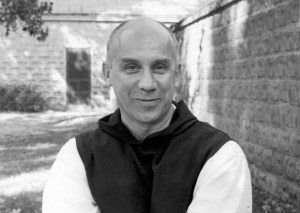
Thomas Merton
(1915-1968)
This statement by Thomas Merton spoke to me loud and clear on this: ‘The beginning of the fight against hatred, the basic Christian answer to hatred, is not the commandment to love, but what must necessarily come before in order to make the commandment bearable and comprehensible. It is a prior commandment to believe. The root of Christian love is not the will to love, but the faith that one is loved’ (If you want to read the fuller citation, here it is). We are called to love all people, including our enemies, because we were first loved by a compassionate creator God. The world — our culture — tells us to REACT when we have been harmed — and that’s the easy thing to do. Get even. Constantly complain. Seek revenge. Jesus, on the other hand, calls us to RESPOND with thought and deliberation, with strength and an empowering love. That’s hard. And, the fact is, we cannot do that on our own. We need to pray for God’s help in that process. Like you, I struggle with this idea of praying for my enemies, but I have learned that when I do, something changes in me — not immediately, but without fail. My world becomes wider and more hopeful. Action replaces anxiety. As Luther would say, this is most certainly true.
Soli Deo Gloria!
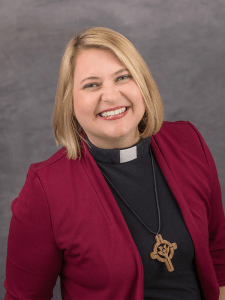
Pastor Jenny Hatleli

Father Martin Hogan
Diocese of Dublin
** Note: My reflections this week were inspired by two people. First, Fr Martin Hogan’s homily on the passage. Fr Martin is a priest of the Diocese of Dublin. He was a Scripture lecturer in Mater Dei Institute of Education for over thirty years. He cited the Merton quote. In addition, a short exchange with Pastor Jen Hatleli of ELC in Black River Falls, also provided excellent insights to this difficult topic. She and I regularly converse about the Lectionary. I am indebted to both!
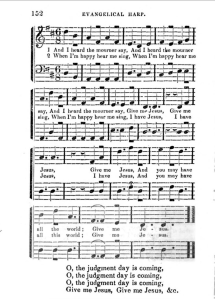
“Give Me Jesus”
1845

Dietrich Bonhoeffer
(1906-1945)
We will meet on Sunday 23 February from 11:00-12:00 in the ELC Sanctuary for our final session!
