Faithful Conversations #17
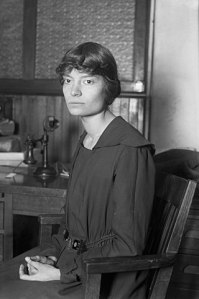
Dorothy Day (1916)
Note to readers:
Perhaps you have heard the name Dorothy Day. She was a social activist who helped found the Catholic Worker Movement in the 1930s. I ran across this quote from her this week and it struck a chord: “We have all known the long loneliness and we learned that the only solution is love that comes with community.” As you reflect on the readings this week, consider someone in your life who may be experiencing the long loneliness and how you might reach out to them.Thanks for your continued interest in exploring scripture! My reflections this week will be primarily drawn from the Gospel and Jesus’ reference to Hosea.
Readings for Pentecost 2:
Hosea 5: 15-6:6
Psalm 50: 7-15
Romans 4: 13-25
Matthew 9: 9-13, 18-26
The First Reading: Hosea 5: 15 – 6: 6
15 I will return again to my place until they acknowledge their guilt and seek my face. In their distress they will beg my favor: (6) “Come, let us return to the Lord, for it is he who has torn, and he will heal us; he has struck down, and he will bind us up. 2 After two days he will revive us; on the third day he will raise us up, that we may live before him. 3 Let us know, let us press on to know the Lord; his appearing is as sure as the dawn; he will come to us like the showers, like the spring rains that water the earth.” 4 What shall I do with you, O Ephraim? What shall I do with you, O Judah? Your love is like a morning cloud, like the dew that goes away early. 5 Therefore I have hewn them by the prophets; I have killed them by the words of my mouth, and my judgment goes forth as the light. 6 For I desire steadfast love and not sacrifice, the knowledge of God rather than burnt offerings.
The Gospel: Matthew 9: 9-13, 18-26
The Calling of Matthew
9 As Jesus was walking along, he saw a man called Matthew sitting at the tax-collection station, and he said to him, “Follow me.” And he got up and followed him. 10 And as he sat at dinner in the house, many tax collectors and sinners came and were sitting with Jesus and his disciples. 11 When the Pharisees saw this, they said to his disciples, “Why does your teacher eat with tax collectors and sinners?” 12 But when he heard this, he said, “Those who are well have no need of a physician, but those who are sick. 13 Go and learn what this means, ‘I desire mercy, not sacrifice.’ For I have not come to call the righteous but sinners.”
A Girl Restored to Life and a Woman Healed
18 While he was saying these things to them, suddenly a leader came in and knelt before him, saying, “My daughter has just died, but come and lay your hand on her, and she will live.” 19 And Jesus got up and followed him, with his disciples. 20 Then suddenly a woman who had been suffering from a flow of blood for twelve years came up behind him and touched the fringe of his cloak, 21 for she was saying to herself, “If I only touch his cloak, I will be made well.” 22 Jesus turned, and seeing her he said, “Take heart, daughter; your faith has made you well.” And the woman was made well from that moment. 23 When Jesus came to the leader’s house and saw the flute players and the crowd making a commotion, 24 he said, “Go away, for the girl is not dead but sleeping.” And they laughed at him. 25 But when the crowd had been put outside, he went in and took her by the hand, and the girl got up. 26 And the report of this spread through all of that district.
This Week’s Reflection: Restoring Dignity
One of my favorite observations about the nature of history comes from the opening lines of L.P. Hartley’s 1953 novel, “The Go-Between”: “The past is a foreign country: they do things differently there.” I have been thinking about that this week while exploring these readings, especially the Gospel. Wandering through the Lectionary each week draws into a world vastly different from our own, yet amazingly relevant.

“The Calling of Saint Matthew” by Caravaggio (1599-1600). Christ is on the far right of the painting, behind St. Peter. Matthew is the figure pointing to himself, as if to say, “Are you talking to me?” Click here to watch a terrific analysis of the painting!
The initial encounter with the tax collector named Matthew (referred to as Levi in Mark’s Gospel) was a fascinating moment in Christ’s three year ministry. Matthew, the namesake of the first New Testament book, was the fifth disciple to be directly called into ministry by Jesus (those fishermen, Peter, Andrew, James and John, were the first four). Jesus said two words to Matthew (verse 9): “Follow me.” And, Matthew simply followed. The Caravaggio painting included here embellishes that moment, and emphasizes Matthew’s surprise at being summoned by Christ (I included a link if you want some further analysis of the painting). And here’s where historical context is important. Tax collectors were considered outcasts within the Israeli culture (apparently, agents of taxation were no more popular then than today!). This was due, in part, to their collaboration with those detested Roman authorities who held sway over the people. And yet, Jesus broke bread with Matthew and other “sinners,” much to the chagrin of those Pharisees who always seemed to be lurking about, confronting this young Rabbi who challenged convention in so many ways (verse 11). We can almost sense Christ’s frustration with them in verses 12-13, and my sense is that his response was a real zinger. First, he reminded them that he has come to heal the “sick” (think outcasts); and second, he challenged these upright religious leaders to “go and learn” the meaning of Hosea 6:6: I desire mercy (or “steadfast love,” depending on the translation) not sacrifice. Can you imagine their reaction to this young upstart telling them to go study this passage from the prophet Hosea? After all, they were steeped in the scriptures! (Note: this reference to Hosea only appears in the version of these events we find in Matthew, and you may want to compare to Mark 2: 13-17 and Luke 5:27-32).
Beyond this dramatic scene, verses 18-26 provide us with two clear examples of Jesus “practicing what he preached.” While walking through a crowd, he healed an anonymous woman who had been hemorrhaging for many years and followed that by restoring the life of a twelve year old girl. In both instances, he mercifully responded to desperate people, the bleeding woman and the synagogue leader whose daughter had died. Both exhibited a pure and simple faith.
What lesson should we draw from these encounters in Matthew 9? One thing that strikes me is that we live in a world that marginalizes people — strips them of their dignity. That word — dignity — derives from the Latin “dignitas” meaning worthiness. And that reminds me of a story. You may remember the name June Carter Cash, wife of Johnny Cash. In her elder years, when this woman of music was asked by a fan how she was doing, she allegedly replied, “Oh, I’m doing okay, I’m just trying to matter.” We can all relate to that, I’m sure. All people crave that sense of worth — it is fundamental. As Christians, we get that. Christ is about restoring dignity (worth) to the outcasts in our midst. He did that over and over again throughout his three year ministry. When Jesus looked at Matthew and said, “follow me,” Matthew did not hesitate. Jesus restored his dignity. We are called to carry out that witness in our day to day interactions, and the Holy Spirit empowers us to do that. We are called to welcome all in the name of our loving God. Are we up for that?
Soli Deo Gloria
Prayer (Inspired by Psalm 50: 7-15):
Heavenly Father, you assure us time and again that all you desire from us is steadfast love. Your grace is like the spring rains that water the earth — it knows no bounds. Help us to press on to know you more fully and to share your love with all we encounter today. Amen.

This entire “conversation” was so good!
LikeLiked by 1 person
Thanks Kris — appreciate that!
LikeLike