Faithful Conversations #32
 Introduction to Readers:
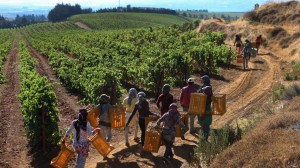
Vineyards were part of everyday life in ancient Israel, and the Bible is filled with references to them (a quick google search verifies that). Often, vineyards symbolized the people of God. Stay tuned to that as you explore this week’s readings. My commentary will focus on the Gospel, with references to Isaiah. Thanks for your continued interest in exploring the infinite wisdom of the scriptures!
Readings for Pentecost 19
Isaiah 5:1-7
Psalm 80:7-15
Philippians 3:4b-14
Matthew 21:33-46
First Reading: Isaiah 5:1-7
I will sing for my beloved my love song concerning his vineyard:
My beloved had a vineyard on a very fertile hill.
2 He dug it and cleared it of stones and planted it with choice vines;
he built a watchtower in the midst of it and hewed out a wine vat in it;
he expected it to yield grapes, but it yielded rotten grapes.
3 And now, inhabitants of Jerusalem and people of Judah,
judge between me and my vineyard.
4 What more was there to do for my vineyard that I have not done in it?
When I expected it to yield grapes, why did it yield rotten grapes?
5 And now I will tell you what I will do to my vineyard.
I will remove its hedge, and it shall be devoured;
I will break down its wall, and it shall be trampled down.
6 I will make it a wasteland; it shall not be pruned or hoed,
and it shall be overgrown with briers and thorns;
I will also command the clouds that they rain no rain upon it.
7 For the vineyard of the Lord of hosts is the house of Israel,
and the people of Judah are his cherished garden;
he expected justice but saw bloodshed;
righteousness but heard a cry!
The Gospel Reading: Matthew 21:33-46
33 “Listen to another parable. There was a landowner who planted a vineyard, put a fence around it, dug a winepress in it, and built a watchtower. Then he leased it to tenants and went away. 34 When the harvest time had come, he sent his slaves to the tenants to collect his produce. 35 But the tenants seized his slaves and beat one, killed another, and stoned another. 36 Again he sent other slaves, more than the first, and they treated them in the same way. 37 Then he sent his son to them, saying, ‘They will respect my son.’ 38 But when the tenants saw the son, they said to themselves, ‘This is the heir; come, let us kill him and get his inheritance.’ 39 So they seized him, threw him out of the vineyard, and killed him. 40 Now when the owner of the vineyard comes, what will he do to those tenants?” 41 They said to him, “He will put those wretches to a miserable death and lease the vineyard to other tenants who will give him the produce at the harvest time.” 42 Jesus said to them, “Have you never read in the scriptures:
‘The stone that the builders rejected
has become the cornerstone;
this was the Lord’s doing,
and it is amazing in our eyes’?
43 “Therefore I tell you, the kingdom of God will be taken away from you and given to a people that produces its fruits. 44 The one who falls on this stone will be broken to pieces, and it will crush anyone on whom it falls.” 45 When the chief priests and the Pharisees heard his parables, they realized that he was speaking about them. 46 They wanted to arrest him, but they feared the crowds, because they regarded him as a prophet.
This Week’s Reflection: “The Parable of the Wicked Tenants”

The Face of Jesus (using AI)
There has been much in the news of late about Artificial Intelligence (AI), and the ongoing and revolutionary application of this in our lives. The image to the right is a product of AI, and gives us a realistic sense, based on various probabilities from the ancient Middle East, what Christ may have looked like as he walked this earth. It is a reminder to me of his humanity, a mystery to ponder.
Jesus, the master teacher, speaks to us across time and his use of stories, often in the form of allegories, is remarkable. In literary terms, an allegory is a “story, poem, or picture that can be interpreted to reveal a hidden meaning, typically a moral or political one” (Wikipedia). For purposes of context, the exchange we witness in this week’s Gospel comes just after the Jewish religious leaders have questioned Jesus concerning his authority. They clearly are disturbed by the young and charismatic spiritual leader, in particular, because of his rising popularity among the people. His defiance of traditional teachings, his radicalism, if you will, cannot stand. As he often did, Jesus offered a parable — one that clearly referenced Isaiah 5 — to highlight disobedience by those that should know better — those same religious leaders — and the consequences of such disobedience.

The Parable of the Wicked Husbandmen by Domenico Fetti, 1620
It went like this. A landowner planted a vineyard, secured it, and made it flourish. He then decided to lease the vineyard to a group of tenants (verse 33). In due time, he sent representatives to collect his produce, but the tenants killed them in an act of wicked and greed-filled defiance. The landowner sent a second group who met the same fate (verses 34-36). Then, naively it seems, he reasoned that if he sends his son as collector, the tenants surely will respect his authority and give the landowner his due. Alas, the tenants murder the son, thereby eliminating the heir to the property (verses 37-39). A gruesome and tragic story.
Jesus, of course, does not stop there. Beginning in verse 40, he walks the elders and zealots who are questioning him into a fearful realization — he is talking about them! His reference to Psalm 188:22-23 (verse 42), plays to their scriptural awareness, and cuts them to the quick. In verse 46, we get a window into their future response.
How should we view this exchange in 2023? It’s easy to stand on the sideline and read this story as a harsh rebuke of the Jewish leaders that rejected Christ. My sense, however, is that is too small and feels like finger-pointing. Jesus is talking to us as well, and we must examine our hearts. How are we responding to him? How are we handling the vineyard in our care?
Soli Deo Gloria
Prayer (inspired by Psalm 80):
Restore us, O God; let your face shine that we may be saved. You are our source of life, and we are the vineyard. O God; let your face shine that we may be saved. Amen.
Finally . . . one more update regarding our current study:
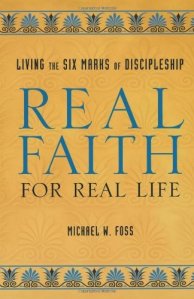 What does it mean to be a disciple of Jesus Christ? Join us for an exploration of that question in September and October. We will read and discuss Michael Foss’s book, Real Faith for Real Life: Living the Six Marks of Discipleship. In his book’s introduction, Foss writes: “This book was written to help you grow deep. It was written to help you on your journey of spiritual discovery and renewal.”
We have met twice, and have two remaining sessions — October 11 and 18! All are welcome!
