Faithful Conversations #42

Charity Thunder (1947-2018)
“Ho-homp-gi-ka re-wi” (she lights up the earth)
Introduction to Readers:
I have referenced her in a prior post, but former colleague Charity Thunder crossed my mind again this week. In a memorable conversation with her many years ago, I asked her a question regarding some aspect of Ho-Chunk culture, and she responded, “I’m not old enough to know that yet.” I’m certain she was in her sixties at the time, and her response was indicative of both her humility and the respect afforded elders within her culture. As I approach this Lectionary challenge each week, I echo her response. Spiritual wisdom, in my estimation, can happen at any age, but for the most part, it seems to continually unfold over time — it is truly a brick-by-brick process. The words of Paul in 1 Corinthians 13:12 come to mind: “For now we see only a reflection, as in a mirror, but then we will see face to face. Now I know only in part; then I will know fully, even as I have been fully known.”
One other thought before starting this week: on Sunday, a few of us gathered in the library after worship, something we will continue to do, for some free-flowing discussion of the readings — no particular agenda, just talk. An important part of that discussion, and a reiteration on my part, is that I’m following the Revised Common Lectionary (RCL) in the blog, and that may not always match with what Pastor Jen is doing on Sunday (and may not match what some of you that outside ELC are hearing in your home churches). For example, in Advent Pastor Jen is doing a preaching series (“Do not be afraid”) that centers on Luke’s Gospel. Clergy, of course, have a variety of options for preaching, including something called the “Narrative Lectionary,” and the RCL is not required by the ELCA. Our initial goal in launching Faithful Conversations was to grow in our understanding of the RCL and to utilize it as an anchor for further study. If you want to more information regarding the denominations that utilize the RCL and its global reach, check out this site. Thanks for your continued interest! In this week’s reflection, I will be focusing on Psalm 126 and the passage from 1 Thessalonians.
Note: I do utilize various hyperlinks within the body here for further exploration on your part if interested! They are a different color and italicized. If you click out to the supplemental information, simply click back to return to the blog. The images included, mostly, are from Wikimedia Commons, and therefore are in the public domain.
Readings for the Third Sunday in Advent
Isaiah 61: 1-4, 8-11
Psalm 126
1 Thessalonians 5: 16-24
John 1: 6-8, 19-28
Psalm 126: A Song of Ascents
When the Lord restored the fortunes of Zion, we were like those who dream.
2 Then our mouth was filled with laughter and our tongue with shouts of joy;
then it was said among the nations, “The Lord has done great things for them.”
3 The Lord has done great things for us, and we rejoiced.
4 Restore our fortunes, O Lord, like the watercourses in the Negeb.
5 May those who sow in tears reap with shouts of joy.
6 Those who go out weeping, bearing the seed for sowing,
shall come home with shouts of joy, carrying their sheaves.
The Second Reading: 1 Thessalonians 5: 16-24
16 Rejoice always, 17 pray without ceasing, 18 give thanks in all circumstances, for this is the will of God in Christ Jesus for you. 19 Do not quench the Spirit. 20 Do not despise prophecies, 21 but test everything; hold fast to what is good; 22 abstain from every form of evil. 23 May the God of peace himself sanctify you entirely and may your spirit and soul and body be kept sound and blameless at the coming of our Lord Jesus Christ. 24 The one who calls you is faithful, and he will do this.
This Week’s Reflection: “Psalms That Speak to Us Across Time”
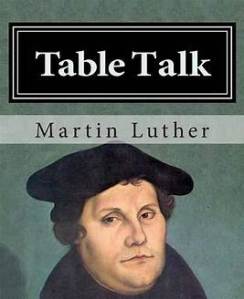
Martin Luther loved the Psalms. He often commented on that, including a quote that sounds so Lutheran: “Komm, lass uns einen Psalm singen und den Teufel vertreiben!” (Come, let us sing a psalm, and drive away the devil!). Let’s do some theater of the mind and picture what it might have been like to join Luther and his wife Katie around their kitchen table, discussing Psalm 126.
For purposes of context, the Psalm likely refers to the period after the Babylonian Captivity and the return of the Jewish exiles to Zion (6th Century BCE). It is a “communal” Psalm — a prayer for help. As Wartburg Professor Samantha Gilmore suggests in a recent commentary, Psalm 126 can be interpreted in two ways: “The psalmist may be 1) remembering with joy what God has done for God’s people in the past or 2) anticipating with joy what God will do to restore God’s people in the (hopefully near) future.” In either case, the psalmist reveals a strong faith “in the power of God to radically change people’s circumstances and the goodness of God to do so in a life-giving way.”
Ah, isn’t it a marvel how these words transcend time and speak to us as we walk the Advent journey? That poetic line in verse 1 — we were like those who dream — reminds me of one of the fundamental questions posed to me and my classmates by Martin Lutter (yes, that was his name, not a typo), a history professor at Concordia in the late 1970s: “Can we use history to imagine a better future?” What an important question! Churches across the ELCA, it seems to me, are in the throes of grappling with that question in 2023, a time of exciting and often painful transition. Individually and collectively, can we remember when our mouths were “filled with laughter” as we contemplate a future filled with “shouts of joy?” This is our challenge.
And the short passage from 1 Thessalonians, it seems to me, offers a timeless playbook, an approach for Christians experiencing difficult times. Those three words in verse 17 — pray without ceasing — offer a powerful reminder for all of us. Lutheran theologian and martyr, Dietrich Bonhoeffer, wrote the following commentary on this verse, offering a great description of the power of prayer and its transformative effect in our lives.

Bonhoeffer and Confirmands 1932
The unity of prayer and work, the unity of the day, is found because finding the You of God behind the It of the day’s work is what Paul means by his admonition to “pray without ceasing” (1 Thessalonians 5:17). The prayer of the Christian reaches, therefore, beyond the time allocated to it and extends into the midst of work. It surrounds the whole day, and in so doing, it does not hinder the work; it promotes work, affirms work, gives work great significance and joyfulness. Thus every word, every deed, every piece of work of the Christian becomes a prayer, not in the unreal sense of being constantly distracted from the task that must be done, but in the real breakthrough from the hard It to the gracious You.
Bonhoeffer! Once again, you have given us something to think about! May we take your words to heart.
Soli Deo Gloria!
Prayer (Inspired by Isaiah 61: 1-4, 8-11)
Note: I found this prayer on-line, but there was no author attribution. It is an example, however, of “praying through the Bible,” a technique that I have been introduced to before, and would like to further explore.
Sovereign Lord, Your Spirit rested on the prophets of the Old Testament. Your Spirit filled John the Baptist before he was born. Your Spirit anointed Your Son when John baptized Him, and He manifested that fact throughout His servant ministry and preaching. As believers in Jesus as our Lord and Savior, we praise You and thank You that this same Holy Spirit indwells us and enables us to do many of the things Jesus did. Empower us, guide us, and help us meet the needs of others as Jesus showed us how when He blessed and taught Your people on earth. Sovereign Lord, Supreme Ruler over all creation, many of Your people are mourning today because of abuse and affliction, disease and death, unjust punishments and evil persecutions. Comfort all who mourn and make us instruments of Your peace. Lord Jesus, come again quicklyand make all thing s right in Your sight. Sovereign Lord, we have seen many of Isaiah’s prophecies fulfilled in history. Through Your Son, establish justice on earth according to the Scriptures. Inspire us to love justice as You do and also hate all unrighteousness. May we see many of the fruits of the new covenant that Jesus Christ established through His blood, and may many people turn to Him in faith and repentance in order to live a new life in Your presence forever.Sovereign Lord, King of the universe, we delight and rejoice in You and Your salvation, even as we continue to struggle in this broken world. Thank You for clothing us in the righteousness of Jesus Christ so we can stand unashamed in Your presence before a watching world ever ready to condemn us for the slightest failings. We pray that through our faithfulness and Your gracious work through us that Your righteousness will spring up before all nations and justice will prevail in all human endeavors and relationships. Come quickly, Lord Jesus. Amen.
