Faithful Conversations #63
Introduction to Readers
There’s an old adage when coaching distance runners: “If you want to do something different, you need to DO something different!” It might seem like double-speak, but there is a life lesson there and, it seems to me, an application to our spiritual journeys. I have been thinking about that recently, particularly regarding my approach to the discipline of prayer. More on that to follow. This week’s blog posting has two parts: first, some history of the Feast Day known as the Ascension of Our Lord and overview of the accompanying readings; and second, an overview of the readings for Easter 7 and commentary on John 17. As always, thanks for visiting this space again this week!Brief history of ascension Day (this coming thursday):
Celebrated since the earliest days of Christianity, the Feast of the Ascension (also known as Ascension Day or Holy Thursday), commemorates our belief in the bodily ascension of Jesus Christ into heaven as described in Luke. The exact origins of its observance are somewhat uncertain, but by the 4th Century, it was widely celebrated by Christians, particularly in the Eastern Church. The Western Church formally established the celebration in the 6th Century. The Ascension is observed on a Thursday, forty days after Easter Sunday. (Sidebar: In some Christian denominations, the Feast is transferred to the following Sunday for practical reasons, allowing more people to participate in the celebration). Throughout history, various customs and rituals have been associated with Ascension Day, including special church services, processions, and devotional practices. Holy Thursday marks the completion of Jesus’ earthly ministry and serves as a reminder of the promise of Jesus’ return in glory, as mentioned in the New Testament.Readings for the Ascension of our Lord (Thursday 9 May) Acts 1: 1-11 Psalm 47 (or 93) Ephesians 1: 15-23 Luke 24: 44-53
what to look for in the Ascension day Readings:

Ascension of Christ
Albertino Piazza
(1490–1528)
Readings for Easter 7 Acts 1: 15-17, 21-26 Psalm 1 1 John 5: 9-13 John 17: 6-19 (highlighted below)
what to look for in the Readings for easter 7:
The readings for the 7th Sunday of Easter encompass various themes that reflect the significance of Jesus’ ascension and the disciples’ preparation for the coming of the Holy Spirit at Pentecost. In Acts 1:15-17, 21-26, the disciples gather to choose a replacement for Judas Iscariot (eventually Matthias), highlighting the importance of unity and community among believers. Psalm 1 echoes the theme of righteousness and meditation on God’s law, emphasizing the path of the righteous and their steadfastness in faith. 1 John 5:9-13 underscores the assurance of eternal life through belief in Jesus Christ, emphasizing the importance of faith and testimony. Finally, John 17:6-19 presents Jesus’ high priestly prayer, where he intercedes for his disciples and emphasizes their sanctification and protection in the world. Together, these readings offer a rich narrative surrounding the disciples’ preparation for ministry and the assurance of God’s presence and protection amidst challenges going forward.
The Gospel Reading from John
17 After Jesus had spoken these words, he looked up to heaven and said, “Father, the hour has come; glorify your Son so that the Son may glorify you, 2 since you have given him authority over all people, to give eternal life to all whom you have given him. 3 And this is eternal life, that they may know you, the only true God, and Jesus Christ, whom you have sent. 4 I glorified you on earth by finishing the work that you gave me to do. 5 So now, Father, glorify me in your own presence with the glory that I had in your presence before the world existed. 6 “I have made your name known to those whom you gave me from the world. They were yours, and you gave them to me, and they have kept your word. 7 Now they know that everything you have given me is from you, 8 for the words that you gave to me I have given to them, and they have received them and know in truth that I came from you, and they have believed that you sent me. 9 I am asking on their behalf; I am not asking on behalf of the world but on behalf of those whom you gave me, because they are yours. 10 All mine are yours, and yours are mine, and I have been glorified in them. 11 And now I am no longer in the world, but they are in the world, and I am coming to you. Holy Father, protect them in your name that you have given me, so that they may be one, as we are one. 12 While I was with them, I protected them in your name that you have given me. I guarded them, and not one of them was lost except the one destined to be lost, so that the scripture might be fulfilled. 13 But now I am coming to you, and I speak these things in the world so that they may have my joy made complete in themselves. 14 I have given them your word, and the world has hated them because they do not belong to the world, just as I do not belong to the world. 15 I am not asking you to take them out of the world, but I ask you to protect them from the evil one. 16 They do not belong to the world, just as I do not belong to the world. 17 Sanctify them in the truth; your word is truth. 18 As you have sent me into the world, so I have sent them into the world. 19 And for their sakes I sanctify myself, so that they also may be sanctified in truth. 20 “I ask not only on behalf of these but also on behalf of those who believe in me through their word, 21 that they may all be one. As you, Father, are in me and I am in you, may they also be in us, so that the world may believe that you have sent me.
reflecting on the “high priestly prayer” of jesus

The High Priestly Prayer
Eugène Burnand (1850–1921)
concluding thoughts on prayer this week:
As mentioned last week, I am offering a few things to think about regarding the spiritual discipline of prayer and will do so again next week. I found these two excerpts helpful this week.
Martin Luther
(1483-1546)
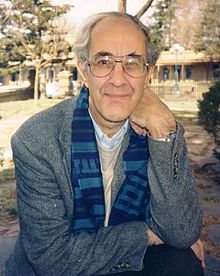
Henri Nouwen (1932-1996)
