Faithful Conversations #71
Introduction to Readers:
Welcome back to Faithful Conversations! I’m deviating from my normal pattern this week a bit and offering three things. First, we’re about to celebrate the 248th anniversary of our nation’s founding, and two recent news events have prompted me to think about that confounding intersection between faith and politics. Second, I want to introduce you to a wonderful resource we have available to us through Luther Seminary and offer you a challenge for next Sunday! Finally, I’m sharing another commentary on prayer by Henri Nouwen (I’m a fan!). So, let’s get started.
(Note: Please feel free to offer comments or feedback for the benefit of the group!)
part 1: separating church and state
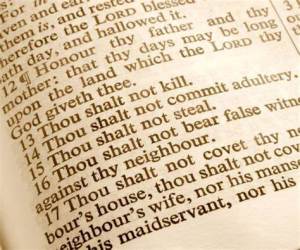
The Ten Commandments
Within the past couple of weeks, two states have been in the national headlines for actions taken regarding religion and the public schools. First, Louisiana’s legislature has mandated the displaying of the ten commandments in taxpayer supported schools (Kentucky attempted this in 1980, but the law was struck down). According to the new law, public schools must prominently display a poster or framed copy of the Ten Commandments in every classroom, as well as in the school library and cafeteria. And second, Oklahoma’s Superintendent of Public Instruction, Ryan Walters, issued an edict requiring schools in the state to teach the Bible as part of their curricula for grades five through 12. The mandate emphasizes the Bible’s historical and cultural significance, as well as its influence on the nation’s founders and constitutional principles. Schools are also instructed to refer to the Ten Commandments.
How should we view these efforts by Louisiana and Oklahoma through the lens of our faith? Further, does the ELCA offer any guidance in this regard? Let me offer a couple things here. First, for some background, here is a short screencast with some background on how the Founders approached religion.
And second, as a follow-up to the screencast, here is the full social statement I referenced from the ELCA. Read if interested!
part 2: the sunday readings, a resource, and a challenge!
The Readings for Pentecost 7
Ezekiel 2: 1-5
Psalm 123
2 Corinthians 12: 2-10
Mark 6: 1-13
A Quick Take on Sunday’s Lectionary:
The readings for Pentecost 7 from Ezekiel 2:1-5, Psalm 123, 2 Corinthians 12:2-10, and Mark 6:1-13 all highlight the themes of prophetic mission, human weakness, and reliance on God’s strength and grace. Ezekiel’s commission as a prophet despite anticipated resistance, and Jesus sending out His disciples amidst His own rejection, illustrate the challenge of proclaiming God’s message. Both Paul, in his admission of weakness, and the psalmist, in their plea for mercy, emphasize humility and the necessity of depending on God’s grace. Together, these passages underscore the call to faithful obedience, the acceptance of human frailty, and the reliance on divine empowerment to fulfill God’s purposes.
A Resource and a Challenge!
As you know, we live in a time of amazing access to information related to the Bible! Luther Seminary in St. Paul has several outstanding resources that are game-changing when it comes to studying the scriptures. Below I have linked the “Enter the Bible” site, and it would be great for you to see what is available there. Here’s my challenge for you this week:
When you arrive at the site, go to the “Books” link at the top, and search out one of this week’s readings (note: there may be a survey linked at the top, which you can “X” out; also, you can create an account for the site — no charge — if interested).
Then, for practice, search out Ezekiel (the first reading). When you arrive there, you will note that you get into all sorts of information about the book, including “Passages” (under “See All Our Related Content”). Find the passage that includes this week’s reading (it won’t be exact, but you will get the idea). Once there, you can read an analysis of the passage.
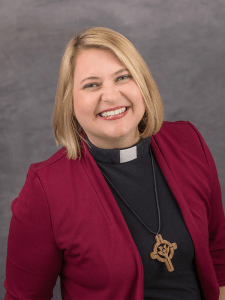
Pastor Jenny Hatleli
Now . . . here’s another thing to try. Pastor Jen and I have an ongoing conversation about the Lectionary, and I know from talking to her on Sunday that she will be preaching on Mark 6: 1-13 next Sunday. Take some time with it and think about what you might emphasize if you were going to talk to someone about it. What ideas would you want to communicate? This is a great way to engage in that portion of the worship experience! Here’s the link — enjoy the process!

Part 3: a commentary on prayer from henri nouwen

Henri Nouwen
(1932-1996)
This really gave me something to think about! Wow!
“Prayer and action can never be seen as contradictory or mutually exclusive. Prayer without action grows into powerless pietism, and action without prayer degenerates into questionable manipulation. If prayer leads us into deeper unity with the compassionate Christ, it will always give rise to concrete acts of service. And if concrete acts of service do indeed lead us to a deeper solidarity with the poor, the hungry, the sick, the dying, and the oppressed, they will always give rise to prayer. In prayer we meet Christ, and in him all human suffering. In service we meet people, and in them the suffering Christ. . . . Action with and for those who suffer is the concrete expression of a compassionate life and the final criterion of being a Christian.”
— Henri Nouwen, Meditation for 26 May 2024
Note: Our lectionary small group will not meet on sunday 7 july after service. We will gather again, however, on 14 july after the 8:30 service at elc! come and join the conversation! No special expertise or prior knowledge is necessary! all are welcome!
