Faithful Conversations #94
Introduction to readers
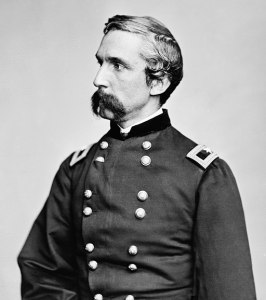
Joshua Lawrence Chamberlain
(1828-1914)
Joshua Lawrence Chamberlain has been on my mind this week. College professor, soldier, and politician, Chamberlain was best known for his heroism during the American Civil War. Enlisting at age 34 in 1862, he most notably commanded the 20th Maine Regiment at the Battle of Gettysburg (July 1863) where his epic defense of Little Round Top was crucial to the Union’s victory. After the war, this amazing man became a politician, serving as the Governor of Maine and later as a U.S. Congressman. A lesser-known episode in his war experiences came after he was severely wounded in the battle of Petersburg (June 1864). In excruciating pain and facing death, he penned these words to his beloved wife Fanny: “I am lying mortally wounded the doctors think, but my mind and heart are at peace — Jesus Christ is my all-sufficient savior. I go to him. God bless and keep and comfort you . . . To know and love you makes life and death beautiful.” (Let’s imagine Fanny receiving such a letter!) Having visited both the Gettysburg and Petersburg battlefields, Chamberlain’s powerful testimony regarding Jesus Christ left such an impression on me when I first read his letter. Among other things, his words bring a much-needed clarity for the Advent Season. My sense is that he understood the nature of the authentic joy the Apostle Paul is talking about in this week’s Philippians passage. As Christians living in our deeply cluttered, harried, hate-filled, and chaotic world, we have a Savior — an all-sufficient Savior, and that is enough!
As always, thanks for your continuing interest in exploring the scriptures! My reflections this week will focus on the passages from Zephaniah Philippians. And two suggestions: first, take one reading per day and spend time with it; and second, utilize the four-question approach with each reading as noted here:
1. What is something new you learned from the reading? (NEW)
2. What is something that caught your attention and made you think? (REFLECT)
3. What did you read that relates to other reading you have done? (RELATE)
4. What would you like to discuss from the reading? (DISCUSS)
Reading for Advent 3
Zephaniah 3: 14-20
Isaiah 12: 2-6
Philippians 4: 4-7
Luke 3: 7-18
Common Themes in the Advent 3 Readings
Look for these common themes in this week’s readings: joy, salvation, and hope. All the readings highlight the theme of rejoicing in the Lord, with Zephaniah and Isaiah proclaiming the coming restoration and deliverance of God’s people, calling for songs of praise and celebration. Philippians emphasizes joy in the Lord and peace through prayer and trust in God, while Luke’s message of repentance and the coming of the Messiah prepares the way for the ultimate salvation. Together, these passages reflect the larger Advent themes of anticipation, inner transformation, and the joyful expectation of God’s saving work.
The Old Testament Reading: Zephaniah 3: 14-20
14 Sing aloud, O daughter Zion;
shout, O Israel!
Rejoice and exult with all your heart,
O daughter Jerusalem!
15 The Lord has taken away the judgments against you;
he has turned away your enemies.
The king of Israel, the Lord, is in your midst;
you shall fear disaster no more.
16 On that day it shall be said to Jerusalem:
“Do not fear, O Zion;
do not let your hands grow weak.
17 The Lord, your God, is in your midst,
a warrior who gives victory;
he will rejoice over you with gladness;
he will renew you in his love;
he will exult over you with loud singing
18 as on a day of festival.”
I will remove disaster from you,
so that you will not bear reproach for it.
19 I will deal with all your oppressors
at that time.
And I will save the lame
and gather the outcast,
and I will change their shame into praise
and renown in all the earth.
20 At that time I will bring you home,
at the time when I gather you;
for I will make you renowned and praised
among all the peoples of the earth,
when I restore your fortunes
before your eyes, says the Lord.
** Note: If you want to spend a few minutes gaining a better understanding of the book of Zephaniah, check out the video below! And further, if you are interested in more of these types of videos, they come from The Bible Project, a site you may want to explore!
The Second Reading: Philippians 4: 4-7
4 Rejoice in the Lord always; again I will say, Rejoice. 5 Let your gentleness be known to everyone. The Lord is near. 6 Do not be anxious about anything, but in everything by prayer and supplication with thanksgiving let your requests be made known to God. 7 And the peace of God, which surpasses all understanding, will guard your hearts and your minds in Christ Jesus.
Reflection: “Gaudete in Domino semper!”
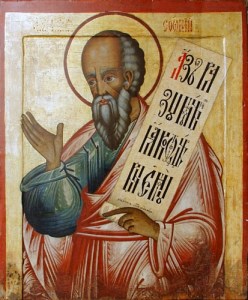
The Prophet Zephaniah
Russian Orthodox Icon
18th Century
The third Sunday in Advent is known Gaudete Sunday. The name derives from Roman Catholic tradition and the opening words of the traditional Introit (opening chant) for the Mass on this day: Gaudete in Domino semper (“Rejoice in the Lord always,” a reference to Philippians 4). The day is marked by a slight relaxation of the penitential tone of Advent, symbolized by the use of a rose-colored (instead of purple) candle on the Advent wreath in many churches. Gaudete Sunday highlights the joyful expectation of Christ’s coming, both at Christmas and in the future Second Coming. (If you want to know more about the traditions surrounding Gaudete Sunday in the ELCA, and especially the Advent Wreath, check out this article).
As you know, Advent affords us the opportunity to hang around with several Old Testament prophets and this week, Zephaniah takes center stage. He prophesied during the late 7th century BCE, a tumultuous period for the Kingdom of Judah, under the reign of King Josiah. This era was marked by religious reform as Josiah sought to return the nation to proper worship, but also by the looming threat of foreign invasion. Assyria, once a dominant power, was in decline, and Babylon was rising, signaling an impending shift in regional power dynamics. Zephaniah’s prophecies, which emphasize the coming “day of the Lord” and divine judgment, reflect the anxiety of this time (not unlike our own), while also offering hope for the faithful remnant amidst the destruction that was to come. Like all the Old Testament prophets — these men and women who spoke for God — Zephaniah’s message is one of both judgement and salvation. The passage included for Sunday picks up on the second part of that and echoes like a rousing pep-talk across the centuries. Read it with that in mind.
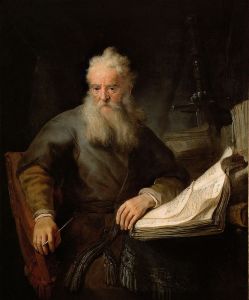
Saint Paul
Rembrandt (1606-1669)
Writing more than six centuries later (and while under house arrest in Rome!), Paul’s admonition to the Christian community in Philippi, reflects the anticipatory JOY voiced by Zephaniah. Throughout the letter, Paul expresses gratitude for their generosity, encourages unity and joy despite challenges, and emphasizes living a life worthy of the gospel. Offering Christ as the ultimate example of selflessness, Paul urges the Philippians to stand firm in their faith as they await Christ’s return. Like many of our Christian ancestors of his generation, Paul was executed under the Emperor Nero as part of a wave of persecutions between 64-68 CE. His clear and direct language in next Sunday’s passage, stand as a reminder for us — JOY is not a fleeting vapor that comes and goes. Rather, it is an attitude, a decision, and a gift for us to share!
Soli Deo Gloria!
prayer: The Advent Attitude (from Henri Nouwen)
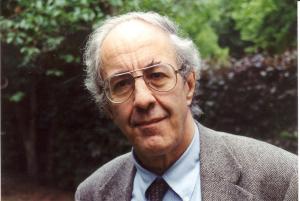
Dutch Theologian
Henri Nouwen
(1932-1996)
In the beginner’s mind there is no thought ‘I have attained something.’ All self-centered thoughts limit our vast mind. When we have no thought of achievement, no thought of self, we are true beginners. Then we can really learn something. The beginner’s mind is the mind of compassion. When our mind is compassionate, it is boundless.”
I like these words. Also very important for Advent. Open, free, flexible, receptive. That is the attitude that makes us ready. I realize that in Zen you are not expecting anything or anyone. Still, it seems that all the things Shunryu Suzuki tells his students (above) are important for Christians to hear and realize. Isn’t a beginner’s mind, a mind without the thought “I have attained something,” a mind opened for grace? Isn’t that the mind of children who marvel at all they see? Isn’t that the mind not filled with worries for tomorrow but alert and awake in the present moment?
(6 December 2024 Entry: Accessed from the Nouwen Society Website)
update on the bonhoeffer book study!

Dietrich Bonhoeffer
(1906-1945)
Dietrich Bonhoeffer’s classic, The Cost of Discipleship, is an excellent book for Christians to read heading into 2025! We have ordered several copies of the book and also hope that many will purchase it for themselves. Besides on-line, copies can be purchased at regional bookstores — BAM in Eau Claire or Barnes and Noble in LaCrosse. (Note: Apparently The Cost of Discipleship is flying off the shelves and not available through normal on-line outlets. We will continue to be resourceful about that and hopefully the fact that we are not starting our study until late January will help!). Also, I should mention that Mary Beth and I had the opportunity to see the film on Bonhoeffer currently playing in theaters and both enjoyed it immensely! It captures many aspects of his story well.
Here’s the plan for our study:
Prior Preparation
It will be helpful to read Bonhoeffer’s book, or a good portion of it, prior to the start of our study (although it certainly will work to first experience the book during the study).
Study Format
Our study will focus on four key themes from Bonhoeffer’s book. Each week will include a chapter selection, key themes, discussion points, and reflection questions. No prior knowledge is necessary, and you will not be put on the spot to read aloud – our format will be simple and informal!
Schedule
We are offering this as part of our preparation for the Lenten Journey that starts in early March this year. We will gather for one evening session (including a film), followed by four sessions on Sunday mornings. The Sunday morning sessions will be from 10:45-11:45.
Wednesday 29 January: “An Evening with Bonhoeffer” (5:00-7:00 p.m.)
To kick off the study, we will meet at 5:00 at ELC to watch a powerful documentary on the life of Dietrich Bonhoeffer, followed by a discussion and overview of the study.
Sunday 2 February: Costly Grace vs. Cheap Grace (Focus on Chapter 1)
Sunday 9 February: The Radical Call for Discipleship (Focus on Chapter 4)
Sunday 16 February: The Ethics of the Sermon on the Mount (Focus on Chapter 12)
Sunday 23 February: The Church as the Visible Community of Disciples (Focus on Chapter 30)
let me know if you are interested in being part of the study, or if you have questions. email or text! (pstrykken@gmail.com or 715-299-0311).
