Faithful Conversations #97
Introduction to readers
Let’s start with the big picture. We are currently experiencing the Twelve Days of Christmas (25 December through 5 January) leading to Epiphany, a calendar configuration that dates back to 567 CE and the Roman Catholic Council of Tours (the city in France that was the heart of medieval western Christendom). The word epiphany comes from the Greek word epiphaneia (ἐπιφάνεια), meaning appearance or manifestation, and has been used in various contexts throughout history, including religious and secular ones, to describe a sudden realization or revelation. The season of Epiphany runs through February and features stories highlighting God’s surprising and life-changing moments during Jesus’ ministry. (Sidebar: In Eastern Christianity, Epiphany is known as Theophany, a significant feast day celebrating Jesus’ baptism in the Jordan River, which is seen as another revelation of his divine nature).

The Wise Men of the East
ELC in Black River Falls
But there’s more! Epiphany is a celebration of the visit of the Magi (the Three Wise Men) to Bethlehem to see the newborn Jesus, symbolizing the revelation of Christ to the Gentiles, as represented by these mysterious men of the east. As a child, I was always a bit confused by the story and it seemed like an “add-on” to the drama surrounding Christmas. And, in the category of silly and random childhood memories, I recall a fractured version of the familiar song we sang on the playground (do kids still do this?):
We three kings of Orient are
Smoking on a rubber cigar.
One was loaded,
It exploded.
Now we’re on yonder star.
(Note: The song I am referencing is We Three Kings of Orient Are, written in 1857 by John Henry Hopkins, rector of Christ Episcopal Church in Williamsport, Pennsylvania. He would likely have been unhappy with our version of it!)
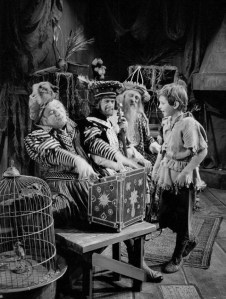
“Amahl and the Night Visitors”
1958
I also associate this story with a short opera I listened to many times as a child on our old record player, Amahl and the Night Visitors (my parents enjoyed opera, something I never appreciated). Anyway, it was a marvelous story that brought the wise men to life for me (especially when Kaspar, one of the wise men, gave Amahl, the central character, some licorice from his box!).
As always, thanks for stopping by this space each week. I have listed the readings for both 2 Christmas and Epiphany, including common themes, and urge you to work your way through them. One suggestion I would offer this week: take one or two of the eight readings and revisit it (or them) several times, over a few days (John 1 might be a good one!). My reflection will focus on Matthew’s Gospel for Epiphany followed by a powerful prayer reflection from John Henry Newman and a thought-provoking song related to the visit of the Magi by James Taylor. An eclectic mix this week!
Readings for 2 Christmas (5 January)
Jeremiah 31: 7-14
Psalm 147: 12-20
Ephesians 1: 3-14
John 1: (1-9) 10-18
Common Themes in the Readings for 2 Christmas (5 January 2025)
Look for the following themes among the four readings for the Second Sunday of Christmas: God’s faithfulness, the promise of restoration, and the revelation of divine grace. In Jeremiah, God’s intention to gather and restore Israel is clear, as He promises joy and peace to His people. Psalm 147 echoes this theme of restoration, praising God for His care and the renewal He brings to the brokenhearted and the land. Ephesians and John highlight God’s eternal plan of salvation through Christ, who reveals God’s grace and truth, offering redemption and unity for all believers.
Readings for Epiphany of Our Lord (6 January)
Isaiah 60: 1-6
Psalm 72: 1-7, 10-14
Ephesians 3: 1-12
Matthew 2: 1-12 (Reflection Focus)
Common Themes in the Readings for Epiphany (6 January 2025)
Look for these common themes among the four readings for Epiphany: the revelation of God’s glory and the manifestation of divine light to the world. Isaiah speaks of the arrival of God’s radiant light, attracting nations to His presence. The Psalm expresses the universal kingship of God, with rulers bringing gifts in recognition of His authority and justice. Ephesians highlights the mystery of God’s plan, revealing that salvation through Christ is meant for all people, while Matthew’s account of the Magi visiting the newborn Jesus shows the recognition of Christ as the Savior by Gentiles from distant lands.
Epiphany Gospel: Matthew 2: 1-12: The Visit of the Magi
In the time of King Herod, after Jesus was born in Bethlehem of Judea, magi from the east came to Jerusalem, 2 asking, “Where is the child who has been born king of the Jews? For we observed his star in the east and have come to pay him homage.” 3 When King Herod heard this, he was frightened, and all Jerusalem with him, 4 and calling together all the chief priests and scribes of the people, he inquired of them where the Messiah was to be born. 5 They told him, “In Bethlehem of Judea, for so it has been written by the prophet:
6 ‘And you, Bethlehem, in the land of Judah,
are by no means least among the rulers of Judah,
for from you shall come a ruler
who is to shepherd my people Israel.’ ” (Reference to Micah 5:2)
7 Then Herod secretly called for the magi and learned from them the exact time when the star had appeared. 8 Then he sent them to Bethlehem, saying, “Go and search diligently for the child, and when you have found him, bring me word so that I may also go and pay him homage.” 9 When they had heard the king, they set out, and there, ahead of them, went the star that they had seen in the east, until it stopped over the place where the child was. 10 When they saw that the star had stopped, they were overwhelmed with joy. 11 On entering the house, they saw the child with Mary his mother, and they knelt down and paid him homage. Then, opening their treasure chests, they offered him gifts of gold, frankincense, and myrrh. 12 And having been warned in a dream not to return to Herod, they left for their own country by another road.
reflection: “those magic men, the magi!”

Adoration of the Magi
Artist: Emmanuel Tzanes
(1610-1690)
Greek Renaissance
The visit of the Magi is shrouded in mystery. The episode is found only in the book of Matthew, written in the mid-80s CE, several generations beyond Christ’s birth. So, who were the Magi, and why are they important for our faith journey two thousand years later?
Let’s start with what we DO NOT KNOW about them. For example, tradition suggests there were three, something that is not at all clear from Matthew’s account — there were likely more. Though often identified as kings and by name (Kaspar, Melchior, and Balthazar), there is no mention of names in the text, and they likely were scholars or priests, as opposed to kings. Further, their visit came perhaps two or three years after the birth of Jesus, so we tend to confuse the time sequence. There is much we do not know.
So, what DO we know about them, based on the Matthew’s account and reasonable assumptions? They came from the east, likely Persia or Babylon, traveling roughly 700 miles to see the infant Jesus, a journey that would have taken more than a month. They were likely followers of Zoroastrianism, a precursor to Islam. They understood astrology (guided by a star) and prophecy and were familiar with Jewish Scriptures (such as Micah 5:2). They visited with Herod, asking where they might find the “King of the Jews,” unsettling him beyond measure (recall the Murder of the Innocents). Herod, the Roman Jewish client king of Judea, then deceitfully asked them to find the child and inform him of his whereabouts, so he (Herod) could also pay homage (?) They visited the Christ child, offered gifts (gold, frankincense and myrrh), and then left without returning to Herod, as they were warned in a dream to avoid him and his violent impulses. Finally, they went back to their country by another route.
What should we take away from this mysterious and intriguing story in Matthew? Several things come to mind. First and foremost, we learn that the birth of Jesus was revealed to the Gentiles, those outside the Jewish world. The wise men were drawn to see this child — they experienced an epiphany, ultimately rejoicing in the presence of this the infant Jesus. We also learn that those in power, like Herod, were deeply troubled by the story surrounding this child. Challenging Herod’s earthly conception of power, the child must be killed! And finally, in a surprising moment, those wise men of the east had a second epiphany. Riding off into history, forever changed by their experience, they chose Jesus above Herod and returned to their homeland by another road. May we follow their example.
Soli Deo Gloria!
prayer/reflection: “the mission of my life” (john henry newman)
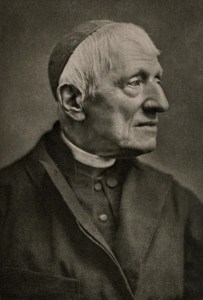
John Henry Newman
(1801-1890)
John Henry Newman (1801-1890) was an influential English theologian and poet who played a key role in the Oxford Movement before converting to Catholicism. He became a cardinal in the Catholic Church and was canonized in 2019. Inspired by him, the Newman Movement established Newman Centers on college campuses to support Catholic students with spiritual, social, and academic resources. This movement began in 1883 at the University of Wisconsin to help Catholic students live their faith amid perceived anti-Catholicism. Newman Centers aim to provide social activities, discussions on faith, and mutual support in a secular academic environment. His statement of mission seems appropriate as we turn the page into a new year!
God has created me to do Him some definite service. He has committed some work to me which He has not committed to another. I have my mission. I may never know it in this life, but I shall be told it in the next. I am a link in a chain, a bond of connection between persons. He has not created me for naught. I shall do good; I shall do His work. I shall be an angel of peace, a preacher of truth in my own place, while not intending it if I do but keep His commandments. Therefore, I will trust Him, whatever I am, I can never be thrown away. If I am in sickness, my sickness may serve Him, in perplexity, my perplexity may serve Him. If I am in sorrow, my sorrow may serve Him. He does nothing in vain. He knows what He is about. He may take away my friends. He may throw me among strangers. He may make me feel desolate, make my spirits sink, hide my future from me. Still, He knows what He is about. Amen.

James Taylor
(born 1948)
Some people call them wise
Or oriental, even kings
Well anyway, those guys
They visited with Jesus
They sure enjoyed their stay
Then warned in a dream of King Herod’s scheme
They went home by another way
Home by another way
Maybe me and you can be wise guys too
And go home by another way
We can make it another way
Safe home as they used to say
Keep a weather eye to the chart on high
And go home another way
Avoid a big to-do
A king who would slaughter the innocents
Will not cut a deal for you
He really, really wants those presents
He’ll comb your camel’s fur
‘Til his boys announce they’ve found trace amounts
Of your frankincense, gold, and myrrh
Home by another way
You have to figure the Gods saying play the odds
And go home by another way
We can make it another way
Safe home as they used to say
Keep a weather eye to the chart on high
And go home another way
You can more or less assume that you’ll be welcome in the end
Mustn’t let King Herod haunt you so
Or fantasize his features when you’re looking at a friend
And to sing this song tonight
They tell me that life is a miracle
And I figured that they’re right
But Herod’s always out there
He’s got our cards on file
It’s a lead pipe cinch, if we give an inch
Then he realized it’d take a mile
Home by another way
We got this far through a lucky star
But tomorrow is another day
We can make it another way
Safe home as they used to say
Keep a weather eye to the chart on high
And go home another way
join us for some in-person discussion of the Lectionary on sunday at 10:45 in the elc library — All are welcome! We meet until roughly 11:30.
And, a reminder: the bonhoeffer book study!

Bonhoeffer and Confirmands 1932
Dietrich Bonhoeffer’s classic, The Cost of Discipleship, is an excellent book for Christians to read heading into 2025! We have ordered several copies of the book and also hope that many will purchase it for themselves. Our intention is to do a five-session study beginning on Wednesday 29 January and continuing for each Sunday in February. Contact me if you have questions!
