Faithful Conversations #98
Introduction to readers

Arthur C. Brooks
Sadness, anger, fear, and disgust. Arthur C. Brooks, social scientist and author, identifies these as the primary negative emotions we experience as human beings (I encourage you to read the linked article). All have been on full display in the first week of 2025. The horrific act of domestic terrorism in New Orleans followed by the tragic incident in Las Vegas, and closer to home, the heartbreaking death of a child in Waukesha, remind us of our broken world. So much pain and so many lives impacted, and unexpectedly! The words from Isaiah included in this week’s lection seem especially appropriate. Though we cannot make sense of such tragedies, we move forward by the grace of God.
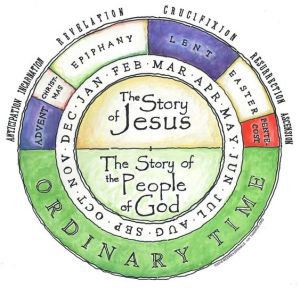
The Church Calendar
The season of Epiphany has arrived and in the midst of all this heartbreak, I am gaining a new appreciation for this middle space between Christmas and Lent. This week, I stumbled on a great line from the Christian Celtic tradition that offers fresh insight into Epiphany: “Heaven and Earth are only three feet apart, but in thin places that distance is even shorter.” Thin places represent locations where the boundary between the earthly and divine in our lives is exceptionally “thin” — moments of insight, experiences, perhaps locations. My hope for all of us is that we are open to the thin places we encounter in the days and weeks ahead.
As always, thank you for visiting this venue again this week. You are helping me grow in my understanding of scripture! I encourage you to work through the readings deliberately — and a reminder to utilize the four-question technique: What is something new I learned? What is something that made me stop and reflect? What is something I can connect to prior knowledge from scripture? And, what is something that I would like to further discuss? My reflection will focus on the powerful story from Luke’s Gospel, with a reference to the Isaiah passage.
One other update: I now have archived the blog in a more organized fashion. You can check that out on the Faithful Conversations homepage!
Readings for the Baptism of our Lord
Isaiah 43: 1-7
Psalm 29
Acts 8: 14-17
Luke 3: 15-17, 21-22
Common Themes in the Readings for the Baptism of our Lord
Look for the following themes in the readings for next Sunday: God’s reassurance and presence, the transformative power of the Holy Spirit, and the affirmation of Jesus’ divine identity. In Isaiah 43:1-7, God reassures His people of His presence and protection, calling them by name. Psalm 29 highlights God’s powerful voice and presence in nature, emphasizing His glory and strength. Acts 8:14-17 and Luke 3:15-17, 21-22 both focus on the transformative power of the Holy Spirit, with the latter recounting the moment when the Holy Spirit descends upon Jesus during His baptism, affirming His divine sonship.
The First Reading: Isaiah 43: 1-7
But now thus says the Lord,
he who created you, O Jacob,
he who formed you, O Israel:
Do not fear, for I have redeemed you;
I have called you by name; you are mine.
2 When you pass through the waters, I will be with you,
and through the rivers, they shall not overwhelm you;
when you walk through fire you shall not be burned,
and the flame shall not consume you.
3 For I am the Lord your God,
the Holy One of Israel, your Savior.
I give Egypt as your ransom,
Cush and Seba in exchange for you.
4 Because you are precious in my sight
and honored and I love you,
I give people in return for you,
nations in exchange for your life.
5 Do not fear, for I am with you;
I will bring your offspring from the east,
and from the west I will gather you;
6 I will say to the north, “Give them up,”
and to the south, “Do not withhold;
bring my sons from far away
and my daughters from the end of the earth—
7 everyone who is called by my name,
whom I created for my glory,
whom I formed and made.”
** Prior to reading the Gospel, you may want to utilize another excellent introduction to the book. Again, these are part of a terrific website called The Bible Project!
The Gospel: Luke 3: 15-17, 21-22: The Baptism of Jesus
15 As the people were filled with expectation and all were questioning in their hearts concerning John, whether he might be the Messiah, 16 John answered all of them by saying, “I baptize you with water, but one who is more powerful than I is coming; I am not worthy to untie the strap of his sandals. He will baptize you with the Holy Spirit and fire. 17 His winnowing fork is in his hand to clear his threshing floor and to gather the wheat into his granary, but the chaff he will burn with unquenchable fire.” 18 So with many other exhortations he proclaimed the good news to the people. 19 But Herod the ruler, who had been rebuked by him because of Herodias, his brother’s wife, and because of all the evil things that Herod had done, 20 added to them all by shutting up John in prison.
21 Now when all the people were baptized and when Jesus also had been baptized and was praying, the heaven was opened, 22 and the Holy Spirit descended upon him in bodily form like a dove. And a voice came from heaven, “You are my Son, the Beloved; with you I am well pleased.”
reflection: “i have called you by name”

The Baptism of Christ by Poussin (1594-1665)
The past few weeks have been a whirlwind, and the transitions can seem abrupt. We saw Jesus’ birth, the Magi visiting him as a young child, his family’s escape to Egypt, and the unusual event of twelve-year-old Jesus talking with the elders in the Temple, much to his worried parents’ dismay. This week, we find ourselves by the Jordan River, witnessing John the Baptist baptizing this relatively unknown thirty-year-old Jewish man.
The significant and powerful story of Jesus’ baptism is found in the three Synoptic Gospels: Matthew (3:13-17), Mark (1:9-11), and Luke (3:21-22). And though the Gospel of John (1:29-34) does not provide a direct account of Jesus’ baptism, it includes John the Baptist’s testimony about the event, affirming Jesus as the Son of God and the Lamb of God who takes away the sin of the world. This transcendent story prompts two questions for me. First, why did Jesus, the Son of God and one who was without sin, need to be baptized? And second, how should we interpret his baptism on the world of 2025?

The Face of Jesus (using AI)
Let’s start here. Neither John nor Jesus invented baptism. For centuries, Jews practiced it as a ritual similar to our Confession. Before the Temple fell in 70 CE, Jewish people commonly used a special pool called a Mikveh, meaning “collection of water,” for spiritual cleansing and removing impurity and sin. In other words, that crowd at the Jordan River that day would not have been unfamiliar with what John was doing. What was so earth-shaking, however, was the fact that Jesus, the Son of God, joined the people in line that day. As Episcopal theologian Debi Thomas so aptly states in her exploration of this story, ” . . . it is first and foremost a story of the sacred ordinary. That is, it’s a story of profound humility. The holy child conceived of the Holy Spirit, celebrated by angels, worshiped by shepherds, and feared by Herod, stands in the same muddy water we stand in. The Messiah’s first public act is a declaration of solidarity. God is one of us.
God is one of us. Let that sink in for a moment. In this deeply symbolic moment, Jesus aligns with us. And in one of the most remarkable episodes in this grand story, God speaks, and the Holy Spirit descends (verse 22). Thus begins the remarkable three-year ministry of Jesus Christ.

Martin Luther
(1483-1546)
What should we make of all this two thousand years later? In his commentary on the baptism of Christ, Martin Luther included this observation: “All this has been done to the honor and praise of the sacrament of Holy Baptism. For it is not a human work, but a great and holy thing. There are great persons connected with it; the Father, who gives and speaks here; the Son, who receives and is baptized; the Holy Ghost, who descends upon the Son, and lets himself be seen in the form of a dove; and no doubt the heavenly choir of the holy angels are there also, who rejoice greatly over this work; for where the Father, Son and Holy Ghost permit themselves to be seen, there the whole host of heaven must also be present. The whole heaven also stands wide open.”

The Sacrament of Holy Baptism
ELC in Black River Falls
Luther reminds us that baptism is important, that baptism symbolizes rebirth, that at that climactic moment that is part of our rite of baptism — that as children of God, we have been sealed by the Holy Spirit and marked with the cross of Christ forever. Perhaps that moment that we have witnessed so many times — that often brings tears to our eyes — is what the Celts meant when they talked about “thin places,” when heaven and earth are joined. The words from Isaiah 43 come to mind: Do not fear, for I have redeemed you; I have called you by name; you are mine.
join us for some in-person discussion of the Lectionary on sunday at 10:45 in the elc library — All are welcome! We meet until roughly 11:30.
And, a reminder: the bonhoeffer book study!

Dietrich Bonhoeffer
(1906-1945)
Dietrich Bonhoeffer’s classic, The Cost of Discipleship, is an excellent book for Christians to read heading into 2025! Yes, it is a challenging read, but we will explore together! Realize that you will not be put on the spot to read, and any sharing will be entirely voluntary! No prior knowledge is necessary — just a willing heart. Why is his life and message important in our Lutheran tradition?
We have ordered several copies of the book and also hope that many will purchase it for themselves. Our intention is to do a five-session study beginning on Wednesday 29 January and continuing for each Sunday in February. Contact me if you have questions!
