Faithful Conversations #100
Introduction to readers

Thomas Wolfe
(1900-1938)
“You can’t go back home to your family, back home to your childhood … back home to a young man’s dreams of glory and of fame … back home to places in the country, back home to the old forms and systems of things which once seemed everlasting, but which are changing all the time – back home to the escapes of Time and Memory.”
Lodged somewhere in our memory, is the place we consider our hometown. Having lived in three places growing up, I have always been a bit divided on that. The passage cited above comes from Thomas Wolfe’s novel You Can’t Go Home Again, published posthumously in 1940. Wolfe explores the idea that returning to the past, whether it’s to family, childhood, dreams, or familiar places, is impossible because everything is constantly changing. It’s a poignant reflection on the inevitability of change and the passage of time. This week’s Gospel story of Jesus returning to his hometown of Nazareth and the synagogue of his youth brought to mind Wolfe’s commentary and prompts us to consider this very human and complicated moment in Christ’s journey. I will explore that episode in my reflections this week (we will get part two of the story next week!).
And some history on the radar this week. On Monday, of course, we will witness the second inauguration of Donald J. Trump as POTUS #47, only the second President in our history to serve disjointed terms (he joins Grover Cleveland with that distinction). Monday is also MLK Day, a federal holiday commemorating the life of Martin Luther King Jr., born on 15 January 1929. In 1967, a year before he was murdered at age 39, King authored, Where Do We Go From Here? Chaos or Community, in which he said these remarkably prophetic words: This is the great new problem of mankind. We have inherited a large house, a great world house in which we have to live together black and white, Easterner and Westerner, Gentile and Jew, Catholic and Protestant, Moslem and Hindu — a family unduly separated in ideas, culture and interest, who, because we can never again live apart, must learn somehow to live with each other in peace. However deeply American Negroes are caught in the struggle to be at last at home in our homeland of the United Sates, we cannot ignore the larger world house in which we are also dwellers. Equality with whites will not solve the problems of either whites or Negroes if it means equality in a world society stricken by poverty and a universe doomed to extinction by war. All inhabitants of the globe are now neighbors.
 Finally, 2025 marks the 1,700th anniversary of the Council of Nicaea (325 CE), held in the ancient city of Nicaea, (today within the city of İznik in Turkey). This council was called by Roman Emperor Constantine to resolve theological disputes about Jesus Christ and who he was, exactly. The Nicene Creed, one of the three ecumenical creeds, emerged from this council and is a statement of faith honored in the ELCA. (More on this in the prayer reflection below). As always, thanks for navigating this space again this week! The discipline of the Lectionary is a process that helps us make sense of the scriptures. Be patient and trust the process!
Readings for 3 Epiphany
Nehemiah 8: 1-3, 5-6, 8-10
Psalm 19
1 Corinthians 12: 12-31a
Luke 4: 14-21
Common Themes in the Readings for 3 Epiphany
Look for the following themes as you work your way through this week’s readings: spiritual renewal, unity, and the power of God’s word. In Nehemiah, the people gather to listen to the reading of the law, emphasizing the transformative power of Scripture to restore and strengthen the community. Psalm 19 speaks to the glory of God’s creation and the life-giving nature of God’s teachings. The passages from 1 Corinthians builds on the reading from last week, further emphasizing the unity of believers in the body of Christ. Finally, Jesus’ return to his hometown in Luke 4 connects to the Nehemiah passage, further solidifying the mission of Jesus, illustrating how God’s call for justice, healing, and salvation is central to both personal and communal life.
The Gospel: Luke 4: 14-21: The Beginning of the Galilean Ministry
14 Then Jesus, in the power of the Spirit, returned to Galilee, and a report about him spread through all the surrounding region. 15 He began to teach in their synagogues and was praised by everyone.16 When he came to Nazareth, where he had been brought up, he went to the synagogue on the Sabbath day, as was his custom. He stood up to read, 17 and the scroll of the prophet Isaiah was given to him. He unrolled the scroll and found the place where it was written:
18 “The Spirit of the Lord is upon me,
because he has anointed me
to bring good news to the poor.
He has sent me to proclaim release to the captives
and recovery of sight to the blind,
to set free those who are oppressed,
19 to proclaim the year of the Lord’s favor.”
20 And he rolled up the scroll, gave it back to the attendant, and sat down. The eyes of all in the synagogue were fixed on him. 21 Then he began to say to them, “Today this scripture has been fulfilled in your hearing.”
reflection: “Jesus, the annointed one”

“Jesus Unrolls the Book”
James Tissot (1836-1902)
Luke’s dramatic account of a brief synagogue encounter offers us yet another epiphany moment in the Jesus narrative. We left Luke’s chronology two weeks ago with the baptism of Jesus. The precursor to this week’s Gospel is the forty days Jesus spent in the wilderness (Luke 4: 1-14). We learn that he fasted for the entire time (he was famished!) and had a series of encounters with Satan who mercilessly tempted him. It’s at that point that Jesus returns to Galilee (verse 14) and news about him spreads through the whole countryside. He teaches in synagogues, and everyone praises him (verse 15). He goes to Nazareth, his hometown, and reads from the scroll of the prophet Isaiah in the synagogue, proclaiming a passage that speaks of the anointed one bringing good news to the poor and oppressed. After reading, he declares to the astonished listeners that this scripture is fulfilled in their hearing, revealing himself as the Messiah. The story abruptly ends there but has a significant sequel that we will walk through next week.
What should we take away from this revelatory moment in Jesus’ ministry? Several things come to mind. First, there is a lot of buzz surrounding this young holy man, but the question was in the air: who exactly is this guy? (A central question addressed in the Nicene Creed). Jesus reads from Isaiah 61, explicitly linking his actions and purpose to the prophecies of old. Jesus claims to be the long-awaited Messiah and that his arrival marks the fulfillment of God’s promise to his people. Further, the Isaiah reference reminds me of the power of scripture in our traditions and also brings to mind the Magnificat, Mary’s glorious prayer in response to her role in God’s plan. As Jesus stood in this familiar place, absorbing all the memories of his earlier life, it seems perfectly plausible that he was emotionally connecting with his beautiful mother.
| Mary’s Song of Praise (Luke 1: 46-56) | Jesus’ Reference to Isaiah (Luke 4:18-19) |
| “My soul magnifies the Lord, 47 and my spirit rejoices in God my Savior, 48 for he has looked with favor on the lowly state of his servant. Surely from now on all generations will call me blessed, 49 for the Mighty One has done great things for me, and holy is his name; 50 indeed, his mercy is for those who fear him from generation to generation. 51 He has shown strength with his arm; he has scattered the proud in the imagination of their hearts. 52 He has brought down the powerful from their thrones and lifted up the lowly; 53 he has filled the hungry with good things and sent the rich away empty. 54 He has come to the aid of his child Israel, in remembrance of his mercy, 55 according to the promise he made to our ancestors, to Abraham and to his descendants forever.” |
“The Spirit of the Lord is upon me, because he has anointed me to bring good news to the poor. He has sent me to proclaim release to the captives and recovery of sight to the blind, to set free those who are oppressed, 19 to proclaim the year of the Lord’s favor.” |
Second, Jesus captures the essence of his mission in this brief exchange — to bring good news to the poor, proclaim release to captives, recovery of sight to the blind, and setting the oppressed free — clear reminders for us when we get tangled up on what the church should be up to in 2025!
Finally, as mentioned earlier, we are only getting part of the story of Jesus’ homecoming this week, and we know that rejection is just around the corner. We must assume that he understood what was coming, and that brings a hint of sadness into the picture. In a beautifully written essay commenting on this synagogue moment, Pastor Charisee Tucker of St. Paul’s Baptist Church in Philadelphia makes the following observation:
Sometimes home is a place. Sometimes home is a people. Sometimes home has no walls or rooms but holds dreams and imaginings of who we are becoming. For Jesus, as he steps up to read the scroll, home becomes a place of clarity. It isn’t just that he sees the people; he sees himself. And he has the courage and conviction to make what he sees clear as he utters the words, “The Spirt of the Lord is upon me.” When we come home and come home to ourselves, we can see things as they are, for better or worse. For Jesus this means seeing his mission, his community, and even the ways that he no longer follows the expected script of the place from which he came. For us maybe it is allowing what we see in our family, our community or maybe our country to affect us in ways that bring forth clarity and care and transformation.
These are good words for us to hear on a cold January day.
For all Christian Churches and Faith Communities, that they may continue to show one another extraordinary kindness in guiding them towards reconciliation and unity in Christ…
For church leaders everywhere during this Week of Prayer for Christian Unity, that they may work together and promote unity among Christians …
For the Church, that God would inspire God’s people to continue the quest for Christian Unity and that our hearts be filled with the gift of Jesus’ love for all …
For those who participate in the works of ecumenism and interreligious dialogue, that they always treat one another with extraordinary kindness seeking the unity that is found in Christ and a true openness to the giftedness found in each other. Amen.
Source: Graymoor Ecumenical and Interreligious Institute
And, a musical offering this week in honor of mlk
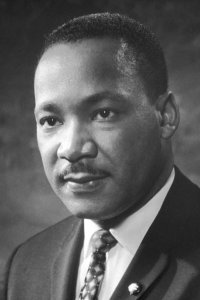
Martin Luther King, Jr.
(1929-1968)
In keeping with the theme this week, formative years remind us of home, and music often provides the soundtrack. Peter, Paul, and Mary were part of that soundtrack for me growing up. (Sidebar: Mary Beth and I saw the Dylan film currently in the theaters, which brought the 1960s alive). The death of Peter Yaro in recent days at age 86 is a reminder of the passage of time (Mary died in 2009). The iconic March on Washington (August of 1963) was a pivotal moment in our history that brought together many people and impulses worth revisiting. Among other things, Peter, Paul and Mary performed the classic Bob Dylan song that day. Enjoy!
join us for some in-person discussion of the Lectionary on sunday at 10:45 in the elc library — All are welcome! We meet until roughly 11:30. Note: we will not meet on 26 january due to ELC’s annual meeting!
a reminder: the bonhoeffer book study!

Dietrich Bonhoeffer
(1906-1945)
