Faithful Conversations #101
Introduction to readers
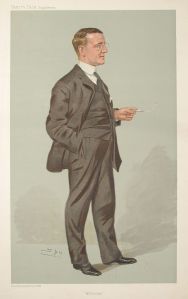
Finley Peter Dunne
(1867-1936)
Vanity Fair, 27 July 1905
The preacher’s role is to comfort the afflicted and afflict the comfortable. This saying was one of my father’s favorites and has been on my mind while exploring Sunday’s gospel reading from Luke. I found out that muckraking journalist Finley Peter Dunne, who created the character “Mr. Dooley,” often gets credit for this paradoxical phrase. His original quote was, The job of the newspaper is to comfort the afflicted and afflict the comfortable, which has since been adapted to other contexts, including sermons. Let’s think about those key words. Afflict comes from a Latin meaning “to knock down causing pain or distress,” while comfort also has Latin roots, via Old French, meaning “to strengthen greatly and provide relief from distress.” This dual role is the delicate balance that preachers must maintain. As a sidebar, I would add that as I have been exploring the life and writings of Dietrich Bonhoeffer in recent weeks, I have felt both afflicted and comforted, so there’s that. More on that later in the blog.
Thanks for your visit to this space again this week! My reflections will focus on the story of Jesus’ return to Nazareth at the start of his ministry (a continuation from last week), with references to 1 Corinthians 13. In addition, starting this week and continuing for four weeks, I will be including information related to Dietrich Bonhoeffer’s book, The Cost of Discipleship, corresponding to a study we are doing at ELC in February.
Finally, a quick word regarding an excellent resource I stumbled on this week. It is simply called BIBLE APP and has some great features — a good reminder of the proliferation of sites available to us in 2025! You might find it useful.
(Also of note: Sunday marks the day on our church calendar known as the Presentation of Our Lord, and an alternative set of readings are assigned for that commemoration (Malachi 3: 1-4, Psalm 84, Hebrews 2: 14-18, and Luke 2: 22-40). Here is information regarding that, for your interest).
Readings for 4 Epiphany
Jeremiah 4: 1-10
Psalm 71: 1-6
1 Corinthians 13: 1-13
Luke 4: 21-30
Common Themes in the Readings for 4 Epiphany
The key themes in the readings for the 4th Sunday after Epiphany revolve around trust, love, and God’s unwavering support. Jeremiah 1:4-10 emphasizes God’s call and equipping for service, highlighting that our perceived inadequacies can be overcome through divine empowerment. Psalm 71:1-6 speaks to God’s consistent presence and protection, encouraging believers to place their trust in God throughout their lives. 1 Corinthians 13:1-13 underscores the centrality of love in all actions and relationships, identifying love as the essential expression of faith in practice. In Luke 4:21-30, Jesus’ message of liberation and inclusion challenges believers to embody these values in their lives, even in the face of opposition and rejection, demonstrating that practical theology calls for active and compassionate engagement with the world.
The Second Reading: 1 Corinthians 13: 1-13: The Gift of Love
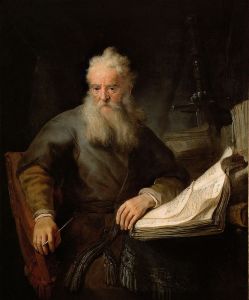
Saint Paul
Rembrandt (1606-1669)
If I speak in the tongues of humans and of angels but do not have love, I am a noisy gong or a clanging cymbal. 2 And if I have prophetic powers and understand all mysteries and all knowledge and if I have all faith so as to remove mountains but do not have love, I am nothing. 3 If I give away all my possessions and if I hand over my body so that I may boast but do not have love, I gain nothing. 4 Love is patient; love is kind; love is not envious or boastful or arrogant 5 or rude. It does not insist on its own way; it is not irritable; it keeps no record of wrongs; 6 it does not rejoice in wrongdoing but rejoices in the truth. 7 It bears all things, believes all things, hopes all things, endures all things. 8 Love never ends. But as for prophecies, they will come to an end; as for tongues, they will cease; as for knowledge, it will come to an end. 9 For we know only in part, and we prophesy only in part, 10 but when the complete comes, the partial will come to an end. 11 When I was a child, I spoke like a child, I thought like a child, I reasoned like a child. When I became an adult, I put an end to childish ways. 12 For now we see only a reflection, as in a mirror, but then we will see face to face. Now I know only in part; then I will know fully, even as I have been fully known. 13 And now faith, hope, and love remain, these three, and the greatest of these is love.
The Gospel: Luke 4: 21-30: The Rejection of Jesus in Nazareth
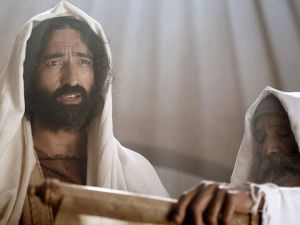
Jesus Reads from Isaiah
21 Then he began to say to them, “Today this scripture has been fulfilled in your hearing.” 22 All spoke well of him and were amazed at the gracious words that came from his mouth. They said, “Is this not Joseph’s son?” 23 He said to them, “Doubtless you will quote to me this proverb, ‘Doctor, cure yourself!’ And you will say, ‘Do here also in your hometown the things that we have heard you did at Capernaum.’ ” 24 And he said, “Truly I tell you, no prophet is accepted in his hometown. 25 But the truth is, there were many widows in Israel in the time of Elijah, when the heaven was shut up three years and six months and there was a severe famine over all the land, 26 yet Elijah was sent to none of them except to a widow at Zarephath in Sidon. 27 There were also many with a skin disease in Israel in the time of the prophet Elisha, and none of them was cleansed except Naaman the Syrian.” 28 When they heard this, all in the synagogue were filled with rage. 29 They got up, drove him out of the town, and led him to the brow of the hill on which their town was built, so that they might hurl him off the cliff. 30 But he passed through the midst of them and went on his way.
reflection: “the greatest of these is love”
Verse 21 of Luke 4 is a bridge from the first part of this story from last week. Here’s a quick summary: Jesus is in the synagogue in Nazareth, his hometown. He reads from the scroll of Isaiah and declares that the scripture is fulfilled in their hearing, suggesting that he is the anointed one spoken of by Jewish prophets. At first, the people are amazed at his words. However, when Jesus goes on to remind them that prophets are often rejected in their own hometowns and mentions examples of prophets helping non-Israelites — the widow at Zarephath in Sidon and Naaman the Syrian — the crowd becomes furious. They drive him out of the town and try to throw him off a cliff, but he walks through the crowd and goes on his way.

Jesus’ Rejection in Nazareth
What can we learn from this dramatic shift? The crowd quickly goes from being amazed by Jesus to outright anger. Jesus challenges their understanding of WHO he is, and WHO he came to save, relevant questions for those on the Christian journey. Throughout history, it seems, our Lord has been a Rorschach Test, revealing more about people’s perceptions than the object of observation. Is Jesus a prophet, savior of mankind, friend to sinners, advocate for the poor, political revolutionary, or charlatan? Certainly, our view of Christ often reflects what we want to see in him. It seems to me, we often want a sanitized version of Jesus, one that makes US “feel good.” When Jesus talked about freeing captives and helping the oppressed, his Nazareth friends assumed he meant THEM. But when he included the “others” — downcast outsiders — it angered them so much — took them so far outside their comfort zone — they nearly killed him right then and there! Let that sink in. What a moment. And, as he walked through the awestruck crowd that day, may we be reminded of the depth of his love for humanity — a love astutely described by Paul in 1 Corinthians. We cannot grasp it fully in this life, but we have the assurance that one day we will.
** Note: Monday 27 January is International Holocaust Remembrance Day. It was on this day 80 years that Auschwitz was liberated. In honor of that, I offer this beautiful prayer from the pen of Dietrich Bonhoeffer.
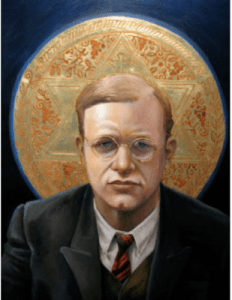
Dietrich Bonhoeffer
(1906-1945)
O God, early in the morning I cry to you. Help me to pray and to think about you. I cannot do it alone. In me there is darkness, but with you there is light. I am lonely, but you do not leave me. I am feeble in heart, but with you there is help. I am restless, but with you there is peace. In me there is bitterness, but with you there is patience. I do not understand your ways, but you know the way for me. Restore me to liberty and enable me to live now that I may answer before you and before men. Lord, whatever this day may bring, your name be praised. Amen.
(Dietrich Bonhoeffer. Letters and Papers From Prison. 1951)
a reminder: the bonhoeffer book study!
Over the next several weeks, some of us will be navigating through a five-session book study on Dietrich Bonhoeffer’s 1937 classic, The Cost of Discipleship. Our initial meeting will be this coming Wednesday (29 January) from 6:00-7:30 at ELC, followed by Sessions 2-5 during the four Sundays in February following worship at ELC (10:45-11:45).
The guiding questions for our study are these:
-
Who was Dietrich Bonhoeffer?
-
Why is he significant in the tradition of Lutheranism?
-
How does Bonhoeffer challenge us in 2025? What can we learn from him?
In our introductory meeting, we will explore the context of Bonhoeffer’s book. I will offer historical background on Bonhoeffer, the rise of Hitler and Nazism in the 1920s and 30s, and more specifically, Bonhoeffer’s theological influences and decision to resist German government authorities in 1933 and beyond. Further, we will discuss an approach to the reading and the schedule for the sessions to follow.
All are welcome and no prior knowledge of Bonhoeffer (or his book) are necessary! If you have questions, please contact me (pstrykken@gmail.com or 715-299-0311).
