Faithful Conversations #102
Introduction to readers

L.P. Hartley (1895-1972)
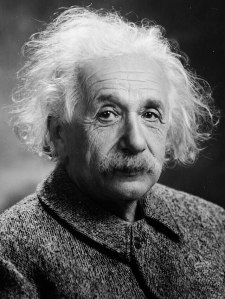
Albert Einstein
1879-1955
Let me start with two streams of thought this week. First, Paul’s commentary from 1 Corinthians 15 reminded me of the importance of context when reading scriptures (more on that in my reflections). When approaching history with my students, I emphasize that the past informs the present, just as the present informs the future, something we experience on a daily basis. Einstein said it best: “The distinction between the past, present, and future is only a stubbornly persistent illusion.” On the other hand, it’s important to recognize that our ancestors lived in a VERY different world from ours, and there are no perfect analogies from past to present. One of my favorite quotes regarding this comes from novelist L.P. Hartley: “The past is a foreign country; they do things differently there.” Our task is to balance these competing notions of history with discernment.
Second, the reading from Isaiah 6 reminded me of a Bonhoeffer quote: “We must be ready to allow ourselves to be interrupted by God.” In that reading, we see God interrupting Isaiah! On Sunday in our book study, we discussed cheap vs. costly grace and faith practices (think prayer, reading the scriptures, worship). Rollie Lee mentioned Romans 10:17: “So faith comes from what is heard, and what is heard comes through the word of Christ.” Participating in community worship puts us in a position to hear the word. In a busy world — a world constantly vying for our attention — we must avail ourselves to be interrupted by God.
Thanks for visiting this space again this week and your continued interest in exploring the scriptures. It will be Ash Wednesday (5 March) before we know it — hard to believe! My reflections this week will focus on the 1 Corinthians passage, with a musical prayer reflection.
Readings for 5 Epiphany
Isaiah 6: 1-8 (9-13)
Psalm 138
1 Corinthians 15: 1-11
Luke 5: 1-11
Common Themes in the Readings for 5 Epiphany
Look for these two themes in this week’s set of readings: the transformative power of God’s call and the human response to divine revelation. In Isaiah 6:1-8, the prophet Isaiah is overwhelmed by a vision of God’s majesty and readily accepts his prophetic mission despite his own sense of unworthiness. Psalm 138 is a song of thanksgiving that acknowledges God’s faithfulness and readiness to answer those who call upon Him. In 1 Corinthians 15:1-11, Paul reminds the Corinthians of the resurrection of Christ and the grace that has transformed him from a persecutor of Christians to an apostle. Similarly, in Luke 5:1-11, Simon Peter responds to Jesus’ miraculous provision by leaving everything to follow Him, despite feeling unworthy. Together, these passages highlight the awe-inspiring nature of encountering God, the acknowledgment of personal inadequacy, and the transformative impact of responding to God’s call with faith and obedience.
The Second Reading: 1 Corinthians 15: 1-11: The Resurrection of Christ
15 Now I want you to understand, brothers and sisters, the good news that I proclaimed to you, which you in turn received, in which also you stand, 2 through which also you are being saved, if you hold firmly to the message that I proclaimed to you—unless you have come to believe in vain. 3 For I handed on to you as of first importance what I in turn had received: that Christ died for our sins in accordance with the scriptures 4 and that he was buried and that he was raised on the third day in accordance with the scriptures 5 and that he appeared to Cephas, then to the twelve. 6 Then he appeared to more than five hundred brothers and sisters at one time, most of whom are still alive, though some have died. 7 Then he appeared to James, then to all the apostles. 8 Last of all, as to one untimely born, he appeared also to me. 9 For I am the least of the apostles, unfit to be called an apostle, because I persecuted the church of God. 10 But by the grace of God I am what I am, and his grace toward me has not been in vain. On the contrary, I worked harder than any of them, though it was not I but the grace of God that is with me. 11 Whether then it was I or they, so we proclaim and so you believed.
reflection: “The past isn’t dead, it isn’t even past”

Temple of Apollo
Ancient Corinth
Ancient Corinth was a cosmopolitan and economically powerful city that included a diverse mix of cultures, ideas, and religions. Such an atmosphere fostered great debates regarding social justice, equality, and personal freedoms, not unlike the kinds of arguments that drive our political culture today. Various religious groups, of course, were caught up in those debates. Picture large and imposing temples to ancient gods sprinkled throughout the city. It was into that environment that Paul brought the message we read this week.
At the core of the Christian gospel, as theologian Carla Works asserts, “lies a scandalous claim: The ancient God of Israel raised Jesus — a first century Jew — from the dead.” That singular event has always been a tough sell to those outside the faith. Thomas Jefferson, for example, could not accept that notion. He and millions of others across time, have argued that following Jesus as a moral exemplar is a good thing, but the resurrection is a step too far. I suspect that there were many within the Corinthian church, especially those with non-Jewish background, that simply could not wrap their heads around a Jewish peasant from the boondocks of the empire being brought back to life.
Paul, then, is addressing these doubts. In verses 3-9 of his letter, he offers clear and convincing evidence of the resurrection. People saw Jesus! Peter, the twelve disciples, then a crowd of 500, then James — they all saw him. Finally, Paul himself saw the post-resurrection Jesus (verse 8) — at least, that is his claim. Interestingly, he feels unworthy due to his pre-conversion life as persecutor of Christians. We get autobiographical material from Paul seven times in the New Testament (see Acts 9:1–2, 22:3–5, 26:9–11, 1 Corinthians 15:9–11, Galatians 1:9–11, Ephesians 3:8, and 1 Timothy 1:12–17). We learn that he imprisoned Christians, favored their executions (think Stephen), and fought hard against the “people of the way.” He clearly experienced a radical change!
What are the takeaways in this account? These things come to mind. We’re getting one of the very first versions of the gospel in this reading today. Realize that Paul’s letter predated Matthew, Mark, Luke, and John. In Paul’s bold message to these early Corinthians, he got right to the point. Let’s try and imagine these early discussions among believers. They lived in a dynamic and complex world and faced all the temptations we face. This intense Greek zealot gave it to them straight — our faith is predicated on the life, death, and resurrection of Jesus Christ. And, we have much in common with Paul. His epiphany moment came on the road to Damascus, and it radically changed his life. Like Paul, we may feel unworthy, but once we have experienced God, our lives are transformed. This is good news!
Soli Deo Gloria!

Carla Works
Wesley Theological Seminary
** Note: My reflections this week were inspired by Dr. Carla Works’ reflection on the passage. She is a Professor of New Testament at Wesley Theological Seminary in Washington, D.C.

Prairie Church
“The Old Church leans nearby a well worn road
update: the bonhoeffer book study!

Dietrich Bonhoeffer
(1906-1945)
We have completed two (of five) sessions of our book study. Thanks to the 28 adult learners who are taking this on! Here is a link to an excellent article about Bonhoeffer and his challenge for contemporary Lutheranism! I commend it to your reading, if interested in learning more about this famous figure in Lutheran history.
We will meet on Sunday 9 February from 10:50-11:50 in the ELC Sanctuary!
