Faithful Conversations #113
Introduction to Readers
“Enough! the Resurrection, A heart’s-clarion! Away grief’s gasping, joyless days, dejection. Across my foundering deck shone, A beacon, an eternal beam.” (Gerard Manley Hopkins, SJ)

We can see it all around us if we’re willing to look at it. In 2023, U.S. Surgeon General Vivek Murthy highlighted loneliness and social isolation as a significant public health crisis, affecting nearly half of U.S. adults (even before the COVID-19 pandemic). Let that sink in. And it is cross-generational. Spend any amount of time with young people in our schools, and you will see its insidious nature. In an extensive report, Murthy called for a national strategy to rebuild social connections, including an active role by communities of faith, viewing relationships as essential for individual and societal well-being.
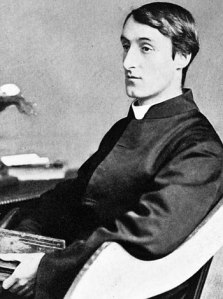
Though a somber note to open this week’s blog, the loneliness epidemic has been on my mind throughout our recent Lenten journey and reminds us that we live in a broken and impermanent world. A year before his untimely death in 1888, Jesuit Priest Gerard Manley Hopkins (1844-1889) penned a verse — That Nature Is a Heraclitean Fire and of the Comfort of the Resurrection — that explored the banishing grief produced by the world’s impermanence (“joyless days”). Though written long ago, his words speak to our time. And, the antidote to hopelessness? The transformative power of Christ’s resurrection (“a beacon, an eternal beam”). If ever our world needs to hear the story of Jesus Christ and his powerful love for the outcast, afflicted, and weary brothers and sisters in our midst, this is it. As Christians, we have much work to do.
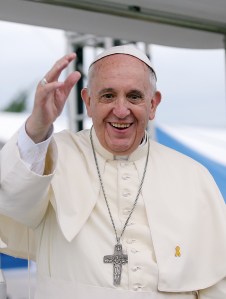
Thanks for visiting this space again this week! We have reached that phase in our liturgical calendar known as Eastertide — the 50 days between Easter Sunday and Pentecost. It begins with Easter celebrations of the resurrection and culminates in Pentecost, commemorating the descent of the Holy Spirit upon the apostles. We have several commemorations in our church calendar this week: Anselm, Bishop of Canterbury (d. 21 April 1109), Toyohiko Kagawa, renewer of society (d. 23 April 1960), and Mark, Evangelist (25 April). And, I have just learned about the death of Pope Francis. Born Jorge Mario Bergoglio in 1936, Francis was the first Pope from the Americas (Argentina) and southern hemisphere, and also the first Jesuit to hold the position. This quote from Francis’ captures his approach: “It is not enough to say we are Christians. We must live the faith, not only with our words, but with our actions.” It seems fitting that he journeyed across on Easter Monday. May God guard the soul of our Christian brother.
My reflections this week will focus on the story of Thomas as offered in John’s Gospel. I will also cite a wonderful prayer inspired by Thomas’ story. And I hope you will enjoy a choral piece from the Stellenbosch University Choir of South Africa.
Common Themes Among the Readings
2 Easter
Acts 5: 27-32
Psalm 118: 14-29
(or Psalm 150)
Revelation 1: 4-8
John 20: 19-31
Look for the convergence of the following themes as you explore the readings for 2 Easter: THE RESURRECTION, FAITH, and DIVINE AUTHORTY. In Acts 5:27-32, the apostles boldly proclaim Jesus’ resurrection despite opposition, highlighting obedience to God over human authority. Psalm 118:14-29 celebrates God’s salvation and steadfast love, portraying the rejected stone becoming the cornerstone. Revelation 1:4-8 and John 20:19-31 both affirm Jesus’ eternal power and presence, encouraging believers to trust in His victory over death.
Focus Passage: John 20: 19-31
19 When it was evening on that day, the first day of the week, and the doors were locked where the disciples were, for fear of the Jews, Jesus came and stood among them and said, “Peace be with you.” 20 After he said this, he showed them his hands and his side. Then the disciples rejoiced when they saw the Lord. 21 Jesus said to them again, “Peace be with you. As the Father has sent me, so I send you.” 22 When he had said this, he breathed on them and said to them, “Receive the Holy Spirit. 23 If you forgive the sins of any, they are forgiven them; if you retain the sins of any, they are retained.”
24 But Thomas (who was called the Twin), one of the twelve, was not with them when Jesus came. 25 So the other disciples told him, “We have seen the Lord.” But he said to them, “Unless I see the mark of the nails in his hands and put my finger in the mark of the nails and my hand in his side, I will not believe.”
26 A week later his disciples were again in the house, and Thomas was with them. Although the doors were shut, Jesus came and stood among them and said, “Peace be with you.” 27 Then he said to Thomas, “Put your finger here and see my hands. Reach out your hand and put it in my side. Do not doubt but believe.” 28 Thomas answered him, “My Lord and my God!” 29 Jesus said to him, “Have you believed because you have seen me? Blessed are those who have not seen and yet have come to believe.”
30 Now Jesus did many other signs in the presence of his disciples that are not written in this book. 31 But these are written so that you may continue to believe that Jesus is the Messiah, the Son of God, and that through believing you may have life in his name.
TRY LUTHER’S METHOD!
Luther’s Revision of the Lectio Divina
(Three Steps)
Oratio (Prayer): This is the starting point, where one humbly prays for the Holy Spirit’s guidance to understand God’s Word. Luther emphasized that prayer prepares the heart and mind to receive divine wisdom.
Meditatio (Meditation): This involves deeply engaging with Scripture, not just reading it but reflecting on it repeatedly. Luther encouraged believers to “chew on” the Word, allowing its meaning to sink in and shape their thoughts and actions.
Tentatio (Struggle): Often translated as “trial” or “temptation,” this refers to the challenges and spiritual battles that arise as one seeks to live according to God’s Word. Luther saw these struggles as a way God refines faith, making it more resilient and authentic.
Reflections: Faith Beyond Certainty
It is fascinating to consider that Christ appeared to many individuals and groups during the 40 days after His resurrection. Saint Paul provides a summary in 1 Corinthians 15:3-8, mentioning appearances to Peter (Cephas), the Twelve (including Thomas), over 500 people at once, James, all the apostles, and finally to Paul himself. The Gospels and Acts also record appearances to Mary Magdalene, the disciples on the road to Emmaus, and others.
Thomas’ post-resurrection encounter with Jesus (I’m not a fan of his nickname) is highlighted as the first Gospel message after Easter because it addresses a central theme of the Resurrection: faith in the unseen. Thomas initially doubts the testimony of the other disciples about Jesus’ resurrection. When Jesus appears to him, Thomas believes, exclaiming, “My Lord and my God!” Jesus responds, “Blessed are those who have not seen and yet have come to believe.” It’s a powerful encounter and appears only in John’s Gospel.
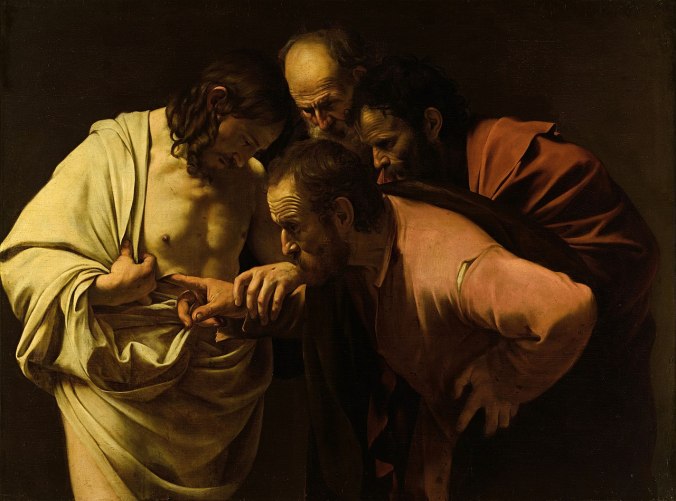

Before exploring its meaning, some quick context regarding Thomas. Saint Thomas, also called Didymus or “the Twin,” was one of Jesus’ twelve apostles. Some traditions link him to Matthew as a twin, and the Syrian Church even identifies him as Jesus’ twin. A fisherman by trade, he became a dedicated missionary and is believed to have traveled to India around 52 CE, specifically Kerala, where he founded Christian communities. He is also connected with regions like Parthia and Persia. Honored as a saint in many Christian traditions, Thomas is remembered on July 3rd in the ELCA. He is also the patron saint of architects and builders because of a legend tying him to constructing a church in India, the site where he was martyred in 72 CE. His story reflects a journey from doubt to unwavering belief, leaving a lasting legacy.
So, what should we take away from St. Thomas’ famous encounter with our Lord? His story is significant because it highlights the challenge of believing in the Resurrection without physical proof, something those first-generation Christians also wrestled with. Further, it reassures believers that faith, even when accompanied by doubt, is valid and blessed (reread verses 27-29). My sense is that Thomas has been stuck with a bad rap over the centuries (how many of us, for example, remember him because of the nickname?). Perhaps stemming from my upbringing — and the willingness of the ELCA to reflect on difficult questions over time — doubt seems a perfectly natural part of our faith journey.
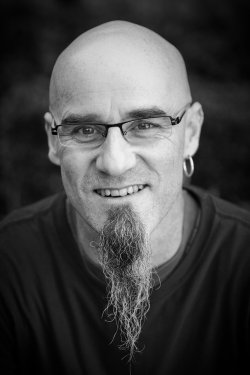
Sean Gladding, storyteller and pastor, has written a compelling commentary in a recent issue of The Christian Century on the subject of Thomas (April 2025, p. 31). Raised in a fundamentalist church, Gladding asserts that he ultimately left that tradition due to its insistence on “certainty” that often led to judgementalism and self-righteousness that seemed counter to the Jesus he came to know. Indeed, certainty often leaves no space for questioning or growth. As one who has now reached the elder stage of my Christian journey, I have learned this: faith thrives in the tension between knowing and not knowing, where doubt can serve as a catalyst for deeper belief rather than an obstacle. Doubt, in this interpretation, is not the enemy of faith but rather a companion in its journey—keeping faith humble, curious, and reliant on something greater. In embracing doubt as part of our faith journey, we honor the legacy of Saint Thomas—a reminder that belief deepens not through certainty, but through humility, curiosity, and the courageous trust in what cannot be seen.
Soli deo Gloria!
Prayer: A Door to Discovery
How strangely comforting, Lord,
That so many of your servants
Have doubted you.
So,
If I cannot always see the sense
Of your Word;
If I do not always feel confident
About my faith;
If I wonder where your love is
In the face of pain and death;
I am not the first.
A great company of saints and martyrs
Has felt this way before me.
Now, in your presence,
They see face to face
And know as they are known.
Teach me, like them,
Not so much to fear doubt
As to see it
As a sign of the mystery of life
And a door to discovery. Amen.
This poem is part of a series of worship resources posted on the Centre for MB Studies (CMBS) website (MB = Mennonite Brethren). In particular, the verse is several offered related to the story of Thomas’ encounter with the risen Lord and is drawn from The Church of Scotland’s website.
The Church of Scotland is Calvinist Presbyterian. Notably, the Evangelical Lutheran Church in America (ELCA) and the Presbyterian Church (USA) are in full communion with each other. This relationship was established in 1997 through an agreement called “A Formula of Agreement.” It means that the two denominations recognize each other’s ministries, share the Lord’s Supper, and collaborate in worship and mission while respecting their differences.
Musical Offering: Let My Love Be Heard (Jake Runestad)
Lyrics
Angels, where you soar
Up to God’s own light
Take my own lost bird
On your hearts tonight;
And as grief once more
Mounts to heaven and sings
Let my love be heard
Whispering in your wings
“Let My Love Be Heard” is a choral composition by Jake Runestad, commissioned for Choral Arts (Seattle) and the UMKC Conservatory Singers, conducted by Robert Bode.
The song explores themes of love, longing, and the desire for connection. It came to mind while reflecting on the “crisis of loneliness” among so many in our society today.
The Stellenbosch University Choir, founded in 1936, is South Africa’s oldest and most celebrated choir, renowned for its exceptional performances and diverse repertoire. Under the direction of André van der Merwe since 2003, the choir has achieved international acclaim, consistently ranking among the world’s top amateur choirs.
Update on “Faithful Conversations”
Join us on Sunday 27 April at 10:45 in the church library. We talk through the readings (some or all) in an informal setting — no prior preparation is necessary and all are welcome! Come and help us deepen our understanding of the readings!
And . . How about some “Doubting Thomas” humor?
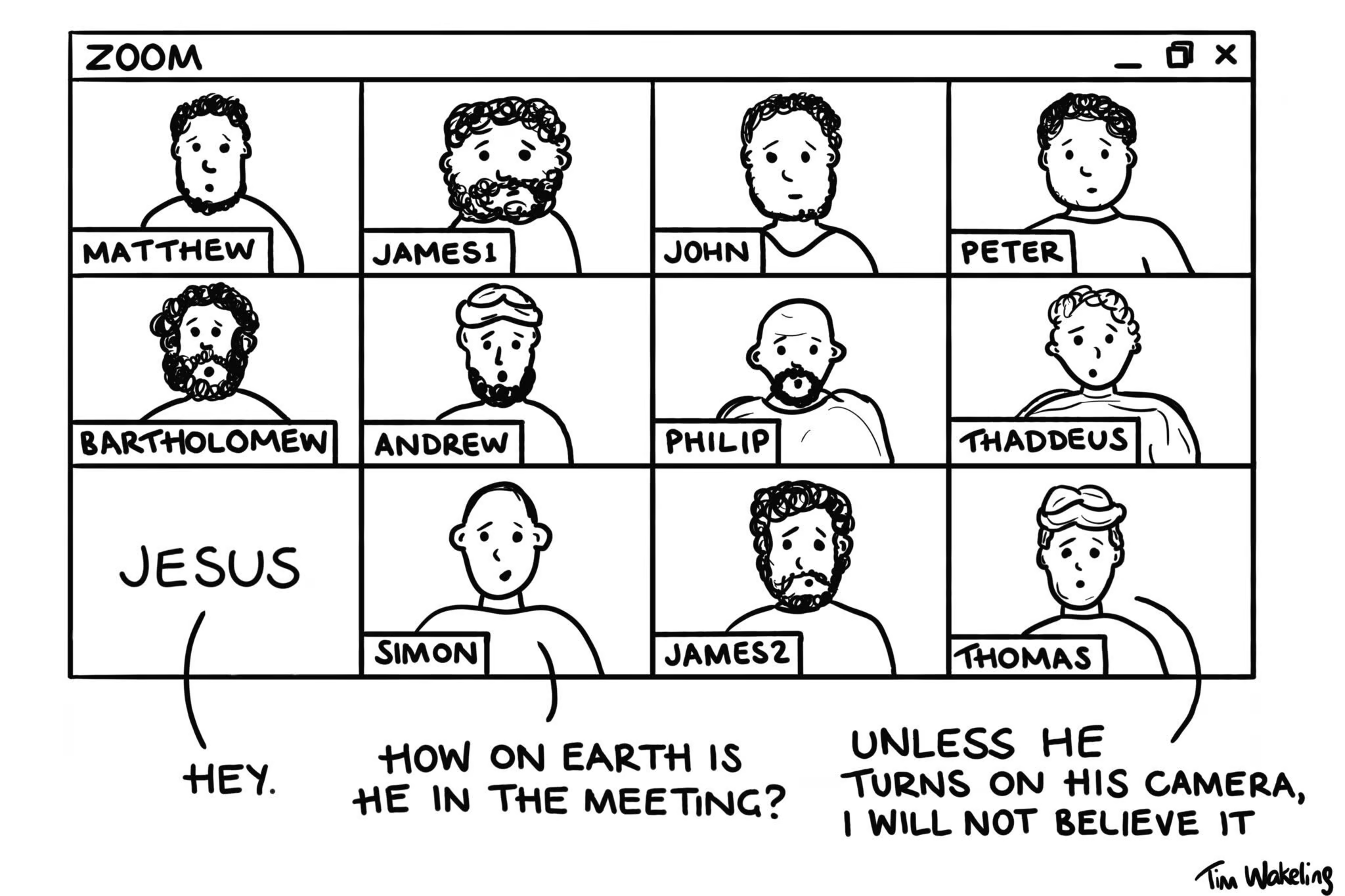
Tim Wakeling is a cartoonist who lives in Chester, England. His cartoons aim to be gently humorous, mostly positive, and entirely black and white.