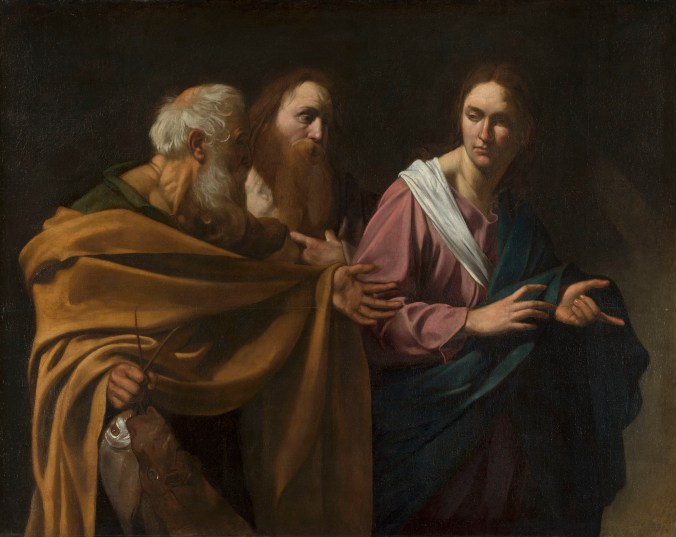
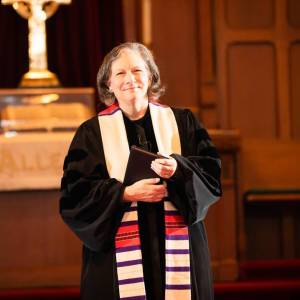
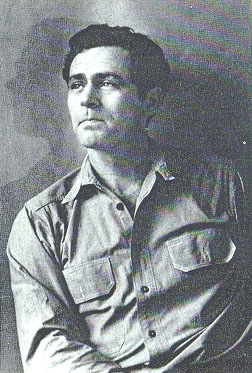
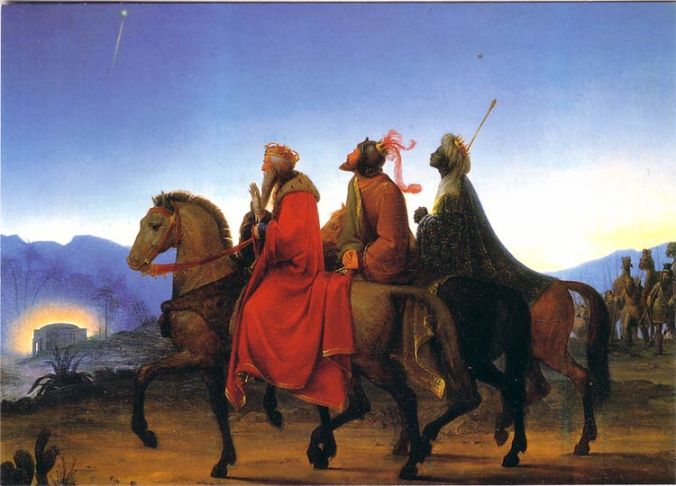
“Advent is the season of remembering, expecting, and waiting for the coming of Jesus into the world. But we cannot do so through the lens of historical or religious amnesia. Only when you begin to take into account the historical specificity of what leads to Advent are you truly able to understand the depth and breadth of this event. Only by remembering the history you might prefer to forget can you grapple with the wonder and beauty of the season.” (Dr. Yolanda Pierce)
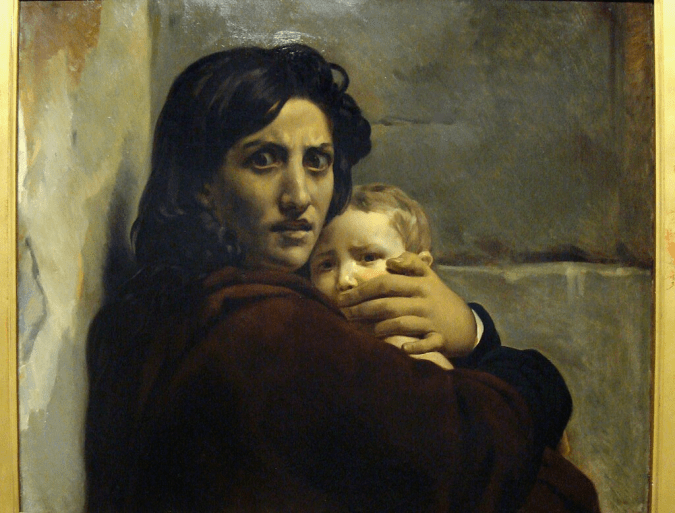
History is never just what happened “back there”; it is how we choose to remember. And, of course, we spend a good deal of time arguing over conflicting memories. In her December Christian Century article, Advent in all its Terror, Dr. Yolanda Pierce of Vanderbilt Divinity School confronts the raw realities of Jesus’ birth—poverty, political oppression, a refugee family desperate for shelter—and insists that memory matters, as unsettling as that may be. God entered our terror-filled world at precisely that moment and in that place, overturning worldly expectations of what a savior-king should look like — the word AWESOME comes to mind, an overused word in our day that in its origin meant something that inspires fear, dread, and great reverence. As the Fourth Sunday of Advent arrives and anticipation reaches its height, we are called not to sentimental escape but to courageous remembrance. The miracle of Advent is God dwelling with us in the midst of terror, reminding us that divine presence accompanies both suffering and hope. Much to think about.
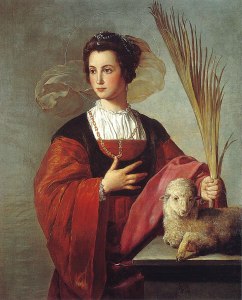
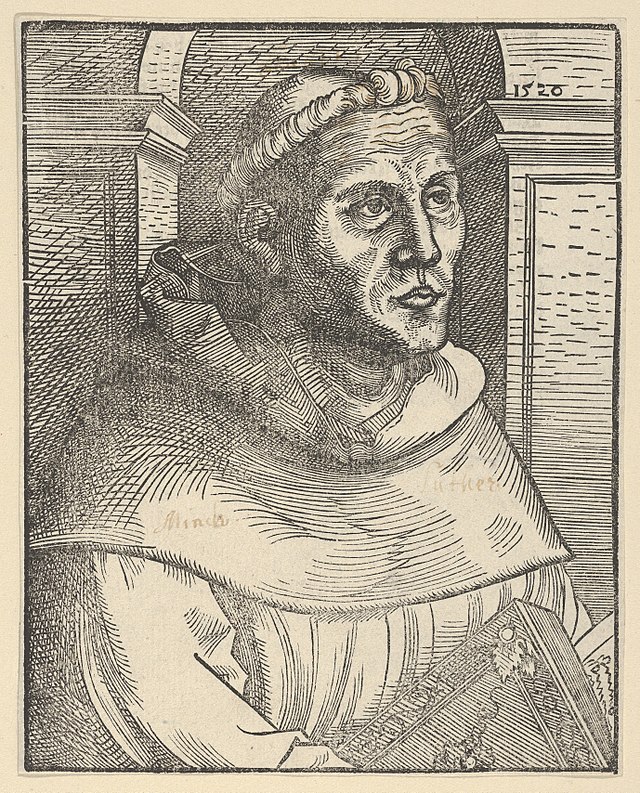
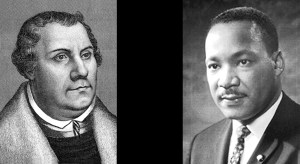
Katie Luther (1499-1552)
Thanks for coming into this space again this week, and for your continued interest in tackling the Lectionary! It’s hard to believe that Christmas is just around the corner. On Saturday, we commemorate Katie von Bora Luther, renewer of the church and wife of Martin, who died 473 years ago (20 December 1552). Her story is fascinating. Raised in convents from childhood, she escaped in 1523 with several other nuns—famously hidden in herring barrels—with Luther’s help. You can’t make that up! Two years later, she married Luther in 1525, and together they established a model Protestant household, raising six children while she managed the Black Cloister with remarkable skill in farming, brewing, and hospitality. (Sidebar: The Black Cloister was originally an Augustinian monastery in Wittenberg, later transformed into Martin Luther’s family home and the first Protestant parsonage). After Luther’s death in 1546, Katie endured hardship during the Schmalkaldic War, eventually dying in Torgau in 1552, remembered as a stabilizing force in Luther’s life and a significant figure in the Reformation.
My reflections this week will focus on the Old Testament prophecy and its connection to the Gospel. The musical meditation, Before the Marvel of this Night, captures the message of Advent well and I hope you enjoy it. I have also included the fourth installment of the interview I did with Pastor Jen Hatleli regarding the Malawi trip from October.
My source for the Bible readings each week is the Bible Gateway website. I generally use the NRSVUE translation.
The readings for the Fourth Sunday of Advent share the theme of God’s faithful presence breaking into human history through promise and fulfillment. Isaiah speaks of a sign given to God’s people—a child born of a young woman—pointing to divine intervention and hope. Psalm 80 echoes this longing with a communal cry for restoration, asking God to “let your face shine” so that salvation may come. In Romans and Matthew, the promise is revealed in Jesus Christ, whose birth fulfills prophecy and embodies Emmanuel, “God with us,” assuring that God’s saving work is both ancient and ever new.
“Describe the common themes among the readings for Advent 4 Sunday.” Copilot, 12 December 2025, Copilot website.
A Strategy for Reading
The four-question approach to reading (NRRD) is a good way to take on Bible passages. Give it a try this week!
What is something NEW you learned?
What is something that made you REFLECT?
What is something that RELATES to prior knowledge?
What is something you would like to further DISCUSS?
Focus Passages: Isaiah and Matthew
Isaiah 7: 10-16
10 Again the Lord spoke to Ahaz, saying, 11 “Ask a sign of the Lord your God; let it be deep as Sheol or high as heaven.” 12 But Ahaz said, “I will not ask, and I will not put the Lord to the test.” 13 Then Isaiah said, “Hear then, O house of David! Is it too little for you to weary mortals that you weary my God also? 14 Therefore the Lord himself will give you a sign. Look, the young woman is with child and shall bear a son and shall name him Immanuel. 15 He shall eat curds and honey by the time he knows how to refuse the evil and choose the good. 16 For before the child knows how to refuse the evil and choose the good, the land before whose two kings you are in dread will be deserted.
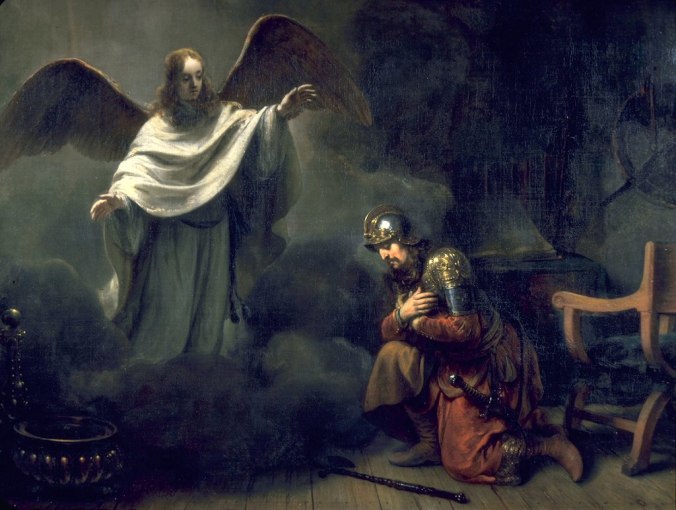
St. Matthew Inspired by an Angel (Rembrandt, 1661)
Matthew 1: 18-25
18 Now the birth of Jesus the Messiah took place in this way. When his mother Mary had been engaged to Joseph, but before they lived together, she was found to be pregnant from the Holy Spirit. 19 Her husband Joseph, being a righteous man and unwilling to expose her to public disgrace, planned to divorce her quietly. 20 But just when he had resolved to do this, an angel of the Lord appeared to him in a dream and said, “Joseph, son of David, do not be afraid to take Mary as your wife, for the child conceived in her is from the Holy Spirit. 21 She will bear a son, and you are to name him Jesus, for he will save his people from their sins.” 22 All this took place to fulfill what had been spoken by the Lord through the prophet: 23 “Look, the virgin shall become pregnant and give birth to a son and they shall name him Emmanuel,” which means, “God is with us.” 24 When Joseph awoke from sleep, he did as the angel of the Lord commanded him; he took her as his wife 25 but had no marital relations with her until she had given birth to a son, and he named him Jesus.
Reflections: “A King Refused, A Carpenter Obeyed”
King Ahaz by Guillaume Rouillé (16th Century French woodcut)
As has been the case throughout Advent, I am intrigued by the connection between Old Testament prophecy and the story of God breaking into our humanity. This week’s Old Testament reading resoundingly echoes in the Gospel of Matthew. Seven hundred years before Christ — picture it, like us looking back to the year 1295 — Judah, the Southern Kingdom, was trembling. King Ahaz, a young ruler from the line of David, faced a dire threat: Israel and Aram had joined forces to pressure Judah into rebellion against Assyria. Isaiah urged Ahaz to trust God and even invited him to ask for a sign of God’s protection. But Ahaz refused. Why? Because he had already decided to rely on Assyria instead of God. Listening to Isaiah would have meant abandoning his political plan, and his heart was closed to God’s promise. Still, God gave the sign anyway: “The young woman is with child and shall bear a son and shall name him Immanuel.” For Ahaz, this prophecy had an immediate horizon. It pointed perhaps to a child born in his own time—a living symbol that God’s presence would remain with His people and that the threat from Israel and Aram would soon fade. But the prophecy also carried a second horizon, stretching far beyond Ahaz’s day. Seven centuries later, Matthew tells us that these same words find their ultimate fulfillment in the birth of Jesus—the true Immanuel,“God with us.” What Ahaz could not see, the Gospel reveals: God’s faithfulness endures across generations, and the child born in Bethlehem is not just a temporary sign of reassurance but the lasting sign that God is with His people forever.
The Holy Family (A.I. generated, 2025)
So, fast forward those seven centuries. Matthew tells us of another descendant of David, Joseph. Like John the Baptist, I fear I have never given Joseph enough attention in the exploration of these events. He too arrived at an existential moment. Mary, his betrothed, was found to be with child. His instinct was caution, compassion, a quiet divorce. But then — like Ahaz — Joseph was confronted with a divine word. Unlike Ahaz, Joseph chose trust. He obeyed the angel, embraced Mary, and named the child Jesus, “Yahweh saves.”Do you hear the echo? Isaiah’s promise of Immanuel — God with us — fulfilled in the child born of Mary. The sign given to Ahaz in fear becomes the sign embraced by Joseph in faith. One king refused, one carpenter obeyed.
And friends, here we stand on the threshold of Christmas. The question is not whether God will be faithful — He already is. The question is whether we will respond like Ahaz, turning to our own strategies, or like Joseph, opening our lives to God’s mystery. So as Advent closes, let Joseph be our guide. Ordinary, quiet, righteous Joseph—who shows us that God’s plan unfolds not in the halls of power but in the hearts of those willing to say yes.
Soli deo Gloria!
Musical Meditation: “Before the Marvel of this Night”
Before the Marvel of This Night by Jaroslav Vajda and Carl Schalk is relatively new. The text imagines the angels rehearsing their song of peace, bliss, and love before announcing Christ’s birth. Its refrain — “Sing peace, sing peace, sing Gift of Peace” — echoes the Advent longing for Christ as the fulfillment of God’s promise. On the Fourth Sunday of Advent, when the church leans into the nearness of Christmas, the hymn’s imagery of angels preparing to “tear the sky apart with light” mirrors our own anticipation of God’s breaking into history. In this way, the hymn becomes a fitting meditation for Advent’s final Sunday, inviting worshippers to join the angelic chorus in proclaiming peace and love as the world awaits the marvel of Christ’s coming.
THE LYRICS
1 Before the marvel of this night, adoring, fold your wings and bow; then tear the sky apart with light and with your news the world endow. Proclaim the birth of Christ and peace, that fear and death and sorrow cease: sing peace; sing peace; sing gift of peace; sing peace; sing gift of peace!
2 Awake the sleeping world with song: this is the day the Lord has made. Assemble here, celestial throng, in royal splendor come arrayed. Give earth a glimpse of heavenly bliss, a teasing taste of what they miss: sing bliss; sing bliss; sing endless bliss; sing bliss; sing endless bliss!
3 The love that we have always known, our constant joy and endless light, now to the loveless world be shown, now break upon its deathly night. Into one song compress the love that rules our universe above: sing love; sing love; sing God is love; sing love; sing God is love!
The Choir of the Cathedral and Abbey Church of St. Alban is a distinguished English cathedral choir made up of boy and girl choristers alongside professional adult Lay Clerks, known for its international tours, recordings, and premieres of new works. Based at St Albans Cathedral, the oldest site of continuous Christian worship in Britain and dedicated to St Alban, England’s first Christian martyr, the choir’s music is deeply rooted in this historic setting. Through its blend of tradition and innovation, the choir embodies the cathedral’s mission to unite heritage and living faith in song.
“Identify and describe The Cathedral Choir of St. Alban” Copilot, 14 December 2025, Copilot website.
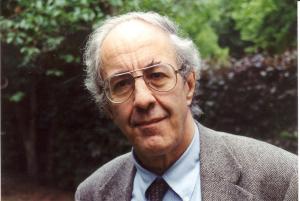
Prayer Reflection: “Recognizing the Lord” (Nouwen)
Henri Nouwen (1932–1996) was a Dutch Catholic priest, theologian, and prolific spiritual writer whose work continues to inspire millions worldwide. After teaching psychology and pastoral theology at institutions such as the University of Notre Dame, Yale Divinity School, and Harvard Divinity School, he left academia to join the L’Arche Daybreak community in Ontario, where he lived among and ministered to people with intellectual disabilities. Nouwen authored over 39 books—including The Wounded Healer and The Return of the Prodigal Son—that explore themes of vulnerability, prayer, community, and God’s unconditional love, blending psychology with spirituality in a way that made faith deeply accessible. His legacy lies in his ability to speak with honesty and compassion about the human struggle for belonging and the experience of being God’s beloved.
“Be alert, be alert, so that you will be able to recognize your Lord in your husband, your wife, your parents, your children, your friends, your teachers, but also in all that you read in the daily newspapers. The Lord is coming, always coming. Be alert to his coming. When you have ears to hear and eyes to see, you will recognize him at any moment of your life. Life is Advent; life is recognizing the coming of the Lord.”
Source: The Henri Nouwen Society Website. Daily E-Meditations, 14 December 2025.
Faithful Conversation Updates
Join us for some free-flowing conversation about the Lectionary readings each Sunday. We meet from 10:45-11:30 in the church library each week, with some exceptions. No prior knowledge is necessary! ALL ARE WELCOME!
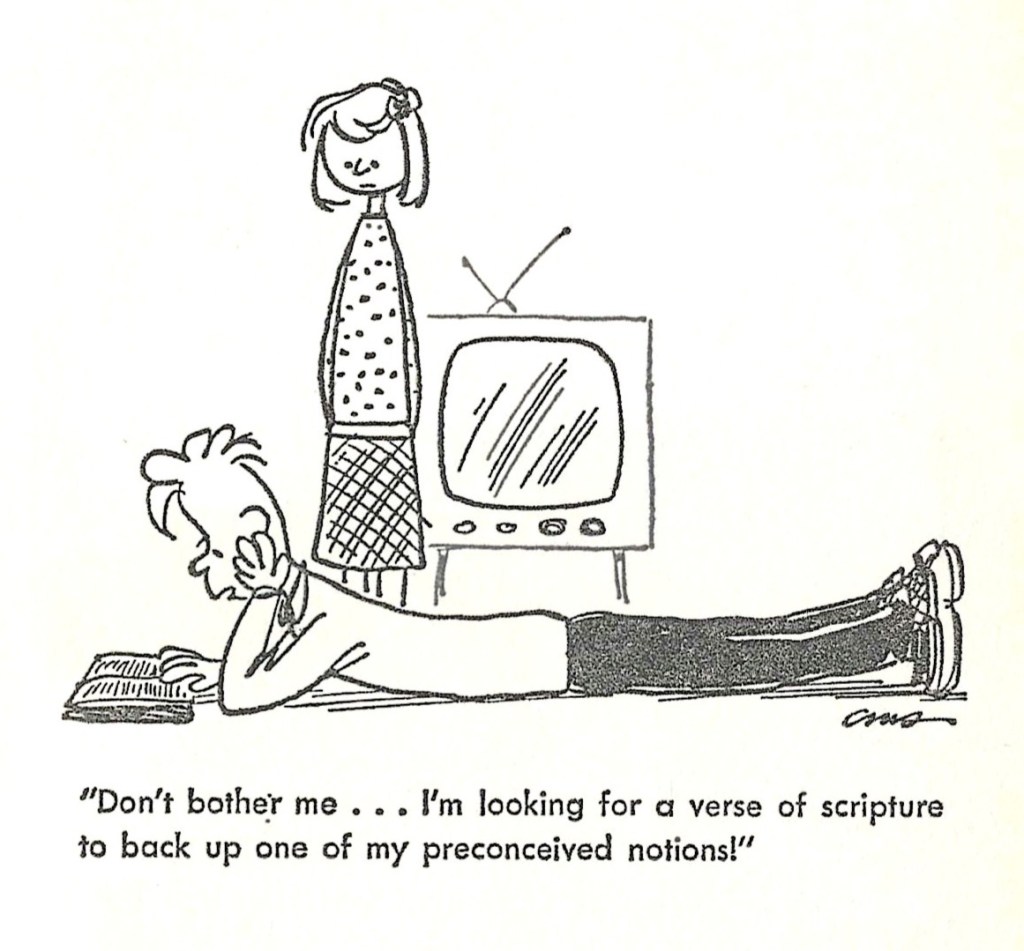
QUESTIONS FOR DISCUSSION THIS WEEK:
1. Ahaz refused God’s sign because he trusted in political power instead of divine promise. What are some “Assyrias” we turn to today—strategies, alliances, or securities—that keep us from trusting God’s presence in our own crises?
2. Joseph, unlike Ahaz, chose to trust and obey, even when God’s plan disrupted his expectations. How might Joseph’s quiet faithfulness inspire us to respond differently when God’s call feels uncertain or costly?
THIS WEEK’S BIBLE 365 READING CHALLENGE
Monday 15 December: 1 Samuel 1-3 Tuesday 16 December: 1 Samuel 4-8 Wednesday 17 December: 1 Samuel 9-12 Thursday 18 December: 1 Samuel 13-14 Friday 19 December: 1 Samuel 15-17 Saturday 20 December: 1 Samuel 18-20 Sunday 21 December: 1 Samuel 21-24
The Bible 365 Challenge! More than 60 members of our faith community have committed to the Bible 365 Challenge—a shared journey of reading through the entire Bible in one year. Each day, we engage with selected passages weaving together stories of faith, struggle, grace, and redemption. This challenge isn’t just about completing a task; it’s about deepening our spiritual roots, building community, and discovering how scripture speaks into our lives today.
Reflections On Malawi: Part 4
Pastor Jenny Hatleli
Since 1999, the Northwest Synod of Wisconsin and the Evangelical Lutheran Church of Malawi have been companions in ministry. Recently, several NW Synod representatives, including Pastor Jen Hatleli and Patti Whitworth from ELC, traveled there and met with many of our partners in the region. During Advent, I am posting excerpts from my interview with her about the trip. In our fourth exchange, Jen shared information about the connection between the Northwest Synod of the ELCA and the ELC of Malawi. We also talked about what Pastor Jen learned about hope and perseverance from the people she interacted with in southern Africa.
JOY has been much on my mind this week. The word itself reaches back to Latin, where gaudia conveys gladness and delight. From that same root comes gaudete — “rejoice” — the word that gives Gaudete Sunday its name. This third Sunday of Advent takes its title from the opening of the ancient introit, Gaudete in Domino semper (“Rejoice in the Lord always”). Emerging in the early centuries of the Church when Advent was observed as a penitential season akin to Lent, this Sunday offered a liturgical pause of joy and anticipation amid the somber preparation, marked by rose‑colored vestments and candles instead of the usual purple. Historically, it reminded the faithful that the coming of Christ was not only a call to repentance but also a promise of joy. Today, Gaudete Sunday continues to be celebrated across Christian traditions as a moment of light breaking into Advent’s darkness—often symbolized by the rose candle on the Advent wreath—and serves as a reminder that even in waiting, the Church rejoices in the nearness of God’s presence.
Malawi children exuding JOY!
Thanks for visiting this space again today and for your continuing interest in studying the Bible and exploring the Revised Common Lectionary! We have two commemorations on the ELCA calendar this week: Lucy, the martyr (d. 304) on 13 December and John of the Cross, renewer of the church (d. 1591) on 14 December.
My reflections for 3 Advent will focus on the Matthew’s Gospel and John the Baptist. I will also offer a homily at ELC on Sunday regarding John’s story and his connection to the season of Advent. In addition, I have included a hauntingly beautiful piece of music from Iceland and the third excerpt of an interview with Pastor Jen Hatleli of ELC regarding her experience in Malawi, Africa in October of 2025.
NOTES REGARDING SOURCING:
** Note 1: Links to outside references are bolded and italicized and are meant for further reading or research on your part. While the text I am including in the blog is my own, I am pulling from a multitude of sites for ideas and connections. ** Note 2: In my increasing use of A.I. (Copilot), I will cite sourcing of how I am using the tool, if necessary. I don’t want that to be overly cumbersome, but I am gradually incorporating more tools.
** Note 3: The images I include in the blog are drawn from Wikimedia Commons to the fullest extent possible.
Common Themes Among the Readings
3 Advent Readings
Isaiah 35:1-10 Psalm 146:5-10 James 5:7-10 Matthew 11:2-11
My source for the Bible readings each week is the Bible Gateway website. I generally use the NRSVUE translation.
The readings for Gaudete Sunday share a common theme of joy and hope breaking into the midst of waiting and struggle. Isaiah envisions the desert blossoming and the weak strengthened, while the psalm proclaims God’s justice for the oppressed and care for the vulnerable. James urges patient endurance, reminding believers that the Lord’s coming is near, and Matthew highlights Jesus as the fulfillment of prophetic promises, bringing healing and good news to the poor. Together, these texts invite the faithful to rejoice with confidence that God’s saving presence is already at work, even as they await its fullness.
“Describe the common themes among the readings for Gaudete Sunday.” Copilot, 6 December 2025, Copilot website.
A Strategy for Reading
The four-question approach to reading (NRRD) is a good way to take on Bible passages. Give it a try this week!
What is something NEW you learned?
What is something that made you REFLECT?
What is something that RELATES to prior knowledge?
What is something you would like to further DISCUSS?
Focus Passage: Matthew 11:2-11
2 When John heard in prison what the Messiah was doing, he sent word by his disciples 3 and said to him, “Are you the one who is to come, or are we to wait for another?” 4 Jesus answered them, “Go and tell John what you hear and see: 5 the blind receive their sight, the lame walk, those with a skin disease are cleansed, the deaf hear, the dead are raised, and the poor have good news brought to them. 6 And blessed is anyone who takes no offense at me.” 7 As they went away, Jesus began to speak to the crowds about John: “What did you go out into the wilderness to look at? A reed shaken by the wind? 8 What, then, did you go out to see? Someone dressed in soft robes? Look, those who wear soft robes are in royal palaces. 9 What, then, did you go out to see? A prophet? Yes, I tell you, and more than a prophet. 10 This is the one about whom it is written,
‘See, I am sending my messenger ahead of you, who will prepare your way before you.’
11 “Truly I tell you, among those born of women no one has arisen greater than John the Baptist, yet the least in the kingdom of heaven is greater than he.
Pastors Tom Heyd, A.M. Rusten, and Thor Rykken lined up left to right, hammering away at wooden crosses for Lent back in the 1960s. This week’s Gospel reading catapulted me straight back to that era, when Rusten thundered out a sermon on “John the Baptizer.” With his booming voice and thick Norwegian brogue, he didn’t just preach—he practically summoned John into the sanctuary. Anyone who knew Rusten remembers him vividly; a strong personality filled with the Holy Spirit!
Reflections: “John the Baptizer — Bridging the Covenant”
The Execution of Saint John the Baptist by Gandolfi (Italian, c. 1770)
John the Baptist has jolted me awake — in my mind I am standing with the crowd along the Jordan River trying to figure this guy out! For years I kept him at the edges, a minor figure overshadowed by Christ. But the more I study, I realize I need to spend more time with him. John storms into the wilderness, thunders repentance, plunges people into the Jordan, and then vanishes—silenced by Herod’s brutal command. Mark’s Gospel paints the most harrowing picture of John’s demise (Mark 6: 14-29): Herod fears John’s righteousness yet crumbles under Herodias’s grudge and her daughter’s demand. The scene exposes Herod’s weakness and John’s fearless courage. We are left with that gruesome image of John’s head on a platter. This week, however, Matthew refuses to let me dismiss him. Jesus declares John more than a prophet—the one who stands at history’s hinge, bridging the old covenant and the new, pointing us straight to the kingdom breaking in.
Saint John the Baptist by Boulogne (French, c. 1630)
In Matthew 11:2–11, we encounter John the Baptist in prison—his body worn down, his spirit unsettled. The prophet who once thundered with conviction now wrestles with doubt. He sends his disciples to ask Jesus, “Are you the one who is to come, or shall we look for another?” It is a profoundly human moment: the fiery herald of repentance now questioning in the shadows of confinement. (Perhaps John is questioning his cousin’s movement from the wilderness into the world — his association with “worldly people”). As is so often the case, Jesus does not respond with a simple “yes” or “no.” Instead, he points to the evidence of God’s reign breaking into the world: the blind see, the lame walk, lepers are cleansed, the deaf hear, the dead are raised, and the poor receive good news. In other words, the promises of Isaiah are being fulfilled before their eyes. Then Jesus turns to the crowd and honors John. He asks them directly: “What did you go out into the wilderness to see? A reed shaken by the wind? A man dressed in fine clothes? No—you went to see a prophet.” These questions cut to the heart. John was not a reed bending to public opinion, nor a courtier seeking comfort and status. He was a prophet—unyielding, uncompromising, and chosen to prepare the way. And yet, Jesus adds a startling twist: “Truly I tell you, among those born of women there has not risen anyone greater than John the Baptist; yet whoever is least in the kingdom of heaven is greater than he.” John stands at the threshold of the kingdom, pointing toward it, but the kingdom itself is breaking in with a new kind of power—one not built on human greatness but on God’s grace. Even the least who enter into this kingdom share in a reality greater than John’s prophetic mission, because they live within the fullness of what Christ brings.
Saint John the Baptist Bearing Witness by Carracci (Italian, c. 1600)
And that is why John the Baptizer is the perfect symbol of Advent. The word itself means “coming” or “arrival,” and John embodies that threshold moment. He points beyond himself, preparing the way, reminding us that the kingdom is near. Advent is not only about waiting—it is about waiting with urgency, with repentance, with hope. John’s life tells us that joy and judgment, longing and fulfillment, are woven together in the coming of Christ. He is not a footnote; he is the voice crying out in the wilderness, the herald of Advent joy. But his cry is not only for the crowds of the Jordan River—it echoes still. If John’s voice were to reach us today, what paths would we need to straighten, what valleys would we need to lift, so that Christ might truly arrive in our midst?
Soli Deo Gloria and Gaudete in Domino semper!
Note: I am indebted to Fr. Morgan Reed of the Corpus Christie Anglican for his interpretation of this week’s Gospel. You can read his full homily here. In addition, I utilized interpretations of John the Baptist offered by Garry Wills in his 2006 book, What Jesus Meant.
We will explore this passage further in our Sunday Lectionary group using the discussion questions included in the Faithful Conversations update below.
Musical Meditation: “Fljótavík” (Sigur Rós)
As we enter the season of Advent, we are invited to see ourselves as travelers moving through wilderness and storm, longing for shelter and light. Sigur Rós’s “Fljótavík,” named after a remote bay in Iceland, tells of a journey ashore, a struggle across sand and stone, and the discovery of a fragile hut where rest is found while the storm rages outside. The music mirrors this imagery—spare at first, then swelling like waves—until it settles into quiet memory. This song, like the season, is about waiting with trust: remembering storms, yet resting in hope that light will break into the darkness. Voces8 offers a powerful interpretation of it which I have included here.
Sigur Rós is an Icelandic post‑rock band formed in Reykjavík in 1994, known for their ethereal sound. Their name means “Victory Rose.” Singing in Icelandic and their invented “Hopelandic” language, they rose to international fame and have sold millions of albums worldwide. Sigur Rós remains celebrated for turning Iceland’s landscapes and spirit into sound that feels both deeply local and universally transcendent.
The original lyrics for Fljotavik are in Icelandic. Here is the translation:
We look over the rudder Cut off the sea We sail by the mast Stretch the sails We steer towards the bridge
We sail ashore Up on the large rocks and the sand We wade ashore What a mess
There I found myself Endlessly thanking Sheltered in a makeshift house And we slept As the storm died down
VOCES8 is a British vocal ensemble formed in 2005. Admired not only for their artistry but also for their role as cultural ambassadors, they bring choral music to diverse audiences and work to nurture the next generation of singers.
“But the angel said to them, “Do not be afraid. I bring you good news that will cause great joy for all the people. Today in the town of David a Savior has been born to you; he is the Messiah, the Lord.” (Luke 2:10-11)
Lord, the good news of Jesus’ arrival brings such joy to our world! Reach those who are lost and searching with the message of hope that we have through the Messiah. God, allow your message of peace to bring comfort to our anxious world. As we all go about the holiday season, let the message of great joy pierce through all the noise and into people’s hearts. Amen.
Source: Crosswalk: Third Sunday of Advent: Gaudete Readings and Prayers for Lighting the Candle. Retrieved 6 December 2025.
Faithful Conversation Updates
Join us for some free-flowing conversation about the Lectionary readings each Sunday. We meet from 10:45-11:30 in the church library each week, with some exceptions. No prior knowledge is necessary! ALL ARE WELCOME!
QUESTIONS FOR DISCUSSION THIS WEEK:
John’s Doubt and Our Own: 1. In Matthew 11, John the Baptist—once so certain—now wrestles with doubt in prison. How does his questioning help us understand the role of doubt in faith, especially during Advent, when we wait with both hope and uncertainty?
John as the Symbol of Advent: 2. Jesus calls John “more than a prophet,” the one who prepares the way. In what ways does John’s life—his courage, his suffering, his pointing beyond himself—embody the meaning of Advent, and how might his witness challenge the way we live out our own waiting today?
The Bible 365 Challenge! More than 60 members of our faith community have committed to the Bible 365 Challenge—a shared journey of reading through the entire Bible in one year. Each day, we engage with selected passages weaving together stories of faith, struggle, grace, and redemption. This challenge isn’t just about completing a task; it’s about deepening our spiritual roots, building community, and discovering how scripture speaks into our lives today.
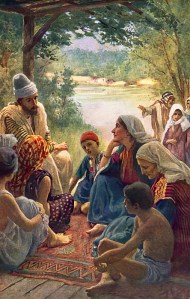
Reflections On Malawi: Part 3
Pastor Jenny Hatleli
Since 1999, the Northwest Synod of Wisconsin and the Evangelical Lutheran Church of Malawi have been companions in ministry. Recently, several NW Synod representatives, including Pastor Jen Hatleli and Patti Whitworth from ELC, traveled there and met with many of our partners in the region. During Advent, I am posting excerpts from my interview with her about the trip. In our third exchange, I asked Jen to share a story of a person or moment that left a lasting impression on her.
“When we suffer from amnesia, every form of serious authority for faith is in question, and we live unauthorized lives of faith and practice unauthorized ministries.”(Walter Brueggemann, The Prophetic Imagination)
Spurred by Pope Leo’s recent travels, Creeds have been on my mind this week. In the rush of headlines—and our constant focus on domestic politics—most Americans overlook international stories. Yet Pope Leo XIV’s visit to Turkey this week — his first international trip as Pope — drew attention back to the 1700th anniversary of the Council of Nicaea. On November 28, he joined Ecumenical Patriarch Bartholomew I and other Christian leaders in Iznik (ancient Nicaea) for an ecumenical prayer service at the ruins of the Basilica of Saint Neophytos, where the Nicene Creed was recited as a sign of unity. The Pope urged Christians to overcome “the scandal of divisions” and called for dialogue across faiths. Just days earlier, on November 23, he issued an apostolic letter, In Unitate Fidei (“In the Unity of Faith”), underscoring the enduring power of the Creed to unite Catholics, Orthodox, and Protestants. His visit blended historical commemoration with a broader appeal for reconciliation and peace. Imagine if we focused more attention on stories such as these!
So, a reminder regarding creeds. In our Lectionary discussion last Sunday, we touched on the difference between creedal and non-creedal churches. Creedal traditions — i.e. Roman Catholic, Eastern Orthodox, Anglican, Lutheran, Presbyterian — formally affirm and often recite the Apostles’, Nicene, and Athanasian Creeds as authoritative summaries of faith, preserving unity with the ancient church (sidebar: In the ELCA, we say the Apostles’ Creed often, and the Nicene Creed occasionally. I cannot recall ever reciting the Athanasian Creed during worship, but that is a topic for another day).Non-creedal churches, by contrast, reject binding creeds, insisting on Sola Scriptura (“Scripture alone”) and often relying on local statements of faith. Many Baptist, non-denominational, and Restorationist congregations embody this stance, wary of elevating human words above God’s Word. Lutherans, however, have always been shaped by creeds. From the Reformation onward, Luther and his followers held fast to the three aforementioned creeds, while also writing their own confessions — like the Augsburg Confession and Luther’s Catechisms — later gathered in the Book of Concord. These creeds and confessions gave Lutherans a shared voice, safeguarded core truths about God and Christ, and distinguished them from both Catholicism and non-creedal movements. Walter Brueggemann’s opening warning rings true here. As Lutherans, we use creeds to resist amnesia, keeping memory alive and connecting us with generations of saints before us. History, yes, is important.
Thanks for your continuing interest in studying the Bible and exploring the Revised Common Lectionary! Following up from last week, my reflections will focus on the Isaiah passage. I’m also including a unique interpretation of a familiar Advent hymn, a prayer from Pope Leo XIV, and the second excerpt of an interview with Pastor Jen regarding her trip to Malawi.
NOTES REGARDING SOURCING:
** Note 1: Links to outside references are bolded and italicized and are meant for further reading or research on your part. While the text I am including in the blog is my own, I am pulling from a multitude of sites for ideas and connections. ** Note 2: In my increasing use of A.I. (Copilot), I will cite sourcing of how I am using the tool, if necessary. I don’t want that to be overly cumbersome, but I am gradually incorporating more tools.
** Note 3: The images I include in the blog are drawn from Wikimedia Commons to the fullest extent possible.
Common Themes Among the Readings
2 Advent Readings
Isaiah 11:1-10 Psalm 72:1-7, 18-19 Romans 15: 4-13 Matthew 3:1-12
My source for the Bible readings each week is the Bible Gateway website. I generally use the NRSVUE translation.
The readings for 2 Advent share strong themes of hope, justice, and preparation for God’s coming reign. Isaiah 11 envisions a shoot from the stump of Jesse—a messianic figure filled with God’s Spirit who will bring righteousness, peace, and harmony to creation. Psalm 72 echoes this vision, praying for a king who rules with justice, defends the poor, and ushers in flourishing and peace. In Romans 15, Paul ties this hope to Christ, urging believers to live in harmony and welcome one another, showing that God’s promises extend to both Jews and Gentiles. Matthew 3 introduces John the Baptist, who calls people to repentance and readiness for the one who will baptize with the Holy Spirit and fire. Together, these texts highlight God’s promise of a righteous ruler, the call to communal justice and peace, and the urgent need to prepare our hearts for Christ’s coming.
“Describe the common themes among the readings for 2 Advent.” Copilot, 29 November 2025, Copilot website.
A Strategy for Reading
The four-question approach to reading (NRRD) is a good way to take on Bible passages. This is something my son Jake shared with me while attending West Point in the early 2000s (a history class), and I have used it with my students ever since. Give it a try this week!
What is something NEW you learned?
What is something that made you REFLECT?
What is something that RELATES to prior knowledge?
What is something you would like to further DISCUSS?
Focus Passage: Isaiah 11:1-10
11 A shoot shall come out from the stump of Jesse, and a branch shall grow out of his roots. 2 The spirit of the Lord shall rest on him, the spirit of wisdom and understanding, the spirit of counsel and might, the spirit of knowledge and the fear of the Lord. 3 His delight shall be in the fear of the Lord. He shall not judge by what his eyes see or decide by what his ears hear, 4 but with righteousness he shall judge for the poor and decide with equity for the oppressed of the earth; he shall strike the earth with the rod of his mouth, and with the breath of his lips he shall kill the wicked. 5 Righteousness shall be the belt around his waist and faithfulness the belt around his loins. 6 The wolf shall live with the lamb; the leopard shall lie down with the kid; the calf and the lion will feed together, and a little child shall lead them. 7 The cow and the bear shall graze; their young shall lie down together; and the lion shall eat straw like the ox. 8 The nursing child shall play over the hole of the asp, and the weaned child shall put its hand on the adder’s den. 9 They will not hurt or destroy on all my holy mountain, for the earth will be full of the knowledge of the Lord as the waters cover the sea. 10 On that day the root of Jesse shall stand as a signal to the peoples; the nations shall inquire of him, and his dwelling shall be glorious.
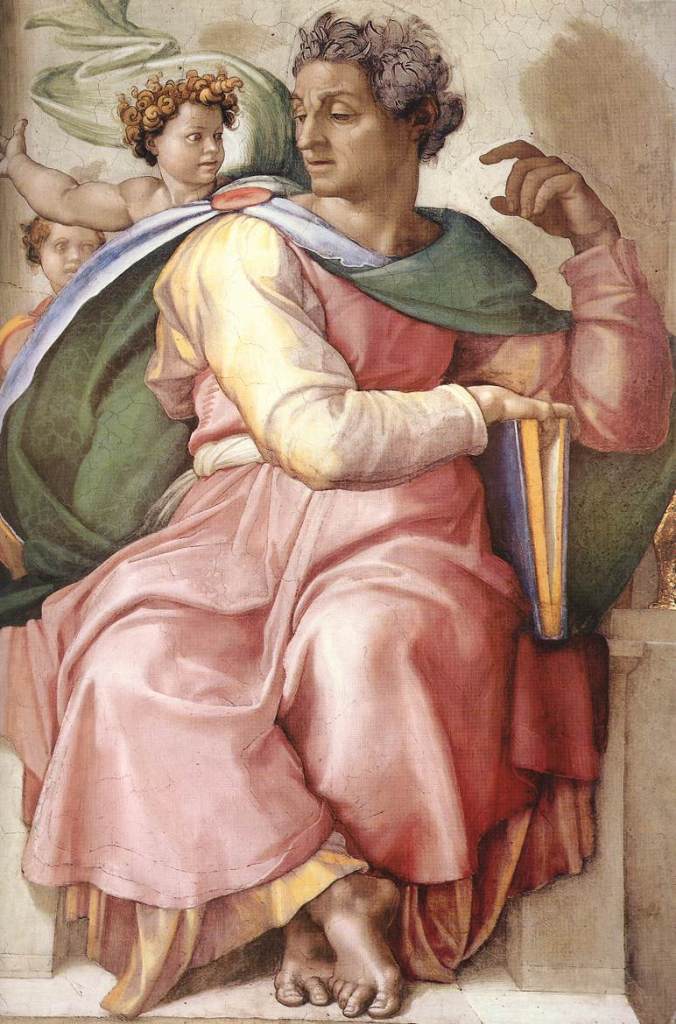
Isaiah by Michelangelo (1475-1564)
A reminder: Keep in mind that the Psalm included among the lection each week is meant to echo or be a commentary on the Old Testament passage — certainly true this week!
Reflections: Prophecy in Context, Promise for Today
Hezekiah showing off his wealth to envoys of the Babylonian king (Vicente López Portaña, 1789)
Isaiah’s voice rings out again in Year A of the lectionary, and one can almost hear the thunder in his words: “A shoot shall come out from the stump of Jesse, and a branch shall grow out of his roots.” He is speaking into the late 8th century BCE, a time when Judah was caught between empires and living under the shadow of Assyrian domination. The northern kingdom of Israel had already fallen to Assyria in 722 BCE, and Judah itself was vulnerable, its people anxious about survival and the future of David’s royal line. Into this moment of fear and uncertainty, Isaiah proclaimed hope: that from the “stump” of Jesse — the family line of David — new life would emerge. For Isaiah’s first hearers, this was not a distant messianic dream, but a promise tied to their own history, a vision of King Hezekiah whose reign brought reform, renewed trust in God, and a measure of peace even in the face of overwhelming threat. (Sidebar: Everything didn’t go well for Hezekiah. After recovering from an illness, King Hezekiah proudly showed Babylonian envoys all the treasures of his palace and armory. The prophet Isaiah rebuked him, warning that this display of wealth would lead to Judah’s riches and even his descendants being carried off into exile. This story, found in 2 Kings 20:12–19 and Isaiah 39:1–8, highlights the danger of pride and misplaced trust in human powers rather than in God).
Jesus Reading from Ancient Texts (A.I. generated 2025)
Fast forward several centuries. First generation Christians (many of whom were raised within Judaism) heard these words from Isaiah differently. They did so because their world had been reshaped by the life, death, and resurrection of Jesus, which reframed ancient promises in light of a Messiah who had already come rather than one still awaited. As Christians, we cannot help but hear these words through the lens of Jesus, the one who embodies wisdom, justice, and peace in ways that surpass any earthly king. Yet we must pause and honor how Jewish hearers would not have seen Jesus here; their longing was for deliverance in their own time, not centuries later. For them, Isaiah’s vision resonated with hopes for national restoration and relief from oppression, not the inauguration of a new covenant. That tension reminds us that prophecy is always heard in context, and that God’s word speaks differently across generations. In our own day, these same words continue to meet us in fresh ways — sometimes as a call to justice in our communities, sometimes as comfort in seasons of loss, and sometimes as a reminder that God’s promises are larger than any single moment. Prophecy, then, is not a static prediction but a living word.
And so, what is the takeaway for those of us in the Christian community today? Isaiah’s vision is not just about a ruler, but about a transformed world. For his original audience, the images of wolves lying with lambs and children playing safely near wild animals were not fanciful but deeply symbolic: they represented the end of violence, the undoing of fear, and the restoration of creation to harmony under God’s reign. In a society where survival often depended on strength and where predators were a constant threat, these pictures of peace would have sounded almost unimaginable — a radical reversal of the way things were. For Christians, the imagery points us toward Christ, who breaks down hostility and calls us into a kingdom where reconciliation is possible. In our own fractured time, Isaiah’s vision invites us to imagine what life could be if God’s justice truly reigned — a peace that defies division, a hope that steadies us, and a call to bring this hope to those we meet along the path.
Soli Deo Gloria!
Note: I am indebted to Cory Driver of Miami University in Ohio for his interpretation of this passage from 2022, accessed from the Working Preacher website, sponsored by Luther Seminary in St. Paul, Minnesota. You can read his essay here.
We will explore this passage further in our Sunday Lectionary group using the discussion questions included in the Faithful Conversations update below.
Advent Hymn: Come Thou Long Expected Jesus
Charles Wesley (1707-1788)
Charles Wesley, principal founder of Methodism, wrote Come, Thou Long-Expected Jesus in 1744, moved by both Scripture and the social needs he witnessed in England. Drawing on passages like Haggai 2:7, he framed Christ as the “dear desire of every nation, joy of every longing heart,” capturing the universal hope for a Savior. The hymn was first published in Hymns for the Nativity of Our Lord and later gained wider recognition when Charles Spurgeon quoted it in a Christmas sermon in 1855. Over time, it became a beloved Advent hymn across denominations. Its enduring power lies in its dual focus: remembering Christ’s birth in Bethlehem while anticipating His future reign, making it both a prayer of longing and a declaration of hope. (Hymn 254, ELW). Enjoy this unique version from Celtic Worship — feel free to sing along!
LYRICS 1. Come, thou long expected Jesus, born to set thy people free; from our fears and sins release us, let us find our rest in thee. Israel’s strength and consolation, hope of all the earth thou art; dear desire of every nation, joy of every longing heart.
2. Born thy people to deliver, born a child and yet a King, born to reign in us forever, now thy gracious kingdom bring. By thine own eternal spirit rule in all our hearts alone; by thine all sufficient merit, raise us to thy glorious throne.
“Celtic Worship” is an authentic expression of sung worship deeply rooted in the sound and traditions of Scottish music. As a collective of some of Scotland’s finest contemporary musicians, they share a deep desire to use their skills and giftings to praise and make known Jesus Christ. Exploring psalms, hymns and new songs, their uniquely powerful pipes-and-fiddle-led sound communicates the full range and depth of the Gospel (from their website).
Holy Spirit of God, you guide believers along the path of history. We thank you for inspiring the Symbols of Faith and for stirring in our hearts the joy of professing our salvation in Jesus Christ, the Son of God, consubstantial with the Father. Without him, we can do nothing. Eternal Spirit of God, rejuvenate the faith of the Church from age to age. Help us to deepen it and to return always to the essentials in order to proclaim it. So that our witness in the world may not be futile, come, Holy Spirit, with your fire of grace, to revive our faith, to enkindle us with hope, to inflame us with charity. Come, divine Comforter, source of harmony, unite the hearts and minds of believers. Come and grant us to taste the beauty of communion. Come, Love of the Father and the Son, gather us into the one flock of Christ. Show us the ways to follow, so that with your wisdom, we become once again what we are in Christ: one, so that the world may believe. Amen.
Excerpt from Pope Leo’s Apostolic Letter, In Unitate Fidei, commemorating the 1700th anniversary of the Council of Nicaea, November 2025. I included a link to the full letter in my introduction this week.
Faithful Conversation Updates
Join us for some free-flowing conversation about the Lectionary readings each Sunday. We meet from 10:45-11:30 in the church library each week, with some exceptions. No prior knowledge is necessary! ALL ARE WELCOME!
QUESTIONS FOR DISCUSSION THIS WEEK:
1. How does understanding Isaiah’s prophecy in its original 8th-century BCE context — with Judah under Assyrian threat and hopes tied to King Hezekiah — change the way we as Christians interpret it through the lens of Jesus?
2. Isaiah’s vision of wolves dwelling with lambs and children safe among wild creatures symbolized a radical reversal of fear and violence. What might it look like for us today to embody that same vision of reconciliation and peace in a world still fractured by division?
The Bible 365 Challenge! More than 60 members of our faith community have committed to the Bible 365 Challenge—a shared journey of reading through the entire Bible in one year. Each day, we engage with selected passages weaving together stories of faith, struggle, grace, and redemption. This challenge isn’t just about completing a task; it’s about deepening our spiritual roots, building community, and discovering how scripture speaks into our lives today.
Reflections On Malawi: Part 2
Pastor Jenny Hatleli
Since 1999, the Northwest Synod of Wisconsin and the Evangelical Lutheran Church of Malawi have been companions in ministry. Recently, several NW Synod representatives, including Pastor Jen Hatleli and Patti Whitworth from ELC, traveled there and met with many of our partners in the region. During Advent, I am posting excerpts from my interview with her about the trip. In our second exchange, she comments on how worship in Malawi challenged or deepened her understanding of faith.
We make hundreds of decisions every day, and the quality of DISCERNMENT has been on my mind this week. The origin of the word is the Latin discernere, — a combination of dis (meaning apart) and cernere (meaning to separate or sift). Discernment, then, refers to our ability to judge wisely and sift things out on our daily walk. I regularly pray for discernment because life is filled with difficult decisions. Spend time this week thinking about those “discerning souls” in your background, people who modeled clear thinking for you in your formative years. We need reminders of their voices!
The Face of Jesus (using AI)
Discernment, of course, is important when choosing leaders, and on election eve, this week’s Lectionary readings are a great reminder of the counter-cultural nature of our faith. Think about the thousands of messages we have been hearing for many months (are you as overwhelmed by the political ads as I am?), and how little we hear about the poor or those suffering from injustice in our world. Frustratingly, the appeal from candidates always seems to focus heavily on selfishness, as if the only question we should be asking ourselves is, “What is best for me?!” I shudder to consider what Jesus thinks about the language running in and through our political dialogue!
Thanks for visiting the blog again this week, and for your continued interest in grappling with issues of faith! Amazingly, we have three Sundays left in this church year and will turn the calendar to “Year C” of the Lectionary on December 1st. We have been in the time of Pentecost since May — and a reminder that it was during Pentecost that our spiritual ancestors received the Holy Spirit. Once exclusive to a select group, that Spirit and God’s blessing extend to everyone — a good reminder for us! My reflection this week will key in on the connections between the passages from 1 Kings, Psalm 146, and Mark’s Gospel.
Look for the following themes in the readings for Sunday: faith, sacrifice, and divine provision. In 1 Kings 17:8-16, the widow’s willingness to share her last meal with the prophet Elijah exemplifies deep trust in God’s sustenance. Psalm 146 emphasizes reliance on God as the true source of help, contrasting human leaders with the enduring support of the Lord. Hebrews 9:24-28 speaks to Christ’s ultimate sacrifice, revealing the significance of His role in atonement and salvation. Finally, in Mark 12:38-44, Jesus commends the poor widow’s humble offering, illustrating that genuine faith is measured not by the amount given, but by the heart’s intention.
First Reading: 1 Kings 17: 8-16: The Widow of Zarephath
8 Then the word of the Lord came to him, saying, 9 “Go now to Zarephath, which belongs to Sidon, and live there, for I have commanded a widow there to feed you.” 10 So he set out and went to Zarephath. When he came to the gate of the town, a widow was there gathering sticks; he called to her and said, “Bring me a little water in a vessel, so that I may drink.” 11 As she was going to bring it, he called to her and said, “Bring me a morsel of bread in your hand.” 12 But she said, “As the Lord your God lives, I have nothing baked, only a handful of meal in a jar and a little oil in a jug; I am now gathering a couple of sticks so that I may go home and prepare it for myself and my son, that we may eat it and die.”13 Elijah said to her, “Do not be afraid; go and do as you have said, but first make me a little cake of it and bring it to me, and afterward make something for yourself and your son. 14 For thus says the Lord the God of Israel: The jar of meal will not be emptied and the jug of oil will not fail until the day that the Lord sends rain on the earth.” 15 She went and did as Elijah said, so that she as well as he and her household ate for many days. 16 The jar of meal was not emptied, neither did the jug of oil fail, according to the word of the Lord that he spoke by Elijah.
Psalm 146: Praise for God’s Help
1 Praise the Lord! Praise the Lord, O my soul! 2 I will praise the Lord as long as I live; I will sing praises to my God all my life long.
3 Do not put your trust in princes, in mortals, in whom there is no help. 4 When their breath departs, they return to the earth; on that very day their plans perish.
5 Happy are those whose help is the God of Jacob, whose hope is in the Lord their God, 6 who made heaven and earth, the sea, and all that is in them; who keeps faith forever; 7 who executes justice for the oppressed; who gives food to the hungry.
The Lord sets the prisoners free; 8 the Lord opens the eyes of the blind. The Lord lifts up those who are bowed down; the Lord loves the righteous. 9 The Lord watches over the strangers; he upholds the orphan and the widow, but the way of the wicked he brings to ruin.
10 The Lord will reign forever, your God, O Zion, for all generations. Praise the Lord!
The Gospel: Mark 12: 38-44: The Widow’s Offering
38 As he taught, he said, “Beware of the scribes, who like to walk around in long robes and to be greeted with respect in the marketplaces 39 and to have the best seats in the synagogues and places of honor at banquets! 40 They devour widows’ houses and for the sake of appearance say long prayers. They will receive the greater condemnation.” 41 He sat down opposite the treasury and watched the crowd putting money into the treasury. Many rich people put in large sums. 42A poor widow came and put in two small copper coins, which are worth a penny. 43 Then he called his disciples and said to them, “Truly I tell you, this poor widow has put in more than all those who are contributing to the treasury. 44 For all of them have contributed out of their abundance, but she out of her poverty has put in everything she had, all she had to live on.”
Reflection: “let us learn from the widows”
Elijah and the Widow of Zerephath
Widows figure prominently in three of this week’s readings. My sense is that the widow of Zerephath and the poor widow Christ observes after his denunciation of the Scribes in Mark’s Gospel account, represent those on the fringes of society — those who lack money, status, or power of any kind. In the patriarchal culture of the ancient world, widowhood presented difficult financial challenges. Some quick research indicates that widows, in fact, are mentioned 103 times in the Bible and, not surprisingly, their status affords the opportunity for sharing theological insights (orphans receive 30 mentions, by the way). What should we take away from these stories?
The encounter between Elijah (700 BCE) and the widow from Zerephath has always puzzled me. Elijah, this rugged “confronter of kings” from the Northern Kingdom, is brusque in manner toward the widow, almost rude (verses 10-12). She is clearly destitute and afraid, and yet he expects her to serve him. What must she have been thinking at this moment? Imagine her stress level! The storyline, of course, highlights the need for faith in God, even in desperate circumstances. Because of her actions, God provides for her and her son from that point forward. The story does not end there, however, because soon thereafter, the widow’s son dies (verses 17-24), and Elijah revives the child with God’s help. What a moment!
“The Widow’s Mite” Artist: James Christensen (1942-2017)
It is not hard to imagine that Christ had this story in his mind as he sat teaching in the Temple. We first see a flash of righteous anger directed at the Scribes (Mark 12: 38-40). And isn’t it interesting how Jesus seems to continually call out the power brokers within the faith community and broader societal structure? He has very little patience for them. He then directs his attention to the poor widow and her extravagant generosity. I recall this story being utilized during stewardship drives, as if she is a model for giving. But after reflecting on it this week, that version of the story makes me uncomfortable. Rather, it seems plausible that Christ elevates the widow, contrasting her with the rich and powerful. Though she possessed little, this humble woman was rich in faith and challenges, to the core, our notion of power, and the various complex societal structures that foster poverty in our midst. The Sermon on the Mount comes to mind.
Finally, take time to read Psalm 146 with this week’s election and the two widows in mind — a good reminder of the timeless wisdom of the Bible! And let us pray for discerning minds this week and going forward!
Soli Deo Gloria!
prayer reflection: “Post-Election Day”
Walter Brueggeman (b. 1933)
Note: This poem by Walter Brueggemann (b. 1933) jumped out at me this week. Brueggemann is a professor emeritus of Old Testament studies at Columbia Theological Seminary in Decatur, Georgia, and has authored over seventy books. This poem appeared in Prayers for a Privileged People (Nashville: Abingdon, 2008), pp. 149. I retrieved it from the Journey With Jesus webzine, a source I utilize frequently.
You creator God who has ordered us in families and communities, in clans and tribes, in states and nations.
You creator God who enacts your governance in ways overt and in ways hidden. You exercise your will for peace and for justice and for freedom.
We give you thanks for the peaceable order of our nation and for the chance of choosing— all the manipulative money notwithstanding.
We pray now for new governance that your will and purpose may prevail, that our leaders may have a sense of justice and goodness, that we as citizens may care about the public face of your purpose.
We pray in the name of Jesus who was executed by the authorities. Amen.
An Announcement Regarding an Adult Education Opportunity!
Dietrich Bonhoeffer (1906-1945)
We are planning a book study on Dietrich Bonhoeffer’s 1937 classic, The Cost of Discipleship. The goal will be for people to read it between now and the end of the year in preparation for several in-person sessions at ELC in early 2025. While giving us an opportunity to dive into some Lutheran history, Bonhoeffer’s book remains incredibly relevant for 21st Century Christians! We plan to order several copies of the book, and also hope that many will purchase it for themselves. In addition, be aware that a film on Bonhoefferwill be coming out around Thanksgiving, and my intention is to reference the book and Bonhoeffer’s life within the blog as well.
We will meet on sunday 10 November after church in the library, for those that want to participate in some in-person discussion of the lectionary readings. our pattern typically is to take one of the readings, apply the four-question approach to it, and let the discussion flow from there! All are welcome!
And, one more thing . . .
Bishop Elizabeth Eaton Fourth Presiding Bishop Evangelical Lutheran Church in America
With elections on our mind, Bishop Eaton recently released this statement regarding voting that I appreciated very much: “Voting is not just a civic duty; it is a way to serve our neighbors. When we vote, we have the chance to advocate for policies that reflect God’s justice and compassion. When we vote, we should think more about the policies that affect the most vulnerable people in our communities, those that Jesus called upon us to serve.”
For 26 weeks, we have been in Ordinary Time in the church calendar and this week marks the end of the church year. Let me offer a bit of history here. In 1925, responding to the brutal ravages of the Great War, Pope Pius XI designated the last Sunday in October as “Christ the King” Sunday. Witnessing totalitarian and secular forces marching across the globe, including the rise of communism in Russia and fascism in Italy and Spain (foreshadowing Nazism in Germany), the Pope sought to remind Christians of their true allegiance to God Almighty. Later, as part of the reforms emerging from the Second Vatican Council,Christ the King Sunday was moved to where it sits in the lectionary today, the final Sunday of the liturgical calendar. A reminder that the ELCA follows the Revised Common Lectionary that emerged in the 1990s, and Christ the King Sunday was absorbed from these earlier changes. My reflections this week will focus on the Gospel, and I will include the posting from this week’s Living Lutheran Lectionary Blog. As always, thanks for your continued interest in exploring the Bible within the flow of our lives!
Note: I do utilize various hyperlinks within the body here for further exploration on your part if interested! They are a different color and italicized.
Readings for Christ the King Sunday Ezekiel 34:11-16, 20-24 Psalm 95:1-7a Ephesians 1:15-23 Matthew 25:31-46
Matthew 25:31-46 (Focus Scripture):
Jan van Eyck (1390-1441) “God Almighty” The Ghent Altarpiece Belgium
31 “When the Son of Man comes in his glory and all the angels with him, then he will sit on the throne of his glory. 32 All the nations will be gathered before him, and he will separate people one from another as a shepherd separates the sheep from the goats, 33 and he will put the sheep at his right hand and the goats at the left. 34 Then the king will say to those at his right hand, ‘Come, you who are blessed by my Father, inherit the kingdom prepared for you from the foundation of the world, 35 for I was hungry and you gave me food, I was thirsty and you gave me something to drink, I was a stranger and you welcomed me, 36 I was naked and you gave me clothing, I was sick and you took care of me, I was in prison and you visited me.’ 37 Then the righteous will answer him, ‘Lord, when was it that we saw you hungry and gave you food or thirsty and gave you something to drink? 38 And when was it that we saw you a stranger and welcomed you or naked and gave you clothing? 39 And when was it that we saw you sick or in prison and visited you?’ 40 And the king will answer them, ‘Truly I tell you, just as you did it to one of the least of these brothers and sisters of mine, you did it to me.’ 41 Then he will say to those at his left hand, ‘You who are accursed, depart from me into the eternal fire prepared for the devil and his angels, 42 for I was hungry and you gave me no food, I was thirsty and you gave me nothing to drink, 43 I was a stranger and you did not welcome me, naked and you did not give me clothing, sick and in prison and you did not visit me.’ 44 Then they also will answer, ‘Lord, when was it that we saw you hungry or thirsty or a stranger or naked or sick or in prison and did not take care of you?’ 45 Then he will answer them, ‘Truly I tell you, just as you did not do it to one of the least of these, you did not do it to me.’ 46 And these will go away into eternal punishment but the righteous into eternal life.”
This Week’s Reflection: “The Counter-Cultural Nature of Christianity”
President Jimmy Carter and First Lady, Rosalynn
Rosalynn Carter’s death this week conjured up memories from the 1970s. As a first-time voter in 1976 (sophomore in college), I cast my ballot for President Carter — and imagine that he and Rosalynn were already in their 30th year of marriage when he was elected! While following their lives, especially in the post-Presidential years, I have always been impressed by the authenticity of this dynamic couple’s faith journey. Both used their positions and influence to promote God’s work in this world, and they did it with amazing grace — and they did it for SO long! What a powerful example they offer.
This week’s Gospel — the final of our church year — is powerful. It takes us into the realm of the final judgement, an uncomfortable topic to say the least. There is much to reflect on here, and I will leave that to the commentary linked below. What is crystal clear, however, is that as Christians, we are commanded to speak up for — and care for — the most vulnerable souls in our midst. We embody the greatest counter-cultural movement in history, an awesome realization! James Forbes, former pastor of Riverside Church in New York City, perhaps said it best: “Nobody gets to heaven without a letter of reference from the poor” (I am indebted to Dan Clenendin for this line, as noted in a lectionary commentary he offered this week).
Living Lutheran is a monthly periodical produced by the ELCA and is transitioning to a digital-only platform as we speak. In my estimation, it is a terrific resource for us, and I commend it to your reading. That said, a Lectionary Blog is featured, and I am especially impressed with this week’s offering. This excerpt is especially insightful:
At the ELCA Systems Academy training in early October, psychologist Walter Howard Smith argued that one of the principle causes of congregations shrinking and dying is that they are in cutoff relationships with the communities that once reciprocally nourished and were nourished by them. The congregations provided good news for all, training for discipleship and aid for those on the margins. The community valued these efforts while supporting and participating in the congregation. But, as the congregations’ foci moved inward to prioritizing worship services (and, if we’re honest, emphasizing one style of worship as “correct” and others as somehow suspect or faulty) instead of forming disciples and caring for its neighbors, those communities lost interest in supporting and/or attending the church.
Lord God, you are the Rock of our salvation, and King above all Gods. Your majestic creation exhibits your power. We, your people, praise your awesome presence in our lives. Amen.
And, for those of you that appreciate powerful organ music, here is a rendition of an 1851 hymn designated for Christ the King Sunday — “Crown Him With Many Crowns.” The organist is Craig Williams and he is playing the organ at the Cadet Chapel at West Point. My wife MaryBeth and I had the pleasure of attending a concert there during graduation week in 2007 — an amazing experience.
Plato (428/427 or 424/423 – 348 BC) Greek Philosopher
One of my favorite passages from Scripture is 1 Corinthians 13:12: “For now we see through a glass, darkly; but then face to face: now I know in part; but then shall I know even as also I am known.” It’s my go-to when I’m struggling to understand God’s word (and is widely applicable in many aspects of our lives, including our understanding of history, by the way!). It gives me great hope — one day things will be clearer! Paul’s Greek heritage is coming through here, particularly the influence of Plato, the philosopher who lived four centuries before Christ’s birth. It was Plato who suggested in his cave analogy that what we perceive to be reality is merely a shadow-like reflection on the walls of the cave, and that truth is outside the cave in splashing sunlight — and that truth is only available to a select few. Forgive the drifty metaphor, but 1 Corinthians 13:12 has been on my mind all week, especially as I try to decipher and process the news of our day. I have had several conversations with friends in the past week who are voicing much anxiety about our world. The readings for Pentecost 25 feel especially modern (or timeless) to me in that regard. And since I have been trying to dig into the Psalms more of late, my focus will be on Psalm 90 and especially the fascinating connection between it and one of the great hymns of the Christian church. As always, thanks for your continuing interest in the Lectionary and I hope your reading is going well. Relax, breathe, and take time to listen as one with a “wise heart” (Psalm 90:12).
(Note: I do highlight phrases, and also offer hyperlinks that offer background — those are of a different color, italicized, and bolded).
This Week’s Reflection: “Crisis, Lament, and Hope”
Abraham Lincoln (1809-1865) This is a photograph from 5 days before he was assassinated.
In October of 1863, amidst a raging Civil War, President Lincoln issued a Proclamation designating the last Thursday of November as a day of Thanksgiving. Lincoln served the nation in an incredibly difficult time and, like all Presidents, had his flaws. The same man who ultimately brought an end to slavery, for example, pursued policies that meant death and removal to Indigenous people. That said, Lincoln’s humility intrigues me. For example, he penned the following passage as part of his Thanksgiving Proclamation: “And I recommend to them that while offering up the ascriptions justly due to Him (God) for such singular deliverances and blessings, they do also, with humble penitence for our national perverseness and disobedience, commend to His tender care all those who have become widows, orphans, mourners or sufferers in the lamentable civil strife in which we are unavoidably engaged, and fervently implore the interposition of the Almighty Hand to heal the wounds of the nation and to restore it as soon as may be consistent with the Divine purposes to the full enjoyment of peace, harmony, tranquility and Union.” Would such words be said by a President in the modern era? Lincoln, in essence, asked the American people to seek penance for our national sins as part of their observance of Thanksgiving. Imagine that.
Though Lincoln’s spiritual life remains a mystery, it is clear that he was well versed in the scriptures, and perhaps this explains his language in the Proclamation. The ancient Israelites responded to crises (such as the Babylonian Captivity) by gathering in holy places and offering laments to their God. Sins of the nation were taken seriously. Psalm 90 provides an example. The fragility of life, divine wrath, and divine grace — these are the themes imbedded in the Psalm. Note also that the Psalmist asks God for a “wise heart” (verse 12), the only time (according to my Lutheran Study Bible commentary) that particular phrase appears in scripture. I will be adding that request to my prayers in the days ahead!
Isaac Watts (1674-1748)
And, permit me to draw one more connection regarding Psalm 90 (and late November). As you may or may not be aware (we don’t emphasize them much), the ELCA has many days of commemoration throughout the church year. On November 25th, we honor the life of Isaac Watts. Among other things, Watts was an English Congregational Minister and prolific hymn writer. Reading his biography leaves me feeling completely inadequate — hard to imagine everything he did in his lifetime. He is credited, for example, with producing more than 750 hymns! (“Joy to the World,” “When I Survey the Wondrous Cross,” and “O God Our Help in Ages Past” are his most famous). Psalm 90 provided Watts with the inspiration for the last hymn of the three mentioned, and provides a wonderful example of the power of the Psalms. Take some time and see how the language of the Psalm worked its way into the hymn. Also, I have linked two versions of this glorious hymn below for your listening pleasure. One is a majestic version from England and the other is from an Anglican church in Nigeria. (Note: In our hymnal, the ELW, this is hymn 632 and we have six verses: 1, 2, 3, 5, 7 and 9).

Psalm 90
Oh God Our Help in Ages Past
1 Lord, you have been our dwelling place in all generations.
2 Before the mountains were brought forth or ever you had formed the earth and the world, from everlasting to everlasting you are God.
3 You turn us back to dust and say, “Turn back, you mortals.”
4 For a thousand years in your sight are like yesterday when it is past or like a watch in the night.
5 You sweep them away; they are like a dream, like grass that is renewed in the morning;
6 in the morning it flourishes and is renewed; in the evening it fades and withers.
7 For we are consumed by your anger; by your wrath we are overwhelmed.
8 You have set our iniquities before you, our secret sins in the light of your countenance.
9 For all our days pass away under your wrath; our years come to an end like a sigh.
10 The days of our life are seventy years or perhaps eighty, if we are strong; even then their span is only toil and trouble; they are soon gone, and we fly away.
11 Who considers the power of your anger? Your wrath is as great as the fear that is due you.
12 So teach us to count our days that we may gain a wise heart.
13 Turn, O Lord! How long? Have compassion on your servants!
14 Satisfy us in the morning with your steadfast love, so that we may rejoice and be glad all our days.
15 Make us glad as many days as you have afflicted us and as many years as we have seen evil.
16 Let your work be manifest to your servants and your glorious power to their children.
17 Let the favor of the Lord our God be upon us and prosper for us the work of our hands— O prosper the work of our hands!
1. O God, our help in ages past, Our hope for years to come, Our shelter from the stormy blast, And our eternal home.
2. Under the shadow of Thy throne Thy saints have dwelt secure; Sufficient is Thine arm alone, And our defense is sure.
3. Before the hills in order stood, Or earth received her frame, From everlasting Thou art God, To endless years the same.
4. Thy Word commands our flesh to dust, “Return, ye sons of men”: All nations rose from earth at first, And turn to earth again.
5. A thousand ages in Thy sight Are like an evening gone; Short as the watch that ends the night Before the rising sun.
6. The busy tribes of flesh and blood, With all their lives and cares, Are carried downwards by the flood, And lost in foll’wing years.
7. Time, like an ever-rolling stream, Bears all its sons away; They fly, forgotten, as a dream Dies at the op’ning day.
8. Like flow’ry fields the nations stand Pleased with the morning light; The flow’rs beneath the mower’s hand Lie with’ring ere ’tis night.
9. O God, our help in ages past, Our hope for years to come, Be Thou our guard while troubles last, And our eternal home.
Soli Deo Gloria!
Prayer (Inspired by Thessalonians 5:1-11): Lord, help us to walk as children of the light. Grant us a sense of urgency, but also calm, as we confront our daily challenges — our lives are brief, but you assure us of eternity in the Kingdom. As we worship you, both publicly and privately, help us to encourage each other in the faith. Amen.
Introduction to Readers: The readings for Pentecost 24 challenge me to ponder WHY we spend so little time in the ELCA on Christ’s second coming (or am I “off” in that assessment?). It is clearly central to our theology, as noted in our public recitation of the Apostles’ Creedeach Sunday (“he is seated at the right hand of the Father, and he will come to judge the living and the dead”). Further, we have Christ’s clear language on the matter (note Luke 17:22-24, among other passages). We live with the anticipation of the Second Coming! Let’s think about this as we walk through this week’s readings. My reflections will focus on the passage from Thessalonians, and my prayer is inspired by the words of Amos.
On another note, we have three Sundays left in our church year (Lectionary A) and on 3 December we will be in Advent and turn the page into Year B (2024). Forgive my repetition, but I cannot believe how fast the time goes! As always, thank you for your continuing interest in taking on the challenge of God’s word!
(Note: I do highlight phrases, and also offer hyperlinks that offer background — those are of a different color, italicized, and bolded).
Readings for Pentecost 24 Amos 5:18-24 Psalm 70 1 Thessalonians 4:13-18 (focus passage) Matthew 25:1-13
The First Reading: Amos 5:18-24
18 Woe to you who desire the day of the Lord!
Why do you want the day of the Lord? It is darkness, not light, 19 as if someone fled from a lion and was met by a bear or went into the house and rested a hand against the wall and was bitten by a snake. 20 Is not the day of the Lord darkness, not light, and gloom with no brightness in it? 21 I hate, I despise your festivals, and I take no delight in your solemn assemblies. 22 Even though you offer me your burnt offerings and grain offerings, I will not accept them, and the offerings of well-being of your fatted animals I will not look upon. 23 Take away from me the noise of your songs; I will not listen to the melody of your harps. 24 But let justice roll down like water and righteousness like an ever-flowing stream.
St. Paul by Rembrandt (1606-1669)
The Second Reading: 1 Thessalonians 4:13-18 13 But we do not want you to be uninformed, brothers and sisters, about those who have died, so that you may not grieve as others do who have no hope. 14 For since we believe that Jesus died and rose again, even so, through Jesus, God will bring with him those who have died. 15 For this we declare to you by the word of the Lord, that we who are alive, who are left until the coming of the Lord, will by no means precede those who have died. 16 For the Lord himself, with a cry of command, with the archangel’s call and with the sound of God’s trumpet, will descend from heaven, and the dead in Christ will rise first. 17 Then we who are alive, who are left, will be caught up in the clouds together with them to meet the Lord in the air, and so we will be with the Lord forever. 18 Therefore encourage one another with these words.
This Week’s Reflection: “The Second Coming” My father was a gracious individual but could be blunt at times. Just weeks before his death, I asked him if he expected to see Cathy (his wife of 64 years who died 7 months ahead of him) when he died. It wasn’t unusual for me to ask such questions of him, since we often talked theology. My question was prompted, in part, by the comments people make when a loved one journeys on, and especially the notion that they have now joined their departed loved ones in heaven. In clear language, Unk (my father) responded to me by asserting that “that’s not what our theology tells us — those that have gone before us are at rest and will rise when Christ returns.” I recall being a bit taken aback by his comments and asked him if that is what he truly believed — it seemed less than comforting. Then he winked at me and said, “you know, sometimes we tell ourselves things just to feel better, but death remains a great mystery.” It was a conversation I never forgot.
Paul’s Second Missionary Journey, 49 CE
So, the Second Coming — what to make of that? Paul’s language in 1 Thessalonians is helpful. As with many books of the Bible, context is truly key. This letter, according to most scholars, is the oldest book of the New Testament, probably written in the early 50s CE, roughly 20 years after the crucifixion. As part of his second missionary journey in 49 CE, Paul and his companions traveled throughout the Roman Empire, in this case to the Macedonian city of Thessaloniki. As was often the case, Paul (and companions Sylvanus and Timothy) were writing to the Thessalonian Christians on many matters of faith to follow-up their earlier visit. Specifically in this passage, Paul is addressing their fear that believers who had died would not share in glory of Christ’s return (verse 13). He assures them that those who have died will be ushered into heaven first, followed by those still alive (verses 14-18), and that all will be with Christ forever.
It is worth noting three things here. First, the notion of our God taking human form and dying a brutal death on the cross and rising again has divided believers since the time of those first-generation Christians. In fact, in the earliest centuries of the Church’s formation, there were those who sought to guard the divinity of Christ — called Docetists — who believed that Jesus, because he was divine, only seemed to die. The Apostles’ Creed, in fact, was written directly in opposition to those who questioned Christ’s humanity — you may want to look at the Creed again. Second, Paul’s language in this passage indicates that he believed Christ would return in his lifetime — a common belief among our earliest Christian ancestors. Amazingly, there were those alive when Paul was writing that had actually witnessed the crucifixion AND may have been among the hundreds of people that saw Christ, post-resurrection! And, let me now circle back to my initial question in the introduction — WHY we spend so little time talking about Christ’s second coming. My sense, based on what I have learned, and especially Luther’s skepticism about the book of Revelation, is that we are wary of getting caught up in predictions regarding the return of Christ. Jesus, in fact, is clear on this point when he tells his followers: “About that day and hour no one knows, neither the angels of heaven, nor the Son, but only the Father” (Matthew 24:36). Further, our emphasis on God’s grace perhaps precludes us from coming down too harshly on the notion of eternal damnation — just a thought. Finally, in spite of the mysteries surrounding many aspects of our faith, let us lean in on the assurance of Christ’s return, and let that awe-inspiring hope guide our approach to life. Barbara Rossing, professor of New Testament and the environmental ministry coordinator at the Lutheran School of Theology at Chicago, offers this terrific commentary:
Early Christians definitely thought they were living at the brink of the end of the world. Love of neighbor and hospitality to strangers was early Christians’ surest response to life on the brink of the end-times. They gathered and worshiped God. They ministered to the poor. They visited prisoners. They broke bread together, they sang hymns. Early Christians nurtured community. By their lifestyle of love and welcome, early Christians resisted the claims of the empire. People around them marveled at their joy and boldness. To look for the coming of Christ, and to live in urgency, means to share God’s love for the world. “Thy kingdom come, thy will be done, on earth as in heaven” is what Jesus taught us to pray. It is not a prayer to take us away from earth but rather a prayer that God’s reign will come to earth — and that it will even come through us, as Martin Luther explained in the 16th century.
Soli Deo Gloria
Prayer (inspired by the Amos passage): Lord, help us to worship you with integrity, and not for show or to elevate ourselves in the eyes of others. Inspire us to “let justice roll down like water and righteousness like an ever-flowing stream” in all that we say and do. We ask this humbly in the Spirit of Christ. Amen.
Postscript:
United Church of Christ Ho-Chunk Mission Established 1878
Finally, this week, a few words about a special event. On Sunday (12 November) we will be joined by several members of the UCC Ho-Chunk Mission Church east of Black River Falls. The church was established in 1878 by missionaries from the German Reformed Church. We are a “full communion partner” with the United Church of Christ, so this joint worship is a natural for us. In addition, within the ELCA we continue to grapple with the difficult history of settler-colonialism and the centuries-long harm inflicted on Indigenous people prompted, in part, by the 15th Century Papel edict known as the Doctrine of Discovery. The ELCA and UCC, along with several other denominations, have repudiated the Doctrine in recent years. Notably, the Catholic Church has done so most recently.Our worship will combine elements of both the UCC and ELCA and will include prayers for healing the divide in our community and beyond.
As we continue to do this work, our steps feel tentative and halting, but we pray for the Holy Spirit’s guidance. I ran across this compelling statement from El Salvadoran Archbishop Oscar Romero (1917-1980) — a beautiful and timely reflection:
Oscar Romero (1917-1980)
“It helps, now and then, to step back and take a long view. The kingdom is not only beyond our efforts, it is even beyond our vision. We accomplish in our lifetime only a tiny fraction of the magnificent enterprise that is God’s work. Nothing we do is complete, which is a way of saying that the Kingdom always lies beyond us. No statement says all that could be said. No prayer fully expresses our faith. No confession brings perfection. No pastoral visit brings wholeness. No program accomplishes the Church’s mission. No set of goals and objectives includes everything. This is what we are about. We plant the seeds that one day will grow. We water seeds already planted, knowing that they hold future promise. We lay foundations that will need further development. We provide yeast that produces far beyond our capabilities. We cannot do everything, and there is a sense of liberation in realizing that. This enables us to do something, and to do it very well. It may be incomplete, but it is a beginning, a step along the way, an opportunity for the Lord’s grace to enter and do the rest. We may never see the end results, but that is the difference between the master builder and the worker. We are workers, not master builders; ministers, not messiahs. We are prophets of a future not our own.”
Introduction to Readers: Each time we say the Lord’s Prayer and utter the phrase, “Hallowedbe Thy Name,” we are referencing a word of Old English origin, meaning “to make holy.” Three days this week, collectively known as Allhallowtide, have deep roots in Christian history: All Hallows’ Eve (commonly referred to as Halloween), All Hallows’ (or All Saints) Day, and All Souls’ Day. Those of us who share Lutheran heritage, of course, also recognize October 31st as the date in 1517 that Martin Luther posted his famous 95 Theses on that church door in Wittenberg, igniting a discussion that continues 506 years on. Some have long speculated that Luther chose that day because it would catch the attention of the common folk on the eve of All Saints’ Day, a day set aside to pray for those great examples of faith who have journeyed before us to our heavenly home. Though not verifiable, it is certain that Luther, an Augustinian monk, would have been well aware of the 8th Century origins of All Saints’ Day within the Catholic tradition. That said, isn’t it fascinating (and perhaps a bit troubling) that Halloween in 2023 is primarily a secular holiday, an evolution with a long and winding history? And, is it just me, or has Halloween grown exponentially in recent years, compared to my memories of it from childhood? As often happens, the origins get lost in the mists of time.
Approach the events of this week, and the various readings for All Saints Sunday, with this backstory in mind. Also, I heartily encourage you to pray for those saints in your life — people who pointed you toward faith in Jesus Christ. My reflections will draw from the Revelation and 1 John passages. As always, thanks for your continued interest in the Lectionary! We have three Sundays left in our current church year.
(Note: I do highlight phrases, and also offer hyperlinks that offer background — those are of a different color, italicized, and bolded).
Readings for All Saints Sunday (Pentecost 23) Revelation 7:9-17 (Focus Passage) Psalm 34:1-10, 22 1 John 3:1-3 (Focus Passage) Matthew 5:1-12
“John Writing Revelation” Italian Artist Carlo Dolci (1616-1686)
Reading From Revelation 7:9-17 9 After this I looked, and there was a great multitude that no one could count, from every nation, from all tribes and peoples and languages, standing before the throne and before the Lamb, robed in white, with palm branches in their hands. 10 They cried out in a loud voice, saying, “Salvation belongs to our God who is seated on the throne and to the Lamb!” 11 And all the angels stood around the throne and around the elders and the four living creatures, and they fell on their faces before the throne and worshiped God, 12 singing,
“Amen! Blessing and glory and wisdom and thanksgiving and honor and power and might be to our God forever and ever! Amen.”
13 Then one of the elders addressed me, saying, “Who are these, robed in white, and where have they come from?” 14 I said to him, “Sir, you are the one who knows.” Then he said to me, “These are they who have come out of the great ordeal; they have washed their robes and made them white in the blood of the Lamb.
15 For this reason they are before the throne of God and worship him day and night within his temple, and the one who is seated on the throne will shelter them. 16 They will hunger no more and thirst no more; the sun will not strike them, nor any scorching heat, 17 for the Lamb at the center of the throne will be their shepherd, and he will guide them to springs of the water of life, and God will wipe away every tear from their eyes.”
Reading From 1 John 3:1-3 1 See what love the Father has given us, that we should be called children of God, and that is what we are. The reason the world does not know us is that it did not know him. 2 Beloved, we are God’s children now; what we will be has not yet been revealed. What we do know is this: when he is revealed, we will be like him, for we will see him as he is. 3 And all who have this hope in him purify themselves, just as he is pure.
This Week’s Reflection: “Simul Justus et Peccator” In his commentary on Romans (his favorite book), Martin Luther gave voice to one of the fundamentals of Lutheranism, that in our Christian journey, we are both sinner and saint. Luther wrote and delivered lectures in Latin and the phrase “Simul Justus et Peccator” is how he would have said it (simul = both, justus = just or righteous, peccator = sinner). The lectionary readings for this Sunday encourage us to reflect on this bedrock of our faith.
Thorvald M. Rykken (1897-1945)
The Revelation passage, especially verses 13-14, immediately reminded of one of the saints in my background, my grandfather, Thorvald Melvin Rykken. Let me explain. Born in 1897 to Norwegian immigrants, TM attended Augsburg College in Minneapolis (connected to the Lutheran Free Church) and Luther Seminary in St. Paul. Upon ordination, he served as mission pastor for eleven years at the Bethany Indian Mission in Wittenberg, Wisconsin (1920-1930), ministering to Ho-Chunk, Oneida, Menominee, and Mohican people, among others. The Rykken family then moved on to Petersburg, North Dakota, where he served several parishes from 1930 until his untimely death (age 48) in 1945.
Though he died twelve years before I was born, he has been a presence in my life from early on. My father, Thorwald Ansgar Rykken, lost his role model while serving in the Italian Theater in World War II, learning of the death of his father eight days after the fact. Perhaps, in part, to make up for this searing loss, he spent years introducing his “Pop” to me and my sisters through stories, pictures, and various impressions. Among other things, I learned that my grandfather was a bit of a maverick, loved baseball, laughed heartily and often, was deeply patriotic, and intensely driven. One story I heard multiple times was that TM’s favorite poem, one he apparently often referenced, was Vachel Lindsay’s “General William Booth Enters Heaven,” a dramatic portrayal of the moment that Booth, the eccentric founder of the Salvation Army, finds himself face to face with Jesus Christ. Intrigued by this window into the mind of the grandfather I never knew, the poem became a bit of a fascination for me. Here it is.
William Booth (1829-1912) Founder of the Salvation Army
[BASS DRUM BEATEN LOUDLY]
Booth led boldly with his big bass drum—
(Are you washed in the blood of the Lamb?)
The Saints smiled gravely and they said: “He’s come.”
(Are you washed in the blood of the Lamb?)
Walking lepers followed, rank on rank,
Lurching bravoes from the ditches dank,
Drabs from the alleyways and drug fiends pale—
Minds still passion-ridden, soul-powers frail:—
Vermin-eaten saints with mouldy breath,
Unwashed legions with the ways of Death—
(Are you washed in the blood of the Lamb?)
[BANJOS]
Every slum had sent its half-a-score
The round world over. (Booth had groaned for more.)
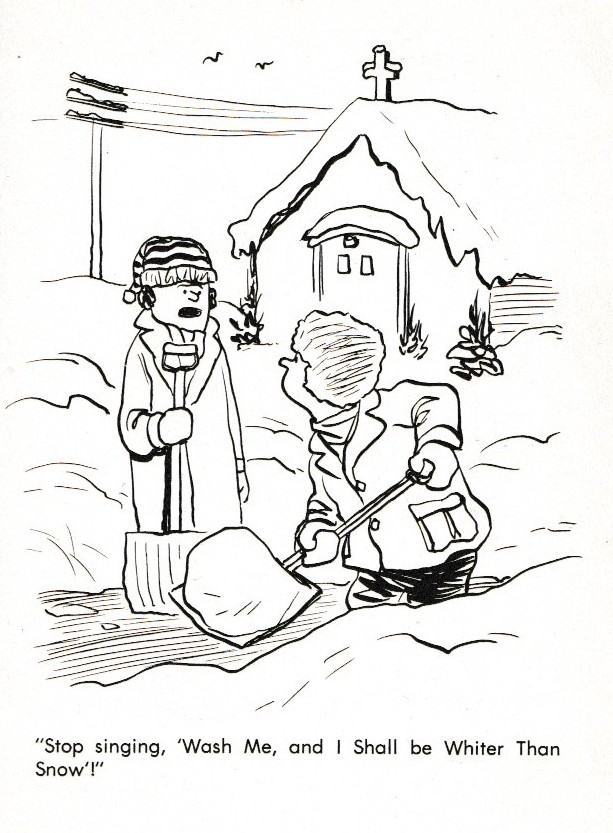
Every banner that the wide world flies
Bloomed with glory and transcendent dyes.
Big-voiced lasses made their banjos bang,
Tranced, fanatical they shrieked and sang:—
“Are you washed in the blood of the Lamb?”
Hallelujah! It was queer to see
Bull-necked convicts with that land make free.
Loons with trumpets blowed a blare, blare, blare
On, on upward thro’ the golden air!
(Are you washed in the blood of the Lamb?)
[BASS DRUM SLOWER AND SOFTER]
Booth died blind and still by Faith he trod,
Eyes still dazzled by the ways of God.
Booth led boldly, and he looked the chief
Eagle countenance in sharp relief,
Beard a-flying, air of high command
Unabated in that holy land.
Poetry: A Magazine of Verse, 1913
[SWEET FLUTE MUSIC]
Jesus came from out the court-house door,
Stretched his hands above the passing poor.
Booth saw not, but led his queer ones there
Round and round the mighty court-house square.
Yet in an instant all that blear review
Marched on spotless, clad in raiment new.
The lame were straightened, withered limbs uncurled
And blind eyes opened on a new, sweet world.
[BASS DRUM LOUDER]
Drabs and vixens in a flash made whole!
Gone was the weasel-head, the snout, the jowl!
Sages and sibyls now, and athletes clean,
Rulers of empires, and of forests green!
[GRAND CHORUS OF ALL INSTRUMENTS.
TAMBOURINES TO THE FOREGROUND]
The hosts were sandalled, and their wings were fire!
(Are you washed in the blood of the Lamb?)
But their noise played havoc with the angel-choir.
(Are you washed in the blood of the Lamb?)
O shout Salvation! It was good to see
Kings and Princes by the Lamb set free.
The banjos rattled and the tambourines
Jing-jing-jingled in the hands of Queens.
[REVERENTLY SUNG. NO INSTRUMENTS]
And when Booth halted by the curb for prayer
He saw his Master thro’ the flag-filled air.
Christ came gently with a robe and crown
For Booth the soldier, while the throng knelt down.
He saw King Jesus. They were face to face,
And he knelt a-weeping in that holy place.
Are you washed in the blood of the Lamb?
What to make of this poem? Clearly inspired by Booth’s recent death (1912), Lindsay anchors his poem in the 7th Chapter of Revelation and the Social Gospel Movement of the early 20th Century. And though written over a century ago, the rhythmic description of Booth and his band of broken souls entering heaven has a modern ring to it. My grandfather’s fascination with it helps me understand what drove him to mission work.
Finally, I suspect most of us have tried to imagine our future journey into the afterlife, the great mystery. The authors of Revelation and 1 John certainly did. Will we meet those saints that have gone before us there, in that place where “God will wipe away every tear” from our eyes . . . “wherewe will be like him, for we will see him as he is?” This remains our redeeming, liberating, and powerful hope! May we boldly share this message of salvation!
God, when I hear the word “saint” I often associate it with those who no longer walk this earth, who are dwelling in eternal rest. I can think of many people in my own life who had an impact with me, who I cannot wait to see them again. Lord, I dearly miss my friends and family who are not here on earth anymore. But I also rejoice that they will no longer experience pain or shed any tears of sadness. God, although I’m sad I am temporarily away from them, I want to thank you so much for bringing them into my life. They have shaped me to be more like you, and I will forever remember their example. Amen.
And, finally, here is a great version of this powerful hymn (from Singapore):
Introduction to Readers: Next Sunday provides an example of how the ELCA and other churches that trace their heritage to the Protestant Reformation utilize different texts than those prescribed by the Revised Common Lectionary. Recall that the RCL is a guideline for churches, not a mandate, as such. For example, there is also something called the “Narrative Lectionary” and various preaching series that offer alternative texts (sidebar: the same can be said of the various liturgies available to us in the ELW).
The readings listed below will be used in ELCA churches this weekend (while the RCL offers the following for Pentecost 22: Leviticus 19:1-2, 15-18; Psalm 1; 1 Thessalonians 2:1-8; and Matthew 22: 34-46).As you work your way through the Reformation texts, find the common threads and consider WHY each of them is appropriate for a Sunday that focuses on our Lutheran heritage. My commentary will focus on Psalm 46. In addition, I will point you to an excellent commentary focusing on the situation in the Middle East. Thanks for your continued interest in the Lectionary!
Readings for Reformation Sunday (Pentecost 22) Jeremiah 31:31-34 Focus Reading: Psalm 46 (text below my reflection) Romans 3:19-28 (Luther’s favorite book!) John 8:31-36
This Week’s Reflection, Part 1: “A Mighty Fortress is our God!”
Martin Luther (1483-1546)
506 years ago, this week (October of 1517), the rebellious Augustinian monk Martin Luther posted his famed Ninety-Five Theses on the door of the Castle Church in Wittenberg, Germany prompting debates that, over time, fractured Roman Catholicism and planted the seeds for the Protestant Reformation. A brilliant and complex individual, Luther spent years translating the Bible into German, produced tracts and commentaries that fill volumes, and produced a large and small catechism for the education of both clergy and common people. A gifted musician, Luther also wrote hymns — thirty-six are attributed to him. Most famously, he composed “Ein feste Burg ist unser Gott,” known to us as “A Mighty Fortress is our God” (hymn number 504 in the ELW). Known as “The Battle Hymn of the Reformation,” Luther most likely penned it between 1527-1529, according to Anglican clergyman and hymnology expert John Julian.
Luther’s Hymn — An Early Printing
Luther clearly derived great strength from the Psalms, referring to them as the “Bible in miniature.” Psalm 46 held a special place in his heart, specifically in 1527 with the plague surging through Europe while Luther faced enormous pressures in his own life, including the near death of his son. Reflecting on Psalm 46, Luther made the following gritty observation: “We sing this psalm to the praise of God, because He is with us and powerfully and miraculously preserves and defends His church and His word against all fanatical spirits, against the gates of hell, against the implacable hatred of the devil, and against all the assaults of the world, the flesh, and sin.”
There are many great versions of this powerful hymn available, and this one by the St. Olaf Choir is especially majestic. Take a listen while you explore Psalm 46 adjacent to the lyrics of the hymn — imagine the mind of Luther at work!
Psalm 46
A Mighty Fortress is our God
1 God is our refuge and strength, a very present help in trouble.
2 Therefore we will not fear, though the earth should change, though the mountains shake in the heart of the sea,
3 though its waters roar and foam, though the mountains tremble with its tumult. Selah
4 There is a river whose streams make glad the city of God, the holy habitation of the Most High.
5 God is in the midst of the city; it shall not be moved; God will help it when the morning dawns.
6 The nations are in an uproar; the kingdoms totter; he utters his voice; the earth melts.
7 The Lord of hosts is with us; the God of Jacob is our refuge. Selah
8 Come, behold the works of the Lord; see what desolations he has brought on the earth.
9 He makes wars cease to the end of the earth; he breaks the bow and shatters the spear; he burns the shields with fire.
10 “Be still, and know that I am God! I am exalted among the nations; I am exalted in the earth.”
11 The Lord of hosts is with us; the God of Jacob is our refuge. Selah
1 A mighty fortress is our God, A bulwark never failing; Our helper He amid the flood Of mortal ills prevailing. For still our ancient foe Doth seek to work us woe– His craft and power are great, And, armed with cruel hate, On earth is not His equal.
2 Did we in our own strength confide, Our striving would be losing. Were not the right man on our side, The man of God’s own choosing. Dost ask who that may be? Christ Jesus, it is He– Lord Sabaoth His name, From age to age the same, And He must win the battle.
3 And though this world with devils filled, Should threaten to undo us, We will not fear, for God hath willed His truth to triumph through us. The prince of darkness grim, We tremble not for him– His rage we can endure, For lo, his doom is sure: One little word shall fell him.
4 That word above all earthly powers, No thanks to them, abideth; The Spirit and the gifts are ours Through Him who with us sideth. Let goods and kindred go, This mortal life also– The body they may kill; God’s truth abideth still: His kingdom is forever. Amen.
This Week’s Reflection, Part 2: Commentary on Israel and Palestine
Those of us that old enough will recall the Yom Kippur War of 1973, when a coalition of Arab states attacked Israel on the Jewish holiday known as Yom Kippur (I was a junior in high school). Among other major ramifications, it is one of very few times during the Cold War that our nation went to “high alert” with our nuclear arsenal, meaning that use of the weapons could have occurred within 15 minutes! That moment from my youth has been on my mind for the past several days.
We are now 17 days beyond the horrific attacks by Hamas on Israel (October 7), and the heartbreaking story continues to evolve. I am attempting to follow it without becoming overwhelmed, in part, by seeking out good sources of information and commentary. Protestant theologian and scholar Daniel B. Clendenin (who I have cited previously in Faithful Conversations) has offered an excellent reflection on the current situation, and I commend it to your reading here.He draws inspiration from the Matthew’s Gospel, part of this week’s RCL.
Soli Deo Gloria
Some Reformation Humor!
Prayer: Luther’s Evening Ritual (a good one!): In the evening when you go to bed, make the sign of the holy cross and say:
In the name of the Father and of the + Son and of the Holy Spirit. Amen.
Then kneeling or standing, repeat the Creed and the Lord’s Prayer. If you choose, you may also say this little prayer:
I thank You, my heavenly Father, through Jesus Christ, Your dear Son, that You have graciously kept me this day; and I pray that You would forgive me all my sins where I have done wrong, and graciously keep me this night. For into Your hands I commend myself, my body and soul, and all things. Let Your holy angel be with me, that the evil foe may have no power over me. Amen.
Introduction to Readers: The echoes of history lurk around every corner in the tortured factionalism of the modern Middle East. The Israel-Hamas conflict on full display serves as a reminder of our broken world and the failure of political solutions in the seemingly intractable divisions of our time (other regional wars rock out planet right now — Ukraine, Myanmar, and Somalia, to name just three). I suspect I speak for many when I say the issues underlying such conflicts — the full slate of issues — remain known only to God and we are seeing “through a glass darkly” in our attempts to understand. That said, this week I again offer the following explanations (hyperlinked) that, though incomplete, helped me understand things somewhat more fully. I commend them to you if you are seeking more information! (I’m seeking sources that offer balance, but that is difficult when approaching this topic).
We continue to pray for the region and all its people — Jews, Muslims, and Christians — especially those that are most vulnerable. It is truly hard to fathom what they are experiencing.
Speaking of politics, they are infused into the Old Testament reading and the Gospel this week. My reflections will center on the Isaiah passage and the story of Cyrus the Great. Thanks for your ongoing interest in the Lectionary and may God bless your spiritual journey this week!
Readings for Pentecost 21 Isaiah 45:1-7 Psalm 96:1-9 (10-13) 1 Thessalonians 1:1-10 Matthew 22:15-22
Focus Reading: Isaiah 45:1-7 Thus says the Lord to his anointed, to Cyrus, whose right hand I have grasped to subdue nations before him and to strip kings of their robes, to open doors before him—and the gates shall not be closed: 2 I will go before you and level the mountains; I will break in pieces the doors of bronze and cut through the bars of iron; 3 I will give you the treasures of darkness and riches hidden in secret places, so that you may know that it is I, the Lord, the God of Israel, who call you by your name. 4 For the sake of my servant Jacob and Israel my chosen, I call you by your name; I give you a title, though you do not know me. 5 I am the Lord, and there is no other; besides me there is no god. I arm you, though you do not know me, 6 so that they may know, from the rising of the sun and from the west, that there is no one besides me; I am the Lord, and there is no other. 7 I form light and create darkness, I make weal and create woe; I the Lord do all these things.
This Week’s Reflection: Our God and History He looked at me over his glasses and said, “It’s always important to contemplate the role of God in human history”(I recall him offering Galatians 4:4 as a worthy illustration — you may want to look that up!). Dr. Herman Larsen (1915-2003), a commanding presence, served as my freshman year advisor at Concordia in 1975. I was doing an oral book report (an intimidating experience) with him in his office for my European history class — a biography of Martin Luther, no less — when he interjected with his admonition concerning history. It was later that I learned that Dr. Larsen, the brilliant St. Olaf and Yale educated man, spent three years in a Japanese prison camp during World War II, a result of his service as a missionary in China. Clearly, this history professor and ordained pastor attributed his survival to God. I thought about him this week while reading Isaiah’s prophetic description of Cyrus.
The Ancient Middle East
Cyrus the Great (590-529 BCE), by all accounts, was a remarkable leader. He ruled over the Persian Empire, the largest at the time, that stretched from present day Iran into modern Turkey. The only non-Jewish person in the Bible referred to as “Messiah,” Cyrus appears 23 times in the scriptures (in Isaiah, Ezra, 2 Chronicles, and Daniel). A hero in Jewish history, this pagan ruler is credited with overtaking Babylon and liberating the Jews being held in captivity and assisting in the rebuilding of the Temple in Jerusalem. Further, he is often cited as a tolerant ruler, allowing those under his authority to live and worship as they pleased, while having at least some voice in their political lives.
In this week’s reading from Isaiah, the prophet foretells Cyrus’ coming more than a century prior to his birth. Despite not knowing God, Cyrus will be chosen and honored (45:4). Beyond the verses cited in the Lectionary, we hear these words: “I have aroused Cyrus in righteousness, and I will make all his paths straight; he shall build my city and set my exiles free, not for price or reward, says the Lord of hosts” (45:13). Indeed, Cyrus is chronicled in Jewish history for his great deeds, notably in the book of Ezra, written in 400 BCE and aimed at Jewish descendants of those who were exiled. Note the language attributed to him in Ezra 1:2-4:
2 “Thus says King Cyrus of Persia: The Lord, the God of heaven, has given me all the kingdoms of the earth, and he has charged me to build him a house at Jerusalem, which is in Judah. 3 Let any of those among you who are of his people—may their God be with them!—go up to Jerusalem in Judah and rebuild the house of the Lord, the God of Israel; he is the God who is in Jerusalem. 4 And let all survivors in whatever place they reside be assisted by the people of their place with silver and gold, with goods, and with livestock, besides freewill offerings for the house of God in Jerusalem.”
Cyrus and Astyages by French painter Jean-Charles Nicaise Perrin (1754–1831)
What lessons should we draw from the story of Cyrus? First, I’m drawn back to my professor’s assertion to me from nearly 50 years ago: we should contemplate God’s role in history. Our all-powerful Creator intervenes in ways that may seem evident but, in truth, are often incomprehensible to us. I was not raised within the traditions of those who frame our times within specific Biblical prophecies and always sense some overreach when we do that — there is so much we simply don’t know. That said, the story of Cyrus reminds us that it is possible for our God to motivate those we may least expect — those outside the traditional faith — to accomplish His ends. Cyrus, it seems, was positioned well to carry out God’s will.
And second, though our present situation seems fraught with danger and, at times, hopeless beyond measure, our God surrounds us with His love, a love that motivates us to be grace-filled people who are willing to walk into a dangerous world with courage and strength.
Soli Deo Gloria
Prayer (inspired by Psalm 96): Lord God, We sing to you this day, a new song and glorify your name. Inspire us to share your marvelous works within our families and communities. You make the seas roar, and the trees and forests sing for joy! May all creation praise your holy name! Amen.
Finally . . . one more update regarding our current study:
What does it mean to be a disciple of Jesus Christ? We are exploring that question in September and October. We are reading and discussing Michael Foss’s book, Real Faith for Real Life: Living the Six Marks of Discipleship.
We have one meeting left — Wednesday 18 October at 6:30 at ELC. If you have missed the study and are interested in the book, let me know!
Text (715.299.0311) Email: pstrykken@gmail.com
Stay tuned for further updates regarding our Adult Education and Bible Studies.