Introduction to Readers: Welcome back to Faithful Conversations! I’m deviating from my normal pattern this week a bit and offering three things. First, we’re about to celebrate the 248th anniversary of our nation’s founding, and two recent news events have prompted me to think about that confounding intersection between faith and politics. Second, I want to introduce you to a wonderful resource we have available to us through Luther Seminary and offer you a challenge for next Sunday! Finally, I’m sharing another commentary on prayer by Henri Nouwen (I’m a fan!). So, let’s get started.
(Note: Please feel free to offer comments or feedback for the benefit of the group!)
part 1: separating church and state
The Ten Commandments
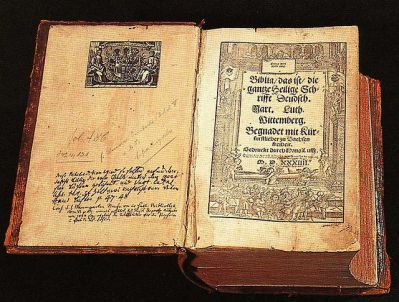
Within the past couple of weeks, two states have been in the national headlines for actions taken regarding religion and the public schools. First, Louisiana’s legislature has mandated the displaying of the ten commandments in taxpayer supported schools (Kentucky attempted this in 1980, but the law was struck down).According to the new law, public schools must prominently display a poster or framed copy of the Ten Commandments in every classroom, as well as in the school library and cafeteria. And second, Oklahoma’s Superintendent of Public Instruction, Ryan Walters, issued an edict requiring schools in the state to teach the Bible as part of their curricula for grades five through 12. The mandate emphasizes the Bible’s historical and cultural significance, as well as its influence on the nation’s founders and constitutional principles. Schools are also instructed to refer to the Ten Commandments.
How should we view these efforts by Louisiana and Oklahoma through the lens of our faith? Further, does the ELCA offer any guidance in this regard? Let me offer a couple things here. First, for some background, here is a short screencast with some background on how the Founders approached religion.
part 2: the sunday readings, a resource, and a challenge!
The Readings for Pentecost 7 Ezekiel 2: 1-5
Psalm 123
2 Corinthians 12: 2-10
Mark 6: 1-13
A Quick Take on Sunday’s Lectionary: The readings for Pentecost 7 from Ezekiel 2:1-5, Psalm 123, 2 Corinthians 12:2-10, and Mark 6:1-13 all highlight the themes of prophetic mission, human weakness, and reliance on God’s strength and grace. Ezekiel’s commission as a prophet despite anticipated resistance, and Jesus sending out His disciples amidst His own rejection, illustrate the challenge of proclaiming God’s message. Both Paul, in his admission of weakness, and the psalmist, in their plea for mercy, emphasize humility and the necessity of depending on God’s grace. Together, these passages underscore the call to faithful obedience, the acceptance of human frailty, and the reliance on divine empowerment to fulfill God’s purposes.
A Resource and a Challenge! As you know, we live in a time of amazing access to information related to the Bible! Luther Seminary in St. Paul has several outstanding resources that are game-changing when it comes to studying the scriptures. Below I have linked the “Enter the Bible” site, and it would be great for you to see what is available there. Here’s my challenge for you this week:
When you arrive at the site, go to the “Books” link at the top, and search out one of this week’s readings (note: there may be a survey linked at the top, which you can “X” out; also, you can create an account for the site — no charge — if interested).
Then, for practice, search out Ezekiel (the first reading). When you arrive there, you will note that you get into all sorts of information about the book, including “Passages” (under “See All Our Related Content”). Find the passage that includes this week’s reading (it won’t be exact, but you will get the idea). Once there, you can read an analysis of the passage.
Pastor Jenny Hatleli
Now . . . here’s another thing to try. Pastor Jen and I have an ongoing conversation about the Lectionary, and I know from talking to her on Sunday that she will be preaching on Mark 6: 1-13 next Sunday. Take some time with it and think about what you might emphasize if you were going to talk to someone about it. What ideas would you want to communicate? This is a great way to engage in that portion of the worship experience! Here’s the link — enjoy the process!
Part 3: a commentary on prayer from henri nouwen
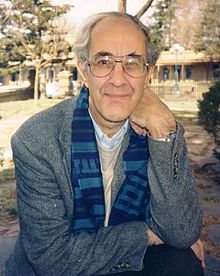
Henri Nouwen (1932-1996)
This really gave me something to think about! Wow!
“Prayer and action can never be seen as contradictory or mutually exclusive. Prayer without action grows into powerless pietism, and action without prayer degenerates into questionable manipulation. If prayer leads us into deeper unity with the compassionate Christ, it will always give rise to concrete acts of service. And if concrete acts of service do indeed lead us to a deeper solidarity with the poor, the hungry, the sick, the dying, and the oppressed, they will always give rise to prayer. In prayer we meet Christ, and in him all human suffering. In service we meet people, and in them the suffering Christ. . . . Action with and for those who suffer is the concrete expression of a compassionate life and the final criterion of being a Christian.”
— Henri Nouwen, Meditation for 26 May 2024
Note: Our lectionary small group will not meet on sunday 7 july after service. We will gather again, however, on 14 july after the 8:30 service at elc! come and join the conversation! No special expertise or prior knowledge is necessary! all are welcome!
Algerian Refugee Children 1963 Supported by Luther Aid of Sweden
PERSPECTIVE has been on my mind lately — how we perceive the world around us and the events of our time, particularly through our Christian lens (our exhausting political environment has prompted this!). For example, I have long been convinced that American citizens should be required to absorb a minimum of 15 minutes of international news every day to see how our fellow human beings are faring around the planet. The global prism quickly confirms that much of what is happening in the United States mirrors transnational trends, and we are incredibly fortunate, relatively speaking. It is astonishing to me, as one example, that there are currently more than 120 million refugees in the world, people forced from their homes, and that 40% of them are children! As a father and grandfather, this grieves my heart and makes me ashamed for the trivial matters I complain about day to day. And consider how this one issue is impacting political debates in our nation and elsewhere! Alarming, to say the least. (Sidebar: Global Refuge — formerly Lutheran Immigration and Refugee Service — was established after World War II, and the ELCA has a longstanding tradition with refugee work. In post-war Europe, nearly 60 million people became refugees and 10 million of those were Lutheran Christians).
My father was what I would call a hopeful realist. One of his favorite admonitions to me was this: Things are never as good as they seem, nor are they as bad as they seem. Reality is somewhere in the middle.* This perspective serves me well! With such thoughts as a backdrop, I’m reflecting on the Christian concept of LAMENTING this week, prompted by the Old Testament reading. How should we deal with authentic sadness in our lives, debilitating despair that drives us to weep and wail, openly or internally? As always, thanks for spending a few minutes in this space each week. I offer these postings with humility as a Christian brother.
* I have learned that the Roman poet Phaedrus famously said something akin to that, and perhaps that’s where Unk (my dad) learned it. (The derivative quote is this: “Things are not always what they seem; the first appearance deceives many; the intelligence of a few perceives what has been carefully hidden”). Much to think about there!
Before you read this week . . . A Quick Take on Sunday’s Lectionary: The readings for Pentecost 6 weave together themes of divine compassion, restoration, and transformative faith. Lamentations 3:22-33 highlights God’s steadfast love and mercy even in times of affliction, urging hope and trust in His faithfulness (the focus of my reflections). Psalm 30 celebrates deliverance from distress, emphasizing praise and gratitude as responses to God’s healing power (an inspiration for this week’s prayer). 2 Corinthians 8:7-15 calls for generosity and equality in sharing resources, echoing the principles of Christ-like love and solidarity within the Christian community. Mark 5:21-43 underscores Jesus’ healing touch, illustrating faith that overcomes despair and brings about miraculous restoration. Together, these passages emphasize God’s enduring compassion, the transformative power of faith, and the call to respond with gratitude, generosity, and trust in His providence.
The Readings for Pentecost 6 Lamentations 3:22-33 (focus passage)
Psalm 30
2 Corinthians 8: 7-15
Mark 5: 21-43
The Old Testament Reading: Lamentations 3: 22-33
22 The steadfast love of the Lord never ceases, his mercies never come to an end; 23 they are new every morning; great is your faithfulness. 24 “The Lord is my portion,” says my soul, “therefore I will hope in him.”
25 The Lord is good to those who wait for him, to the soul that seeks him. 26 It is good that one should wait quietly for the salvation of the Lord. 27 It is good for one to bear the yoke in youth,
28 to sit alone in silence when the Lord has imposed it, 29 to put one’s mouth to the dust (there may yet be hope), 30 to give one’s cheek to the smiter and be filled with insults.
31 For the Lord will not reject forever. 32 Although he causes grief, he will have compassion according to the abundance of his steadfast love; 33 for he does not willingly afflict or grieve anyone.
Reflections: “Great is your faithfulness”
The Bible is filled with voices of lament, prayers raised to God in the midst of devastating sorrow. The first reading this week comes from Lamentations, and I invite you to spend some time with the entire book in the days ahead (some scholars believe that Jeremiah authored Lamentations, but there is no consensus on that). It contains five poems, each reflecting on the fall of Jerusalem and subsequent exile at the hands of the Babylonians in 586 B.C.E. (yes, they became refugees!). Many voices of suffering emerge in the five poems — children, parents, political and religious leaders, prisoners, and widows — all reacting to an existential disaster.
To get a better sense of this week’s passage, it is important to read all of Chapter 3(sidebar: Lectionary readings often puzzle me a bit because of how they are divided, but I digress). Verses 1-21 are filled with anger and despair. The speaker accuses God of ignoring — even causing — horrible suffering. I picture a man or woman standing amidst rubble, shaking their fist at God! The writer, however, then makes a powerful transition in verse 21, setting up this week’s reading: “But this I call to mind, and therefore I have hope.” So, what is “this” referring to in verse 21? The answer comes in verses 22- 24. Dwell on these words for a few moments: The steadfast love of the Lord never ceases, his mercies never come to an end; they are new every morning; great is your faithfulness. “The Lord is my portion,” says my soul, “therefore I will hope in him.” What an incredible dialogue!
Lamentation of Christ by Ludovico Carracci (1555–1619)
What should we take away from this? First, the despairing voices feel very contemporary to me, especially when I see the images coming out of the Middle East in 2024. Yes, lament is part of our lives — part of our world — every single day. We experience it ourselves and witness it in the lives of others. Second, spending some time on this for a few days makes me wonder if we avoid lament in our faith journey in these challenging times — that we forget the necessity of acknowledging authentic pain (“weeping and wailing”) in ourselves or others. It is easier to turn our gaze in a different direction, after all. Our culture, in my estimation, pushes us to do that. What are we to do?
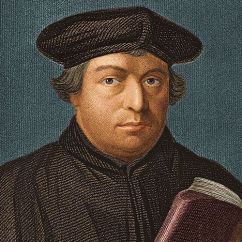
Martin Luther (1483-1546)
In 1525, Martin Luther offered a series of lectures on Lamentations. Among his many insights, and in typical Luther fashion, he emphasized what is termed a “Christological interpretation” of the book — a “Christ-centered” lens. He saw in its themes of suffering and hope a foreshadowing of Christ’s redemptive work. He drew connections between the suffering of those Israelites in 586 BCE and the future suffering of Christ, urging believers to repentance, faith, and trust in God’s promises. For Luther, that meant persevering in prayer, relying on God’s grace amidst life’s turmoil, and experiencing the transformative power of God’s Word. This is good news for us to share!
Soli Deo Gloria!
Prayer (Inspired by Psalm 30) Lord, in moments of despair, You lifted me from darkness into Your glorious light, turning my mourning into dancing. I praise You, O God, for Your faithfulness endures forever, and Your grace sustains me through every trial. May my heart sing Your praises always, for You have turned my sorrow into joy. Amen.
Finally . . . a hymn. Several of you have given me feedback on appreciating the occasional hymns that connect to the various parts of scripture we are reading. Inspired by Lamentations 3: 22-23, “Great is Thy Faithfulness” was a poem written by Thomas Obediah Chisholm (1866-1960). Converted to Christianity in 1893, Chisholm was ordained a Methodist minister in 1903. The lyrics to the hymn were put to music by William Runyan (1870-1957) in 1923. Though Chisholm was Methodist, surprisingly, the hymn was not made part of the United Methodist Hymnal until 1989. The ELCA included the hymn for the first time in the ELW (2006), our current hymnal. The version of the hymn posted below is great! Here are the lyrics:
Great is Thy faithfulness, O God my Father;
There is no shadow of turning with Thee;
Thou changest not, Thy compassions, they fail not;
As Thou hast been Thou forever wilt be.
Refrain:
Great is Thy faithfulness!
Great is Thy faithfulness!
Morning by morning new mercies I see:
All I have needed Thy hand hath provided—
Great is Thy faithfulness, Lord, unto me!
Summer and winter and springtime and harvest,
Sun, moon, and stars in their courses above
Join with all nature in manifold witness
To Thy great faithfulness, mercy, and love.
Pardon for sin and a peace that endureth,
Thine own dear presence to cheer and to guide,
Strength for today and bright hope for tomorrow—
Blessings all mine, with ten thousand beside!
If interested, join us after the 8:30 service at ELC on 30 June for some in-person discussion of this week’s readings. No special expertise or prior knowledge is necessary! all are welcome!
Stormy seas are on my mind this week. In April of 1868, my great-great grandfather Torger Rykken and his wife Agata, along with their seven children, including my twelve-year-old great-grandfather Kittel, boarded a ship in Bergen to begin the 3,000-mile journey across the North Atlantic to Quebec. Encountering a terrifying two-day storm early in the voyage that blew them 100 miles off course, they nearly perished. One of their infant children, Kristi (my great-aunt), died several days before they reached North America, a fact they kept hidden from the ship’s captain to avoid a burial at sea.* Once in Quebec, they traveled by train to Detroit, then across southern Michigan and a ferry crossing to Milwaukee. From there, they boarded a train to Rushford, Minnesota, arriving on the 4th of July to start their new life in America.
Beyond the fact that this week’s Gospel reading involves another dangerous crossing, I’m sharing this family story for two reasons. First, it is humbling to imagine the staggering challenges my ancestors navigated compared to my own, something we have all contemplated. One can only admire their courage and rock-solid faith. And second, their survival in the face of that dramatic storm 156 years ago, reminds me of what historians call contingency— the notion that historical events are not predetermined but are influenced by a complex interplay of unpredictable factors, circumstances, and individual actions. The fact is, I would not be writing this had they not survived. We all have such moments in our backstories, known or unknown, and they prompt us to examine the meaning of our lives.
My reflections this week will focus on that long-ago storm in the Sea of Galilee recounted on Mark’s Gospel. I’m also including a powerful poem by Howard Thurman. As always, thanks for taking a few minutes in this space again this week. I pray for all of us as we move forward in our understanding of the scriptures!
* Torger buried Kristi near the shores of the St. Lawrence once they arrived in Quebec. A few months later, at the behest of Agata, he made the difficult journey from Rushford back to Quebec to retrieve Kristi’s body and bring her back to Rushford for burial. What a painful and difficult trip that must have been!
Before you read this week . . . A Quick Take on Sunday’s Lectionary: The four lectionary readings for Pentecost 5 share common themes of God’s supreme power over creation, His deliverance and care for His people, and the call for human faith and trust in His sovereignty. Job 38 emphasizes God’s control over the natural world, setting the stage for recognizing His omnipotence. Psalm 107 illustrates God’s ability to calm storms and save those in trouble, urging people to give thanks. 2 Corinthians 6 speaks to enduring hardships with faith, relying on God’s grace and support. Mark 4 portrays Jesus calming a storm, showcasing His divine authority and encouraging the disciples to trust in Him. Together, these readings highlight the importance of recognizing God’s power, trusting in His care, and remaining steadfast in faith during life’s challenges.
The Readings for Pentecost 5 Job 38: 1-11
Psalm 107: 1-3, 23-32
2 Corinthians 6: 1-13 Mark 4: 35-41 (Focus Reading)
A Portion of Psalm 107 (as a backdrop for the Gospel)
Some went down to the sea in ships, doing business on the mighty waters; 24 they saw the deeds of the Lord, his wondrous works in the deep. 25 For he commanded and raised the stormy wind, which lifted up the waves of the sea. 26 They mounted up to heaven; they went down to the depths; their courage melted away in their calamity; 27 they reeled and staggered like drunkards and were at their wits’ end. 28 Then they cried to the Lord in their trouble, and he brought them out from their distress; 29 he made the storm be still, and the waves of the sea were hushed. 30 Then they were glad because they had quiet, and he brought them to their desired haven.
Storm on the Sea of Galilee (1663) Rembrandt (1606–1669)
The Gospel Reading: Mark 4: 35:41: Jesus Stills a Storm 35 On that day, when evening had come, he said to them, “Let us go across to the other side.” 36 And leaving the crowd behind, they took him with them in the boat, just as he was. Other boats were with him. 37 A great windstorm arose, and the waves beat into the boat, so that the boat was already being swamped. 38 But he was in the stern, asleep on the cushion, and they woke him up and said to him, “Teacher, do you not care that we are perishing?”39 And waking up, he rebuked the wind and said to the sea, “Be silent! Be still!” Then the wind ceased, and there was a dead calm. 40 He said to them, “Why are you afraid? Have you still no faith?” 41 And they were filled with great fear and said to one another, “Who then is this, that even the wind and the sea obey him?”
reflections: “he made the storm be still”
As Mark tells it, Jesus and his disciples set out across the Sea of Galilee when a fierce storm arises. With chaos swirling around them, Jesus remains asleep in the stern. The terrified disciples wake him, pleading for help, astonished by his seeming nonchalance. Jesus then rebukes the wind, commanding the sea to be still, resulting in immediate calm. He questions their lack of courage and faith, leaving the disciples in awe and wonder at his authority over nature, asking each other, “Who then is this, that even the wind and the sea obey him?”
“Christ on the Sea of Galilee” c. 1611 Peter Paul Rubens (1577-1640)
What are we to make of this perplexing story? The dialogue between Jesus and his disciples is thought-provoking, especially these four questions: (the disciples) Teacher, do you not care that we are perishing? (Jesus) Why are you afraid? Have you still no faith? (the disciples) Who then is this, that even the wind and the sea obey him?
I find myself in every one of those questions. But let’s focus on Jesus for a minute. Notably, he goes to sleep amidst this terrifying storm. How can he do that? Was he simply exhausted from his ministry? Perhaps there is a different answer. Writing in a 2009 article in The Christian Century, UCC Minister Kate Layzer (Cambridge, Massachusetts), makes the following observation:
Jesus’ ministry is one dangerous crossing after another, starting with his baptism. The moment the waters close over his head, the moment God’s rushing Spirit meets and merges with his, his path through the world becomes one of confrontation: confrontation between entrenched interests and the in-breaking kingdom; confrontation between the way things are and the way God means them to be. The unclean spirits don’t want their boat rocked. Neither do the authorities. But the Spirit of the Lord is upon Jesus. Rocking the boat is what he’s come to do.
In other words, Jesus navigated storms from the very beginning, and we should learn from that. His earthly existence was perilous to say the least. In the dangerous crossings of our lives — physical and emotional pain, depression, addiction, broken relationships, fractured politics, the violence of war — it is easy to feel that God is distant, that Jesus is sleeping. Why is this happening to me? To us? Our fears and anxieties are real, and we want them to end! Echoing Psalm 107, we are in the depths and our courage melts away. Jesus, however, does not take away the calamities of our lives. Rather, he helps us navigate our storms. He provides courage, He provides hope. Nothing can defeat us. This is news that we need to share with others.
Soli Deo Gloria!
Prayer: thurman’s “I need thy sense of time”
Howard Thurman (1899-1981)
Note: Howard Thurman (1899-1981) was a pioneering African American theologian, educator, author, and civil rights leader. As Dean of Rankin Chapel at Howard University and later Dean of Marsh Chapel at Boston University, Thurman emphasized mysticism, nonviolence, and social justice. His influential book, “Jesus and the Disinherited,” profoundly impacted civil rights leaders like Martin Luther King Jr. Thurman’s work bridged personal spirituality with social activism, leaving a lasting legacy of compassion, justice, and deep spiritual insight. This poem/prayer echoes this week’s readings. I need Thy Sense of Time Always I have an underlying anxiety about things. Sometimes I am in a hurry to achieve my ends And am completely without patience. It is hard for me to realize that some growth is slow, that all processes are not swift. I cannot always discriminate between what takes time to develop and what can be rushed, because my sense of time is dulled. I measure things in terms of happenings. O to understand the meaning of perspective that I may do all things with a profound sense of leisure – of time.
I Need Thy Sense of Order The confusion of the details of living Is sometimes overwhelming. The little things keep getting in my way providing ready-made excuses for failure to do and be what I know I ought to do and be. Much time is spent on things that are not very important while significant things are put into an insignificant place in my scheme of order. I must unscramble my affairs so that my life will become order. O God, I need Thy sense of order.
I Need Thy Sense of the Future Teach me to know that life is ever on the side of the future. Keep alive in me the forward look, the high hope, the onward surge. Let me not be frozen either by the past or the present. Grant me, O patient Father, Thy sense of the future without which all life would sicken and die.
Amen.
If interested, join us after the 10:15 service at Hatfield on 23 June for some in-person discussion of this week’s readings. No special expertise or prior knowledge is necessary! all are welcome!
Jesus Teaching on the Mountain (A.I. Generated, 2023)
“With many such parables he spoke the word to them as they were able to hear it; he did not speak to them except in parables, but he explained everything in private to his disciples.”
These two verses (Mark 4: 33-34) stopped me in my tracks this week. On one level, they remind us that Jesus, reared within the tradition of Jewish storytelling, frequently used parables — allegorical stories — to convey spiritual truths. This was how his listeners were able to hear such truths. It’s that second clause, however, that was NEW to me — that he explained everything in private to his disciples. That feels personal as if Jesus is speaking directly to us across the centuries! Give that some thought this week.
Neil Postman (1931-2003)
So, WHY Jesus’ reliance on stories? Having been raised by a father who loved stories and subtly used them to enhance my understanding of the world, Jesus’ approach seems perfectly natural to me, and fitting with our human nature. Author and educator Neil Postman (1931-2003) offered this sharp assessment of the value of stories in an article from the late 1980s: “Nations need stories, just as people do, to provide themselves with a sense of continuity, or identity . . . Without stories as organizing frameworks we are swamped by the volume of our own experience, adrift in a sea of facts . . . A story gives us direction by providing a kind of theory about how the world works—and how it needs to work if we are to survive.” It seems to me that Jesus’ parables clearly do that! (Sidebar: Postman’s quote is exceedingly relevant, by the way, as we observe the twists and turns of our current political campaign. Clearly, candidates and political parties offer their worldview — an “organizing framework” and “theory about how the world works.” And, of course, they do this, in part, by attacking their opponent’s theory of the case. As citizens, we are left to sort this out — and we draw on our own stories to do that!)
After offering a short summary of this week’s readings, my reflections will focus on the two parables included in the passage from Mark. As always, thanks for your continuing interest in tackling the lectionary! One thing you might want to try this week is to take one reading per day and simply spend time with it — give yourself a few minutes to contemplate its meaning.
Before you read . . . A Quick Take on Sunday’s Lectionary: Look for these connecting themes in the readings for Pentecost 4: growth, renewal, and the flourishing of God’s kingdom.Ezekiel 17:22-24 speaks of God’s promise to bring about new life and growth, using the imagery of a tender shoot growing into a majestic cedar tree. Psalm 92:1-4, 12-15 celebrates the flourishing of the righteous, comparing them to strong and resilient trees planted by God. In 2 Corinthians 5:6-10 [11-13] 14-17, Paul discusses the transformation that occurs in those who are in Christ, emphasizing the newness of life and the reconciliation between humanity and God. Finally, in Mark 4:26-34, Jesus uses parables about seeds and mustard seeds to illustrate the gradual yet powerful growth of God’s kingdom.
The Readings for Pentecost 4 Ezekiel 17: 22-24
Psalm 92: 1-4, 12-15
2 Corinthians 5: 6-10 [11-13] 14-17 Mark 4: 26-34 (Focus Reading)
The Gospel Reading: Mark 4: 26-34 26 He also said, “The kingdom of God is as if someone would scatter seed on the ground 27 and would sleep and rise night and day, and the seed would sprout and grow, he does not know how. 28 The earth produces of itself first the stalk, then the head, then the full grain in the head. 29 But when the grain is ripe, at once he goes in with his sickle because the harvest has come.” 30 He also said, “With what can we compare the kingdom of God, or what parable will we use for it? 31 It is like a mustard seed, which, when sown upon the ground, is the smallest of all the seeds on earth, 32 yet when it is sown it grows up and becomes the greatest of all shrubs and puts forth large branches, so that the birds of the air can make nests in its shade.” 33 With many such parables he spoke the word to them as they were able to hear it; 34 he did not speak to them except in parables, but he explained everything in private to his disciples.
reflections: the mystery of the kingdom
Depending on how they are identified in the Gospels, we have roughly forty parables from Jesus. There are nine in Mark’s gospel and in this week’s passage, we are are challenged with two of them. The Parable of the Growing Seed (Mark 4:26-29), only present in Mark, illustrates how the kingdom of God grows mysteriously and gradually, much like a seed planted in the ground that grows and produces a harvest without the farmer fully understanding how it happens. The Parable of the Mustard Seed (Mark 4:30-32) appears in all three Synoptic Gospels** (compare to Matthew 13:31-32 and Luke 13: 18-19) and likens the kingdom of God to the tiny mustard seed that grows into a large plant, providing shelter for birds. What should we take away from these stories?
The Mustard Flower
Let me start with the more familiar of the two — that of the mustard seed. In ancient Palestine, where agriculture was a primary way of life, listeners would have been familiar with mustard seeds and the plants they produced. The seeds were commonly used as a spice and for medicinal purposes, and mustard plants were known for their exponential growth. We might imagine that for a small group of people, many of them from the lower echelons of society, many of them considered outcasts, Jesus’ metaphor signaled hope for the future. God’s entrance into history in human form meant something big was about to happen, and they had a front row seat.
The first parable (verses 26-29), that of the growing seed, surprised me, as is often the case with scripture. I’m sure I have read it a number of times, but I must have glossed over it. Jesus’ message here — that our work is simply to “plant the seeds” of the kingdom in our world — is profound. We do not (and cannot) fully grasp the working of the Holy Spirit in our midst. The awesome power of God is beyond our comprehension. Our role is to simply to be guided by the Holy Spirit and do the work in whatever manner we can. It’s that simple. We are not responsible for the outcome of that work. There will be successes and there will be failures, but God is in charge. It seems to me, especially as we navigate the challenges facing the Christian community in 2024, this is a powerful and liberating message for all of us!
Soli Deo Gloria!
**The Synoptic Gospels refer to the first three books of the New Testament: Matthew, Mark, and Luke. They are called “synoptic” because they share a similar structure, content, and even wording in many passages when compared side by side. The term “synoptic” comes from Greek roots meaning “to see together” or “to have a common view,” highlighting their shared perspectives on the life, teachings, death, and resurrection of Jesus Christ. The Gospel of John, while also about Jesus’ life and teachings, is distinct from the Synoptic Gospels in both its style and content. It includes unique stories, discourses, and theological reflections not found in Matthew, Mark, or Luke.
Prayer inspired by 2 Corinthians 5:17 and luther’s statement
Martin Luther (1483-1546)
Note: The phrase, “Grace is the experience of being delivered from experience,” is attributed to Martin Luther, and offers a great theological insight for us. Grace liberates us from those things that separate us from God, especially our past and present sins and consequences of those sins. 2 Corinthians 5:17 reminds us of that! It’s about daily renewal.
Heavenly Father,
Thank You for the promise of new beginnings in 2 Corinthians 5:17. As we embrace the new life found in Christ, help us to leave behind the old and be transformed by Your grace. Guide us to walk in Your ways, reflecting Your love and renewing our spirits each day. May our lives be a testament to the power of Your redemption, filled with hope and joy in Your presence. Amen.
I thought you might appreciate a bit of humor with today’s post! Join us after the 10:15 service at Hatfield on 16 June for some in-person discussion of this week’s readings. No special expertise or prior knowledge is necessary! all are welcome!
**Renewal is on my mind this week, triggered by three things: recent conversations with various people, the polarizing times we are experiencing in 2024, and next Sunday’s passage from 2 Corinthians. How do we experience renewal as individuals? Further, how are public institutions renewed? Important questions!
Due to my age (born 1957), one of the consistent narratives in my lifetime (especially since 1970) has been declining trust in institutions. Reputable polling organizations track this carefully, and the numbers are daunting.Cynicism lurks around every corner regarding government, political leaders, schools, organized religion (and the list goes on and on). Countless books have been churned out on this topic and explanations run deep. I don’t think it is coincidental, by the way, that decline trust has accelerated since the mid-1990s and the advent of the internet. Information has been democratized in the 21st Century, allowing people to challenge traditional narratives and authority figures more readily. Indeed, agreed upon truths have seemingly disappeared (“my truth is not your truth”).
William Butler Yeats (1865 –1939)
As is often the case, history provides perspective. We are not the first people in history to confront such anxious times. One of my favorite poems is called The Second Comingby Irish poet, William Butler Yeats. Prompted by the cataclysmic impact of the Great War, and the flu pandemic of 1918-19, Yeats captured the anxiety of his time in haunting language that feels contemporary:
Things fall apart; the centre cannot hold; Mere anarchy is loosed upon the world, The blood-dimmed tide is loosed, and everywhere The ceremony of innocence is drowned; The best lack all conviction, while the worst Are full of passionate intensity.
Surely some revelation is at hand; Surely the Second Coming is at hand.
My reflections for Pentecost 3 will center on the passage from 2 Corinthians and what it has to say to us about renewal. As always, thanks for visiting this space again this week and for your continued interest in exploring the Bible!
*The word “renewal” derives from a 14th Century Middle English word, “reneuen,” meaning to restore (a living thing) to a vigorous or flourishing state.
The Readings for Pentecost 3 Genesis 3: 8-15
Psalm 130 2 Corinthians 4: 13 – 5:1
Mark 3: 20-35
Gian Lorenzo Bernini “Dove of the Holy Spirit” (c. 1660) St. Peter’s Basilica, Vatican
A Quick Take on the Sunday Readings: The readings for Pentecost 3 are interconnected through the themes of human fallibility, divine mercy, faith, and spiritual kinship. In Genesis 3:8-15, we witness the origin of human sin and the resulting estrangement from God, setting the stage for the need for redemption. Psalm 130 responds to this condition with a cry for mercy and forgiveness, emphasizing the hope and trust in God’s redemptive love. In 2 Corinthians 4:13 – 5:1, Paul speaks of enduring faith despite suffering, highlighting the promise of eternal life and the renewal of our beings as a counter to the decay initiated by sin. Mark 3:20-35 ties these themes together by illustrating Jesus’ teaching on true kinship, defining it through obedience to God’s will rather than biological ties. Collectively, these passages reflect the journey from sin and separation towards faith, redemption, and spiritual unity with God.
The Second Reading: 2 Corinthians 4:13 – 5:1 (NRSV) 13 But just as we have the same spirit of faith that is in accordance with scripture—“I believed, and so I spoke”—we also believe, and therefore we also speak, 14because we know that the one who raised Jesus will also raise us with Jesus and will present us with you in his presence. 15 Indeed, everything is for your sake, so that grace, when it has extended to more and more people, may increase thanksgiving, to the glory of God. 16 So we do not lose heart. Even though our outer nature is wasting away, our inner nature is being renewed day by day. 17 For our slight, momentary affliction is producing for us an eternal weight of glory beyond all measure, 18 because we look not at what can be seen but at what cannot be seen, for what can be seen is temporary, but what cannot be seen is eternal. 5For we know that, if the earthly tent we live in is destroyed, we have a building from God, a house not made with hands, eternal in the heavens.
reflections on 2 Corinthians 4:13 – 5:1
In his book, Meeting St. Paul Today (2008), Daniel Harrington offers this description of Paul: Next to Jesus, Paul is the most prominent figure in the New Testament. Of the twenty-seven documents that constitute the New Testament, thirteen are letters attributed to Paul. Also, more than half of the Acts of the Apostles describes Paul’s conversion and subsequent activities on behalf of the spread of the good news about Jesus (the gospel).**
Saint Paul by Guercino (1591–1666)
Who was this guy? Born in Tarsus, a city in the Roman province of Cilicia (modern day Turkey), Paul was of the tribe of Benjamin and steeped in Judaism (his Hebrew name was Saul). Though contemporaries, Paul never met the earthly Jesus, but around CE 32, he experienced a dramatic conversion to Christianity (recounted in Acts 9, 22, and 26). Roughly ten years later, Paul began a series of missionary journeys that lasted for twelve years. Legend suggests that Paul died a martyr’s death in CE 67 at the hands of Nero, the Roman Emperor of the time.
Paul’s letters were mainly written in response to challenges that arose in Chrisian communities he had founded. 2 Corinthians, for example, comes from Paul and his companion Timothy, addressed to “the church of God that is in Corinth.” Though not full of detail, it is clear that Paul wrote the letter to defend his apostolic authority against a group of critics and false apostles who were undermining his ministry and questioning his legitimacy. In the portion of the letter we’re reading for Sunday, Paul speaks about faith and the eternal hope Christians have despite present sufferings. He acknowledges the hardships faced in life but contrasts them with the eternal glory that awaits. He reminds readers that their current physical bodies are temporary “earthly tents,” but they have the assurance of an eternal, heavenly dwelling from God.
There is much to process in this passage, but one thing stands out to me (note: I am indebted to Associate Professor of New Testament at Luther Seminary, Jennifer Vija Pietz, for her interpretation). Focusing on verses 14 and 16, we hear that powerful promise of eternal life (14), followed by Paul’s admonition not to “lose heart” in the face of present difficulties, and to realize that we are renewed every day in our inner nature (16). In other words, the resurrection, in some mysterious way, is ALREADY PRESENT in us today, that “believers live in a time ‘in-between,’ when their embodied lives can still be wounded by sin and decay even while Christ’s Spirit sustains and renews them” (Professor Pietz). This is what authentic renewal looks like. Nothing can defeat us in this life! This is the authentic joy and optimism of the Christian in a broken world. This is good news that we need to share with others!
Soli Deo Gloria
**Scholars are in broad agreement that seven of the thirteen letters attributed to Paul are directly from Paul’s hand. Here is a list of those, including dates: 1Thessalonians (CE 50 or 51), Galatians (53 or 54), 1 Corinthians (54 or 55), Philippians (54 or 55), Philemon (54 or 55), Corinthians (54 or 55), and Romans (56 or 57). The other six — known as Deuteropaulines — are thought to have been in Paul’s name by his students, most likely after he died: 2 Thessalonians, Colossians, Ephesians, 1 and 2 Timothy, and Titus).
Prayer inspired by psalm 130
Dear God, in our deepest struggles, we call out to You for mercy and place our hope in Your unfailing love and forgiveness. Guide us through our hardships and fill us with the strength that comes from Your steadfast presence. Amen.
finally, if you enjoy inspirational music . . .
The Stellanbosch University Choir (South Africa) is marvelous. This interpretation of Jake Runestad’s “Let My Love Be Heard,” fits well with Psalm 130. The story behind the music is compelling as well. Here is the text:
Angels, where you soar Up to God’s own light Take my own lost bird On your hearts tonight; And as grief once more Mounts to heaven and sings Let my love be heard Whispering in your wings
Join us after the 8:30 service at elc on 9 June for some in-person discussion of this week’s readings. No special expertise or prior knowledge is necessary! all are welcome!
Introduction to Readers: “Embrace the Process” Let me start with a reminder today. If you google “lectionary history,” you will quickly realize that we are following a tradition here that has a long and winding backstory. The current three-year cycle we follow in the ELCA, the Revised Common Lectionary (RCL), has its more immediate roots in the late 1960s, and includes four scripture passages for each Sunday — the Old Testament reading, the Psalm as a response to the OT reading, the New Testament reading, and the Holy Gospel (Mark is featured in Year B). We started this project in February of 2023 with one simple goal: to promote the spiritual discipline of Bible reading by focusing on the Sunday readings (realize that there are Daily Readings for the RCL as well).
One of my favorite admonitions to athletes I have coached over the years is, “Embrace the Process.” It is easy to get sidetracked, to lose focus, to lose patience — and one thing I have learned about Bible study is that it takes patience and prayer. Your continuing interest inspires me, and I thank you for that! My reflections this week focus on the Old Testament reading, and especially the third commandment.
Readings for Pentecost 2 Deuteronomy 5: 12-15
Psalm 81: 1-10
2 Corinthians 4: 5-12
Mark 2: 23 – 3:6
A Quick Take on the Readings for Pentecost 2: These readings invite us to honor God’s commands, trust in his grace, and recognize Jesus as the ultimate authority over tradition and human understanding. Deuteronomy 5:12-15 reiterates the commandment to observe the Sabbath, emphasizing its significance as a day of rest and remembrance of God’s liberation. Psalm 81:1-10 echoes this call to worship and obedience, reminding the people of God’s faithfulness and their covenant responsibilities. In 2 Corinthians 4:5-12, Paul reflects on the challenges of ministry, emphasizing the surpassing power of God’s grace amidst trials. Finally, in Mark 2:23-3:6, Jesus challenges the rigid interpretations of Sabbath observance, asserting his authority as the Lord of the Sabbath and revealing the true spirit of God’s law: mercy and restoration.
The First Reading: Deuteronomy 5: 12-15 12 Observe the Sabbath day and keep it holy, as the Lord your God commanded you. 13 Six days you shall labor and do all your work. 14 But the seventh day is a Sabbath to the Lord your God; you shall not do any work—you, or your son or your daughter, or your male or female slave, or your ox or your donkey, or any of your livestock, or the resident alien in your towns, so that your male and female slave may rest as well as you. 15 Remember that you were a slave in the land of Egypt, and the Lord your God brought you out from there with a mighty hand and an outstretched arm; therefore, the Lord your God commanded you to keep the Sabbath day.
(Compare to Exodus 20: 7-10) 7 “You shall not make wrongful use of the name of the Lord your God, for the Lord will not acquit anyone who misuses his name. 8 “Remember the Sabbath day and keep it holy. 9 Six days you shall labor and do all your work. 10 But the seventh day is a Sabbath to the Lord your God; you shall not do any work—you, your son or your daughter, your male or female slave, your livestock, or the alien resident in your towns.
Reflections on the sabbath day
“Blue Laws” (or Sunday Laws) have been on my mind this week, prompted by the Deuteronomy passage. Many of us are old enough to remember such laws, although Wisconsin moved away from them earlier than many other states. Having spent much of my young life in North Dakota, I saw these firsthand. Historically derived from 17th Century Puritanism, Blue Laws (so named, allegedly, because they were originally printed on blue paper) regulated activities that would be permitted on Sundays, or not, thereby enforcing Sabbath observance. The impulse behind such actions in a political system that separates church and state are complicated and over time, Blue Laws have faded. A bit of research tells me that 28 states still operate with Sunday Laws today, primarily related to the sale of alcohol. The relaxation of Blue Laws, I suppose, is but one sign that Sunday has become “just another day of the week” for a huge swath of our population, prompting a good deal of handwringing among the faithful. And we’re all aware that church attendance continues to decline, especially among young adults. That said, how should we interpret the words from Deuteronomy?
“Moses Receiving the Tablets of the Law” by Benjamin West (1738-1820)
First, some context. According to the Book of Exodus (Chapters 19-20), Moses ascended Mount Sinai, enveloped in smoke and thunder, to meet with God. There, in a dramatic, awe-inspiring moment, he received the Ten Commandments inscribed on two stone tablets, which provided a foundational moral and legal code for the Israelites. This event signaled a covenant between God and His chosen people, establishing guidelines for healthy living and worship. Moses’ descent from the mountain with the tablets symbolized the delivery of divine law to humanity, a cornerstone of Judeo-Christian tradition.
Like many of you, my introduction to the Ten Commandments came through studying and memorizing Luther’s Small Catechism more than fifty years ago. They were not presented to me as a set of rules, but rather as parameters for faithful living (Sidebar: Martin Luther adopted a specific approach to numbering the Ten Commandments that aligned closely with the Augustinian tradition, something that varies within the Christian community). In his explanation of the Third Commandment — Remember the sabbath day and keep it holy — Luther offered these words: We are to fear and love God, so that we do not despise preaching or God’s word, but instead keep that word holy and gladly hear and learn it. Luther is suggesting an attitude toward worship here. But, what about resting on the seventh day?
The idea of a day of rest (“Shabbat” in Hebrew) goes back to Genesis (2: 1-3) and the Creation story where God blessed the seventh day and set it apart. Both the Deuteronomy passage and the earlier one from Exodus (note above) appear to be saying the same thing, but as UCC biblical scholar (Lancaster Theological Seminary) Vanessa Lovelace points out, Deuteronomy 5:15 emphasizes God’s action in freeing the Israelites from slavery in Egypt (the exodus), rather than God resting on the seventh day as the source for this admonition. In other words, keeping the Sabbath meant remembering that period of enslavement, and God’s gift of liberation. Interesting. Further, both passages emphasize that resting from work applies to all, including you, or your son or your daughter, or your male or female slave, or your ox or your donkey, or any of your livestock, or the resident alien in your towns, so that your male and female slave may rest as well as you. In other words, we must take time for rest and focusing on God and allow others to have that same opportunity — this is a central part of our faith tradition. By doing so, we put ourselves in a position to deepen our faith journey and be touched by the miracle of God’s grace!
Soli Deo Gloria
prayer (inspired by Mark 2: 23 – 3:6)
Dear Heavenly Father,
As we reflect on the actions and teachings of Jesus in Mark 2:23-3:6, we ask for Your guidance and wisdom. Teach us to understand and embrace the true purpose of Your commandments, recognizing that compassion and mercy are at their heart. Help us to prioritize love and kindness in our daily lives, just as Jesus did when He healed on the Sabbath. May we have the courage to do what is right and just, even when it challenges conventional norms. Grant us the strength to extend grace and understanding to others, seeking always to do good and to honor You in all our actions. In your name we pray, Amen.
We will resume our in-person discussion of the Lectionary on Sunday (June 2) after the 8:30 worship service at ELC. Please feel welcome to join that discussion! no prior knowedge or special expertise is necessary — we grapple with scripture every week! All are welcome!
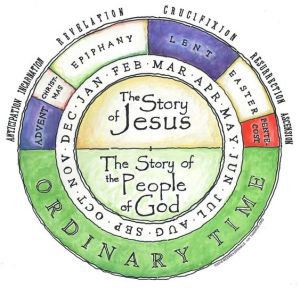
Summer is around the corner, and believe it or not, we have reached Ordinary Time, the longest phase in the liturgical calendar! We will be here until Advent and the start of the new church year. My reflections this week will focus on the presence of the Holy Trinity in the official creeds of the ELCA and the Isaiah reading. As always, thanks for returning to this space each week. I submit these posts with great humility, realizing that many who are reading know much more than I do about these spiritual topics! (Sidebar: I have provided more hyperlinks than normal this week due to the subject matter. These are offered for the benefit of those who want to take a deeper dive into the material — they are italicized and in bold type and a different color).
Let’s Start With a prayer and Some Context!
Almighty Creator and ever-living God: we worship your glory, eternal Three-in-One, and we praise your power, majestic One-in-Three. Keep us steadfast in this faith, defend us in all adversity, and bring us at last into your presence, where you live in endless joy and love, Father, Son, and Holy Spirit, one God, now and forever. Amen.
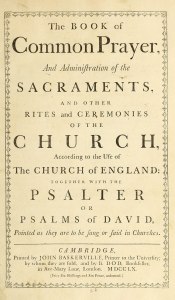
The Book of Common Prayer 1760 Edition
Across many denominations, formal worship includes the liturgy (customary public ritual performed by a religious group). The Propers are part of the liturgy that vary according to the date (think special observances like Epiphany or Pentecost) and correspond with the Revised Common Lectionary. The Prayer of the Day cited above (formerly referenced as the “Collect”), is designated for Holy Trinity Sunday and is from page 37 of the ELW (our hymnal). Such prayers derive, at least in part, from the Book of Common Prayer, dating back to the 16th Century Anglican Church. I included this prayer to spur reflections on what some have called, “the central mystery of the Christian faith and life,” the Holy Trinity.
“Shield of the Trinity” (Illustrating the Athanasian Creed) A Modern View of the 12th Century Diagram
While exploring the Holy Trinity this week, I was transported back to my religion classes at Concordia College in the mid-1970s, especially discussions regarding theological differences in the early Christian Church, most of which seemed beyond my ken! One such dispute that burned hot in the 4th Century centered on Arianism, the belief that Jesus was created by God and was not one with God. As one born into Lutheranism, I suspect I have taken the unity of Father, Son, and Holy Spirit for granted, but it is important to realize how central this is to our faith. As an illustration of that, I have included the three belief statements cited by the ELCA as sources for its official doctrine, the Apostle’s, Nicene, and Athanasian Creeds. It is fascinating to note the actual language in each creed (especially the Nicene and Athanasian) that is devoted to the concept of the Trinity! Scholars believe the Apostle’s Creed, the one we say most often, dates back to the 2nd Century. Both the Nicene and Athanasian Creeds, it should be noted, were written in response to heretical movements in their time, and primarily Trinitarian disputes (325 and the 5th Century, respectively). And, just for the record, I’m not sure I would want to tackle the Athanasian Creed every Sunday in our worship experience!
The Apostle’s Creed (2nd century)
I believe in God, the Father almighty, creator of heaven and earth.I believe in Jesus Christ, God’s only Son, our Lord, who was conceived by the Holy Spirit, born of the virgin Mary, suffered under Pontius Pilate, was crucified, died, and was buried; he descended to the dead.* On the third day he rose again; he ascended into heaven, he is seated at the right hand of the Father, and he will come to judge the living and the dead.
I believe in the Holy Spirit, the holy catholic Church, the communion of saints, the forgiveness of sins, the resurrection of the body, and the life everlasting. Amen.*Or, “he descended into hell,” another translation of this text in widespread use.
Nicene Creed (325 CE)
Athanasian Creed
(5th Century CE)
We believe in one God, the Father, the Almighty, maker of heaven and earth, of all that is, seen and unseen.
We believe in one Lord, Jesus Christ, the only Son of God, eternally begotten of the Father, God from God, Light from Light, true God from true God, begotten, not made, of one Being with the Father; through him all things were made. For us and for our salvation he came down from heaven, was incarnate of the Holy Spirit and the virgin Mary and became truly human. For our sake he was crucified under Pontius Pilate; he suffered death and was buried. On the third day he rose again in accordance with the scriptures; he ascended into heaven and is seated at the right hand of the Father. He will come again in glory to judge the living and the dead, and his kingdom will have no end.
We believe in the Holy Spirit, the Lord, the giver of life, who proceeds from the Father and the Son,* who with the Father and the Son is worshiped and glorified, who has spoken through the prophets.
We believe in one holy catholic and apostolic church.
We acknowledge one baptism for the forgiveness of sins.
We look for the resurrection of the dead, and the life of the world to come. Amen.
*Or, “who proceeds from the Father.” The phrase “and the Son” is a later addition to the creed.
Whoever wants to be saved should above all cling to the catholic faith. Whoever does not guard it whole and inviolable will doubtless perish eternally. Now this is the catholic faith:
We worship one God in trinity and the Trinity in unity, neither confusing the persons nor dividing the divine being. For the Father is one person, the Son is another, and the Spirit is still another. But the deity of the Father, Son, and Holy Spirit is one, equal in glory, coeternal in majesty. What the Father is, the Son is, and so is the Holy Spirit. Uncreated is the Father; uncreated is the Son; uncreated is the Spirit. The Father is infinite; the Son is infinite; the Holy Spirit is infinite. Eternal is the Father; eternal is the Son; eternal is the Spirit: And yet there are not three eternal beings, but one who is eternal; as there are not three uncreated and unlimited beings, but one who is uncreated and unlimited. Almighty is the Father; almighty is the Son; almighty is the Spirit: And yet there are not three almighty beings, but one who is almighty. Thus the Father is God; the Son is God; the Holy Spirit is God: And yet there are not three gods, but one God. Thus the Father is Lord; the Son is Lord; the Holy Spirit is Lord: And yet there are not three lords, but one Lord. As Christian truth compels us to acknowledge each distinct person as God and Lord, so catholic religion forbids us to say that there are three gods or lords. The Father was neither made nor created nor begotten; the Son was neither made nor created, but was alone begotten of the Father; the Spirit was neither made nor created, but is proceeding from the Father and the Son. Thus there is one Father, not three fathers; one Son, not three sons; one Holy Spirit, not three spirits. And in this Trinity, no one is before or after, greater or less than the other; but all three persons are in themselves, coeternal and coequal; and so we must worship the Trinity in unity and the one God in three persons.
Whoever wants to be saved should think thus about the Trinity. It is necessary for eternal salvation that one also faithfully believe that our Lord Jesus became flesh. For this is the true faith that we believe and confess: That our Lord Jesus Christ, God’s Son, is both God and man. He is God, begotten before all worlds from the being of the Father, and he is man, born in the world from the being of his mother—existing fully as God, and fully as man with a rational soul and a human body; equal to the Father in divinity, subordinate to the Father in humanity. Although he is God and man, he is not divided, but is one Christ. He is united because God has taken humanity into himself; he does not transform deity into humanity. He is completely one in the unity of his person, without confusing his natures. For as the rational soul and body are one person, so the one Christ is God and man. He suffered death for our salvation. He descended into hell and rose again from the dead. He ascended into heaven and is seated at the right hand of the Father. He will come again to judge the living and the dead. At his coming all people shall rise bodily to give an account of their own deeds. Those who have done good will enter eternal life, those who have done evil will enter eternal fire.
This is the catholic faith. One cannot be saved without believing this firmly and faithfully.
Readings for The Holy Trinity
Isaiah 6: 1-8
Psalm 29
Romans 8: 12-17
John 3: 1-17
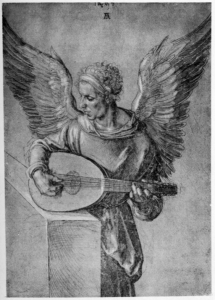
“Seraphim Plays the Lute” Albrecht Dürer (1471 – 1528)
A Quick Take on This Week’s Readings:
Think about the concept of the Holy Trinity as you walk through Sunday’s readings. In Isaiah 6:1-8, we are witnesses to Isaiah’s vision of the Lord seated on a throne, surrounded by seraphim (the closest angels to God who focus on praising and worshiping God for who he is and what he does). This imagery reflects the Father’s sovereignty. Psalm 29 portrays the powerful voice of God that thunders over the waters, shaking the wilderness, showcasing the might and authority of God, reminiscent of the Father’s divine power. In Romans 8:12-17, Paul discusses our adoption as children of God through the Spirit, highlighting the intimate relationship between believers and God as Father, while also acknowledging the role of the Holy Spirit in uniting us with Christ. Finally, in John 3:1-17, Jesus speaks to Nicodemus about being born of water and the Spirit, revealing the transformative work of the Holy Spirit in bringing about spiritual rebirth and salvation, thus portraying the unity of the Father, Son, and Holy Spirit in the divine plan of redemption.
Mosaic of the prophet Isaiah in the Dome of Immanuel in St Mark’s Basilica (Venice)
The First Reading: Isaiah 6: 1-8: A Vision of God in the Temple
In the year that King Uzziah died, I saw the Lord sitting on a throne, high and lofty, and the hem of his robe filled the temple. 2 Seraphs were in attendance above him; each had six wings: with two they covered their faces, and with two they covered their feet, and with two they flew. 3 And one called to another and said,
“Holy, holy, holy is the Lord of hosts;the whole earth is full of his glory.”
4 The pivots on the thresholds shook at the voices of those who called, and the house filled with smoke. 5 And I said, “Woe is me! I am lost, for I am a man of unclean lips, and I live among a people of unclean lips, yet my eyes have seen the King, the Lord of hosts!” 6 Then one of the seraphs flew to me, holding a live coal that had been taken from the altar with a pair of tongs. 7 The seraph touched my mouth with it and said, “Now that this has touched your lips, your guilt has departed and your sin is blotted out.” 8 Then I heard the voice of the Lord saying, “Whom shall I send, and who will go for us?” And I said, “Here am I; send me!”
Reflections on isaiah’s call
Isaiah by Michelangelo (1475-1564)
Old Testament encounters between individuals and God are often profound and pivotal moments in biblical narratives.* Varied in nature, they range from visions and dreams to physical manifestations, but they all serve to convey God’s awesome power and direct communication with humanity. This week’s vivid story from Isaiah, one such encounter, narrates the prophet’s overwhelming vision of God’s majesty in the temple. Isaiah sees the Lord seated on a throne (verse 1), surrounded by seraphim who proclaim His holiness (verses 2-3). The temple shakes, and smoke fills the air (verse 4). Feeling unworthy in the presence of such divine glory, Isaiah acknowledges his sinfulness and the sin of his people (verse 5). One of the seraphim purifies Isaiah’s lips with a burning coal, symbolizing forgiveness (verses 6-7). In response to God’s call for someone to deliver His message, Isaiah volunteers, saying, “Here am I; send me!” (verse 8).
What should we take away from this episode that so triggers our imagination? First, it reminds us that we are not alone in this universe. Our God is all-powerful, eternally holy, and loves us, despite our flaws. Further, we encounter God in nature, in our daily interactions with other people, in our work, and in our dreams. God is present in us. Let that sink in. Second, the most powerful moment of this Isaiah encounter, it seems to me, is the prophet’s response — his readiness to serve as God’s messenger despite his own imperfections. It reminded me of that famous line from Mark Twain: “The two most important days in your life are the day you are born and the day you find out why.” God called Isaiah and he responded. He didn’t analyze the situation and make a list of pros and cons, he simply said YES! Soli Deo Gloria*Here are six well-known encounters: Moses and the Burning Bush in Exodus 3, Abraham and the Covenant in Genesis 15, Sarah’s Promise of a Son in Genesis 18, Miriam’s Leadership in Exodus 15, Moses on Mount Sinai in Exodus 19-20, and Deborah the Judge in Judges 4-5). Prayer (portions of psalm 29)
Ascribe to the Lord, O heavenly beings, ascribe to the Lord glory and strength.
Ascribe to the Lord the glory of his name; worship the Lord in holy splendor!
The voice of the Lord is over the waters; the God of glory thunders, the Lord, over mighty waters.
The voice of the Lord is powerful; the voice of the Lord is full of majesty!
The voice of the Lord flashes forth flames of fire.
The voice of the Lord shakes the wilderness!
The voice of the Lord causes the earth to shake and in God’s temple, all shall say “Glory!”
The Lord sits enthroned as king forever. May the Lord give strength to us, the people of God!
May the Lord bless the whole world with peace! Amen.
a hymn inspired by isaiah, Chapter 6
The inspiration for hymns is a favorite topic of mine. This one will be familiar to many and has been part of our hymnal since 2006. Both the text and the music come from Dan Schutte, a Jesuit Priest, who drew his inspiration from chapter 6 of Isaiah. Enjoy this wonderful rendition from the Luther College Nordic Choir (Decorah, Iowa).
In-Person Lectionary Discussions!
Remember that ELC will have one service on Memorial Day Weekend at Russell Park in Hatfield (10:15). We will not meet on the 26th.
Luther’s Seal
Starting June 2nd, there will be two services: 8:30 at ELC and 10:15 at Russell Park. We will resume our in-person lectionary discussions on June 2nd, after the in-town service (roughly 9:30). We will do that for the Sundays in June (we will generate a new schedule beyond June). All are welcome!
Introduction to Readers: Campus protests in the United States remind us that we live in a small world. Events thousands of miles from our shores impact us whether we like it or not. That said, I am struck by the inverse relationship between the news coverage (high) and the lack of historical awareness of the Middle East among US citizens in general (low). My evidence for that is anecdotal, and yes, it is a hazard of my profession to feel this way (I have lived my life believing we do not teach enough history in our schools, nor with enough depth, but I digress!). If you feel like you could use a primer on this region, give this site a try, especially if you like maps! History provides context.
As Christians, our Judeo-Christian heritage runs deep, and Pentecost offers a good reminder of that. In Jewish tradition, the celebration of Pentecost derives from the Festival of Weeks coming 50 days after the Passover (penta is Greek for 50). Celebrating the spring wheat harvest, among other things, including God’s gift of the law — the Torah — to Moses (as described in Exodus 24). For the Christian community, the Jerusalem Pentecost, as described in Acts 2, signals the coming of the Holy Spirit. Steeped in the traditions of Judaism, our first spiritual ancestors, those who walked this earth with Jesus, encountered the risen Christ and received the gift of the Holy Spirit on what we consider the birth of our church in roughly 33 CE. We know that by the Second Century, Christians marked this day on the calendar. Keep that history in mind as you tackle this week’s readings. My commentary will focus on the Ezekiel passage, a personal favorite. As always, thanks for visiting this space each week!
Readings for Pentecost Acts 2: 1-21 or Ezekiel 37: 1-14
Psalm 104: 24-34, 35b
Romans 8: 22-27
John 15: 26-27; 16: 4b-15
A Quick Take on This Week’s Readings: The Pentecost passages paint a vivid picture of the Spirit’s work initiating new life, renewal, and empowerment within the Christian community (I’m reminded of that phrase, sing a new song unto the Lord). Acts 2:1-21 recounts the dramatic outpouring of the Holy Spirit upon the disciples, echoing Ezekiel 37:1-14 where the breath of God revitalizes dry bones, symbolizing the restoration of Israel. Psalm 104:24-34, 35b praises God’s creative and life-giving power, echoing the themes of renewal and vitality found in both Acts and Ezekiel. Romans 8:22-27 speaks to the groaning of creation and the Spirit’s role in interceding for believers, linking back to the transformative power of the Spirit. Finally, in John 15:26-27; 16:4b-15, Jesus promises the coming of the Advocate, the Spirit of Truth, who will guide and empower the disciples, fulfilling the prophecies and prayers found throughout these readings.
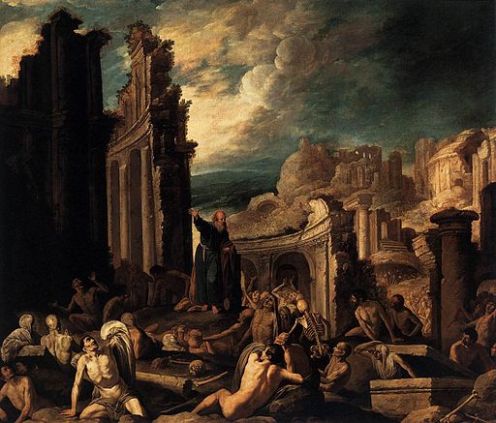
“The Vision of Ezekiel” (1630) by Spanish painter Francisco Collantes (1599-1656)
The First Reading: Ezekiel 37: 1-14: The Valley of Dry Bones 37 The hand of the Lord came upon me, and he brought me out by the spirit of the Lord and set me down in the middle of a valley; it was full of bones. 2 He led me all around them; there were very many lying in the valley, and they were very dry. 3 He said to me, “Mortal, can these bones live?” I answered, “O Lord God, you know.”4 Then he said to me, “Prophesy to these bones and say to them: O dry bones, hear the word of the Lord. 5 Thus says the Lord God to these bones: I will cause breath to enter you, and you shall live. 6 I will lay sinews on you and will cause flesh to come upon you and cover you with skin and put breath in you, and you shall live, and you shall know that I am the Lord.” 7 So I prophesied as I had been commanded, and as I prophesied, suddenly there was a noise, a rattling, and the bones came together, bone to its bone. 8 I looked, and there were sinews on them, and flesh had come upon them, and skin had covered them, but there was no breath in them. 9 Then he said to me, “Prophesy to the breath, prophesy, mortal, and say to the breath: Thus says the Lord God: Come from the four winds, O breath, and breathe upon these slain, that they may live.” 10 I prophesied as he commanded me, and the breath came into them, and they lived and stood on their feet, a vast multitude.11 Then he said to me, “Mortal, these bones are the whole house of Israel. They say, ‘Our bones are dried up, and our hope is lost; we are cut off completely.’ 12 Therefore prophesy and say to them: Thus says the Lord God: I am going to open your graves and bring you up from your graves, O my people, and I will bring you back to the land of Israel. 13 And you shall know that I am the Lord when I open your graves and bring you up from your graves, O my people. 14 I will put my spirit within you, and you shall live, and I will place you on your own soil; then you shall know that I, the Lord, have spoken and will act, says the Lord.”
Reflections on ezekiel 37: “The breath of god”
This passage from Ezekiel is part of a rich landscape, the theater of the mind, we find throughout the Old Testament. It is one of my favorite stories from the scriptures. Ezekiel, the lonely prophet, stands on the floor of a valley filled with dry bones, conversing with God about what he is experiencing. His prophetic call, it should be noted, coincides with the early period of the Babylonian Captivity and in a moment of desperate fear and sadness, God assures the prophet that He will breathe new life into the parched souls of the people. This was news they needed to hear!
Saint Augustine (354-430) by Philippe de Champaigne
How should we think about this story twenty-six centuries later? Two things come to mind for me. First, Ezekiel’s encounter is an affirmation of God’s energetic Spirit at work through history. We live with a visual reminder of that in our community with the sturdy structures that grace “Holy Hill” atop Main Street (for those of you not familiar with Black River Falls, I have inserted an aerial photograph at the end of my reflections).Let me explain. Saint Joseph Church is the most visible symbol of Roman Catholicism in our community. One strand of that tradition derives from the works of Augustine, the 4th Century Church Father from North Africa. Augustine was spiritually dry until his 32nd year when he converted to Christianity. God infused the mind of this powerful intellectual with a desire to write and teach, ultimately leading to the founding of the Augustinian Order, one of the most influential in the training of priests.
Katie Luther (1499-1552)
Martin Luther (1483-1546)
Just north of St. Joseph, we arrive at Evangelical Lutheran Church. Let’s imagine a young Augustinian Monk named Luther nailing those 95 Theses on the door of the Wittenberg Church in Germany. Like Augustine, Luther experienced a crisis of faith as a young man and was infused with God’s Spirit to PROTEST various traditions within Roman Catholicism. Ultimately leaving the Augustinian Order, he married a former nun (Katharina von Bora), and wrote prolifically for the remainder of his life, providing many of the foundations of the Protestant Reformation. His critics referred to those who followed him as “Lutherans,” a name the protesters eventually embraced. (Sidebar: Luther was not comfortable with that term and favored the label of “Evangelical” instead — I suspect he would be OK with the name of our church — ELC!).
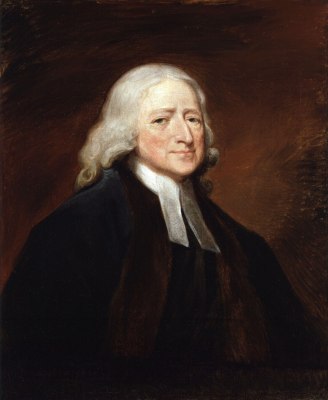
John Wesley (1701-1793)
Fifty meters north of ELC stands the United Methodist Church. Once again, the work of God’s Spirit is evident in the tradition. Let’s go back to 18th Century England and Oxford University and hear discussions among a small band of students led by a young man name Wesley. A troubled soul, Wesley believed the Anglican Church had become too formal — spiritually dry — and that reform was needed. Methodical and disciplined in their personal habits, others derisively called them “Methodists.” Young Wesley’s often tortured journey of faith reached what he called a defining moment at age 35 while listening to someone reading, interestingly enough, Luther’s Preface to the Book of Romans. Wesley himself, by the way, never left the Anglican Church, but his followers did.
Beyond the Holy Spirit’s role in history, Ezekiel’s story offers a powerful metaphor for each of us. How often do we confront “valleys of dry bones” in our faith journeys, when faith seems tenuous, hope seems lost, and life seems grim? If we notice that situation in another, for example, we might even remark, they have lost their spirit, an interesting expression. As Christians, we know it is the breath of God that sustains us, liberating us from sadness and despair, and driving us forward in hope. It is the Holy Spirit that sparks our thoughts and actions. And isn’t that a powerful realization! We are not simply a constellation of genetics and environmental influences. We carry within us a force that lies beyond our human understanding. Interestingly, the word enthusiasm derives from the Greek, theos, meaning God — hence, en + theos means God in us! The next time you are with someone that exhibits authentic enthusiasm about anything, and especially in matters of faith, remember that word origin (I’m reminded of a recent conversation with Pastor Jen. I asked her how things were going, to which she replied, “Oh, things are going well — I’m just trying to keep up with the Holy Spirit!”). My prayer for all of us is that we carry that breath of God into our relationships, into our work, and into our communities!
Soli Deo Gloria
“Holy Hill” in Black River Falls, Wisconsin
Reflecting on the spiritual discipline of prayer
In recent weeks, I have been offering ideas regarding prayer. Recently I have been reading Martin Luther’s A Simple Way to Pray, a short tract he wrote at the request of his barber, Peter Beskendorf, in 1535. I love the fact that he wrote this for his barber! I commend to your reading the article link included here.I have found it exceedingly helpful!
Henri Nouwen (1932-1996)
And, once again, an offering from the wordsmith, Henri Nouwen:
Prayer is not introspection. It is not a scrupulous, inward-looking analysis of our own thoughts and feelings, but it is a careful attentiveness to the Presence of Love personified inviting us to an encounter. Prayer is the presentation of our thoughts— reflective thoughts, as well as daydreams, and night dreams—to the One who receives them, sees them in the light of unconditional love, and responds to them with divine compassion. This context of thinking in the Presence, of conversation and dialogue with Love, is the joyful affirmation of our gentle Companion on the journey with God who knows our minds and hearts, our goodness and our beauty, our darkness and our light. The Psalmist prays the prayer for us (Psalms 139:1–3; 23–24):
O Lord, you search me and you know me, you know my resting and my rising, you discern my purpose from afar. You mark when I walk or lie down, all my ways lie open to you. . . . O search me, God, and know my heart. O test me and know my thoughts. See that I follow not the wrong path and lead me in the path of life eternal. Amen.
Join us after church on Sundays in the library for some in-person discussion of the Lectionary! no prior knowedge or special expertise is necessary — we grapple with scripture every week! All are welcome!
There’s an old adage when coaching distance runners: “If you want to do something different, you need to DO something different!” It might seem like double-speak, but there is a life lesson there and, it seems to me, an application to our spiritual journeys. I have been thinking about that recently, particularly regarding my approach to the discipline of prayer. More on that to follow.
This week’s blog posting has two parts: first, some history of the Feast Day known as the Ascension of Our Lord and overview of the accompanying readings; and second, an overview of the readings for Easter 7 and commentary on John 17. As always, thanks for visiting this space again this week!
Brief history of ascension Day (this coming thursday):
Celebrated since the earliest days of Christianity, the Feast of the Ascension (also known as Ascension Day or Holy Thursday), commemorates our belief in the bodily ascension of Jesus Christ into heaven as described in Luke. The exact origins of its observance are somewhat uncertain, but by the 4th Century, it was widely celebrated by Christians, particularly in the Eastern Church. The Western Church formally established the celebration in the 6th Century. The Ascension is observed on a Thursday, forty days after Easter Sunday. (Sidebar: In some Christian denominations, the Feast is transferred to the following Sunday for practical reasons, allowing more people to participate in the celebration). Throughout history, various customs and rituals have been associated with Ascension Day, including special church services, processions, and devotional practices. Holy Thursday marks the completion of Jesus’ earthly ministry and serves as a reminder of the promise of Jesus’ return in glory, as mentioned in the New Testament.
Readings for the Ascension of our Lord (Thursday 9 May)
Acts 1: 1-11
Psalm 47 (or 93)
Ephesians 1: 15-23
Luke 24: 44-53
what to look for in the Ascension day Readings:
Ascension of Christ Albertino Piazza (1490–1528)
These four scripture passages convey the profound significance of Christ’s Ascension.Acts 1:1-11 portrays the moment of Jesus’ departure from Earth, as He ascends into heaven, promising the disciples the Holy Spirit and affirming His return. Luke 24:44-53 recounts the same event, emphasizing Jesus’ final words of blessing and commissioning to His followers. Ephesians 1:15-23 expands on the cosmic implications of Christ’s Ascension, depicting His exaltation above all powers and authorities, with believers as beneficiaries of His glorious inheritance. Psalm 47 serves as a poetic celebration of God’s sovereignty and kingship, resonating with the themes of triumph and exaltation present throughout the Ascension narrative.
Readings for Easter 7
Acts 1: 15-17, 21-26
Psalm 1
1 John 5: 9-13
John 17: 6-19 (highlighted below)
what to look for in the Readings for easter 7:
The readings for the 7th Sunday of Easter encompass various themes that reflect the significance of Jesus’ ascension and the disciples’ preparation for the coming of the Holy Spirit at Pentecost. In Acts 1:15-17, 21-26, the disciples gather to choose a replacement for Judas Iscariot (eventually Matthias), highlighting the importance of unity and community among believers. Psalm 1 echoes the theme of righteousness and meditation on God’s law, emphasizing the path of the righteous and their steadfastness in faith. 1 John 5:9-13 underscores the assurance of eternal life through belief in Jesus Christ, emphasizing the importance of faith and testimony. Finally, John 17:6-19 presents Jesus’ high priestly prayer, where he intercedes for his disciples and emphasizes their sanctification and protection in the world. Together, these readings offer a rich narrative surrounding the disciples’ preparation for ministry and the assurance of God’s presence and protection amidst challenges going forward.
The Gospel Reading from John
17 After Jesus had spoken these words, he looked up to heaven and said, “Father, the hour has come; glorify your Son so that the Son may glorify you, 2 since you have given him authority over all people, to give eternal life to all whom you have given him. 3 And this is eternal life, that they may know you, the only true God, and Jesus Christ, whom you have sent. 4 I glorified you on earth by finishing the work that you gave me to do. 5 So now, Father, glorify me in your own presence with the glory that I had in your presence before the world existed. 6 “I have made your name known to those whom you gave me from the world. They were yours, and you gave them to me, and they have kept your word. 7 Now they know that everything you have given me is from you, 8 for the words that you gave to me I have given to them, and they have received them and know in truth that I came from you, and they have believed that you sent me. 9 I am asking on their behalf; I am not asking on behalf of the world but on behalf of those whom you gave me, because they are yours. 10 All mine are yours, and yours are mine, and I have been glorified in them. 11 And now I am no longer in the world, but they are in the world, and I am coming to you. Holy Father, protect them in your name that you have given me, so that they may be one, as we are one. 12 While I was with them, I protected them in your name that you have given me. I guarded them, and not one of them was lost except the one destined to be lost, so that the scripture might be fulfilled. 13 But now I am coming to you, and I speak these things in the world so that they may have my joy made complete in themselves. 14 I have given them your word, and the world has hated them because they do not belong to the world, just as I do not belong to the world. 15 I am not asking you to take them out of the world, but I ask you to protect them from the evil one. 16 They do not belong to the world, just as I do not belong to the world. 17 Sanctify them in the truth; your word is truth. 18 As you have sent me into the world, so I have sent them into the world. 19 And for their sakes I sanctify myself, so that they also may be sanctified in truth. 20 “I ask not only on behalf of these but also on behalf of those who believe in me through their word, 21 that they may all be one. As you, Father, are in me and I am in you, may they also be in us, so that the world may believe that you have sent me.
reflecting on the “high priestly prayer” of jesus
The High Priestly Prayer Eugène Burnand (1850–1921)
The High Priestly Prayerof Jesus is found in John 17:1-26 (note that I’m including verses beyond what is assigned in the Lectionary). It’s a profound and intimate prayer that Jesus offered on behalf of his disciples just before his arrest and crucifixion. In this prayer, Jesus prays to the Father, expressing his desires for his disciples, for their unity, sanctification, and their mission in the world. It’s often regarded as one of the most significant prayers in the New Testament, revealing Jesus’ deep love for his followers and his concern for their spiritual well-being. Here’s a quick outline of 1-21: Verses 1-5 show the stress exhibited in Jesus’ words as he speaks about his self-understanding in terms of his own mission. 6-9 include the gift of God’s words Jesus has shared with them. 10-13 include Jesus’ sharing of all that he has with the disciples, his pleas for their protection so their unity is not disrupted, and finally the gift of joy. Verses 14-19 conclude with the affirmation of the disciples’ placement squarely in the midst of human life and the process of God’s truth working in them a holy life. Finally, 20-21 suggest that Jesus is also praying for those in the future (like us!) who will acknowledge him as Lord.
What should we take away from this incredible prayer? Some refer to the High Priestly Prayer of Jesus as the “other” Lord’s Prayer, referencing the familiar words Jesus gave us in his Sermon on the Mount (Matthew 6:5-15). Beyond providing a model prayer, however, Jesus’ conversation with God feels deeply personal. Pastor and professor Susan Hedahl said this about this intimate moment with Jesus from John 17: This prayer is many things: leave-taking reflections; summary words; a call to spiritual struggle and commitment; and most of all, a prayer for someone who loves his followers deeply. That last line — and most of all, a prayer for someone who loves his followers deeply — hit me hard. Jesus is offering us a tremendous example of intercessory prayer here, a prayer given by someone on behalf of another. The context is important. He had spent three years with this group of men, among others who walked with him on this earth. And now, he was leaving. What must have been going through their minds at this point? And then he prays for us! (Verses 20-21). And his prayer includes the desire that we “all be one.” Let that sit in your heart for a few moments. How many people do you encounter in your daily walk who NEED to know that God loves them? As we look around at all the agony in our world — all the division and hatred — we need to dwell on these words from John 17! We need to share these words with others!
Soli Deo Gloria** As is often the case, many ideas I include here are drawn from others. This week’s blog was inspired, in part, from a 2009 reflection written by Susan Hedahl, Lutheran Theological Seminary at Gettysburg in fall 2012.
concluding thoughts on prayer this week:
As mentioned last week, I am offering a few things to think about regarding the spiritual discipline of prayer and will do so again next week. I found these two excerpts helpful this week.
Martin Luther (1483-1546)
From Martin Luther:
In our prayers, we should firmly believe that God’s promise to us is always sure and certain and have no doubt that He will give us what He promises. Words of promise from God always call for faith on our part. Faith is a firm, undoubted confidence in the truth of God’s promise. He who prays to God with doubts in his heart is tempting God. He has his doubts about God’s will and grace. His prayer must be meaningless. He gropes after God like a blind man for a wall.
Henri Nouwen (1932-1996)
From Henri Nouwen:
Silence means rest, rest of body and mind in which we become available for him whose heart is greater than ours. That is very threatening; it is like giving up control over our actions and thoughts, allowing something creative to happen not by us but to us. Is it so amazing that we are so often tired and exhausted, trying to be masters of ourselves, wanting to grasp the ultimate meaning of our existence, struggling with our identity? Silence is that moment in which we not only stop the discussion with others but also the inner discussions with ourselves, in which we can breathe in freely and accept our identity as a gift. “Not I live, but He lives in me.” It is in this silence that the Spirit of God can pray in us and continue his creative work in us. . . . Without silence the Spirit will die in us and the creative energy of our life will float away and leave us alone, cold, and tired. Without silence we will lose our center and become the victim of the many who constantly demand our attention.
and, finally, celebrating unity in song . . . .
As part of our communion celebration at ELC on Sunday, we sang this familiar tune. After searching around a bit, I stumbled on this version of it. I learned that the song is derived from an African American Spiritual, and that it was most likely first sung at the time of the Civil War. (Note: It first showed up in our tradition with the Lutheran Book of Worship in 1978, and you will find it on page 471 in the ELW, our current hymnal).
I don’t know the full background of this live recording by Joan Baez, but I guarantee it will lift your spirit today, particularly when you reach the 4:20 mark!
we will resume our in-person discussion of the Lectionary on sunday 19 May! join us in the church library at 10:45 — no prior knowedge or special expertise is necessary — we grapple with scripture every week! All are welcome!
Introduction to Readers: We started this effort in February of 2023 as an outgrowth of an Introduction to Bible Study class. Our intention is to stay grounded in the Lutheran principle of Sola Scriptura by consistently reading and reflecting on weekly readings as prescribed in the Revised Common Lectionary. Hopefully, we are making progress in that effort! We are nearing the end of the Easter cycle of RCL readings (Year B), leading to the celebration of Pentecost (19 May). Today, I will offer a short introduction to the four readings and offer a brief reflection on Psalm 98, including a link to a favorite hymn. Beyond that, and for the next three weeks, I want to drill down a bit on the spiritual practice of prayer. As always, thanks for being here!
Readings for Easter 6 Acts 10: 44-48
Psalm 98
1 John 5: 1-6
John 15: 9-17
A Quick Take on This Week’s Readings: A thematic thread of divine love and its transformative power weaves through the readings for the sixth Sunday in Easter. Acts 10:44-48 illustrates the inclusive nature of God’s love, as the Holy Spirit descends upon Gentiles, signifying that God’s grace is not limited by cultural or ethnic boundaries (the story of Cornelius, the Roman soldier, precedes this passage). This theme continues in Psalm 98, a celebration of God’s salvation and righteousness revealed to all nations, emphasizing the universality of divine love and justice. 1 John 5:1-6 underscores the inseparable connection between love for God and love for others, affirming that genuine faith in Christ is expressed through acts of love. Finally, John 15:9-17 captures Jesus’ commandment to love one another as he has loved us, emphasizing the sacrificial and unconditional nature of divine love, which forms the essence of discipleship. Look for these connections as you read today!
Psalm 98
1 O sing to the Lord a new song, for he has done marvelous things. His right hand and his holy arm have gotten him victory. 2 The Lord has made known his victory; he has revealed his vindication in the sight of the nations. 3 He has remembered his steadfast love and faithfulness to the house of Israel. All the ends of the earth have seen the victory of our God.
4 Make a joyful noise to the Lord, all the earth; break forth into joyous song and sing praises. 5 Sing praises to the Lord with the lyre, with the lyre and the sound of melody. 6 With trumpets and the sound of the horn make a joyful noise before the King, the Lord.
7 Let the sea roar and all that fills it, the world and those who live in it. 8 Let the floods clap their hands; let the hills sing together for joy 9 at the presence of the Lord, for he is coming to judge the earth. He will judge the world with righteousness and the peoples with equity.
Herbert Brokering (1926-2009)
Reflections on psalm 98 Psalm 98, I have learned this week, served as the inspiration for one of my favorite hymns: “Earth and All Stars” (731 in the ELW). It was a favorite of my father’s and one that he requested for his funeral in 2013. Composed by David Johnson with lyrics by Herb Brokering, it’s fairly new to our tradition. Written to commemorate the 90th anniversary of St. Olaf College in 1964, Brokering said this about his inspiration: I tried to gather into a hymn of praise the many facets of life which emerge in the life of community. So there are the references to building, nature, learning, family, war, festivity. Seasons, emotions, death and resurrection, bread, wine, water, wind, sun, spirit. . . have made great impressions on my imagination.
A couple other things. First, I met Herb Brokering at Concordia College in the late 1970s. He came and spoke at our morning chapel service and made quite an impression! And second, I’m taken with the phrase “sing to the Lord a new song” (Psalm 98:1) that reverberates throughout the piece and have been thinking about it for a couple of days. The phrase appears six times in the Psalms (33:3, 40:3, 96:1, 98:1, 144:9, and 149:1). It can be interpreted a variety of ways, but my sense of it is this: through Christ we continually experience spiritual renewal, we are opened up to new experiences, and experience the old and traditional foundations of our faith in new ways. Here are Brokering’s lyrics for the hymn:
1 Earth and all stars, loud rushing planets, sing to the Lord a new song! O victory, loud shouting army, sing to the Lord a new song! Refrain He has done marvelous things. I too will praise him with a new song!
2 Hail, wind, and rain, loud blowing snowstorms, sing to the Lord a new song! Flowers and trees, loud rustling dry leaves, sing to the Lord a new song! Refrain
3 Trumpet and pipes, loud clashing cymbals, sing to the Lord a new song! Harp, lute, and lyre, loud humming cellos, sing to the Lord a new song! Refrain
4 Engines and steel, loud pounding hammers, sing to the Lord a new song! Limestone and beams, loud building workers, sing to the Lord a new song! Refrain
5 Classrooms and labs, loud boiling test-tubes, sing to the Lord a new song! Athlete and band, loud cheering people, sing to the Lord a new song! Refrain
6 Knowledge and truth, loud sounding wisdom, sing to the Lord a new song! Daughter and son, loud praying members, sing to the Lord a new song!
As mentioned in my introduction, for the next three weeks I want to devote part of this space to the discipline of prayer. I offer this with great humility, because I know that many of you have depths of wisdom when it comes to prayer. My interest in doing this stems from interviews I have been conducting with elder members of our parish (our “Resilient Voices” project). Each participant thus far has spoken with great specificity about their daily interaction with God through prayer. This is not surprising, of course, but exploring that with people is enlightening. Within the past week, I spoke with John Hoagenson — aka “Hoagy” — who has been a member of our parish for 95 years! In the course of the conversation, he talked about his nightly prayer discipline, and he lit up when talking about that.
**Note: Father Schmitz the Director of Youth and Young Adult Ministries in the Diocese of Duluth, Minnesota. He has a notable social media presence and I am a fan of his podcasts.
And finally, I offer this prayer from the pen of Eleanor Roosevelt. According to her children, she included it with her prayers every night. I so appreciate the humility in the prayer and the final line reminded me of Psalm 98:1.
Eleanor Roosevelt (1884-1962)
Our Father, who has set a restlessness in our hearts and made us all seekers after that which we can never fully find, forbid us to be satisfied with what we make of life. Draw us from base content and set our eyes on far off goals. Keep us at tasks too hard for us that we may be driven to Thee for strength. Deliver us from fretfulness and self-pitying; make us sure of the good we cannot see and of the hidden good in the world. Open our eyes to simple beauty all around us and our hearts to the loveliness men hide from us because we do not try to understand them. Save us from ourselves and show us a vision of the world made new. Amen.
Soli Deo Gloria
Join us after church on Sundays in the library for some in-person discussion of the Lectionary! no prior knowedge or special expertise is necessary — we grapple with scripture every week! All are welcome!
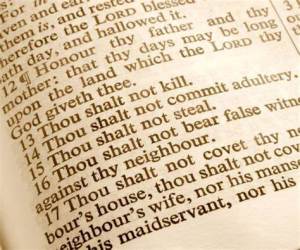



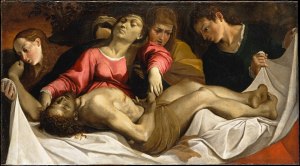

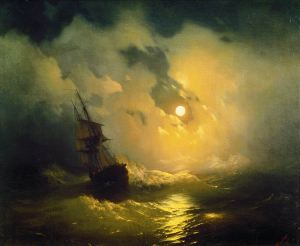


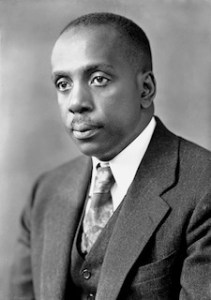
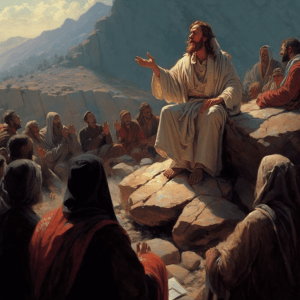


 I thought you might appreciate a bit of humor with today’s post! Join us after the 10:15 service at Hatfield on 16 June for some in-person discussion of this week’s readings. No special expertise or prior knowledge is necessary! all are welcome!
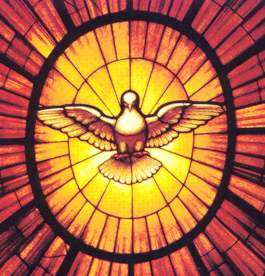
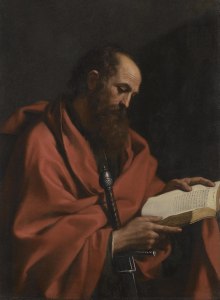
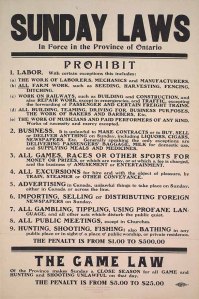 “Blue Laws” (or Sunday Laws) have been on my mind this week, prompted by the Deuteronomy passage. Many of us are old enough to remember such laws, although Wisconsin moved away from them earlier than many other states. Having spent much of my young life in North Dakota, I saw these firsthand. Historically derived from 17th Century Puritanism,