10 August 2025: Pentecost 9 (Ordinary 19)

Introduction to Readers

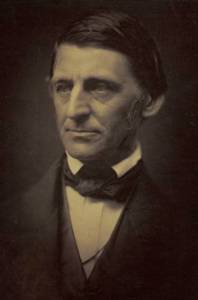
Ralph Waldo Emerson
(1803-1882)

“Things are in the saddle and ride mankind.” (Ralph Waldo Emerson)

Emerson’s line from his 1846 Ode to William H. Channing, voicing his unease with the coming war with Mexico, has been on my mind over the past few days. It was eighty years ago this week, that the United States dropped atomic bombs on Hiroshima (August 6) and Nagasaki (August 9), bringing World War II to a close. The bombs, ironically born of a desperate race among scientists fleeing Nazi tyranny, marked a split screen in human history: the unleashing of the most devastating weapon ever conceived, and the liberation of millions from the grip of totalitarianism. As Christians living in a dangerous world, we are called to wrestle with such paradoxes. We live between the towers of Babel and the cross of Christ—between the pride of human power and the humility of divine love. The events of August 1945 remind us that history is not merely a sequence of dates and decisions, but a moral terrain where faith must find its footing. In a world where “things” of our own making often seem to ride us, how do we remain grounded in the gospel? How do we discern the difference between necessary action and moral compromise? These questions challenge me every day.

As the world turns, important things happened this week impacting our denomination. Among many actions taken by the Churchwide Assembly, Reverand Yehiel Curry (b. 1972) was elected as the fifth presiding bishop of the Evangelical Lutheran Church in America (ELCA)—the first Black leader to serve in this role. He received 562 of the 799 votes cast on the fifth ballot, marking a significant moment in the church’s history.** Like Martin Luther, Curry’s spiritual journey began in the Roman Catholic tradition. Raised on the South Side of Chicago, he attended Lewis University, a Catholic institution, and earned his B.A. in 1995. His path shifted in the 1990s when he accepted an invitation to worship at St. Stephen’s Lutheran Church. That experience opened the door to Lutheran theology and community life, eventually leading him to join the ELCA. Before entering ministry, Curry worked as a public-school teacher and social worker—roles that shaped his deep commitment to urban communities. He was ordained in 2010, served as pastor of Shekinah Chapel, and later became bishop of the Metropolitan Chicago Synod. Curry brings a strong voice for multicultural engagement and urban ministry to his new role. Here’s a good article from Living Lutheran, if you want more background. Bishop Curry is the fifth since the ELCA was established in 1987 and his term will begin in October. Others who held the position: Herbert Chilstrom (1987-1995), H. George Anderson (1995-2001), Mark S. Hanson (2001-2013), and Elizabeth A. Eaton (2013-2025).

**Note: The presiding bishop is chosen through a prayerful process called the ecclesiastical ballot. Any eligible minister can be nominated anonymously by voting members on the first ballot, which serves as both nomination and potential election. If no one receives the required majority, the top candidates move forward through successive ballots until one is elected. This method emphasizes discernment, transparency, and communal decision-making.
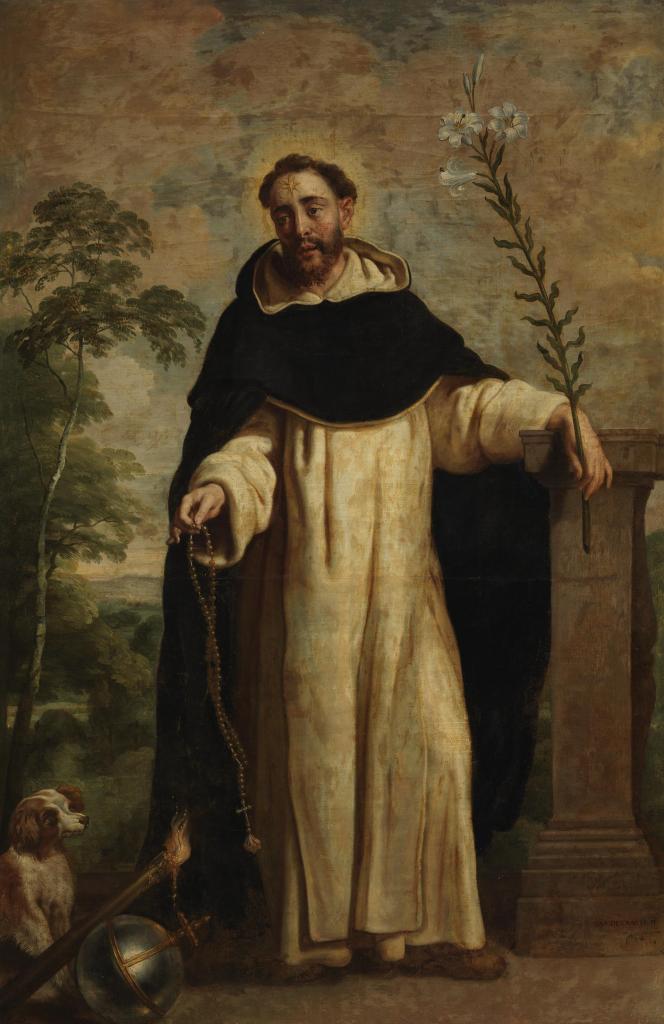
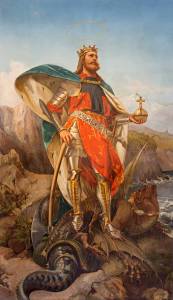
Saint Dominic (1170-1221)

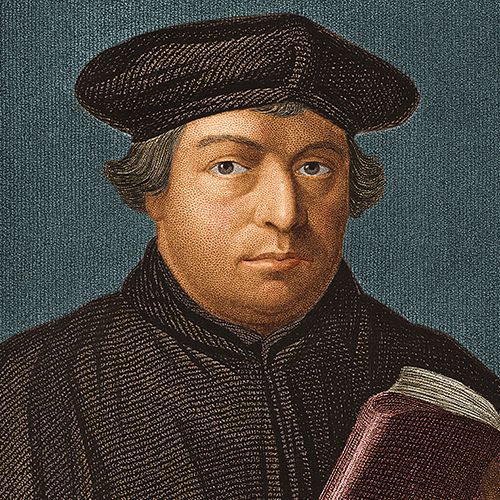
We have reached the 9th of 23 Sundays in Ordinary Time. The second lessons for the remaining August Sundays feature passages from the last three chapters of Hebrews, and my plan is to feature those in the next four blog postings. We should note at the outset that in his German Bible, Luther grouped Hebrews with James, Jude, and Revelation at the end of the New Testament, signaling his reservations about the book. He considered these books “disputed” and less central to the gospel message than others like Romans or Galatians (if you want more information regarding his position, here is a good link). Anyway, let’s take on these readings and learn more about this book!

Thanks for returning to this space this week! I deeply appreciate your continued interest in the Lectionary! Saint Dominic de Guzmán, founder of The Order of Preachers (Dominican), who died on 8 August in 1221, is commemorated within the ELCA this week. I have included a painting of him by the Flemish artist Gaspar de Crayer (c. 1655).

** Note 1: Links to outside references are bolded and italicized and are meant for further reading or research on your part. While the text I am including in the blog is my own, I am pulling from a multitude of sites for ideas and connections.

** Note 2: In my increasing use of A.I. (Copilot), I will cite sourcing of how I am using the tool, if necessary. I don’t want that to be overly cumbersome, but I am gradually incorporating more tools. I am exploring the A.I. world this summer prior to my next teaching semester. As you can imagine, it is a great challenge right now and will forever change the face of education!


** Note 3: The images I include in the blog are drawn from Wikimedia Commons to the fullest extent possible.

Common Themes Among the Readings

Pentecost 9 Readings

Genesis 15: 1-6
Psalm 33: 12-22
Hebrews 11: 1-3, 8-16
Luke 12: 32-40

My source for the Bible readings each week is the Bible Gateway website. I generally use the NRSVUE translation.

On the 9th Sunday after Pentecost (Year C), the lectionary readings share a common thread of faithful trust in God’s promises and the call to live with hopeful readiness. In Genesis 15, Abram believes God’s promise despite having no visible evidence, and his faith is counted as righteousness. Psalm 33 celebrates God’s steadfast love and watchful care over those who trust in Him, reminding us that human strength cannot save. Hebrews 11 highlights the faith of Abraham and others who embraced God’s promises from afar, longing for a better country prepared by God. Luke 12 calls disciples to live without fear, to give generously, and to remain vigilant—ready for the coming of the Son of Man.

“Describe the common themes among the readings for Pentecost 9.” Copilot, 1 August 2025, Copilot website.

Genesis 15: 1-6

15 After these things the word of the Lord came to Abram in a vision, “Do not be afraid, Abram, I am your shield; your reward shall be very great.” But Abram said, “O Lord God, what will you give me, for I continue childless, and the heir of my house is Eliezer of Damascus?” And Abram said, “You have given me no offspring, so a slave born in my house is to be my heir.” But the word of the Lord came to him, “This man shall not be your heir; no one but your very own issue shall be your heir.” He brought him outside and said, “Look toward heaven and count the stars, if you are able to count them.” Then he said to him, “So shall your descendants be.” And he believed the Lord, and the Lord reckoned it to him as righteousness.

Check out this background video on the book of Hebrews!

Source: The Bible Project

LUTHER’S METHOD OF BIBLE READING
GIVE IT A TRY!

A Revision of the Lectio Divina, a method he learned in his Augustinian training

Three Steps

Oratio (Prayer): This is the starting point, where one humbly prays for the Holy Spirit’s guidance to understand God’s Word. Luther emphasized that prayer prepares the heart and mind to receive divine wisdom.

Meditatio (Meditation): This involves deeply engaging with Scripture, not just reading it but reflecting on it repeatedly. Luther encouraged believers to “chew on” the Word, allowing its meaning to sink in and shape their thoughts and actions.

Tentatio (Struggle): Often translated as “trial” or “temptation,” this refers to the challenges and spiritual battles that arise as one seeks to live according to God’s Word. Luther saw these struggles as a way God refines faith, making it more resilient and authentic.

Hebrews 11: 1-3, 8-16
11 Now faith is the assurance of things hoped for, the conviction of things not seen. Indeed, by faith our ancestors received approval. By faith we understand that the worlds were prepared by the word of God, so that what is seen was made from things that are not visible.
By faith Abraham obeyed when he was called to set out for a place that he was to receive as an inheritance, and he set out, not knowing where he was going. By faith he stayed for a time in the land he had been promised, as in a foreign land, living in tents, as did Isaac and Jacob, who were heirs with him of the same promise. 10 For he looked forward to the city that has foundations, whose architect and builder is God. 11 By faith, with Sarah’s involvement, he received power of procreation, even though he was too old, because he considered him faithful who had promised. 12 Therefore from one person, and this one as good as dead, descendants were born, “as many as the stars of heaven and as the innumerable grains of sand by the seashore.” 13 All of these died in faith without having received the promises, but from a distance they saw and greeted them. They confessed that they were strangers and foreigners on the earth, 14 for people who speak in this way make it clear that they are seeking a homeland. 15 If they had been thinking of the land that they had left behind, they would have had opportunity to return. 16 But as it is, they desire a better homeland, that is, a heavenly one. Therefore God is not ashamed to be called their God; indeed, he has prepared a city for them.

Reflection: “Strangers on the Way”

Apollos and Paul (A.I. Generated)

In his excellent introduction to Hebrews in the Lutheran Study Bible (second edition), Erik M. Heen, professor of New Testament at The Lutheran Theological Seminary at Philadelphia, points out that the book is a “sophisticated document written in elegant Greek around 70 CE” and was penned as an “extended sermon” for a “community of second-generation Greek-speaking Christians” that had experienced a variety of trials causing many to “drift away” from their faith in the Gospel. Heen asserts the following overarching statement about the message of Hebrews: “Lutherans believe that the word of God, in Hebrew Scriptures and in the New Testament, meets us as both law (judgement) and gospel (promise). Hebrews follows that pattern, often moving back and forth between severe warning and strong encouragement . . .” He also reminds us that tradition claimed that Paul wrote the letter, but that Luther thought the author was Apollos (see Acts 18:24), a companion of Paul and intriguing figure in his own right. The author clearly had a profound understanding of Jewish scriptures and Christian theology. As a sidenote, the book is beautifully written and provides an eloquent summary of the Jewish story and where Christ comes into that story.

Here is a summary of this week’s passage and its connection to the Old Testament reading. Faith begins not with certainty, but with trust—trust in a promise we cannot yet see. Abraham’s journey, as told in Hebrews 11, was marked by obedience to a call that offered no map, only the assurance of God’s presence. He lived as a stranger, yet hoped for a city built by God, a home beyond what this world could offer. In Genesis 15, Abram questioned his future, but when he believed God’s word, it was counted to him as righteousness (sidebar: Luther viewed Genesis 15:6 as a foundational text for the doctrine of justification by faith, not works. Also, note that the Hebrews passage includes Sarah’s involvement in all this!). What lessons should we draw from these texts?

Two things stand out to me. First, faith, as described in Hebrews 11, calls us to live with forward-looking trust rather than backward-facing certainty — note that poetic and familiar phrasing, “Now faith is the assurance of things hoped for, the conviction of things not seen” (11:1). Abraham models this posture by stepping into the unknown, not because he had a map, but because he trusted the One who called him; his journey reminds us that faith begins when we move, not when we understand. Second, the passage also urges us to embrace our identity as strangers and foreigners on the earth, people who seek a better homeland shaped not by comfort or permanence but by God’s promise. Rather than returning to what was familiar, the faithful pressed on toward a city whose architect and builder is God, showing us that true faith resists settling and instead leans into sacred anticipation. In a world that tempts us to anchor ourselves in possessions, status, or certainty, Hebrews reminds us that faith is not a possession but a pilgrimage—a daily turning toward the promise, a restlessness that refuses to settle for anything less than God’s future. It’s up to us — guided by the Spirit — to share this good news with others!

Soli Deo Gloria!

Prayer Reflection: The Jesus Prayer (Henri Nouwen)
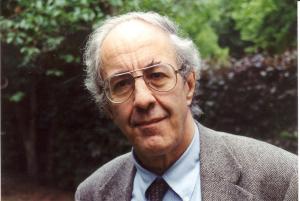
Dutch Theologian
Henri Nouwen
(1932-1996)

One simple way to practice solitude is to take a simple prayer like, “Lord Jesus Christ, have mercy on me.” Sit down, light a candle, look at an icon, be in front of the blessed sacrament or the Bible, depending on your tradition. Simply be there and repeat the prayer for five minutes. Let each word sink from your mind into your heart and then carry all of them through the day.

A Musical Offering: “People Get Ready” (Curtis Mayfield)

People Get Ready, written by Curtis Mayfield in 1965, is a soul song rooted in gospel tradition and the hope of the Civil Rights Movement. Its image of a train bound for glory calls people to faith and trust, much like the message in Hebrews 11, where believers are praised for following God’s call without knowing where it would lead. Mayfield, shaped by his church upbringing, wrote the song during a time of racial struggle, and it became a source of comfort and strength for many, including Martin Luther King Jr. The song has been covered by many artists. The version I’m sharing by Kenny Rankin captures its spirit beautifully—I hope it resonates with you.

Lyrics: People Get Ready (Mayfield version)

People get ready
There’s a train a-coming
You don’t need no baggage
You just get on board

All you need is faith
To hear the diesels humming
Don’t need no ticket
You just thank the Lord

So people get ready
For the train to Jordan
Picking up passengers
From coast to coast

Faith is the key
Open the doors and board them
There’s hope for all
Among those loved the most

There ain’t no room
For the hopeless sinner
Who would hurt all mankind
Just to save his own, believe me now

Have pity on those
Whose chances grow thinner
For there’s no hiding place
Against the kingdom’s throne

So people get ready
There’s a train a-coming
You don’t need no baggage
You just get on board

All you need is faith
To hear the diesels humming
Don’t need no ticket
You just thank the Lord

Kenny Rankin (1940-2009) was a genre-blending singer-songwriter whose crystalline voice and jazz-inflected guitar work earned him acclaim across folk, pop, and jazz circles. Born in New York City in 1940, he gained early recognition with his song “Peaceful” and frequent appearances on The Tonight Show, where Johnny Carson championed his talent. His interpretations of standards and Beatles songs, especially “Blackbird,” showcased his emotional depth and technical finesse. Rankin passed away in 2009, leaving behind a legacy of soulful artistry and musical elegance.

“Provide background on Kenny Rankin.” Copilot, 2 August 2025, Copilot website.

Faithful Conversations: Looking Ahead

Our regular gatherings for discussing the weekly lectionary are on a pause. Summer worship at ELC is at 8:30 in town and 10:15 at Hatfield by the lake. The 8:30 service will be streamed. Please stay in touch! Note: We will resume our “after-worship” dialogues on 14 September.

3 August 2025: Pentecost 8 (Ordinary 18)

Introduction to Readers

This week’s haunting passage from Ecclesiastes brought back a memory that still lingers. A few years ago, I spoke with a former colleague—a thoughtful educator and friend—whose unexpectedly bleak outlook left me deeply unsettled. His tone was heavy with resignation, almost sorrowful, as if despair itself had been granted voice. That word, despair, from the Latin desperarede, meaning “down from,” and sperare, “to hope”—captures what I heard: a jarring erosion of hope. The moment stayed with me because it reflected a quiet cynicism that seems to have settled into many lives in 2025. It’s a heaviness people carry just beneath the surface—rarely spoken, but always close at hand. Politically, culturally, and spiritually, we do seem to be drifting. The daily headlines point to conflict, division, and uncertainty. Even in our churches, fewer people attend, and the familiar communal patterns that once grounded generations now feel fractured. Is our despair new—or merely newly felt? The ancient text of Ecclesiastes, likely composed around 935 BCE, reminds us that seasons of sorrow, perplexity, and drift are not singular to our time. There is nothing new under the sun, declares the Teacher. The language, though distant, remains remarkably relevant, and it is perhaps comforting to realize we are not alone among the generations. And yet, what troubles me most isn’t just the state of the world—it’s the spiritual malaise — or disconnection — among our rising generations. Maybe that’s the teacher in me speaking. They grow up surrounded by noise—so many voices vying for their attention, so many versions of truth—yet few guiding anchors. Without a steady framework, philosophical or spiritual, they wander. Like the Teacher said, All is vanity. They face life’s questions with no compass, no inheritance of wisdom passed down through scripture or sacred tradition. A tough challenge we all need to consider.

Thanks for checking in again this week! The scripture readings for Pentecost 8 speak to each other in striking ways, and I’ll focus on Ecclesiastes in my reflection, drawing a connection with Psalm 49. Ecclesiastes, by the way, rarely shows up in the RCL, so I feel compelled to dive into it (I heartily recommend viewing the short video I posted at the bottom of the reading). I also am including a prayer reflection for countering anxiety, a familiar and fitting musical offering, and some updates regarding Faithful Conversations at ELC.

Saint Olaf

Our church calendar marks several commemorations this week: on July 28th, we remember Johann Sebastian Bach, Heinrich Schutz, and George Frederick Handel. On July 29th, we honor Mary, Martha, and Lazarus of Bethany—and Saint Olaf, a figure especially meaningful to me given my Nordic roots and his tie to one of the ELCA’s premier colleges in the Upper Midwest. Some quick background: Olaf II Haraldsson of Norway, later Saint Olaf, was born around 995. He began as a Viking warrior, but after converting to Christianity in Normandy, he returned home and became king in 1015. He worked to unify Norway through church-building, legal reform, and spreading the Christian faith, despite resistance from pagan leaders. Olaf died in 1030 at the Battle of Stiklestad while trying to regain his throne after exile. His death came to be seen as martyrdom, and miracles reported at his grave led to his recognition as Norway’s patron saint. The accompanying image is a painting from 1893 by Pius Adamowitsch Welonsky (1849-1939), now housed on an altar in the San Carlo al Corso Basilica in Rome.

** Note 1: Links to outside references are bolded and italicized and are meant for further reading or research on your part. While the text I am including in the blog is my own, I am pulling from a multitude of sites for ideas and connections.

** Note 2: In my increasing use of A.I. (Copilot), I will cite sourcing of how I am using the tool, if necessary. I don’t want that to be overly cumbersome, but I am gradually incorporating more tools. I am exploring the A.I. world this summer prior to my next teaching semester. As you can imagine, it is a great challenge right now and will forever change the face of education!


** Note 3: The images I include in the blog are drawn from Wikimedia Commons to the fullest extent possible.

Common Themes Among the Readings

Pentecost 8 Readings

Ecclesiastes 1:2, 12-14; 2:18-23
Psalm 49: 1-12
Colossians 3: 1-11
Luke 12: 13-21

My source for the Bible readings each week is the Bible Gateway website. I generally use the NRSVUE translation.

The readings for Pentecost 8 (Year C) share a sobering reflection on the futility of placing ultimate trust in wealth, possessions, or earthly accomplishments. Ecclesiastes and Psalm 49 both confront the transience of life and the inability of riches to secure lasting meaning or escape death. Luke’s parable of the rich fool echoes this warning, challenging the illusion that abundance equals security and urging a posture of being “rich toward God.” Colossians reframes the conversation by calling believers to set their minds on things above, putting to death earthly desires—especially greed, which is named as idolatry. Together, these texts invite a reorientation of values: from accumulation to generosity, from anxiety to trust, and from self-centered striving to a life hidden in Christ.

“Describe the common themes among the readings for Pentecost 8.” Copilot, 25 July 2025, Copilot website.

Psalm 49: 1-12

Hear this, all you peoples;
    give ear, all inhabitants of the world,
both low and high,
    rich and poor together.
My mouth shall speak wisdom;
    the meditation of my heart shall be understanding.
I will incline my ear to a proverb;
    I will solve my riddle to the music of the harp.
Why should I fear in times of trouble,
    when the iniquity of my persecutors surrounds me,
those who trust in their wealth
    and boast of the abundance of their riches?
Truly, no ransom avails for one’s life;
    there is no price one can give to God for it.
For the ransom of life is costly
    and can never suffice,
that one should live on forever
    and never see the Pit.
10 When we look at the wise, they die;
    fool and dolt perish together
    and leave their wealth to others.
11 Their graves are their homes forever,
    their dwelling places to all generations,
    though they named lands their own.

12 Mortals cannot abide in their pomp;
    they are like the animals that perish.

LUTHER’S METHOD OF BIBLE READING
GIVE IT A TRY!

A Revision of the Lectio Divina, a method he learned in his Augustinian training

Three Steps

Oratio (Prayer): This is the starting point, where one humbly prays for the Holy Spirit’s guidance to understand God’s Word. Luther emphasized that prayer prepares the heart and mind to receive divine wisdom.

Meditatio (Meditation): This involves deeply engaging with Scripture, not just reading it but reflecting on it repeatedly. Luther encouraged believers to “chew on” the Word, allowing its meaning to sink in and shape their thoughts and actions.

Tentatio (Struggle): Often translated as “trial” or “temptation,” this refers to the challenges and spiritual battles that arise as one seeks to live according to God’s Word. Luther saw these struggles as a way God refines faith, making it more resilient and authentic.

Martin Luther
(1483-1546)

Ecclesiastes 1:2, 12-14; 2:18-23

Vanity of vanities, says the Teacher,
    vanity of vanities! All is vanity.

12 I, the Teacher, was king over Israel in Jerusalem. 13 I applied my mind to seek and to search out by wisdom all that is done under heaven; it is an unhappy business that God has given to humans to be busy with. 14 I saw all the deeds that are done under the sun, and see, all is vanity and a chasing after wind.
18 I hated all my toil in which I had toiled under the sun, seeing that I must leave it to my successor, 19 and who knows whether he will be wise or foolish? Yet he will be master of all for which I toiled and used my wisdom under the sun. This also is vanity. 20 So I turned and gave my heart up to despair concerning all the toil of my labors under the sun, 21 because sometimes one who has toiled with wisdom and knowledge and skill must leave all to be enjoyed by another who did not toil for it. This also is vanity and a great evil. 22 What do mortals get from all the toil and strain with which they toil under the sun? 23 For all their days are full of pain, and their work is a vexation; even at night their minds do not rest. This also is vanity.

Source: The Bible Project


Reflection: ““Chasing the Wind, Trusting the Spirit”

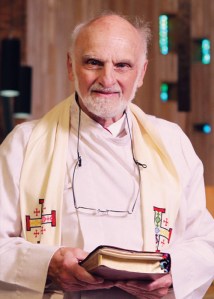
In her introduction to Ecclesiastes in the Lutheran Study Bible (Updated Edition, 2025), Dr. Diane Jacobson of Luther Seminary, includes the following quote from Martin Luther: Ecclesiastes is a . . . “very beautiful and useful book . . . which on many counts deserves to be in everyone’s hands and to be familiar to everyone.” Luther, it seems, viewed the book as a profound reflection on human failings and divine grace (he lectured on it in 1526 and published his commentary in 1532). For Luther, the Preacher’s voice in Ecclesiastes (his interpretation of the Hebrew word Qoheleth) was honest about the futility of human striving when disconnected from God.

King Solomon by Kristian Zahrtmann (1843–1917)

Here’s a quick summary of the passages in front of us this week (traditionally attributed to King Solomon, but there are debates about that): The Teacher in Ecclesiastes opens with a striking claim: Vanity of vanities! All is vanity, suggesting that life is as fleeting as smoke. (Sidebar: The word “vanity” appears roughly 38 times in the book of Ecclesiastes, making it one of the most defining terms of the text. It translates the Hebrew word hevel, which means breath, vapor, or mist—a metaphor for life’s fleeting, elusive nature). He surveys human activity and finds it to be mostly a meaningless pursuit—like chasing the wind—with no lasting impact. Though he labors with wisdom and skill, he’s troubled that all he’s worked for will pass to someone else after his death, who will not value it. The emotional toll of his work weighs heavily on him: restless nights, sorrow, and lingering anxiety. In the end, even the most diligent work offers no lasting satisfaction—only more evidence that this too is vanity.
Although I didn’t initially share Luther’s enthusiasm for Ecclesiastes, its message has begun to resonate—especially when read alongside Psalm 49. What should we take away from these passages? First, we live in a world enamored with achievement, intellect, and legacy — these things are rooted in our culture. This voice from two thousand years ago bristles with countercultural wisdom: life’s deepest truths are found not in permanence, but in impermanence. The Teacher’s sadness over fleeting labor, the limits of wisdom, and the futility of legacy (Ecclesiastes 1:2, 12–14; 2:18–23) echoes the psalmist’s sober reminder that wealth cannot redeem a soul, and that all—rich or poor, wise or foolish—are united in mortality (Psalm 49:1–12). Yes, death is the great equalizer. (Sidebar: both these passages are echoed by Jesus in this week’s Gospel). And second, these texts remind us to walk humbly, to accept the mystery woven into each moment, and to invest in people rather than possessions. They urge us to entrust our days to God—days often filled with striving and distraction—and seek the kind of wisdom that endures beyond our fleeting plans. In a world clouded by cynicism and despair, these words come as a quiet and piercing light. They speak into August 2025 with clarity and challenge: turn from noise, lean into relationship, and let grace guide us. And for those of us who carry God’s Kingdom in our hearts, this is not a passive calling. We are called to share it—freely, boldly, and with those in our midst!

Soli Deo Gloria!

Prayer Reflection: Hannah Whitall Smith

Hannah Whitall Smith (1832–1911) was a Quaker-born American evangelist, author, and reformer who became a leading voice in the Holiness and Higher Life movements. She gained international recognition for her spiritual classic The Christian’s Secret of a Happy Life (1875), which emphasized joyful surrender and practical sanctification. Active in the women’s suffrage and temperance movements, she helped found the Woman’s Christian Temperance Union and advocated for women’s education and leadership. Below is a favorite excerpt of mine from the book mentioned. Her words remind us that taking action is the great antidote to the sense of helplessness we may experience in our lives!

“Describe the life and background of Hannah Whitall Smith” Copilot, 26 July 2025, Copilot website.

We are the agents of the Creative Spirit in this world. Real advance in the spiritual life, then, means accepting the vocation with all it involves. Not merely turning over the pages of an engineering magazine and enjoying the pictures but putting on overalls and getting on with the job. The real spiritual life must be horizontal as well as vertical; spread more and more as well as aspire more and more.


A Musical Offering: “Turn, Turn, Turn” (Pete Seeger)

In the category of “songs that made it seem cool to be a Christian” from my formative years, this one stands out. Folk icon Pete Seeger supposedly came up with the tune in fifteen minutes and off it went. I have included an interview with Pete, if you want some further background. There are many great versions of the song out there — the one posted features The Byrds.

Seeger composed Turn! Turn! Turn! in 1959 by adapting Ecclesiastes 3:1–8, adding only six original words to its biblical text. After initial recordings by The Limeliters and Judy Collins, The Byrds released their electrified version in 1965, propelling it to #1 on the Billboard chart and embedding it in the cultural memory of the 1960s and beyond. The song’s timeless message of seasons and peace resonated deeply with both protest movements and spiritual seekers, appearing in films, memorials, and worship services across generations. Seeger, committed to the song’s pacifist roots, donated portions of the royalties to peace organizations and continued performing it as a witness to the enduring relevance of Scripture in public life. Enjoy!

Faithful Conversations: Three Updates

Pastor Jenny Hatleli

The 2025 ELCA Churchwide Assembly will convene July 28–August 2 at the Phoenix Convention Center in Arizona, gathering voting members from across the country for worship, discernment, and decision-making. This occurs once every three years and this year will include the election of a new Presiding Bishop and Secretary, as well as votes on key issues such as civic engagement, Indigenous justice, and church structure. Pastor Jen will be attending as a representative of the Northwest Synod of Wisconsin and let’s pray for everyone involved this week!

Our regular gatherings for discussing the weekly lectionary are on a pause. Summer worship at ELC is at 8:30 in town and 10:15 at Hatfield by the lake. The 8:30 service will be streamed. Please stay in touch!

27 July 2025: Pentecost 7 (Ordinary 17)

Introduction to Readers

Le Pater Noster by Tissot
(c. 1890)

As Christians, we regularly engage with the origin stories of our faith—moments when the ordinary becomes sacred and helps shape our identity. This week’s Gospel reading offers one of those moments. An unnamed disciple asks Jesus to teach them how to pray, and in just a few verses (found in both Luke and Matthew), Jesus offers what we now call The Lord’s Prayer. If you grew up in the church, you’ve likely spoken this prayer thousands of times. As Lutherans, we place it at the center of liturgical life. When we say it aloud, we form community, build trust, and reconnect with God’s reign. Over time, I’ve learned that this prayer echoes the Jewish Amidah—a daily sequence of blessings that praised God’s name, asked for sustenance, and sought deliverance. Jesus knew and practiced that tradition.

Early Christian communities quickly embraced the prayer. Around 95 CE, the Didache instructed believers to pray it three times a day. That simple practice helped shape early Christian ethics and identity. The Didache also introduced a doxology—“For yours is the power and the glory forever”—which added depth to the scriptural text. The longer doxology many of us know—“For thine is the kingdom, and the power, and the glory…”—doesn’t appear in the earliest manuscripts. It entered worship through fourth-century church orders and became prominent in Protestant traditions thanks to the King James Bible and the Book of Common Prayer. Lutheran liturgy kept it as a bold affirmation of God’s sovereignty

Martin Luther
(1483-1546)

Martin Luther spoke often about prayer, and especially The Lord’s Prayer. In the Small Catechism, he highlighted its simplicity. He’s reputed to have said, “The fewer the words the better the prayer.” He also criticized Christians for praying it without thought: “The Lord’s Prayer is the greatest martyr on earth. For everyone tortures and abuses it; few take comfort and joy in its proper use” (doesn’t that sound like Luther!)

Today, we Lutherans debate which translation to use on Sunday mornings—a squabble that always leaves me a bit amused. In the 1960s, a more contemporary version emerged and entered our Lutheran Book of Worship (the green hymnal) in 1978 and beyond. Traditionalists favor the King James phrasing, so the real debate often comes down to which Bible translation we prefer. I’ve included some resources below that will give you a greater sense of that, including how the prayer sounds in German and Norwegian, the language of many of our ancestors in the upper Great Lakes region.

Mary of Magdala
(Modern Interpretation)

Thanks for visiting this space again this week—I deeply appreciate your commitment to digging into these readings with me. The ELCA calendar offers several commemorations this week; check out page 16 of the ELW to explore them. One standout is the remembrance of Mary Magdalene on July 22. Mary was a woman of fierce devotion, personal transformation, and fearless witness. After Jesus delivered her from seven demons, she followed him faithfully, stood by the cross, and became the first to proclaim the resurrection. While history often misunderstood her, today the ELCA rightly honors her as an Apostle.

This week’s reflections center on the Gospel, with a nod to Psalm 138. I’ve also included a prayer reflection and a powerful musical interpretation of The Lord’s Prayer by a contemporary composer.

The Lord’s Prayer
(ELCA Traditional)

Our Father, who art in heaven,
hallowed be thy name, thy kingdom come,
thy will be done, on earth as it is in heaven.
Give us this day our daily bread;
and forgive us our trespasses,
as we forgive those who trespass against us;
and lead us not into temptation but deliver us from evil.

(added) For thine is the kingdom, and the power, and the glory,
forever and ever. Amen.


Matthew 6: 9-13
(King James Version)

After this manner therefore pray ye: Our Father which art in heaven, Hallowed be thy name. 10 Thy kingdom come, Thy will be done in earth, as it is in heaven. 11 Give us this day our daily bread. 12 And forgive us our debts, as we forgive our debtors. 13 And lead us not into temptation, but deliver us from evil: For thine is the kingdom, and the power, and the glory, for ever. Amen.

(Luke 11: 2-4 is the other source for the prayer in the New Testament, included in this week’s Gospel)

The Lord’s Prayer
(ELCA Contemporary)

Our Father in heaven, hallowed be your name, your kingdom come, your will be done, on earth as in heaven. Give us today our daily bread. Forgive us our sins as we forgive those who sin against us. Save us from the time of trial and deliver us from evil.

(added) For the kingdom, the power, and the glory are yours, now and forever. Amen.

Here is the version of the Lord’s Prayer Luther used in the early 16th century.

Vater unser im Himmel,
Geheiligt werde dein Name.
Dein Reich komme.
Dein Wille geschehe,
wie im Himmel, also auch auf Erden.
Unser tägliches Brot gib uns heute.
Und vergib uns unsere Schuld,
wie wir vergeben unsern Schuldigern.
Und führe uns nicht in Versuchung,
sondern erlöse uns von dem Übel.
Denn dein ist das Reich und die Kraft und die Herrlichkeit in Ewigkeit.
Amen.

** Note 1: Links to outside references are bolded and italicized and are meant for further reading or research on your part. While the text I am including in the blog is my own, I am pulling from a multitude of sites for ideas and connections.

** Note 2: In my increasing use of A.I. (Copilot), I will cite sourcing of how I am using the tool, if necessary. I don’t want that to be overly cumbersome, but I am gradually incorporating more tools. And, by the way, I am exploring the A.I. world this summer prior to my next teaching semester. As you can imagine, it is a great challenge right now and will forever change the face of education!


** Note 3: The images I include in the blog are drawn from Wikimedia Commons to the fullest extent possible.

Common Themes Among the Readings

Pentecost 7 Readings

Genesis 18: 20-32
Psalm 138
Colossians 2: 6-15 (16-19)
Luke 11: 1-13

My source for the Bible readings each week is the Bible Gateway website. I generally use the NRSVUE translation.

The readings for the Seventh Sunday after Pentecost (Year C) center on bold intercession, divine responsiveness, and spiritual rootedness. Abraham’s plea for Sodom in Genesis 18 and Jesus’ teaching on persistent prayer in Luke 11 both highlight the power of faithful dialogue with God. Psalm 138 affirms that God answers those who call and lifts up the lowly, while Colossians 2 urges believers to remain grounded in Christ, resisting distractions and trusting in the fullness of divine grace. Together, these texts invite the faithful to approach God with confidence, knowing that divine mercy meets human need with transformative love.

“Describe the common themes among the readings for Pentecost 7.” Copilot, 19 July 2025, Copilot website.

Psalm 138

I give you thanks, O Lord,with my whole heart;
    before the gods I sing your praise;
I bow down toward your holy temple
    and give thanks to your name for your steadfast love and your faithfulness,
    for you have exalted your name and your word
    above everything.
On the day I called, you answered me;
    you increased my strength of soul.

All the kings of the earth shall praise you, O Lord,
    for they have heard the words of your mouth.
They shall sing of the ways of the Lord,
    for great is the glory of the Lord.
For though the Lord is high, he regards the lowly,
    but the haughty he perceives from far away.
Though I walk in the midst of trouble,
    you preserve me against the wrath of my enemies;
you stretch out your hand,
    and your right hand delivers me.
The Lord will fulfill his purpose for me;
    your steadfast love, O Lord, endures forever.
    Do not forsake the work of your hands.

TRY LUTHER’S METHOD OF BIBLE READING — GIVE IT A TRY!

A Revision of the Lectio Divina, a method he learned in his Augustinian training

Three Steps

Oratio (Prayer): This is the starting point, where one humbly prays for the Holy Spirit’s guidance to understand God’s Word. Luther emphasized that prayer prepares the heart and mind to receive divine wisdom.

Meditatio (Meditation): This involves deeply engaging with Scripture, not just reading it but reflecting on it repeatedly. Luther encouraged believers to “chew on” the Word, allowing its meaning to sink in and shape their thoughts and actions.

Tentatio (Struggle): Often translated as “trial” or “temptation,” this refers to the challenges and spiritual battles that arise as one seeks to live according to God’s Word. Luther saw these struggles as a way God refines faith, making it more resilient and authentic.

Luke 11: 1-13

He was praying in a certain place, and after he had finished, one of his disciples said to him, “Lord, teach us to pray, as John taught his disciples.” So he said to them, “When you pray, say:
Father, may your name be revered as holy.
    May your kingdom come.
    Give us each day our daily bread.
    And forgive us our sins,
        for we ourselves forgive everyone indebted to us.
    And do not bring us to the time of trial.”
And he said to them, “Suppose one of you has a friend, and you go to him at midnight and say to him, ‘Friend, lend me three loaves of bread, for a friend of mine has arrived, and I have nothing to set before him.’ And he answers from within, ‘Do not bother me; the door has already been locked, and my children are with me in bed; I cannot get up and give you anything.’ I tell you, even though he will not get up and give him anything out of friendship, at least because of his persistence he will get up and give him whatever he needs.
“So I say to you, Ask, and it will be given to you; search, and you will find; knock, and the door will be opened for you. 10 For everyone who asks receives, and everyone who searches finds, and for everyone who knocks, the door will be opened. 11 Is there anyone among you who, if your child asked for a fish, would give a snake instead of a fish? 12 Or if the child asked for an egg, would give a scorpion? 13 If you, then, who are evil, know how to give good gifts to your children, how much more will the heavenly Father give the Holy Spirit to those who ask him!”

Reflections: The Sacred Audacity of Prayer

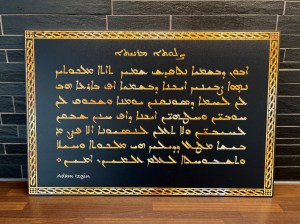
The Lord’s Prayer in Aramaic

Long ago and far away, perhaps on a hillside near the Sea of Galilee, something powerful happened. A disciple asked Jesus to teach them how to pray—recall they had seen Jesus pray multiple times. It was a simple request that unlocked one of the most enduring texts in Christian tradition. Jesus responded with the Lord’s Prayer, a model of beautiful simplicity — he likely spoke the words in Aramaic. These few lines (verses 2-4) speak of a God who is both holy and near, whose kingdom breaks into daily life and whose mercy sustains our relationships and our souls. The prayer itself reveals not just how to speak to God, but how to see the world—through dependence, forgiveness, and trust. There are multiple versions of this prayer. I recently read the First Nations Version (2021), drawn from Luke’s Gospel, and it is filled with delightful imagery. Consider these opening lines: O Great Spirit, our Father from above, your name is sacred and holy. Bring your good road to us, where the beauty of your ways in the spirit world above is reflected in the earth below. Hard to improve on that.

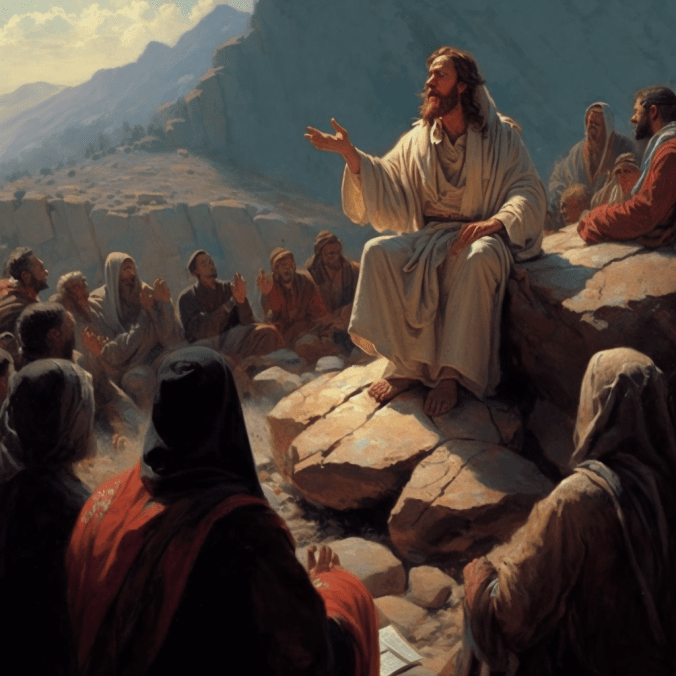
Jesus Teaching in Galilee
(A.I. Generated, 2023)

Jesus goes on to tell a story (verses 5-13): a midnight visitor knocks persistently on a friend’s door, seeking bread. The friend eventually rises not out of kindness, but because the visitor refuses to quit. The parable honors shameless persistence, reminding us that prayer isn’t about polished words—it’s about bold approach. Jesus follows with the familiar triad: ask, seek, knock. These aren’t passive gestures; they signal movement toward a God who responds with generosity and gives the Holy Spirit to those who truly ask.

Psalm 138 deepens this theme. The psalmist recalls a time when they called to God—and God answered. Not only with words, but with strength: On the day I called, you answered me; you increased my strength of soul (verse 3). I love that line! The Psalmist echoes Luke’s midnight visitor who dares to knock, and the disciple who dares to ask. Both the psalm and the Gospel proclaim a God who hears and strengthens, a God whose steadfast love endures and whose purposes do not falter.

In the week ahead, I encourage you to sit with this prayer and let it resonate. In his 1535 letter A Simple Way to Pray, written to his barber (that really humanizes Luther, doesn’t it?), Luther described how he personally used the Lord’s Prayer as a framework for deeper meditation—sometimes lingering on a single petition if it stirred his heart. He emphasized quality over quantity, urging believers to pray with sincerity and attentiveness rather than rote repetition. The prayer calls us into a bold intimacy with God and guides us on the road of transformation.

Soli Deo Gloria!

Prayer Reflection: Meditation on the Lord’s Prayer

Alfred Delp, a Jesuit priest, was executed by the Nazis on February 2, 1945, for his refusal to condone the Third Reich and leave the Jesuit order — resistors like Delp and Bonhoeffer are amazing. While in prison, he meditated on the Lord’s Prayer. Here are excerpts of his thoughts on the words, “Hallowed be thy name.”

Alfred Delp (1907-1945)

Human nature is so constituted that it must have something holy that it can worship, otherwise it becomes cramped and distorted, and instead of a holy object of veneration something else will take its place. I ought to know for I have just emerged from a murderous dialogue with such a self-appointed object of veneration. These substitute values are far more autocratic and demanding than the living God himself. They have no idea of courtesy or of waiting for their turn…All they know is demand, compulsion, force, threats and liquidation. And woe to anyone who does not conform . . . The word of God should evoke and receive the great veneration this phrase suggests: praise, reverence, awe…The name of God is the holy of holies, the central silence, the thing that above all others calls for humble approach. We not only ought to believe in the truth at the center of our being, in the purpose of our existence, but we should also bear testimony to this belief by the proper fulfilment of our life’s purpose. We should subjugate everything to this law of holiness and reject everything that does not harmonize with it. God, the great object of our veneration, will then also be our whole life . . . Prayer is our way to freedom and education in the method of prayer is the most valuable service that we can give to humankind. It makes it possible for the temple and the altar to again occupy their rightful place and for humanity to humble itself and measure its responsibilities in the name of God.

Source: Plough Magazine, Meditation on the Lord’s Prayer, 2 February 2025.

A Musical Offering: The Lord’s Prayer (Lucy Walker)

Lucy Walker (b. 1998), a young composer from North-East England, is gaining recognition for creating sacred choral music that speaks to the heart. A graduate of Cambridge and former Choral Scholar, she brings both skill and soul to her work. Her recent and enchanting setting of The Lord’s Prayer, premiered in 2025 at York Minster, was written to help people experience the prayer in a fresh and meaningful way, offering a great example of how this powerful prayer continues to inspire artists around the world in the early years of the 21st Century.

Faithful Conversations Updates

Our regular gatherings for discussing the weekly lectionary are on a pause. Summer worship at ELC is at 8:30 in town and 10:15 at Hatfield by the lake. The 8:30 service will be streamed. Please stay in touch!

Looking Ahead: “Bible 365: Journey Through God’s Word, One Day at a Time”

Have you ever wanted to read the entire Bible in a year? Starting this September, our church invites you to do just that through the Bible 365 Challenge. It’s open to everyone—individuals, families, and small groups—and designed to help us explore Scripture together. As Lutherans, we believe God’s Word is at the heart of our faith. Martin Luther once said, “The Bible is alive… it lays hold of me.” When we read daily, we grow in connection—with God and with one another. Our intention is to offer two choices regarding approach, traditional and digital. More details are coming soon in worship, online, and in the bulletin. We’ll walk through this journey as a community, offering support along the way. Are you ready to take the journey? Let’s read, grow, and deepen our faith—together!

20 July 2025: Pentecost 6 (16 Ordinary)

Introduction to Readers

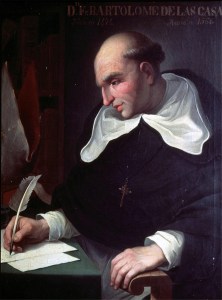
Christ wanted love to be called his single commandment. This we owe to all men. Nobody is excepted.” (Bartolomé de las Casas)

From the world of Charles Schultz and 1960s Lutheran humor.

Prophets are on my mind this week. In the Lutheran church of my childhood — shaped by the 1950s and 60s — the preaching leaned heavily on the New Testament. Jesus was our weekly companion, Paul our theological guide, and the Psalms brought comfort. The Old Testament prophets? They were thundering off in the distance somewhere — respected but rarely central. But this week, Amos breaks through. He appears in the Revised Common Lectionary’s Year C cycle, most prominently in July and again in September. His words are sharp, poetic, and deeply unsettling — calling out injustice with a clarity that is hard to ignore. I’m working my way through Walter Brueggemann’s The Prophetic Imagination right now, a book that reframes the prophet not as a predictor of events, but as a poet of possibility — someone who dismantles the dominant narrative and dares to imagine a world shaped by divine justice.

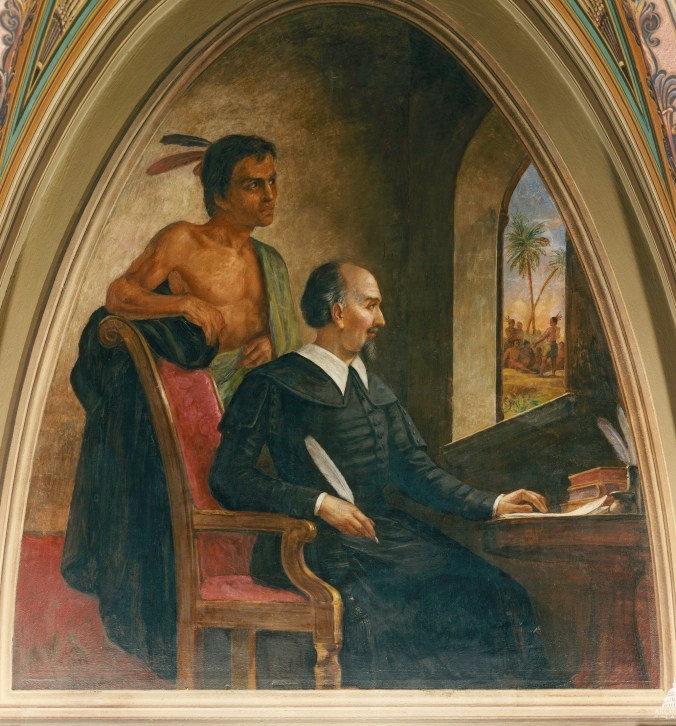
That vision resonates with another figure whose voice I’ve long admired: Bartolomé de las Casas, a prophet from a different time. This week, the ELCA commemorates Las Casas who died on 17 July 1566. A Dominican friar and missionary to the Indies, Las Casas was one of the first to publicly denounce the brutal treatment of Indigenous peoples by Spanish colonizers. He gave up his own encomienda and spent decades advocating for peaceful mission work, legal reform, and the dignity of Native lives. His writings — especially A Short Account of the Destruction of the Indies — were not just historical records; they were theological indictments. Las Casas clearly fits within the prophetic tradition. Like Amos, he spoke truth to power. And like Brueggemann’s vision of the prophet, Las Casas refused to accept the dominant consciousness of empire — and imagine the power of the Spanish empire! He imagined an alternative world rooted in mercy, justice, and the radical belief that Indigenous souls mattered to God. Like Amos, he was ridiculed, resisted, and marginalized. His courage amazes me.

Thanks for visiting this space again this week. As noted in previous blog postings, the more I learn about God’s Word, the more I realize I do not know, and I offer these with humility! July of 2025 is offering us several examples of the overwhelming power of nature with flooding in Texas and wildfires in Canada — it can be unsettling. Be reminded that God is present and in control, ever faithful. I will come back to Amos in my reflections this week and include a prayer for Las Casas that falls within our tradition. My musical offering will offer a few moments of calm and offers a wide range of interpretive possibilities! Also, note my short explanation at the end of the blog regarding the role of alternative readings within the Revised Common Lectionary, as is the case with the passage from Amos this week).

** Note 1: Links to outside references are bolded and italicized and are meant for further reading or research on your part. While the text I am including in the blog is my own, I am pulling from a multitude of sites for ideas and connections.

** Note 2: In my increasing use of A.I. (Copilot), I will cite sourcing of how I am using the tool, if necessary. I don’t want that to be overly cumbersome, but I am gradually incorporating more tools. And, by the way, I am exploring the A.I. world this summer prior to my next teaching semester. As you can imagine, it is a great challenge right now and will forever change the face of education!


** Note 3: The images I include in the blog are drawn from Wikimedia Commons to the fullest extent possible.

Amos 8: 1-12
This is what the Lord God showed me: a basket of summer fruit. He said, “Amos, what do you see?” And I said, “A basket of summer fruit.” Then the Lord said to me,

“The end has come upon my people Israel;
    I will spare them no longer.
The songs of the temple shall become wailings on that day,”
            says the Lord God;
“the dead bodies shall be many,
    cast out in every place. Be silent!”

Hear this, you who trample on the needy,
    and bring to ruin the poor of the land,
saying, “When will the new moon be over
    so that we may sell grain,
and the Sabbath,
    so that we may offer wheat for sale?
We will make the ephah smaller and the shekel heavier
    and practice deceit with false balances,
buying the poor for silver
    and the needy for a pair of sandals
    and selling the sweepings of the wheat.”

The Lord has sworn by the pride of Jacob:
Surely I will never forget any of their deeds.
Shall not the land tremble on this account,
    and everyone mourn who lives in it,
and all of it rise like the Nile,
    and be tossed about and sink again, like the Nile of Egypt?

On that day, says the Lord God,
    I will make the sun go down at noon
    and darken the earth in broad daylight.
10 I will turn your feasts into mourning
    and all your songs into lamentation;
I will bring sackcloth on all loins
    and baldness on every head;
I will make it like the mourning for an only son
    and the end of it like a bitter day.

11 The time is surely coming, says the Lord God,
    when I will send a famine on the land,
not a famine of bread or a thirst for water,
    but of hearing the words of the Lord.
12 They shall wander from sea to sea
    and from north to east;
they shall run to and fro, seeking the word of the Lord,
    but they shall not find it.

My source for the Bible readings each week is the Bible Gateway website.

TRY LUTHER’S METHOD OF BIBLE READING

A Revision of the Lectio Divina, a method he learned in his Augustinian training

Three Steps

Oratio (Prayer): This is the starting point, where one humbly prays for the Holy Spirit’s guidance to understand God’s Word. Luther emphasized that prayer prepares the heart and mind to receive divine wisdom.

Meditatio (Meditation): This involves deeply engaging with Scripture, not just reading it but reflecting on it repeatedly. Luther encouraged believers to “chew on” the Word, allowing its meaning to sink in and shape their thoughts and actions.

Tentatio (Struggle): Often translated as “trial” or “temptation,” this refers to the challenges and spiritual battles that arise as one seeks to live according to God’s Word. Luther saw these struggles as a way God refines faith, making it more resilient and authentic.

Luther’s Seal

Reflections: “Amos: A Prophetic Voice for 2025″

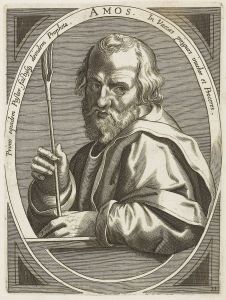
The Prophet Amos
(d. 745 BCE)

‘”A prophet is not without honor except in his own country and in his own house.” (Jesus speaking: Matthew 13:57)

Amos, clearly, was an unsettling character. Roughly 2,700 years ago (c.760 BCE), God called this shepherd and tree farmer from Tekoa to confront the injustices of Israel during the reign of King Jeroboam II. Though Amos lacked formal training or religious credentials, he delivered piercing critiques of economic exploitation, idolatry, and hollow worship. Amos disrupted the comfort of the powerful, declaring that true faith demanded justice and compassion. His message challenged Israel’s prosperity, warning that unchecked greed would rot the soul of the nation.

In the reading designated for next Sunday, Amos uses the image of ripe summer fruit to signal that Israel’s time is running out—their prosperity has turned rotten. The prophet condemns dishonest merchants who exploit the poor and treat holy days as nuisances, revealing a deep moral failure. God warns of a coming reversal: joy will turn to mourning, light to darkness, and silence will replace divine guidance. Verses 11-12 offer a startling warning — God’s Word will ultimately be withdrawn! What to make of all this?

First, Walter Brueggemann described prophets like Amos as carriers of the prophetic imagination —voices who disrupt dominant narratives and reframe reality according to God’s vision. They do not merely critique; they reimagine. Amos reveals that wealth without justice leads to spiritual blindness. Brueggemann’s insight helps us see that prophets don’t just diagnose—they cast alternative futures shaped by divine mercy and moral clarity.

Jesus Teaching in Galilee
(A.I. Generated, 2023)

Second, it’s important for us to realize that Jesus stood firmly within this prophetic tradition. When He returned to Nazareth, His own community rejected Him, unable to see beyond the carpenter they had always known. The quote cited above from Matthew 13 (similarly quoted in Mark and Luke), underscores the pattern of resistance faced by truth-tellers. Like Amos, Jesus defied expectations and confronted systems that oppressed the poor and marginalized. His teachings and actions reawakened the prophetic witness of Israel—a witness rooted not in status, but in courageous truth-telling.

Finally, Amos feels remarkably relevant to me in 2025, and his warnings resonate across time. We live in a world where profit too often outweighs compassion, where worship may become spectacle (or non-existent), and where the poor are easily forgotten. He reminds us that silence—not scarcity—may be our greatest famine: a hunger for the Word of the Lord in an age of distraction (tough words, difficult to hear, but look around!). Jesus confirms that prophetic voices will always face rejection, but also that they carry the deepest truths. In listening to Amos, and to Jesus, we recover a holy imagination—one that dares to envision justice, mercy, and transformation in our own time.

Soli Deo Gloria!

Note: I leaned heavily on an interpretation of this passage by author Rev. Courtney Pace, Ph.D. She is the Prathia Hall Scholar in Residence of Social Justice History for Equity for Women in the Church and a visiting faculty at Rhodes College. She is a contributor to Working Preacher, a resource offered through Luther Seminary in St. Paul, Minnesota.

The following prayer is drawn from the ELW (red hymnal), and specifically commemorates Bartolomé de las Casas (1484-1566), observed on July 17—the date of his death in 1566.

God of grace and glory, we praise you for your servant Bartolomé de las Casas, who made the good news known in the Americas among Indigenous people. Raise up, we pray, in every country, heralds of the Gospel, so that the world may know the immeasurable riches of your love, and be drawn to worship you, Father, Son, and Holy Spirit, one God, now and forever. Amen.

A Musical Offering: The Road Home

Stephen Paulus’ The Road Home is a reflective choral piece based on a 19th-century American folk tune. Sung without instruments, it carries a sense of longing and peace, as the lyrics tell of someone returning home after being lost. Though not explicitly Christian, the words speak to the heart of Christian hope and God’s welcome to those who have wandered. Enjoy a few moments of calm today!

Composer Stephen Paulus was a prolific American composer born in 1949. Over his career, Paulus wrote more than 600 works and earned multiple Grammy nominations before passing away in 2014 from complications following a stroke.


Tell me, where is the road
I can call my own
That I left, that I lost
So long ago?
All these years I have wandered
Oh, when will I know
There′s a way, there’s a road
That will lead me home

After wind, after rain
When the dark is done
As I wake from a dream
In the gold of day
Through the air there′s a calling
From far away
There’s a voice I can hear
That will lead me home

Rise up, follow me
Come away, is the call
With the love in your heart
As the only song
There is no such beauty
As where you belong
Rise up, follow me
I will lead you home

The Road Home
(Stephen Paulus, Composer)

The Dale Warland Singers was a renowned 40-voice professional choir based in St. Paul, Minnesota, founded in 1972 by conductor and composer Dale Warland. Over its 32-year history, the group performed hundreds of concerts, collaborated with major ensembles like the Mormon Tabernacle Choir and Chanticleer, and appeared on broadcasts like A Prairie Home Companion. Their final concert, I Have Had Singing, was held in 2004, after which the choir was disbanded and its archives entrusted to the University of Cincinnati College-Conservatory of Music.

“Provide a description of the Dale Warland Singers” Copilot, 14 July 2025, Copilot website.

Update on “Faithful Conversations”

Our regular gatherings for discussing the weekly lectionary are on a pause. Summer worship at ELC is at 8:30 in town and 10:15 at Hatfield by the lake. The 8:30 service will be streamed. Please stay in touch!

Looking ahead . . . and calling for ideas!

In September we will be launching “Bible 365” at ELC. The goal will be to invite any who are interested to take on the challenge of reading through the entirety of the Bible in one year. We are currently in the planning process and will offer more details as we progress. We will be following the “Challenge” plan offered in the Lutheran Study Bible (Second Edition, 2025). We hope to form teams that will go through the process together and meet from time to time for discussion. We’re looking for some feedback on this, so let me know if you have done something like this before and/or if you have ideas about the process. You can simply email me! Thanks.

What’s up with alternative readings in the RCL?

Alternate readings in the Revised Common Lectionary allow churches to choose between following the unfolding story of the Old Testament or aligning readings thematically with the Gospel (this week’s reading from Amos offers an example). This flexibility supports different liturgical traditions and theological emphases across denominations. At its core, the lectionary invites both continuity and context, allowing Scripture to speak faithfully across seasons and settings. And a reminder regarding the ELCA’s approach: we use the Revised Common Lectionary (RCL) as our primary guide for Sunday worship readings while also supporting both semi-continuous and thematic (complementary) Old Testament tracks, giving congregations flexibility in how they connect Scripture readings. You will find the entire listing of the RCL on pages 18-52 in the front portion of the ELW (the red hymnal in the pews).

13 July 2025: Pentecost 5 (15 Ordinary)

Introduction to Readers

“A refugee is someone who survived and who can create the future.” (Amela Koluder)

“Boat People”
(c. late 1970s)

The parable of the Good Samaritan prompts a memory nearly fifty years past: cool summer mornings in the mid ’70s, walking with my father, escorting a young Vietnamese refugee to catch the bus to the beet fields outside Fargo where he had recently started working. I was a student at Concordia College in Moorhead, MN, and a member of Faith Lutheran Church in West Fargo where my father served. Our parish was sponsoring families fleeing the wars in Vietnam and Cambodia. This was my first encounter with third world people — people who survived war and displacement — something I could only imagine. They were among nearly 300,000 Southeast Asian refugees who arrived in the U.S. between 1975 and 1979. (In Wisconsin alone, thousands of Hmong refugees began new lives during those same years). Arriving at their hot apartment with the smells of seasoned rice filling the air, I helped teach the young children basic English and attempted to communicate with these beautiful people whose world was so entirely different from mine—simple moments that opened my eyes to the human toll of conflict. The Vietnam War, which had loomed large throughout my formative years, suddenly had names, faces, and stories. All these years later, I regret that I did not do more to foster a good experience for these frightened boatpeople living so far from their homeland! My halting, clumsy efforts fell woefully short. In 2025, more than 42 million people worldwide live as refugees—part of a staggering 123 million who are displaced by war, persecution, or disaster. The crisis has reshaped global politics and tests our capacity for collective compassion. As a Christian with Lutheran heritage, I am proud of the fact that refugee resettlement has been a significant part of the Lutheran witness going back to the World War II era. Most notably that work continues today through Global Refuge, an excellent organization.

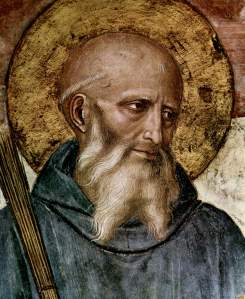
Saint Benedict (480-547)

Thanks for visiting this space again this week and for your continued interest in exploring the Lectionary! We have reached the 15th Sunday in Ordinary Time (and the All-Star Game is just around the corner for those of you that following the Major Leagues!). A notable ELCA calendar commemoration this week is for Benedict of Nursia, better known as Saint Benedict, who died on 11 July 547. My reflections this week will focus on the familiar parable of the Good Samaritan, with a reference to the reading from Deuteronomy. I will also include a fitting prayer for this week’s Gospel and St. Benedict, and a rousing musical selection I hope will bring you joy! I will also have the opportunity to preach on these readings this week at ELC and Hatfield!

** Note 1: Links to outside references are bolded and italicized and are meant for further reading or research on your part. While the text I am including in the blog is my own, I am pulling from a multitude of sites for ideas and connections.

** Note 2: In my increasing use of A.I. (Copilot), I will cite sourcing of how I am using the tool, if necessary. I don’t want that to be overly cumbersome, but I am gradually incorporating more tools. And, by the way, I am exploring the A.I. world this summer prior to my next teaching semester. As you can imagine, it is a great challenge right now and will forever change the face of education!

Deuteronomy 30: 9-14

and the Lord your God will make you abundantly prosperous in all your undertakings, in the fruit of your body, in the fruit of your livestock, and in the fruit of your soil. For the Lord will again take delight in prospering you, just as he delighted in prospering your ancestors, 10 when you obey the Lord your God by observing his commandments and decrees that are written in this book of the law, because you turn to the Lord your God with all your heart and with all your soul. 11 “Surely, this commandment that I am commanding you today is not too hard for you, nor is it too far away. 12 It is not in heaven, that you should say, ‘Who will go up to heaven for us and get it for us so that we may hear it and observe it?’ 13 Neither is it beyond the sea, that you should say, ‘Who will cross to the other side of the sea for us and get it for us so that we may hear it and observe it?’ 14 No, the word is very near to you; it is in your mouth and in your heart for you to observe.

If you would like background to the book of Deuteronomy, here is a good summary:

Source: The Bible Project

TRY LUTHER’S METHOD OF BIBLE READING

A Revision of the Lectio Divina, a method he learned in his Augustinian training (Three Steps)

Oratio (Prayer): This is the starting point, where one humbly prays for the Holy Spirit’s guidance to understand God’s Word. Luther emphasized that prayer prepares the heart and mind to receive divine wisdom.

Meditatio (Meditation): This involves deeply engaging with Scripture, not just reading it but reflecting on it repeatedly. Luther encouraged believers to “chew on” the Word, allowing its meaning to sink in and shape their thoughts and actions.

Tentatio (Struggle): Often translated as “trial” or “temptation,” this refers to the challenges and spiritual battles that arise as one seeks to live according to God’s Word. Luther saw these struggles as a way God refines faith, making it more resilient and authentic.

Luke 10: 25-37

25 An expert in the law stood up to test Jesus. “Teacher,” he said, “what must I do to inherit eternal life?” 26 He said to him, “What is written in the law? What do you read there?” 27 He answered, “You shall love the Lord your God with all your heart and with all your soul and with all your strength and with all your mind and your neighbor as yourself.” 28 And he said to him, “You have given the right answer; do this, and you will live.” 29 But wanting to vindicate himself, he asked Jesus, “And who is my neighbor?” 30 Jesus replied, “A man was going down from Jerusalem to Jericho and fell into the hands of robbers, who stripped him, beat him, and took off, leaving him half dead. 31 Now by chance a priest was going down that road, and when he saw him he passed by on the other side. 32 So likewise a Levite, when he came to the place and saw him, passed by on the other side. 33 But a Samaritan while traveling came upon him, and when he saw him he was moved with compassion. 34 He went to him and bandaged his wounds, treating them with oil and wine. Then he put him on his own animal, brought him to an inn, and took care of him. 35 The next day he took out two denarii, gave them to the innkeeper, and said, ‘Take care of him, and when I come back I will repay you whatever more you spend.’ 36 Which of these three, do you think, was a neighbor to the man who fell into the hands of the robbers?” 37 He said, “The one who showed him mercy.” Jesus said to him, “Go and do likewise.”

My source for the Bible readings each week is the Bible Gateway website.

Reflections: Who Passed, Who Stopped and Why It Matters!

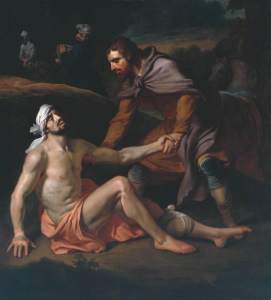
The Good Samaritan (1744)
Joseph Highmore (1682-1780)

We see Jesus at his sharpest here—not just as a storyteller, but as a master teacher. With this parable, he afflicts the comfortable — he unsettles them. Here’s the setup: A legal expert stands up to test Jesus. What must I do to inherit eternal life? he asks. True to form, Jesus doesn’t answer directly. Instead, he turns the question back: What’s written in the Law? The man responds with the heart of Torah—love God and love your neighbor. But he wants to justify himself, so he presses further: And who is my neighbor? Jesus answers with a story that stuns the crowd. A man lies beaten and half-dead on the road. A priest sees him and walks by. A Levite does the same. But then comes a Samaritan—someone Jews considered a heretic, an outsider, an enemy. He stops. He binds the man’s wounds, anoints them with oil and wine, lifts him onto his animal, and pays for his care.

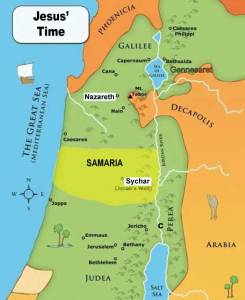
Jesus doesn’t just tell a story here—he shatters a cultural boundary. Making a Samaritan the hero would have shocked his listeners. The hostility between Jews and Samaritans ran deep. After the Assyrian conquest of Israel in 721 BCE, many Israelites were exiled. Those who remained intermarried with foreign settlers, and their descendants became the Samaritans. They worshiped on Mount Gerizim and accepted only the Pentateuch as Scripture. Jews saw them as impure and unfaithful. By Jesus’ time, the two groups avoided each other entirely. So when Jesus casts a Samaritan as the model of mercy, he doesn’t just challenge prejudice—he dismantles it. He redefines neighborly love as boundary-breaking compassion. And this isn’t an isolated moment. Samaritans appear often in Jesus’ ministry: the woman at the well in John 4, the grateful leper in Luke 17, and the Great Commission in Acts 1, where Jesus sends his followers to Samaria as part of their mission.

As I read this parable again, three reflections rise to the surface. First, as a historian, I’m struck by a powerful Old Testament parallel in 2 Chronicles 28, something I was not aware of previously. After a brutal battle, Israelite soldiers take thousands of Judean captives. But the prophet Oded confronts them: “Your cruelty offends God.” In response, leaders from Ephraim rise—not to dominate, but to heal. They clothe the naked, feed the hungry, anoint the wounded, and carry the weak on donkeys back to Jericho—the very road where Jesus sets his parable. This ancient act of mercy across tribal lines mirrors the Samaritan’s compassion. It reminds us that even in the Old Testament, God calls his people to see the enemy not as a threat, but as a neighbor in need. Is Jesus reflecting this story realizing that those listening may draw this parallel?

Second, for the past few weeks, I’ve been reflecting on how the Gospel and the Old Testament readings speak to each other in the Lectionary. Deuteronomy 30 insists that God’s command isn’t distant or mysterious. Moses says, the word is very near to you; it is in your mouth and in your heart for you to observe (verse 14). Jesus echoes this truth. The Samaritan doesn’t wait for a sign from heaven. He sees suffering and acts. Love of neighbor isn’t abstract—it’s immediate, embodied, and within reach. Just as Moses urges Israel to choose life, Jesus calls us to choose mercy. It’s not complicated. It’s costly, but it’s clear.

Walter Brueggeman
(1933-2025)

Finally, I’m drawn to how Jesus uses counter-narratives. He does this again and again. He flips expectations, tells stories that disrupt the dominant script — what theologian Walter Brueggemann called the “prophetic imagination”—the bold articulation of an alternative reality. From Brueggeman: People in fact change by the offer of new models, images, and pictures of how the pieces of life fit together. Transformation is the slow, steady process of inviting each other into a counter story about God, world, neighbor, and self.

Yes, Jesus invites us to see the world not as it is, but as it could be. He calls us to imagine a kingdom where mercy triumphs over division, and where love crosses every line we draw. May we act on this message going forward in 2025!

Soli Deo Gloria!

Note: I am indebted to Mennonite Pastor Gina Burkhart and her interpretation of this text as explored in the July issue of The Christian Century.

The Good Samaritan Prayer comes from the Sisters of the Good Samaritan of the Order of St. Benedict, located in southeastern Australia. I appreciate the simplicity and clarity, along with the connection to the 10th Chapter of Luke.

God of love,
May we always see the world through
the eyes of the Good Samaritan and be filled
with your deep compassion.
Help us to be merciful neighbours
even when it is inconvenient, when we don’t have
time, or when we have other responsibilities to attend to.

Grant us the insight to see the need in those around us,
the wisdom to know how to respond,
and the strength to do so willingly.
We pray for those we might cross the road to avoid –
the poor, the vulnerable and the marginalised.
Those, who in many and various ways, have been stripped,
beaten and left for dead.

We pray for all who call from us more than we feel we have to give.
Open our eyes, that we might not cross the road from human need.
May our love of you and love of our neighbour call us to be people of peace and justice in the world.
And may we, like the Good Samaritan, always ‘go and do likewise’.
Amen.

This statement of acknowledgement for the Indigenous people of Australia is from the website of the Sisters of the Good Samaritan. Read more about their work with the native people of Australia here.

We acknowledge the traditional custodians who have walked upon and cared for this land for tens of thousands of years. We acknowledge their deep spiritual relationship to country and commit ourselves to the ongoing journey of Reconciliation. We pay our respects to their Elders, past, present and emerging. We respectfully acknowledge the first peoples of all the lands and waters upon which we live, work and travel throughout Australia, Japan, the Philippines and Kiribati. As you take your next step, remember the first peoples who walked these lands.

Sacred Heart Chapel
Sisters of the Order of St. Benedict

Note: In the process of working on the blog, I learned of the tragic flooding that hit central Texas. Two of our grandchildren were attending Camp Chrysalis at the time of the extreme weather, an ELCA sponsored Bible camp just 14 miles from Camp Mystic that was hit so hard! Fortunately, they were safe, but our heart grieves for the many lost lives in that region — let us pray for them this week and beyond. Lives have been forever changed.

I’ll Be On My Way

When I am gone
Don’t you cry for me
Don’t you pity my sorry soul
What pain there might have been
Will now be passed
And my spirit will be home.

I’ll be on my way, I’ll be on my way
I’ll have left my feet of clay upon the ground
I will be glory bound
I’ll be on my way

When I am gone
Don’t you cry for me
Don’t my pity my sorry soul
What pain there might have been
Will now be past and my spirit will be home

I’ll be on my way, I’ll be on my way
I’ll have left my feet of clay upon the ground
I will be glory bound
I’ll be on my way

When I am gone
Please forgive the wrong that I might have done to you
There’ll be no room for regrets up there high above
Way beyond the blue

I’ll be on my way, I’ll be on way
I’ll have laid my frown and all my burdens down
I’ll be putting on my crown
I’ll be in my way

When I am gone, don’t you look for me in the places I have been
I’ll be alive but somewhere else I’ll be on my way again

I’ll be on my way, I’ll be on my way
I’ll lift my wings and soar into the air
There’ll be glory everywhere
I’ll be on way
I’ll be on my way, I’ll be on my way
I’ll have laid my from and all my burdens down
I’ll be putting on my crown
I’ll be on my way
I’ll have left my feet of clay upon the ground
I will be glory bound
I’ll be on my way

“I’ll Be On My Way”
Shawn Kirchner composed “I’ll Be On My Way” after witnessing a tragic bus accident near his church, where a quiet moment of reflection sparked the song’s central phrase. Drawing on folk and gospel traditions, the song has since resonated deeply with audiences, often closing concerts with its message of healing and homecoming.

“Provide background for Kirshner’s song, ‘I’ll Be On My Way.'” Copilot, 5 July 2025. Copilot Website.

From the National Lutheran Choir’s Website:

“Founded in 1986 by the late Larry Fleming, grown under the direction of David Cherwien from 2002-2023, and now led by Jennaya Robison, the National Lutheran Choir sings a spiritual story through diverse repertoire including selections from early chant and simple folk anthems to complex choral masterworks and new compositions. Currently in its 39th year, the National Lutheran Choir features a roster of more than 65 volunteer singers from various backgrounds and faith traditions.”

Update on “Faithful Conversations”

Our regular gatherings for discussing the weekly lectionary are on a pause. Summer worship at ELC is at 8:30 in town and 10:15 at Hatfield by the lake. The 8:30 service will be streamed. Please stay in touch!

And . . . Looking Ahead: The “Bible 365 Challenge!”

Consistent interaction with God’s Word is a transforming experience. In one of his Table Talks, Martin Luther made the following statement about the spiritual discipline of reading the scriptures: “For some years now I have read through the Bible twice every year. If you picture the Bible to be a mighty tree and every word a little branch, I have shaken every one of these branches because I wanted to know what it was and what it meant.” In September we will be launching “Bible 365” at ELC. The goal will be to invite any who are interested to take on the challenge of reading through the entirety of the Bible in one year. We are currently in the planning process and will offer more details as we progress. We will be following the “Challenge” plan offered in the Lutheran Study Bible (Second Edition, 2025). We hope to form teams that will go through the process together and meet from time to time for discussion. Feel free to contact me with questions and/or ideas regarding this endeavor!

6 July 2025: Pentecost 4 (14 Ordinary)

Introduction to Readers

I saw an older man standing alone by the side of the road. He kept looking down that road as if he was expecting a bus, but no bus stopped there, so I mentioned that to him. He said he was not waiting for a bus. He was waiting for a parade. He had heard that if you waited long enough, the parade would come back down your street. He had missed it before. He did not want to miss it again. I looked at him. He was different than me. Different color. Different culture. Different religion. He looked a little grubby and he had an accent. But I decided that didn’t matter. He was a person. I was a person. He needed a parade. I needed a parade. He had hope. I had hope. So I just started waiting beside him, looking down the street in the same direction. And the minute I did: we both heard music in the distance.” (Steven Charleston)

In a world increasingly fractured by noise and suspicion, we need stories that quiet our fears and call us back to each other. One of my regrets in the modern age is that, too often, Americans consume the news of the day already filtered through a partisan lens. Every headline becomes a battle cry—another excuse to choose sides, defend our tribe, and vilify the other. We shrink people into caricatures, place them in boxes, exaggerating what we fear, rather than seeking what we share. In Ladder to the Light, Steve Charleston—a retired Episcopal bishop and member of the Choctaw Nation—cuts through this noise. He tells of an older man waiting not for a bus, but for a parade, believing that if he waited long enough, music and joy would return. When the narrator chooses to wait with him, divided identities dissolve into common hope. Side by side, they listen—not for argument, but for music. That is where healing begins. And maybe, if we choose to wait together—with open hearts and listening ears—we’ll find that the music never truly stopped. That is my hope for all of us.

Catherine Winkworth
(1827-1878)

Thanks for returning to this space again this week! We are turning the corner into July and have reached the 14th Sunday in Ordinary Time. We celebrate the 4th of July on Friday, a good time to think about the meaning of freedom within our Christian worldview. Among those we venerate in the ELCA calendar this week are prolific hymn translator Catherine Winkworth (d. July 1, 1878) and Czech reformer and martyr Jan Hus (d. July 6, 1415). Hus, a precursor to Luther, died an especially tragic death.

My reflections this week will focus on the story of Naaman, the Syrian commander healed by Elisha (an alternate Old Testament reading for Pentecost 4), with commentary on how his story connects to the Gospel. Beyond that, I will provide a poem from Langston Hughes, a powerful reflection on freedom, and offer a song from my era that I hope you will appreciate. Also, take time to read my description of the Revised Common Lectionary at the end of this week’s blog.

** Note 1: Links to outside references are bolded and italicized and are meant for further reading or research on your part. While the text I am including in the blog is my own, I am pulling from a multitude of sites for ideas and connections.

** Note 2: In my increasing use of A.I. (Copilot), I will cite sourcing of how I am using the tool, if necessary. I don’t want that to be overly cumbersome, but I am gradually incorporating more tools. And, by the way, I am exploring the A.I. world this summer prior to my next teaching semester. As you can imagine, it is a great challenge right now and will forever change the face of education!

** Note 3: The images I include in the blog are drawn from Wikimedia Commons to the fullest extent possible.

2 Kings 5: 1-14

Naaman, commander of the army of the king of Aram, was a great man and in high favor with his master because by him the Lord had given victory to Aram. The man, though a mighty warrior, suffered from a skin disease. Now the Arameans on one of their raids had taken a young girl captive from the land of Israel, and she served Naaman’s wife. She said to her mistress, “If only my lord were with the prophet who is in Samaria! He would cure him of his skin disease.” So Naaman went in and told his lord just what the girl from the land of Israel had said. And the king of Aram said, “Go, then, and I will send along a letter to the king of Israel.” He went, taking with him ten talents of silver, six thousand shekels of gold, and ten sets of garments. He brought the letter to the king of Israel, which read, “When this letter reaches you, know that I have sent to you my servant Naaman, that you may cure him of his skin disease.” When the king of Israel read the letter, he tore his clothes and said, “Am I God, to give death or life, that this man sends word to me to cure a man of his skin disease? Just look and see how he is trying to pick a quarrel with me.” But when Elisha the man of God heard that the king of Israel had torn his clothes, he sent a message to the king, “Why have you torn your clothes? Let him come to me, that he may learn that there is a prophet in Israel.” So Naaman came with his horses and chariots and halted at the entrance of Elisha’s house. 10 Elisha sent a messenger to him, saying, “Go, wash in the Jordan seven times, and your flesh shall be restored, and you shall be clean.” 11 But Naaman became angry and went away, saying, “I thought that for me he would surely come out and stand and call on the name of the Lord his God and would wave his hand over the spot and cure the skin disease! 12 Are not Abana and Pharpar, the rivers of Damascus, better than all the waters of Israel? Could I not wash in them and be clean?” He turned and went away in a rage. 13 But his servants approached and said to him, “Father, if the prophet had commanded you to do something difficult, would you not have done it? How much more, when all he said to you was, ‘Wash, and be clean’?” 14 So he went down and immersed himself seven times in the Jordan, according to the word of the man of God; his flesh was restored like the flesh of a young boy, and he was clean.

My source for the Bible readings each week is the Bible Gateway website.

TRY LUTHER’S METHOD OF BIBLE READING

A Revision of the Lectio Divina, a method he learned in his Augustinian training

Three Steps

Oratio (Prayer): This is the starting point, where one humbly prays for the Holy Spirit’s guidance to understand God’s Word. Luther emphasized that prayer prepares the heart and mind to receive divine wisdom.

Meditatio (Meditation): This involves deeply engaging with Scripture, not just reading it but reflecting on it repeatedly. Luther encouraged believers to “chew on” the Word, allowing its meaning to sink in and shape their thoughts and actions.

Tentatio (Struggle): Often translated as “trial” or “temptation,” this refers to the challenges and spiritual battles that arise as one seeks to live according to God’s Word. Luther saw these struggles as a way God refines faith, making it more resilient and authentic.

Luther’s Seal

Luke 10: 1-11, 16-20

10 After this the Lord appointed seventy-two others and sent them on ahead of him in pairs to every town and place where he himself intended to go. He said to them, “The harvest is plentiful, but the laborers are few; therefore ask the Lord of the harvest to send out laborers into his harvest. Go on your way; I am sending you out like lambs into the midst of wolves. Carry no purse, no bag, no sandals, and greet no one on the road. Whatever house you enter, first say, ‘Peace to this house!’ And if a person of peace is there, your peace will rest on that person, but if not, it will return to you. Remain in the same house, eating and drinking whatever they provide, for the laborer deserves to be paid. Do not move about from house to house. Whenever you enter a town and its people welcome you, eat what is set before you; cure the sick who are there, and say to them, ‘The kingdom of God has come near to you. 10 But whenever you enter a town and they do not welcome you, go out into its streets and say, 11 ‘Even the dust of your town that clings to our feet, we wipe off in protest against you. Yet know this: the kingdom of God has come near.

16 “Whoever listens to you listens to me, and whoever rejects you rejects me, and whoever rejects me rejects the one who sent me.” 17 The seventy-two returned with joy, saying, “Lord, in your name even the demons submit to us!” 18 He said to them, “I watched Satan fall from heaven like a flash of lightning. 19 Indeed, I have given you authority to tread on snakes and scorpions and over all the power of the enemy, and nothing will hurt you. 20 Nevertheless, do not rejoice at this, that the spirits submit to you, but rejoice that your names are written in heaven.”

Reflections: The Power of the Powerless

The Jordan River, once again, is a feature of this week’s Old Testament Reading, and Elisha is a central character. Here’s a quick summary. Naaman, a respected Syrian military commander, suffers from leprosy and seeks healing after hearing from a captive Israelite girl about the prophet Elisha. Expecting a dramatic cure, Naaman is initially offended when Elisha simply instructs him—through a messenger—to wash seven times in the Jordan River. After some persuasion from his servants, Naaman humbles himself, follows the prophet’s instructions, and is miraculously healed. This passage highlights the power of God working through humility, obedience, and unexpected messengers. What to make of this unusual story about this long-ago Syrian military man?

Gina Burkhart

So often when reading these stories, I find myself drawn to the peripheral players — in this case the Israelite girl. This remarkable, nameless young woman, captured in a raid and forced into servitude in Naaman’s household, sets in motion a chain of events leading to Naaman’s healing and spiritual transformation. She reminds us that God works through even the most marginalized and voiceless individuals. In a terrific commentary in the July edition of The Christian Century, Mennonite pastor Gina Burkhardt, offers the following commentary and contemporary application regarding the role of the young Israelite, “In our current political milieu, many feel powerless . . . We need the reminder that ordinary, relatively powerless people are very often the links to life-giving change for our spiritual lives. As followers of Jesus, we can imagine the healing and wholeness that our hurting world needs.”

Landscape with Jesus and His Disciples by Jean-François Millet (c. 1667)

This theme resonates in this week’s Gospel story from Luke 10. Jesus sends out seventy disciples with minimal provisions to proclaim the kingdom and bring healing. Their mission is marked by vulnerability and dependence, yet they return rejoicing at the power of God working through them. Jesus affirms that their authority comes not from status or strength, but from their participation in God’s mission. Together, these readings emphasize that God’s healing and power are not reserved for the mighty, but are revealed through obedience, humility, and the faithful witness of those the world might overlook. These are good words for us to hear in 2025!

Soli Deo Gloria!

Freedom will not come
today, this year
Nor ever
Through compromise and fear.
I have as much right
As the other fellow has
To stand
On my two feet
And own the land.
I tire so of hearing people say,
Let things take their course.
Tomorrow is another day.
I do not need my freedom when I’m dead.
I cannot live on tomorrow’s bread.
Freedom
Is a strong seed
Planted
In a great need.
I live here, too.
I want my freedom
Just as you.

Source: The Poetry Foundation

Langston Hughes (1901-1967)

Langston Hughes’s poem Freedom refuses to accept delay, and echoes Jesus’ own words in Luke 4:18 about release for the captives and good news for the poor. Drawing on America’s own tradition of liberty, Hughes exposes the painful distance between its ideals and the lived experience of those still waiting for justice. Read through a Christian lens, the poem takes on a prophetic urgency, calling us to recognize the image of God in every neighbor and to live into the gospel’s vision of a freedom that is real, present, and shared. My prayer for July 4th is that we live into that vision!

A Musical Offering: Here to Love You (The Doobie Brothers)

In the category of, songs that are not explicitly Christian, but reverberate with Christian themes,” the 1978 Doobie Brothers hit Here to Love You, always caught my attention (sidebar: this song immediately transports me back to my high school and college days — and yes, me and my friends loudly sang another great Doobie Brothers hit “Black Water” while driving around Fargo, but I digress!). The song reflects the Christian message of steadfast, unconditional love that mirrors God’s faithful presence through silence and struggle. Its gospel-tinged sound deepens the call not only to receive such grace but to embody it—loving our neighbors with the same steady compassion. Michael McDonald, the composer, has spoken publicly about his faith and in a Guideposts article, shared how faith helped him through periods of personal struggle and disillusionment, particularly during the height of his success with the Doobie Brothers. Enjoy!

“Here To Love You”

I’ve heard it said that the weight of the world’s problems
Is enough to make the ball fall right through space
That it ain’t even worth it to live
With all that’s goin’ wrong
Well, let me just go down as saying
That I’m glad to be here
Here with all the same pain and laughs everybody knows

Some men think they’re born to be king
Maybe that’s true
But I think passing love around
Is all we were born to do

Let them build their kingdoms
Let them make the laws for this world to heed
‘Cause you and I make life worth living
Right here in each other’s arms

I’m here to love you, baby
No more loneliness
No more emptiness
I’m here to love you

Let them build their kingdoms
Let them make the laws for this world to heed
‘Cause you and I make life worth living
Right here in each other’s arms

I’m here to love you, baby
No more loneliness
No more emptiness
I’m here to love you…

I’m here to love you

Just let me go on loving you
Don’t stop me now while I’m feeling this way..


“Here to Love You” (1976)

The Doobie Brothers are an American rock band formed in San Jose, California, in 1970, known for their rich vocal harmonies and genre-blending sound that spans rock, soul, country, and pop. They rose to prominence in the 1970s with hits like “Listen to the Music,” “Long Train Runnin’,” and “Black Water,” and later reinvented their sound with Michael McDonald’s soulful influence on tracks like “Takin’ It to the Streets” and “What a Fool Believes.” Their ability to evolve musically while maintaining a strong identity helped them earn a place in the Rock and Roll Hall of Fame in 2020. With over 40 million records sold worldwide, the Doobie Brothers remain a defining voice in American popular music.

“Provide a description of the Doobie Brothers.” Copilot, 29 June 2025, Copilot website.

Update on “Faithful Conversations”

Our regular gatherings for discussing the weekly lectionary are on a pause. Summer worship at ELC is at 8:30 in town and 10:15 at Hatfield by the lake. The 8:30 service will be streamed. Please stay in touch!

A Reminder: The Background of the RCL

The Revised Common Lectionary, often called the RCL, is a three-year cycle (A-B-C) of Scripture readings used in worship by many Christian churches, including the Evangelical Lutheran Church in America (ELCA). It was developed in the late twentieth century by an ecumenical group called the Consultation on Common Texts, which brought together leaders from various denominations to create a shared pattern of readings. Their goal was to help congregations hear a broader range of Scripture and to foster unity across the Christian community. The RCL was officially published in 1992 and later adopted by the ELCA with the release of Evangelical Lutheran Worship in 2006. Each Sunday, the RCL offers four readings that are meant to speak to one another. The Old Testament reading and the Gospel often share a common theme, showing how God’s promises unfold across time. The Psalm serves as a poetic or emotional response to the Old Testament reading, giving voice to praise, lament, or trust. The Epistle, usually drawn from the New Testament letters, may not always connect directly to the other readings but often adds theological depth or seasonal insight. Together, these texts create a rich and layered conversation that invites worshipers into a deeper experience of Scripture and the rhythms of the church year.

29 June 2025: Pentecost 3 (13 Ordinary)

Introduction to Readers

“Eventually, all things merge into one, and a river runs through it. The river was cut by the world’s great flood and runs over rocks from the basement of time. On some of the rocks are timeless raindrops. Under the rocks are the words, and some of the words are theirs. I am haunted by waters.”
(Norman Maclean)

Norman Maclean
(1902-1990)

Rivers—and the moments of transformation they represent—have been on my mind this week, especially as I sit with the readings from 2 Kings and Luke. Norman Maclean’s words remind me how rivers quietly carry the memory of generations past. Living in a small river city, I’ve often felt that truth flow around me. The Jordan River, prevalent in this week’s first reading, isn’t just a location in Scripture—it’s a vivid symbol of change, transition, and divine encounter. In the Old Testament, it marks the line between wilderness and promise. Jacob crosses the Jabbok River (an eastern tributary of the Jordan), wrestles a man all night, and leaves limping with a dislocated hip. That crossing marks the moment he becomes Israel (Genesis 32). When the Israelites step across the Jordan in Joshua 3, they’re not just walking into new territory—after 40 years of wandering, they’re crossing into God’s fulfilled promise. The river becomes a doorway into new life. In 2 Kings, Elijah and Elisha both cross the Jordan during key moments in their prophetic journeys. Elijah walks through before being taken up to heaven. Elisha returns, parting the waters with Elijah’s cloak and carrying a double portion of his spirit. The river becomes the stage for succession, power, and calling. And in the New Testament, the Jordan deepens in meaning. Jesus steps into its waters to be baptized by John. That moment marks the start of his public ministry. The Jordan becomes not just a river, but a sign of spiritual rebirth and God’s voice of affirmation. It points toward the heart of baptism: dying to the old self, rising into new life. More to come on sacred crossings in this week’s reflection.

Thanks for your visit again this week and for your continued interaction with the Lectionary! As I am working on the blog, the news out of the Middle East is disconcerting. As Christians, we are called to be people of peace, even in times of global conflict. The U.S. bombing of Iranian nuclear sites is sobering and will be an evolving story. In part, due to our son Jake’s military journey, we have spent 25 years reacting to such stories in a personal way. Regardless of political views, our response must begin with prayer—for wisdom among leaders, protection for the innocent, and a path toward reconciliation. I found myself seeking out the words from Psalm 121, often a calming exercise for me.

There are several commemorations on our church calendar this week (you can find all 125 of them in the ELW, pages 14-17). Notably, John the Baptist (June 24) and Peter and Paul (June 29). And, important in our Lutheran heritage, we commemorate the presentation of the Augsburg Confession (1530) and Philipp Melanchthon (d. 1560) on June 25. Read more about that story here! Beyond my reflections this week, I will offer some background on the Serenity Prayer and a beautiful (and familiar) piece of music with a river theme!

** Note 1: Links to outside references are bolded and italicized and are meant for further reading or research on your part. While the text I am including in the blog is my own, I am pulling from a multitude of sites for ideas and connections.

** Note 2: In my increasing use of A.I. (Copilot), I will cite sourcing of how I am using the tool, if necessary. I don’t want that to be overly cumbersome, but I am gradually incorporating more tools. And, by the way, I am exploring the A.I. world this summer prior to my next teaching semester. As you can imagine, it is a great challenge right now and will forever change the face of education!

2 Kings 2: 1-2, 6-14

Now when the Lord was about to take Elijah up to heaven by a whirlwind, Elijah and Elisha were on their way from Gilgal. Elijah said to Elisha, “Stay here, for the Lord has sent me as far as Bethel.” But Elisha said, “As the Lord lives and as you yourself live, I will not leave you.” So they went down to Bethel. 

Then Elijah said to him, “Stay here, for the Lord has sent me to the Jordan.” But he said, “As the Lord lives and as you yourself live, I will not leave you.” So the two of them went on. Fifty men of the company of prophets also went and stood at some distance from them, as they both were standing by the Jordan. Then Elijah took his mantle and rolled it up and struck the water; the water was parted to the one side and to the other, and the two of them crossed on dry ground. When they had crossed, Elijah said to Elisha, “Tell me what I may do for you before I am taken from you.” Elisha said, “Please let me inherit a double share of your spirit.” 10 He responded, “You have asked a hard thing, yet if you see me as I am being taken from you, it will be granted you; if not, it will not.” 11 As they continued walking and talking, a chariot of fire and horses of fire separated the two of them, and Elijah ascended in a whirlwind into heaven. 12 Elisha kept watching and crying out, “Father, father! The chariots of Israel and its horsemen!” But when he could no longer see him, he grasped his own clothes and tore them in two pieces. 13 He picked up the mantle of Elijah that had fallen from him and went back and stood on the bank of the Jordan. 14 He took the mantle of Elijah that had fallen from him and struck the water. He said, “Where is the Lord, the God of Elijah? Where is he?” He struck the water again, and the water was parted to the one side and to the other, and Elisha crossed over.

TRY LUTHER’S METHOD OF BIBLE READING

A Revision of the Lectio Divina, a method he learned in his Augustinian training (Three Steps)

Oratio (Prayer): This is the starting point, where one humbly prays for the Holy Spirit’s guidance to understand God’s Word. Luther emphasized that prayer prepares the heart and mind to receive divine wisdom.

Meditatio (Meditation): This involves deeply engaging with Scripture, not just reading it but reflecting on it repeatedly. Luther encouraged believers to “chew on” the Word, allowing its meaning to sink in and shape their thoughts and actions.

Tentatio (Struggle): Often translated as “trial” or “temptation,” this refers to the challenges and spiritual battles that arise as one seeks to live according to God’s Word. Luther saw these struggles as a way God refines faith, making it more resilient and authentic.

My source for the Bible readings each week is the Bible Gateway website.

Luke 9: 51-62

51 When the days drew near for him to be taken up, he set his face to go to Jerusalem. 52 And he sent messengers ahead of him. On their way they entered a village of the Samaritans to prepare for his arrival, 53 but they did not receive him because his face was set toward Jerusalem. 54 When his disciples James and John saw this, they said, “Lord, do you want us to command fire to come down from heaven and consume them?” 55 But he turned and rebuked them. 56 Then they went on to another village. 57 As they were going along the road, someone said to him, “I will follow you wherever you go.” 58 And Jesus said to him, “Foxes have holes, and birds of the air have nests, but the Son of Man has nowhere to lay his head.” 59 To another he said, “Follow me.” But he said, “Lord, first let me go and bury my father.” 60 And Jesus said to him, “Let the dead bury their own dead, but as for you, go and proclaim the kingdom of God.” 61 Another said, “I will follow you, Lord, but let me first say farewell to those at my home.” 62 And Jesus said to him, “No one who puts a hand to the plow and looks back is fit for the kingdom of God.”

Here is a good “refresher” on how to read the Gospels from

Source: The Bible Project

Reflections: “Reluctance and Resolve”

The connections between the Lectionary readings are sometimes difficult to discern, but that’s not the case with the passages from 2 Kings and Luke this week. Both center on moments of transition, departure, and the cost of discipleship. Here is a quick summary of both. (Note: You may see there are two “first” readings listed this week, and the 2 Kings passage is the alternate reading, but they are connected).

Elijah and the Chariot of Fire
by Giuseppe Angeli (c. 1740)

In 2 Kings, Elijah (the mentor) is about to be taken up into heaven (a dramatic scene!), and Elisha (the pupil) becomes his successor. (Sidbar: Can we all recall readers in church stumbling through this passage, confusing the names of Elijah and Elisha? But, I digress). The naming of Elisha happens earlier (1 Kings 19), but the actual transfer of authority happens in 2 Kings. Elisha’s persistence and his request for a double portion of Elijah’s spirit show his readiness to carry on the prophetic mission. The crossing of the Jordan, the parting of the waters, and the taking up of Elijah all mark a sacred transition of leadership and spiritual authority.

The Face of Jesus (using AI)

In Luke 9, Jesus “sets his face toward Jerusalem” (verse 53) signaling the beginning of his journey toward the cross. Like Elijah, he is moving toward a moment of departure. Along the way, Jesus encounters would-be followers, but he challenges them with the cost of discipleship—no turning back, no delay, no divided loyalties (verses 60-62). His words echo the urgency and total commitment seen in Elisha’s response to Elijah.

The Jordan River

What are the takeaways for those of us navigating the world of 2025? Let me return to my musings on rivers and especially the Jordan River. While working through the 2 Kings reading, I stumbled on a wonderful analysis offered by theologian Kimberly D. Russaw of Pittsburgh Theological Seminary. She highlights the Jordan River as a metaphor in our lives that I find an especially compelling: “What situation do we need to cross over or resolve in order to move into the next phase of our life? What hard thing must we confront to live fully and freely in our ministry?” In Elisha’s case, one senses both reluctance and resolve as he witnesses his vaunted mentor riding that chariot to a different reality — a moment of truth. The disciples traveling with Jesus are experiencing the same thing — reluctance and resolve. This young Jewish man is heading toward the fulfillment of his destiny, and they aren’t quite sure if they’re ready to take those next steps. Those next steps are always difficult. Again, from Kimberly Russaw: “When we cross our Jordan Rivers, we should possess something different—something that will help us in our earthly ministry. We should also understand aspects of our ministry because we will have witnessed someone else doing something similar.” My prayer for all of us going forward is that we find that resolve and cross those rivers, doorways to a new life, more deeply and spiritually blessed!

Soli Deo Gloria!

Niebuhr
Wygal

Background: Most people think the Serenity Prayer started with AA, but it actually goes back to theologian Reinhold Niebuhr (1892-1971) in the 1930s. One of his students, Winnifred Wygal (1884-1972), wrote it down and helped spread its popularity through the YWCA. Over time, the prayer made its way into a World War II chaplain’s prayer book, and by the early 1940s, it landed in Alcoholics Anonymous—and that’s when it really stuck. The prayer found its way to me 31 years ago through a counselor who walked with me during a time of deep personal reckoning. It has been part of my daily ritual ever since.

God, grant me the serenity to accept the things I cannot change,
Courage to change the things I can,
And wisdom to know the difference.

Down in the River to Pray

As I went down in the river to pray
Studying about that good ol’ way
And who shall wear the starry crown?
Good Lord show me the way

O sisters, let’s go down
Let’s go down, come on down
O sisters, let’s go down
Down in the river to pray

As I went down in the river to pray
Studying about that good ol’ way
And who shall wear the robe and crown?
Good Lord show me the way

O brothers, let’s go down
Let’s go down, come on down
Come on brothers, let’s go down
Down in the river to pray

As I went down in the river to pray
Studying about that good ol’ way
And who shall wear the starry crown?
Good Lord show me the way

O fathers, let’s go down
Let’s go down, come on down
O fathers, let’s go down
Down in the river to pray

As I went down in the river to pray
Studying about that good ol’ way
And who shall wear the robe and crown?
Good Lord show me the way

O mothers, let’s go down
Come on down, don’t you wanna go down?
Come on mothers, let’s go down
Down in the river to pray

As I went down in the river to pray
Studying about that good ol’ way
And who shall wear the starry crown?
Good Lord show me the way

O sinners, let’s go down
Let’s go down, come on down
O sinners, let’s go down
Down in the river to pray

As I went down in the river to pray
Studying about that good ol’ way
And who shall wear the robe and crown?
Good Lord show me the way

“Down in the River to Pray”

“Down in the River to Pray” is a deeply spiritual American folk song with roots that stretch across traditions—African American spirituals, Appalachian hymns, and Southern gospel all claim a piece of its heritage. The earliest known version, titled “The Good Old Way,” appeared in the 1867 collection Slave Songs of the United States, contributed by George H. Allan of Nashville. Its lyrics evoke baptismal imagery and a longing for divine guidance, often interpreted as both a literal call to faith and a coded message of hope and escape during slavery—walking in the river could mask scent from tracking dogs, and the “starry crown” may allude to navigating by the stars. As I have listened to it this week, two things stand out: first, the pace of the song raises an image of people gracefully walking, and two, the sense of spiritual resolve embodied in the lyrics.

The Atlanta Master Chorale is a nationally recognized choral ensemble based in Atlanta, Georgia, known for its rich, expressive sound and deeply spiritual performances. Founded in 1985 as the Gwinnett Festival Singers, the group evolved into Atlanta Sacred Chorale under the leadership of Dr. Eric Nelson in 2000, and later adopted its current name to reflect its artistic growth and broader reach. Their mission, “to lift the spirit through choral artistry,” is evident in their diverse repertoire, which spans Renaissance motets, spirituals, gospel, and newly commissioned works.

Source: exploregeorgia.org

Update on “Faithful Conversations”

Our regular gatherings for discussing the weekly lectionary are on a pause. Summer worship at ELC is at 8:30 in town and 10:15 at Hatfield by the lake. The 8:30 service will be streamed. Please stay in touch!

News from our Episcopal Brothers and Sisters in Massachusetts!

22 June 2025: Pentecost 2

Introduction to Readers

“The church meets to imagine what our lives can be like if the gospel were true.” ~ Walter Brueggemann

Walter Brueggeman
(1933-2025)

God calls us to imagine a better future. In June 2025, that call feels especially urgent. Let me explain. The death of Walter Brueggemann two weeks ago stirred me to return to his writings, especially those that speak of imagination as a tool of faith. Brueggemann challenged the Church to resist the forces that numb and divide us, and to dream boldly in the Spirit of the prophets. And just as I began writing this week’s blog posting, I learned of the heartbreak in Brooklyn Park, Minnesota (Saturday 14 June). With family members who live there, the sorrow feels close to home. I hold this grief in tandem with Brueggemann’s vision, asking what it means to live as if the gospel is true. May we dare to imagine more—and may God carry those who have suffered an unspeakable tragedy. I will revisit imagination-inspired faith in my reflections on this week’s passage from Galatians.

The Liturgical Calendar

Thanks for taking some time in the space again this week! We are in Ordinary Time, the longest season in the Church calendar, but don’t let the name fool you—it’s anything but boring. The word “ordinary” comes from ordinal, meaning “counted,” because the Sundays are numbered (like the 12th Sunday in Ordinary Time). It comes in two parts: the first begins after Epiphany and ends before Lent, and the second starts after Pentecost and runs until Advent. Unlike the dramatic seasons of Christmas or Easter, Ordinary Time focuses on the day-to-day life and teachings of Jesus, inviting us to grow in faith, discipleship, and spiritual maturity. Think of it as the Church’s “green season”—a time for steady growth, reflection, and living out the gospel in ordinary moments. Along with this week’s reflections, I’m offering a prayer reflection and musical selection that will hopefully prompt peace in the midst of the turmoil of our times.

** Note 1: Links to outside references are bolded and italicized and are meant for further reading or research on your part. While the text I am including in the blog is my own, I am pulling from a multitude of sites for ideas and connections.

** Note 2: In my increasing use of A.I. (Copilot), I will cite sourcing of how I am using the tool, if necessary. I don’t want that to be overly cumbersome, but I am gradually incorporating more tools. And, by the way, I am exploring the A.I. world this summer prior to my next teaching semester. As you can imagine, it is a great challenge right now and will forever change the face of education!

Note on Sourcing: I utilize Bible Gateway for the scripture passages cited each week.

TRY LUTHER’S METHOD OF BIBLE READING

A Revision of the Lectio Divina, a method he learned in his Augustinian training (Three Steps)

Oratio (Prayer): This is the starting point, where one humbly prays for the Holy Spirit’s guidance to understand God’s Word. Luther emphasized that prayer prepares the heart and mind to receive divine wisdom.

Meditatio (Meditation): This involves deeply engaging with Scripture, not just reading it but reflecting on it repeatedly. Luther encouraged believers to “chew on” the Word, allowing its meaning to sink in and shape their thoughts and actions.

Tentatio (Struggle): Often translated as “trial” or “temptation,” this refers to the challenges and spiritual battles that arise as one seeks to live according to God’s Word. Luther saw these struggles as a way God refines faith, making it more resilient and authentic.

Luther’s Seal

Like so much of scripture, context is key to understanding what we are reading. Paul likely wrote Galatians between 47 and 50 CE, during or just after his first missionary journey. It was a moment of intense debate over the inclusion of Gentiles in the Christian movement. Christianity, recall, began as a Jewish messianic movement, but as it spread beyond Israel, conflicts arose over whether non-Jewish believers needed to follow Jewish customs (like circumcision and dietary laws). This controversy came to a head in Acts 15, where church leaders debated whether Gentiles should be required to observe the Torah’s laws (found in the first five books of the Old Testament). Some Jewish Christians insisted that Gentiles must follow these practices to be fully part of God’s covenant family, while Paul argued that faith in Christ alone was sufficient. His letter to the Galatians was written in response to Judaizers—Jewish Christians who were pressuring Gentile believers to adopt Jewish customs. You can feel his frustration throughout the book!

Saint Paul by Guercino (1591–1666)

Galatians 3:23–29 brings us to the heart of the Christian story: faith has arrived, and the law no longer defines us. Once, the law guided and instructed, but now baptism clothes us in Christ, transforming our identities! Paul declares, “There is no longer Jew or Greek, slave or free, male and female.” The divisions that once separated people no longer hold power—a radical claim in his time and just as revolutionary today. If we take this seriously, we must see every person as equally beloved, fully included, and truly part of the body of Christ.

And that brings me back to Walter Brueggemann and his challenge. He urges the Church to ignite imaginations through the Holy Spirit, inspiring people not just to read the gospel but to embody it in their lives — to offer hope in a troubled world. As a counter-cultural people, we must reveal what life looks like when love—not hierarchy—leads the way. Now, more than ever, is the time to live this truth.

Soli Deo Gloria!

The story of Hercules wrestling Antaeus is a classic myth about strength and strategy. Antaeus, a giant and son of Gaia (Earth) and Poseidon, was invincible as long as he remained in contact with the ground. He challenged all travelers to wrestling matches, always winning and using their skulls to decorate a temple. When Hercules encountered Antaeus, he realized that the giant’s power came from the earth. Instead of continuing to throw him down, Hercules lifted Antaeus into the air, cutting off his connection to the ground. Without his source of strength, Antaeus weakened, and Hercules was able to crush him to death. (“Describe the myth of Hercules wrestling with Antaeus.” Copilot, 13 June 2025, Copilot website).

I ran across this beautiful interpretation of the Hercules/Antaeus myth by Glenn Clark — widely applicable and so fitting for our present circumstances!

“We, who are not children of Earth but children of God, could learn much from the lesson of Antaeus. We too, whenever troubles cast us back upon the bosom of our Father, rise with renewed strength. But just as Antaeus let Hercules, who was smaller in stature than he, lift him away from the source of his power, so circumstances, infinitely small and trivial, may drag us away from God. Troubles, misfortunes, disappointments, and handicaps, if they but throw us back upon God, if they merely give us opportunity of bringing into play our God-directed imagination and our heaven-blessed sense of humor, may become converted into marvelous good fortune. For trouble, if it merely turns us to God and hence renews our strength, ceases to be evil, and becomes good; it becomes the best thing that could possibly come to us, next to God Himself. For our growth in power and happiness depends upon the number of seconds out of each twenty-four hours that we are resting in God.”

Source: The Soul’s Sincere Desire
(Glenn Cark)

Medici Villa of Castello, Florence, Italy. Detail of Fountain of Hercules and Antaeus (1538-1565) by Bartolomeo Ammannati.

One of the things that has become clear to me in recent times, is that as Christians we are called to be purveyors of hope within our communities. This has been a theme of conversations with Pastor Jen in recent weeks. To do that, of course, we have to maintain our own sense of well-being. This song, though not overtly Christian, expresses the power of hope that is ours in Jesus Christ.

You are the new day

You are the new day
I will love you more than me
And more than yesterday
If you can but prove to me
You are the new day

Send the sun in time for dawn
Let the birds all hail the morning
Love of life will urge me say
You are the new day

When I lay me down at night
Knowing we must pay
Thoughts occur that this night might
Stay yesterday

Thoughts that we as humans small
Could slow worlds and end it all
Lie around me where they fall
Before the new day

One more day when time is running out
For everyone
Like a breath I knew would come I reach for
The new day

Hope is my philosophy
Just needs days in which to be
Love of life means hope for me
Borne on a new day
You are the new day

“You Are the New Day”

John David wrote You Are the New Day in 1978 during a time of deep concern about the state of the world—particularly the threat of nuclear war. He later shared that he composed the song in a moment of quiet reflection, hoping to express a longing for peace, renewal, and the fragile hope that each new day brings. Though David was known for his work in rock music, this song emerged as a gentle, hymn-like meditation. Its message—centered on love, life, and the possibility of change—struck a chord far beyond its original context.

The Singapore Symphony Youth Choir (SSYC) is an ensemble of young singers aged 17 to 28, performing under the umbrella of the Singapore Symphony Orchestra. Founded in 2016, the SSYC builds on the success of the Singapore Symphony Children’s Choir and offers older youth a platform to continue their choral journey with artistic excellence and expressive depth. At the helm is Wong Lai Foon, a seasoned choirmaster and educator who has shaped Singapore’s choral landscape for nearly two decades. They are impressive!

Update on “Faithful Conversations”

Our regular gatherings for discussing the weekly lectionary are on a pause. Summer worship at ELC is at 8:30 in town and 10:15 at Hatfield by the lake. The 8:30 service will be streamed. Please stay in touch!

Recent News From Luther Seminary in St. Paul!

“After engaging in careful consideration and faithful conversation about Luther Seminary’s important mission and future, the seminary’s board of directors voted unanimously to begin the process to shift to a more nimble model and divest from its current physical campus in Saint Paul. Luther Seminary will initiate a process to seek new space in the Twin Cities area that aligns with its needs going forward and helps maintain the seminary’s enduring commitment to ensuring Christian leaders are equipped for the realities of ministry today and into the future.”

Read the full article here!

15 June 2025: The Holy Trinity

Introduction to Readers

Eleanor at the U.N. 1946

Character has been on my mind this week, stirred by Paul’s words in Romans for Trinity Sunday. The word immediately brings my mother, Cathy, to mind. Let me explain. For 60 years, I have immersed myself in athletics, either as a competitor or a coach. This particular photo—one of the few I have from my athletic days—captures a moment in 1974. My parents stood on the sidelines, enduring brutal weather to watch me compete in a Cross Country race during my senior year at West Fargo High School. Cathy never missed a chance to cheer me on, but beneath her unwavering support ran a fierce competitive streak. If she sensed I wasn’t pushing hard enough or thought I had slipped into self-pity, she wasted no time in setting me straight — she pushed me to persevere. My coaches appreciated her enthusiasm, I have no doubt! She would have wholeheartedly agreed with Eleanor Roosevelt, as she prepared me to face a challenging world. And, incidentally, wisdom often appears in Scripture as a personified woman—this week’s passage from Proverbs is an example. That image, much like the concept of character itself, reminds me of my mother. As part of my reflections this week, I’ll delve into how Paul frames character and how this applies to our lives as Christians.

As always, thanks for your continued interest in exploring the scriptures! And, a shout-out this week to all the fathers or father-figures in our lives. Thanks for everything that you do! We are now beyond the half-year of seasons (Advent, Christmas, Epiphany, Lent, and Easter) and are on the front end of the long season of Pentecost with this question guiding our reading: What does it mean to live out Jesus’ teachings in our chaotic and turmoil-filled world? The blog this week includes some thoughts on the Holy Trinity, Luther’s Trinitarian Prayer, and a joyful organ selection of a Trinity-inspired hymn. And one note: I sprinkle in a few hyperlinks throughout the blog if you care to do further reading — there are italicized and bolded.

Check out this introductory segment on Romans for background on this week’s passage. This comes from our friends at the Bible Project. There is a segment on Romans 5-16 as well, if you’re interested. You can find that here, along with many other guides.

TRY LUTHER’S METHOD OF BIBLE READING

A Revision of the Lectio Divina, a method he learned in his Augustinian training (Three Steps)

Oratio (Prayer): This is the starting point, where one humbly prays for the Holy Spirit’s guidance to understand God’s Word. Luther emphasized that prayer prepares the heart and mind to receive divine wisdom.

Meditatio (Meditation): This involves deeply engaging with Scripture, not just reading it but reflecting on it repeatedly. Luther encouraged believers to “chew on” the Word, allowing its meaning to sink in and shape their thoughts and actions.

Tentatio (Struggle): Often translated as “trial” or “temptation,” this refers to the challenges and spiritual battles that arise as one seeks to live according to God’s Word. Luther saw these struggles as a way God refines faith, making it more resilient and authentic.

Luther’s Seal

Here are a few things to think about this week regarding the Holy Trinity. Many Christian traditions follow a structured liturgy, shaping worship through prayers and rituals passed down over generations. Some parts of the liturgy, known as Propers, change based on the calendar, aligning with the Revised Common Lectionary and marking special observances like Epiphany or Pentecost. The Prayer of the Day for Holy Trinity Sunday (above), found on page 37 of the ELW (Evangelical Lutheran Worship hymnal), continues a tradition that traces back to the 16th-century Book of Common Prayer. I included this prayer to encourage reflection on the Holy Trinity, often called “the central mystery of the Christian faith and life.”

Martin Marty (1928-2025)

Many volumes explore the Trinity, but words alone struggle to capture its full meaning. Still, as theologian Martin Marty suggests, the Trinity teaches us about relationship—not just between God and humanity, but in how we interact with each other. He writes: “The Trinity is the model of the relational life, and invoking the Trinity draws us into thinking and experiencing divine-human relations that we can then carry into human-to-human relations . . . God. Father. Creator. Son. Redeemer. Savior. Spirit. Advocate. Comforter . . . the Trinity opens the door of imagination and the focusing power of prayer to much more than if we do not invoke the Trinity” (Lutheran Questions, Lutheran Answers, p. 42).

The discussion around the Trinity isn’t just a relic of history. I learned this week, for example, that The Lutheran World Federation (LWF), which includes our church, continues theological dialogues with Roman Catholic and Orthodox traditions, working toward greater understanding and unity. Decades of conversation with the Catholic Church led to the Joint Declaration on the Doctrine of Justification, a major step in bridging doctrinal differences. Likewise, dialogues with Orthodox churches have addressed topics such as the Holy Spirit, the nature of the Church, and historical disputes like the Filioque controversy. These ongoing conversations remind us that the doctrine of the Trinity remains deeply relevant in shaping faith today. Check out this joint statement from June 2025.

Like many passages in Romans, this week’s second reading packs a punch. Paul proclaims a bold truth: through faith, we stand justified and reconciled with God. Christ grants us access to grace, and we rejoice in the hope of His glory. But our confidence is not limited to moments of triumph—we find glory even in suffering, knowing it refines us. Hardships build endurance, endurance shapes character, and character fuels unwavering hope. This hope never fails us because God has poured His love into our hearts through the Holy Spirit, His gift to us. We are strengthened, sustained, and assured by the power of divine love.

Seminary Professor Chrystal Hall offers a compelling interpretation of this passage, highlighting how Paul grapples with integrating vastly different peoples—Gentiles and Jews—into the church despite their cultural, legal, and religious differences. Even in 2025, unity remains a challenge for the Christian community. Hall also emphasizes the Trinity’s presence in this passage, showing how its three Persons intertwine in relationship. Followers of the Anointed One experience God’s peace through Jesus and receive God’s love through the Holy Spirit, who pours that love into their hearts. This interdependence reflects our own relationship with one another and with God—a model suggested by Martin Marty (note Part 1 of my Reflections).

Finally, as alluded to in my blog introduction this week, I’ve always been struck by the language in verses 3-4: “suffering produces perseverance; perseverance, character; and character, hope.” The Greek word for “endurance” conveys resilient perseverance, while “character” implies steadfast reliability, especially in God’s eyes. These words resonate deeply in 2025, reminding us to remain strong as we navigate a challenging world. May the Holy Spirit inscribe them on our hearts!

Soli Deo Gloria!

O God the Father,
graciously give us
all that we need
for body and soul.

O Son of God,
deliver us from sin,
be gracious to us,
and give us your Spirit.

O God, Holy Spirit,
heal, comfort
and strengthen us
against the devil,
and give us endless victory
and resurrection from death.
Amen.

Martin Luther
(1483-1546)

Come, Join the Dance of Trinity

Come, join the dance of Trinity,
before all worlds begun–
the interweaving of the Three,
the Father, Spirit, Son.
The universe of space and time
did not arise by chance,
but as the Three, in love and hope,
made room within their dance.

Come, see the face of Trinity,
newborn in Bethlehem;
then bloodied by a crown of thorns
outside Jerusalem.
The dance of Trinity is meant
for human flesh and bone;
when fear confines the dance in death,
God rolls away the stone.

Come, speak aloud of Trinity,
as wind and tongues of flame
set people free at Pentecost
to tell the Savior’s name.
We know the yoke of sin and death,
our necks have worn it smooth;
go tell the world of weight and woe
that we are free to move!

Within the dance of Trinity,
before all worlds begun,
we sing the praises of the Three,
the Father, Spirit, Son.
Let voices rise and interweave,
by love and hope set free,
to shape in song this joy, this life:
the dance of Trinit
y.

“Come, Join the Dance of Trinity” is a hymn written by Richard Leach, known for his ability to craft texts that are both biblically grounded and theologically rich. The hymn draws on the ancient concept of perichoresis, an early theological term describing the interrelationship of the Father, Son, and Holy Spirit—often likened to a divine dance. The hymn’s four stanzas explore the Trinity’s role in creation, redemption, and the Spirit’s ongoing work, culminating in an invitation for believers to join in the dance of faith. It is commonly set to the KINGSFOLD tune, a melody with medieval roots that has been adapted for various hymns. The organist you’re hearing is Jeffrey Dexter of Zion Lutheran Church in Ohio. The visuals are interesting throughout the song.

Zion is a congregation of the Evangelical Lutheran Church in America (ELCA), part of the Northeastern Ohio Synod of the ELCA, founded in 1840 and located in downtown Wooster.

Update on “Faithful Conversations”

Our regular gatherings for discussing the weekly lectionary are on a pause. Summer worship at ELC is at 8:30 in town and 10:15 at Hatfield by the lake. The 8:30 service will be streamed. Please stay in touch!

Recent News Regarding the Lutheran Study Bible!

This is something you may be interested to know. In 2009, the Lutheran Study Bible was published by Augsburg Fortress. It featured the New Revised Standard Version (NRSV) translation and included introductions, notes, and articles written by ELCA Lutheran pastors and theologians. It provided historical and cultural context, theological insights, and faith reflection prompts to help readers engage deeply with Scripture. I have used if for a number of years. A second edition, featuring the NRSV Updated Edition (NRSVue), is set to release in July 2025, expanding on the original with contributions from over seventy Lutheran scholars. If you’re looking for a Bible that connects well with the ELCA, check it out.

8 June 2025: Day of Pentecost

Introduction to Readers

“They call it Christianity. I call it consciousness.” (Ralph Waldo Emerson)

Recent surveys indicate that nearly one in five Americans identify as, “spiritual, but not religious” (SBNR) — nearly 70 million people. I recall first hearing this expression in my college days in the mid-1970s, and while it is impossible to judge what’s in a person’s heart, my sense is that people who assert this position have found institutional religion wanting for one reason or another. Any number of people in my life have made the argument to me, for example, that religion has been the cause of great pain, violence, persecution, and war in history and therefore is a net negative. It is hard to argue against that — much has been done in the name of religion that is appalling. And we know that millions of people have walked away from organized religion in recent decades decrying its formalism, dogma, rootedness in miracles, and perceived exclusivity.

Ralph W. Emerson

It is tempting to think of this as a recent phenomenon, but I suspect SBNR has been around for a long, long time. Consider the high-profile case of Ralph Waldo Emerson (1803-1882). Ordained as a Unitarian minister, he ultimately walked away from organized religion entirely by 1838. Later in life, he helped establish the Free Religious Association (FRA), a movement promoting free inquiry into religious matters and advocating for a rational, progressive approach to spirituality. The FRA welcomed diverse religious perspectives, including those from Jewish, Spiritualist, and Eastern traditions, aiming to foster a broader, more inclusive spiritual dialogue.

Why is this on my mind this week? How should we respond to those who embrace the SBNR label? Simply this: Pentecost calls Christians to remember the outpouring of the Holy Spirit—the divine force (outside of ourselves) that unites, empowers, and commissions the Church. Further, Pentecost demands reflection on the vital role of the Church in shaping spiritual identity. Emerson’s rejection of religious institutions, for example, reveals the lingering question: Can spirituality thrive without community, tradition, and theological grounding? The Spirit did not descend in isolation but ignited a gathered people, sending them forth with a shared mission. That’s us and we need to offer a strong and positive face for the church in our world!

Thanks for visiting this space again this week! The Easter season is now behind us, and Pentecost reminds us of our deep Judeo-Christian roots. In Jewish tradition, it denoted the Festival of Weeks, celebrated 50 days after Passover (penta means “50” in Greek). It marked the spring wheat harvest and God’s gift of the Torah to Moses (Exodus 24). For Christians, Pentecost in Acts 2 signals the moment the Holy Spirit came upon Jesus’ followers, empowering them to spread the Gospel. The first believers, shaped by Jewish traditions, met the risen Christ and received the Spirit, launching the Church in 33 CE. By the Second Century, Christians recognized Pentecost as a holy day. Keep this history in mind as you dive into this week’s readings. My commentary will focus on the reading from Acts with a reference to John’s Gospel. I will also offer a prayer reflection inspired by Luther’s explanation of the Third Article of the Apostle’s Creed, along with a favorite new song from the jazz world.

The readings for Pentecost reveal the Spirit’s role in empowerment, renewal, divine presence, and guidance, shaping both the Church and individual believers in faith and mission. Acts 2 highlights the Spirit’s transformative power, as the disciples boldly proclaim the Gospel in many languages, breaking barriers of communication and fear. Psalm 104 celebrates the Spirit’s work in creation and sustenance, reminding believers that God’s presence fills the earth and brings life to all things. Romans 8 affirms that through the Spirit, Christians are adopted as children of God, freed from fear and led by divine guidance. In John 14, Jesus assures his followers that the Holy Spirit, the Advocate, will be with them, teaching and reminding them of his truth, ensuring they are never alone.

Acts 2: 1-21
 When the day of Pentecost had come, they were all together in one place. And suddenly from heaven there came a sound like the rush of a violent wind, and it filled the entire house where they were sitting. Divided tongues, as of fire, appeared among them, and a tongue rested on each of them. All of them were filled with the Holy Spirit and began to speak in other languages, as the Spirit gave them ability. Now there were devout Jews from every people under heaven living in Jerusalem. And at this sound the crowd gathered and was bewildered, because each one heard them speaking in the native language of each. Amazed and astonished, they asked, “Are not all these who are speaking Galileans? And how is it that we hear, each of us, in our own native language? Parthians, Medes, Elamites, and residents of Mesopotamia, Judea and Cappadocia, Pontus and Asia, 10 Phrygia and Pamphylia, Egypt and the parts of Libya belonging to Cyrene, and visitors from Rome, both Jews and proselytes, 11 Cretans and Arabs—in our own languages we hear them speaking about God’s deeds of power.” 12 All were amazed and perplexed, saying to one another, “What does this mean?” 13 But others sneered and said, “They are filled with new wine.”
14 But Peter, standing with the eleven, raised his voice and addressed them, “Fellow Jews[a] and all who live in Jerusalem, let this be known to you, and listen to what I say. 15 Indeed, these are not drunk, as you suppose, for it is only nine o’clock in the morning. 16 No, this is what was spoken through the prophet Joel:
17 ‘In the last days it will be, God declares,
that I will pour out my Spirit upon all flesh,
    and your sons and your daughters shall prophesy,
and your young men shall see visions,
    and your old men shall dream dreams.
18 Even upon my slaves, both men and women,
    in those days I will pour out my Spirit,
        and they shall prophesy.
19 And I will show portents in the heaven above
    and signs on the earth below,
        blood, and fire, and smoky mist.
20 The sun shall be turned to darkness
    and the moon to blood,
        before the coming of the Lord’s great and glorious day.
21 Then everyone who calls on the name of the Lord shall be saved.’

John 14: 8-17 (25-27)
Philip said to him, “Lord, show us the Father, and we will be satisfied.” Jesus said to him, “Have I been with you all this time, Philip, and you still do not know me? Whoever has seen me has seen the Father. How can you say, ‘Show us the Father’? 10 Do you not believe that I am in the Father and the Father is in me? The words that I say to you I do not speak on my own, but the Father who dwells in me does his works. 11 Believe me that I am in the Father and the Father is in me, but if you do not, then believe because of the works themselves. 12 Very truly, I tell you, the one who believes in me will also do the works that I do and, in fact, will do greater works than these, because I am going to the Father. 13 I will do whatever you ask in my name, so that the Father may be glorified in the Son. 14 If in my name you ask me for anything, I will do it. 15 “If you love me, you will keep my commandments. 16 And I will ask the Father, and he will give you another Advocate, to be with you forever. 17 This is the Spirit of truth, whom the world cannot receive because it neither sees him nor knows him. You know him because he abides with you, and he will be in you.

TRY LUTHER’S METHOD OF BIBLE READING

A Revision of the Lectio Divina, a method he learned in his Augustinian training (Three Steps)

Oratio (Prayer): This is the starting point, where one humbly prays for the Holy Spirit’s guidance to understand God’s Word. Luther emphasized that prayer prepares the heart and mind to receive divine wisdom.

Meditatio (Meditation): This involves deeply engaging with Scripture, not just reading it but reflecting on it repeatedly. Luther encouraged believers to “chew on” the Word, allowing its meaning to sink in and shape their thoughts and actions.

Tentatio (Struggle): Often translated as “trial” or “temptation,” this refers to the challenges and spiritual battles that arise as one seeks to live according to God’s Word. Luther saw these struggles as a way God refines faith, making it more resilient and authentic.

Regular readers of the blog know that I’m fascinated by artistic interpretations of Biblical stories. Jean Restout II’s Pentecost (1732) is a dramatic Baroque painting depicting the Holy Spirit descending over the apostles and Mary. Restout places them in a grand courtyard, with swirling clouds above. The figures react with awe, fear, and reverence, while Mary stays calm at the center, contrasting with the stunned apostles. Restout’s bold lighting and detailed gestures bring great energy to the moment. An amazing painting!

St. Peter Preaching at Pentecost

So, let’s imagine what the disciples experienced on the day of Pentecost! The Holy Spirit (our Advocate, as identified by Jesus in John’s Gospel — and isn’t that a beautiful description?) descends with fire and wind, filling them with supernatural power. A mighty rush of wind shakes the room, and tongues of fire settle on each person, igniting them with divine speech. They begin speaking in different languages, astounding the crowds of pilgrims in Jerusalem. Confusion turns to awe as people realize they are hearing the wonders of God in their own tongues. Some mock the disciples, accusing them of drunkenness, but Peter steps forward with authority, declaring that this is the fulfillment of Joel’s prophecy—the Spirit of God is poured out on all people, men and women, young and old (verse 17 is great poetry). He proclaims that signs and wonders will accompany this new era, and everyone who calls on the name of the Lord will be saved. The Church is born in fire, power, and prophecy, setting the world ablaze with the unstoppable movement of God. Wow!

What should we take away from this powerful moment from the first century? There are many things, but these stand out. Pentecost reminds us that God is active, faith is communal, and transformation is real. It’s not just a story—it’s a call to live spirit-filled lives that impact the world. Further, God empowers His People. We do not find this within ourselves (or our “consciousness,” in Emerson’s description). In fact, when we try to do that, we easily lose our way. And finally, the Gospel is for all nations and all people. When the apostles speak in different languages, it signals that God’s message is universal, meant for every tribe and tongue. Christianity is not confined to one people or culture but extends to all. And while many in our midst may see organized religion as rigid or hypocritical, ours should be a faith that heals, uplifts, and serves. The Church must show grace, truth, and love, proving faith is about justice, hope, and transformation, not control. When we live with integrity and compassion, we help break negative stereotypes and reveal that faith inspires real change. The world needs a Church that reflects Christ’s love, not just defends tradition. This is a radical and powerful message and one that we are privileged to share!

Soli Deo Gloria!

“I believe that I cannot by my own reason or strength believe in Jesus Christ, my Lord, or come to Him; but the Holy Spirit has called me by the Gospel, enlightened me with His gifts, sanctified and kept me in the true faith. In the same way, He calls, gathers, enlightens, and sanctifies the whole Christian church on earth, and keeps it with Jesus Christ in the one true faith. In this Christian church, He daily and richly forgives all my sins and the sins of all believers. On the Last Day, He will raise me and all the dead, and give eternal life to me and all believers in Christ. This is most certainly true.”

Meditation on New Hope

When I first heard this track, it struck me that it is more than just a melody—it’s a reminder that faith renews us, even in the most uncertain seasons. The track weaves a sense of possibility, much like the quiet yet persistent voice of the Spirit, whispering courage into weary souls. Hope is not passive; it stirs, it moves, it calls us forward. Faith does the same. Every dawn, God offers us a fresh start, a chance to dream again, to believe that renewal is possible, no matter how heavy the night has been. Now, more than ever, we need that reminder: hope is alive, and faith makes it real.

New Hope

“New Hope” is a track from Bob James and Dave Koz’s collaborative 2025 album Just Us, which features unplugged piano and saxophone duets.

Update on “Faithful Conversations”

Our regular gatherings for discussing the weekly lectionary are on a pause. Summer worship at ELC is at 8:30 in town and 10:15 at Hatfield by the lake. The 8:30 service will be streamed. Please stay in touch!

Introduction to Bible Study

A few weeks back, I shared this link to the on-line class I put together and am reposting now as we get into the summer phase of the Lectionary. If you’re looking for a “reboot” on how to approach Bible study, take a look! Click on the photo for access!