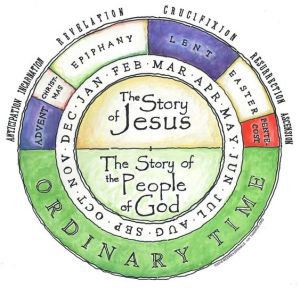
23 March 2025: 3 Lent

Introduction to Readers

Billy Graham Revival 1961

The older I get, the more I realize that life is a constant dialogue between what was and what is. In my more anxious moments, for example, I struggle with the state of the Christian church in our society in 2025. What is our future?As part of the boomer generation (b. 1943-1960) I now realize that my formative years intersected with a high-water mark when it came to church attendance in the post-war era. And while we might argue that many attended during those years because it was the “thing to do,” current trends do cause concern. The decline in church membership and attendance within the mainline Protestant denominations in the last quarter century (often referred to as the “Seven Sisters”) receives a good bit of attention and the data is overwhelming. The ELCA, for example, has lost roughly 2 million members since 2000 (5.1 million to 3 million).**

This week’s second reading has prompted me to reflect on the oft-repeated presence of the wilderness in our faith tradition, both physically and metaphorically. In the Old Testament, for example, the Israelites wandered in the wilderness for 40 years before reaching the promised land (Exodus 15-17) and the prophet Elijah had a dramatic encounter with God in the wilderness near Mount Sinai (1 Kings 19). In the New Testament, John the Baptist emerged from the wilderness of Judea proclaiming repentance (Matthew 3) and Jesus spent 40 excruciating days in the wilderness in a face-off with Satan (Matthew 4). Based on these episodes, the wilderness metaphor suggests a period of spiritual testing, transformation, and growth, an encounter with hardship and renewal. Perhaps Christians are experiencing such a moment in 2025. More on that in my reflections. I also have included two music selections this week (I recommend the use of headphones if you have them, if you enjoy rich harmony!).

St. Patrick by Giovanni Battista Tiepolo (1696-1770)

As always, thanks for your continued interest in exploring the Lectionary! Monday marks DAY 13 of this year’s Lenten Journey (40 days from Ash Wednesday to Easter, not counting Sundays). We have three commemorations on our church calendar this week. Monday, we honor St. Patrick in our tradition (he died on 17 March 461). Patrick, notably, had a dramatic wilderness experience in his life, something he describes in his famous Confession. We also commemorate Joseph, the Guardian of Jesus on 19 March, Thomas Cranmer, the Bishop of Canterbury on 21 March (d. 1556), and Jonathan Edwards, teacher and missionary to the Stockbridge people (d. 1758) on 22 March. And here’s a connection: the Stockbridge-Munsee Band of Mohican Indians in Wisconsin are descended from the people Edwards worked among.

And one further note concerning St. Patrick’s Day: 46 years ago — March 17, 1979 — I asked a wonderful person if she would be my wife. Mary Beth said yes, and the rest is history! And yes, I do have Irish heritage — those Vikings traveled!

** This link will take you to a summary of the most recent Pew Survey on Religion in America if you want to explore further. You may find the information compelling!

The common themes among these readings for the third Sunday in Lent revolve around repentance, divine mercy, and the human longing for God.

Isaiah 55:1-9 emphasizes God’s invitation to seek Him while He may be found, highlighting His boundless mercy and the need for turning away from sin. Psalm 63:1-8 conveys a deep yearning for God’s presence, portraying Him as the ultimate source of satisfaction and strength in times of need. Meanwhile, 1 Corinthians 10:1-13 warns against complacency and urges believers to learn from past mistakes, while Luke 13:1-9 calls for repentance and growth, using the parable of the fig tree to underscore the urgency of bearing fruit in response to God’s patience.

Focus Passage: 1 Corinthians 10: 1-13

TRY LUTHER’S METHOD!

Luther’s Revision of the Lectio Divina
(Three Steps)

Oratio (Prayer): This is the starting point, where one humbly prays for the Holy Spirit’s guidance to understand God’s Word. Luther emphasized that prayer prepares the heart and mind to receive divine wisdom.

Meditatio (Meditation): This involves deeply engaging with Scripture, not just reading it but reflecting on it repeatedly. Luther encouraged believers to “chew on” the Word, allowing its meaning to sink in and shape their thoughts and actions.

Tentatio (Struggle): Often translated as “trial” or “temptation,” this refers to the challenges and spiritual battles that arise as one seeks to live according to God’s Word. Luther saw these struggles as a way God refines faith, making it more resilient and authentic.

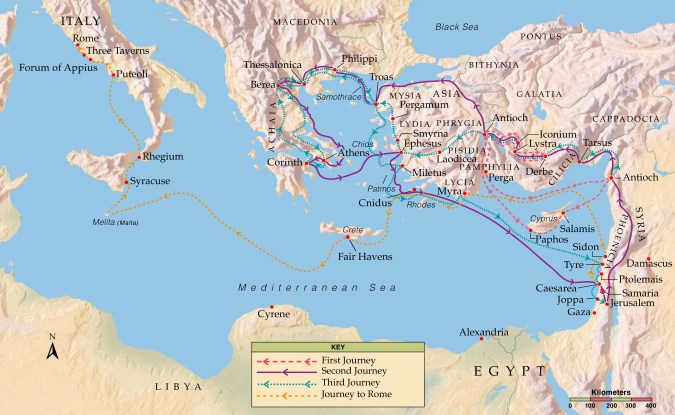
We’re back with the Apostle Paul this week, and here is some backstory. Paul had a significant connection to Corinth as founder of the Christian church there during his second missionary journey in the early 50s CE. For some context, realize that the crucifixion and resurrection of Jesus occurred approximately 20 years before that journey and that Paul’s conversion to Christianity happened roughly 4 years after the resurrection of Jesus. These events were still fresh on his mind. He spent 18 months in Corinth, preaching the Gospel and establishing a community of believers in this bustling, cosmopolitan city. Corinth’s diverse and morally complex environment posed challenges for the new Christians, prompting Paul to write letters like 1 and 2 Corinthians to address issues of unity, morality, and faith. These letters reveal Paul’s deep care for the Corinthian church and his commitment to guiding them in their spiritual growth.

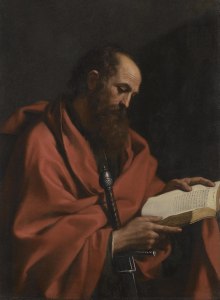
Saint Paul Rembrandt (1606-1669)

In 1 Corinthians 10:1-13, believed to have been written sometime in 53-55 CE, Paul reminds the Corinthians of the lessons from Israel’s history, emphasizing that their ancestors experienced God’s blessings yet fell into sin and faced judgment. He uses examples of idolatry, immorality, and grumbling to warn against overconfidence and disobedience. Paul highlights that these stories serve as warnings for believers, urging them to remain steadfast in their faith and avoid temptation. He reassures them, however, that God is faithful and will not allow them to be tempted beyond what they can endure, always providing a way out.

What should we take away from this exchange? I’m struck by three things. First, I’m intrigued by his use of history. The people of Corinth during Paul’s time were a diverse lot, consisting of Greeks, Romans, and Jews. While there was a Jewish community in Corinth, evidenced by the presence of a synagogue where Paul preached (Acts 18:4), the majority of the population was likely Gentile. Paul’s letters to the Corinthians address a predominantly Gentile audience, as he often discusses issues like idolatry and pagan practices, which were more relevant to non-Jewish converts to Christianity. In spite of that, he frames their experience within the context of Jewish history. He emphasizes the presence of Jesus Christ in that story (verse 4), reinforcing the belief that the Triune God has been present from the very beginning of time. Second, Paul’s message is simultaneously a scolding (v. 7-13) and pep talk (v 13). (Sidebar: The “pep talk” aspect becomes even clearer if you read chapter 9 — verses 24-27 have always been a favorite of mine!) He is calling these nascent believers to shape up! He seems to be especially concerned about their overconfidence in the face of temptation, their complacency perhaps. And finally, Paul reminds the Corinthian Christians of God’s overwhelming faithfulness.

And let me circle back to my sense that Christians are in the wilderness of anxiety in 2025. St. Paul’s words feel remarkably relevant two thousand years later — read them again as if he is talking directly to you. Placing ourselves within the grand story of Christianity — recalling the struggles that so many have endured for centuries — balancing accountability with encouragement and continually reminding ourselves of God’s faithfulness in a broken world — these things are vital for us in this third week of Lent!

Soli deo Gloria!

Prayer: The Prayer of St. Patrick

A Lenten Hymn: “My Song is Love Unknown”

My song is love unknown
My Savior’s love to me
Love to the loveless shown
That they might lovely be
Oh, who am I that for my sake
My Lord should take frail flesh and die?

He came from his blest throne
Salvation to bestow
The world that was his own
Would not its Savior know
But, oh, my friend
My friend indeed
Who at my need his life did spend!

Sometimes we strew his way
And his sweet praises sing
Resounding all the day
Hosannas to our king
Then, “Crucify!” is all our breath
And for his death we thirst and cry

We cry out, we will have
Our dear Lord made away
A murderer to save
The prince of life to slay
Yet cheerful he to suff’ring goes
That he his foes from thence might free

In life no house, no home
My Lord on earth might have
In death no friendly tomb
But what a stranger gave
What may I say? Heav’n was his home
But mine the tomb wherein he lay

Here might I stay and sing
No story so divine!
Never was love, dear King
Never was grief like thine
This is my friend, in whose sweet praise
I all my days could gladly spend!

Faithful Conversations on Sunday

Join us on Sunday 23 March at 10:45 in the church library. We talk through the readings (some or all) in an informal setting — no prior preparation is necessary and all are welcome! Come and help us deepen our understanding of the readings!

16 March 2025: 2 Lent

Introduction to Readers

“Furnish an example, stop preaching, stop shielding, don’t prevent self-reliance and initiative, allow your children to develop along their own lines.” (Eleanor Roosevelt)

Inspired by this week’s Philippians passage, ROLE MODELS have been on my mind. Before reading further, reflect on the examples who shaped you into the person you are today. How did they do it? Eleanor Roosevelt believed children learn more from actions than words, something I understood early on as a teacher, coach, and parent. And here’s something to consider: Did those who inspired us realize their impact? I vividly recall awkwardly trying to thank my best college teacher and realizing he didn’t know how much he influenced me. The same goes for spiritual mentors. Bonhoeffer spoke to this: “The saints don’t realize the fruits of their actions. If they tried to observe themselves, they’d sever their connection to the source of their strength, ending their impact” (The Cost of Discipleship, 285). I will share more on Christian role models in my reflections this week.

The readings for the Second Sunday in Lent share the common themes of trust in God’s promises and perseverance through challenges. In Genesis 15, God reassures Abram, affirming His covenant and calling for faith even when fulfillment seems distant. Psalm 27 emphasizes unwavering confidence in God as a refuge and source of strength amidst adversity. Philippians 3 highlights perseverance in faith and a focus on heavenly priorities, encouraging believers to remain steadfast. Luke 13 presents Jesus’ trust in God’s plan as He faces opposition, demonstrating courage and love despite rejection, which mirrors the call to faithful endurance found in the other readings.

Focus Passage from Philippians

Luther’s Revision of the Lectio Divina
(Three Steps)

Oratio (Prayer): This is the starting point, where one humbly prays for the Holy Spirit’s guidance to understand God’s Word. Luther emphasized that prayer prepares the heart and mind to receive divine wisdom.

Meditatio (Meditation): This involves deeply engaging with Scripture, not just reading it but reflecting on it repeatedly. Luther encouraged believers to “chew on” the Word, allowing its meaning to sink in and shape their thoughts and actions.

Tentatio (Struggle): Often translated as “trial” or “temptation,” this refers to the challenges and spiritual battles that arise as one seeks to live according to God’s Word. Luther saw these struggles as a way God refines faith, making it more resilient and authentic.

Philippi was a Roman colony in Macedonia, known for its strategic location on the Via Egnatia, a major trade route connecting Rome and Constantinople. The city was heavily influenced by Roman culture and politics, and its citizens prided themselves on their Roman citizenship. Paul visited Philippi during his second missionary journey (49-50) and again on his third in the mid-50s. It was here that he established the first Christian community in Europe, making the Philippians some of his earliest converts (Acts 16). Written from prison in Rome (c. 60-62), the letter to the Philippians is often referred to as the “Epistle of Joy.” The letter has a very personal voice in its tone.

St. Paul in Prison

Paul’s admonition to the Philippian Christians to follow his example seems bold, especially in light of the admission of his failings voiced in chapter 3. And here, language is important. Paul wrote his letters in Koine Greek, the common language of the Eastern Mediterranean, so they could reach a wide audience. He also spoke Aramaic, the everyday language of many Jews including Jesus, and likely knew Hebrew for religious texts. However, Koine Greek was the best choice for sharing the gospel across the Roman Empire, as it connected both Jewish and Gentile communities. The word example comes from the Latin exemplum, meaning pattern or model, but its roots trace back to the Greek word παράδειγμα (paradeigma) meaning pattern or model. Although example entered English via Latin, its Greek origins highlight the role of Greek traditions in using models to teach ideas, something Paul would have understood due to this educational background.

And let me take that a step further. From the Greek paradeigma we derive the word paradigm, defined as a model or framework that shapes how we understand or approach something. It can broadly refer to a set of beliefs, methods, or examples that guide thinking or actions in a particular field or context. (Sidebar: One of the fascinating things to study in history is the notion of “paradigm shifts,” when one way of seeing the world — normally applied in science — replaces another. For example, the shift from the physics of Newton to Einstein was earth-shaking). In short, Paul is calling on the Philippian Christians (and us) to be radically transformed in our being — to move from our old selves in the flesh to our new selves as citizens of heaven (verses 20-21). There is another Greek word that speaks to this transformation — metanoia, meaning a “change of heart.” This brings to mind that powerful verse from Romans (12:2): “Do not conform to the pattern of this world but be transformed by the renewing of your mind. Then you will be able to test and approve what God’s will is—his good, pleasing and perfect will” (New International Version).

This journey of metanoia calls us to leave behind old ways and embrace a new life as citizens of heaven. Paul’s message urges us to change not just how we think, but how we live—reflecting God’s will in all we do. Let us pray for the strength to stay on that journey!

Soli deo Gloria!

Sacred Space Prayer

The following prayer comes from a resource I am using during Lent: Sacred Space: Prayer from the Irish Jesuits, published by the Loyola Press.

A Musical Reflection: When Twilight Comes

“When Twilight Comes” is a haunting evening hymn that associates God’s love with the image of a mother hen sheltering her brood under her wings. The author, Moises Andrade (b. 1948), a Catholic priest, wrote this beautiful hymn to reflect the joy, peace, and contentment of being with the LORD. It is hymn 566 in the ELW. Enjoy!

Faithful Conversations on Sunday

Join us on Sunday 16 March at 10:45 in the church library. We talk through the readings (some or all) in an informal setting — no prior preparation is necessary and all are welcome!

5 and 9 March: Ash Wednesday and 1 Lent

Introduction to Readers:

Common Themes

Look for these themes as you work through Sunday’s readings: faith, trust, and divine protection. In Deuteronomy 26:1-11, the Israelites are reminded to offer their first fruits as a testament to God’s provision and faithfulness. Psalm 91:1-2, 9-16 speaks of God’s promise to protect those who take refuge in Him. Romans 10:8b-13 emphasizes the power of faith in Christ for salvation, and Luke 4:1-13 recounts Jesus’ temptation in the wilderness, showcasing His unwavering trust in God’s word.

Psalm 51: 1-17
Have mercy on me, O God,
    according to your steadfast love;
according to your abundant mercy,
    blot out my transgressions.
Wash me thoroughly from my iniquity,
    and cleanse me from my sin.
For I know my transgressions,
    and my sin is ever before me.
Against you, you alone, have I sinned
    and done what is evil in your sight,
so that you are justified in your sentence
    and blameless when you pass judgment.
Indeed, I was born guilty,
    a sinner when my mother conceived me.
You desire truth in the inward being;
    therefore teach me wisdom in my secret heart.
Purge me with hyssop, and I shall be clean;
    wash me, and I shall be whiter than snow.
Let me hear joy and gladness;
    let the bones that you have crushed rejoice.
Hide your face from my sins,
    and blot out all my iniquities.
10 Create in me a clean heart, O God,
    and put a new and right spirit within me.
11 Do not cast me away from your presence,
    and do not take your holy spirit from me.
12 Restore to me the joy of your salvation,
    and sustain in me a willing spirit.

13 Then I will teach transgressors your ways,
    and sinners will return to you.
14 Deliver me from bloodshed, O God,
    O God of my salvation,
    and my tongue will sing aloud of your deliverance.
15 O Lord, open my lips,
    and my mouth will declare your praise.
16 For you have no delight in sacrifice;
    if I were to give a burnt offering, you would not be pleased.
17 The sacrifice acceptable to God is a broken spirit;
    a broken and contrite heart, O God, you will not despise.


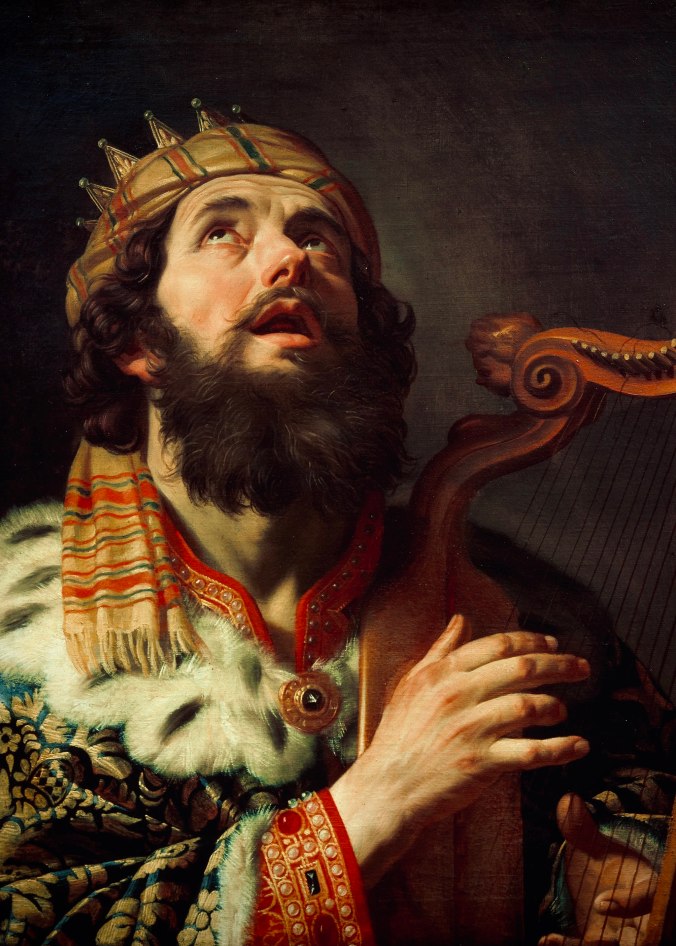
“King David Playing the Harp”
Gerard van Honthorst (1592–1656)

Two Psalms confront us at the start of Lent (51 and 91) that offer contrasting themes and tones, regarding different aspects our relationship with God. Psalm 51, a deeply penitent prayer, emphasizes the desire for redemption and a new heart. Psalm 91, an uplifting liturgy of confident assurance, emphasizes God’s protection and care for those who trust in Him (note the musical connection below).

Let me start that process with a stunning visual, Dutch artist Govert Flinck’s 1651 masterpiece, “Bathsheba’s Appeal to David.” Flinck imagines a later chapter from a deeply complicated tale found in 2 Samuel and 1 Kings. A quick summary: King David, while his army was at war against the Ammonites, stayed back in Jerusalem. On a fateful spring evening, he witnessed Bathsheba, the wife of Uriah (an elite soldier in David’s army), bathing from the rooftop of his palace. Overcome by desire, David summoned Bathsheba and slept with her, resulting in her pregnancy. To cover up his actions, David called Uriah back from the battlefield, hoping he would sleep with Bathsheba and believe the child was his. However, Uriah, being a loyal and disciplined soldier, refused to go home while his comrades were still fighting. Frustrated, David then arranged for Uriah to be placed in the front lines of battle, where he was killed. After Uriah’s death, David married Bathsheba (he had many wives). And, in one of the most powerful scenes in scripture, God sends the Prophet Nathan of visit the powerful King, offering a stern rebuke for his actions (see 2 Samuel 12). This series of events led to significant consequences for David and his family, including the birth of Solomon, who would later become one of Israel’s greatest kings. Flinck’s painting recounts the visit of Bathsheba to the aging king, pleading for Solomon’s succession to the throne of Israel (recounted in 1 Kings 1).

It’s hard to “unhear” that story when reading Psalm 51. David, the lowly shepherd boy who gained fame for defeating Goliath, was known for his military skills and poetic flare. A “golden child” in many ways, he rose to the heights of power yet remained an anguished figure who sinned mightily. Imagine his deep remorse as you read the words of the Psalm (verses 1-7). This flawed man, driven to his knees, was totally dependent on God’s redeeming power. Pleading with God to bring him back from the brink of despair, he enunciates a prayer that rings across the ages (verses 10-12). Hear these words from the King James version: Create in me a clean heart, O God; and renew a right spirit within me. Cast me not away from thy presence; and take not thy holy spirit from me. Restore unto me the joy of thy salvation; and uphold me with thy free spirit.**

As we begin our Lenten journey this year, let’s pray those Psalms, 51 and 91. Let’s remind ourselves every day of our baptism into Christ. And may we feel the breath of God’s free spirit, a generous, liberating, and empowering spirit!

Soli deo Gloria!

**Sidebar: I am partial to the King James version of Psalm 51 — I like that wording. In part, that derives from singing those words hundreds of times in formative years as an Offertory during worship. The version of that Offertory comes from composer J.A. Freylinghausen (1670-1739), notable as a hymn writer and also for his involvement in the Pietist Movement in Germany in the post-Reformation period. Pietism emphasized personal faith, spiritual renewal, and practical Christianity. The hymn remains in the ELW (our book of worship) and is found in the “Service Music” section — in fact, there are four versions of it!

A Prayer for Peace in Ukraine

Musical Reflection: Psalm 91

Michael Joncas (b. 1951) is a Catholic priest, liturgical theologian, and composer of contemporary Catholic music. Joncas has served as a professor at various institutions, including the University of St. Thomas and the University of Notre Dame. He is best known for his hymn “On Eagle’s Wings.” The lyrics draw inspiration from Psalm 91, the Book of Exodus 19, and Matthew 13.

Psalm 91

You who live in the shelter of the Most High,
    who abide in the shadow of the Almighty,
will say to the Lord, “My refuge and my fortress;
    my God, in whom I trust.”
For he will deliver you from the snare of the hunter
    and from the deadly pestilence;
he will cover you with his pinions,
    and under his wings you will find refuge;
    his faithfulness is a shield and defense.
You will not fear the terror of the night
    or the arrow that flies by day
or the pestilence that stalks in darkness
    or the destruction that wastes at noonday.
A thousand may fall at your side,
    ten thousand at your right hand,
    but it will not come near you.
You will only look with your eyes
    and see the punishment of the wicked.
Because you have made the Lord your refuge,
    the Most High your dwelling place,
10 no evil shall befall you,
    no scourge come near your tent.
11 For he will command his angels concerning you
    to guard you in all your ways.
12 On their hands they will bear you up,
    so that you will not dash your foot against a stone.
13 You will tread on the lion and the adder;
    the young lion and the serpent you will trample under foot.
14 Those who love me, I will deliver;
    I will protect those who know my name.
15 When they call to me, I will answer them;
    I will be with them in trouble;
    I will rescue them and honor them.
16 With long life I will satisfy them
    and show them my salvation.

On Eagles Wings

You who dwell in the shelter of the Lord
Who abide in His shadow for life
Say to the Lord, “My refuge, my rock in whom I trust!”

And He will raise you up on eagles’ wings
Bear you on the breath of dawn
Make you to shine like the sun
And hold you in the palm of His hand

The snare of the fowler will never capture you
And famine will bring you no fear
Under His wings your refuge, His faithfulness your shield

You need not fear the terror of the night
Nor the arrow that flies by day
Though thousands fall about you, near you it shall not come

For to His angels He’s given a command
To guard you in all of your ways
Upon their hands they will bear you up
Lest you dash your foot against a stone

And He will raise you up on eagles’ wings
Bear you on the breath of dawn
Make you to shine like the sun
And hold you in the palm of His hand

Faithful Conversations on Sunday

Join us on Sunday 9 March at 10:45 in the church library. We talk through the readings (some or all) in an informal setting — no prior preparation is necessary and all are welcome!

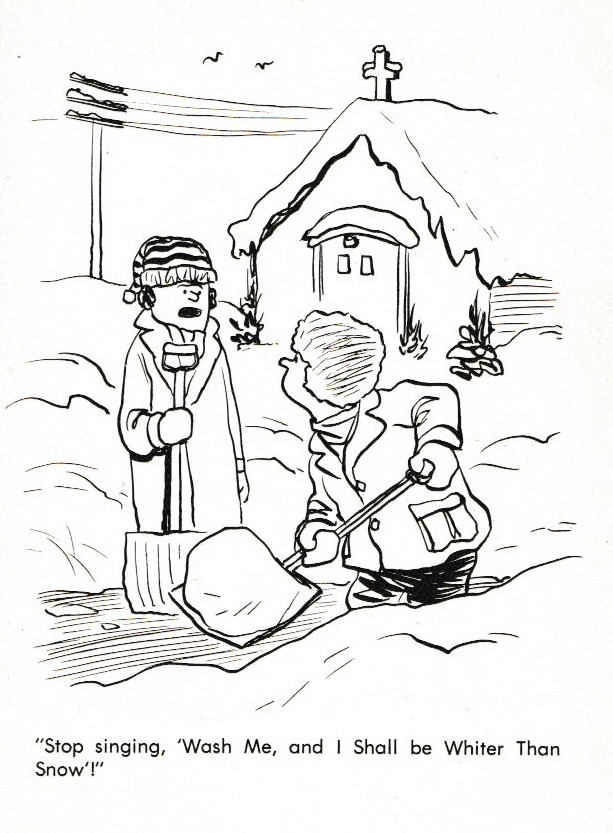
The cartoon here comes from the world of Charles Schultz and clearly references Psalm 51!

2 March 2025: The Transfiguration

Introduction to Readers:

Sir Bernard Crick
(1929-2008)

British political theorist Bernard Crick’s observation has been on my mind this week. His book, In Defense of Politics, was a formative text in college days, especially because he was a powerful champion of the need for authentic civic education in our schools. As we wrestled with Bonhoeffer’s book, The Cost of Discipleship, over the past several weeks, Crick’s words were ringing in my ears and two things became clear: first, reading systematic theology is a significant challenge! And second, it is easy within the hustle and bustle of our lives, to lose sight of those “established truths” (our doctrines) that provide the road map for our faith journeys. Complacency sets in. We get distracted. We lose our way. Yet, there stands Bonhoeffer reminding us that, as Christians, we are grounded in something that is rock-solid and ever-renewing: the life of Jesus Christ in Word (scriptures) and Holy Sacraments (baptism and communion).

As always, thanks for returning to this space this week. And as the world turns, we are ten days out from Ash Wednesday and the 40-day Lenten Journey! Hard to believe. My reflections this week will focus on that pivotal story from the end of the Epiphany Season — the Transfiguration of our Lord. One final note of introduction: Tuesday is a day of commemoration within the ELCA for Deaconess Elizabeth Fedde (b. 1850) who died on 25 February in 1921. Rollie Lee put me on to her remarkable story a few years back. Click on her image if you want to learn more about this incredible woman of faith.

Readings for
Transfiguration Sunday

Exodus 34: 29-35
Psalm 99
2 Corinthians 3:12 – 4:2
Luke 9: 28-36 (37-43a)

Common Theme In Sunday’s Readings

The common theme in the readings for Transfiguration Sunday is the revelation of God’s divine glory and the transformative power of encountering the divine. In Exodus 34:29-35, Moses’ face shines after speaking with God, reflecting the radiance of God’s presence. Psalm 99 emphasizes God’s holiness and mighty acts, calling the people to worship at His holy mountain. Similarly, 2 Corinthians 3:12 – 4:2 speaks of the boldness and transformation brought by the Spirit, while Luke 9:28-36 (37-43a) recounts the Transfiguration of Jesus, where His divine nature is revealed to the disciples, reinforcing the call to listen to and follow Him.

The Transfiguration Gospel

28 Now about eight days after these sayings Jesus took with him Peter and John and James and went up on the mountain to pray. 29 And while he was praying, the appearance of his face changed, and his clothes became as bright as a flash of lightning. 30 Suddenly they saw two men, Moses and Elijah, talking to him. 31 They appeared in glory and were speaking about his exodus, which he was about to fulfill in Jerusalem. 32 Now Peter and his companions were weighed down with sleep, but as they awoke they saw his glory and the two men who stood with him. 33 Just as they were leaving him, Peter said to Jesus, “Master, it is good for us to be here; let us set up three tents: one for you, one for Moses, and one for Elijah,” not realizing what he was saying. 34 While he was saying this, a cloud came and overshadowed them, and they were terrified as they entered the cloud. 35 Then from the cloud came a voice that said, “This is my Son, my Chosen; listen to him!” 36 When the voice had spoken, Jesus was found alone. And they kept silent and in those days told no one any of the things they had seen. 37 On the next day, when they had come down from the mountain, a great crowd met him. 38 Just then a man from the crowd shouted, “Teacher, I beg you to look at my son; he is my only child. 39 Suddenly a spirit seizes him, and all at once he shrieks. It convulses him until he foams at the mouth; it mauls him and will scarcely leave him. 40 I begged your disciples to cast it out, but they could not.” 41 Jesus answered, “You faithless and perverse generation, how much longer must I be with you and put up with you? Bring your son here.” 42 While he was being brought forward, the demon dashed him to the ground in convulsions. But Jesus rebuked the unclean spirit, healed the boy, and gave him back to his father. 43 And all were astounded at the greatness of God.

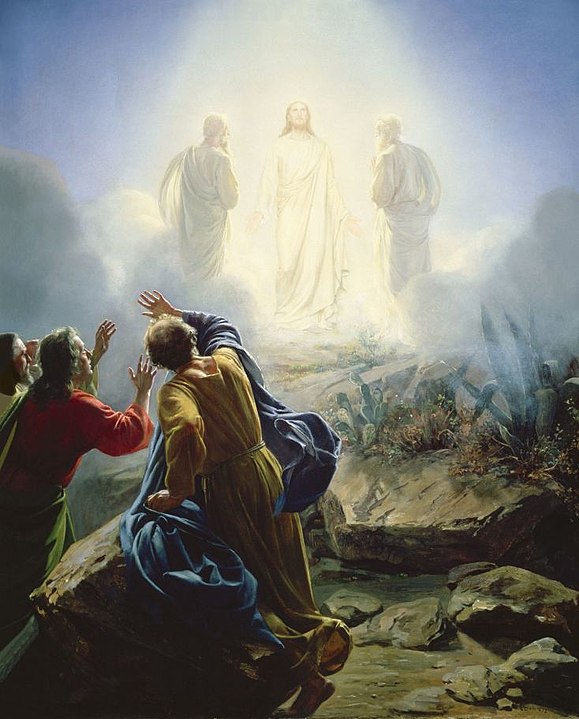
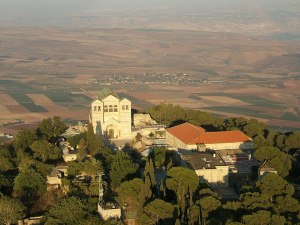
For the past several weeks, we have been experiencing various “Epiphany” moments in Jesus’ life — instances where His divine power is evident (think the Magi visit, His baptism in the Jordan River, and turning water to wine at the wedding in Cana). Transfiguration Sunday is the climactic moment in that season. Owing to its significance, the story is recounted in all three Synoptic Gospels (also in Matthew 17: 1-9 and Mark 9: 2-8), and in 2 Peter 1: 16-18 (c. 80-90 CE) to verify its authenticity. In these passages, Jesus takes Peter, James, and John up a high mountain (thought to be Mount Tabor in northern Israel) where He is transfigured before them, His face shining like the sun, and His clothes becoming as white as light. Moses and Elijah appear, and a voice from a cloud declares, “This is my Son, my Chosen; listen to him!” Shortly thereafter, they descend the mountain and Jesus heals a child suffering from violent seizures at the behest of his father, who earlier asked the disciples for healing, to no avail.

What should we take away from this story? These things caught my attention. First, they ascended the mountain to pray, something Jesus did at pivotal moments in His earthly journey. Is it possible he is feeling weighed down by the ominous events that are about to unfold as He returns to Jerusalem? The appearance of Moses and Elijah, two of Israel’s famous figures, reinforce Jesus’ role in the fulfillment of the Old Testament prophecies (note the Exodus reading — and wouldn’t it be fascinating to know what exactly they talked about!). Second, I have always been intrigued by the reaction of the three disciples. It feels like they don’t get it, they’re confused and simply want to stay there and revel in the spectacular nature of the moment. Peter, in fact, wants to put up tents, recalling the Festival of the Booths in Jewish history (see Leviticus 23:42 for further connections). Finally, I must admit that my understanding of this passage in scripture has been unbalanced due to the fact that I have often left out “part two,” the descent from the mountain. The dramatic experience on Mount Tabor is followed by a return to the agonizing “real world” of suffering. Jesus’ reaction to the failure of the disciples shows a side of Him we don’t often see — deep frustration. His disciples — those closest to him — are falling short. I wonder how they felt at that moment.

Finally, while reminding us of the importance of prayer, the fulfillment of prophecies, and the reality of human frailty, this mysterious moment on the mountain and what followed fills me with wonder. And, in our chaotic and tumultuous world, moments of wonder are a gift.

Soli deo Gloria!

Prayer Reflection from Thurman

Lord, Lord, Open Unto Me
Open unto me, light for my darkness,
Open unto me, courage for my fear
Open unto me, hope for my despair,
Open unto me, peace for my turmoil
Open unto me, joy for my sorrow,
Open unto me, strength for my weakness
Open unto me, wisdom for my confusion,
Open unto me, forgiveness for my sins
Open unto me, tenderness for my toughness,
Open unto me, love for my hates
Open unto me, Thy Self for myself, 
Lord, Lord, open unto me! Amen.

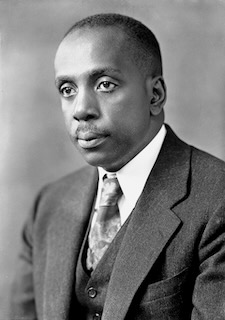
At the time of his death in 1981, Howard Thurman was Dean Emeritus of Marsh Chapel, Boston University. He also served as Dean of Rankin Chapel and professor of theology at Howard University in Washington, D.C., and Director of Religious Life at Morehouse College. He is often cited as a spiritual mentor to Martin Luther King, Jr.

Musical Offering: The Youngbloods

The Youngbloods 1969

A quick backstory: Growing up as a PK meant many journeys to Bible Camp, Red Willow in North Dakota and Luther Park in Wisconsin. One empowering moment from 1969 was sitting around a campfire by the lake in northern Wisconsin singing Get Together, led by the counselors (college kids who knew how to engage our young minds — we thought they were cool!). It all seems so innocent all these years later. No doubt, some of the older pastors raised their eyebrows a bit, but it was such a revelation to think that music that was hot on the charts at the time, could be experienced through the lens of Christianity! The lyrics still hold and our world needs to hear them! Click the album cover and do a bit of musical time-tripping.

Faithful Conversations on Sunday

Note: We will resume our regular Lectionary Conversations on Sunday 2 March at 10:45 in the church library. We talk through the readings (some or all) in an informal setting — no prior preparation is necessary and all are welcome!

23 February 2025: 7 Epiphany

Faithful Conversations #104
Introduction to readers

Bonhoeffer (row 3, far right) and Frank Fisher (row 2, far left) at Union Theological Seminary, 1930.

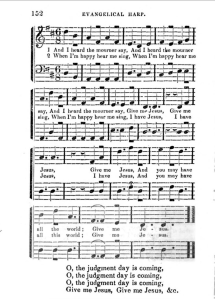
Prompted by our ongoing exploration of Bonhoeffer’s story, CONTINGENCY has been on my mind this week. Think of contingency this way: our lives, and indeed all of history, are shaped by random factors, personal decisions, and specific situations — often unpredictable elements that illustrate the complexity of our life journeys. Let me provide an example. At age 24, Dietrich Bonhoeffer traveled to New York City to study for ten months at Union Theological Seminary. While there, the first black man he met was Albert Franklin Fisher and they became good friends. It was Fisher who opened the doors to Harlem and the Abyssinian Baptist Church for the young German. And importantly, Fisher introduced Dietrich to the great African American spirituals from that faith tradition, something he took back with him to Germany. Let’s imagine those young students at Finkenwald Seminary, training ground for the Confessing Church, singing “Swing Low, Sweet Chariot,” and “Give Me Jesus” as part of their worship experience. Why do I mention this? Clearly, Bonhoeffer’s chance meeting with Frank Fisher and six-month immersion in the Afro-American church and culture awakened something in his theological understanding. He found authentic joy there, another step in his evolution of translating abstract concepts and formalized training into what he called “lived theology.” What if he never had crossed paths with this young black man? The Holy Spirit, as they say, moves in mysterious ways.

As always, thanks for visiting this space during this cold week of February. Entry #104 marks the second anniversary of “Faithful Conversations,” and some of you have been here from the start! We have over 100 members and hopefully the blog improves along the way. In one of my earliest installments, I offered this simple statement of purpose: Our goal is to promote the spiritual practice of Bible reading through the Revised Common Lectionary — the series of readings for the church year followed by multiple Christian denominations. This statement is from the ELCA website: “This lectionary provides a three-year series of readings for Sunday . . . three readings and a psalm are suggested and include: a Gospel reading, an Old Testament reading, and a New Testament reading.”  

One final note of introduction regarding the blog: I have created an archive (available here) that includes all the entries, if that is value to you. We started during Epiphany in Year A, have completed all of Year B, and are now well into Year C. We’re back in Luke’s account of the Sermon on the Plain this week and my reflections will focus on that. 

The Readings for 7 Epiphany
Genesis 45: 3-11, 15
Psalm 37: 1-11, 39-40
1 Corinthians 15: 35-38, 42-50
Luke 6: 27-38

Common Themes in the Readings for 7 Epiphany:
As you work your way through this week’s readings, note the following themes and parallels:  Forgiveness and Reconciliation: Both Genesis and Luke highlight the importance of forgiveness and reconciliation. Joseph forgives his brothers, and Jesus teaches about loving and forgiving enemies. Trust in God: Psalm 37 and 1 Corinthians both emphasize trusting in God’s plan. The psalm encourages trust in God’s justice, while Paul speaks of the hope and transformation through resurrection. Righteous Living and Mercy: Psalm 37 and Luke 6 both call for righteous living and showing mercy. The psalm promises protection for the righteous, and Jesus calls for mercy and love towards others. Transformation and New Life: 1 Corinthians and Genesis both touch on transformation. Joseph’s journey from suffering to a position of power and Paul’s discussion of the resurrection both illustrate transformation and new beginnings.

The Gospel: Luke 6: 27-38
27 “But I say to you who are listening: Love your enemies; do good to those who hate you; 28 bless those who curse you; pray for those who mistreat you. 29 If anyone strikes you on the cheek, offer the other also, and from anyone who takes away your coat do not withhold even your shirt. 30 Give to everyone who asks of you, and if anyone takes away what is yours, do not ask for it back again. 31 Do to others as you would have them do to you. 32 “If you love those who love you, what credit is that to you? For even sinners love those who love them. 33 If you do good to those who do good to you, what credit is that to you? For even sinners do the same. 34 If you lend to those from whom you expect to receive payment, what credit is that to you? Even sinners lend to sinners, to receive as much again. 35 Instead, love your enemies, do good, and lend, expecting nothing in return. Your reward will be great, and you will be children of the Most High, for he himself is kind to the ungrateful and the wicked. 36 Be merciful, just as your Father is merciful. 37 “Do not judge, and you will not be judged; do not condemn, and you will not be condemned. Forgive, and you will be forgiven; 38 give, and it will be given to you. A good measure, pressed down, shaken together, running over, will be put into your lap, for the measure you give will be the measure you get back.”

reflection: “But I say to you who are listening . . .”

Some have described modern America as a culture of grievance with anger and revenge lurking around every corner. We see this on so many levels. This is nothing new in history, of course, but the amplification of grievance through social media makes our environment especially toxic. How should we deal with that as people of the way?  A good place to start is Luke 6. Jesus calls us to a radical and counter-cultural way of living. After walking the people through a series of Beatitudes (last week’s Gospel), he gets right to the point: we are to love our enemies, do good to them, bless them, and yes, pray for them! (verses 27-28). (Note that he begins by saying, “But I say to you who are listening,” suggesting that some in the crowd may have already tuned him out or walked away). These are tough words. He doesn’t suggest we do this, he doesn’t ask us to discuss whether or not we should do this; he simply directs us to act in a way that seems to clearly contradict our human (and sinful) nature.  What are we to make of that?   

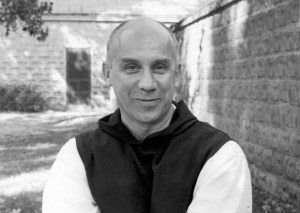
Thomas Merton
(1915-1968)

This statement by Thomas Merton spoke to me loud and clear on this: ‘The beginning of the fight against hatred, the basic Christian answer to hatred, is not the commandment to love, but what must necessarily come before in order to make the commandment bearable and comprehensible. It is a prior commandment to believe. The root of Christian love is not the will to love, but the faith that one is loved’ (If you want to read the fuller citation, here it is).  We are called to love all people, including our enemies, because we were first loved by a compassionate creator God. The world — our culture — tells us to REACT when we have been harmed — and that’s the easy thing to do. Get even. Constantly complain. Seek revenge. Jesus, on the other hand, calls us to RESPOND with thought and deliberation, with strength and an empowering love. That’s hard. And, the fact is, we cannot do that on our own. We need to pray for God’s help in that process. Like you, I struggle with this idea of praying for my enemies, but I have learned that when I do, something changes in me — not immediately, but without fail. My world becomes wider and more hopeful. Action replaces anxiety. As Luther would say, this is most certainly true. 

Soli Deo Gloria!    

Pastor Jenny Hatleli

Father Martin Hogan
Diocese of Dublin

** Note: My reflections this week were inspired by two people. First, Fr Martin Hogan’s homily on the passage.  Fr Martin is a priest of the Diocese of Dublin. He was a Scripture lecturer in Mater Dei Institute of Education for over thirty years. He cited the Merton quote. In addition, a short exchange with Pastor Jen Hatleli of ELC in Black River Falls, also provided excellent insights to this difficult topic. She and I regularly converse about the Lectionary. I am indebted to both!   

prayer reflection From Thomas Merton
My Lord God, I have no idea where I am going. I do not see the road ahead of me. I cannot know for certain where it will end. Nor do I really know myself, and the fact that I think I am following your will does not mean that I am actually doing so. But I believe that the desire to please you does in fact please you. And I hope I have that desire in all that I am doing. I hope that I will never do anything apart from that desire. And I know that if I do this you will lead me by the right road, though I may know nothing about it. Therefore will I trust you always though I may seem to be lost and in the shadow of death. I will not fear, for you are ever with me, and you will never leave me to face my perils alone. Amen.

and, a musical offering this week: “give me jesus”
 

“Give Me Jesus”
1845

It’s hard to overestimate the impact of Afro-American Spirituals within the Christian community. I offer this interpretation of “Give Me Jesus” as an example. With roots in the slave community near Port Royal in South Carolina, it was first published in 1845 and popularized in Methodist circles by the time of the Civil War. In 1873, the Fisk Jubilee Singers, published a version of the song that remains popular today. The version I have linked here comes from the world-renowned Stellenbosch University Choir of South Africa, an amazingly talented group. The lyrics of the song point to making Jesus our top priority in life, echoing Matthew 6:33 and John 14:6. 
 
 
update: the bonhoeffer book study!
 

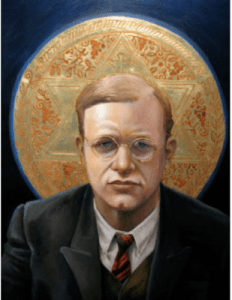
Dietrich Bonhoeffer
(1906-1945)

We have completed four (of five) sessions of our book study. Thanks to the 28 adult learners who have attended one or more sessions and have taken on the challenge of reading his book!  
 

We will meet on Sunday 23 February from 11:00-12:00 in the ELC Sanctuary for our final session! 

16 February 2025: 6 Epiphany

Faithful Conversations #103
Introduction to readers

Adam Clayton Powell, Sr.
(1865-1953)

Our faith journeys are unique, and I suspect we all can point to many things that brought us to where we are. That has been on my mind this week, prompted by our continuing study of Dietrich Bonhoeffer and this week’s Gospel reading from Luke. Let me explain. 

During his 1930-31 visit to America, Bonhoeffer’s faith was significantly altered. While at Union Theological Seminary in New York, he studied under influential professors like Reinhold Niebuhr, Paul Tillich, and Albert Knudson. His time in black churches, particularly at Abyssinian Baptist Church in Harlem, deeply impacted his theology. The powerful preaching and vibrant worship, especially Adam Clayton Powell Sr.’s socially conscious sermons, made a lasting impression on him. At age 24, this exposure prompted Bonhoeffer see the gospel in a new light, emphasizing the importance of living out one’s faith amid social suffering and injustice. 

Bonhoeffer and Jean Lesserre (1908-1983)

A transformative moment for the young German theologian was a 2,600-mile road trip from New York City to Mexico City in May 1931, accompanied by fellow European Jean Lasserre. It was Lasserre who helped Bonhoeffer imagine the Sermon on the Mount not just as an ideal but as a call for practical, radical obedience to Jesus’ teachings. This perspective was a departure from traditional German Lutheran interpretations, which often saw the Sermon as an impossible standard. I mention this because this week’s Gospel is the ‘Sermon on the Plain’ from Luke. I will focus on this and its connection to the Beatitudes in the ‘Sermon on the Mount’ from Matthew in my reflections.

As always, thanks for your continued interest in exploring the Lectionary! And, if you need a quick review of background of the Revised Common Lectionary, I ran across this EXCELLENT EXPLANATION this week and commend it to your reading. The author does a wonderful job of summarizing the make-up and intentions of the Lectionary readings.    

Readings for 6 Epiphany
Jeremiah 17: 5-10
Psalm 1
1 Corinthians 15: 12-20
Luke 6: 17-26

Common Themes in the Readings for 6 Epiphany:
The readings for the 6th Sunday in Epiphany share common themes of trust, blessings, and the consequences of faith or lack thereof (curses). Jeremiah 17:5-10 contrasts those who trust in human strength, who are cursed like a barren bush, with those who trust in the Lord, who flourish like a tree by the water. Psalm 1 echoes this imagery, depicting the righteous as a fruitful tree and the wicked as chaff blown away by the wind (note: recall that within the Lectionary, the Psalm is a response to the first reading). In 1 Corinthians 15:12-20, Paul emphasizes the importance of faith in Christ’s resurrection, affirming that without it, faith is in vain and hope is lost. Luke 6:17-26 presents Jesus’ Beatitudes, where the blessed are those who rely on God despite suffering, while woes come to those who trust in worldly comfort, reinforcing the call to place ultimate trust in God for true life and blessing.

The Gospel: Luke 6: 17-26

The Galilee Region of Northern Israel

17 He came down with them and stood on a level place with a great crowd of his disciples and a great multitude of people from all Judea, Jerusalem, and the coast of Tyre and Sidon. 18 They had come to hear him and to be healed of their diseases, and those who were troubled with unclean spirits were cured. 19 And everyone in the crowd was trying to touch him, for power came out from him and healed all of them. 20 Then he looked up at his disciples and said:

“Blessed are you who are poor,
    for yours is the kingdom of God.
21 “Blessed are you who are hungry now,
    for you will be filled.
“Blessed are you who weep now,
    for you will laugh.

22 “Blessed are you when people hate you and when they exclude you, revile you, and defame you on account of the Son of Man. 23 Rejoice on that day and leap for joy, for surely your reward is great in heaven, for that is how their ancestors treated the prophets.

24 “But woe to you who are rich,
    for you have received your consolation.
25 “Woe to you who are full now,
    for you will be hungry.
“Woe to you who are laughing now,
    for you will mourn and weep.

26 “Woe to you when all speak well of you, for that is how their ancestors treated the false prophets.

reflection: “Living on the level plain”

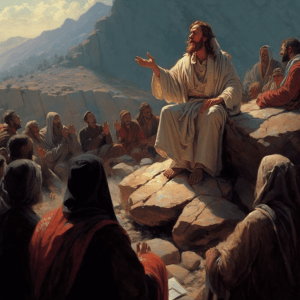
The Gospels of Matthew and Luke were written in the latter years of the 1st Century and therefore relied on a variety of sources to tell the story of Jesus. Though there are similarities in content, the Sermon on the Mount and the Sermon on the Plain are generally considered to be different events. The Sermon on the Mount (Matthew 5-7) is delivered on a mountainside, symbolizing a connection to Moses and the giving of the Law, and contains the eight familiar Beatitudes. The Sermon on the Plain (Luke 6) takes place on a level place, emphasizing accessibility to a diverse crowd, and features four of the Beatitudes. We must assume that Jesus delivered similar teachings on multiple occasions, adapting His message to different audiences and contexts. 

Jesus Teaching in Galilee
(A.I. Generated, 2023)

In Luke 6:17-26, Jesus does not mince words. As theologian Debie Thomas writes, his message in a nutshell is this:  “Blessed are you who are poor, hungry, sad, and expendable.  Woe to you who are rich, full, happy, and popular.” There it is. What are we to make of that?  Let me offer these things as you reflect on the passage. First, the Beatitudes of Jesus turn the world on its head, emphasizing a reversal of societal expectations, highlighting the blessedness of the marginalized and the spiritual peril of those who rely on material wealth and social status. It calls for a life of faith and dependence on God rather than on worldly success. Let that resonate for a few minutes. 

Second, Jesus’ words cut deep. Again, Debie Thomas offers her reaction to his teachings — one that spoke to me:  “I might begin by admitting that Jesus is right. That is to say, I might come clean about the fact that most of the time, I am not desperate for God. I am not keenly aware of God’s active, daily intervention in my life. I am not on my knees with need, ache, sorrow, longing, gratitude, or love.  After all, why would I be? I have plenty to eat. I live in a comfortable home. I have both health and health insurance. My children are safe. I have access to a vibrant social, intellectual, and recreational life.  I’m not in dire need of, well, anything.”  Ouch. 

Lastly, I think it is important for us to imagine being in the crowd that day. Jesus didn’t aim four of the Beatitudes to one group of us and four to another group. All were meant for all. We are both saint and sinner. Our lives are complicated that way. We need to be comforted and challenged as we live “on the level plain” of this world together. My we find inspiration and hope in that!    

Soli Deo Gloria!

Debie Thomas
Theologian and Writer

** Note: My reflections this week were inspired by Pastor Debie Thomas’ reflection on the passage.  She currently serves as the Minister for Lifelong Formation at St. Mark’s Episcopal Church in Palo Alto, CA.  

prayer reflection 1: Bonhoeffer’s evening prayer

Note: In a recent blog, I offered the most famous prayer attributed to Bonhoeffer, that comes from his “Letters and Papers from Prison.” I ran across this one while researching him and found it thought-provoking, especially the phrase, “the temptations of darkness.” 

O Lord my God, I thank you that you have brought this day to its close. I thank you that you have given rest to body and soul. Your hands have been over me, guarding me and preserving me. Forgive my feeble faith and all the wrong I have done this day, and help me to forgive all who have wronged me. Grant that I may sleep in peace beneath your care, and defend me from the temptations of darkness. Into your hands I commend my loved ones, I commend this household, I commend my body and soul. O God, Your holy name be praised. AMEN.

Source: United Methodist Hymnal 

prayer reflection 2: commemorating Martin Luther
 
Note: Martin Luther died on 18 February 1546 at the age of 62. We have roughly 125 “Lesser Festivals and Commemoration” that are part of our tradition each year. You can find the complete listing in the ELW, our book of worship. Based on my knowledge of Luther, I’m not sure how he would feel about being included in such a listing, although the prayer points us to proclaiming the reality of Jesus’ reign, something he would have applauded!      

Martin Luther
(1483-1546)

Almighty God, we praise you for your servant Martin Luther, through whom you have called the church to its tasks and renewed its life. Raise up in our own day teachers and prophets inspired by your Spirit, whose voices will give strength to your church and proclaim the reality of your reign, through Jesus Christ, our Savior and Lord, who lives and reigns with you and the Holy Spirit, on God, now and forever. Amen.

Source: Days of Commemoration, Prayers for Renewers of the Church, Evangelical Lutheran Worship (ELW).

update: the bonhoeffer book study!

Dietrich Bonhoeffer
(1906-1945)

We have completed three (of five) sessions of our book study. Thanks to the 28 adult learners who have attended one or more sessions and have taken on the challenge of reading his book!  Here is a link to an excellent commentary by Reinhold Niebuhr written shortly after Bonhoeffer’s execution in 1945 reflecting on the complicated relationship between religion and politics. I commend it to your reading! 
 

We will meet on Sunday 16 February from 10:50-11:50 in the ELC Sanctuary! 

9 February 2025: 5 Epiphany

Faithful Conversations #102

Introduction to readers

L.P. Hartley (1895-1972)

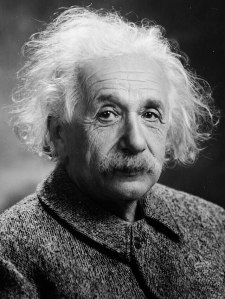
Albert Einstein
1879-1955

Let me start with two streams of thought this week. First, Paul’s commentary from 1 Corinthians 15 reminded me of the importance of context when reading scriptures (more on that in my reflections). When approaching history with my students, I emphasize that the past informs the present, just as the present informs the future, something we experience on a daily basis. Einstein said it best: “The distinction between the past, present, and future is only a stubbornly persistent illusion.” On the other hand, it’s important to recognize that our ancestors lived in a VERY different world from ours, and there are no perfect analogies from past to present. One of my favorite quotes regarding this comes from novelist L.P. Hartley: “The past is a foreign country; they do things differently there.” Our task is to balance these competing notions of history with discernment. 

Second, the reading from Isaiah 6 reminded me of a Bonhoeffer quote: “We must be ready to allow ourselves to be interrupted by God.” In that reading, we see God interrupting Isaiah! On Sunday in our book study, we discussed cheap vs. costly grace and faith practices (think prayer, reading the scriptures, worship). Rollie Lee mentioned Romans 10:17: “So faith comes from what is heard, and what is heard comes through the word of Christ.” Participating in community worship puts us in a position to hear the word. In a busy world — a world constantly vying for our attention — we must avail ourselves to be interrupted by God. 

Thanks for visiting this space again this week and your continued interest in exploring the scriptures. It will be Ash Wednesday (5 March) before we know it — hard to believe!  My reflections this week will focus on the 1 Corinthians passage, with a musical prayer reflection. 

Readings for 5 Epiphany 
Isaiah 6: 1-8 (9-13)
Psalm 138
1 Corinthians 15: 1-11
Luke 5: 1-11

Common Themes in the Readings for 5 Epiphany
Look for these two themes in this week’s set of readings: the transformative power of God’s call and the human response to divine revelation. In Isaiah 6:1-8, the prophet Isaiah is overwhelmed by a vision of God’s majesty and readily accepts his prophetic mission despite his own sense of unworthiness. Psalm 138 is a song of thanksgiving that acknowledges God’s faithfulness and readiness to answer those who call upon Him. In 1 Corinthians 15:1-11, Paul reminds the Corinthians of the resurrection of Christ and the grace that has transformed him from a persecutor of Christians to an apostle. Similarly, in Luke 5:1-11, Simon Peter responds to Jesus’ miraculous provision by leaving everything to follow Him, despite feeling unworthy. Together, these passages highlight the awe-inspiring nature of encountering God, the acknowledgment of personal inadequacy, and the transformative impact of responding to God’s call with faith and obedience.

The Second Reading: 1 Corinthians 15: 1-11: The Resurrection of Christ
15 Now I want you to understand, brothers and sisters, the good news that I proclaimed to you, which you in turn received, in which also you stand, through which also you are being saved, if you hold firmly to the message that I proclaimed to you—unless you have come to believe in vain. For I handed on to you as of first importance what I in turn had received: that Christ died for our sins in accordance with the scriptures and that he was buried and that he was raised on the third day in accordance with the scriptures and that he appeared to Cephas, then to the twelve. Then he appeared to more than five hundred brothers and sisters at one time, most of whom are still alive, though some have died. Then he appeared to James, then to all the apostles. Last of all, as to one untimely born, he appeared also to me. For I am the least of the apostles, unfit to be called an apostle, because I persecuted the church of God. 10 But by the grace of God I am what I am, and his grace toward me has not been in vain. On the contrary, I worked harder than any of them, though it was not I but the grace of God that is with me. 11 Whether then it was I or they, so we proclaim and so you believed.

reflection: “The past isn’t dead, it isn’t even past” 

Temple of Apollo
Ancient Corinth

Ancient Corinth was a cosmopolitan and economically powerful city that included a diverse mix of cultures, ideas, and religions. Such an atmosphere fostered great debates regarding social justice, equality, and personal freedoms, not unlike the kinds of arguments that drive our political culture today. Various religious groups, of course, were caught up in those debates. Picture large and imposing temples to ancient gods sprinkled throughout the city. It was into that environment that Paul brought the message we read this week.  

At the core of the Christian gospel, as theologian Carla Works asserts, “lies a scandalous claim: The ancient God of Israel raised Jesus — a first century Jew — from the dead.” That singular event has always been a tough sell to those outside the faith. Thomas Jefferson, for example, could not accept that notion. He and millions of others across time, have argued that following Jesus as a moral exemplar is a good thing, but the resurrection is a step too far. I suspect that there were many within the Corinthian church, especially those with non-Jewish background, that simply could not wrap their heads around a Jewish peasant from the boondocks of the empire being brought back to life. 

Paul, then, is addressing these doubts. In verses 3-9 of his letter, he offers clear and convincing evidence of the resurrection. People saw Jesus! Peter, the twelve disciples, then a crowd of 500, then James — they all saw him. Finally, Paul himself saw the post-resurrection Jesus (verse 8) — at least, that is his claim. Interestingly, he feels unworthy due to his pre-conversion life as persecutor of Christians. We get autobiographical material from Paul seven times in the New Testament (see Acts 9:1–2, 22:3–5, 26:9–11, 1 Corinthians 15:9–11, Galatians 1:9–11, Ephesians 3:8, and 1 Timothy 1:12–17). We learn that he imprisoned Christians, favored their executions (think Stephen), and fought hard against the “people of the way.” He clearly experienced a radical change! 

What are the takeaways in this account? These things come to mind. We’re getting one of the very first versions of the gospel in this reading today. Realize that Paul’s letter predated Matthew, Mark, Luke, and John. In Paul’s bold message to these early Corinthians, he got right to the point. Let’s try and imagine these early discussions among believers. They lived in a dynamic and complex world and faced all the temptations we face. This intense Greek zealot gave it to them straight — our faith is predicated on the life, death, and resurrection of Jesus Christ. And, we have much in common with Paul. His epiphany moment came on the road to Damascus, and it radically changed his life. Like Paul, we may feel unworthy, but once we have experienced God, our lives are transformed. This is good news! 

Soli Deo Gloria!

Carla Works
Wesley Theological Seminary


** Note: My reflections this week were inspired by Dr. Carla Works’ reflection on the passage. She is a Professor of New Testament at Wesley Theological Seminary in Washington, D.C.    
 
 
prayer/reflection: “The Old Church” by Stephen Paulus
**Note: Stephen Paulus (1949-2014) was an incredible composer with Minnesota connections (graduate of Macalester College in St. Paul). If you had a rural church experience (or not), I believe you will enjoy his artistry. The text comes from a poem by Della B. Vik. My grandfather, T.M. Rykken, served rural parishes in North Dakota as part of his ministry from 1930-1945. Click on the picture of the church for the song.       
 

Prairie Church


“The Old Church leans nearby a well worn road
upon a hill that has no grass or tree
The winds from off the prairie now unload
the dust they bring around it fitfully
The path that leads up to the open door
is worn and grayed by many toiling feet
of us who listen to the Bible lore
and once again the old time hymns repeat.
And every Sabbath Morning we are still
returning to the altar standing there;
a hush, a prayer, a pause, and voices
fill the Master’s House with a triumphant air.
The old church leans awry and looks quite odd,
But it is beautiful to us, and God.”
 
update: the bonhoeffer book study!

Dietrich Bonhoeffer
(1906-1945)


We have completed two (of five) sessions of our book study. Thanks to the 28 adult learners who are taking this on!  Here is a link to an excellent article about Bonhoeffer and his challenge for contemporary Lutheranism! I commend it to your reading, if interested in learning more about this famous figure in Lutheran history.      
 

We will meet on Sunday 9 February from 10:50-11:50 in the ELC Sanctuary! 

2 February 2025: 4 Epiphany

Faithful Conversations #101
Introduction to readers

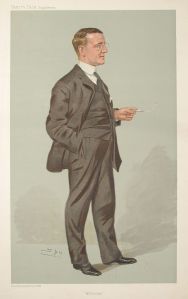
Finley Peter Dunne
(1867-1936)
Vanity Fair, 27 July 1905

The preacher’s role is to comfort the afflicted and afflict the comfortable. This saying was one of my father’s favorites and has been on my mind while exploring Sunday’s gospel reading from Luke. I found out that muckraking journalist Finley Peter Dunne, who created the character “Mr. Dooley,” often gets credit for this paradoxical phrase. His original quote was, The job of the newspaper is to comfort the afflicted and afflict the comfortable, which has since been adapted to other contexts, including sermons.  Let’s think about those key words. Afflict comes from a Latin meaning “to knock down causing pain or distress,” while comfort also has Latin roots, via Old French, meaning “to strengthen greatly and provide relief from distress.” This dual role is the delicate balance that preachers must maintain. As a sidebar, I would add that as I have been exploring the life and writings of Dietrich Bonhoeffer in recent weeks, I have felt both afflicted and comforted, so there’s that. More on that later in the blog. 

Thanks for your visit to this space again this week! My reflections will focus on the story of Jesus’ return to Nazareth at the start of his ministry (a continuation from last week), with references to 1 Corinthians 13. In addition, starting this week and continuing for four weeks, I will be including information related to Dietrich Bonhoeffer’s book, The Cost of Discipleship, corresponding to a study we are doing at ELC in February. 

Finally, a quick word regarding an excellent resource I stumbled on this week. It is simply called BIBLE APP and has some great features — a good reminder of the proliferation of sites available to us in 2025! You might find it useful. 

(Also of note: Sunday marks the day on our church calendar known as the Presentation of Our Lord, and an alternative set of readings are assigned for that commemoration (Malachi 3: 1-4, Psalm 84, Hebrews 2: 14-18, and Luke 2: 22-40). Here is information regarding that, for your interest).   

Readings for 4 Epiphany 
Jeremiah 4: 1-10
Psalm 71: 1-6
1 Corinthians 13: 1-13
Luke 4: 21-30

Common Themes in the Readings for 4 Epiphany
The key themes in the readings for the 4th Sunday after Epiphany revolve around trust, love, and God’s unwavering support. Jeremiah 1:4-10 emphasizes God’s call and equipping for service, highlighting that our perceived inadequacies can be overcome through divine empowerment. Psalm 71:1-6 speaks to God’s consistent presence and protection, encouraging believers to place their trust in God throughout their lives. 1 Corinthians 13:1-13 underscores the centrality of love in all actions and relationships, identifying love as the essential expression of faith in practice. In Luke 4:21-30, Jesus’ message of liberation and inclusion challenges believers to embody these values in their lives, even in the face of opposition and rejection, demonstrating that practical theology calls for active and compassionate engagement with the world.

The Second Reading: 1 Corinthians 13: 1-13: The Gift of Love

Saint Paul
Rembrandt (1606-1669)

If I speak in the tongues of humans and of angels but do not have love, I am a noisy gong or a clanging cymbal. And if I have prophetic powers and understand all mysteries and all knowledge and if I have all faith so as to remove mountains but do not have love, I am nothing. If I give away all my possessions and if I hand over my body so that I may boast but do not have love, I gain nothing. Love is patient; love is kind; love is not envious or boastful or arrogant or rude. It does not insist on its own way; it is not irritable; it keeps no record of wrongs; it does not rejoice in wrongdoing but rejoices in the truth. It bears all things, believes all things, hopes all things, endures all things. Love never ends. But as for prophecies, they will come to an end; as for tongues, they will cease; as for knowledge, it will come to an end. For we know only in part, and we prophesy only in part, 10 but when the complete comes, the partial will come to an end. 11 When I was a child, I spoke like a child, I thought like a child, I reasoned like a child. When I became an adult, I put an end to childish ways. 12 For now we see only a reflection, as in a mirror, but then we will see face to face. Now I know only in part; then I will know fully, even as I have been fully known. 13 And now faith, hope, and love remain, these three, and the greatest of these is love.

The Gospel: Luke 4: 21-30: The Rejection of Jesus in Nazareth 

Jesus Reads from Isaiah

21 Then he began to say to them, “Today this scripture has been fulfilled in your hearing.” 22 All spoke well of him and were amazed at the gracious words that came from his mouth. They said, “Is this not Joseph’s son?” 23 He said to them, “Doubtless you will quote to me this proverb, ‘Doctor, cure yourself!’ And you will say, ‘Do here also in your hometown the things that we have heard you did at Capernaum.’ ” 24 And he said, “Truly I tell you, no prophet is accepted in his hometown. 25 But the truth is, there were many widows in Israel in the time of Elijah, when the heaven was shut up three years and six months and there was a severe famine over all the land, 26 yet Elijah was sent to none of them except to a widow at Zarephath in Sidon. 27 There were also many with a skin disease in Israel in the time of the prophet Elisha, and none of them was cleansed except Naaman the Syrian.” 28 When they heard this, all in the synagogue were filled with rage. 29 They got up, drove him out of the town, and led him to the brow of the hill on which their town was built, so that they might hurl him off the cliff. 30 But he passed through the midst of them and went on his way.

reflection: “the greatest of these is love” 

Verse 21 of Luke 4 is a bridge from the first part of this story from last week. Here’s a quick summary: Jesus is in the synagogue in Nazareth, his hometown. He reads from the scroll of Isaiah and declares that the scripture is fulfilled in their hearing, suggesting that he is the anointed one spoken of by Jewish prophets. At first, the people are amazed at his words. However, when Jesus goes on to remind them that prophets are often rejected in their own hometowns and mentions examples of prophets helping non-Israelites — the widow at Zarephath in Sidon and Naaman the Syrian — the crowd becomes furious. They drive him out of the town and try to throw him off a cliff, but he walks through the crowd and goes on his way.

Jesus’ Rejection in Nazareth

What can we learn from this dramatic shift? The crowd quickly goes from being amazed by Jesus to outright anger. Jesus challenges their understanding of WHO he is, and WHO he came to save, relevant questions for those on the Christian journey. Throughout history, it seems, our Lord has been a Rorschach Test, revealing more about people’s perceptions than the object of observation. Is Jesus a prophet, savior of mankind, friend to sinners, advocate for the poor, political revolutionary, or charlatan? Certainly, our view of Christ often reflects what we want to see in him. It seems to me, we often want a sanitized version of Jesus, one that makes US “feel good.” When Jesus talked about freeing captives and helping the oppressed, his Nazareth friends assumed he meant THEM. But when he included the “others” — downcast outsiders — it angered them so much — took them so far outside their comfort zone — they nearly killed him right then and there! Let that sink in.  What a moment. And, as he walked through the awestruck crowd that day, may we be reminded of the depth of his love for humanity — a love astutely described by Paul in 1 Corinthians. We cannot grasp it fully in this life, but we have the assurance that one day we will. 

Soli Deo Gloria! 
 
** Note: My reflections this week were inspired by an excellent essay by Pastor Diane Roth in the February edition of The Christian Century. Pastor Roth serves Grace Lutheran Church (ELCA) in Conroe, Texas.   
 
prayer/reflection: “Prayer for the day” 

** Note: Monday 27 January is International Holocaust Remembrance Day. It was on this day 80 years that Auschwitz was liberated. In honor of that, I offer this beautiful prayer from the pen of Dietrich Bonhoeffer.   

Dietrich Bonhoeffer
(1906-1945)

O God, early in the morning I cry to you. Help me to pray and to think about you. I cannot do it alone. In me there is darkness, but with you there is light. I am lonely, but you do not leave me. I am feeble in heart, but with you there is help. I am restless, but with you there is peace. In me there is bitterness, but with you there is patience. I do not understand your ways, but you know the way for me. Restore me to liberty and enable me to live now that I may answer before you and before men. Lord, whatever this day may bring, your name be praised. Amen.

(Dietrich Bonhoeffer. Letters and Papers From Prison. 1951)

a reminder: the bonhoeffer book study!

Over the next several weeks, some of us will be navigating through a five-session book study on Dietrich Bonhoeffer’s 1937 classic, The Cost of Discipleship. Our initial meeting will be this coming Wednesday (29 January) from 6:00-7:30 at ELC, followed by Sessions 2-5 during the four Sundays in February following worship at ELC (10:45-11:45).

The guiding questions for our study are these: 
  • Who was Dietrich Bonhoeffer?
  • Why is he significant in the tradition of Lutheranism?
  • How does Bonhoeffer challenge us in 2025? What can we learn from him?

In our introductory meeting, we will explore the context of Bonhoeffer’s book. I will offer historical background on Bonhoeffer, the rise of Hitler and Nazism in the 1920s and 30s, and more specifically, Bonhoeffer’s theological influences and decision to resist German government authorities in 1933 and beyond. Further, we will discuss an approach to the reading and the schedule for the sessions to follow. 

All are welcome and no prior knowledge of Bonhoeffer (or his book) are necessary! If you have questions, please contact me (pstrykken@gmail.com or 715-299-0311).   

26 January 2025: 3 Epiphany

Faithful Conversations #100

Introduction to readers

Thomas Wolfe
(1900-1938)

“You can’t go back home to your family, back home to your childhood … back home to a young man’s dreams of glory and of fame … back home to places in the country, back home to the old forms and systems of things which once seemed everlasting, but which are changing all the time – back home to the escapes of Time and Memory.”

Lodged somewhere in our memory, is the place we consider our hometown. Having lived in three places growing up, I have always been a bit divided on that. The passage cited above comes from Thomas Wolfe’s novel You Can’t Go Home Again, published posthumously in 1940. Wolfe explores the idea that returning to the past, whether it’s to family, childhood, dreams, or familiar places, is impossible because everything is constantly changing. It’s a poignant reflection on the inevitability of change and the passage of time. This week’s Gospel story of Jesus returning to his hometown of Nazareth and the synagogue of his youth brought to mind Wolfe’s commentary and prompts us to consider this very human and complicated moment in Christ’s journey. I will explore that episode in my reflections this week (we will get part two of the story next week!).    

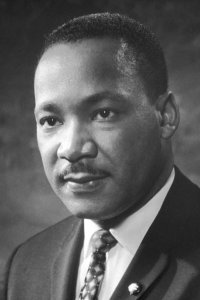
And some history on the radar this week. On Monday, of course, we will witness the second inauguration of Donald J. Trump as POTUS #47, only the second President in our history to serve disjointed terms (he joins Grover Cleveland with that distinction). Monday is also MLK Day, a federal holiday commemorating the life of Martin Luther King Jr., born on 15 January 1929. In 1967, a year before he was murdered at age 39, King authored, Where Do We Go From Here? Chaos or Community, in which he said these remarkably prophetic words:   This is the great new problem of mankind. We have inherited a large house, a great world house in which we have to live together black and white, Easterner and Westerner, Gentile and Jew, Catholic and Protestant, Moslem and Hindu — a family unduly separated in ideas, culture and interest, who, because we can never again live apart, must learn somehow to live with each other in peace. However deeply American Negroes are caught in the struggle to be at last at home in our homeland of the United Sates, we cannot ignore the larger world house in which we are also dwellers. Equality with whites will not solve the problems of either whites or Negroes if it means equality in a world society stricken by poverty and a universe doomed to extinction by war. All inhabitants of the globe are now neighbors.

Finally, 2025 marks the 1,700th anniversary of the Council of Nicaea (325 CE), held in the ancient city of Nicaea, (today within the city of İznik in Turkey). This council was called by Roman Emperor Constantine to resolve theological disputes about Jesus Christ and who he was, exactly. The Nicene Creed, one of the three ecumenical creeds, emerged from this council and is a statement of faith honored in the ELCA. (More on this in the prayer reflection below). As always, thanks for navigating this space again this week! The discipline of the Lectionary is a process that helps us make sense of the scriptures. Be patient and trust the process!  

Readings for 3 Epiphany
Nehemiah 8: 1-3, 5-6, 8-10
Psalm 19 
1 Corinthians 12: 12-31a
Luke 4: 14-21

Common Themes in the Readings for 3 Epiphany  
Look for the following themes as you work your way through this week’s readings: spiritual renewal, unity, and the power of God’s word. In Nehemiah, the people gather to listen to the reading of the law, emphasizing the transformative power of Scripture to restore and strengthen the community. Psalm 19 speaks to the glory of God’s creation and the life-giving nature of God’s teachings. The passages from 1 Corinthians builds on the reading from last week, further emphasizing the unity of believers in the body of Christ. Finally, Jesus’ return to his hometown in Luke 4 connects to the Nehemiah passage, further solidifying the mission of Jesus, illustrating how God’s call for justice, healing, and salvation is central to both personal and communal life.

The Gospel: Luke 4: 14-21: The Beginning of the Galilean Ministry
14 Then Jesus, in the power of the Spirit, returned to Galilee, and a report about him spread through all the surrounding region. 15 He began to teach in their synagogues and was praised by everyone.16 When he came to Nazareth, where he had been brought up, he went to the synagogue on the Sabbath day, as was his custom. He stood up to read, 17 and the scroll of the prophet Isaiah was given to him. He unrolled the scroll and found the place where it was written:

18 “The Spirit of the Lord is upon me,
    because he has anointed me
        to bring good news to the poor.
He has sent me to proclaim release to the captives
    and recovery of sight to the blind,
        to set free those who are oppressed,
19 to proclaim the year of the Lord’s favor.”

20 And he rolled up the scroll, gave it back to the attendant, and sat down. The eyes of all in the synagogue were fixed on him. 21 Then he began to say to them, “Today this scripture has been fulfilled in your hearing.”

reflection: “Jesus, the annointed one”

“Jesus Unrolls the Book”
James Tissot (1836-1902)

Luke’s dramatic account of a brief synagogue encounter offers us yet another epiphany moment in the Jesus narrative. We left Luke’s chronology two weeks ago with the baptism of Jesus. The precursor to this week’s Gospel is the forty days Jesus spent in the wilderness (Luke 4: 1-14). We learn that he fasted for the entire time (he was famished!) and had a series of encounters with Satan who mercilessly tempted him. It’s at that point that Jesus returns to Galilee (verse 14) and news about him spreads through the whole countryside. He teaches in synagogues, and everyone praises him (verse 15). He goes to Nazareth, his hometown, and reads from the scroll of the prophet Isaiah in the synagogue, proclaiming a passage that speaks of the anointed one bringing good news to the poor and oppressed. After reading, he declares to the astonished listeners that this scripture is fulfilled in their hearing, revealing himself as the Messiah. The story abruptly ends there but has a significant sequel that we will walk through next week.

What should we take away from this revelatory moment in Jesus’ ministry?  Several things come to mind. First, there is a lot of buzz surrounding this young holy man, but the question was in the air: who exactly is this guy? (A central question addressed in the Nicene Creed). Jesus reads from Isaiah 61, explicitly linking his actions and purpose to the prophecies of old. Jesus claims to be the long-awaited Messiah and that his arrival marks the fulfillment of God’s promise to his people. Further, the Isaiah reference reminds me of the power of scripture in our traditions and also brings to mind the Magnificat, Mary’s glorious prayer in response to her role in God’s plan. As Jesus stood in this familiar place, absorbing all the memories of his earlier life, it seems perfectly plausible that he was emotionally connecting with his beautiful mother.   

Mary’s Song of Praise (Luke 1: 46-56) Jesus’ Reference to Isaiah (Luke 4:18-19)
“My soul magnifies the Lord,
47     and my spirit rejoices in God my Savior,
48 for he has looked with favor on the lowly state of his servant.
    Surely from now on all generations will call me blessed,
49 for the Mighty One has done great things for me,
    and holy is his name;
50 indeed, his mercy is for those who fear him
    from generation to generation.
51 He has shown strength with his arm;
    he has scattered the proud in the imagination of their hearts.
52 He has brought down the powerful from their thrones
    and lifted up the lowly;
53 he has filled the hungry with good things
    and sent the rich away empty.
54 He has come to the aid of his child Israel,
    in remembrance of his mercy,
55 according to the promise he made to our ancestors,
    to Abraham and to his descendants forever.”
“The Spirit of the Lord is upon me,
    because he has anointed me
        to bring good news to the poor.
He has sent me to proclaim release to the captives
    and recovery of sight to the blind,
        to set free those who are oppressed,
19 to proclaim the year of the Lord’s favor.”

Second, Jesus captures the essence of his mission in this brief exchange — to bring good news to the poor, proclaim release to captives, recovery of sight to the blind, and setting the oppressed free — clear reminders for us when we get tangled up on what the church should be up to in 2025! 

Finally, as mentioned earlier, we are only getting part of the story of Jesus’ homecoming this week, and we know that rejection is just around the corner. We must assume that he understood what was coming, and that brings a hint of sadness into the picture. In a beautifully written essay commenting on this synagogue moment, Pastor Charisee Tucker of St. Paul’s Baptist Church in Philadelphia makes the following observation: 

Sometimes home is a place. Sometimes home is a people. Sometimes home has no walls or rooms but holds dreams and imaginings of who we are becoming. For Jesus, as he steps up to read the scroll, home becomes a place of clarity. It isn’t just that he sees the people; he sees himself. And he has the courage and conviction to make what he sees clear as he utters the words, “The Spirt of the Lord is upon me.” When we come home and come home to ourselves, we can see things as they are, for better or worse. For Jesus this means seeing his mission, his community, and even the ways that he no longer follows the expected script of the place from which he came. For us maybe it is allowing what we see in our family, our community or maybe our country to affect us in ways that bring forth clarity and care and transformation. 

These are good words for us to hear on a cold January day. 

Soli Deo Gloria! 
 
prayer/reflection: praying for unity in the christian community 
Note: According to recent surveys, there are roughly 2.4 billion Christians in the world (one-third of humanity). As a member of both the Lutheran World Federation and the World Council of Churches, the ELCA has both a global and ecumenical presence. This week is commemorated as the Week of Prayer for Christian Unity within both the LWF and WCC and offers us a good chance to think about what we have in common with our Christian brothers and sisters from the wide array of denominations that make up the Kingdom of God. Let us pray this week . . .
 

For all Christian Churches and Faith Communities, that they may continue to show one another extraordinary kindness in guiding them towards reconciliation and unity in Christ…

For church leaders everywhere during this Week of Prayer for Christian Unity, that they may work together and promote unity among Christians …

For the Church, that God would inspire God’s people to continue the quest for Christian Unity and that our hearts be filled with the gift of Jesus’ love for all …

For those who participate in the works of ecumenism and interreligious dialogue, that they always treat one another with extraordinary kindness seeking the unity that is found in Christ and a true openness to the giftedness found in each other. Amen. 

Source: Graymoor Ecumenical and Interreligious Institute

And, a musical offering this week in honor of mlk

Martin Luther King, Jr.
(1929-1968)

In keeping with the theme this week, formative years remind us of home, and music often provides the soundtrack. Peter, Paul, and Mary were part of that soundtrack for me growing up.  (Sidebar: Mary Beth and I saw the Dylan film currently in the theaters, which brought the 1960s alive). The death of Peter Yaro in recent days at age 86 is a reminder of the passage of time (Mary died in 2009). The iconic March on Washington (August of 1963) was a pivotal moment in our history that brought together many people and impulses worth revisiting. Among other things, Peter, Paul and Mary performed the classic Bob Dylan song that day.  Enjoy! 

join us for some in-person discussion of the Lectionary on sunday at 10:45 in the elc library — All are welcome! We meet until roughly 11:30. Note: we will not meet on 26 january due to ELC’s annual meeting!
a reminder: the bonhoeffer book study!

Dietrich Bonhoeffer
(1906-1945)

Dietrich Bonhoeffer’s classic, The Cost of Discipleship, is an excellent book for Christians to read heading into 2025! Our intention is to do a five-session study beginning on Wednesday 29 January (6:00-7:30) and continuing for each Sunday in February (10:45-11:45).  I learned this week, by the way, that Martin Luther King was deeply influenced by Bonhoeffer — not surprising! Contact me if you have questions about the study. 

19 January 2025: 2 Epiphany

Faithful Conversations #99
Introduction to readers

Religious Make-Up
119th Congress

Let’s start this week with an understatement: humankind has always been layered with factionalism — it seems to be wired into our DNA. This has been on my mind this week, in part, because of the passage from 1 Corinthians in the lection and our current political environment, both at home and abroad. In that regard, I tracked some interesting information about the 119th Congress, which has been in power since January 3rd. Pew Research has charted the religious makeup of Congress since 2007, and their latest report shows that roughly 87% of the 535 House and Senate members identify as Christians. Of those, 55% are Protestant (only 19 out of 295 Protestants are Lutheran!). Interestingly, 62% of the American public identifies as Christian, which is significantly less than the 87% in Congress. (Notably, since 2007, there has been a drop in the percentage of the general population identifying as Christian, from 78% to 62%, a trend that has elicited much commentary!). And while we have a long tradition of separating church and state and a diverse religious population, it’s clear that religious beliefs influence our politics. The extent of that influence, of course, prompts debates within the political sphere, echoing arguments within and among religious communities. It seems to me that the church may be one of the few places where people of differing beliefs and backgrounds sit next to each other and actually can debate the issues of our time in a healthy way — not easy but always possible. 

Thanks for your continued interest in exploring the scriptures, and your willingness to reflect on the big questions prompted by our Christian journey! Continue to be open to those moments of Epiphany in your daily walk — those “thin places” where heaven and earth are close together. My reflections this week will focus on what the Apostle Paul wrote to those Corinthian Christians in the mid-50s CE.    

Readings for 2 Epiphany
Isaiah 62: 1-5
Psalm 36: 5-10
1 Corinthians 12: 1-11
John 2: 1-11

Common Themes in the Readings for 2 Epiphany
Look for these two themes in this week’s readings: God’s steadfast love and transformative power. In Isaiah 62: 1-5, we see God’s promise to restore and delight in His people, making them a shining beacon. Psalm 36: 5-10 underscores God’s unfailing love and faithfulness, offering refuge and abundance to those who seek Him. 1 Corinthians 12: 1-11 emphasizes the diverse spiritual gifts given by the same Spirit, meant for the common good. Finally, John 2: 1-11 describes the miraculous transformation of water into wine at the wedding in Cana, revealing Jesus’ glory and signifying the beginning of His public ministry.

** Before tackling the second reading, I encourage you to WATCH THIS EXCELLENT OVERVIEW of 1 Corinthians from The Bible Project.   

The Second Reading: 1 Corinthians 12: 1-11: Spiritual Gifts
12 Now concerning spiritual gifts, brothers, I do not want you to be uninformed. You know that when you were pagans you were led astray to mute idols, however you were led. Therefore I want you to understand that no one speaking in the Spirit of God ever says “Jesus is accursed!” and no one can say “Jesus is Lord” except in the Holy Spirit. Now there are varieties of gifts, but the same Spirit; and there are varieties of service, but the same Lord; and there are varieties of activities, but it is the same God who empowers them all in everyone. To each is given the manifestation of the Spirit for the common good. For to one is given through the Spirit the utterance of wisdom, and to another the utterance of knowledge according to the same Spirit, to another faith by the same Spirit, to another gifts of healing by the one Spirit, 10 to another the working of miracles, to another prophecy, to another the ability to distinguish between spirits, to another various kinds of tongues, to another the interpretation of tongues. 11 All these are empowered by one and the same Spirit, who apportions to each one individually as he wills.

reflection: pursuing the common good

Paul’s Second Missionary Journey, 49 CE

Throughout the seven Sundays in Epiphany, we will spend time with chapters 12, 13, and 15 of St. Paul’s first letter to the Corinthians. Paul spent a year and a half in Corinth during his second missionary journey in the late 40s and early 50s and in ensuing years, exchanged four letters with leaders within the church he established there, two of which survived. Written in the mid-50s from Ephesus, 1 Corinthians focuses on disturbing news Paul received concerning divisions among the Corinthian Christians. As theologian Douglas Campbell asserts in a 2018 article in the Christian Century, “The church at Corinth was a mess. I count 15 distinguishable problems that Paul addresses in 1 Corinthians: partisanship, with the Corinthians factionalizing behind rival leaders (1:10–4:21; 16:10–18); incest (5:1–13); prostitution (6:12–21); celibacy within marriage (7:1–7); Christians married to one another asking about divorce (7:8–11, 39); Christians married to pagans asking about divorce (7:12–16); questions surrounding marriage and remarriage (7:25–40); lawsuits (6:1–11); idolatry (8:1–11:1); concerns about women praying and prophesying in immodest ways (11:2–16); chaos in worship, with speaking in tongues and competing voices (chapter 14); inequality in the communal meal (11:17–34); denials of the bodily resurrection of Jesus and of Christians (15:1–58); the collection of a large sum of money to be sent to Jerusalem (16:1–4); and a change in Paul’s travel plans (16:5–9).”

Saint Paul by
Guercino (1591–1666)

In short, those early spiritual ancestors of ours were in the midst of a culture war, a good reminder in our time that there is nothing new under the sun (Ecclesiastes 1:9). Paul wrote to remind them of their unity in Christ. He gave both encouragement and correction, stressing the need for love and respect among all members. In Sunday’s passage, he addresses their disagreements over spiritual gifts, warning against spiritual elitism, highlighting the importance of diverse gifts in the church, all contributing to the common good (verse 7). 

Indeed, the interaction between Paul and the Christians in Corinth reminds us that many of the problems we face in our culture today are not new and that living in community is never easy and can be especially challenging for those in leadership positions. Again, Douglas Campbell offers the following commentary: “In sum, the Christian way asks all its followers to be kind and considerate toward one another . . . These actions are fairly simple in theory but incredibly demanding in practice. They are deeply countercultural. If they are to take root, above all they require the right sort of leadership. Christian leaders must help their communities navigate their current locations ethically with due depth, sensitivity, and courage, as Paul did for the Corinthians.”   

You and I, indeed, are members of the most powerful countercultural movement in history. May we navigate our days with “depth, sensitivity, and courage” empowered by one and the same Spirit.  

Soli Deo Gloria! 
 
prayer/reflection from Joan Chittister 

My gift to you is always a story; something to think about more than once; something to keep your mind alive and touch your soul so that you can see life fresh and leaping once again.

There is a story from the Desert Fathers and Mothers about a young monk who asked one of the holy men of the desert why it is that so many people came out to the desert to seek God and yet most of them gave up after a short time and returned to their lives in the city. The old monk responded: “Last evening my dog saw a rabbit running for cover among the bushes of the desert and he began to chase the rabbit, barking loudly. Soon other dogs joined the chase, barking and running. They ran a great distance and alerted many other dogs. Soon the wilderness was echoing the sounds of their pursuit, but the chase went on into the night. After a little while, many of the dogs grew tired and dropped out. A few chased the rabbit until the night was nearly spent. By morning, only my dog continued the hunt.” “Do you understand,” the old man said, “what I have told you?” “No,” replied the young monk, “I don’t. Please help me with it.” “It is simple,” said the desert father. “My dog saw the rabbit!”

The gift? A reminder to keep our souls focused on the important dimensions of life, on the purpose for which we have been born, on the gifts we are meant to give to others as life goes by. Otherwise, we simply drift through life: one minute attracted by this; at another moment confused about what we’re doing. Over the long haul, then, we become pilgrims without purpose, looking for what can’t be found. A Happy New Year to you every day of your life. May the gift be born in you and may you keep your eye on it always.

Sister Joan Chittister
Benedictine Order

Joan Daugherty Chittister O.S.B. (born April 26, 1936), is an American Benedictine nun, theologian, author, and speaker. She has served as Benedictine prioress and Benedictine Federation president, president of the Leadership Conference of Women Religious, and co-chair of the Global Peace Initiative of Women.

I accessed this story by Joan from Benetvision, her website. She is a terrific author. 

 
join us for some in-person discussion of the Lectionary on sunday at 10:45 in the elc library — All are welcome! We meet until roughly 11:30.


And, a reminder: the bonhoeffer book study!

Dietrich Bonhoeffer
(1906-1945)

Dietrich Bonhoeffer’s classic, The Cost of Discipleship, is an excellent book for Christians to read heading into 2025! We have ordered several copies of the book and also hope that many will purchase it for themselves. Our intention is to do a five-session study beginning on Wednesday 29 January and continuing for each Sunday in February.  Pastor Jen and I are working on some intersecting themes from Bonhoeffer’s exploration of the Sermon on the Mount that will be part of the Lectionary Readings in February as well. Contact me if you have questions!