“Advent is the season of remembering, expecting, and waiting for the coming of Jesus into the world. But we cannot do so through the lens of historical or religious amnesia. Only when you begin to take into account the historical specificity of what leads to Advent are you truly able to understand the depth and breadth of this event. Only by remembering the history you might prefer to forget can you grapple with the wonder and beauty of the season.” (Dr. Yolanda Pierce)
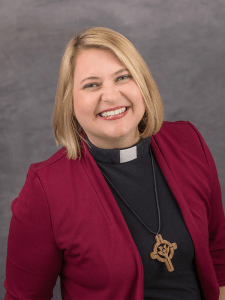
History is never just what happened “back there”; it is how we choose to remember. And, of course, we spend a good deal of time arguing over conflicting memories. In her December Christian Century article, Advent in all its Terror, Dr. Yolanda Pierce of Vanderbilt Divinity School confronts the raw realities of Jesus’ birth—poverty, political oppression, a refugee family desperate for shelter—and insists that memory matters, as unsettling as that may be. God entered our terror-filled world at precisely that moment and in that place, overturning worldly expectations of what a savior-king should look like — the word AWESOME comes to mind, an overused word in our day that in its origin meant something that inspires fear, dread, and great reverence. As the Fourth Sunday of Advent arrives and anticipation reaches its height, we are called not to sentimental escape but to courageous remembrance. The miracle of Advent is God dwelling with us in the midst of terror, reminding us that divine presence accompanies both suffering and hope. Much to think about.
Katie Luther (1499-1552)
Thanks for coming into this space again this week, and for your continued interest in tackling the Lectionary! It’s hard to believe that Christmas is just around the corner. On Saturday, we commemorate Katie von Bora Luther, renewer of the church and wife of Martin, who died 473 years ago (20 December 1552). Her story is fascinating. Raised in convents from childhood, she escaped in 1523 with several other nuns—famously hidden in herring barrels—with Luther’s help. You can’t make that up! Two years later, she married Luther in 1525, and together they established a model Protestant household, raising six children while she managed the Black Cloister with remarkable skill in farming, brewing, and hospitality. (Sidebar: The Black Cloister was originally an Augustinian monastery in Wittenberg, later transformed into Martin Luther’s family home and the first Protestant parsonage). After Luther’s death in 1546, Katie endured hardship during the Schmalkaldic War, eventually dying in Torgau in 1552, remembered as a stabilizing force in Luther’s life and a significant figure in the Reformation.
My reflections this week will focus on the Old Testament prophecy and its connection to the Gospel. The musical meditation, Before the Marvel of this Night, captures the message of Advent well and I hope you enjoy it. I have also included the fourth installment of the interview I did with Pastor Jen Hatleli regarding the Malawi trip from October.
My source for the Bible readings each week is the Bible Gateway website. I generally use the NRSVUE translation.
The readings for the Fourth Sunday of Advent share the theme of God’s faithful presence breaking into human history through promise and fulfillment. Isaiah speaks of a sign given to God’s people—a child born of a young woman—pointing to divine intervention and hope. Psalm 80 echoes this longing with a communal cry for restoration, asking God to “let your face shine” so that salvation may come. In Romans and Matthew, the promise is revealed in Jesus Christ, whose birth fulfills prophecy and embodies Emmanuel, “God with us,” assuring that God’s saving work is both ancient and ever new.
“Describe the common themes among the readings for Advent 4 Sunday.” Copilot, 12 December 2025, Copilot website.
A Strategy for Reading
The four-question approach to reading (NRRD) is a good way to take on Bible passages. Give it a try this week!
What is something NEW you learned?
What is something that made you REFLECT?
What is something that RELATES to prior knowledge?
What is something you would like to further DISCUSS?
Focus Passages: Isaiah and Matthew
Isaiah 7: 10-16
10 Again the Lord spoke to Ahaz, saying, 11 “Ask a sign of the Lord your God; let it be deep as Sheol or high as heaven.” 12 But Ahaz said, “I will not ask, and I will not put the Lord to the test.” 13 Then Isaiah said, “Hear then, O house of David! Is it too little for you to weary mortals that you weary my God also? 14 Therefore the Lord himself will give you a sign. Look, the young woman is with child and shall bear a son and shall name him Immanuel. 15 He shall eat curds and honey by the time he knows how to refuse the evil and choose the good. 16 For before the child knows how to refuse the evil and choose the good, the land before whose two kings you are in dread will be deserted.
St. Matthew Inspired by an Angel (Rembrandt, 1661)
Matthew 1: 18-25
18 Now the birth of Jesus the Messiah took place in this way. When his mother Mary had been engaged to Joseph, but before they lived together, she was found to be pregnant from the Holy Spirit. 19 Her husband Joseph, being a righteous man and unwilling to expose her to public disgrace, planned to divorce her quietly. 20 But just when he had resolved to do this, an angel of the Lord appeared to him in a dream and said, “Joseph, son of David, do not be afraid to take Mary as your wife, for the child conceived in her is from the Holy Spirit. 21 She will bear a son, and you are to name him Jesus, for he will save his people from their sins.” 22 All this took place to fulfill what had been spoken by the Lord through the prophet: 23 “Look, the virgin shall become pregnant and give birth to a son and they shall name him Emmanuel,” which means, “God is with us.” 24 When Joseph awoke from sleep, he did as the angel of the Lord commanded him; he took her as his wife 25 but had no marital relations with her until she had given birth to a son, and he named him Jesus.
Reflections: “A King Refused, A Carpenter Obeyed”
King Ahaz by Guillaume Rouillé (16th Century French woodcut)
As has been the case throughout Advent, I am intrigued by the connection between Old Testament prophecy and the story of God breaking into our humanity. This week’s Old Testament reading resoundingly echoes in the Gospel of Matthew. Seven hundred years before Christ — picture it, like us looking back to the year 1295 — Judah, the Southern Kingdom, was trembling. King Ahaz, a young ruler from the line of David, faced a dire threat: Israel and Aram had joined forces to pressure Judah into rebellion against Assyria. Isaiah urged Ahaz to trust God and even invited him to ask for a sign of God’s protection. But Ahaz refused. Why? Because he had already decided to rely on Assyria instead of God. Listening to Isaiah would have meant abandoning his political plan, and his heart was closed to God’s promise. Still, God gave the sign anyway: “The young woman is with child and shall bear a son and shall name him Immanuel.” For Ahaz, this prophecy had an immediate horizon. It pointed perhaps to a child born in his own time—a living symbol that God’s presence would remain with His people and that the threat from Israel and Aram would soon fade. But the prophecy also carried a second horizon, stretching far beyond Ahaz’s day. Seven centuries later, Matthew tells us that these same words find their ultimate fulfillment in the birth of Jesus—the true Immanuel,“God with us.” What Ahaz could not see, the Gospel reveals: God’s faithfulness endures across generations, and the child born in Bethlehem is not just a temporary sign of reassurance but the lasting sign that God is with His people forever.
The Holy Family (A.I. generated, 2025)
So, fast forward those seven centuries. Matthew tells us of another descendant of David, Joseph. Like John the Baptist, I fear I have never given Joseph enough attention in the exploration of these events. He too arrived at an existential moment. Mary, his betrothed, was found to be with child. His instinct was caution, compassion, a quiet divorce. But then — like Ahaz — Joseph was confronted with a divine word. Unlike Ahaz, Joseph chose trust. He obeyed the angel, embraced Mary, and named the child Jesus, “Yahweh saves.”Do you hear the echo? Isaiah’s promise of Immanuel — God with us — fulfilled in the child born of Mary. The sign given to Ahaz in fear becomes the sign embraced by Joseph in faith. One king refused, one carpenter obeyed.
And friends, here we stand on the threshold of Christmas. The question is not whether God will be faithful — He already is. The question is whether we will respond like Ahaz, turning to our own strategies, or like Joseph, opening our lives to God’s mystery. So as Advent closes, let Joseph be our guide. Ordinary, quiet, righteous Joseph—who shows us that God’s plan unfolds not in the halls of power but in the hearts of those willing to say yes.
Soli deo Gloria!
Musical Meditation: “Before the Marvel of this Night”
Before the Marvel of This Night by Jaroslav Vajda and Carl Schalk is relatively new. The text imagines the angels rehearsing their song of peace, bliss, and love before announcing Christ’s birth. Its refrain — “Sing peace, sing peace, sing Gift of Peace” — echoes the Advent longing for Christ as the fulfillment of God’s promise. On the Fourth Sunday of Advent, when the church leans into the nearness of Christmas, the hymn’s imagery of angels preparing to “tear the sky apart with light” mirrors our own anticipation of God’s breaking into history. In this way, the hymn becomes a fitting meditation for Advent’s final Sunday, inviting worshippers to join the angelic chorus in proclaiming peace and love as the world awaits the marvel of Christ’s coming.
THE LYRICS
1 Before the marvel of this night, adoring, fold your wings and bow; then tear the sky apart with light and with your news the world endow. Proclaim the birth of Christ and peace, that fear and death and sorrow cease: sing peace; sing peace; sing gift of peace; sing peace; sing gift of peace!
2 Awake the sleeping world with song: this is the day the Lord has made. Assemble here, celestial throng, in royal splendor come arrayed. Give earth a glimpse of heavenly bliss, a teasing taste of what they miss: sing bliss; sing bliss; sing endless bliss; sing bliss; sing endless bliss!
3 The love that we have always known, our constant joy and endless light, now to the loveless world be shown, now break upon its deathly night. Into one song compress the love that rules our universe above: sing love; sing love; sing God is love; sing love; sing God is love!
The Choir of the Cathedral and Abbey Church of St. Alban is a distinguished English cathedral choir made up of boy and girl choristers alongside professional adult Lay Clerks, known for its international tours, recordings, and premieres of new works. Based at St Albans Cathedral, the oldest site of continuous Christian worship in Britain and dedicated to St Alban, England’s first Christian martyr, the choir’s music is deeply rooted in this historic setting. Through its blend of tradition and innovation, the choir embodies the cathedral’s mission to unite heritage and living faith in song.
“Identify and describe The Cathedral Choir of St. Alban” Copilot, 14 December 2025, Copilot website.
Prayer Reflection: “Recognizing the Lord” (Nouwen)
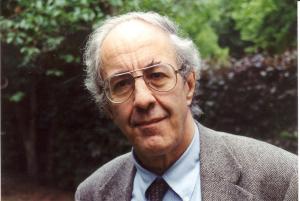
Henri Nouwen (1932–1996) was a Dutch Catholic priest, theologian, and prolific spiritual writer whose work continues to inspire millions worldwide. After teaching psychology and pastoral theology at institutions such as the University of Notre Dame, Yale Divinity School, and Harvard Divinity School, he left academia to join the L’Arche Daybreak community in Ontario, where he lived among and ministered to people with intellectual disabilities. Nouwen authored over 39 books—including The Wounded Healer and The Return of the Prodigal Son—that explore themes of vulnerability, prayer, community, and God’s unconditional love, blending psychology with spirituality in a way that made faith deeply accessible. His legacy lies in his ability to speak with honesty and compassion about the human struggle for belonging and the experience of being God’s beloved.
“Be alert, be alert, so that you will be able to recognize your Lord in your husband, your wife, your parents, your children, your friends, your teachers, but also in all that you read in the daily newspapers. The Lord is coming, always coming. Be alert to his coming. When you have ears to hear and eyes to see, you will recognize him at any moment of your life. Life is Advent; life is recognizing the coming of the Lord.”
Source: The Henri Nouwen Society Website. Daily E-Meditations, 14 December 2025.
Faithful Conversation Updates
Join us for some free-flowing conversation about the Lectionary readings each Sunday. We meet from 10:45-11:30 in the church library each week, with some exceptions. No prior knowledge is necessary! ALL ARE WELCOME!
QUESTIONS FOR DISCUSSION THIS WEEK:
1. Ahaz refused God’s sign because he trusted in political power instead of divine promise. What are some “Assyrias” we turn to today—strategies, alliances, or securities—that keep us from trusting God’s presence in our own crises?
2. Joseph, unlike Ahaz, chose to trust and obey, even when God’s plan disrupted his expectations. How might Joseph’s quiet faithfulness inspire us to respond differently when God’s call feels uncertain or costly?
THIS WEEK’S BIBLE 365 READING CHALLENGE
Monday 15 December: 1 Samuel 1-3 Tuesday 16 December: 1 Samuel 4-8 Wednesday 17 December: 1 Samuel 9-12 Thursday 18 December: 1 Samuel 13-14 Friday 19 December: 1 Samuel 15-17 Saturday 20 December: 1 Samuel 18-20 Sunday 21 December: 1 Samuel 21-24
The Bible 365 Challenge! More than 60 members of our faith community have committed to the Bible 365 Challenge—a shared journey of reading through the entire Bible in one year. Each day, we engage with selected passages weaving together stories of faith, struggle, grace, and redemption. This challenge isn’t just about completing a task; it’s about deepening our spiritual roots, building community, and discovering how scripture speaks into our lives today.
Reflections On Malawi: Part 4
Pastor Jenny Hatleli
Since 1999, the Northwest Synod of Wisconsin and the Evangelical Lutheran Church of Malawi have been companions in ministry. Recently, several NW Synod representatives, including Pastor Jen Hatleli and Patti Whitworth from ELC, traveled there and met with many of our partners in the region. During Advent, I am posting excerpts from my interview with her about the trip. In our fourth exchange, Jen shared information about the connection between the Northwest Synod of the ELCA and the ELC of Malawi. We also talked about what Pastor Jen learned about hope and perseverance from the people she interacted with in southern Africa.
JOY has been much on my mind this week. The word itself reaches back to Latin, where gaudia conveys gladness and delight. From that same root comes gaudete — “rejoice” — the word that gives Gaudete Sunday its name. This third Sunday of Advent takes its title from the opening of the ancient introit, Gaudete in Domino semper (“Rejoice in the Lord always”). Emerging in the early centuries of the Church when Advent was observed as a penitential season akin to Lent, this Sunday offered a liturgical pause of joy and anticipation amid the somber preparation, marked by rose‑colored vestments and candles instead of the usual purple. Historically, it reminded the faithful that the coming of Christ was not only a call to repentance but also a promise of joy. Today, Gaudete Sunday continues to be celebrated across Christian traditions as a moment of light breaking into Advent’s darkness—often symbolized by the rose candle on the Advent wreath—and serves as a reminder that even in waiting, the Church rejoices in the nearness of God’s presence.
Malawi children exuding JOY!
Thanks for visiting this space again today and for your continuing interest in studying the Bible and exploring the Revised Common Lectionary! We have two commemorations on the ELCA calendar this week: Lucy, the martyr (d. 304) on 13 December and John of the Cross, renewer of the church (d. 1591) on 14 December.
My reflections for 3 Advent will focus on the Matthew’s Gospel and John the Baptist. I will also offer a homily at ELC on Sunday regarding John’s story and his connection to the season of Advent. In addition, I have included a hauntingly beautiful piece of music from Iceland and the third excerpt of an interview with Pastor Jen Hatleli of ELC regarding her experience in Malawi, Africa in October of 2025.
NOTES REGARDING SOURCING:
** Note 1: Links to outside references are bolded and italicized and are meant for further reading or research on your part. While the text I am including in the blog is my own, I am pulling from a multitude of sites for ideas and connections. ** Note 2: In my increasing use of A.I. (Copilot), I will cite sourcing of how I am using the tool, if necessary. I don’t want that to be overly cumbersome, but I am gradually incorporating more tools.
** Note 3: The images I include in the blog are drawn from Wikimedia Commons to the fullest extent possible.
Common Themes Among the Readings
3 Advent Readings
Isaiah 35:1-10 Psalm 146:5-10 James 5:7-10 Matthew 11:2-11
My source for the Bible readings each week is the Bible Gateway website. I generally use the NRSVUE translation.
The readings for Gaudete Sunday share a common theme of joy and hope breaking into the midst of waiting and struggle. Isaiah envisions the desert blossoming and the weak strengthened, while the psalm proclaims God’s justice for the oppressed and care for the vulnerable. James urges patient endurance, reminding believers that the Lord’s coming is near, and Matthew highlights Jesus as the fulfillment of prophetic promises, bringing healing and good news to the poor. Together, these texts invite the faithful to rejoice with confidence that God’s saving presence is already at work, even as they await its fullness.
“Describe the common themes among the readings for Gaudete Sunday.” Copilot, 6 December 2025, Copilot website.
A Strategy for Reading
The four-question approach to reading (NRRD) is a good way to take on Bible passages. Give it a try this week!
What is something NEW you learned?
What is something that made you REFLECT?
What is something that RELATES to prior knowledge?
What is something you would like to further DISCUSS?
Focus Passage: Matthew 11:2-11
2 When John heard in prison what the Messiah was doing, he sent word by his disciples 3 and said to him, “Are you the one who is to come, or are we to wait for another?” 4 Jesus answered them, “Go and tell John what you hear and see: 5 the blind receive their sight, the lame walk, those with a skin disease are cleansed, the deaf hear, the dead are raised, and the poor have good news brought to them. 6 And blessed is anyone who takes no offense at me.” 7 As they went away, Jesus began to speak to the crowds about John: “What did you go out into the wilderness to look at? A reed shaken by the wind? 8 What, then, did you go out to see? Someone dressed in soft robes? Look, those who wear soft robes are in royal palaces. 9 What, then, did you go out to see? A prophet? Yes, I tell you, and more than a prophet. 10 This is the one about whom it is written,
‘See, I am sending my messenger ahead of you, who will prepare your way before you.’
11 “Truly I tell you, among those born of women no one has arisen greater than John the Baptist, yet the least in the kingdom of heaven is greater than he.
Pastors Tom Heyd, A.M. Rusten, and Thor Rykken lined up left to right, hammering away at wooden crosses for Lent back in the 1960s. This week’s Gospel reading catapulted me straight back to that era, when Rusten thundered out a sermon on “John the Baptizer.” With his booming voice and thick Norwegian brogue, he didn’t just preach—he practically summoned John into the sanctuary. Anyone who knew Rusten remembers him vividly; a strong personality filled with the Holy Spirit!
Reflections: “John the Baptizer — Bridging the Covenant”
The Execution of Saint John the Baptist by Gandolfi (Italian, c. 1770)
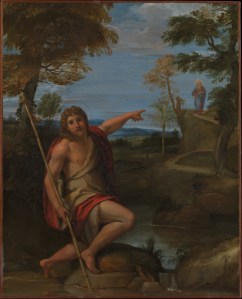
John the Baptist has jolted me awake — in my mind I am standing with the crowd along the Jordan River trying to figure this guy out! For years I kept him at the edges, a minor figure overshadowed by Christ. But the more I study, I realize I need to spend more time with him. John storms into the wilderness, thunders repentance, plunges people into the Jordan, and then vanishes—silenced by Herod’s brutal command. Mark’s Gospel paints the most harrowing picture of John’s demise (Mark 6: 14-29): Herod fears John’s righteousness yet crumbles under Herodias’s grudge and her daughter’s demand. The scene exposes Herod’s weakness and John’s fearless courage. We are left with that gruesome image of John’s head on a platter. This week, however, Matthew refuses to let me dismiss him. Jesus declares John more than a prophet—the one who stands at history’s hinge, bridging the old covenant and the new, pointing us straight to the kingdom breaking in.
Saint John the Baptist by Boulogne (French, c. 1630)
In Matthew 11:2–11, we encounter John the Baptist in prison—his body worn down, his spirit unsettled. The prophet who once thundered with conviction now wrestles with doubt. He sends his disciples to ask Jesus, “Are you the one who is to come, or shall we look for another?” It is a profoundly human moment: the fiery herald of repentance now questioning in the shadows of confinement. (Perhaps John is questioning his cousin’s movement from the wilderness into the world — his association with “worldly people”). As is so often the case, Jesus does not respond with a simple “yes” or “no.” Instead, he points to the evidence of God’s reign breaking into the world: the blind see, the lame walk, lepers are cleansed, the deaf hear, the dead are raised, and the poor receive good news. In other words, the promises of Isaiah are being fulfilled before their eyes. Then Jesus turns to the crowd and honors John. He asks them directly: “What did you go out into the wilderness to see? A reed shaken by the wind? A man dressed in fine clothes? No—you went to see a prophet.” These questions cut to the heart. John was not a reed bending to public opinion, nor a courtier seeking comfort and status. He was a prophet—unyielding, uncompromising, and chosen to prepare the way. And yet, Jesus adds a startling twist: “Truly I tell you, among those born of women there has not risen anyone greater than John the Baptist; yet whoever is least in the kingdom of heaven is greater than he.” John stands at the threshold of the kingdom, pointing toward it, but the kingdom itself is breaking in with a new kind of power—one not built on human greatness but on God’s grace. Even the least who enter into this kingdom share in a reality greater than John’s prophetic mission, because they live within the fullness of what Christ brings.
Saint John the Baptist Bearing Witness by Carracci (Italian, c. 1600)
And that is why John the Baptizer is the perfect symbol of Advent. The word itself means “coming” or “arrival,” and John embodies that threshold moment. He points beyond himself, preparing the way, reminding us that the kingdom is near. Advent is not only about waiting—it is about waiting with urgency, with repentance, with hope. John’s life tells us that joy and judgment, longing and fulfillment, are woven together in the coming of Christ. He is not a footnote; he is the voice crying out in the wilderness, the herald of Advent joy. But his cry is not only for the crowds of the Jordan River—it echoes still. If John’s voice were to reach us today, what paths would we need to straighten, what valleys would we need to lift, so that Christ might truly arrive in our midst?
Soli Deo Gloria and Gaudete in Domino semper!
Note: I am indebted to Fr. Morgan Reed of the Corpus Christie Anglican for his interpretation of this week’s Gospel. You can read his full homily here. In addition, I utilized interpretations of John the Baptist offered by Garry Wills in his 2006 book, What Jesus Meant.
We will explore this passage further in our Sunday Lectionary group using the discussion questions included in the Faithful Conversations update below.
Musical Meditation: “Fljótavík” (Sigur Rós)
As we enter the season of Advent, we are invited to see ourselves as travelers moving through wilderness and storm, longing for shelter and light. Sigur Rós’s “Fljótavík,” named after a remote bay in Iceland, tells of a journey ashore, a struggle across sand and stone, and the discovery of a fragile hut where rest is found while the storm rages outside. The music mirrors this imagery—spare at first, then swelling like waves—until it settles into quiet memory. This song, like the season, is about waiting with trust: remembering storms, yet resting in hope that light will break into the darkness. Voces8 offers a powerful interpretation of it which I have included here.
Sigur Rós is an Icelandic post‑rock band formed in Reykjavík in 1994, known for their ethereal sound. Their name means “Victory Rose.” Singing in Icelandic and their invented “Hopelandic” language, they rose to international fame and have sold millions of albums worldwide. Sigur Rós remains celebrated for turning Iceland’s landscapes and spirit into sound that feels both deeply local and universally transcendent.
The original lyrics for Fljotavik are in Icelandic. Here is the translation:
We look over the rudder Cut off the sea We sail by the mast Stretch the sails We steer towards the bridge
We sail ashore Up on the large rocks and the sand We wade ashore What a mess
There I found myself Endlessly thanking Sheltered in a makeshift house And we slept As the storm died down
VOCES8 is a British vocal ensemble formed in 2005. Admired not only for their artistry but also for their role as cultural ambassadors, they bring choral music to diverse audiences and work to nurture the next generation of singers.
“But the angel said to them, “Do not be afraid. I bring you good news that will cause great joy for all the people. Today in the town of David a Savior has been born to you; he is the Messiah, the Lord.” (Luke 2:10-11)
Lord, the good news of Jesus’ arrival brings such joy to our world! Reach those who are lost and searching with the message of hope that we have through the Messiah. God, allow your message of peace to bring comfort to our anxious world. As we all go about the holiday season, let the message of great joy pierce through all the noise and into people’s hearts. Amen.
Source: Crosswalk: Third Sunday of Advent: Gaudete Readings and Prayers for Lighting the Candle. Retrieved 6 December 2025.
Faithful Conversation Updates
Join us for some free-flowing conversation about the Lectionary readings each Sunday. We meet from 10:45-11:30 in the church library each week, with some exceptions. No prior knowledge is necessary! ALL ARE WELCOME!
QUESTIONS FOR DISCUSSION THIS WEEK:
John’s Doubt and Our Own: 1. In Matthew 11, John the Baptist—once so certain—now wrestles with doubt in prison. How does his questioning help us understand the role of doubt in faith, especially during Advent, when we wait with both hope and uncertainty?
John as the Symbol of Advent: 2. Jesus calls John “more than a prophet,” the one who prepares the way. In what ways does John’s life—his courage, his suffering, his pointing beyond himself—embody the meaning of Advent, and how might his witness challenge the way we live out our own waiting today?
The Bible 365 Challenge! More than 60 members of our faith community have committed to the Bible 365 Challenge—a shared journey of reading through the entire Bible in one year. Each day, we engage with selected passages weaving together stories of faith, struggle, grace, and redemption. This challenge isn’t just about completing a task; it’s about deepening our spiritual roots, building community, and discovering how scripture speaks into our lives today.
Reflections On Malawi: Part 3
Pastor Jenny Hatleli
Since 1999, the Northwest Synod of Wisconsin and the Evangelical Lutheran Church of Malawi have been companions in ministry. Recently, several NW Synod representatives, including Pastor Jen Hatleli and Patti Whitworth from ELC, traveled there and met with many of our partners in the region. During Advent, I am posting excerpts from my interview with her about the trip. In our third exchange, I asked Jen to share a story of a person or moment that left a lasting impression on her.