14-20 April 2025: Holy Week and Easter

Introduction to Readers

Egeria

. . . all the children who are gathered at the top of the Mount of Olives, including those who are not yet able to walk because they are too young and therefore are carried on their parents’ shoulders, all of them bear branches, some carrying palms, others, olive branches. And the bishop is led in the same manner as the Lord once was led. (Egeria, c. 380s)

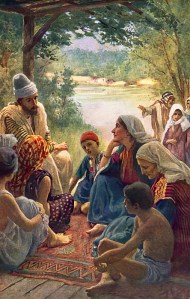
Egeria, an intriguing 4th-century Christian nun from Roman Hispania, is noted for a detailed account of her pilgrimage to the Holy Land between 381 and 384. Preserved in fragments found in the Codex Aretinus and amazingly rediscovered in an Italian monastery in 1884 by archaeologist Gian Francesco Gamurrini (1835-1923), Egeria’s vivid descriptions of visits to Jerusalem, Bethlehem, Mount Sinai, and the Red Sea, offer insights into early Christian liturgical practices and sacred geography. The opening excerpt (above) describes her eye-witness account of a procession in Jerusalem — a reenactment of Jesus’ triumphal entry into the city, as played out for centuries in churches across the globe. Let’s imagine Egeria’s excitement as she stumbled on this early Palm Sunday celebration. Young children, laughing as they ride on their parents’ shoulders, carry palm and olive branches. The excited bishop, representing Christ, recreates Jesus’ entry, creating a vivid and participatory act of worship. I suspect this curious onlooker from Spain engaged many of those involved in conversations now lost in time.

Gian Francesco Gamurrini

And thus, we have arrived at this most sacred week of the year. Holy Week goes back to the 4th century, notably to St. Athanasius (c.296/98-373 — think Athanasian Creed) and St. Epiphanius (c.310/20-403). The earliest Christians focused on commemorating key events like Good Friday and Holy Saturday (Easter Vigil). By the 3rd century, other days of the week were added, and by the latter 4th century, the practice of observing the entire week with distinct events, such as Palm Sunday and Maundy Thursday, became more structured. Technically, Holy Week concludes on Holy Saturday (Easter Vigil), the day before Easter Sunday. However, Easter Sunday follows directly after and is part of the broader celebration of the Paschal Triduum, which includes Holy Thursday, Good Friday, Holy Saturday, and Easter Sunday. So, while not part of “Holy Week” itself, Easter Sunday is closely tied to its conclusion and significance.

Approaching this week’s Lectionary Readings

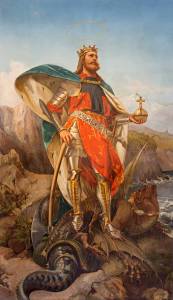
Athanasius
Epiphanius

Famed humorist Garrison Keillor (of Lake Wobegon fame) once remarked that “stories are the essence of civilization,” and I concur. Eye-witness accounts, like Egeria’s, bring history alive and Holy Week is punctuated with several dramatic stories that drive our faith. I encourage you to be patient this week and take on the readings of the Triduum (listed below), as well as those designated for Easter Day. Put yourselves in the shoes of those early Christians and imagine how their lives were impacted by the events they witnessed!

As always, thanks for visiting this space My two-part reflections this week will focus on the crucifixion and resurrection. I am drawing from the April edition of The Chistian Century and also utilizing a revised version of a post I did a year ago. The two familiar hymns included are powerful versions that you will enjoy.

The Readings for Easter Triduum

Easter Vigil (Holy Saturday)

Romans 6: 3-11
John 20: 1-18
Note: All 12 readings for Easter Vigil are found in ELW, page 269.

Easter Day

Acts 10: 34-43
(or Isaiah 65: 17-25)
Psalm 118: 1-2, 14-24
1 Corinthians 15: 19-26
Luke 24: 1-12
(or John 20: 1-18)

Look for the following theme as you explore the readings for Easter Day: THE TRIUMPH OF LIFE OVER DEATH THROUGH THE RESURRECTION OF JESUS CHRIST. They collectively emphasize God’s power to save, as seen in His work through Christ’s sacrifice and victory over the grave. The passages celebrate renewal, hope, and eternal life, urging believers to rejoice in the fulfillment of God’s promises. Together, they proclaim the message of salvation and the assurance of new life for all who believe.

Focus Passages from Luke (Gospel) and Acts (First Reading)

Luther’s Seal

TRY LUTHER’S METHOD!

Luther’s Revision of the Lectio Divina
(Three Steps)

Oratio (Prayer): This is the starting point, where one humbly prays for the Holy Spirit’s guidance to understand God’s Word. Luther emphasized that prayer prepares the heart and mind to receive divine wisdom.

Meditatio (Meditation): This involves deeply engaging with Scripture, not just reading it but reflecting on it repeatedly. Luther encouraged believers to “chew on” the Word, allowing its meaning to sink in and shape their thoughts and actions.

Tentatio (Struggle): Often translated as “trial” or “temptation,” this refers to the challenges and spiritual battles that arise as one seeks to live according to God’s Word. Luther saw these struggles as a way God refines faith, making it more resilient and authentic.
The crucifixion of Jesus is detailed in all four Gospels, each offering unique perspectives. Matthew 27:32–56 emphasizes the fulfillment of prophecy and Jesus’ kingship. Mark 15:21–41 highlights the suffering and abandonment Jesus endured. Luke 23:26–49 focuses on Jesus’ compassion, even in his final moments. And John 19:17–37 (this year’s Good Friday account) underscores Jesus’ divine authority and the fulfillment of Scripture.

Elizabeth L. Evans, an ordained deacon in the United Methodist Church, offers a compelling reflection on this moment in history, placing the events surrounding Jesus’ death within the context of the first century Roman Empire (The Christian Century, April 2025, page 20). Among other things, Evans points out that scapegoating—blaming and punishing innocent people to protect those in power—is a pattern that still exists today. Good Friday reminds us to reflect on who is being unjustly blamed in our time and to stand with them against injustice.

Crucifixion was the Roman Empire’s execution method of choice for rebels and insurrectionists. It was reserved for those whom the empire considered the lowest of the low, for those who threatened the status quo and questioned the legitimacy of the powerful. It was meant to be a public spectacle, a warning to all those watching that they would receive the same fate if they dared exalt anyone higher than Caesar. And this is the way that Jesus died: on the cross, as a despised rebel and enemy of the Roman Empire, in solidarity with the oppressed, with crowds of people rubbernecking from a distance. Perhaps this was precisely what the empire and the religious leaders found so threatening about Jesus—the way he subverted the norms that kept them in power. His love for others was . . . a radical love that, at its core, critiqued the power of the unjust. And it was, for this reason, that Jesus died an unjust death. The tragedy of Good Friday is that the tale of scapegoating and condemning innocents to die plays out in multiple contexts, in multiple eras, and in multiple ways. Unjust leaders will always seek to unite people against a real good enemy, in the interest of self-preservation. Good Friday is an annual reminder to consider who is scapegoated in our time for the benefit of those who inflict violence against God’s people, to ask who is crucified in our midst to distract from the crimes of those with institutional power.

The spiritual “Were You There When They Crucified My Lord?” has deep roots in African-American history. It was likely composed by enslaved African Americans in the 19th century and reflects their profound faith amidst suffering. This spiritual became widely recognized when it was included in the Episcopal Church hymnal in 1940, making it the first African-American spiritual to appear in a major American hymnal. Over time, it has been embraced across Christian traditions, including the ELCA (ELW, 353).

The Crucifixion, ca. 1625–30
Pedro Orrente (1580–1645)

Reflections: Part 2: The Resurrection

It has been said that history must first be imagined in order to be understood. Let’s imagine the dramatic events outside Jesus’ tomb recounted in the 24th chapter of Luke.

Mary of Magdala
(Modern Interpretation)

First, some background on Mary Magdalene. A fascinating individual, she is mentioned in all four Gospels as a follower of Jesus and witness to his crucifixion and resurrection. There are twelve references to her in the Gospels, more than any other woman, besides Mary, the mother of Jesus. Honored as a Saint within the Catholic Church, there is much we do not know about Mary of Magdala (another name for her). We commemorate her in the ELCA as Mary the Apostle on July 22nd. Most importantly, perhaps, Mary becomes the first person to carry the message of Jesus’ resurrection! (Sidenote: The Synoptic Gospels — Matthew, Mark, and Luke — all mention the other Mary being present at the tomb, presumably the mother of Jesus, while John does not. Some scholars suggest that the absence of the Virgin Mary in John’s account may have symbolic significance. Mary, as the mother of Jesus, represents the earthly relationship, while Mary Magdalene, as a disciple, represents the new community of believers in Jesus). 

The Disciples Peter and John running to the Sepulchre on the morning of the Resurrection by Eugene Burnand (1898).

Back to Luke’s account. Mary Magdalene and several women visited Jesus’ tomb and saw that the stone had been removed. Realizing that Jesus’ body was gone, they informed the apostles who doubted their story. Though Luke does not include Mary’s post-resurrection encounter with Jesus, Matthew, Mark, and John do. Mary who remained weeping outside the tomb, saw two angels where the body of Jesus had been. In a stunning moment Jesus appears to Mary, though she does not recognize him until he calls her by name. He told her that he was ascending to his Father “and your Father, to my God and your God.” Mary then announced what she has learned to the disciples. In a dramatic moment, Peter (and an unnamed companion) breathlessly run to the tomb to see for themselves — one of my favorite moments in this story, recounted most dramatically in John’s Gospel. Their excitement is palpable and rumbles across the centuries. (Sidebar: The “other disciple” may have been John, the writer of the Gospel, but there is no definitive identification. I have always been intrigued by the various passages in scripture that include unnamed individuals — see the Emmaus story in Luke 24, for example. Some have suggested such characters represent us). This remarkable moment, no doubt, marked these women, Peter, and his companion for the remainder of their lives. We hear from Peter again in the second reading from Acts. Speaking to a Gentile audience, he recounts Jesus’ crucifixion, burial, and resurrection roughly fifteen years after his dramatic encounter with the risen Christ (Acts 10: 39-41). In this way, the earliest Christians began to absorb the foundational stories of the faith.

The Burial of Christ by Titian (1490–1576). Joseph of Arimathea, Nicodemus and the Virgin Mary take Christ in the tomb watched by Mary Magdalene and Saint John the Evangelist.

What are we to make of all this two thousand years later? The deep, rich, and powerful stories we encounter during Holy Week remind us that as Christians, we are fundamentally an Easter people, racing toward that tomb, forever trying to grasp what happened there. Our faith journey is predicated on the acceptance of miracles — water turned to wine, blind people regaining their site, liberation from demonic possession — things we cannot explain. To many in our midst, this acceptance of the unexplainable is ridiculous — to them, we are chasing a fairy tale. But, as children of the light, we race on. The central miracle involves our Creator God sending his Son to share in our humanity, to walk the earth for roughly 33 years, to face betrayal, suffering, and a torturous death at the hands of Roman authorities. This Jesus took the dysfunction of the world, including the sins of humankind, upon himself, ultimately liberating us from sin and death, our greatest fear. The moment of his resurrection from the dead shines like a beacon in this unfolding drama we annually replay at this time of year. And, because we have been liberated, we are free to love and forgive others. Such forgiveness, at times, is a miracle in itself and runs contrary to the instincts of our broken and revenge-oriented culture. Miraculous forgiveness and victory over death — as Christians, our great gifts. Yes, we are an Easter people. We have a God who is faithful. Let us walk in the sunlight of his glorious resurrection!

Soli Deo Gloria!  

Musical Offering: Jesus Christ is Risen Today (ELW, 365)

The hymn “Jesus Christ is Risen Today” has a rich history rooted in Christian tradition. It originated as a 14th-century Latin hymn titled Surrexit Christus Hodie (“Christ is Risen Today”). Later translated into English in the early 18th century, the most well-known version appeared in the 1708 collection Lyra Davidica, which included both the lyrics and the lively tune we associate with the hymn today. The hymn celebrates the Resurrection of Christ and is often sung during Easter services. Its joyful refrain of “Alleluia” after each line emphasizes the triumph and hope of the Resurrection. Over time, it has become a beloved part of Easter worship across many Christian denominations.

The Anglican Hereford Cathedral provides a magnificent setting for this stirring hymn. Christians have worshipped at this site since the 8th century and the present structure dates back to 1079.

Prayer Reflection: The Eyes of God (Henri Nouwen)

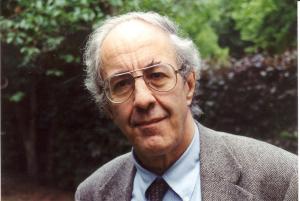
Dutch Theologian Henri Nouwen (1932-1996)

Jesus looked at the human condition with the eyes of love and tried to teach us how to look at ourselves and others “from above” and not “from below,” where dark clouds obscure our vision. “I come from above,” Jesus told his disciples, “and I want you to be reborn from above so that you will be able to see with new eyes” (John 3:3). This is what spiritual theology is all about – looking at reality with the eyes of God.

Help us to see the world through your eyes, O God. Amen.

(Source: Henri Nouwen Society, Daily Meditation for 13 April 2025)

Update on Faithful Conversations

We will resume our in-person lectionary discussions after worship on 27 April at 10:45 in the church library. We talk through the readings (some or all) in an informal setting — no prior preparation is necessary and all are welcome! Come and help us deepen our understanding of the readings!

13 April 2025: Passion/Palm Sunday

Introduction to Readers

R.M.Rilke
(1875-1926)

Be patient toward all that is unsolved in your heart and try to love the questions themselves, like locked rooms and like books that are now written in a very foreign tongue. Do not now seek the answers, which cannot be given you because you would not be able to live them. And the point is, to live everything. Live the questions now. Perhaps you will then gradually, without noticing it, live along some distant day into the answer.

One of my father’s oft-repeated lines — “There has always been plenty of sin in the world!” — has been ringing in my ears lately. Unk had a way of helping me realize that the disorder of our world and the anxiety it stirs is part of a larger context that Christians, of all people, should understand. That said, as human beings, we crave certainty in our lives, a sense of security that feels precarious in 2025. I stumbled upon the opening quote from Austrian poet and novelist Rainer Maria Rilke this week, an encouragement to embrace uncertainty and the process of growth. Rilke suggests that instead of rushing to find answers to life’s complexities, we should learn to live fully in the present moment—even when it means dwelling in the questions themselves. Whether he was commenting on the faith journey or not, I don’t know, but his advice seems especially fitting for Christians. Week to week, the lectionary readings provide flashes of insight and a sense of certainty, while raising questions we must learn to embrace. By living authentically and with patience, the answers will naturally unfold over time, often without conscious realization. More on that in my reflections this week.

As always, thanks for visiting this space again this week! Next Sunday is Palm/Passion Sunday, which combines two key themes. Palm Sunday celebrates Jesus’ triumphant entry into Jerusalem, where crowds greeted Him as King and Messiah by waving palms and shouting “Hosanna” (picture a processional at church at the start of the service). Passion Sunday then shifts the focus to Jesus’ suffering and death, as churches reflect on His arrest, trial, crucifixion, and burial. This combination provides a deeper spiritual experience, moving from joy to solemn reflection in preparation for Holy Week and Easter. Historically, these were separate observances. Before the Second Vatican Council (1962–1965), Passion Sunday was the fifth Sunday of Lent, starting “Passiontide,” a focus on Christ’s suffering, while Palm Sunday came a week later. Vatican II reforms merged these into Palm Sunday of the Lord’s Passion, emphasizing the Passion narrative for Holy Week while simplifying the Church calendar. Recall that the Revised Common Lectionary (RCL) we follow in the ELCA flowed from those 1960s changes.

Welcome new members!

A couple notes for the benefit of our newest blog members: “Faithful Conversations” was prompted by a Bible study we did in early 2023 and has been going strong for more than two years. It is designed to help you frame the readings for next Sunday. It is best to approach it with an open Bible in front of you. My commentary usually focuses on one of the readings. I do provide some references throughout the blog, links out for further information — they are bold and italicized. The format of the blog works best on a larger screen, but if you are on your phone, I suggest reading it horizontally. Also, you can find all the blog entries on the Lectionary homepage which is accessible from my main site. I welcome feedback or comments, of course!

Focus Passage: Philippians 2: 5-11

TRY LUTHER’S METHOD!

Luther’s Revision of the Lectio Divina
(Three Steps)

Oratio (Prayer): This is the starting point, where one humbly prays for the Holy Spirit’s guidance to understand God’s Word. Luther emphasized that prayer prepares the heart and mind to receive divine wisdom.

Meditatio (Meditation): This involves deeply engaging with Scripture, not just reading it but reflecting on it repeatedly. Luther encouraged believers to “chew on” the Word, allowing its meaning to sink in and shape their thoughts and actions.

Tentatio (Struggle): Often translated as “trial” or “temptation,” this refers to the challenges and spiritual battles that arise as one seeks to live according to God’s Word. Luther saw these struggles as a way God refines faith, making it more resilient and authentic.

Luther’s Seal

Sunday’s second reading fits beautifully with the Passion Gospel. The context of Philippians 2:5-11 lies within Paul’s letter to the church in Philippi, written during his imprisonment, likely in Rome. The passage is part of Paul’s exhortation to the Philippians to live in unity, humility, and selflessness, imitating the mindset of Christ. He is addressing a community that faced external pressures, likely from Roman authorities or societal opposition, as well as internal challenges with potential discord. In this setting, Paul emphasizes living a life worthy of the Gospel through humility and mutual care, rooting this exhortation in the example of Christ. What should we take away from this passage, especially when reading it alongside this week’s Gospel reading from Luke?

The Entry of Christ into Jerusalem by Leullier, Louis Felix (1811-82)

A couple things stand out to me. First, Paul’s use of the so-called Christological Hymn is worth noting (verses 6-11). Scholars debate the origin of this hymn. Some think Paul used an existing hymn from early Christian worship, supported by its poetic structure, which is different from his usual writing style. Others believe Paul wrote it himself, reflecting key Christian beliefs about Jesus’ birth, humility, and exalted nature. Regardless, the hymn resonated powerfully with Paul’s listeners and offers a window into the mind of those early Christians, our spiritual ancestors. Second, Paul’s admonition that we adopt Jesus’ mindset (verse 5) is a reminder of the counter-cultural nature of our faith. This is a recurring theme in Philippians, referenced by Paul five times in the letter (1:27, 2:2, 2:5, 3:15, and 4:2). The Philippian Christians Paul addressed lived in a world dominated by Rome and infused with Greco-Roman values — power, strength, fortitude, and self-reliance. And, of course, those with great wealth held positions of power within society. Not much has changed! Think of how we glorify those attributes in 2025! Our God paraded into Jerusalem on a donkey, preaching and modeling profound empathy with the outcasts of society. Sit with that for a few minutes as we begin the journey into Holy Week. The truths emanating from this journey continue to unfold. We have a story to tell and good news to share!

Soli deo Gloria!

Poem Reflection: Chesterton’s The Donkey

Poet and literary critic G.K.Chesterton’s 1927 poem provides a unique perspective on Jesus’ triumphal entry into Jerusalem. He uses the donkey’s voice to explore the idea that even the humblest and most scorned beings can hold extraordinary purpose and meaning in God’s plan. Enjoy!

G.K. Chesterton (1874-1926)

The Donkey

When fishes flew and forests walked
And figs grew upon thorn,
Some moment when the moon was blood
Then surely I was born;
With monstrous head and sickening cry
And ears like errant wings,
The devil’s walking parody
On all four-footed things.
The tattered outlaw of the earth,
Of ancient crooked will;
Starve, scourge, deride me: I am dumb,
I keep my secret still.
Fools! For I also had my hour;
One far fierce hour and sweet:
There was a shout about my ears,
And palms before my feet.

Musical Offering: Lord Whose Love in Humble Service (ELW, 712)

The hymn Lord, Whose Love in Humble Service was written by Albert F. Bayly (1901-1984), an English Congregational minister and hymn writer. It was chosen as the theme hymn for the Second National Conference on the Churches and Social Welfare held in Cleveland, Ohio in 1961. It first appeared in the Lutheran Book of Worship (the green hymnal used from 1978 to 2006). The lyrics seems especially fitting with the passage from Philippians in this week’s readings. Enjoy the hymn and sing along if moved to do so!

Update on “Faithful Conversations”

Join us on Sunday 13 April at 10:45 in the church library. We talk through the readings (some or all) in an informal setting — no prior preparation is necessary and all are welcome! Come and help us deepen our understanding of the readings!

And . . I can’t resist! 1960s Lutheran Humor!

From the mind of Charles Schultz, the creator of “Peanuts,” who grew up in Minneapolis and was an active layperson with a heart for the foibles of the church. He did a series of books focusing on teenagers in the late 1950s and early 60s.
Clearly, this young man missed the point of this week’s readings!

6 April 2025: 5 Lent

Introduction to Readers

“The communion of saints celebrates how God has created each of us for a purpose, one we cannot fulfill without each other; how God loves us all equally yet loves each one of us as if we were the only one.” (Samuel Wells)


Who am I and why am I here? We spend lifetimes chasing after these two fundamental questions — think identity and purpose. Anglican Vicar Sam Wells’ article in April’s Christian Century Magazine (“The Grace of Identity,” p. 39) reminded me of this. Wells asserts that people tend to understand identity in one of two ways. One is by discovery—seeing identity as something fixed from our past, shaped by upbringing and experiences, and uncovered over time. The other is by construction—viewing identity as something we create through choices and commitments, continually evolving over time. In discovery, identity is inherited; in construction, it’s built (perhaps both are true). Wells, however, suggests that as Christians, our identity is both bestowed and revealed by a God who chose us. In other words, we had no control over that part of the equation. As mysterious as this is, it is fundamental to our faith journey. Further, Wells posits that identity is not about isolating one’s uniqueness (self-centered). Instead, it’s about joining others in believing there is a role for each one of us in the body of Christ — in other words, our identity is fostered in community. Aha! The answer to the two basic questions! These insights were front of mind for me this week as I worked through the passages from Isaiah and Philippians.

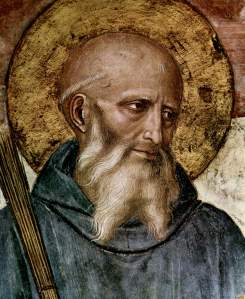
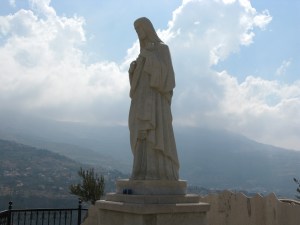
Thanks for visiting this space again this week! We are 18 days out from Good Friday and experiencing the vicissitudes of March weather in the upper midwest. As one who has been coaching track and field for a long, long time, such weather is like the return of an old friend! We venerate two individuals this week on the Lutheran calendar. The English poet John Donne (d. 31 March 1631) and Benedict the Moor (d. 4 April 1589), also known as Benedict the African. His statue pictured here adorns the Church of Our Lady of the Rosary and Saint Benedict, Cuiabá, Mato Grosso, Brazil. Both men have fascinating stories and their connection to church history is worth exploring!

Focus Passages from Isaiah 43 and Philippians 3

Here’s an excellent video with backround on Isaiah 40-66

Luther’s Seal

TRY LUTHER’S METHOD!

Luther’s Revision of the Lectio Divina
(Three Steps)

Oratio (Prayer): This is the starting point, where one humbly prays for the Holy Spirit’s guidance to understand God’s Word. Luther emphasized that prayer prepares the heart and mind to receive divine wisdom.

Meditatio (Meditation): This involves deeply engaging with Scripture, not just reading it but reflecting on it repeatedly. Luther encouraged believers to “chew on” the Word, allowing its meaning to sink in and shape their thoughts and actions.

Tentatio (Struggle): Often translated as “trial” or “temptation,” this refers to the challenges and spiritual battles that arise as one seeks to live according to God’s Word. Luther saw these struggles as a way God refines faith, making it more resilient and authentic.

This week’s first and second readings focus on our Christian identity. Isaiah 43 reminds us of God’s power, recalling the Exodus from Egypt as proof of His might (16-17). It then shifts to a “new thing” God is doing—bringing renewal, like creating a path in the wilderness and rivers in the desert (19). God’s faithfulness is shown as He calls His people to praise Him, demonstrating His ability to bring hope and restoration, even in hard times (20-21). In Philippians 3, Paul reflects on his past achievements (4-6), calling them worthless compared to knowing Christ (7-8). He highlights righteousness through faith in Christ, not by the law, and his desire to share in Christ’s sufferings and resurrection (9-11). Paul concludes by urging us to press on toward the goal of eternal life, striving to fulfill our calling in Christ Jesus (12-14).

Moses and the Children of Israel Crossing the Red Sea
Henri Schopin (1904-1880)

What do these readings say to us in 2025? I’m struck by how each author addresses the nature of history in shaping our identity. Speaking for the Lord, Isaiah hearkens back to a triumphant moment in Jewish history — the crossing of the Red Sea recounted in Exodus 14, a cultural touchstone for the people. We might imagine young Jewish children hearing this story multiple times as they absorb their worldview (did they get tired of hearing it?). Likewise, Paul references his past life — his history as an ardent Jew — as a window into his identity. In stunning reversals, however, both authors suggest that God liberates us from our past — “that was then, this is now!” In other words, our identities transcend what we may have inherited. Whatever has happened, whatever we have experienced, God is about to do a new thing. In the case of the Israelites, their journey to the promised land meant hope in the midst of despair. In Paul’s case, his Jesus moment on the road to Damascus changed everything. Likewise, our Christian identities, both bestowed and revealed by a loving God, remain forever a work in progress. Whatever chaos we may be experiencing, whatever turmoil we may confront, this is good news to share!

Soli deo Gloria!

(I am indebted to Samuel Wells, as noted, regarding the interpretation of the readings. Also, Paul’s writings provided inspiration, especially these passages: 2 Corinthians 5:17, Galatians 6:15, Ephesians 4:24, Colossians 3:10, and Romans 6:4. You may want to look those up!)

Prayer Reflection: Spiritual Maturity

Dear Lord, We humbly seek Your guidance as we strive for spiritual maturity. Help us to deepen our faith, cultivate wisdom, and embrace Your teachings. May we grow in love, patience, and understanding, reflecting Your light in our lives. Strengthen our hearts and minds, that we may walk in Your ways and bear fruit for Your kingdom. Amen.

(Note: The inspiration for this prayer is Colossians 2: 6-7. Retrieved from God’s Blessing prayer site, 30 March 2025)

Musical Offering: Lux Aeterna (Eternal Light)

Lux Aeterna is an enchanting piece of music that has roots deep in Christian history. This version by VOCES8 features great harmony. The Latin lyrics center around themes of eternal light and rest for departed souls — the communions of saints — those who helped shape our identities. Here’s a translation:

May light eternal shine upon them,
O Lord, with Thy saints forever, for Thou art kind.
Eternal rest give to them, O Lord,
and let perpetual light shine upon them.

Update on “Faithful Conversations”

Two years ago, we offered “Journey Into the Bible,” a class which inspired the Lectionary Blog experiment. A digital version of the class is now ready for launch. We hope it can be useful for new members or anyone seeking to get started with Bible study. Special thanks to Pastor Jen Hatleli and the Lectionary Small Group for their support and inspiration throughout!

Click on the image of the ELC Sanctuary to access the class.

And . . . Join us on Sunday 30 March at 10:45 in the church library. We talk through the readings (some or all) in an informal setting — no prior preparation is necessary and all are welcome! Come and help us deepen our understanding of the readings!

30 March 2025: 4 Lent

Introduction to Readers

“The task of the modern educator is not to tear down jungles, but to irrigate the deserts.”
(C.S. Lewis)

Last week I shared information with you about the state of the Christian Church in 2025, a somewhat dire situation based on the increasing secularization of our world. One of the troubling aspects of our present circumstances, in my estimation, is that the population cohort most conspicuously absent from our pews are the young men in our midst — specifically those from the Millennial and Gen Z generations (born 1981-2012). This is a challenge we need to reflect on and pray about. And though the state of the modern church is troubling, the C.S. Lewis quote shared on the front-end this week helps me reframe the challenge. I grew up with C.S. Lewis books scattered around our house due to my father’s interest in him. Mere Christianity, for example, was a favorite, as was The Abolition of Man. The quote I shared here is from a sermon-turned-essay by Lewis delivered in 1939 at Oxford University amidst the outbreak of World War II called Learning in Wartime. Among other things, Lewis talked to the students about keeping a proper perspective and combatting distractions (fear, anxiety, urgency) and staying focused on one’s calling. (Sidebar: After reading this, it is ever more clear to me why Lewis appealed to Unk who enlisted in the Army Air Corps in 1943). Lewis’ words remain remarkably relevant for our time!

Thanks for visiting this space again this week — I so appreciate your continued interest in exploring the Scriptures! Monday is Day 19 of the Lenten Journey, so we have nearly reached the half-way mark. We have three important Commemorations on our church calendar this week. On Monday (24 March) we remember Oscar Romero (1917-1980), Bishop of El Salvador who was murdered on this day in 1980. Tuesday is the Annunciation of our Lord (Isaiah 7:14 and Luke 1: 26-38). Note the prayer included this week regarding that event. And finally, on Saturday (29 March) we remember Hans Nielson Hauge (1771-1824), renewer of the church. Hauge’s story is integral to our Norwegian Lutheran heritage and specifically to the story of the early Lutherans in Jackson County! My reflections this week will focus on the passages from Joshua and 2 Corinthians.

Look for these themes as you work your way through the readings for the 4th Sunday in Lent: RENEWAL and RECONCILIATION. In Joshua 5:9-12, the Israelites celebrate their liberation from Egypt and begin a new chapter by eating the produce of the Promised Land. Psalm 32 emphasizes the joy and restoration that come from confessing sins and receiving God’s forgiveness. Similarly, 2 Corinthians 5:16-21 speaks of being reconciled to God through Christ, while Luke 15:1-3, 11b-32 recounts the parable of the prodigal son, illustrating the transformative power of forgiveness and a return to the Father’s embrace.

Focus Passages from Joshua and 2 Corinthians

Check out this excellent background video on the book of Joshua!

TRY LUTHER’S METHOD!

Luther’s Revision of the Lectio Divina
(Three Steps)

Oratio (Prayer): This is the starting point, where one humbly prays for the Holy Spirit’s guidance to understand God’s Word. Luther emphasized that prayer prepares the heart and mind to receive divine wisdom.

Meditatio (Meditation): This involves deeply engaging with Scripture, not just reading it but reflecting on it repeatedly. Luther encouraged believers to “chew on” the Word, allowing its meaning to sink in and shape their thoughts and actions.

Tentatio (Struggle): Often translated as “trial” or “temptation,” this refers to the challenges and spiritual battles that arise as one seeks to live according to God’s Word. Luther saw these struggles as a way God refines faith, making it more resilient and authentic.

Often, though not always, the Lectionary readings fit together beautifully. Such is the case with this week’s first and second readings. In Joshua 5:9-12, God declares to Joshua that He has removed the “disgrace of Egypt” from the Israelites, symbolizing their liberation from past shame and their renewed identity as God’s people. The Israelites celebrate Passover in the promised land, marking a significant moment of renewal and gratitude. In 2 Corinthians 5:16-21, Paul emphasizes the transformation brought by Christ, urging believers to see people not by worldly standards but through the lens of spiritual renewal. He explains that in Christ, we become new creations, reconciled to God and entrusted with the ministry of reconciliation. Paul concludes by highlighting the profound exchange of righteousness, where Christ bore our sins so that we might become righteous before God. Luther referred to this as the “Happy Exchange,” (noted in 1 Corinthians 1:9), a phrase he borrowed from Bernard of Clairvaux (1090-1153), abbot and co-founder of the Knights Templar (a controversial figure as well!). I have always appreciated the use of that phrase!

What should we discern from these two readings? As always, these words from scripture remain remarkably relevant to our time — and to my recent obsessing about the state of the church. First, the Israelites left the wilderness and stepped into the Promised Land — a new start with new opportunities. Similarly, in Paul’s letter to the Corinthians, he reminds them (and us) that in Christ we are a new creation — our old identity is transformed! Second, when God removed the “disgrace of Egypt” from His people, they were reconciled to their promised identity as a people — freed from their past. Likewise, Paul’s discussion of reconciliation extends beyond our relationship with God and flows into how we relate to others. We are called to be “ambassadors for Christ” in our communities, an awesome identity that we carry. Each of us is called in some manner in this regard and this is good, exciting news. Let us together strive to “irrigate the deserts!”

Soli deo Gloria!

Prayer of the day for Annunciation (ELW, p. 55)

Pour your grace into our hearts, O God, that we who have known the incarnation of your Son, Jesus Christ, announced by an angel, may by his cross and passion be brought to the glory of his resurrection; for he lives and reigns with you, in the unity of the Holy Spirit, one God, now and forever. Amen.

Prayer: A Prayer for Protection (Luther)

Lord God, heavenly Father, you know that we are set in the midst of so many and great dangers, that by reason of the frailty of our nature we cannot always stand upright: Grant us such strength and protection, to support us in all danger, and carry us through all temptations; through your Son, Jesus Christ our Lord. Amen.

From the Archives: 1960s Lutheran Humor!

Charles Schulz, born on November 26, 1922, in Minneapolis, Minnesota, was the creator of the beloved comic strip Peanuts. Known for characters like Charlie Brown and Snoopy, Schulz’s work reflected his personal experiences and philosophical musings. Raised in a Lutheran household, Schulz later became a Methodist and even taught Sunday school for a decade.

Update on “Faithful Conversations”

For several weeks, I have been developing a class titled, “Journey Into the Bible,” a digital version of an in-person study that we did two years ago. The project evolved along the way, and the idea is that it can be utilized by new members or anyone seeking to grow in their Biblical understanding. The hope is to roll this out soon. Thanks to Pastor Jen Hatleli and the Lectionary Small Group that meets on Sundays for inspirational support in this process!

And . . . Join us on Sunday 30 March at 10:45 in the church library. We talk through the readings (some or all) in an informal setting — no prior preparation is necessary and all are welcome! Come and help us deepen our understanding of the readings!

23 March 2025: 3 Lent

Introduction to Readers

Billy Graham Revival 1961

The older I get, the more I realize that life is a constant dialogue between what was and what is. In my more anxious moments, for example, I struggle with the state of the Christian church in our society in 2025. What is our future?As part of the boomer generation (b. 1943-1960) I now realize that my formative years intersected with a high-water mark when it came to church attendance in the post-war era. And while we might argue that many attended during those years because it was the “thing to do,” current trends do cause concern. The decline in church membership and attendance within the mainline Protestant denominations in the last quarter century (often referred to as the “Seven Sisters”) receives a good bit of attention and the data is overwhelming. The ELCA, for example, has lost roughly 2 million members since 2000 (5.1 million to 3 million).**

This week’s second reading has prompted me to reflect on the oft-repeated presence of the wilderness in our faith tradition, both physically and metaphorically. In the Old Testament, for example, the Israelites wandered in the wilderness for 40 years before reaching the promised land (Exodus 15-17) and the prophet Elijah had a dramatic encounter with God in the wilderness near Mount Sinai (1 Kings 19). In the New Testament, John the Baptist emerged from the wilderness of Judea proclaiming repentance (Matthew 3) and Jesus spent 40 excruciating days in the wilderness in a face-off with Satan (Matthew 4). Based on these episodes, the wilderness metaphor suggests a period of spiritual testing, transformation, and growth, an encounter with hardship and renewal. Perhaps Christians are experiencing such a moment in 2025. More on that in my reflections. I also have included two music selections this week (I recommend the use of headphones if you have them, if you enjoy rich harmony!).

St. Patrick by Giovanni Battista Tiepolo (1696-1770)

As always, thanks for your continued interest in exploring the Lectionary! Monday marks DAY 13 of this year’s Lenten Journey (40 days from Ash Wednesday to Easter, not counting Sundays). We have three commemorations on our church calendar this week. Monday, we honor St. Patrick in our tradition (he died on 17 March 461). Patrick, notably, had a dramatic wilderness experience in his life, something he describes in his famous Confession. We also commemorate Joseph, the Guardian of Jesus on 19 March, Thomas Cranmer, the Bishop of Canterbury on 21 March (d. 1556), and Jonathan Edwards, teacher and missionary to the Stockbridge people (d. 1758) on 22 March. And here’s a connection: the Stockbridge-Munsee Band of Mohican Indians in Wisconsin are descended from the people Edwards worked among.

And one further note concerning St. Patrick’s Day: 46 years ago — March 17, 1979 — I asked a wonderful person if she would be my wife. Mary Beth said yes, and the rest is history! And yes, I do have Irish heritage — those Vikings traveled!

** This link will take you to a summary of the most recent Pew Survey on Religion in America if you want to explore further. You may find the information compelling!

The common themes among these readings for the third Sunday in Lent revolve around repentance, divine mercy, and the human longing for God.

Isaiah 55:1-9 emphasizes God’s invitation to seek Him while He may be found, highlighting His boundless mercy and the need for turning away from sin. Psalm 63:1-8 conveys a deep yearning for God’s presence, portraying Him as the ultimate source of satisfaction and strength in times of need. Meanwhile, 1 Corinthians 10:1-13 warns against complacency and urges believers to learn from past mistakes, while Luke 13:1-9 calls for repentance and growth, using the parable of the fig tree to underscore the urgency of bearing fruit in response to God’s patience.

Focus Passage: 1 Corinthians 10: 1-13

TRY LUTHER’S METHOD!

Luther’s Revision of the Lectio Divina
(Three Steps)

Oratio (Prayer): This is the starting point, where one humbly prays for the Holy Spirit’s guidance to understand God’s Word. Luther emphasized that prayer prepares the heart and mind to receive divine wisdom.

Meditatio (Meditation): This involves deeply engaging with Scripture, not just reading it but reflecting on it repeatedly. Luther encouraged believers to “chew on” the Word, allowing its meaning to sink in and shape their thoughts and actions.

Tentatio (Struggle): Often translated as “trial” or “temptation,” this refers to the challenges and spiritual battles that arise as one seeks to live according to God’s Word. Luther saw these struggles as a way God refines faith, making it more resilient and authentic.

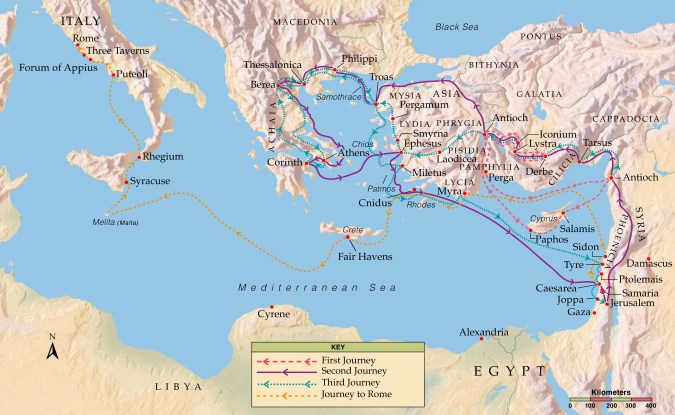
We’re back with the Apostle Paul this week, and here is some backstory. Paul had a significant connection to Corinth as founder of the Christian church there during his second missionary journey in the early 50s CE. For some context, realize that the crucifixion and resurrection of Jesus occurred approximately 20 years before that journey and that Paul’s conversion to Christianity happened roughly 4 years after the resurrection of Jesus. These events were still fresh on his mind. He spent 18 months in Corinth, preaching the Gospel and establishing a community of believers in this bustling, cosmopolitan city. Corinth’s diverse and morally complex environment posed challenges for the new Christians, prompting Paul to write letters like 1 and 2 Corinthians to address issues of unity, morality, and faith. These letters reveal Paul’s deep care for the Corinthian church and his commitment to guiding them in their spiritual growth.

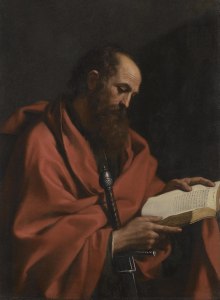
Saint Paul Rembrandt (1606-1669)

In 1 Corinthians 10:1-13, believed to have been written sometime in 53-55 CE, Paul reminds the Corinthians of the lessons from Israel’s history, emphasizing that their ancestors experienced God’s blessings yet fell into sin and faced judgment. He uses examples of idolatry, immorality, and grumbling to warn against overconfidence and disobedience. Paul highlights that these stories serve as warnings for believers, urging them to remain steadfast in their faith and avoid temptation. He reassures them, however, that God is faithful and will not allow them to be tempted beyond what they can endure, always providing a way out.

What should we take away from this exchange? I’m struck by three things. First, I’m intrigued by his use of history. The people of Corinth during Paul’s time were a diverse lot, consisting of Greeks, Romans, and Jews. While there was a Jewish community in Corinth, evidenced by the presence of a synagogue where Paul preached (Acts 18:4), the majority of the population was likely Gentile. Paul’s letters to the Corinthians address a predominantly Gentile audience, as he often discusses issues like idolatry and pagan practices, which were more relevant to non-Jewish converts to Christianity. In spite of that, he frames their experience within the context of Jewish history. He emphasizes the presence of Jesus Christ in that story (verse 4), reinforcing the belief that the Triune God has been present from the very beginning of time. Second, Paul’s message is simultaneously a scolding (v. 7-13) and pep talk (v 13). (Sidebar: The “pep talk” aspect becomes even clearer if you read chapter 9 — verses 24-27 have always been a favorite of mine!) He is calling these nascent believers to shape up! He seems to be especially concerned about their overconfidence in the face of temptation, their complacency perhaps. And finally, Paul reminds the Corinthian Christians of God’s overwhelming faithfulness.

And let me circle back to my sense that Christians are in the wilderness of anxiety in 2025. St. Paul’s words feel remarkably relevant two thousand years later — read them again as if he is talking directly to you. Placing ourselves within the grand story of Christianity — recalling the struggles that so many have endured for centuries — balancing accountability with encouragement and continually reminding ourselves of God’s faithfulness in a broken world — these things are vital for us in this third week of Lent!

Soli deo Gloria!

Prayer: The Prayer of St. Patrick

A Lenten Hymn: “My Song is Love Unknown”

My song is love unknown
My Savior’s love to me
Love to the loveless shown
That they might lovely be
Oh, who am I that for my sake
My Lord should take frail flesh and die?

He came from his blest throne
Salvation to bestow
The world that was his own
Would not its Savior know
But, oh, my friend
My friend indeed
Who at my need his life did spend!

Sometimes we strew his way
And his sweet praises sing
Resounding all the day
Hosannas to our king
Then, “Crucify!” is all our breath
And for his death we thirst and cry

We cry out, we will have
Our dear Lord made away
A murderer to save
The prince of life to slay
Yet cheerful he to suff’ring goes
That he his foes from thence might free

In life no house, no home
My Lord on earth might have
In death no friendly tomb
But what a stranger gave
What may I say? Heav’n was his home
But mine the tomb wherein he lay

Here might I stay and sing
No story so divine!
Never was love, dear King
Never was grief like thine
This is my friend, in whose sweet praise
I all my days could gladly spend!

Faithful Conversations on Sunday

Join us on Sunday 23 March at 10:45 in the church library. We talk through the readings (some or all) in an informal setting — no prior preparation is necessary and all are welcome! Come and help us deepen our understanding of the readings!