10 August 2025: Pentecost 9 (Ordinary 19)

Introduction to Readers

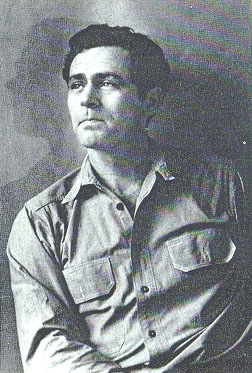
Ralph Waldo Emerson
(1803-1882)

“Things are in the saddle and ride mankind.” (Ralph Waldo Emerson)

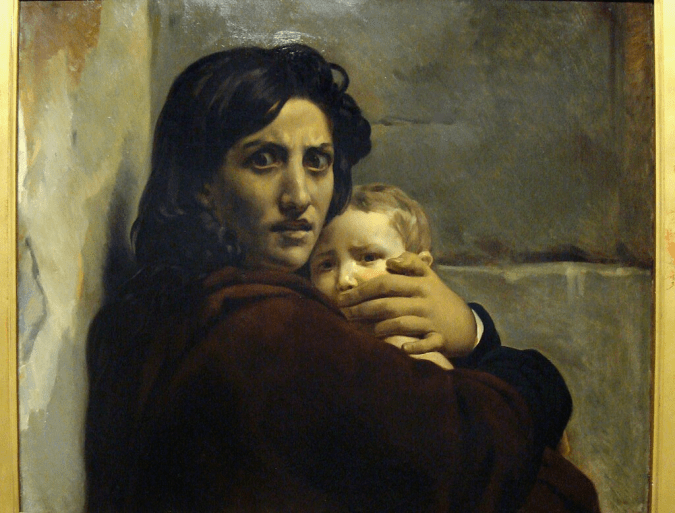
Emerson’s line from his 1846 Ode to William H. Channing, voicing his unease with the coming war with Mexico, has been on my mind over the past few days. It was eighty years ago this week, that the United States dropped atomic bombs on Hiroshima (August 6) and Nagasaki (August 9), bringing World War II to a close. The bombs, ironically born of a desperate race among scientists fleeing Nazi tyranny, marked a split screen in human history: the unleashing of the most devastating weapon ever conceived, and the liberation of millions from the grip of totalitarianism. As Christians living in a dangerous world, we are called to wrestle with such paradoxes. We live between the towers of Babel and the cross of Christ—between the pride of human power and the humility of divine love. The events of August 1945 remind us that history is not merely a sequence of dates and decisions, but a moral terrain where faith must find its footing. In a world where “things” of our own making often seem to ride us, how do we remain grounded in the gospel? How do we discern the difference between necessary action and moral compromise? These questions challenge me every day.

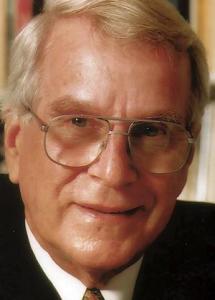
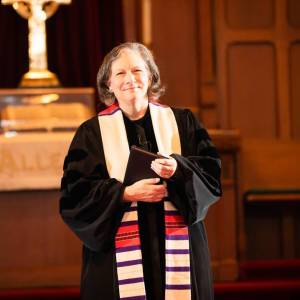
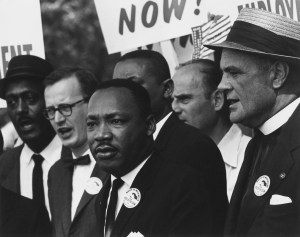
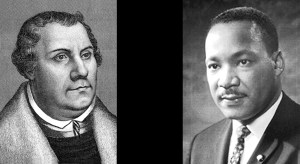
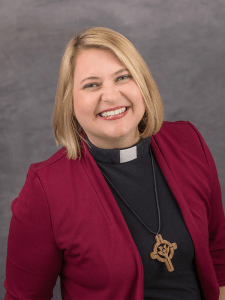
As the world turns, important things happened this week impacting our denomination. Among many actions taken by the Churchwide Assembly, Reverand Yehiel Curry (b. 1972) was elected as the fifth presiding bishop of the Evangelical Lutheran Church in America (ELCA)—the first Black leader to serve in this role. He received 562 of the 799 votes cast on the fifth ballot, marking a significant moment in the church’s history.** Like Martin Luther, Curry’s spiritual journey began in the Roman Catholic tradition. Raised on the South Side of Chicago, he attended Lewis University, a Catholic institution, and earned his B.A. in 1995. His path shifted in the 1990s when he accepted an invitation to worship at St. Stephen’s Lutheran Church. That experience opened the door to Lutheran theology and community life, eventually leading him to join the ELCA. Before entering ministry, Curry worked as a public-school teacher and social worker—roles that shaped his deep commitment to urban communities. He was ordained in 2010, served as pastor of Shekinah Chapel, and later became bishop of the Metropolitan Chicago Synod. Curry brings a strong voice for multicultural engagement and urban ministry to his new role. Here’s a good article from Living Lutheran, if you want more background. Bishop Curry is the fifth since the ELCA was established in 1987 and his term will begin in October. Others who held the position: Herbert Chilstrom (1987-1995), H. George Anderson (1995-2001), Mark S. Hanson (2001-2013), and Elizabeth A. Eaton (2013-2025).

**Note: The presiding bishop is chosen through a prayerful process called the ecclesiastical ballot. Any eligible minister can be nominated anonymously by voting members on the first ballot, which serves as both nomination and potential election. If no one receives the required majority, the top candidates move forward through successive ballots until one is elected. This method emphasizes discernment, transparency, and communal decision-making.

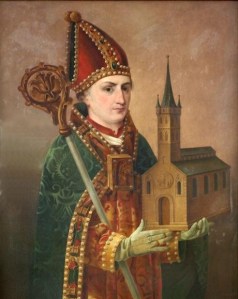
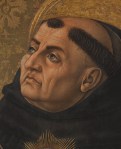
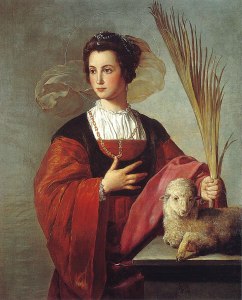
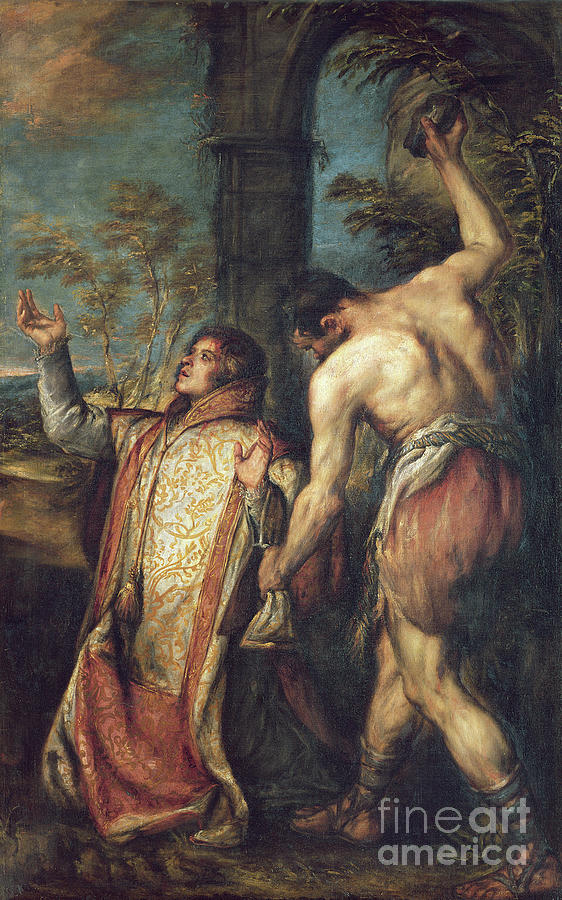
Saint Dominic (1170-1221)

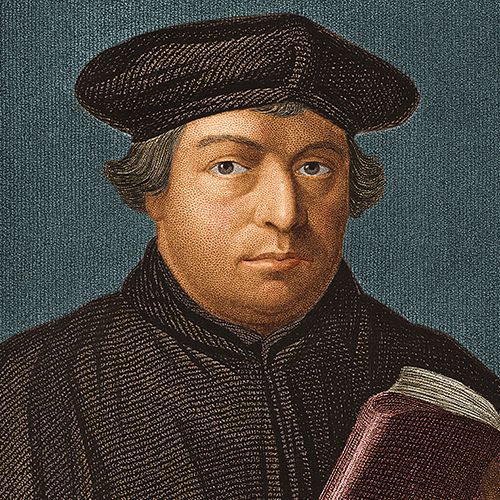
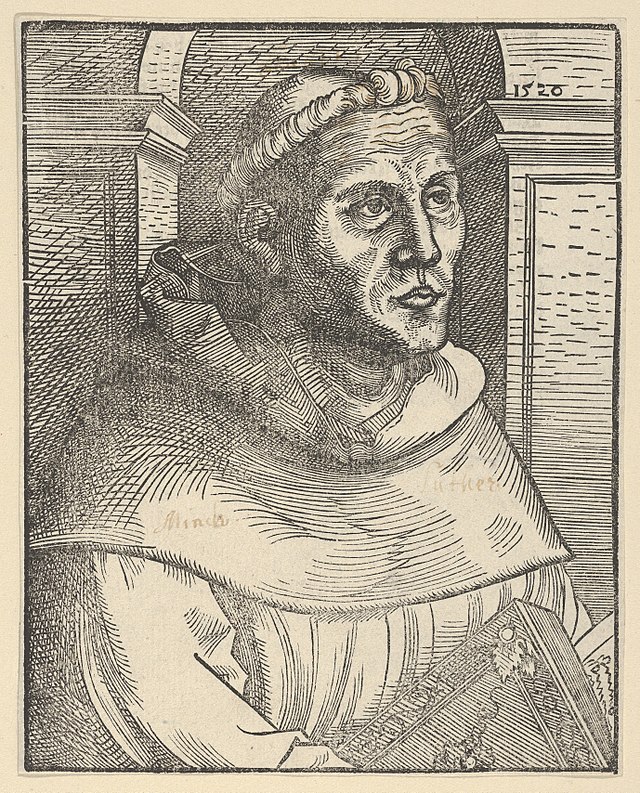
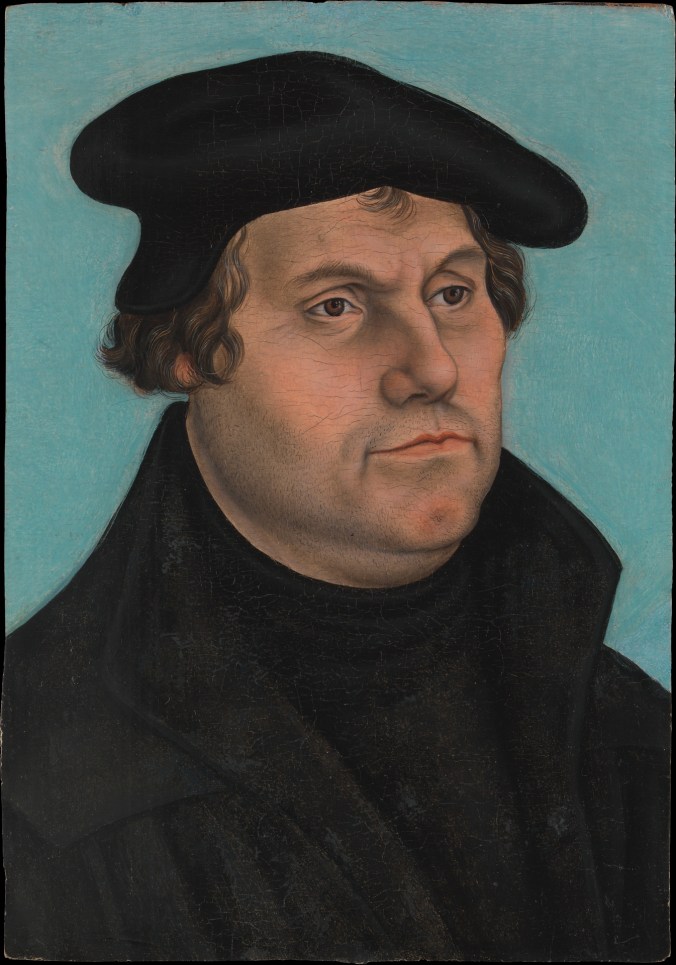
We have reached the 9th of 23 Sundays in Ordinary Time. The second lessons for the remaining August Sundays feature passages from the last three chapters of Hebrews, and my plan is to feature those in the next four blog postings. We should note at the outset that in his German Bible, Luther grouped Hebrews with James, Jude, and Revelation at the end of the New Testament, signaling his reservations about the book. He considered these books “disputed” and less central to the gospel message than others like Romans or Galatians (if you want more information regarding his position, here is a good link). Anyway, let’s take on these readings and learn more about this book!

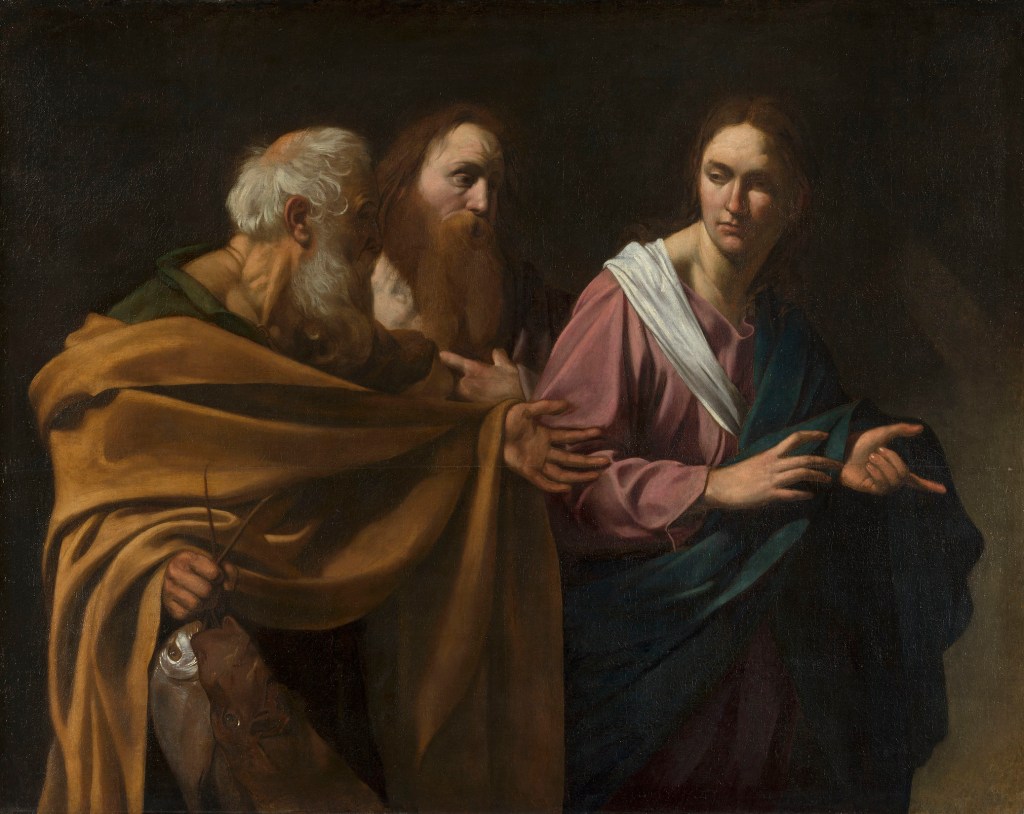
Thanks for returning to this space this week! I deeply appreciate your continued interest in the Lectionary! Saint Dominic de Guzmán, founder of The Order of Preachers (Dominican), who died on 8 August in 1221, is commemorated within the ELCA this week. I have included a painting of him by the Flemish artist Gaspar de Crayer (c. 1655).

** Note 1: Links to outside references are bolded and italicized and are meant for further reading or research on your part. While the text I am including in the blog is my own, I am pulling from a multitude of sites for ideas and connections.

** Note 2: In my increasing use of A.I. (Copilot), I will cite sourcing of how I am using the tool, if necessary. I don’t want that to be overly cumbersome, but I am gradually incorporating more tools. I am exploring the A.I. world this summer prior to my next teaching semester. As you can imagine, it is a great challenge right now and will forever change the face of education!


** Note 3: The images I include in the blog are drawn from Wikimedia Commons to the fullest extent possible.

Common Themes Among the Readings

Pentecost 9 Readings

Genesis 15: 1-6
Psalm 33: 12-22
Hebrews 11: 1-3, 8-16
Luke 12: 32-40

My source for the Bible readings each week is the Bible Gateway website. I generally use the NRSVUE translation.

On the 9th Sunday after Pentecost (Year C), the lectionary readings share a common thread of faithful trust in God’s promises and the call to live with hopeful readiness. In Genesis 15, Abram believes God’s promise despite having no visible evidence, and his faith is counted as righteousness. Psalm 33 celebrates God’s steadfast love and watchful care over those who trust in Him, reminding us that human strength cannot save. Hebrews 11 highlights the faith of Abraham and others who embraced God’s promises from afar, longing for a better country prepared by God. Luke 12 calls disciples to live without fear, to give generously, and to remain vigilant—ready for the coming of the Son of Man.

“Describe the common themes among the readings for Pentecost 9.” Copilot, 1 August 2025, Copilot website.

Genesis 15: 1-6

15 After these things the word of the Lord came to Abram in a vision, “Do not be afraid, Abram, I am your shield; your reward shall be very great.” But Abram said, “O Lord God, what will you give me, for I continue childless, and the heir of my house is Eliezer of Damascus?” And Abram said, “You have given me no offspring, so a slave born in my house is to be my heir.” But the word of the Lord came to him, “This man shall not be your heir; no one but your very own issue shall be your heir.” He brought him outside and said, “Look toward heaven and count the stars, if you are able to count them.” Then he said to him, “So shall your descendants be.” And he believed the Lord, and the Lord reckoned it to him as righteousness.

Check out this background video on the book of Hebrews!

Source: The Bible Project

LUTHER’S METHOD OF BIBLE READING
GIVE IT A TRY!

A Revision of the Lectio Divina, a method he learned in his Augustinian training

Three Steps

Oratio (Prayer): This is the starting point, where one humbly prays for the Holy Spirit’s guidance to understand God’s Word. Luther emphasized that prayer prepares the heart and mind to receive divine wisdom.

Meditatio (Meditation): This involves deeply engaging with Scripture, not just reading it but reflecting on it repeatedly. Luther encouraged believers to “chew on” the Word, allowing its meaning to sink in and shape their thoughts and actions.

Tentatio (Struggle): Often translated as “trial” or “temptation,” this refers to the challenges and spiritual battles that arise as one seeks to live according to God’s Word. Luther saw these struggles as a way God refines faith, making it more resilient and authentic.

Hebrews 11: 1-3, 8-16
11 Now faith is the assurance of things hoped for, the conviction of things not seen. Indeed, by faith our ancestors received approval. By faith we understand that the worlds were prepared by the word of God, so that what is seen was made from things that are not visible.
By faith Abraham obeyed when he was called to set out for a place that he was to receive as an inheritance, and he set out, not knowing where he was going. By faith he stayed for a time in the land he had been promised, as in a foreign land, living in tents, as did Isaac and Jacob, who were heirs with him of the same promise. 10 For he looked forward to the city that has foundations, whose architect and builder is God. 11 By faith, with Sarah’s involvement, he received power of procreation, even though he was too old, because he considered him faithful who had promised. 12 Therefore from one person, and this one as good as dead, descendants were born, “as many as the stars of heaven and as the innumerable grains of sand by the seashore.” 13 All of these died in faith without having received the promises, but from a distance they saw and greeted them. They confessed that they were strangers and foreigners on the earth, 14 for people who speak in this way make it clear that they are seeking a homeland. 15 If they had been thinking of the land that they had left behind, they would have had opportunity to return. 16 But as it is, they desire a better homeland, that is, a heavenly one. Therefore God is not ashamed to be called their God; indeed, he has prepared a city for them.

Reflection: “Strangers on the Way”

Apollos and Paul (A.I. Generated)

In his excellent introduction to Hebrews in the Lutheran Study Bible (second edition), Erik M. Heen, professor of New Testament at The Lutheran Theological Seminary at Philadelphia, points out that the book is a “sophisticated document written in elegant Greek around 70 CE” and was penned as an “extended sermon” for a “community of second-generation Greek-speaking Christians” that had experienced a variety of trials causing many to “drift away” from their faith in the Gospel. Heen asserts the following overarching statement about the message of Hebrews: “Lutherans believe that the word of God, in Hebrew Scriptures and in the New Testament, meets us as both law (judgement) and gospel (promise). Hebrews follows that pattern, often moving back and forth between severe warning and strong encouragement . . .” He also reminds us that tradition claimed that Paul wrote the letter, but that Luther thought the author was Apollos (see Acts 18:24), a companion of Paul and intriguing figure in his own right. The author clearly had a profound understanding of Jewish scriptures and Christian theology. As a sidenote, the book is beautifully written and provides an eloquent summary of the Jewish story and where Christ comes into that story.

Here is a summary of this week’s passage and its connection to the Old Testament reading. Faith begins not with certainty, but with trust—trust in a promise we cannot yet see. Abraham’s journey, as told in Hebrews 11, was marked by obedience to a call that offered no map, only the assurance of God’s presence. He lived as a stranger, yet hoped for a city built by God, a home beyond what this world could offer. In Genesis 15, Abram questioned his future, but when he believed God’s word, it was counted to him as righteousness (sidebar: Luther viewed Genesis 15:6 as a foundational text for the doctrine of justification by faith, not works. Also, note that the Hebrews passage includes Sarah’s involvement in all this!). What lessons should we draw from these texts?

Two things stand out to me. First, faith, as described in Hebrews 11, calls us to live with forward-looking trust rather than backward-facing certainty — note that poetic and familiar phrasing, “Now faith is the assurance of things hoped for, the conviction of things not seen” (11:1). Abraham models this posture by stepping into the unknown, not because he had a map, but because he trusted the One who called him; his journey reminds us that faith begins when we move, not when we understand. Second, the passage also urges us to embrace our identity as strangers and foreigners on the earth, people who seek a better homeland shaped not by comfort or permanence but by God’s promise. Rather than returning to what was familiar, the faithful pressed on toward a city whose architect and builder is God, showing us that true faith resists settling and instead leans into sacred anticipation. In a world that tempts us to anchor ourselves in possessions, status, or certainty, Hebrews reminds us that faith is not a possession but a pilgrimage—a daily turning toward the promise, a restlessness that refuses to settle for anything less than God’s future. It’s up to us — guided by the Spirit — to share this good news with others!

Soli Deo Gloria!

Prayer Reflection: The Jesus Prayer (Henri Nouwen)

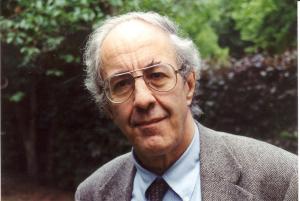
Dutch Theologian
Henri Nouwen
(1932-1996)

One simple way to practice solitude is to take a simple prayer like, “Lord Jesus Christ, have mercy on me.” Sit down, light a candle, look at an icon, be in front of the blessed sacrament or the Bible, depending on your tradition. Simply be there and repeat the prayer for five minutes. Let each word sink from your mind into your heart and then carry all of them through the day.

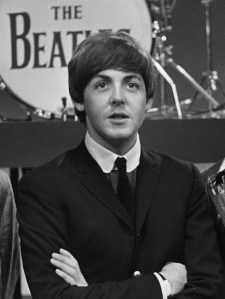
A Musical Offering: “People Get Ready” (Curtis Mayfield)

People Get Ready, written by Curtis Mayfield in 1965, is a soul song rooted in gospel tradition and the hope of the Civil Rights Movement. Its image of a train bound for glory calls people to faith and trust, much like the message in Hebrews 11, where believers are praised for following God’s call without knowing where it would lead. Mayfield, shaped by his church upbringing, wrote the song during a time of racial struggle, and it became a source of comfort and strength for many, including Martin Luther King Jr. The song has been covered by many artists. The version I’m sharing by Kenny Rankin captures its spirit beautifully—I hope it resonates with you.

Lyrics: People Get Ready (Mayfield version)

People get ready
There’s a train a-coming
You don’t need no baggage
You just get on board

All you need is faith
To hear the diesels humming
Don’t need no ticket
You just thank the Lord

So people get ready
For the train to Jordan
Picking up passengers
From coast to coast

Faith is the key
Open the doors and board them
There’s hope for all
Among those loved the most

There ain’t no room
For the hopeless sinner
Who would hurt all mankind
Just to save his own, believe me now

Have pity on those
Whose chances grow thinner
For there’s no hiding place
Against the kingdom’s throne

So people get ready
There’s a train a-coming
You don’t need no baggage
You just get on board

All you need is faith
To hear the diesels humming
Don’t need no ticket
You just thank the Lord

Kenny Rankin (1940-2009) was a genre-blending singer-songwriter whose crystalline voice and jazz-inflected guitar work earned him acclaim across folk, pop, and jazz circles. Born in New York City in 1940, he gained early recognition with his song “Peaceful” and frequent appearances on The Tonight Show, where Johnny Carson championed his talent. His interpretations of standards and Beatles songs, especially “Blackbird,” showcased his emotional depth and technical finesse. Rankin passed away in 2009, leaving behind a legacy of soulful artistry and musical elegance.

“Provide background on Kenny Rankin.” Copilot, 2 August 2025, Copilot website.

Faithful Conversations: Looking Ahead

Our regular gatherings for discussing the weekly lectionary are on a pause. Summer worship at ELC is at 8:30 in town and 10:15 at Hatfield by the lake. The 8:30 service will be streamed. Please stay in touch! Note: We will resume our “after-worship” dialogues on 14 September.

13 July 2025: Pentecost 5 (15 Ordinary)

Introduction to Readers

“A refugee is someone who survived and who can create the future.” (Amela Koluder)

“Boat People”
(c. late 1970s)

The parable of the Good Samaritan prompts a memory nearly fifty years past: cool summer mornings in the mid ’70s, walking with my father, escorting a young Vietnamese refugee to catch the bus to the beet fields outside Fargo where he had recently started working. I was a student at Concordia College in Moorhead, MN, and a member of Faith Lutheran Church in West Fargo where my father served. Our parish was sponsoring families fleeing the wars in Vietnam and Cambodia. This was my first encounter with third world people — people who survived war and displacement — something I could only imagine. They were among nearly 300,000 Southeast Asian refugees who arrived in the U.S. between 1975 and 1979. (In Wisconsin alone, thousands of Hmong refugees began new lives during those same years). Arriving at their hot apartment with the smells of seasoned rice filling the air, I helped teach the young children basic English and attempted to communicate with these beautiful people whose world was so entirely different from mine—simple moments that opened my eyes to the human toll of conflict. The Vietnam War, which had loomed large throughout my formative years, suddenly had names, faces, and stories. All these years later, I regret that I did not do more to foster a good experience for these frightened boatpeople living so far from their homeland! My halting, clumsy efforts fell woefully short. In 2025, more than 42 million people worldwide live as refugees—part of a staggering 123 million who are displaced by war, persecution, or disaster. The crisis has reshaped global politics and tests our capacity for collective compassion. As a Christian with Lutheran heritage, I am proud of the fact that refugee resettlement has been a significant part of the Lutheran witness going back to the World War II era. Most notably that work continues today through Global Refuge, an excellent organization.

Saint Benedict (480-547)

Thanks for visiting this space again this week and for your continued interest in exploring the Lectionary! We have reached the 15th Sunday in Ordinary Time (and the All-Star Game is just around the corner for those of you that following the Major Leagues!). A notable ELCA calendar commemoration this week is for Benedict of Nursia, better known as Saint Benedict, who died on 11 July 547. My reflections this week will focus on the familiar parable of the Good Samaritan, with a reference to the reading from Deuteronomy. I will also include a fitting prayer for this week’s Gospel and St. Benedict, and a rousing musical selection I hope will bring you joy! I will also have the opportunity to preach on these readings this week at ELC and Hatfield!

** Note 1: Links to outside references are bolded and italicized and are meant for further reading or research on your part. While the text I am including in the blog is my own, I am pulling from a multitude of sites for ideas and connections.

** Note 2: In my increasing use of A.I. (Copilot), I will cite sourcing of how I am using the tool, if necessary. I don’t want that to be overly cumbersome, but I am gradually incorporating more tools. And, by the way, I am exploring the A.I. world this summer prior to my next teaching semester. As you can imagine, it is a great challenge right now and will forever change the face of education!

Deuteronomy 30: 9-14

and the Lord your God will make you abundantly prosperous in all your undertakings, in the fruit of your body, in the fruit of your livestock, and in the fruit of your soil. For the Lord will again take delight in prospering you, just as he delighted in prospering your ancestors, 10 when you obey the Lord your God by observing his commandments and decrees that are written in this book of the law, because you turn to the Lord your God with all your heart and with all your soul. 11 “Surely, this commandment that I am commanding you today is not too hard for you, nor is it too far away. 12 It is not in heaven, that you should say, ‘Who will go up to heaven for us and get it for us so that we may hear it and observe it?’ 13 Neither is it beyond the sea, that you should say, ‘Who will cross to the other side of the sea for us and get it for us so that we may hear it and observe it?’ 14 No, the word is very near to you; it is in your mouth and in your heart for you to observe.

If you would like background to the book of Deuteronomy, here is a good summary:

Source: The Bible Project

TRY LUTHER’S METHOD OF BIBLE READING

A Revision of the Lectio Divina, a method he learned in his Augustinian training (Three Steps)

Oratio (Prayer): This is the starting point, where one humbly prays for the Holy Spirit’s guidance to understand God’s Word. Luther emphasized that prayer prepares the heart and mind to receive divine wisdom.

Meditatio (Meditation): This involves deeply engaging with Scripture, not just reading it but reflecting on it repeatedly. Luther encouraged believers to “chew on” the Word, allowing its meaning to sink in and shape their thoughts and actions.

Tentatio (Struggle): Often translated as “trial” or “temptation,” this refers to the challenges and spiritual battles that arise as one seeks to live according to God’s Word. Luther saw these struggles as a way God refines faith, making it more resilient and authentic.

Luke 10: 25-37

25 An expert in the law stood up to test Jesus. “Teacher,” he said, “what must I do to inherit eternal life?” 26 He said to him, “What is written in the law? What do you read there?” 27 He answered, “You shall love the Lord your God with all your heart and with all your soul and with all your strength and with all your mind and your neighbor as yourself.” 28 And he said to him, “You have given the right answer; do this, and you will live.” 29 But wanting to vindicate himself, he asked Jesus, “And who is my neighbor?” 30 Jesus replied, “A man was going down from Jerusalem to Jericho and fell into the hands of robbers, who stripped him, beat him, and took off, leaving him half dead. 31 Now by chance a priest was going down that road, and when he saw him he passed by on the other side. 32 So likewise a Levite, when he came to the place and saw him, passed by on the other side. 33 But a Samaritan while traveling came upon him, and when he saw him he was moved with compassion. 34 He went to him and bandaged his wounds, treating them with oil and wine. Then he put him on his own animal, brought him to an inn, and took care of him. 35 The next day he took out two denarii, gave them to the innkeeper, and said, ‘Take care of him, and when I come back I will repay you whatever more you spend.’ 36 Which of these three, do you think, was a neighbor to the man who fell into the hands of the robbers?” 37 He said, “The one who showed him mercy.” Jesus said to him, “Go and do likewise.”

My source for the Bible readings each week is the Bible Gateway website.

Reflections: Who Passed, Who Stopped and Why It Matters!

The Good Samaritan (1744)
Joseph Highmore (1682-1780)

We see Jesus at his sharpest here—not just as a storyteller, but as a master teacher. With this parable, he afflicts the comfortable — he unsettles them. Here’s the setup: A legal expert stands up to test Jesus. What must I do to inherit eternal life? he asks. True to form, Jesus doesn’t answer directly. Instead, he turns the question back: What’s written in the Law? The man responds with the heart of Torah—love God and love your neighbor. But he wants to justify himself, so he presses further: And who is my neighbor? Jesus answers with a story that stuns the crowd. A man lies beaten and half-dead on the road. A priest sees him and walks by. A Levite does the same. But then comes a Samaritan—someone Jews considered a heretic, an outsider, an enemy. He stops. He binds the man’s wounds, anoints them with oil and wine, lifts him onto his animal, and pays for his care.

Jesus doesn’t just tell a story here—he shatters a cultural boundary. Making a Samaritan the hero would have shocked his listeners. The hostility between Jews and Samaritans ran deep. After the Assyrian conquest of Israel in 721 BCE, many Israelites were exiled. Those who remained intermarried with foreign settlers, and their descendants became the Samaritans. They worshiped on Mount Gerizim and accepted only the Pentateuch as Scripture. Jews saw them as impure and unfaithful. By Jesus’ time, the two groups avoided each other entirely. So when Jesus casts a Samaritan as the model of mercy, he doesn’t just challenge prejudice—he dismantles it. He redefines neighborly love as boundary-breaking compassion. And this isn’t an isolated moment. Samaritans appear often in Jesus’ ministry: the woman at the well in John 4, the grateful leper in Luke 17, and the Great Commission in Acts 1, where Jesus sends his followers to Samaria as part of their mission.

As I read this parable again, three reflections rise to the surface. First, as a historian, I’m struck by a powerful Old Testament parallel in 2 Chronicles 28, something I was not aware of previously. After a brutal battle, Israelite soldiers take thousands of Judean captives. But the prophet Oded confronts them: “Your cruelty offends God.” In response, leaders from Ephraim rise—not to dominate, but to heal. They clothe the naked, feed the hungry, anoint the wounded, and carry the weak on donkeys back to Jericho—the very road where Jesus sets his parable. This ancient act of mercy across tribal lines mirrors the Samaritan’s compassion. It reminds us that even in the Old Testament, God calls his people to see the enemy not as a threat, but as a neighbor in need. Is Jesus reflecting this story realizing that those listening may draw this parallel?

Second, for the past few weeks, I’ve been reflecting on how the Gospel and the Old Testament readings speak to each other in the Lectionary. Deuteronomy 30 insists that God’s command isn’t distant or mysterious. Moses says, the word is very near to you; it is in your mouth and in your heart for you to observe (verse 14). Jesus echoes this truth. The Samaritan doesn’t wait for a sign from heaven. He sees suffering and acts. Love of neighbor isn’t abstract—it’s immediate, embodied, and within reach. Just as Moses urges Israel to choose life, Jesus calls us to choose mercy. It’s not complicated. It’s costly, but it’s clear.

Walter Brueggeman
(1933-2025)

Finally, I’m drawn to how Jesus uses counter-narratives. He does this again and again. He flips expectations, tells stories that disrupt the dominant script — what theologian Walter Brueggemann called the “prophetic imagination”—the bold articulation of an alternative reality. From Brueggeman: People in fact change by the offer of new models, images, and pictures of how the pieces of life fit together. Transformation is the slow, steady process of inviting each other into a counter story about God, world, neighbor, and self.

Yes, Jesus invites us to see the world not as it is, but as it could be. He calls us to imagine a kingdom where mercy triumphs over division, and where love crosses every line we draw. May we act on this message going forward in 2025!

Soli Deo Gloria!

Note: I am indebted to Mennonite Pastor Gina Burkhart and her interpretation of this text as explored in the July issue of The Christian Century.

The Good Samaritan Prayer comes from the Sisters of the Good Samaritan of the Order of St. Benedict, located in southeastern Australia. I appreciate the simplicity and clarity, along with the connection to the 10th Chapter of Luke.

God of love,
May we always see the world through
the eyes of the Good Samaritan and be filled
with your deep compassion.
Help us to be merciful neighbours
even when it is inconvenient, when we don’t have
time, or when we have other responsibilities to attend to.

Grant us the insight to see the need in those around us,
the wisdom to know how to respond,
and the strength to do so willingly.
We pray for those we might cross the road to avoid –
the poor, the vulnerable and the marginalised.
Those, who in many and various ways, have been stripped,
beaten and left for dead.

We pray for all who call from us more than we feel we have to give.
Open our eyes, that we might not cross the road from human need.
May our love of you and love of our neighbour call us to be people of peace and justice in the world.
And may we, like the Good Samaritan, always ‘go and do likewise’.
Amen.

This statement of acknowledgement for the Indigenous people of Australia is from the website of the Sisters of the Good Samaritan. Read more about their work with the native people of Australia here.

We acknowledge the traditional custodians who have walked upon and cared for this land for tens of thousands of years. We acknowledge their deep spiritual relationship to country and commit ourselves to the ongoing journey of Reconciliation. We pay our respects to their Elders, past, present and emerging. We respectfully acknowledge the first peoples of all the lands and waters upon which we live, work and travel throughout Australia, Japan, the Philippines and Kiribati. As you take your next step, remember the first peoples who walked these lands.

Sacred Heart Chapel
Sisters of the Order of St. Benedict

Note: In the process of working on the blog, I learned of the tragic flooding that hit central Texas. Two of our grandchildren were attending Camp Chrysalis at the time of the extreme weather, an ELCA sponsored Bible camp just 14 miles from Camp Mystic that was hit so hard! Fortunately, they were safe, but our heart grieves for the many lost lives in that region — let us pray for them this week and beyond. Lives have been forever changed.

I’ll Be On My Way

When I am gone
Don’t you cry for me
Don’t you pity my sorry soul
What pain there might have been
Will now be passed
And my spirit will be home.

I’ll be on my way, I’ll be on my way
I’ll have left my feet of clay upon the ground
I will be glory bound
I’ll be on my way

When I am gone
Don’t you cry for me
Don’t my pity my sorry soul
What pain there might have been
Will now be past and my spirit will be home

I’ll be on my way, I’ll be on my way
I’ll have left my feet of clay upon the ground
I will be glory bound
I’ll be on my way

When I am gone
Please forgive the wrong that I might have done to you
There’ll be no room for regrets up there high above
Way beyond the blue

I’ll be on my way, I’ll be on way
I’ll have laid my frown and all my burdens down
I’ll be putting on my crown
I’ll be in my way

When I am gone, don’t you look for me in the places I have been
I’ll be alive but somewhere else I’ll be on my way again

I’ll be on my way, I’ll be on my way
I’ll lift my wings and soar into the air
There’ll be glory everywhere
I’ll be on way
I’ll be on my way, I’ll be on my way
I’ll have laid my from and all my burdens down
I’ll be putting on my crown
I’ll be on my way
I’ll have left my feet of clay upon the ground
I will be glory bound
I’ll be on my way

“I’ll Be On My Way”
Shawn Kirchner composed “I’ll Be On My Way” after witnessing a tragic bus accident near his church, where a quiet moment of reflection sparked the song’s central phrase. Drawing on folk and gospel traditions, the song has since resonated deeply with audiences, often closing concerts with its message of healing and homecoming.

“Provide background for Kirshner’s song, ‘I’ll Be On My Way.'” Copilot, 5 July 2025. Copilot Website.

From the National Lutheran Choir’s Website:

“Founded in 1986 by the late Larry Fleming, grown under the direction of David Cherwien from 2002-2023, and now led by Jennaya Robison, the National Lutheran Choir sings a spiritual story through diverse repertoire including selections from early chant and simple folk anthems to complex choral masterworks and new compositions. Currently in its 39th year, the National Lutheran Choir features a roster of more than 65 volunteer singers from various backgrounds and faith traditions.”

Update on “Faithful Conversations”

Our regular gatherings for discussing the weekly lectionary are on a pause. Summer worship at ELC is at 8:30 in town and 10:15 at Hatfield by the lake. The 8:30 service will be streamed. Please stay in touch!

And . . . Looking Ahead: The “Bible 365 Challenge!”

Consistent interaction with God’s Word is a transforming experience. In one of his Table Talks, Martin Luther made the following statement about the spiritual discipline of reading the scriptures: “For some years now I have read through the Bible twice every year. If you picture the Bible to be a mighty tree and every word a little branch, I have shaken every one of these branches because I wanted to know what it was and what it meant.” In September we will be launching “Bible 365” at ELC. The goal will be to invite any who are interested to take on the challenge of reading through the entirety of the Bible in one year. We are currently in the planning process and will offer more details as we progress. We will be following the “Challenge” plan offered in the Lutheran Study Bible (Second Edition, 2025). We hope to form teams that will go through the process together and meet from time to time for discussion. Feel free to contact me with questions and/or ideas regarding this endeavor!

22 June 2025: Pentecost 2

Introduction to Readers

“The church meets to imagine what our lives can be like if the gospel were true.” ~ Walter Brueggemann

Walter Brueggeman
(1933-2025)

God calls us to imagine a better future. In June 2025, that call feels especially urgent. Let me explain. The death of Walter Brueggemann two weeks ago stirred me to return to his writings, especially those that speak of imagination as a tool of faith. Brueggemann challenged the Church to resist the forces that numb and divide us, and to dream boldly in the Spirit of the prophets. And just as I began writing this week’s blog posting, I learned of the heartbreak in Brooklyn Park, Minnesota (Saturday 14 June). With family members who live there, the sorrow feels close to home. I hold this grief in tandem with Brueggemann’s vision, asking what it means to live as if the gospel is true. May we dare to imagine more—and may God carry those who have suffered an unspeakable tragedy. I will revisit imagination-inspired faith in my reflections on this week’s passage from Galatians.

The Liturgical Calendar

Thanks for taking some time in the space again this week! We are in Ordinary Time, the longest season in the Church calendar, but don’t let the name fool you—it’s anything but boring. The word “ordinary” comes from ordinal, meaning “counted,” because the Sundays are numbered (like the 12th Sunday in Ordinary Time). It comes in two parts: the first begins after Epiphany and ends before Lent, and the second starts after Pentecost and runs until Advent. Unlike the dramatic seasons of Christmas or Easter, Ordinary Time focuses on the day-to-day life and teachings of Jesus, inviting us to grow in faith, discipleship, and spiritual maturity. Think of it as the Church’s “green season”—a time for steady growth, reflection, and living out the gospel in ordinary moments. Along with this week’s reflections, I’m offering a prayer reflection and musical selection that will hopefully prompt peace in the midst of the turmoil of our times.

** Note 1: Links to outside references are bolded and italicized and are meant for further reading or research on your part. While the text I am including in the blog is my own, I am pulling from a multitude of sites for ideas and connections.

** Note 2: In my increasing use of A.I. (Copilot), I will cite sourcing of how I am using the tool, if necessary. I don’t want that to be overly cumbersome, but I am gradually incorporating more tools. And, by the way, I am exploring the A.I. world this summer prior to my next teaching semester. As you can imagine, it is a great challenge right now and will forever change the face of education!

Note on Sourcing: I utilize Bible Gateway for the scripture passages cited each week.

TRY LUTHER’S METHOD OF BIBLE READING

A Revision of the Lectio Divina, a method he learned in his Augustinian training (Three Steps)

Oratio (Prayer): This is the starting point, where one humbly prays for the Holy Spirit’s guidance to understand God’s Word. Luther emphasized that prayer prepares the heart and mind to receive divine wisdom.

Meditatio (Meditation): This involves deeply engaging with Scripture, not just reading it but reflecting on it repeatedly. Luther encouraged believers to “chew on” the Word, allowing its meaning to sink in and shape their thoughts and actions.

Tentatio (Struggle): Often translated as “trial” or “temptation,” this refers to the challenges and spiritual battles that arise as one seeks to live according to God’s Word. Luther saw these struggles as a way God refines faith, making it more resilient and authentic.

Luther’s Seal

Like so much of scripture, context is key to understanding what we are reading. Paul likely wrote Galatians between 47 and 50 CE, during or just after his first missionary journey. It was a moment of intense debate over the inclusion of Gentiles in the Christian movement. Christianity, recall, began as a Jewish messianic movement, but as it spread beyond Israel, conflicts arose over whether non-Jewish believers needed to follow Jewish customs (like circumcision and dietary laws). This controversy came to a head in Acts 15, where church leaders debated whether Gentiles should be required to observe the Torah’s laws (found in the first five books of the Old Testament). Some Jewish Christians insisted that Gentiles must follow these practices to be fully part of God’s covenant family, while Paul argued that faith in Christ alone was sufficient. His letter to the Galatians was written in response to Judaizers—Jewish Christians who were pressuring Gentile believers to adopt Jewish customs. You can feel his frustration throughout the book!

Saint Paul by Guercino (1591–1666)

Galatians 3:23–29 brings us to the heart of the Christian story: faith has arrived, and the law no longer defines us. Once, the law guided and instructed, but now baptism clothes us in Christ, transforming our identities! Paul declares, “There is no longer Jew or Greek, slave or free, male and female.” The divisions that once separated people no longer hold power—a radical claim in his time and just as revolutionary today. If we take this seriously, we must see every person as equally beloved, fully included, and truly part of the body of Christ.

And that brings me back to Walter Brueggemann and his challenge. He urges the Church to ignite imaginations through the Holy Spirit, inspiring people not just to read the gospel but to embody it in their lives — to offer hope in a troubled world. As a counter-cultural people, we must reveal what life looks like when love—not hierarchy—leads the way. Now, more than ever, is the time to live this truth.

Soli Deo Gloria!

The story of Hercules wrestling Antaeus is a classic myth about strength and strategy. Antaeus, a giant and son of Gaia (Earth) and Poseidon, was invincible as long as he remained in contact with the ground. He challenged all travelers to wrestling matches, always winning and using their skulls to decorate a temple. When Hercules encountered Antaeus, he realized that the giant’s power came from the earth. Instead of continuing to throw him down, Hercules lifted Antaeus into the air, cutting off his connection to the ground. Without his source of strength, Antaeus weakened, and Hercules was able to crush him to death. (“Describe the myth of Hercules wrestling with Antaeus.” Copilot, 13 June 2025, Copilot website).

I ran across this beautiful interpretation of the Hercules/Antaeus myth by Glenn Clark — widely applicable and so fitting for our present circumstances!

“We, who are not children of Earth but children of God, could learn much from the lesson of Antaeus. We too, whenever troubles cast us back upon the bosom of our Father, rise with renewed strength. But just as Antaeus let Hercules, who was smaller in stature than he, lift him away from the source of his power, so circumstances, infinitely small and trivial, may drag us away from God. Troubles, misfortunes, disappointments, and handicaps, if they but throw us back upon God, if they merely give us opportunity of bringing into play our God-directed imagination and our heaven-blessed sense of humor, may become converted into marvelous good fortune. For trouble, if it merely turns us to God and hence renews our strength, ceases to be evil, and becomes good; it becomes the best thing that could possibly come to us, next to God Himself. For our growth in power and happiness depends upon the number of seconds out of each twenty-four hours that we are resting in God.”

Source: The Soul’s Sincere Desire
(Glenn Cark)

Medici Villa of Castello, Florence, Italy. Detail of Fountain of Hercules and Antaeus (1538-1565) by Bartolomeo Ammannati.

One of the things that has become clear to me in recent times, is that as Christians we are called to be purveyors of hope within our communities. This has been a theme of conversations with Pastor Jen in recent weeks. To do that, of course, we have to maintain our own sense of well-being. This song, though not overtly Christian, expresses the power of hope that is ours in Jesus Christ.

You are the new day

You are the new day
I will love you more than me
And more than yesterday
If you can but prove to me
You are the new day

Send the sun in time for dawn
Let the birds all hail the morning
Love of life will urge me say
You are the new day

When I lay me down at night
Knowing we must pay
Thoughts occur that this night might
Stay yesterday

Thoughts that we as humans small
Could slow worlds and end it all
Lie around me where they fall
Before the new day

One more day when time is running out
For everyone
Like a breath I knew would come I reach for
The new day

Hope is my philosophy
Just needs days in which to be
Love of life means hope for me
Borne on a new day
You are the new day

“You Are the New Day”

John David wrote You Are the New Day in 1978 during a time of deep concern about the state of the world—particularly the threat of nuclear war. He later shared that he composed the song in a moment of quiet reflection, hoping to express a longing for peace, renewal, and the fragile hope that each new day brings. Though David was known for his work in rock music, this song emerged as a gentle, hymn-like meditation. Its message—centered on love, life, and the possibility of change—struck a chord far beyond its original context.

The Singapore Symphony Youth Choir (SSYC) is an ensemble of young singers aged 17 to 28, performing under the umbrella of the Singapore Symphony Orchestra. Founded in 2016, the SSYC builds on the success of the Singapore Symphony Children’s Choir and offers older youth a platform to continue their choral journey with artistic excellence and expressive depth. At the helm is Wong Lai Foon, a seasoned choirmaster and educator who has shaped Singapore’s choral landscape for nearly two decades. They are impressive!

Update on “Faithful Conversations”

Our regular gatherings for discussing the weekly lectionary are on a pause. Summer worship at ELC is at 8:30 in town and 10:15 at Hatfield by the lake. The 8:30 service will be streamed. Please stay in touch!

Recent News From Luther Seminary in St. Paul!

“After engaging in careful consideration and faithful conversation about Luther Seminary’s important mission and future, the seminary’s board of directors voted unanimously to begin the process to shift to a more nimble model and divest from its current physical campus in Saint Paul. Luther Seminary will initiate a process to seek new space in the Twin Cities area that aligns with its needs going forward and helps maintain the seminary’s enduring commitment to ensuring Christian leaders are equipped for the realities of ministry today and into the future.”

Read the full article here!

8 June 2025: Day of Pentecost

Introduction to Readers

“They call it Christianity. I call it consciousness.” (Ralph Waldo Emerson)

Recent surveys indicate that nearly one in five Americans identify as, “spiritual, but not religious” (SBNR) — nearly 70 million people. I recall first hearing this expression in my college days in the mid-1970s, and while it is impossible to judge what’s in a person’s heart, my sense is that people who assert this position have found institutional religion wanting for one reason or another. Any number of people in my life have made the argument to me, for example, that religion has been the cause of great pain, violence, persecution, and war in history and therefore is a net negative. It is hard to argue against that — much has been done in the name of religion that is appalling. And we know that millions of people have walked away from organized religion in recent decades decrying its formalism, dogma, rootedness in miracles, and perceived exclusivity.

Ralph W. Emerson

It is tempting to think of this as a recent phenomenon, but I suspect SBNR has been around for a long, long time. Consider the high-profile case of Ralph Waldo Emerson (1803-1882). Ordained as a Unitarian minister, he ultimately walked away from organized religion entirely by 1838. Later in life, he helped establish the Free Religious Association (FRA), a movement promoting free inquiry into religious matters and advocating for a rational, progressive approach to spirituality. The FRA welcomed diverse religious perspectives, including those from Jewish, Spiritualist, and Eastern traditions, aiming to foster a broader, more inclusive spiritual dialogue.

Why is this on my mind this week? How should we respond to those who embrace the SBNR label? Simply this: Pentecost calls Christians to remember the outpouring of the Holy Spirit—the divine force (outside of ourselves) that unites, empowers, and commissions the Church. Further, Pentecost demands reflection on the vital role of the Church in shaping spiritual identity. Emerson’s rejection of religious institutions, for example, reveals the lingering question: Can spirituality thrive without community, tradition, and theological grounding? The Spirit did not descend in isolation but ignited a gathered people, sending them forth with a shared mission. That’s us and we need to offer a strong and positive face for the church in our world!

Thanks for visiting this space again this week! The Easter season is now behind us, and Pentecost reminds us of our deep Judeo-Christian roots. In Jewish tradition, it denoted the Festival of Weeks, celebrated 50 days after Passover (penta means “50” in Greek). It marked the spring wheat harvest and God’s gift of the Torah to Moses (Exodus 24). For Christians, Pentecost in Acts 2 signals the moment the Holy Spirit came upon Jesus’ followers, empowering them to spread the Gospel. The first believers, shaped by Jewish traditions, met the risen Christ and received the Spirit, launching the Church in 33 CE. By the Second Century, Christians recognized Pentecost as a holy day. Keep this history in mind as you dive into this week’s readings. My commentary will focus on the reading from Acts with a reference to John’s Gospel. I will also offer a prayer reflection inspired by Luther’s explanation of the Third Article of the Apostle’s Creed, along with a favorite new song from the jazz world.

The readings for Pentecost reveal the Spirit’s role in empowerment, renewal, divine presence, and guidance, shaping both the Church and individual believers in faith and mission. Acts 2 highlights the Spirit’s transformative power, as the disciples boldly proclaim the Gospel in many languages, breaking barriers of communication and fear. Psalm 104 celebrates the Spirit’s work in creation and sustenance, reminding believers that God’s presence fills the earth and brings life to all things. Romans 8 affirms that through the Spirit, Christians are adopted as children of God, freed from fear and led by divine guidance. In John 14, Jesus assures his followers that the Holy Spirit, the Advocate, will be with them, teaching and reminding them of his truth, ensuring they are never alone.

Acts 2: 1-21
 When the day of Pentecost had come, they were all together in one place. And suddenly from heaven there came a sound like the rush of a violent wind, and it filled the entire house where they were sitting. Divided tongues, as of fire, appeared among them, and a tongue rested on each of them. All of them were filled with the Holy Spirit and began to speak in other languages, as the Spirit gave them ability. Now there were devout Jews from every people under heaven living in Jerusalem. And at this sound the crowd gathered and was bewildered, because each one heard them speaking in the native language of each. Amazed and astonished, they asked, “Are not all these who are speaking Galileans? And how is it that we hear, each of us, in our own native language? Parthians, Medes, Elamites, and residents of Mesopotamia, Judea and Cappadocia, Pontus and Asia, 10 Phrygia and Pamphylia, Egypt and the parts of Libya belonging to Cyrene, and visitors from Rome, both Jews and proselytes, 11 Cretans and Arabs—in our own languages we hear them speaking about God’s deeds of power.” 12 All were amazed and perplexed, saying to one another, “What does this mean?” 13 But others sneered and said, “They are filled with new wine.”
14 But Peter, standing with the eleven, raised his voice and addressed them, “Fellow Jews[a] and all who live in Jerusalem, let this be known to you, and listen to what I say. 15 Indeed, these are not drunk, as you suppose, for it is only nine o’clock in the morning. 16 No, this is what was spoken through the prophet Joel:
17 ‘In the last days it will be, God declares,
that I will pour out my Spirit upon all flesh,
    and your sons and your daughters shall prophesy,
and your young men shall see visions,
    and your old men shall dream dreams.
18 Even upon my slaves, both men and women,
    in those days I will pour out my Spirit,
        and they shall prophesy.
19 And I will show portents in the heaven above
    and signs on the earth below,
        blood, and fire, and smoky mist.
20 The sun shall be turned to darkness
    and the moon to blood,
        before the coming of the Lord’s great and glorious day.
21 Then everyone who calls on the name of the Lord shall be saved.’

John 14: 8-17 (25-27)
Philip said to him, “Lord, show us the Father, and we will be satisfied.” Jesus said to him, “Have I been with you all this time, Philip, and you still do not know me? Whoever has seen me has seen the Father. How can you say, ‘Show us the Father’? 10 Do you not believe that I am in the Father and the Father is in me? The words that I say to you I do not speak on my own, but the Father who dwells in me does his works. 11 Believe me that I am in the Father and the Father is in me, but if you do not, then believe because of the works themselves. 12 Very truly, I tell you, the one who believes in me will also do the works that I do and, in fact, will do greater works than these, because I am going to the Father. 13 I will do whatever you ask in my name, so that the Father may be glorified in the Son. 14 If in my name you ask me for anything, I will do it. 15 “If you love me, you will keep my commandments. 16 And I will ask the Father, and he will give you another Advocate, to be with you forever. 17 This is the Spirit of truth, whom the world cannot receive because it neither sees him nor knows him. You know him because he abides with you, and he will be in you.

TRY LUTHER’S METHOD OF BIBLE READING

A Revision of the Lectio Divina, a method he learned in his Augustinian training (Three Steps)

Oratio (Prayer): This is the starting point, where one humbly prays for the Holy Spirit’s guidance to understand God’s Word. Luther emphasized that prayer prepares the heart and mind to receive divine wisdom.

Meditatio (Meditation): This involves deeply engaging with Scripture, not just reading it but reflecting on it repeatedly. Luther encouraged believers to “chew on” the Word, allowing its meaning to sink in and shape their thoughts and actions.

Tentatio (Struggle): Often translated as “trial” or “temptation,” this refers to the challenges and spiritual battles that arise as one seeks to live according to God’s Word. Luther saw these struggles as a way God refines faith, making it more resilient and authentic.

Regular readers of the blog know that I’m fascinated by artistic interpretations of Biblical stories. Jean Restout II’s Pentecost (1732) is a dramatic Baroque painting depicting the Holy Spirit descending over the apostles and Mary. Restout places them in a grand courtyard, with swirling clouds above. The figures react with awe, fear, and reverence, while Mary stays calm at the center, contrasting with the stunned apostles. Restout’s bold lighting and detailed gestures bring great energy to the moment. An amazing painting!

St. Peter Preaching at Pentecost

So, let’s imagine what the disciples experienced on the day of Pentecost! The Holy Spirit (our Advocate, as identified by Jesus in John’s Gospel — and isn’t that a beautiful description?) descends with fire and wind, filling them with supernatural power. A mighty rush of wind shakes the room, and tongues of fire settle on each person, igniting them with divine speech. They begin speaking in different languages, astounding the crowds of pilgrims in Jerusalem. Confusion turns to awe as people realize they are hearing the wonders of God in their own tongues. Some mock the disciples, accusing them of drunkenness, but Peter steps forward with authority, declaring that this is the fulfillment of Joel’s prophecy—the Spirit of God is poured out on all people, men and women, young and old (verse 17 is great poetry). He proclaims that signs and wonders will accompany this new era, and everyone who calls on the name of the Lord will be saved. The Church is born in fire, power, and prophecy, setting the world ablaze with the unstoppable movement of God. Wow!

What should we take away from this powerful moment from the first century? There are many things, but these stand out. Pentecost reminds us that God is active, faith is communal, and transformation is real. It’s not just a story—it’s a call to live spirit-filled lives that impact the world. Further, God empowers His People. We do not find this within ourselves (or our “consciousness,” in Emerson’s description). In fact, when we try to do that, we easily lose our way. And finally, the Gospel is for all nations and all people. When the apostles speak in different languages, it signals that God’s message is universal, meant for every tribe and tongue. Christianity is not confined to one people or culture but extends to all. And while many in our midst may see organized religion as rigid or hypocritical, ours should be a faith that heals, uplifts, and serves. The Church must show grace, truth, and love, proving faith is about justice, hope, and transformation, not control. When we live with integrity and compassion, we help break negative stereotypes and reveal that faith inspires real change. The world needs a Church that reflects Christ’s love, not just defends tradition. This is a radical and powerful message and one that we are privileged to share!

Soli Deo Gloria!

“I believe that I cannot by my own reason or strength believe in Jesus Christ, my Lord, or come to Him; but the Holy Spirit has called me by the Gospel, enlightened me with His gifts, sanctified and kept me in the true faith. In the same way, He calls, gathers, enlightens, and sanctifies the whole Christian church on earth, and keeps it with Jesus Christ in the one true faith. In this Christian church, He daily and richly forgives all my sins and the sins of all believers. On the Last Day, He will raise me and all the dead, and give eternal life to me and all believers in Christ. This is most certainly true.”

Meditation on New Hope

When I first heard this track, it struck me that it is more than just a melody—it’s a reminder that faith renews us, even in the most uncertain seasons. The track weaves a sense of possibility, much like the quiet yet persistent voice of the Spirit, whispering courage into weary souls. Hope is not passive; it stirs, it moves, it calls us forward. Faith does the same. Every dawn, God offers us a fresh start, a chance to dream again, to believe that renewal is possible, no matter how heavy the night has been. Now, more than ever, we need that reminder: hope is alive, and faith makes it real.

New Hope

“New Hope” is a track from Bob James and Dave Koz’s collaborative 2025 album Just Us, which features unplugged piano and saxophone duets.

Update on “Faithful Conversations”

Our regular gatherings for discussing the weekly lectionary are on a pause. Summer worship at ELC is at 8:30 in town and 10:15 at Hatfield by the lake. The 8:30 service will be streamed. Please stay in touch!

Introduction to Bible Study

A few weeks back, I shared this link to the on-line class I put together and am reposting now as we get into the summer phase of the Lectionary. If you’re looking for a “reboot” on how to approach Bible study, take a look! Click on the photo for access!

29 May and 1 June 2025: Ascension and 7 Easter

Faithful Conversations #118

Introduction to Readers

“People who’ve had any genuine spiritual experience always know that they don’t know. They are utterly humbled before mystery. They are in awe before the abyss of it all, in wonder at eternity and depth, and a Love, which is incomprehensible to the mind.”
~ Richard Rohr (Franciscan Priest)

Monday marks the 36th day of Eastertide, the sacred 50-day journey from Easter Sunday to Pentecost on June 8. Throughout these seven weeks, the Lectionary readings highlight resurrection, renewal, and the Church’s early expansion. This week, the opening quote from Christian mystic Richard Rohr resonated deeply with me, especially as Thursday approaches—the day that commemorates the Ascension of our Lord. After His Resurrection, Jesus walked the earth for 40 days before ascending into heaven, a moment of profound mystery (Acts 1: 1-11 and Luke 24: 44-53). The Ascension serves as a bridge between heaven and earth, mortality and eternity. Across Christian traditions, it remains a cornerstone of faith and worship, intricately tied to eschatology—the belief in Christ’s second coming — a connection we have with Christians across time since that incredible moment.

Ascension of Christ
Albertino Piazza
(1490–1528)

Some quick background. Since the earliest days of Christianity, believers have celebrated the Feast of the Ascension—also known as Ascension Day or Holy Thursday—to honor Jesus’ bodily ascent into heaven, as recorded in Luke’s Gospel. By the 4th century, Christians, particularly in the Eastern Church, widely observed the feast, and by the 6th century, the Western Church formally established it. Traditionally held forty days after Easter, Ascension Day falls on a Thursday, though some denominations move it to Sunday to allow more worshippers to take part. Over time, churches have deepened the celebration with processions, prayers, and solemn services. More than a historical event, Ascension Day proclaims Christ’s heavenly reign and his promise to return in glory, filling believers with hope and anticipation.

This day is highlighted in the Lectionary (one of several beyond Sundays), but my sense is that it goes by without much notice. In our various books of worship prior to the 1978 green hymnal, the calendar of the church year received more emphasis than in our new versions. If you are 65 or older, for example, the 1958 red hymnal would be familiar to you. Note the Introit and Collect for Ascension Day (below), utilized at the beginning of the worship service, words you may have heard growing up. Keep them in mind as you navigate the readings for both Ascension Day and the Seventh Sunday of Easter.

INTROIT
“Ye men of Galilee, why stand ye gazing up into heaven? Hallelujah! This same Jesus which is taken up from you into heaven, shale come in like manner as ye have seen Him go into heaven: Hallelujah! Hallelujah!”
(drawn from Acts 1: 11)

COLLECT
“Grant we beseech Thee, Almighty God, that like as we do they only-begotten Son, our Lord Jesus Christ, to have ascended into the heavens; so may we also in heart and mind thither ascend, and with him continually dwell; who liveth and reigneth with thee and the Holy Ghost, one God, world without end. Amen.

Ascension of Our Lord
Acts 1: 1-11
Psalm 47
Ephesians 1: 15-23
Luke 24: 44-53

7 Easter
Acts 16: 16-34
Psalm 97
Revelation 22:14,
16-17, 20-21
John 17: 20-26

These four scripture passages convey the profound significance of Christ’s Ascension. Acts 1:1-11 portrays the moment of Jesus’ departure from Earth, as He ascends into heaven, promising the disciples the Holy Spirit and affirming His return. Luke 24:44-53 recounts the same event, emphasizing Jesus’ final words of blessing and commissioning to His followers. Ephesians 1:15-23 expands on the cosmic implications of Christ’s Ascension, depicting His exaltation above all powers and authorities, with believers as beneficiaries of His glorious inheritance. Psalm 47 serves as a poetic celebration of God’s sovereignty and kingship, resonating with the themes of triumph and exaltation present throughout the Ascension narrative.

The readings for the 7th Sunday of Easter emphasize themes of liberation, divine authority, and the promise of salvation. In Acts 16:16-34, Paul and Silas experience both persecution and miraculous deliverance, demonstrating God’s power to free and transform lives. Psalm 97 celebrates God’s reign with imagery of justice and righteousness, affirming divine sovereignty over all creation. Revelation 22 and John 17 point to Christ’s ultimate fulfillment of salvation, inviting all to partake in the water of life and highlighting the unity of believers in God’s love.

Christian denominations like the ELCA actively shape their core beliefs and cultivate theological unity. They immerse believers in the Church’s rich historical traditions, preserving and passing down the faith that has endured since early Christianity. Creeds enunciate complex doctrines, transforming them into accessible teachings that strengthen spiritual formation through worship and instruction. As catalysts for ecumenical dialogue, creeds foster unity among diverse Christian traditions, building connections despite theological differences. Ultimately, they anchor churches in shared doctrine while forging lasting bridges across generations and denominations. The three great ecumenical statements of faith within Christendom are the Apostles’, Nicene, and Athanasian Creeds. The ELCA affirms all three as foundational expressions of our faith, and all are recognized in the ELCA’s governing documents and Lutheran confessional writings compiled in the Book of Concord. We recite the Apostles’ Creed every Sunday and the Nicene Creed occasionally. (Sidebar: I do not recall ever having used the Athanasian Creed. In fact, you will not find it in the ELW, our current hymnal, which seems surprising — a story for another day!).

Let’s do a bit of time-tripping regarding the second of those belief statements, the Nicene Creed. As mentioned in my introduction, the summer of 2025 marks the 1700th anniversary of the famous meeting that produced this creed, the Council of Nicaea. From May through August of 325 CE, bishops from across the Roman Empire gathered in Nicaea, near Lake Ascanius in modern-day Turkey, to settle a major dispute about Christ’s nature. Arius, a priest from Alexandria, argued that Jesus was created and not fully divine, while others, like Athanasius (think Athanasian Creed), insisted he was equal to the Father. As the debates intensified, tensions ran high, and according to legend, St. Nicholas of Myra (yes, THAT St. Nicholas!) became so enraged by Arius’ arguments that he slapped or punched him in the heat of the discussion, a moment that I must admit, made me laugh when I heard of it! (This dramatic act, by the way, led to Nicholas being temporarily removed from the council until Emperor Constantine reinstated him). Ultimately, the council rejected Arianism, declaring Jesus homoousios—of the same essence as God—and formalized this belief in the Nicene Creed. Constantine supported the decision and ordered Arius to be exiled, banning his writings and declaring him a heretic. Meanwhile, the Nicene Creed became the foundation of Christian doctrine, shaping the Church for centuries.

Icon of Arius by Greek artist Michael Damaskinos (1530–1593).

My account here is a shorthand version of a complicated debate that went on far beyond 325! (Sidebar: Professor Philip Jenkins of Baylor University has written an excellent article in the May issue of The Christian Century that you may want to explore). Suffice to say, however, the Council of Nicaea proved to be a major turning point in Christian history. The council rejected Arianism and affirmed that Jesus is fully God, just like the Father. And further, this council led to the creation of the Nicene Creed, a statement of faith that Christians still use today. The Roman Emperor Constantine wanted a stronger, united Church to help stabilize his rule (we could have a lengthy discussion if this embrace of Christianity by the state was a good thing or not, but I digress!). The council’s decisions shaped Christianity for centuries, influencing future church gatherings and theological teachings.

As you read the words of the creed below, notice the careful use of language regarding that debate about Christ’s divinity (I encourage you to read it several times this week!). The Arian controversy is like a storm that shaped Christianity forever and offers a good reminder of how history shapes our present experience. In 325 AD, church leaders gathered at the Council of Nicaea to settle a fiery debate: Was Jesus fully God, or just created by Him? They stood their ground, declaring Christ eternal and equal to the Father (“being of one substance”), a belief now woven into the fabric of Christian worship through the Nicene Creed. Even today, some groups challenge this teaching, keeping the conversation alive in theology and interfaith dialogue. The echoes of that ancient dispute still ring through churches, shaping faith, unity, and how Christians see the heart of their belief—Jesus Himself. We live within an unfinished dialogue. 1 Corinthians 13:12: “For now we see in a mirror dimly, but then face to face. Now I know in part; then I shall know fully, even as I have been fully known.”

Soli Deo Gloria!

Late medieval Greek icon of Saint Nicholas slapping Arius during the Council of Nicaea, 325 CE.
Icon from the Mégalo Metéoron Monastery in Greece depicting Arius below Constantine and the bishops.

The Nicene Creed

I believe in one God, the Father Almighty, maker of heaven and earth and of all things visible and invisible.

And in one Lord Jesus Christ, the only-begotten Son of God, begotten of His Father before all worlds, God of God, Light of Light, very God of very God, begotten, not made, being of one substance with the Father, by whom all things were made; who for us men and for our salvation came down from heaven and was incarnate by the Holy Spirit of the virgin Mary and was made man; and was crucified also for us under Pontius Pilate. He suffered and was buried. And the third day He rose again according to the Scriptures and ascended into heaven and sits at the right hand of the Father. And He wil come again with glory to judge both the living and the dead, whose kingdom will have no end.

And I believe in the Holy Spirit, the Lord and giver of life, who proceeds from the Father and the Son, who with the Father and the Son together is worshiped and glorified, who spoke by the prophets. And I believe in one holy Christian and apostolic Church, I acknowledge one Baptism for the remission of sins, and I look for the resurrection of the dead and the life of the world to come. Amen.

Prayer Reflection: “Refreshing our Memory” (Henri Nouwen)

Henri Nouwen (1932-1996)

I am struck by the fact that the prophets speaking about the future of Israel always kept reminding their people of God’s great works in the past. They could look forward with confidence because they could look backward with awe to Yahweh’s great deeds. All this seems extremely important in a time in which our sense of history is so weak…. Without anchors in its early promises and aspirations, a nation is in danger of drifting and losing direction. And not only a nation but the Church as well. It seems that progress is always connected with a refreshing of our collective memory.

My prayer for us, prompted by Nouwen’s reflection:

God of our history and hope, You have led us through trials and triumphs, teaching us wisdom from the footsteps of those before us. Guide our hearts to honor the past, and give us courage to walk boldly into the future, trusting always in Your unfailing love. Amen.

A Musical Offering:
“Sure On This Shining Night

James Agee (1909-1955)

When I first heard Lauridsen’s musical interpretation of James Agee’s poem, I felt God’s presence — I don’t know if that’s what the poet or Lauridsen intended, but the music and words prompted that. The imagery of kindness watching over him suggests divine care, while the line “all is healed, all is health” echoes themes of restoration and peace. His weeping for wonder mirrors the human soul’s longing for God, much like the psalmist’s awe in Psalm 8. Ultimately, the poem captures the feeling of being alone yet surrounded by the sacred, drawing the reader into a sense of divine mystery and grace. It also fits well with the quote I cited in the introduction by Richard Rohr. Enjoy!

Sure On This Shining Night

James Agee

Sure on this shining night
Of star made shadows round,
Kindness must watch for me
This side the ground.
The late year lies down the north.
All is healed, all is health.
High summer holds the earth.
Hearts all whole.
Sure on this shining night
I weep for wonder wand’ring far alone
Of shadows on the stars.

Sure on This Shining Night

Morten Lauridsen, Composer


Performed by the Concordia College Choir, Moorhead, MN

“Sure on This Shining Night” by Morten Lauridsen is a choral setting of a poem by James Agee, originally published in his 1934 collection Permit Me Voyage.

Update on “Faithful Conversations”

Our regular gatherings for discussing the weekly lectionary are on a pause. Summer worship at ELC is at 8:30 in town and 10:15 at Hatfield by the lake. The 8:30 service will be streamed. Please stay in touch!

Introduction to Bible Study

A few weeks back, I shared this link to the on-line class I put together and am reposting now as we get into the summer phase of the Lectionary. If you’re looking for a “reboot” on how to approach Bible study, take a look! Click on the photo for access!

25 May 2025: 6 Easter

Faithful Conversations #117

Introduction to Readers

The Four Chaplains

On February 3, 1943, a German torpedo struck the SS Dorchester, a U.S. Army transport ship, in the icy North Atlantic. Four chaplains—Alexander D. Goode (Jewish rabbi), George L. Fox (Methodist), Clark V. Poling (Dutch Reformed), and John P. Washington (Catholic)—guided soldiers to safety, handed out life jackets, and offered prayers. When the life jackets ran out, they gave up their own and remained aboard, linked arm in arm, praying and singing hymns as the ship sank—a lasting testament to unity and courage.

As Memorial Day weekend and the 6th Sunday in Easter intersect, the story of the four chaplains feels especially poignant. My father, Thor—aka “Unk”—joined the Army at 19 in 1943, flying 49 missions as a tail-gunner on a B-25 Mitchell in the Italian Theater. His pocket New Testament, inscribed by the Commander-in-Chief, remains a cherished possession, and his dog tags bore his Lutheran identity. Among other things, World War II reshaped interfaith relations, uniting Protestant, Catholic, and Jewish communities under a shared identity, with freedom of religion standing among the FOUR FREEDOMS that defined the war effort. Unk often said military service expanded his world beyond his northern small-town roots. This week, take time to pray for those who serve and honor those whose lives ended on some distant field of battle. I’ve included a haunting piece of music in my blog that I believe you’ll find moving.

“The Dream of St. Helena” by Paolo Veronese (1528 – 1588)

Monday marks day 29 of Eastertide, meaning the celebration of Pentecost (8 June) is 21 days away. We have three commemorations noted in our calendar this week (pages 14-17 of the ELW): Helena, mother of Constantine (died on 21 May c. 330), and scientists Nicolaus Copernicus and Leonhard Euler (both died on 24 May 1543 and 1783 respectively). Emperor Constantine’s conversion to Christianity in 312 CE led to the Edict of Milan in 313, granting religious tolerance to Christians. He actively supported the Church, commissioning Christian buildings, including the original St. Peter’s Basilica and convening the Council of Nicaea in 325 to address theological disputes and establish foundational doctrines. If interesting, read more about his mother, Saint Helena here! And, as always, thanks for visiting this space again this week. I consider each blog entry an unfinished dialogue, and my hope is that you read them in that spirit. I offer them with humility — the more I learn, the more I understand how much I do not know! My reflection this week will focus on the story of Lydia’s conversion as recounted in Acts 16.

6 Easter

Acts 16: 9-15
Psalm 67
Revelation 21: 10, 22-22:5
John 14: 23-29

The readings for the sixth Sunday in Easter emphasize divine guidance, inclusion, and peace. In Acts 16, Paul follows a vision that leads him to Lydia, whose open heart exemplifies God’s call to all people. Psalm 67 echoes this theme, celebrating God’s blessings reaching every nation, while Revelation 21 paints a vision of a radiant, welcoming city where God’s presence illuminates all. John 14 reinforces this promise, as Jesus assures his followers of the Spirit’s guidance and the peace that transcends earthly troubles.

During the night Paul had a vision: there stood a man of Macedonia pleading with him and saying, “Come over to Macedonia and help us.” 10 When he had seen the vision, we immediately tried to cross over to Macedonia, being convinced that God had called us to proclaim the good news to them. 11 We therefore set sail from Troas and took a straight course to Samothrace, the following day to Neapolis, 12 and from there to Philippi, which is a leading city of the district of Macedonia and a Roman colony. We remained in this city for some days. 13 On the Sabbath day we went outside the gate by the river, where we supposed there was a place of prayer, and we sat down and spoke to the women who had gathered there. 14 A certain woman named Lydia, a worshiper of God, was listening to us; she was from the city of Thyatira and a dealer in purple cloth. The Lord opened her heart to listen eagerly to what was said by Paul. 15 When she and her household were baptized, she urged us, saying, “If you have judged me to be faithful to the Lord, come and stay at my home.” And she prevailed upon us.

TRY LUTHER’S METHOD OF BIBLE READING

A Revision of the Lectio Divina, a method he learned in his Augustinian training (Three Steps)

Oratio (Prayer): This is the starting point, where one humbly prays for the Holy Spirit’s guidance to understand God’s Word. Luther emphasized that prayer prepares the heart and mind to receive divine wisdom.

Meditatio (Meditation): This involves deeply engaging with Scripture, not just reading it but reflecting on it repeatedly. Luther encouraged believers to “chew on” the Word, allowing its meaning to sink in and shape their thoughts and actions.

Tentatio (Struggle): Often translated as “trial” or “temptation,” this refers to the challenges and spiritual battles that arise as one seeks to live according to God’s Word. Luther saw these struggles as a way God refines faith, making it more resilient and authentic.

Luther’s Seal

Several women in the New Testament make short, seemingly random appearances, yet profoundly speak to us across time. Three examples (among many others) are Anna the prophetess (Luke 2:36–38) who recognizes Jesus as the Messiah when he is presented at the temple, the unnamed woman (Mark 5:25–34) who reaches out in faith to touch Jesus’ cloak, demonstrating the power of belief and healing, and Pilate’s wife (Matthew 27:19) who warns her husband about condemning Jesus, offering a rare glimpse of moral insight in the trial narrative. And let’s add the intriguing encounter between Lydia and Paul to that list.

Lydia of Thyatira by Harold Copping (1863-1932)

WHAT SHOULD WE TAKE AWAY FROM THE LYDIA STORY? Two things stand out to me. First, there is the issue of divine guidance. Paul’s nighttime vision (verse 9) directs him to Macedonia, no small matter. Paul often comes across to me as an anxious (even tortured) soul, but when something became clear to him, he proceeded with great courage and intensity. Much will come from that trip for Paul, his companions, and the people they encounter. Second, we learn that God opened Lydia’s heart (verse 14), a reminder of the notion of what some in the faith community refer to as Effectual Calling, the irresistible work of God in drawing people to salvation—it’s not just an invitation, but a divine summons that guarantees a response.** Lydia’s example is important for us to think about. Do we leave ourselves open to God’s call to spread the Gospel? Lydia’s openness to Paul’s message and her willingness to support his mission reflect the transformative power of faith and generosity, a timeless lesson for all of us!

Soli Deo Gloria!

Martin Luther (1483-1546)

** For futher discussion: Calvinism, for example, places great emphasis on effectual calling. As Lutherans, the notion of “being called” is central, and we certainly emphasize God’s role in salvation. Luther taught that humans are bound by sin and cannot choose God on their own, aligning with the idea that faith is a gift. However, he focused more on vocation, believing that God calls people to serve Him in all aspects of life, not just in salvation. While he affirmed that God initiates faith, he didn’t frame it in the strict irresistible grace model found in Calvinism. He was more about God’s calling in daily work and service, rather than a predetermined, irresistible summons to salvation.

Prayer Reflection: “Living in the Light” (Henri Nouwen)

Dutch Theologian Henri Nouwen (1932-1996)

Lord Jesus,
I come to you to enter into the mystery of your way – the way of discipleship, the way that leads from the cross to new life. It is not an easy way, but it is a way of peace and joy. Help me to be here with a heart open to suffering, a mind open to understanding, and a will ready to follow. There are many struggles and I will always have many struggles, but with you, O Lord, I am living in the Light. With you, O Lord, I am moving more and more toward life. With you, O Lord, I know I am safe. Let me celebrate my life in a spirit of gratitude. Grateful that I am here and grateful you are my God. Amen.

(Source: Daily Meditations, 16 May 2025. Henri Nouwen Society).

A Musical Offering: “Mansions of the Lord”

Lyrics: Mansions of the Lord
To fallen soldiers let us sing,
Where no rockets fly nor bullets wing,
Our broken brothers let us bring
To the Mansions of the Lord

No more bleeding, no more Fight
No prayers pleading through the night
Just Divine embrace,
Eternal light,
In the Mansions of the Lord

Where no mothers cry
And no children weep,
We will stand and guard
Though the angels sleep,
All through the ages safely keep
The Mansions of the Lord

“Mansions of the Lord” is a solemn hymn honoring fallen soldiers. It was written by Randall Wallace and composed by Nick Glennie-Smith for the 2002 film We Were Soldiers, which told the story of the Battle of Ia Drang in Vietnam. The use of the term “mansions” in the title is clearly a reference to John 14:2 (King James version): “In my Father’s house are many mansions: if it were not so, I would have told you. I go to prepare a place for you.”

During our son Jake’s time at West Point (2004-2007), we had the opportunity to worship there in a couple of settings and had the privilege of hearing great music!

Update on “Faithful Conversations”

Our regular gatherings for discussing the weekly lectionary are on a pause. Memorial Day weekend will be the kick-off for our Hatfield Services and there will be no in-town service this weekend! Join us at the lake!

Introduction to Bible Study

A few weeks back, I shared this link to the on-line class I put together and am reposting now as we get into the summer phase of the Lectionary. If you’re looking for a “reboot” on how to approach Bible study, take a look! Click on the photo for access!

18 May 2025: 5 Easter

Faithful Conversations #116

Introduction to Readers

It’s been quite a week in the world of Christendom! After two days and four ballots, Cardinal Robert Prevost was selected as the 267th Pope, the first time an American has held the position (he is also a citizen of Peru). Of the roughly 2.6 billion Christians worldwide, 1.2 billion (48%) are Catholic, making Leo instantly the most identifiable Christian leader in the world. Globally, 619 million Christians are in the Protestant camp, including 110 million who call ourselves “Lutherans” (To put that in perspective, the ELCA represents slightly more than 2.5% of the global Lutheran population). To further explore numbers, there are 5.3 million Lutherans in the United States, and roughly 3 million of them are members of an ELCA congregation.

My sense over the past few days is that Pope Leo’s first moments presented a joyful and ecumenical aura. Regular blog readers will note that my father’s example is ever-present for me and a defining mark of his 50-year ministry was a commitment to ecumenical efforts within Christianity. Unk enjoyed healthy dialogue with colleagues across denominations in every community he served, and especially Catholic priests. As a tag-along, I witnessed so many interesting conversations in that regard. His impulses reflected the traditions of what became the ELCA in 1988, and we should celebrate that more than we do. We currently share communion, for example, with the following bodies: the Presbyterian Church (USA), the Reformed Church in America, the United Church of Christ, The Episcopal Church, The Moravian Church, and the United Methodist Church. Beyond that, the ELCA has an important global reach.**

**The ELCA reach is extensive. We are members of Churches Beyond Borders, a coalition that includes the the Evanglical Lutheran Church in Canada, The Episcopal Church, and the Anglican Church of Canada. More broadly, the ELCA is a member of the World Council of Churches (WCC), the Lutheran World Federation (LWF), the National Council of Churches (NCC), Churches Uniting in Christ (CUIC), and Christian Churches Together (CCT).

We are three weeks into the period of Eastertide, the 50 days between Easter (April 20) Pentecost (June 8). Acts, Revelation, and John’s Gospel are receiving much attention in the Year C readings, giving us a great opportunity to learn more about each book. My reflections this seek will focus on the Revelation passage and included a video for some background on that. In addition, I’m including a poem/prayer from Jane Joyce Wilson and a rich musical piece called Earth Song. As always, thanks for your continued interest in exploring the Lectionary readings each week!

“Therefore, without fear, united hand in hand with God and among ourselves, we move forward. We are disciples of Christ. Christ precedes us. The world needs his light. Humanity needs him as the bridge to allows it to be reached by God and by his love.”

Cardinal Robert Prevost in his first speech as Pope Leo XIV

The leader of the ELCA, Bishop Elizabeth Eaton, joined other Christians leaders in welcoming the new Pontiff: “We pray that the Holy Spirit will sustain Pope Leo XIV for the ministry to which he has been called, and will strengthen us all in our vocations as bridge-builders and as witnesses to God’s love for all people and creation.”

5 Easter

Acts 11: 1-18
Psalm 148
Revelation 21: 1-6
John 13: 31-35

Look for the following themes in the Easter 5 Readings: inclusion, renewal, and love. In Acts 11, Peter learns that God’s grace extends beyond traditional boundaries, welcoming all people into faith. Revelation 21 speaks of a new creation, where God dwells among humanity, bringing healing and restoration. Psalm 148 and John 13 reinforce the call to praise and love, reminding believers that God’s presence transforms the world through unity and compassion.

Then I saw a new heaven and a new earth, for the first heaven and the first earth had passed away, and the sea was no more. And I saw the holy city, the new Jerusalem, coming down out of heaven from God, prepared as a bride adorned for her husband. And I heard a loud voice from the throne saying,

“See, the home of God is among mortals.
He will dwell with them;
they will be his peoples,
and God himself will be with them and be their God;
he will wipe every tear from their eyes.
Death will be no more;
mourning and crying and pain will be no more,
for the first things have passed away.”


And the one who was seated on the throne said, “See, I am making all things new.” Also he said, “Write this, for these words are trustworthy and true.” Then he said to me, “It is done! I am the Alpha and the Omega, the Beginning and the End. To the thirsty I will give water as a gift from the spring of the water of life.

For the context of this passage, take time to watch this excellent background video!

TRY LUTHER’S METHOD OF BIBLE READING

A Revision of the Lectio Divina, a method he learned in his Augustinian training (Three Steps)

Oratio (Prayer): This is the starting point, where one humbly prays for the Holy Spirit’s guidance to understand God’s Word. Luther emphasized that prayer prepares the heart and mind to receive divine wisdom.

Meditatio (Meditation): This involves deeply engaging with Scripture, not just reading it but reflecting on it repeatedly. Luther encouraged believers to “chew on” the Word, allowing its meaning to sink in and shape their thoughts and actions.

Tentatio (Struggle): Often translated as “trial” or “temptation,” this refers to the challenges and spiritual battles that arise as one seeks to live according to God’s Word. Luther saw these struggles as a way God refines faith, making it more resilient and authentic.

Luther’s Seal
Johann Georg Rapp

Let me start with a quick story. Johann Georg Rapp (1757-1847) was no ordinary preacher—he was a spiritual disruptor, shaking off Lutheranism in Germany like dust from his feet, convinced it had lost its way and fallen into the grip of state control. With his eyes set on prophecy, he led his devoted flock across the Atlantic in 1803, carving out a New Jerusalem in the American wilderness. The Harmony Society was no half-hearted congregation—it was a self-sufficient, celibate, fiercely disciplined movement, grinding out industry and waiting for the heavens to split open with Christ’s return. Rapp’s take on Revelation 20-21 was pure pre-millennial urgency—his people weren’t making casual predictions, they were living on the edge of eternity on the American frontier. Though he never thundered in revival tents, his movement pulsed with the raw energy of the Second Great Awakening, blending faith, prophecy, and industry into a bold experiment in millennial expectation. (Sidebar: Rapp’s Harmony Society, rooted in Germany, and Han Nielson Hauge’s revival movement in Norway both fostered self-sufficient communities, though Rapp’s followers embraced communal living and celibacy, while Haugeans focused on lay preaching and social reform. Both were rooted in pietism. Our parish — ELC in Black River Falls — had Haugean influence in its early years).

Any number of spiritual movements across the centuries have predicted (and they have all been wrong) that Christ’s return is imminent, and in fact, can be pegged to a specific date. George Rapp is one such example. He and his fervid followers believed Christ would return before the Millennium—a thousand-year reign—to establish His kingdom on earth, with a period of tribulation coming first. (Post-millennialists, both in Rapp’s time and today, believe Christ will return after the Millennium, seeing it as an era of spiritual progress where society improves through the Gospel before Christ comes for the final judgment).

And therein lies one of the great challenges prompted by the book of Revelation. Those of us reared within the ELCA tradition most likely did not have a lot of exposure to the book of Revelation growing up. The symbolic imagery, apocalyptic themes, and complex structure are challenging. And, you might wonder, where does the ELCA fit into the pre vs. post-millennialism argument? We have been described as embracing amillennialism (sorry for all the jargon!), which interprets the Millennium in Revelation symbolically rather than as a literal thousand-year reign. Amillennialists believe that Christ is already reigning spiritually through His Church and that His Second Coming will bring about the final judgment and the new creation, rather than a distinct millennial kingdom on earth. With that as a backdrop, let’s take on this week’s Revelation passage. (Sidebar: I can never read 21:1 without recalling a paper I wrote in a religion class as a freshman in college. The topic of the paper was comparing millennial movements, and I was trying to swim in water that was way over my head! The paper was returned to me with a large red “D” on it and one comment from the tough professor: “This is not a good paper.” I had to go in and meet with him on it — not a pleasant experience!)

A quick summary. Revelation 21: 1-6 describes a vision of a renewed creation, where God establishes a new heaven and earth and brings forth the holy city, the New Jerusalem, as a symbol of divine restoration. In this new reality, God dwells among humanity, offering comfort and ending sorrow, death, and pain, marking the fulfillment of His promise to redeem and renew. The passage concludes with God’s declaration—He is the Alpha and the Omega, the source of all life, and He freely gives the water of life to those who seek Him.

Statue of Jesus Christ in Bcharre, Lebanon

What should we take away from these verses? First, it is tempting with the state of our world, I must admit, to cling to the idea that at some point God is simply going to wipe everything out and start over. There is some appeal to that. But, as theologian Anna M.V. Bowden asserts in her commentary on this passage, the original language John used in verse one suggests, not the destruction of the world, but rather a departure. The first heaven and first earth have departed and a new heaven and earth are arriving. As Bowden asserts, “This scene from Revelation images heaven coming down to earth. Despite popular depictions of heaven, God comes to us. God chooses to join us. It isn’t the other way around. God, it seems, isn’t in the business of starting over.” Second, verses 3-4 offer a beautiful reminder for us. Our lives are intertwined with God. He is with us. In fact, he mourns with us. Let that sink in especially when you are carrying grief in your heart. Again, from Anna Bowden, “What God offers in this moment is not a one-way ticket out of Dodge. God offers care. God does more than simply rescue God’s people. God joins God’s people in their pain and suffering and expresses sympathy and concern for them. Just as they see God, God sees them.”

Finally, in our despairing world, verses 5-6 powerfully resonate. We have a compassionate God who is in charge and continually makes all things new. We are called to join Him in that work. Yes, the Kingdom of God is here!

Soli Deo Gloria!

Prayer Reflection and Poem: Crazy Quilt (Jane Joyce Wilson)

The Liberty Bell in Philadelphia
is cracked. California is splitting
off. There is no East or West, no rhyme,
no reason to it. We are scattered.
Dear Lord, lest we all be somewhere
else, patch this work. Quilt us
together, feather-stitching piece
by piece our tag-ends of living,
our individual scraps of love.

Jane Wilson Joyce (PhD University of Texas, Austin) retired in 2012 as Luellen Professor Emerita of Classics at Centre College in Kentucky. A classical scholar with wide-ranging interests, This poem comes from her book The Quilt Poems (1984). Retrieved from JourneywithJesus.net, 11 May 2025.

A Musical Offering: Earth Song

Lyrics: Earth Song

Sing, be, live, see
This dark stormy hour
The wind, it stirs
The scorched Earth cries out in vain
Oh war and power, you blind and blur
The torn heart cries out in pain
But music and singing have been my refuge
And music and singing shall be my light
A light of song, shining strong Hallelujah, hallelujah
Through darkness and pain and strife
I’ll sing, I’ll be, live, see Peace

Frank Ticheli is an American composer known for his orchestral, choral, and concert band works. Born in Monroe, Louisiana in 1958, he studied composition at Southern Methodist University before earning his master’s and doctoral degrees from the University of Michigan.

Earth Song is a deeply personal reflection on the turmoil and violence he witnessed in the world, particularly during the Iraq War. The piece serves as a quiet yet powerful response to conflict, offering a sense of refuge and hope through its serene melody and uplifting message. It fits well with this week’s Revelation passage and more broadly, with the tumultuous world of 2025!

Mount Royal Kantorei is an award winning mixed-voice auditioned choir based in Calgary, Alberta, affiliated with Mount Royal University’s Conservatory. Established in 1995, the choir has built a reputation for exceptional choral performances, blending traditional and contemporary classical music.

Update on “Faithful Conversations”

Join us on Sunday 18 May for informal conversation regarding the Sunday readings after church in the library — no prior preparation is necessary. This will be our last meeting until we gather again in September!

11 May 2025: 4 Easter

Faithful Conversations #115

Introduction to Readers

Thoreau’s famous line from his 1854 book resonates in 2025. Though harsh, his suggestion that many people — indeed, more than we may want to admit — settle into unfulfilled lives, accepting their circumstances rather than seeking deeper meaning or change, is worth exploring. Thoreau came to mind this week, in part, because I stumbled on a compelling essay from Arthur Brooks in The Atlantic Magazine (1 May 2025). The gist of Brooks’ message is this: Young Americans are becoming less happy, and studies show it’s a global trend, especially in wealthier nations. Traditionally, happiness dips in young adulthood and rises later in life, but now it starts low and stays low longer. A big factor is lack of strong social connections—young people with more friends tend to follow a healthier happiness curve. Another key factor is declining religious participation, which is linked to a loss of meaning in life. Wealth may reduce reliance on religion, but data suggests that faith still plays a strong role in well-being, particularly in rich societies. The solution? Prioritizing real-life relationships, seeking deeper purpose, and remembering that money alone won’t bring happiness — ideas that should resonate with those of us who walk the Christian path!

Thanks for visiting this space again this week! We are two weeks into the 50-day journey of Eastertide, the time period between the Resurrection of Christ and the coming of the Holy Spirit on Pentecost (8 June). In Year C of the Revised Common Lectionary (RCL), Eastertide readings emphasize themes of resurrection, transformation, and the mission of the early Church. The Acts of the Apostles takes center stage, replacing Old Testament readings to highlight the spread of the Gospel and the work of the Holy Spirit. The Gospel readings often come from John and Luke, focusing on Christ’s post-resurrection appearances and teachings. Beyond my reflections this week’s Gospel, I will offer information related to the ELCA connection to the issue of missing and murdered Indigenous women and share a musical prayer song inspired by Psalm 23, a favorite of mine that will be familiar to many.

We have several recent or upcoming days of commemoration in our church calendar (all can be located on pages 14-17 of the ELW). One I would like to highlight here is Saint Monica, the mother of Augustine (d. 4 May 387). The painting to the left is from 1846 and the Dutch-French romantic artist Ary Scheffer, titled Saint Augustine and his mother, Saint Monica. Click here If you would like to further explore this intriguing and important woman from Christian history.

4 Easter

Acts 9: 36-43
Psalm 23
Revelation 7: 9-17
John 10: 22-30

The readings for the Fourth Sunday of Easter converge on the theme of Christ as the Good Shepherd, offering guidance, protection, and life-giving care. Acts 9:36-43 illustrates this through Peter’s miraculous restoration of Tabitha, reflecting Christ’s power to bring renewal and hope. Psalm 23 and Revelation 7:9-17 emphasize God’s provision and comfort, assuring believers that they are sustained and sheltered even in times of trial. John 10:22-30 reinforces this imagery, as Jesus declares that his sheep hear his voice and cannot be taken from his hand, affirming the security and eternal care found in him.

22 At that time the Festival of the Dedication took place in Jerusalem. It was winter, 23 and Jesus was walking in the temple, in the portico of Solomon. 24 So the Jews gathered around him and said to him, “How long will you keep us in suspense? If you are the Messiah, tell us plainly.” 25 Jesus answered, “I have told you, and you do not believe. The works that I do in my Father’s name testify to me, 26 but you do not believe because you do not belong to my sheep. 27 My sheep hear my voice. I know them, and they follow me. 28 I give them eternal life, and they will never perish. No one will snatch them out of my hand. 29 My Father, in regard to what he has given me, is greater than all, and no one can snatch them out of the Father’s hand. 30 The Father and I are one.”

TRY LUTHER’S METHOD!

Luther’s Revision of the Lectio Divina
(Three Steps)

Oratio (Prayer): This is the starting point, where one humbly prays for the Holy Spirit’s guidance to understand God’s Word. Luther emphasized that prayer prepares the heart and mind to receive divine wisdom.

Meditatio (Meditation): This involves deeply engaging with Scripture, not just reading it but reflecting on it repeatedly. Luther encouraged believers to “chew on” the Word, allowing its meaning to sink in and shape their thoughts and actions.

Tentatio (Struggle): Often translated as “trial” or “temptation,” this refers to the challenges and spiritual battles that arise as one seeks to live according to God’s Word. Luther saw these struggles as a way God refines faith, making it more resilient and authentic.

 The Lord is my shepherd; I shall not want.
He makes me lie down in green pastures;
he leads me beside still waters;
he restores my soul.
He leads me in right paths
    for his name’s sake.
Even though I walk through the darkest valley,
    I fear no evil,
for you are with me;
    your rod and your staff,
    they comfort me.
You prepare a table before me
    in the presence of my enemies;
you anoint my head with oil;
    my cup overflows.
Surely goodness and mercy shall follow me
    all the days of my life,
and I shall dwell in the house of the Lord
    my whole life long.

Titus Flavius Clemens
(Clement of Alexandria)

Clement of Alexandria (c. 150-215 CE), an early church father, described John’s Gospel as a spiritual account of Jesus’ life and teaching (The Lutheran Study Bible, p. 1752). Traditionally attributed to the apostle John, it was likely composed between 90–110 CE, reflecting a later theological perspective distinct from the Synoptic Gospels (Matthew, Mark, and Luke). It emphasizes Jesus’ divine nature, portraying him as the eternal Word (Logos) and focusing on his spiritual teachings rather than a chronological account of his ministry. Scholars debate its authorship, but it is clear that it was written for Jewish Christians who faced hostility within their communities.

Here is a quick summary of this week’s reading from chapter 10. During the Festival of Dedication (Hanukkah), Jesus is confronted in the temple by those demanding a clear declaration of his identity as the Messiah. (Sidebar: this is the fourth episode in John centering on Jewish festivals and Jesus’ identity). He responds by affirming that his works testify to his divine authority, but their unbelief stems from their not belonging to his flock. Jesus then assures his followers of eternal security, declaring his unity with the Father, emphasizing that no one can snatch them away from God’s protection.

What should we take away from intriguing exchange between Jesus and those Jewish listeners in the temple? Here are three things that stand out. First, the imagery of Jesus as our shepherd (verses 26-27) and also one with the father is powerful and is rooted in the Old Testament writings that would have been meaningful to the Jewish crowd (note this week’s Psalm, for example).

Second, as Jennifer Garcia Bashaw of Campbell University in North Carolina aptly asserts in a recent commentary, Jesus’ dialogue regarding “life and eternal life” is critical to understanding this exchange. Hear what she has to say on this: “The final theme John has masterfully stitched into this passage is the most identifiable of the Gospel and the most misinterpreted. When Jesus says of his sheep, ‘I give them eternal life, and they will never perish’ (10:28), he is elaborating on the theme of life and eternal life that saturates John” (what we might think of as heaven and hell). She further explains that,“In the first century, hearers of the Gospel did not have developed concepts of heaven and hell (as places where people go when they die). Instead, they would more likely think of ‘perishing’ as the present, evil age they lived in and ‘eternal life’ as an image for the age to come, or what the Synoptic Gospels call the kingdom of God. Jesus is speaking of the kind of life believers lead now as they hear the Shepherd’s voice and follow him. This is a quality of life, not a place in the clouds where we go when we die.” In other words, the Kingdom of God is among us, here and now. Let that sink in for a few moments.

Finally, Jesus is explicit about humanity: some will hear His voice and others will not. And though forever a mystery to me, faith is a gift. Why do some hear this voice while others are seemingly deaf or distant from it? I cannot explain that. What we do know is this: Jesus the Shepherd seeks after us in spite of our failings, in spite of our doubts. He persistently seeks our hearts. And that brings me back to those in our midst experiencing quiet desperation. Perhaps you know someone like that? How will they come to hear the Shepherd’s voice? What is our role in that? May we have the strength, courage, and wisdom to tell them about Jesus Christ and invite them into “life and eternal life!”

Soli Deo Gloria!

**Note: As is so often the case, the interpretation I am offering here was inspired by someone with much more theological training than I have! In this case, Jennifer Garcia Bashaw helped me understand this passage from John and I thank her! I am continually amazed by the incredible information we have available to us in 2025, reaffirming my belief: the more I learn, the more I realize I do not know!

Prayer Reflection: Remembering the Plight of MMIW

The crisis of Missing and Murdered Indigenous Women (MMIW) remains a deeply troubling issue, with Indigenous women facing disproportionately high rates of violence, disappearance, and homicide. In some tribal communities, Native women are murdered at rates more than ten times the national average. Efforts to raise awareness, such as the National Week of Action for MMIW, aim to honor victims and push for systemic change. This thoughtful and informative message from Vance Blackfox is worth your time!

Our hearts are heavy as we come to you, God, seeking your mercy and grace for the Indigenous women and girls who have been taken from us too soon. Provide the families and communities with comfort and peace. We pray for guidance and strength as we fight for justice on their behalf. We will not forget those who have lost their lives or the love that remains in their wake. Today, we honor their memory in prayer, grateful for the hope you provide in times of heartache and injustice. Here us as we offer our prayers and plea for justice. Amen.
Source: Candlelight Vigil for Murdered and Missing Women by Kelly Sherman-Conroy (Oglala-Lakota)

A Musical Prayer: “The King of Love”


Composed in 1868 by Sir Henry Williams Baker, “The King of Love My Shepherd Is” is a hymn based on Psalm 23. Baker, an Anglican priest and hymn writer, was deeply involved in the production of Hymns Ancient & Modern, a landmark hymnal in English hymnody. The hymn is most commonly sung to the tune Dominus Regit Me, composed by John Bacchus Dykes, though it has also been paired with other melodies, including the Irish tune St. Columba. Baker’s final words before his death were reportedly from the third stanza of this hymn, reflecting its deep personal and theological significance.

I have included the text of all the verses here, although the version you will hear includes verses 1, 2, and 6. My mother, Cathryn Wambheim Rykken, sang this hundreds of times and I hear her voice in the music!

There are 27 private liberal arts colleges and universities affiliated with the Evangelical Lutheran Church in America (ELCA), all of which are part of the Network of ELCA Colleges and Universities (NECU). These institutions uphold a commitment to Lutheran higher education, emphasizing vocation, service, and intellectual curiosity. You can find a full list of the colleges and universities here.

Update on “Faithful Conversations”

Thanks to this fine group of people who bring their voices to this endeavor each week! Join us on Sunday 11 May at 10:45 in the church library. We talk through the readings (some or all) in an informal setting — no prior preparation is necessary and all are welcome! Come and help us deepen our understanding of the readings!

6 April 2025: 5 Lent

Introduction to Readers

“The communion of saints celebrates how God has created each of us for a purpose, one we cannot fulfill without each other; how God loves us all equally yet loves each one of us as if we were the only one.” (Samuel Wells)


Who am I and why am I here? We spend lifetimes chasing after these two fundamental questions — think identity and purpose. Anglican Vicar Sam Wells’ article in April’s Christian Century Magazine (“The Grace of Identity,” p. 39) reminded me of this. Wells asserts that people tend to understand identity in one of two ways. One is by discovery—seeing identity as something fixed from our past, shaped by upbringing and experiences, and uncovered over time. The other is by construction—viewing identity as something we create through choices and commitments, continually evolving over time. In discovery, identity is inherited; in construction, it’s built (perhaps both are true). Wells, however, suggests that as Christians, our identity is both bestowed and revealed by a God who chose us. In other words, we had no control over that part of the equation. As mysterious as this is, it is fundamental to our faith journey. Further, Wells posits that identity is not about isolating one’s uniqueness (self-centered). Instead, it’s about joining others in believing there is a role for each one of us in the body of Christ — in other words, our identity is fostered in community. Aha! The answer to the two basic questions! These insights were front of mind for me this week as I worked through the passages from Isaiah and Philippians.

Thanks for visiting this space again this week! We are 18 days out from Good Friday and experiencing the vicissitudes of March weather in the upper midwest. As one who has been coaching track and field for a long, long time, such weather is like the return of an old friend! We venerate two individuals this week on the Lutheran calendar. The English poet John Donne (d. 31 March 1631) and Benedict the Moor (d. 4 April 1589), also known as Benedict the African. His statue pictured here adorns the Church of Our Lady of the Rosary and Saint Benedict, Cuiabá, Mato Grosso, Brazil. Both men have fascinating stories and their connection to church history is worth exploring!

Focus Passages from Isaiah 43 and Philippians 3

Here’s an excellent video with backround on Isaiah 40-66

Luther’s Seal

TRY LUTHER’S METHOD!

Luther’s Revision of the Lectio Divina
(Three Steps)

Oratio (Prayer): This is the starting point, where one humbly prays for the Holy Spirit’s guidance to understand God’s Word. Luther emphasized that prayer prepares the heart and mind to receive divine wisdom.

Meditatio (Meditation): This involves deeply engaging with Scripture, not just reading it but reflecting on it repeatedly. Luther encouraged believers to “chew on” the Word, allowing its meaning to sink in and shape their thoughts and actions.

Tentatio (Struggle): Often translated as “trial” or “temptation,” this refers to the challenges and spiritual battles that arise as one seeks to live according to God’s Word. Luther saw these struggles as a way God refines faith, making it more resilient and authentic.

This week’s first and second readings focus on our Christian identity. Isaiah 43 reminds us of God’s power, recalling the Exodus from Egypt as proof of His might (16-17). It then shifts to a “new thing” God is doing—bringing renewal, like creating a path in the wilderness and rivers in the desert (19). God’s faithfulness is shown as He calls His people to praise Him, demonstrating His ability to bring hope and restoration, even in hard times (20-21). In Philippians 3, Paul reflects on his past achievements (4-6), calling them worthless compared to knowing Christ (7-8). He highlights righteousness through faith in Christ, not by the law, and his desire to share in Christ’s sufferings and resurrection (9-11). Paul concludes by urging us to press on toward the goal of eternal life, striving to fulfill our calling in Christ Jesus (12-14).

Moses and the Children of Israel Crossing the Red Sea
Henri Schopin (1904-1880)

What do these readings say to us in 2025? I’m struck by how each author addresses the nature of history in shaping our identity. Speaking for the Lord, Isaiah hearkens back to a triumphant moment in Jewish history — the crossing of the Red Sea recounted in Exodus 14, a cultural touchstone for the people. We might imagine young Jewish children hearing this story multiple times as they absorb their worldview (did they get tired of hearing it?). Likewise, Paul references his past life — his history as an ardent Jew — as a window into his identity. In stunning reversals, however, both authors suggest that God liberates us from our past — “that was then, this is now!” In other words, our identities transcend what we may have inherited. Whatever has happened, whatever we have experienced, God is about to do a new thing. In the case of the Israelites, their journey to the promised land meant hope in the midst of despair. In Paul’s case, his Jesus moment on the road to Damascus changed everything. Likewise, our Christian identities, both bestowed and revealed by a loving God, remain forever a work in progress. Whatever chaos we may be experiencing, whatever turmoil we may confront, this is good news to share!

Soli deo Gloria!

(I am indebted to Samuel Wells, as noted, regarding the interpretation of the readings. Also, Paul’s writings provided inspiration, especially these passages: 2 Corinthians 5:17, Galatians 6:15, Ephesians 4:24, Colossians 3:10, and Romans 6:4. You may want to look those up!)

Prayer Reflection: Spiritual Maturity

Dear Lord, We humbly seek Your guidance as we strive for spiritual maturity. Help us to deepen our faith, cultivate wisdom, and embrace Your teachings. May we grow in love, patience, and understanding, reflecting Your light in our lives. Strengthen our hearts and minds, that we may walk in Your ways and bear fruit for Your kingdom. Amen.

(Note: The inspiration for this prayer is Colossians 2: 6-7. Retrieved from God’s Blessing prayer site, 30 March 2025)

Musical Offering: Lux Aeterna (Eternal Light)

Lux Aeterna is an enchanting piece of music that has roots deep in Christian history. This version by VOCES8 features great harmony. The Latin lyrics center around themes of eternal light and rest for departed souls — the communions of saints — those who helped shape our identities. Here’s a translation:

May light eternal shine upon them,
O Lord, with Thy saints forever, for Thou art kind.
Eternal rest give to them, O Lord,
and let perpetual light shine upon them.

Update on “Faithful Conversations”

Two years ago, we offered “Journey Into the Bible,” a class which inspired the Lectionary Blog experiment. A digital version of the class is now ready for launch. We hope it can be useful for new members or anyone seeking to get started with Bible study. Special thanks to Pastor Jen Hatleli and the Lectionary Small Group for their support and inspiration throughout!

Click on the image of the ELC Sanctuary to access the class.

And . . . Join us on Sunday 30 March at 10:45 in the church library. We talk through the readings (some or all) in an informal setting — no prior preparation is necessary and all are welcome! Come and help us deepen our understanding of the readings!
30 March 2025: 4 Lent

Introduction to Readers

“The task of the modern educator is not to tear down jungles, but to irrigate the deserts.”
(C.S. Lewis)

Last week I shared information with you about the state of the Christian Church in 2025, a somewhat dire situation based on the increasing secularization of our world. One of the troubling aspects of our present circumstances, in my estimation, is that the population cohort most conspicuously absent from our pews are the young men in our midst — specifically those from the Millennial and Gen Z generations (born 1981-2012). This is a challenge we need to reflect on and pray about. And though the state of the modern church is troubling, the C.S. Lewis quote shared on the front-end this week helps me reframe the challenge. I grew up with C.S. Lewis books scattered around our house due to my father’s interest in him. Mere Christianity, for example, was a favorite, as was The Abolition of Man. The quote I shared here is from a sermon-turned-essay by Lewis delivered in 1939 at Oxford University amidst the outbreak of World War II called Learning in Wartime. Among other things, Lewis talked to the students about keeping a proper perspective and combatting distractions (fear, anxiety, urgency) and staying focused on one’s calling. (Sidebar: After reading this, it is ever more clear to me why Lewis appealed to Unk who enlisted in the Army Air Corps in 1943). Lewis’ words remain remarkably relevant for our time!

Thanks for visiting this space again this week — I so appreciate your continued interest in exploring the Scriptures! Monday is Day 19 of the Lenten Journey, so we have nearly reached the half-way mark. We have three important Commemorations on our church calendar this week. On Monday (24 March) we remember Oscar Romero (1917-1980), Bishop of El Salvador who was murdered on this day in 1980. Tuesday is the Annunciation of our Lord (Isaiah 7:14 and Luke 1: 26-38). Note the prayer included this week regarding that event. And finally, on Saturday (29 March) we remember Hans Nielson Hauge (1771-1824), renewer of the church. Hauge’s story is integral to our Norwegian Lutheran heritage and specifically to the story of the early Lutherans in Jackson County! My reflections this week will focus on the passages from Joshua and 2 Corinthians.

Look for these themes as you work your way through the readings for the 4th Sunday in Lent: RENEWAL and RECONCILIATION. In Joshua 5:9-12, the Israelites celebrate their liberation from Egypt and begin a new chapter by eating the produce of the Promised Land. Psalm 32 emphasizes the joy and restoration that come from confessing sins and receiving God’s forgiveness. Similarly, 2 Corinthians 5:16-21 speaks of being reconciled to God through Christ, while Luke 15:1-3, 11b-32 recounts the parable of the prodigal son, illustrating the transformative power of forgiveness and a return to the Father’s embrace.

Focus Passages from Joshua and 2 Corinthians

Check out this excellent background video on the book of Joshua!

TRY LUTHER’S METHOD!

Luther’s Revision of the Lectio Divina
(Three Steps)

Oratio (Prayer): This is the starting point, where one humbly prays for the Holy Spirit’s guidance to understand God’s Word. Luther emphasized that prayer prepares the heart and mind to receive divine wisdom.

Meditatio (Meditation): This involves deeply engaging with Scripture, not just reading it but reflecting on it repeatedly. Luther encouraged believers to “chew on” the Word, allowing its meaning to sink in and shape their thoughts and actions.

Tentatio (Struggle): Often translated as “trial” or “temptation,” this refers to the challenges and spiritual battles that arise as one seeks to live according to God’s Word. Luther saw these struggles as a way God refines faith, making it more resilient and authentic.

Often, though not always, the Lectionary readings fit together beautifully. Such is the case with this week’s first and second readings. In Joshua 5:9-12, God declares to Joshua that He has removed the “disgrace of Egypt” from the Israelites, symbolizing their liberation from past shame and their renewed identity as God’s people. The Israelites celebrate Passover in the promised land, marking a significant moment of renewal and gratitude. In 2 Corinthians 5:16-21, Paul emphasizes the transformation brought by Christ, urging believers to see people not by worldly standards but through the lens of spiritual renewal. He explains that in Christ, we become new creations, reconciled to God and entrusted with the ministry of reconciliation. Paul concludes by highlighting the profound exchange of righteousness, where Christ bore our sins so that we might become righteous before God. Luther referred to this as the “Happy Exchange,” (noted in 1 Corinthians 1:9), a phrase he borrowed from Bernard of Clairvaux (1090-1153), abbot and co-founder of the Knights Templar (a controversial figure as well!). I have always appreciated the use of that phrase!

What should we discern from these two readings? As always, these words from scripture remain remarkably relevant to our time — and to my recent obsessing about the state of the church. First, the Israelites left the wilderness and stepped into the Promised Land — a new start with new opportunities. Similarly, in Paul’s letter to the Corinthians, he reminds them (and us) that in Christ we are a new creation — our old identity is transformed! Second, when God removed the “disgrace of Egypt” from His people, they were reconciled to their promised identity as a people — freed from their past. Likewise, Paul’s discussion of reconciliation extends beyond our relationship with God and flows into how we relate to others. We are called to be “ambassadors for Christ” in our communities, an awesome identity that we carry. Each of us is called in some manner in this regard and this is good, exciting news. Let us together strive to “irrigate the deserts!”

Soli deo Gloria!

Prayer of the day for Annunciation (ELW, p. 55)

Pour your grace into our hearts, O God, that we who have known the incarnation of your Son, Jesus Christ, announced by an angel, may by his cross and passion be brought to the glory of his resurrection; for he lives and reigns with you, in the unity of the Holy Spirit, one God, now and forever. Amen.

Prayer: A Prayer for Protection (Luther)

Lord God, heavenly Father, you know that we are set in the midst of so many and great dangers, that by reason of the frailty of our nature we cannot always stand upright: Grant us such strength and protection, to support us in all danger, and carry us through all temptations; through your Son, Jesus Christ our Lord. Amen.

From the Archives: 1960s Lutheran Humor!

Charles Schulz, born on November 26, 1922, in Minneapolis, Minnesota, was the creator of the beloved comic strip Peanuts. Known for characters like Charlie Brown and Snoopy, Schulz’s work reflected his personal experiences and philosophical musings. Raised in a Lutheran household, Schulz later became a Methodist and even taught Sunday school for a decade.

Update on “Faithful Conversations”

For several weeks, I have been developing a class titled, “Journey Into the Bible,” a digital version of an in-person study that we did two years ago. The project evolved along the way, and the idea is that it can be utilized by new members or anyone seeking to grow in their Biblical understanding. The hope is to roll this out soon. Thanks to Pastor Jen Hatleli and the Lectionary Small Group that meets on Sundays for inspirational support in this process!

And . . . Join us on Sunday 30 March at 10:45 in the church library. We talk through the readings (some or all) in an informal setting — no prior preparation is necessary and all are welcome! Come and help us deepen our understanding of the readings!