Faithful Conversations #128
Introduction to Readers
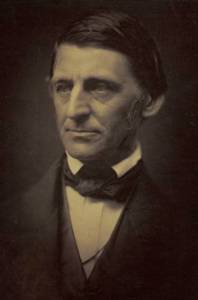
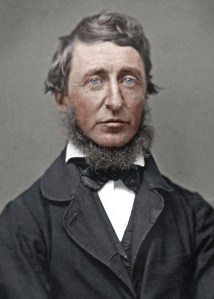
(1803-1882)
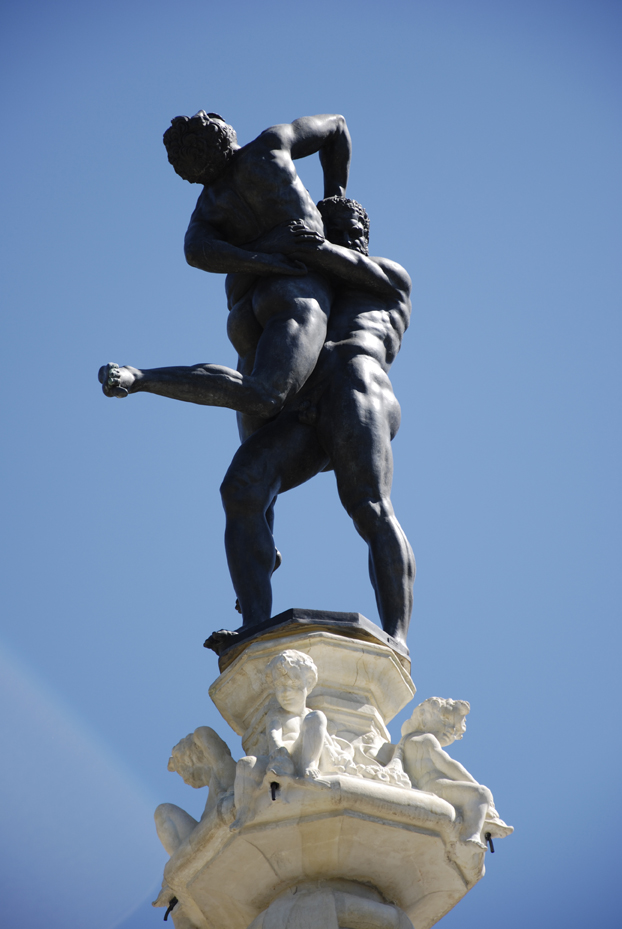
“Things are in the saddle and ride mankind.” (Ralph Waldo Emerson)
Emerson’s line from his 1846 Ode to William H. Channing, voicing his unease with the coming war with Mexico, has been on my mind over the past few days. It was eighty years ago this week, that the United States dropped atomic bombs on Hiroshima (August 6) and Nagasaki (August 9), bringing World War II to a close. The bombs, ironically born of a desperate race among scientists fleeing Nazi tyranny, marked a split screen in human history: the unleashing of the most devastating weapon ever conceived, and the liberation of millions from the grip of totalitarianism. As Christians living in a dangerous world, we are called to wrestle with such paradoxes. We live between the towers of Babel and the cross of Christ—between the pride of human power and the humility of divine love. The events of August 1945 remind us that history is not merely a sequence of dates and decisions, but a moral terrain where faith must find its footing. In a world where “things” of our own making often seem to ride us, how do we remain grounded in the gospel? How do we discern the difference between necessary action and moral compromise? These questions challenge me every day.

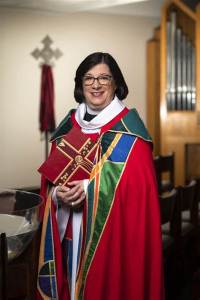
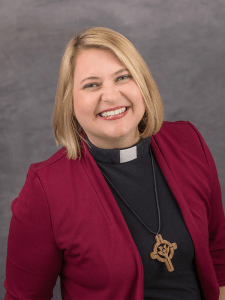
As the world turns, important things happened this week impacting our denomination. Among many actions taken by the Churchwide Assembly, Reverand Yehiel Curry (b. 1972) was elected as the fifth presiding bishop of the Evangelical Lutheran Church in America (ELCA)—the first Black leader to serve in this role. He received 562 of the 799 votes cast on the fifth ballot, marking a significant moment in the church’s history.** Like Martin Luther, Curry’s spiritual journey began in the Roman Catholic tradition. Raised on the South Side of Chicago, he attended Lewis University, a Catholic institution, and earned his B.A. in 1995. His path shifted in the 1990s when he accepted an invitation to worship at St. Stephen’s Lutheran Church. That experience opened the door to Lutheran theology and community life, eventually leading him to join the ELCA. Before entering ministry, Curry worked as a public-school teacher and social worker—roles that shaped his deep commitment to urban communities. He was ordained in 2010, served as pastor of Shekinah Chapel, and later became bishop of the Metropolitan Chicago Synod. Curry brings a strong voice for multicultural engagement and urban ministry to his new role. Here’s a good article from Living Lutheran, if you want more background. Bishop Curry is the fifth since the ELCA was established in 1987 and his term will begin in October. Others who held the position: Herbert Chilstrom (1987-1995), H. George Anderson (1995-2001), Mark S. Hanson (2001-2013), and Elizabeth A. Eaton (2013-2025).
**Note: The presiding bishop is chosen through a prayerful process called the ecclesiastical ballot. Any eligible minister can be nominated anonymously by voting members on the first ballot, which serves as both nomination and potential election. If no one receives the required majority, the top candidates move forward through successive ballots until one is elected. This method emphasizes discernment, transparency, and communal decision-making.
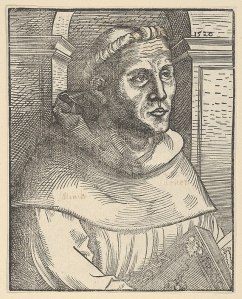
We have reached the 9th of 23 Sundays in Ordinary Time. The second lessons for the remaining August Sundays feature passages from the last three chapters of Hebrews, and my plan is to feature those in the next four blog postings. We should note at the outset that in his German Bible, Luther grouped Hebrews with James, Jude, and Revelation at the end of the New Testament, signaling his reservations about the book. He considered these books “disputed” and less central to the gospel message than others like Romans or Galatians (if you want more information regarding his position, here is a good link). Anyway, let’s take on these readings and learn more about this book!
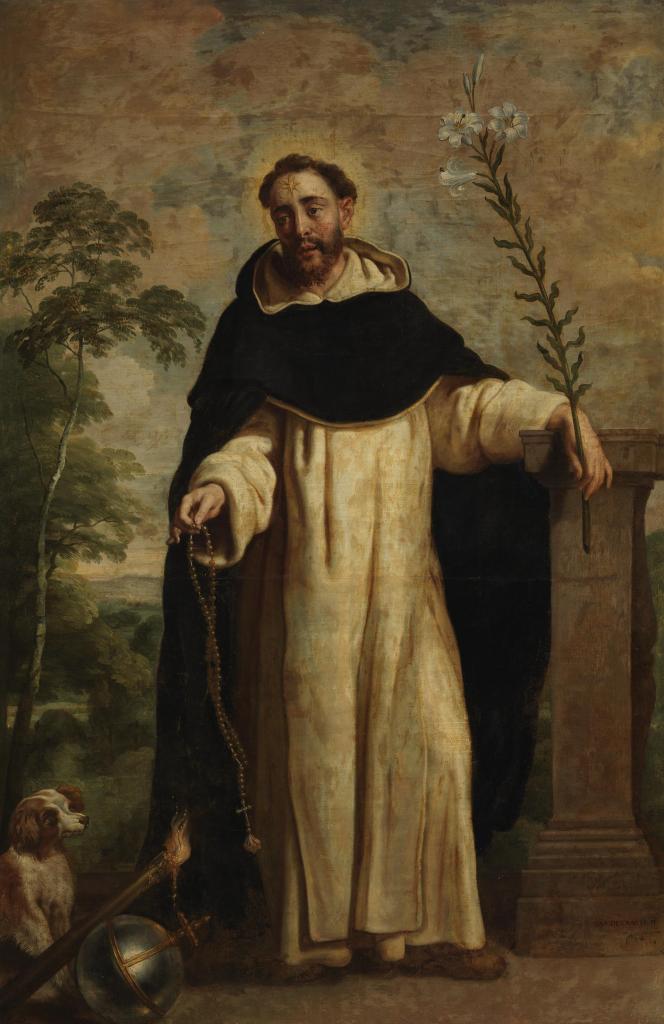
Thanks for returning to this space this week! I deeply appreciate your continued interest in the Lectionary! Saint Dominic de Guzmán, founder of The Order of Preachers (Dominican), who died on 8 August in 1221, is commemorated within the ELCA this week. I have included a painting of him by the Flemish artist Gaspar de Crayer (c. 1655).
** Note 1: Links to outside references are bolded and italicized and are meant for further reading or research on your part. While the text I am including in the blog is my own, I am pulling from a multitude of sites for ideas and connections.
** Note 2: In my increasing use of A.I. (Copilot), I will cite sourcing of how I am using the tool, if necessary. I don’t want that to be overly cumbersome, but I am gradually incorporating more tools. I am exploring the A.I. world this summer prior to my next teaching semester. As you can imagine, it is a great challenge right now and will forever change the face of education!
** Note 3: The images I include in the blog are drawn from Wikimedia Commons to the fullest extent possible.
Common Themes Among the Readings
Pentecost 9 Readings
Genesis 15: 1-6
Psalm 33: 12-22
Hebrews 11: 1-3, 8-16
Luke 12: 32-40
My source for the Bible readings each week is the Bible Gateway website. I generally use the NRSVUE translation.
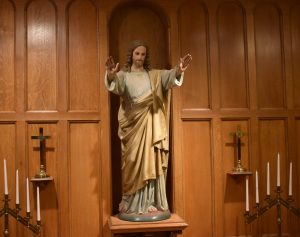
On the 9th Sunday after Pentecost (Year C), the lectionary readings share a common thread of faithful trust in God’s promises and the call to live with hopeful readiness. In Genesis 15, Abram believes God’s promise despite having no visible evidence, and his faith is counted as righteousness. Psalm 33 celebrates God’s steadfast love and watchful care over those who trust in Him, reminding us that human strength cannot save. Hebrews 11 highlights the faith of Abraham and others who embraced God’s promises from afar, longing for a better country prepared by God. Luke 12 calls disciples to live without fear, to give generously, and to remain vigilant—ready for the coming of the Son of Man.
“Describe the common themes among the readings for Pentecost 9.” Copilot, 1 August 2025, Copilot website.
Genesis 15: 1-6
15 After these things the word of the Lord came to Abram in a vision, “Do not be afraid, Abram, I am your shield; your reward shall be very great.” 2 But Abram said, “O Lord God, what will you give me, for I continue childless, and the heir of my house is Eliezer of Damascus?” 3 And Abram said, “You have given me no offspring, so a slave born in my house is to be my heir.” 4 But the word of the Lord came to him, “This man shall not be your heir; no one but your very own issue shall be your heir.” 5 He brought him outside and said, “Look toward heaven and count the stars, if you are able to count them.” Then he said to him, “So shall your descendants be.” 6 And he believed the Lord, and the Lord reckoned it to him as righteousness.
Check out this background video on the book of Hebrews!
Source: The Bible Project
LUTHER’S METHOD OF BIBLE READING
GIVE IT A TRY!
A Revision of the Lectio Divina, a method he learned in his Augustinian training
Three Steps
Oratio (Prayer): This is the starting point, where one humbly prays for the Holy Spirit’s guidance to understand God’s Word. Luther emphasized that prayer prepares the heart and mind to receive divine wisdom.
Meditatio (Meditation): This involves deeply engaging with Scripture, not just reading it but reflecting on it repeatedly. Luther encouraged believers to “chew on” the Word, allowing its meaning to sink in and shape their thoughts and actions.
Tentatio (Struggle): Often translated as “trial” or “temptation,” this refers to the challenges and spiritual battles that arise as one seeks to live according to God’s Word. Luther saw these struggles as a way God refines faith, making it more resilient and authentic.

Hebrews 11: 1-3, 8-16
11 Now faith is the assurance of things hoped for, the conviction of things not seen. 2 Indeed, by faith our ancestors received approval. 3 By faith we understand that the worlds were prepared by the word of God, so that what is seen was made from things that are not visible.
8 By faith Abraham obeyed when he was called to set out for a place that he was to receive as an inheritance, and he set out, not knowing where he was going. 9 By faith he stayed for a time in the land he had been promised, as in a foreign land, living in tents, as did Isaac and Jacob, who were heirs with him of the same promise. 10 For he looked forward to the city that has foundations, whose architect and builder is God. 11 By faith, with Sarah’s involvement, he received power of procreation, even though he was too old, because he considered him faithful who had promised. 12 Therefore from one person, and this one as good as dead, descendants were born, “as many as the stars of heaven and as the innumerable grains of sand by the seashore.” 13 All of these died in faith without having received the promises, but from a distance they saw and greeted them. They confessed that they were strangers and foreigners on the earth, 14 for people who speak in this way make it clear that they are seeking a homeland. 15 If they had been thinking of the land that they had left behind, they would have had opportunity to return. 16 But as it is, they desire a better homeland, that is, a heavenly one. Therefore God is not ashamed to be called their God; indeed, he has prepared a city for them.
Reflection: “Strangers on the Way”

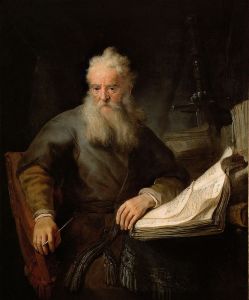
In his excellent introduction to Hebrews in the Lutheran Study Bible (second edition), Erik M. Heen, professor of New Testament at The Lutheran Theological Seminary at Philadelphia, points out that the book is a “sophisticated document written in elegant Greek around 70 CE” and was penned as an “extended sermon” for a “community of second-generation Greek-speaking Christians” that had experienced a variety of trials causing many to “drift away” from their faith in the Gospel. Heen asserts the following overarching statement about the message of Hebrews: “Lutherans believe that the word of God, in Hebrew Scriptures and in the New Testament, meets us as both law (judgement) and gospel (promise). Hebrews follows that pattern, often moving back and forth between severe warning and strong encouragement . . .” He also reminds us that tradition claimed that Paul wrote the letter, but that Luther thought the author was Apollos (see Acts 18:24), a companion of Paul and intriguing figure in his own right. The author clearly had a profound understanding of Jewish scriptures and Christian theology. As a sidenote, the book is beautifully written and provides an eloquent summary of the Jewish story and where Christ comes into that story.
Here is a summary of this week’s passage and its connection to the Old Testament reading. Faith begins not with certainty, but with trust—trust in a promise we cannot yet see. Abraham’s journey, as told in Hebrews 11, was marked by obedience to a call that offered no map, only the assurance of God’s presence. He lived as a stranger, yet hoped for a city built by God, a home beyond what this world could offer. In Genesis 15, Abram questioned his future, but when he believed God’s word, it was counted to him as righteousness (sidebar: Luther viewed Genesis 15:6 as a foundational text for the doctrine of justification by faith, not works. Also, note that the Hebrews passage includes Sarah’s involvement in all this!). What lessons should we draw from these texts?
Two things stand out to me. First, faith, as described in Hebrews 11, calls us to live with forward-looking trust rather than backward-facing certainty — note that poetic and familiar phrasing, “Now faith is the assurance of things hoped for, the conviction of things not seen” (11:1). Abraham models this posture by stepping into the unknown, not because he had a map, but because he trusted the One who called him; his journey reminds us that faith begins when we move, not when we understand. Second, the passage also urges us to embrace our identity as strangers and foreigners on the earth, people who seek a better homeland shaped not by comfort or permanence but by God’s promise. Rather than returning to what was familiar, the faithful pressed on toward a city whose architect and builder is God, showing us that true faith resists settling and instead leans into sacred anticipation. In a world that tempts us to anchor ourselves in possessions, status, or certainty, Hebrews reminds us that faith is not a possession but a pilgrimage—a daily turning toward the promise, a restlessness that refuses to settle for anything less than God’s future. It’s up to us — guided by the Spirit — to share this good news with others!
Soli Deo Gloria!
Prayer Reflection: The Jesus Prayer (Henri Nouwen)
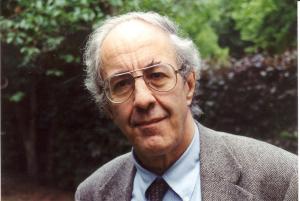
Henri Nouwen
(1932-1996)
“One simple way to practice solitude is to take a simple prayer like, “Lord Jesus Christ, have mercy on me.” Sit down, light a candle, look at an icon, be in front of the blessed sacrament or the Bible, depending on your tradition. Simply be there and repeat the prayer for five minutes. Let each word sink from your mind into your heart and then carry all of them through the day.“
A Musical Offering: “People Get Ready” (Curtis Mayfield)
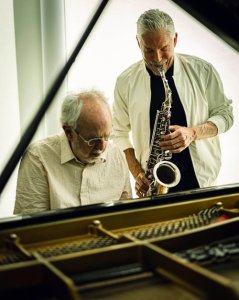
People Get Ready, written by Curtis Mayfield in 1965, is a soul song rooted in gospel tradition and the hope of the Civil Rights Movement. Its image of a train bound for glory calls people to faith and trust, much like the message in Hebrews 11, where believers are praised for following God’s call without knowing where it would lead. Mayfield, shaped by his church upbringing, wrote the song during a time of racial struggle, and it became a source of comfort and strength for many, including Martin Luther King Jr. The song has been covered by many artists. The version I’m sharing by Kenny Rankin captures its spirit beautifully—I hope it resonates with you.
Lyrics: People Get Ready (Mayfield version)
People get ready
There’s a train a-coming
You don’t need no baggage
You just get on board
All you need is faith
To hear the diesels humming
Don’t need no ticket
You just thank the Lord
So people get ready
For the train to Jordan
Picking up passengers
From coast to coast
Faith is the key
Open the doors and board them
There’s hope for all
Among those loved the most
There ain’t no room
For the hopeless sinner
Who would hurt all mankind
Just to save his own, believe me now
Have pity on those
Whose chances grow thinner
For there’s no hiding place
Against the kingdom’s throne
So people get ready
There’s a train a-coming
You don’t need no baggage
You just get on board
All you need is faith
To hear the diesels humming
Don’t need no ticket
You just thank the Lord

Kenny Rankin (1940-2009) was a genre-blending singer-songwriter whose crystalline voice and jazz-inflected guitar work earned him acclaim across folk, pop, and jazz circles. Born in New York City in 1940, he gained early recognition with his song “Peaceful” and frequent appearances on The Tonight Show, where Johnny Carson championed his talent. His interpretations of standards and Beatles songs, especially “Blackbird,” showcased his emotional depth and technical finesse. Rankin passed away in 2009, leaving behind a legacy of soulful artistry and musical elegance.
“Provide background on Kenny Rankin.” Copilot, 2 August 2025, Copilot website.
Faithful Conversations: Looking Ahead
Our regular gatherings for discussing the weekly lectionary are on a pause. Summer worship at ELC is at 8:30 in town and 10:15 at Hatfield by the lake. The 8:30 service will be streamed. Please stay in touch! Note: We will resume our “after-worship” dialogues on 14 September.
📖 Ready to read the Bible in a year?
Starting this September, join our Bible 365 Challenge—a yearlong journey through Scripture for individuals, families, and groups. As Lutherans, we know God’s Word shapes our lives and deepens our faith. Luther once said, “The Bible is alive… it lays hold of me.” Whether you choose the print path or go digital, we’ll grow together—with daily readings, mutual support, and spiritual connection. Details are coming soon. Let’s dive in, walk together, and let the Word come alive in us!