Faithful Conversations #115
Introduction to Readers
“The mass of men lead lives of quiet desperation.” (Henry David Thoreau, Walden)
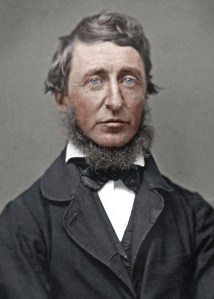
Thoreau’s famous line from his 1854 book resonates in 2025. Though harsh, his suggestion that many people — indeed, more than we may want to admit — settle into unfulfilled lives, accepting their circumstances rather than seeking deeper meaning or change, is worth exploring. Thoreau came to mind this week, in part, because I stumbled on a compelling essay from Arthur Brooks in The Atlantic Magazine (1 May 2025). The gist of Brooks’ message is this: Young Americans are becoming less happy, and studies show it’s a global trend, especially in wealthier nations. Traditionally, happiness dips in young adulthood and rises later in life, but now it starts low and stays low longer. A big factor is lack of strong social connections—young people with more friends tend to follow a healthier happiness curve. Another key factor is declining religious participation, which is linked to a loss of meaning in life. Wealth may reduce reliance on religion, but data suggests that faith still plays a strong role in well-being, particularly in rich societies. The solution? Prioritizing real-life relationships, seeking deeper purpose, and remembering that money alone won’t bring happiness — ideas that should resonate with those of us who walk the Christian path!
Thanks for visiting this space again this week! We are two weeks into the 50-day journey of Eastertide, the time period between the Resurrection of Christ and the coming of the Holy Spirit on Pentecost (8 June). In Year C of the Revised Common Lectionary (RCL), Eastertide readings emphasize themes of resurrection, transformation, and the mission of the early Church. The Acts of the Apostles takes center stage, replacing Old Testament readings to highlight the spread of the Gospel and the work of the Holy Spirit. The Gospel readings often come from John and Luke, focusing on Christ’s post-resurrection appearances and teachings. Beyond my reflections this week’s Gospel, I will offer information related to the ELCA connection to the issue of missing and murdered Indigenous women and share a musical prayer song inspired by Psalm 23, a favorite of mine that will be familiar to many.

We have several recent or upcoming days of commemoration in our church calendar (all can be located on pages 14-17 of the ELW). One I would like to highlight here is Saint Monica, the mother of Augustine (d. 4 May 387). The painting to the left is from 1846 and the Dutch-French romantic artist Ary Scheffer, titled Saint Augustine and his mother, Saint Monica. Click here If you would like to further explore this intriguing and important woman from Christian history.
Common Themes Among the Readings
4 Easter
Acts 9: 36-43
Psalm 23
Revelation 7: 9-17
John 10: 22-30
The readings for the Fourth Sunday of Easter converge on the theme of Christ as the Good Shepherd, offering guidance, protection, and life-giving care. Acts 9:36-43 illustrates this through Peter’s miraculous restoration of Tabitha, reflecting Christ’s power to bring renewal and hope. Psalm 23 and Revelation 7:9-17 emphasize God’s provision and comfort, assuring believers that they are sustained and sheltered even in times of trial. John 10:22-30 reinforces this imagery, as Jesus declares that his sheep hear his voice and cannot be taken from his hand, affirming the security and eternal care found in him.
Focus Passages: John 10: 22-30 and Psalm 23
22 At that time the Festival of the Dedication took place in Jerusalem. It was winter, 23 and Jesus was walking in the temple, in the portico of Solomon. 24 So the Jews gathered around him and said to him, “How long will you keep us in suspense? If you are the Messiah, tell us plainly.” 25 Jesus answered, “I have told you, and you do not believe. The works that I do in my Father’s name testify to me, 26 but you do not believe because you do not belong to my sheep. 27 My sheep hear my voice. I know them, and they follow me. 28 I give them eternal life, and they will never perish. No one will snatch them out of my hand. 29 My Father, in regard to what he has given me, is greater than all, and no one can snatch them out of the Father’s hand. 30 The Father and I are one.”
TRY LUTHER’S METHOD!
Luther’s Revision of the Lectio Divina
(Three Steps)
Oratio (Prayer): This is the starting point, where one humbly prays for the Holy Spirit’s guidance to understand God’s Word. Luther emphasized that prayer prepares the heart and mind to receive divine wisdom.
Meditatio (Meditation): This involves deeply engaging with Scripture, not just reading it but reflecting on it repeatedly. Luther encouraged believers to “chew on” the Word, allowing its meaning to sink in and shape their thoughts and actions.
Tentatio (Struggle): Often translated as “trial” or “temptation,” this refers to the challenges and spiritual battles that arise as one seeks to live according to God’s Word. Luther saw these struggles as a way God refines faith, making it more resilient and authentic.
The Lord is my shepherd; I shall not want.
2 He makes me lie down in green pastures;
he leads me beside still waters;
3 he restores my soul.
He leads me in right paths
for his name’s sake.
4 Even though I walk through the darkest valley,
I fear no evil,
for you are with me;
your rod and your staff,
they comfort me.
5 You prepare a table before me
in the presence of my enemies;
you anoint my head with oil;
my cup overflows.
6 Surely goodness and mercy shall follow me
all the days of my life,
and I shall dwell in the house of the Lord
my whole life long.
Reflections: “Who will hear His voice?”

(Clement of Alexandria)
Clement of Alexandria (c. 150-215 CE), an early church father, described John’s Gospel as a spiritual account of Jesus’ life and teaching (The Lutheran Study Bible, p. 1752). Traditionally attributed to the apostle John, it was likely composed between 90–110 CE, reflecting a later theological perspective distinct from the Synoptic Gospels (Matthew, Mark, and Luke). It emphasizes Jesus’ divine nature, portraying him as the eternal Word (Logos) and focusing on his spiritual teachings rather than a chronological account of his ministry. Scholars debate its authorship, but it is clear that it was written for Jewish Christians who faced hostility within their communities.
Here is a quick summary of this week’s reading from chapter 10. During the Festival of Dedication (Hanukkah), Jesus is confronted in the temple by those demanding a clear declaration of his identity as the Messiah. (Sidebar: this is the fourth episode in John centering on Jewish festivals and Jesus’ identity). He responds by affirming that his works testify to his divine authority, but their unbelief stems from their not belonging to his flock. Jesus then assures his followers of eternal security, declaring his unity with the Father, emphasizing that no one can snatch them away from God’s protection.
What should we take away from intriguing exchange between Jesus and those Jewish listeners in the temple? Here are three things that stand out. First, the imagery of Jesus as our shepherd (verses 26-27) and also one with the father is powerful and is rooted in the Old Testament writings that would have been meaningful to the Jewish crowd (note this week’s Psalm, for example).
Second, as Jennifer Garcia Bashaw of Campbell University in North Carolina aptly asserts in a recent commentary, Jesus’ dialogue regarding “life and eternal life” is critical to understanding this exchange. Hear what she has to say on this: “The final theme John has masterfully stitched into this passage is the most identifiable of the Gospel and the most misinterpreted. When Jesus says of his sheep, ‘I give them eternal life, and they will never perish’ (10:28), he is elaborating on the theme of life and eternal life that saturates John” (what we might think of as heaven and hell). She further explains that,“In the first century, hearers of the Gospel did not have developed concepts of heaven and hell (as places where people go when they die). Instead, they would more likely think of ‘perishing’ as the present, evil age they lived in and ‘eternal life’ as an image for the age to come, or what the Synoptic Gospels call the kingdom of God. Jesus is speaking of the kind of life believers lead now as they hear the Shepherd’s voice and follow him. This is a quality of life, not a place in the clouds where we go when we die.” In other words, the Kingdom of God is among us, here and now. Let that sink in for a few moments.
Finally, Jesus is explicit about humanity: some will hear His voice and others will not. And though forever a mystery to me, faith is a gift. Why do some hear this voice while others are seemingly deaf or distant from it? I cannot explain that. What we do know is this: Jesus the Shepherd seeks after us in spite of our failings, in spite of our doubts. He persistently seeks our hearts. And that brings me back to those in our midst experiencing quiet desperation. Perhaps you know someone like that? How will they come to hear the Shepherd’s voice? What is our role in that? May we have the strength, courage, and wisdom to tell them about Jesus Christ and invite them into “life and eternal life!”
Soli Deo Gloria!
**Note: As is so often the case, the interpretation I am offering here was inspired by someone with much more theological training than I have! In this case, Jennifer Garcia Bashaw helped me understand this passage from John and I thank her! I am continually amazed by the incredible information we have available to us in 2025, reaffirming my belief: the more I learn, the more I realize I do not know!
Prayer Reflection: Remembering the Plight of MMIW

The crisis of Missing and Murdered Indigenous Women (MMIW) remains a deeply troubling issue, with Indigenous women facing disproportionately high rates of violence, disappearance, and homicide. In some tribal communities, Native women are murdered at rates more than ten times the national average. Efforts to raise awareness, such as the National Week of Action for MMIW, aim to honor victims and push for systemic change. This thoughtful and informative message from Vance Blackfox is worth your time!
Our hearts are heavy as we come to you, God, seeking your mercy and grace for the Indigenous women and girls who have been taken from us too soon. Provide the families and communities with comfort and peace. We pray for guidance and strength as we fight for justice on their behalf. We will not forget those who have lost their lives or the love that remains in their wake. Today, we honor their memory in prayer, grateful for the hope you provide in times of heartache and injustice. Here us as we offer our prayers and plea for justice. Amen.
Source: Candlelight Vigil for Murdered and Missing Women by Kelly Sherman-Conroy (Oglala-Lakota)
A Musical Prayer: “The King of Love”
Lyrics: The King of Love My Shepherd Is (Hymn 502, ELW)
1 The King of love my shepherd is,
whose goodness faileth never.
I nothing lack if I am his,
and he is mine forever.
2 Where streams of living water flow,
my ransomed soul he leadeth;
and where the verdant pastures grow,
with food celestial feedeth.
3 Perverse and foolish, oft I strayed,
but yet in love he sought me;
and on his shoulder gently laid,
and home, rejoicing, brought me.
4 In death’s dark vale I fear no ill,
with thee, dear Lord, beside me;
thy rod and staff my comfort still,
thy cross before to guide me.
5 Thou spreadst a table in my sight;
thy unction grace bestoweth;
and oh, what transport of delight
from thy pure chalice floweth!
6 And so through all the length of days,
thy goodness faileth never;
Good Shepherd, may I sing thy praise
within thy house forever.
Composed in 1868 by Sir Henry Williams Baker, “The King of Love My Shepherd Is” is a hymn based on Psalm 23. Baker, an Anglican priest and hymn writer, was deeply involved in the production of Hymns Ancient & Modern, a landmark hymnal in English hymnody. The hymn is most commonly sung to the tune Dominus Regit Me, composed by John Bacchus Dykes, though it has also been paired with other melodies, including the Irish tune St. Columba. Baker’s final words before his death were reportedly from the third stanza of this hymn, reflecting its deep personal and theological significance.
I have included the text of all the verses here, although the version you will hear includes verses 1, 2, and 6. My mother, Cathryn Wambheim Rykken, sang this hundreds of times and I hear her voice in the music!
The Concordia Choir of Moorhead, Minnesota, is widely recognized as one of America’s premier a cappella choirs, known for its exceptional artistry and rich tradition. Founded in 1920, the choir consists of 72 voices and has performed in prestigious venues such as Carnegie Hall and the Kennedy Center, as well as internationally in Germany and Italy. The choir is a central part of Concordia College’s musical life, contributing to the Emmy-winning Concordia Christmas Concerts, which are broadcast nationally. Under the direction of Dr. Michael Culloton, only the fourth conductor in its century-long history, the choir continues to uphold its legacy of excellence through national and international tours, recordings, and collaborations with renowned musicians.
There are 27 private liberal arts colleges and universities affiliated with the Evangelical Lutheran Church in America (ELCA), all of which are part of the Network of ELCA Colleges and Universities (NECU). These institutions uphold a commitment to Lutheran higher education, emphasizing vocation, service, and intellectual curiosity. You can find a full list of the colleges and universities here.
Update on “Faithful Conversations”
Thanks to this fine group of people who bring their voices to this endeavor each week! Join us on Sunday 11 May at 10:45 in the church library. We talk through the readings (some or all) in an informal setting — no prior preparation is necessary and all are welcome! Come and help us deepen our understanding of the readings!



And, on the horizon . . . . Pastor Jen and I are working to develop a series of podcasts that will be made available on various venues, short conversations on a variety of topics related to the faith journey. Our first series will explore the history of Lutheranism in general, the background to our local parish, how we translate our faith traditions and core values in our community, and how people can become a member of our church. Look for these later this spring!