“They call it Christianity. I call it consciousness.” (Ralph Waldo Emerson)
Recent surveys indicate that nearly one in five Americans identify as, “spiritual, but not religious” (SBNR) — nearly 70 million people. I recall first hearing this expression in my college days in the mid-1970s, and while it is impossible to judge what’s in a person’s heart, my sense is that people who assert this position have found institutional religion wanting for one reason or another. Any number of people in my life have made the argument to me, for example, that religion has been the cause of great pain, violence, persecution, and war in history and therefore is a net negative. It is hard to argue against that — much has been done in the name of religion that is appalling. And we know that millions of people have walked away from organized religion in recent decades decrying its formalism, dogma, rootedness in miracles, and perceived exclusivity.
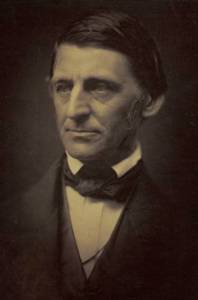
Ralph W. Emerson
It is tempting to think of this as a recent phenomenon, but I suspect SBNR has been around for a long, long time. Consider the high-profile case of Ralph Waldo Emerson (1803-1882). Ordained as a Unitarian minister, he ultimately walked away from organized religion entirely by 1838. Later in life, he helped establish the Free Religious Association (FRA), a movement promoting free inquiry into religious matters and advocating for a rational, progressive approach to spirituality. The FRA welcomed diverse religious perspectives, including those from Jewish, Spiritualist, and Eastern traditions, aiming to foster a broader, more inclusive spiritual dialogue.
Why is this on my mind this week? How should we respond to those who embrace the SBNR label? Simply this: Pentecost calls Christians to remember the outpouring of the Holy Spirit—the divine force (outside of ourselves) that unites, empowers, and commissions the Church. Further, Pentecost demands reflection on the vital role of the Church in shaping spiritual identity. Emerson’s rejection of religious institutions, for example, reveals the lingering question: Can spirituality thrive without community, tradition, and theological grounding? The Spirit did not descend in isolation but ignited a gathered people, sending them forth with a shared mission. That’s us and we need to offer a strong and positive face for the church in our world!
Thanks for visiting this space again this week! The Easter season is now behind us, and Pentecost reminds us of our deep Judeo-Christian roots. In Jewish tradition, it denoted the Festival of Weeks, celebrated 50 days after Passover (penta means “50” in Greek). It marked the spring wheat harvest and God’s gift of the Torah to Moses (Exodus 24). For Christians, Pentecost in Acts 2 signals the moment the Holy Spirit came upon Jesus’ followers, empowering them to spread the Gospel. The first believers, shaped by Jewish traditions, met the risen Christ and received the Spirit, launching the Church in 33 CE. By the Second Century, Christians recognized Pentecost as a holy day. Keep this history in mind as you dive into this week’s readings. My commentary will focus on the reading from Acts with a reference to John’s Gospel. I will also offer a prayer reflection inspired by Luther’s explanation of the Third Article of the Apostle’s Creed, along with a favorite new song from the jazz world.
The readings for Pentecost reveal the Spirit’s role in empowerment, renewal, divine presence, and guidance, shaping both the Church and individual believers in faith and mission. Acts 2 highlights the Spirit’s transformative power, as the disciples boldly proclaim the Gospel in many languages, breaking barriers of communication and fear. Psalm 104 celebrates the Spirit’s work in creation and sustenance, reminding believers that God’s presence fills the earth and brings life to all things. Romans 8 affirms that through the Spirit, Christians are adopted as children of God, freed from fear and led by divine guidance. In John 14, Jesus assures his followers that the Holy Spirit, the Advocate, will be with them, teaching and reminding them of his truth, ensuring they are never alone.
Acts 2: 1-21 When the day of Pentecost had come, they were all together in one place. 2 And suddenly from heaven there came a sound like the rush of a violent wind, and it filled the entire house where they were sitting. 3 Divided tongues, as of fire, appeared among them, and a tongue rested on each of them. 4 All of them were filled with the Holy Spirit and began to speak in other languages, as the Spirit gave them ability. 5 Now there were devout Jews from every people under heaven living in Jerusalem. 6 And at this sound the crowd gathered and was bewildered, because each one heard them speaking in the native language of each. 7 Amazed and astonished, they asked, “Are not all these who are speaking Galileans? 8 And how is it that we hear, each of us, in our own native language? 9 Parthians, Medes, Elamites, and residents of Mesopotamia, Judea and Cappadocia, Pontus and Asia, 10 Phrygia and Pamphylia, Egypt and the parts of Libya belonging to Cyrene, and visitors from Rome, both Jews and proselytes, 11 Cretans and Arabs—in our own languages we hear them speaking about God’s deeds of power.” 12 All were amazed and perplexed, saying to one another, “What does this mean?” 13 But others sneered and said, “They are filled with new wine.” 14 But Peter, standing with the eleven, raised his voice and addressed them, “Fellow Jews[a] and all who live in Jerusalem, let this be known to you, and listen to what I say. 15 Indeed, these are not drunk, as you suppose, for it is only nine o’clock in the morning. 16 No, this is what was spoken through the prophet Joel: 17 ‘In the last days it will be, God declares, that I will pour out my Spirit upon all flesh, and your sons and your daughters shall prophesy, and your young men shall see visions, and your old men shall dream dreams. 18 Even upon my slaves, both men and women, in those days I will pour out my Spirit, and they shall prophesy. 19 And I will show portents in the heaven above and signs on the earth below, blood, and fire, and smoky mist. 20 The sun shall be turned to darkness and the moon to blood, before the coming of the Lord’s great and glorious day. 21 Then everyone who calls on the name of the Lord shall be saved.’
John 14: 8-17 (25-27) 8 Philip said to him, “Lord, show us the Father, and we will be satisfied.” 9 Jesus said to him, “Have I been with you all this time, Philip, and you still do not know me? Whoever has seen me has seen the Father. How can you say, ‘Show us the Father’? 10 Do you not believe that I am in the Father and the Father is in me? The words that I say to you I do not speak on my own, but the Father who dwells in me does his works. 11 Believe me that I am in the Father and the Father is in me, but if you do not, then believe because of the works themselves. 12 Very truly, I tell you, the one who believes in me will also do the works that I do and, in fact, will do greater works than these, because I am going to the Father. 13 I will do whatever you ask in my name, so that the Father may be glorified in the Son. 14 If in my name you ask me for anything, I will do it. 15 “If you love me, you will keep my commandments. 16 And I will ask the Father, and he will give you another Advocate, to be with you forever. 17 This is the Spirit of truth, whom the world cannot receive because it neither sees him nor knows him. You know him because he abides with you, and he will be in you.
TRY LUTHER’S METHOD OF BIBLE READING
A Revision of the Lectio Divina, a method he learned in his Augustinian training (Three Steps)
Oratio (Prayer): This is the starting point, where one humbly prays for the Holy Spirit’s guidance to understand God’s Word. Luther emphasized that prayer prepares the heart and mind to receive divine wisdom.
Meditatio (Meditation): This involves deeply engaging with Scripture, not just reading it but reflecting on it repeatedly. Luther encouraged believers to “chew on” the Word, allowing its meaning to sink in and shape their thoughts and actions.
Tentatio (Struggle): Often translated as “trial” or “temptation,” this refers to the challenges and spiritual battles that arise as one seeks to live according to God’s Word. Luther saw these struggles as a way God refines faith, making it more resilient and authentic.
Reflections: “Spiritual and Religious!”
Regular readers of the blog know that I’m fascinated by artistic interpretations of Biblical stories. Jean Restout II’s Pentecost (1732) is a dramatic Baroque painting depicting the Holy Spirit descending over the apostles and Mary. Restout places them in a grand courtyard, with swirling clouds above. The figures react with awe, fear, and reverence, while Mary stays calm at the center, contrasting with the stunned apostles. Restout’s bold lighting and detailed gestures bring great energy to the moment. An amazing painting!
St. Peter Preaching at Pentecost
So, let’s imagine what the disciples experienced on the day of Pentecost! The Holy Spirit (our Advocate, as identified by Jesus in John’s Gospel — and isn’t that a beautiful description?) descends with fire and wind, filling them with supernatural power. A mighty rush of wind shakes the room, and tongues of fire settle on each person, igniting them with divine speech. They begin speaking in different languages, astounding the crowds of pilgrims in Jerusalem. Confusion turns to awe as people realize they are hearing the wonders of God in their own tongues. Some mock the disciples, accusing them of drunkenness, but Peter steps forward with authority, declaring that this is the fulfillment of Joel’s prophecy—the Spirit of God is poured out on all people, men and women, young and old (verse 17 is great poetry). He proclaims that signs and wonders will accompany this new era, and everyone who calls on the name of the Lord will be saved. The Church is born in fire, power, and prophecy, setting the world ablaze with the unstoppable movement of God. Wow!
What should we take away from this powerful moment from the first century? There are many things, but these stand out. Pentecost reminds us that God is active, faith is communal, and transformation is real. It’s not just a story—it’s a call to live spirit-filled lives that impact the world. Further, God empowers His People. We do not find this within ourselves (or our “consciousness,” in Emerson’s description). In fact, when we try to do that, we easily lose our way. And finally, the Gospel is for all nations and all people. When the apostles speak in different languages, it signals that God’s message is universal, meant for every tribe and tongue. Christianity is not confined to one people or culture but extends to all. And while many in our midst may see organized religion as rigid or hypocritical, ours should be a faith that heals, uplifts, and serves. The Church must show grace, truth, and love, proving faith is about justice,hope, and transformation, not control. When we live with integrity and compassion, we help break negative stereotypes and reveal that faith inspires real change. The world needs a Church that reflects Christ’s love, not just defends tradition. This is a radical and powerful message and one that we are privileged to share!
Soli Deo Gloria!
Prayer Reflection: Inspired by Luther’s Explanation of the Third Article
“I believe that I cannot by my own reason or strength believe in Jesus Christ, my Lord, or come to Him; but the Holy Spirit has called me by the Gospel, enlightened me with His gifts, sanctified and kept me in the true faith. In the same way, He calls, gathers, enlightens, and sanctifies the whole Christian church on earth, and keeps it with Jesus Christ in the one true faith. In this Christian church, He daily and richly forgives all my sins and the sins of all believers. On the Last Day, He will raise me and all the dead, and give eternal life to me and all believers in Christ. This is most certainly true.”
Spirit of the Living God, fall fresh on us today! You call us by the Gospel, shaping us into Christ’s body. You gather Your Church from every nation, binding us in unity and love. You fill us with Your gifts—wisdom, courage, and boldness to proclaim Your truth. You forgive, renew, and send us out, strengthened for the work of Your kingdom. And on the last day, You will raise us up in glory, bringing us into eternal life. Come, Holy Spirit—move in power! Amen.
A Musical Offering: “New Hope”
Meditation on New Hope
When I first heard this track, it struck me that it is more than just a melody—it’s a reminder that faith renews us, even in the most uncertain seasons. The track weaves a sense of possibility, much like the quiet yet persistent voice of the Spirit, whispering courage into weary souls. Hope is not passive; it stirs, it moves, it calls us forward. Faith does the same. Every dawn, God offers us a fresh start, a chance to dream again, to believe that renewal is possible, no matter how heavy the night has been. Now, more than ever, we need that reminder: hope is alive, and faith makes it real.
“New Hope“
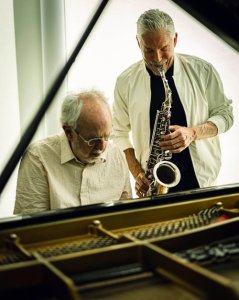
“New Hope” is a track from Bob James and Dave Koz’s collaborative 2025 album Just Us, which features unplugged piano and saxophone duets.
Update on “Faithful Conversations”
Our regular gatherings for discussing the weekly lectionary are on a pause. Summer worship at ELC is at 8:30 in town and 10:15 at Hatfield by the lake. The 8:30 service will be streamed. Please stay in touch!
Introduction to Bible Study
A few weeks back, I shared this link to the on-line class I put together and am reposting now as we get into the summer phase of the Lectionary. If you’re looking for a “reboot” on how to approach Bible study, take a look! Click on the photo for access!