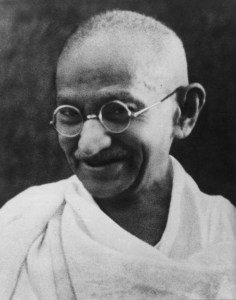
“If light can come out of darkness, then alone can love emerge from hatred.” (Mahatma Gandhi)
Once again, political violence has erupted with chilling force this week. On Friday, as I spoke with our eldest daughter Kate (b. 1981), her words stirred a sobering truth: we are not built to absorb the relentless tide of hatred and grief that courses through our nation. I hold fast to Gandhi’s enduring conviction—that LOVE stands as the most powerful force we possess, and we must wield it with courage and intention. (Gandhi himself, regretfully, fell victim to political violence in 1948).
As we open the lectionary this Sunday, we enter a tradition that has never shied away from upheaval. Scripture speaks directly into chaos, echoing through centuries of resistance—from the Zealot revolts in Roman-occupied Judea to the unraveling of civic virtue in the late Roman Republic. Like us, our spiritual ancestors grappled with power, injustice, violence, and the sacred call to act. Of course, their world was far different from ours, but evil has been present across time — not a comforting reality but perhaps brings perspective. As Pastor Jen emphasized in her sermon on Sunday (14 September), as Christians, we are to be “purveyors of hope” for those living in a divided world.
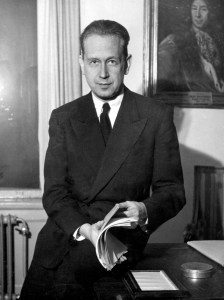
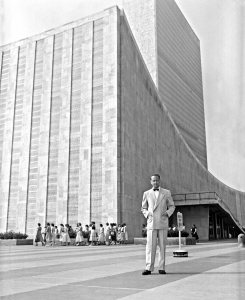
Hammarskjold (1905-1961)
Thanks for your return to this venue this week! Counting next Sunday, there are ten remaining in our church year (Christ the King Sunday is on 23 November). We have several commemorations this week on the ELCA calendar, and perhaps most notably, Dag Hammarskjold who was killed (somewhat mysteriously) in a plane crash on 18 September 1961. A fascinating individual, Hammarskjöld was a Swedish economist, diplomat, and spiritual thinker who served as the second Secretary-General of the United Nations from 1953 until his death (sidebar: A teacher I had in 8th grade was enamored with Hammarskjold and we learned much about him that year!). He played a pivotal role in shaping UN peacekeeping operations and mediating global crises, including the Suez and Congo conflicts, earning him a posthumous Nobel Peace Prize. As a man of faith and ethical service, Hammarskjold was deeply influenced by Christian mysticism.
Note: My reflections this week will focus on the Amos passage. I also have included a prayer from the pen of Dag Hammarskjold and a favorite Dylan song that speaks to our time. Also, take note of the discussion questions that will frame our in-person discussion of the Lectionary next Sunday (a new feature).
** Note 1: Links to outside references are bolded and italicized and are meant for further reading or research on your part. While the text I am including in the blog is my own, I am pulling from a multitude of sites for ideas and connections. ** Note 2: In my increasing use of A.I. (Copilot), I will cite sourcing of how I am using the tool, if necessary. I don’t want that to be overly cumbersome, but I am gradually incorporating more tools. I am exploring the A.I. world this summer prior to my next teaching semester. As you can imagine, it is a great challenge right now and will forever change the face of education!
** Note 3: The images I include in the blog are drawn from Wikimedia Commons to the fullest extent possible.
My source for the Bible readings each week is the Bible Gateway website. I generally use the NRSVUE translation.
The readings for Pentecost 15 confront economic injustice and call for ethical stewardship, reminding us that God sees and judges those who exploit the poor (Amos 8:4–7). Psalm 113 lifts up God’s mercy and power to raise the lowly, celebrating divine reversal and care for the marginalized. 1 Timothy 2:1–7 urges prayerful living and inclusive salvation, emphasizing Christ as mediator for all people. Luke 16:1–13 challenges us to use worldly resources wisely and faithfully, underscoring that no one can serve both God and wealth.
“Describe the common themes among the readings for Pentecost 15.” Copilot, 12 September 2025, Copilot website.
LUTHER’S METHOD OF BIBLE READING A Revision of the Lectio Divina (Augustinian)
Three Steps Oratio (Prayer): This is the starting point, where one humbly prays for the Holy Spirit’s guidance to understand God’s Word. Luther emphasized that prayer prepares the heart and mind to receive divine wisdom.
Meditatio (Meditation): This involves deeply engaging with Scripture, not just reading it but reflecting on it repeatedly. Luther encouraged believers to “chew on” the Word, allowing its meaning to sink in and shape their thoughts and actions.
Tentatio (Struggle): Often translated as “trial” or “temptation,” this refers to the challenges and spiritual battles that arise as one seeks to live according to God’s Word. Luther saw these struggles as a way God refines faith, making it more resilient and authentic.
Luther on Reading the Bible
“For some years now I have read through the Bible twice every year. If you picture the Bible to be a mighty tree and every word a little branch, I have shaken every one of these branches because I wanted to know what it was and what it meant.“
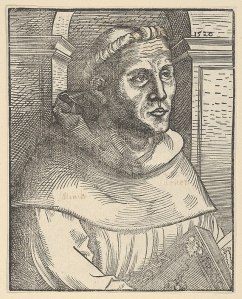
Martin Luther (1483-1546)
The First Reading: Amos 8: 4-7
Hear this, you who trample on the needy, and bring to ruin the poor of the land, 5 saying, “When will the new moon be over so that we may sell grain, and the Sabbath, so that we may offer wheat for sale? We will make the ephah smaller and the shekel heavier and practice deceit with false balances, 6 buying the poor for silver and the needy for a pair of sandals and selling the sweepings of the wheat.” 7 The Lord has sworn by the pride of Jacob: Surely I will never forget any of their deeds.
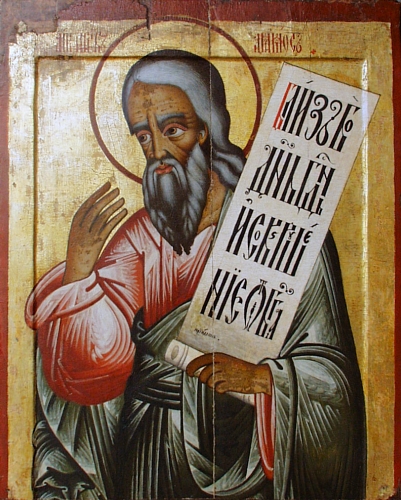
Amos, the Prophet
Check out this excellent summary of Amos from the Bible Project!
Reflection: An Ancient Voice Speaks to Us
The prophet Amos appears five times across the three-year cycle of the Revised Common Lectionary, typically during the Season after Pentecost when prophetic voices are spotlighted (once in Year A, and twice in both Years B and C). Across these readings, Amos emerges as a relentless voice for justice, calling out systems that oppress the vulnerable and distort sacred practice. His message is consistent: true faith demands ethical integrity, and divine judgment awaits those who ignore the cries of the poor. The lectionary’s use of Amos places him in direct conversation with Gospel texts, reinforcing the timeless urgency of his prophetic witness. (Sidebar: I explored Amos in July (Pentecost 6) when he appeared as an alternate reading offered within the Lectionary).
Amos the Prophet, 18th Century Russian Icon
In the Lutheran Study Bible (Second Edition), Peter T. Nash and Walter C. Bouzard do a terrific job of framing the prophet’s story (shameless plug for investing in this resource!). Amos’ prophetic ministry began in c. 762 BCE and though he was from Tekoa in the Southern Kingdom, he spent most of his time in the Northern Kingdom in the region of Bethel (eleven miles north of Jerusalem). The division between the two Kingdoms of Israel during this time offers relevant context. As the authors assert, “Judahite interpreters from the southern tribes blamed the north and its leaders for the broken relationship. They pointed to the northerners’ rebellious spirit, which was fueled by the polluting influence of Canannite and Phoenician politics and religious practices. The worship of other gods in addition to YHWH was a severe offense. Also mentioned frequently was the issue of economic inequality . . . Southerners accused the northerners of abandoning their shared core value — equality among siblings based on their equality before God.” (pp. 1383-84, LSB). I suspect if these ancient people could have accessed social media, they would have launched vitriolic attacks on one another! It was into this milieux that the prophet Amos emerged. It was a diverse and divided world.
This week’s passage, chapter 8:4–7, comes after God compares the people of Israel to a basket of summer fruit that is rotting. In response, Amos delivers a sharp rebuke to those who exploit the poor and manipulate economic systems for personal gain. The prophet exposes how sacred times are treated as mere interruptions to profiteering, with dishonest scales and the buying and selling of the vulnerable. God responds with a solemn oath: these injustices will not be forgotten, and divine judgment is coming for those who trample the needy. In fact, if you read ahead a bit (verses 11-12), the Lord suggests that the very Word of God will be withdrawn from the people — a chilling assertion!
How should 21st Century Christians respond to Amos? The lessons from Amos 8:4–7 are as urgent now as they were in his day twenty-seven centuries ago. First, justice is not optional—it’s woven into the very character of God, and those who claim to follow Him must reflect that justice in how they treat others, especially the poor and powerless. Second, Amos reminds us that injustice is often systemic: dishonest scales, exploitative markets, and disregard for sacred rhythms all point to a society where profit overrides compassion. And third, there’s a warning here for communities of faith: when worship becomes disconnected from ethical living, God does not merely critique—He threatens silence. The Word of the Lord is not a guarantee; it’s a gift, and when ignored, it may be withdrawn. That silence, Amos suggests, is its own kind of judgment. That’s unsettling, to say the least!
But let’s not leave it at that. The great Walter Brueggemann viewed prophets like Amos as bearers of the prophetic imagination—figures who challenged prevailing assumptions and offered a radically different vision rooted in God’s justice. Their role wasn’t just to criticize; they also reframed reality itself. Brueggemann reminds us that true prophets don’t simply name what’s broken—they envision what could be, guided by mercy and moral conviction. These are words for us to carry with us every day as “purveyors of hope” in a broken world.
Soli Deo Gloria!
Note: In the paragraph offered on the lessons of Amos, I drew heavily from a 2010 commentary by Rolf Jacobson, the A.N. Rogness Chair in Scripture, Theology and Ministry at Luther Seminary in St. Paul.
Note: Walter Brueggemann’s book, The Prophetic Imagination (40th Anniversary edition, 2018) is a remarkable resource and changed my understanding of the Old Testament prophets.
Prayer Reflection from Dag Hammarskjold
You who are over us, You who are one of us, You who are also within us, May all see you in me also. May I prepare the way for you, May I thank you for all that shall fall to my lot, May I also not forget the needs of others. Give me a pure heart-that I may see you. A humble heart-that I may hear you, A heart of love-that I may serve you, A heart of faith-that I may abide in you. Amen.
This prayer is attributed to Dag Hammarskjöld, the Swedish diplomat and second Secretary-General of the United Nations. It appears in his posthumously published spiritual journal Markings (originally Vägmärken), which blends poetic reflection, Christian mysticism, and ethical introspection.
A Musical Offering: Ring Them Bells (Dylan)
Bob Dylan’s “Ring Them Bells,” from his 1989 Oh Mercy album, hits like a quiet thunderclap—a solemn, hymn-like call to wake up. It’s Dylan in full prophetic mode, echoing earlier pieces like “Chimes of Freedom,” but here the urgency feels deeper, more spiritual. He brings in biblical figures—St. Peter, St. Catherine, Sweet Martha—not just as symbols, but as voices ringing the bells, urging us back toward justice, mercy, and truth. Dylan’s not just singing—he’s sounding the alarm, stepping into that long tradition of artists who speak up when the world’s off-kilter.
The song is especially interesting, owing to Dylan’s dramatic conversion to Christianity in the late 1970s.
Provide a short analysis of Bob Dylan’s Song, “Ring Them Bells.” Copilot website, 13 September 2025.
The Lyrics
Ring them bells, ye heathen From the city that dreams Ring them bells from the sanctuaries Across the valleys and streams For they’re deep and they’re wide And the world’s on its side And time is runnin’ backwards And so is the bride
Ring them bells St. Peter Where the four winds blow Ring them bells with an iron hand So the people will know Oh, it’s rush hour now On the wheel and the plow And the sun is goin’ down Upon the sacred cow
Ring them bells Sweet Martha For the poor man’s son Ring them bells so the world will know That God is one Oh the shepherd is asleep Where the willows weep And the mountains they are filled With lost sheep
Ring them bells for the blind and the deaf Ring them bells for all of us who are left Ring them bells for the chosen few Who will judge the many When the day is through Ring them bells for the time that flies For the child that cries When her innocence dies
Ring them bells St. Catherine From the top of the room Ring them bells from the fortress For the lilies that bloom Oh, the lines they are long And the fighting is strong And they’re breakin’ down the distance Between right and wrong
Joan Baez, born in 1941 in Staten Island, New York, rose to prominence in the early 1960s as a folk singer whose unwavering commitment to social justice made her a defining voice of her generation. She played a pivotal role in popularizing Bob Dylan’s early work and became a leading figure in the civil rights and anti-war movements, performing at events like the 1963 March on Washington. and the 1969 Woodstock Festival. Over more than six decades, Baez released over 30 albums and remained a tireless activist, earning induction into the Rock and Roll Hall of Fame in 2017.
I hope you enjoy Baez’s live performance here and her interpretation of this timely song!
Faithful Conversations Updates
Join us for some free-flowing conversation about the Lectionary readings each Sunday. We meet from 10:45-11:30 in the church library each week, with some exceptions. No prior knowledge is necessary! ALL ARE WELCOME!
Note: These are questions for discussion for next Sunday:
What does Amos 8:4–7 reveal about the relationship between worship and justice? How might this challenge modern faith communities that separate spiritual practice from social responsibility?
Amos was a southerner speaking truth to the northern kingdom. How does his outsider status affect his message? What parallels can we draw with voices today who speak truth across lines of division?
How can we, as 21st-century Christians, become “purveyors of hope” in a broken world? What practices help us move from critique to constructive vision?
📖 LET’S TAKE ON READING THE ENTIRE BIBLE THIS YEAR! Starting on 28 September, join our Bible 365 Challenge—a yearlong journey through Scripture for individuals, families, and groups. As Lutherans, we know God’s Word shapes our lives and deepens our faith. Luther once said, “The Bible is alive… it lays hold of me.” Whether you choose the print path or go digital, we’ll grow together—with daily readings, mutual support, and spiritual connection. Pastor Jen will offer a “Bible Reading Kick-Off Class” on 21 and 28 September (choose either) at 11:00 in the Gathering Area. ALL ARE WELCOME!
“Everywhere and always, when human beings either cannot or dare not take their anger out on the thing that has caused it, they unconsciously search for substitutes, and more often than not they find them.” (René Girard, The One by Whom Scandal Comes)
While exploring the Gospel passage from John for Holy Cross Day, I stumbled on a fascinating commentary that pointed me to a deeper understanding of the role of the scapegoat throughout history — a term that traces back to William Tyndale’s 1530 English translation of Leviticus 16. In the ancient Day of Atonement ritual, one goat was offered to God, while another was sent into the wilderness, symbolically carrying the sins of the people. Tyndale rendered the Hebrew word ʿăzāzêl as “escape goat,” a phrase that evolved into scapegoat and came to describe anyone unfairly blamed or cast out for the faults of others. French-American thinker René Girard deepened this insight with his concept of the scapegoat mechanism—the unconscious “search for substitutes.” What he described was a pattern by which societies target outsiders to relieve internal tensions, often masking deeper truths about violence, reconciliation, and grace. We don’t have to look far to see the pattern! History certainly offers sobering examples: Socrates, condemned by the Athenian state as a corrupting influence during a time of civic unrest, and European Jews, scapegoated by the Nazi regime as the cause of Germany’s decline—both victims of collective projection and sacrificial violence. (Here’s a good article if you would like a further explanation). I will explore this concept further in m reflections, focusing on the Old Testament reading from Numbers as a backdrop for understanding the Gospel.
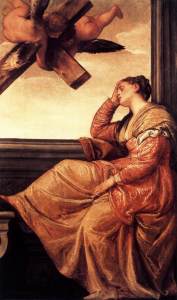
St. Helena
Thanks for returning to this space again this week! Your interest in the Lectionary inspires me! Next Sunday coincides with Holy Cross Day on our church calendar (September 14), listed among the Lesser Festivals and Commemorations in the ELCA. It is not uncommon to highlight the Lesser Festivals, especially when they fall on a Sunday. (Sidebar: Here’s a nice explanation of how we handle such things within our denomination). And some background for the good of the cause: Holy Cross Day commemorates the cross on which Jesus was crucified—not merely as an instrument of death, but as a symbol of redemption and divine love. The feast traces its origins to St. Helena, mother of Emperor Constantine, who journeyed to Jerusalem c. 326 CE and, according to tradition, discovered the True Cross at the site of Christ’s crucifixion. Sometime later, Constantine dedicated the Church of the Holy Sepulchre on September 13–14, 335, marking the first public veneration of the cross. The feast also recalls the recovery of the cross in 628 A.D. by Emperor Heraclius, who reclaimed it from Persian forces and returned it to Jerusalem. Over time, Holy Cross Day became a universal Christian observance, celebrated by Catholics, Orthodox, Anglicans, Lutherans, and others. Unlike Good Friday, which focuses on Christ’s suffering, this feast exalts the cross as a “tree of life”, a sign of victory, healing, and hope. In liturgy and devotion, the cross is lifted high—not to glorify suffering, but to proclaim the transformative power of divine love. I’m offering a musical selection today that comes out of this tradition.
** Note 1: Links to outside references are bolded and italicized and are meant for further reading or research on your part. While the text I am including in the blog is my own, I am pulling from a multitude of sites for ideas and connections. ** Note 2: In my increasing use of A.I. (Copilot), I will cite sourcing of how I am using the tool, if necessary. I don’t want that to be overly cumbersome, but I am gradually incorporating more tools. I am exploring the A.I. world this summer prior to my next teaching semester. As you can imagine, it is a great challenge right now and will forever change the face of education!
** Note 3: The images I include in the blog are drawn from Wikimedia Commons to the fullest extent possible.
My source for the Bible readings each week is the Bible Gateway website. I generally use the NRSVUE translation.
The readings for Holy Cross Day converge around the mystery and majesty of the cross as both a symbol of suffering and a source of salvation. In Numbers, the bronze serpent lifted by Moses prefigures Christ’s crucifixion, where healing comes through looking in faith. John 3:13–17 deepens this image, revealing that the Son of Man must be lifted up so that all who believe may have eternal life—not just life after death, but a new, abundant life marked by spiritual rebirth and belonging. This passage, often reduced to the familiar “John 3:16,” gains its full power when read in context: Jesus speaks to Nicodemus about the radical nature of God’s love, a love that chooses vulnerability and sacrifice over condemnation. 1 Corinthians and Psalm 98 echo this paradox and promise—where the cross, foolish to the world, becomes the wisdom of God, and all creation is invited to sing of the victory won through love.
“Describe the common themes among the readings for Holy Cross Day.” Copilot, 4 September 2025, Copilot website.
LUTHER’S METHOD OF BIBLE READING A Revision of the Lectio Divina (Augustinian)
Three Steps Oratio (Prayer): This is the starting point, where one humbly prays for the Holy Spirit’s guidance to understand God’s Word. Luther emphasized that prayer prepares the heart and mind to receive divine wisdom.
Meditatio (Meditation): This involves deeply engaging with Scripture, not just reading it but reflecting on it repeatedly. Luther encouraged believers to “chew on” the Word, allowing its meaning to sink in and shape their thoughts and actions.
Tentatio (Struggle): Often translated as “trial” or “temptation,” this refers to the challenges and spiritual battles that arise as one seeks to live according to God’s Word. Luther saw these struggles as a way God refines faith, making it more resilient and authentic.
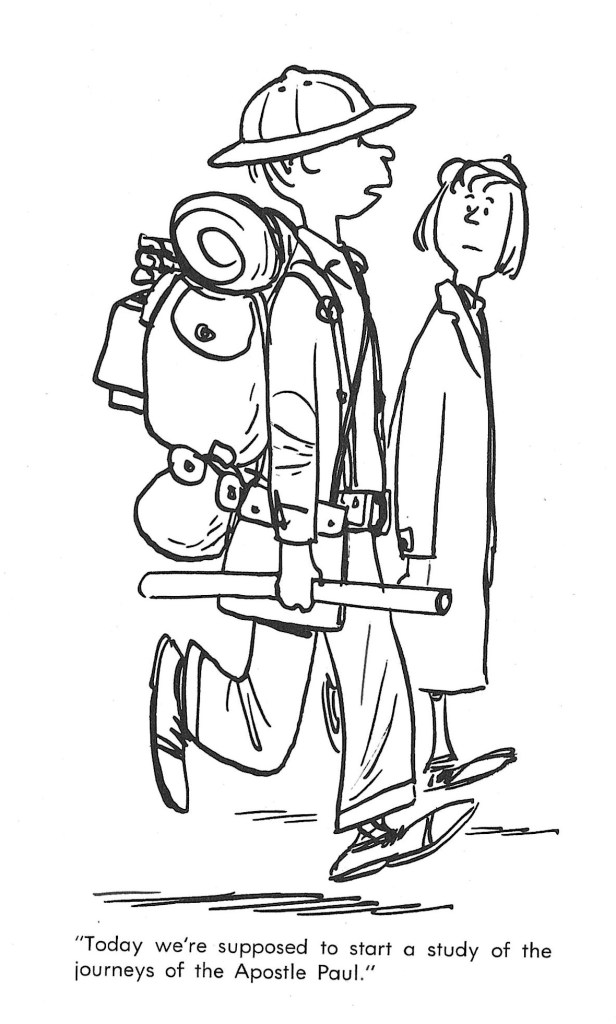
1960s Lutheran humor from Charles Schultz
The First Reading: Numbers 21: 4b-9
4 From Mount Hor they set out by the way to the Red Sea, to go around the land of Edom, but the people became discouraged on the way. 5 The people spoke against God and against Moses, “Why have you brought us up out of Egypt to die in the wilderness? For there is no food and no water, and we detest this miserable food.” 6 Then the Lord sent poisonous serpents among the people, and they bit the people, so that many Israelites died. 7 The people came to Moses and said, “We have sinned by speaking against the Lord and against you; pray to the Lord to take away the serpents from us.” So Moses prayed for the people. 8 And the Lord said to Moses, “Make a poisonous serpent, and set it on a pole, and everyone who is bitten shall look at it and live.” 9 So Moses made a serpent of bronze and put it upon a pole, and whenever a serpent bit someone, that person would look at the serpent of bronze and live.
The Gospel: John 3: 13-17
13 No one has ascended into heaven except the one who descended from heaven, the Son of Man. 14 And just as Moses lifted up the serpent in the wilderness, so must the Son of Man be lifted up, 15 that whoever believes in him may have eternal life. 16 “For God so loved the world that he gave his only Son, so that everyone who believes in him may not perish but may have eternal life. 17 “Indeed, God did not send the Son into the world to condemn the world but in order that the world might be saved through him.
Reflection: Lifted for Healing
In exploring the Lectionary each week, the Old Testament passage typically provides context for the Gospel reading, and that is certainly the case for Holy Cross Day. Here’s a quick summary of each.
Moses and the Bronze Serpent (Jean-Charles Frontier, 1743)
Numbers 21:4b–9 recounts a moment of crisis and mercy during Israel’s wilderness journey. As the people grow impatient and speak against God and Moses, they are punished with fiery serpents whose bites prove deadly. In response to their repentance, God instructs Moses to craft a bronze serpent and lift it on a pole—anyone who looks at it after being bitten is healed. This passage reveals a powerful pattern: divine judgment met with divine mercy, and healing offered not by removing danger, but by redirecting the gaze toward hope.
John 3:13–17 presents a powerful summary of the Gospel message through Jesus’ conversation with Nicodemus, a Pharisee who secretly visited Jesus at night. Jesus explains that just as Moses lifted up the serpent in the wilderness, so must the Son of Man be lifted up—pointing to his crucifixion as the means by which eternal life is offered. The passage culminates in the declaration that “God so loved the world that He gave His only Son,” emphasizing divine love as the foundation of salvation. Crucially, it affirms that Jesus was sent not to condemn the world, but to save it, offering redemption to all who believe.
What are we to make of these readings? Both passages are imbedded in powerful moments and difficult to understand, in my mind, without deeper context. Jennifer Garcia Bashaw, Associate Professor of New Testament and Christian Ministry at Campbell University, provides a compelling commentary that I am leaning on heavily here. Let me summarize a bit. She makes the case that we tend to read John 3:16 — one of the most recognizable Bible passage of all — as a “stand-alone” verse and misrepresent its true meaning. The key, according to Bashaw, is the reference in preceding verses (3:14-15) to the “bizarre story about a bronze snake” (referencing Numbers). Those fiery serpents God sent are wreaking havoc on the wandering Israelites, and their only salvation is to gaze upon the lifted serpent of bronze. That image reminds them of their own self-destruction — in Bashaw’s words, “the evil of empire, the oppression they participate in, the violence that beats at the heart of society, the scapegoating tendencies of people who allow innocent people to suffer for sins that aren’t their own.” And here’s the connection John is drawing: like that bronze serpent, Jesus’ death on the cross (“Lift High the Cross”), “reveals humanity’s self-destructive nature that drives societies to fear and violence.” The cross, then, becomes “the symbol of misplaced blame and oppressive violence.” Jesus becomes the scapegoat, executed by the powerful and a reminder of how far we have fallen. Our healing — our salvation — starts with recognizing this fact, believing it deeply in our souls.
John’s Gospel underscores this call to belief with remarkable frequency. He uses some variation of the verb believe eighty-four times—far more than Matthew, Mark, and Luke combined. Faith, then, rests not on abstract doctrine but on a lived belief in a Savior whose life, death, and resurrection transformed history and offers hope to a fallen world. This is good news that we need to share!
Soli Deo Gloria!
Prayer Reflection: Two from Henri Nouwen
Henri Nouwen (1932-1996)
Before Birth and After Death I am a human being who was loved by God before I was born and whom God will love after I die. This brief lifetime is my opportunity to receive love, deepen love, grow in love, and give love. When I die love continues to be active, and from full communion with God I am present by love to those I leave behind.
Discovering our True Self The spiritual journey is essentially different from engaging in hero worship or joining a therapeutic movement. These forms of following are typically centered on “me.” In hero worship, we may be looking for a vicarious self by losing our identity in that of the hero. In many therapeutic movements, we may be searching for inner harmony or healing. When Jesus says, “Follow me,” he is calling us to let go of “me” and to gradually say, “You, Lord, are the one.” Jesus calls us to leave our “me” world, trusting that being at home in God we will discover who we truly are.
A Musical Offering: Nos Autem Gloriari
Nos autem gloriari is a liturgical chant rooted in Galatians 6:14 which declares: “But far be it from me to glory except in the cross of our Lord Jesus Christ, by which the world has been crucified to me, and I to the world.” This verse became the foundation for the Latin Introit used on Holy Thursday and the Feast of the Exaltation of the Holy Cross, emphasizing the paradoxical glory of Christ’s crucifixion. The chant was formalized in the Gregorian tradition and later inspired Renaissance composers like Palestrina, whose motet setting remains a sacred choral standard. Over centuries, Nos autem has served as a musical and theological anchor, proclaiming the cross as both a sign of suffering and the gateway to redemption. The lyrics also reference Psalm 67.
The Lyrics (Latin/English)
Nos autem gloriari oportet in cruce Domini nostri Jesu Christi: In quo est salus, vita et resurrectio nostra: Per quem salvati et liberati sumus. Psalmus: Deus misereatur nostri, et benedicat nobis: Illuminet vultum suum super nos, et misereatur nostri.
But it befits us to glory in the Cross of our Lord Jesus Christ, in whom is our salvation, life, and resurrection; through whom we are saved and set free. Psalm: May God have mercy on us and bless us; may He cause the light of His countenance to shine upon us, and may He have mercy on us.
The Choir of the Basilica of the National Shrine of the Immaculate Conception is a professional vocal ensemble based in Washington, D.C., dedicated to enhancing sacred liturgy through music. Comprising highly trained singers from the region, the choir performs a wide repertoire—from Gregorian chant and Renaissance polyphony to contemporary sacred compositions—under the direction of Dr. Peter Latona. Known for its musical excellence and spiritual depth, the choir regularly sings for major liturgical celebrations, including papal visits and national broadcasts, serving as a voice of beauty and devotion within the Catholic Church.
“Provide a description of the Choir of the Basilica of the National Shrine,” 7 September 2025, Copilot Website.
Faithful Conversations Updates
Regular worship resumed last week at ELC (9:30). Our in-person lectionary discussions will start up again next Sunday — September 14th. We will meet from 10:45-11:30 in the church library each week, with some exceptions. Join us for a free-flowing discussion of the Sunday readings. No prior knowledge is necessary! ALL ARE WELCOME!
📖 ARE YOU READY TO READ THE BIBLE IN A YEAR? Starting on 28 September, join our Bible 365 Challenge—a yearlong journey through Scripture for individuals, families, and groups. As Lutherans, we know God’s Word shapes our lives and deepens our faith. Luther once said, “The Bible is alive… it lays hold of me.” Whether you choose the print path or go digital, we’ll grow together—with daily readings, mutual support, and spiritual connection. Pastor Jen will offer a “Bible Reading Kick-Off Class” on 21 and 28 September (choose either) at 11:00 in the Gathering Area. ALL ARE WELCOME!
“History must be imagined before it can be understood.” (David Blight)
Philemon(fih-LEE-muhn), Paul’s shortest letter, shows up once every three years in the Revised Common Lectionary. Just 25 verses long, this oft-overlooked epistle opens a deeply personal window into the early Christian movement—a moment of moral tension, complex relationships, and spiritual transformation. After spending some time with Philemon, Paul, and Onesimus over the past several days, I decided to take the opportunity to explore the story more fully and will do that in my reflections. It is a fascinating letter.
Before getting to that, however, some further background is in order (and a good example of the difficulties inherent in Biblical interpretation). One of my guiding quotes regarding the study of history comes from Yale historian David Blight, reminding us that we must imagine a world far different from our own to bring history alive. Imagine this, for example. In the generation leading up to the Civil War, pro-slavery advocates and abolitionists BOTH drew on Biblical texts to support their contrary positions. Paul’s appeal to Philemon to receive Onesimus, his escaped slave, “no longer as a slave, but as a beloved brother” suggests that slavery was wrong, yet Paul’s letter was also used as an example of the Bible sanctioning human bondage. Soldier and author John Richter Jones, for example, argued just that in his 1861 treatise, Slavery Sanctioned by the Bible. Consider that as you explore it this week.
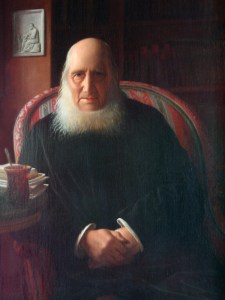
N.F.S. Grundtvig
As always, thanks for your ongoing interest in the Lectionary! We have one commemoration on the ELCA calendar this week. Nikolaj Frederik Severin Grundtvig (b. 1783) was a Danish pastor, poet, historian, and educational reformer whose legacy reshaped both church and society. He championed a living Christianity rooted in sacramental tradition and cultural heritage, opposing sterile rationalism in favor of spiritual vitality. Grundtvig is best remembered for founding the folk high school movement, which democratized education and inspired a new Danish nationalism grounded in enlightenment, community, and human dignity. He died on 2 September in 1872. (Note: All commemorations within the ELCA calendar are found on pages 14-17 of our hymnal — the ELW).
** Note 1: Links to outside references are bolded and italicized and are meant for further reading or research on your part. While the text I am including in the blog is my own, I am pulling from a multitude of sites for ideas and connections. ** Note 2: In my increasing use of A.I. (Copilot), I will cite sourcing of how I am using the tool, if necessary. I don’t want that to be overly cumbersome, but I am gradually incorporating more tools. I am exploring the A.I. world this summer prior to my next teaching semester. As you can imagine, it is a great challenge right now and will forever change the face of education!
** Note 3: The images I include in the blog are drawn from Wikimedia Commons to the fullest extent possible.
Common Themes Among the Readings
Pentecost 13 Readings
Deuteronomy 30: 15-20 Psalm 1 Philemon 1-21 Luke 14: 25-33
My source for the Bible readings each week is the Bible Gateway website. I generally use the NRSVUE translation.
The readings for Pentecost 13 (Year C) center on the profound theme of choice and commitment in the life of faith. Deuteronomy 30 and Psalm 1 both present a stark contrast between the way of life and the way of death, urging the faithful to choose obedience and delight in God’s law as the path to flourishing. Luke 14 intensifies this call by demanding radical discipleship—renouncing possessions, relationships, and even self-interest to follow Christ wholeheartedly. In Philemon, Paul models this costly love by appealing for reconciliation and transformation, asking Philemon to receive Onesimus not as a slave but as a beloved brother. Together, these texts challenge believers to count the cost, embrace the cross, and walk the path of righteousness with courage and grace.
“Describe the common themes among the readings for Pentecost 13.” Copilot, 30 August 2025, Copilot website.
LUTHER’S METHOD OF BIBLE READING A Revision of the Lectio Divina (Augustinian)
Three Steps Oratio (Prayer): This is the starting point, where one humbly prays for the Holy Spirit’s guidance to understand God’s Word. Luther emphasized that prayer prepares the heart and mind to receive divine wisdom.
Meditatio (Meditation): This involves deeply engaging with Scripture, not just reading it but reflecting on it repeatedly. Luther encouraged believers to “chew on” the Word, allowing its meaning to sink in and shape their thoughts and actions.
Tentatio (Struggle): Often translated as “trial” or “temptation,” this refers to the challenges and spiritual battles that arise as one seeks to live according to God’s Word. Luther saw these struggles as a way God refines faith, making it more resilient and authentic.
1960s Lutheran humor from Charles Schultz
The Second Reading: Philemon 1-21
Salutation 1 Paul, a prisoner of Christ Jesus, and Timothy our brother, To our beloved coworker Philemon, 2 to our sister Apphia, to our fellow soldier Archippus, and to the church in your house: 3 Grace to you and peace from God our Father and the Lord Jesus Christ.
Philemon’s Love and Faith 4 I thank my God always when I mention you in my prayers, 5 because I hear of your love for all the saints and your faith toward the Lord Jesus. 6 I pray that the partnership of your faith may become effective as you comprehend all the good that we share in Christ.7 I have indeed received much joy and encouragement from your love, because the hearts of the saints have been refreshed through you, my brother.
Paul’s Plea for Onesimus 8 For this reason, though I am more than bold enough in Christ to command you to do the right thing, 9 yet I would rather appeal to you on the basis of love—and I, Paul, do this as an old man and now also as a prisoner of Christ Jesus. 10 I am appealing to you for my child, Onesimus, whose father I have become during my imprisonment. 11 Formerly he was useless to you, but now he is indeed useful to you and to me. 12 I am sending him, that is, my own heart, back to you. 13 I wanted to keep him with me so that he might minister to me in your place during my imprisonment for the gospel, 14 but I preferred to do nothing without your consent in order that your good deed might be voluntary and not something forced. 15 Perhaps this is the reason he was separated from you for a while, so that you might have him back for the long term, 16 no longer as a slave but more than a slave, a beloved brother—especially to me but how much more to you, both in the flesh and in the Lord. 17 So if you consider me your partner, welcome him as you would welcome me. 18 If he has wronged you in any way or owes you anything, charge that to me. 19 I, Paul, am writing this with my own hand: I will repay it. I say nothing about your owing me even your own self. 20 Yes, brother, let me have this benefit from you in the Lord! Refresh my heart in Christ.21 Confident of your obedience, I am writing to you, knowing that you will do even more than I ask. 22 One thing more: prepare a guest room for me, for I am hoping through your prayers to be restored to you.
Final Greetings and Benediction 23 Epaphras, my fellow prisoner in Christ Jesus, sends greetings to you,24 and so do Mark, Aristarchus, Demas, and Luke, my coworkers. 25 The grace of the Lord Jesus Christ be with your spirit.
Take time to watch this excellent overview of Philemon from the Bible Project. We will be referencing the work of the Bible Project in our Bible 365 Challenge starting in late September, especially the summary videos. They are especially good if you are a visual learner!
Paul is traditionally credited with thirteen letters in the New Testament. Of these, seven are considered undisputed—Romans, 1 and 2 Corinthians, Galatians, Philippians, 1 Thessalonians, and Philemon—widely accepted as authentically Pauline. The remaining six—Ephesians, Colossians, 2 Thessalonians, 1 and 2 Timothy, and Titus—are disputed, raising questions about authorship, theological development, and historical context. Philemon stands apart in its intimacy. It centers on a triangular relationship: Paul, the imprisoned apostle; Philemon, a house church leader and slaveholder; and Onesimus, an enslaved man who has encountered Paul and returned transformed.
Here’s a review of the basic facts: Written from a prison cell around 60-62 CE, Paul’s letter to Philemon is his shortest — merely 355 Greek words long. The key figures are Philemon, a Christian leader and slave owner in Colossae, and Onesimus, his runaway slave who encountered Paul and became a believer (sidebar: we never hear from Onesimus). Paul sends Onesimus back to Philemon with this letter, appealing for reconciliation and a transformed relationship. Rather than commanding Philemon, Paul diplomatically urges him to receive Onesimus not as a slave, but as a beloved brother in Christ.
What can we take away from this personal correspondence from the earliest days of the Christian movement? First, the radical nature of the letter is best understood in context. In the Greco-Roman world of Paul’s time, slavery was a widespread and socially accepted institution, with enslaved people making up a significant portion of the population and serving in roles from manual labor to skilled professions. Estimates are that roughly 35% of the population was enslaved! Slaves were considered property with no legal rights, though manumission (freedom) was possible and sometimes led to citizenship. Enslavement wasn’t based on race but on status, and people became slaves through war, birth, or debt. Paul’s letter to Philemon boldly challenges this system by urging Philemon to see his slave Onesimus not as property but as a brother in Christ. Paul chooses his words carefully (note verse 8 and beyond) but leaves little doubt of his intentions.
A.I. Generated Image
Second, this somewhat obscure letter from 2000 years ago speaks to us across the ages. Imagine Paul and Onesimus sitting in that jail cell, working through the particulars of the letter. Imagine the fear that Onesimus must have experienced as he traveled back to his former master! His willingness, I suspect, sheds light on his relationship of trust with Paul. As spiritual descendants of this story, the Apostle’s call for radical reconciliation, dignity, and spiritual kinship that transcends social status is breath-taking. Paul’s appeal to Philemon invites believers to embody grace—not just in personal forgiveness, but in how they view and treat others, especially those marginalized or wronged. Our challenge is to move beyond transactional relationships and embrace a community defined by love, mutual respect, and shared identity in Christ. How will we respond to that challenge?
Soli Deo Gloria!
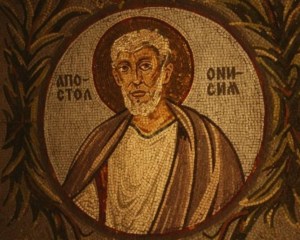
Onesimus (Medieval Depiction)
Postscript: What happened to Onesimus? There is much mystery there. Onesimus became a symbol of Christian transformation and reconciliation. After encountering Paul in Rome and converting to Christianity, he returned to Philemon bearing Paul’s appeal for mercy and brotherhood. Early church tradition holds that Onesimus was later freed and rose to prominence as a church leader, possibly serving as bishop of Ephesus. His legacy endures as a testament to grace, justice, and the radical reordering of relationships within the early Christian community.
Prayer Reflection: The Imitation of Christ
Thomas à Kempis (1380-1472)
The Imitation of Christ by Thomas à Kempis is a 15th-century devotional classic that urges readers to renounce worldly vanities and cultivate a life of humility, self-denial, and spiritual intimacy with Christ. Structured in four books, it offers meditative reflections on the interior life, the comfort of divine presence, and the transformative power of the Eucharist. Revered across centuries and traditions, it remains one of the most widely read Christian texts after the Bible, guiding seekers toward a quiet, contemplative discipleship. Here is a representative passage:
The life of a good religious person should shine in all virtue and be inwardly as it appears outwardly . . . We ought every day to renew our purpose in God, and to stir our hearts to fervor and devotion, as though it were the first day of our conversion. And we ought daily to pray and say: Help me, my Lord Jesus, that I may persevere in good purpose and in your holy service unto my death, and that I may now today perfectly begin, for I have done nothing in time past.
A Musical Offering: The Doxology (some nostalgia here)
Bishop Thomas Ken (1637-1711)
The well-known doxology that begins “Praise God from whom all blessings flow” was written by Anglican Bishop Thomas Ken in the late 1600s as part of hymns for students at Winchester College. First published in 1709, it quickly became a regular part of Christian worship, loved for its brief and powerful praise of the Trinity. Its style echoes older Jewish and early Christian traditions, where short songs of praise were used in prayer and worship. The tune often used for the doxology is called the “Old Hundredth,” written by Louis Bourgeois in 1551 for the Genevan Psalter, a Reformation-era songbook. (Note: The familiar hymn, “All People That on Earth Do Dwell,” is the tune associated with the Doxology — it is hymn 883 in the ELW). Though originally paired with Psalm 134, it became famous through Psalm 100 (“Old Hundredth”) and remains a central melody in Protestant worship because of its strong, simple beauty and deep historical roots. Like many of you, I grew up with this song, and especially associate it with potluck suppers in church basements or family gatherings at Thanksgiving and Christmas — and yes, how well I recall my father always having to clarify, ahead of time, how we were going to finish the song! (there are two versions of the last line) And, there were always those in our midst that manage to include rich harmonies during the “Amen!” The musical interpretation I posted here comes from jazz pianist Chuck Marohnic. Feel free to sing along!
Various Lyrics Associated With the Doxology
(The original) Praise God from whom all blessings flow, Praise Him all creatures here below, Praise Him above, ye heavenly host, Praise Father, Son, and Holy Ghost.
And Prayers Before Eating (especially in church basements!) Be present at our table, Lord; Be here and everywhere adored. Thy children bless, and grant that we May feast in paradise with Thee. Amen.
Or . . . Be present at our table, Lord; Be here and everywhere adored. Thy mercies bless, and grant that we May strengthened for Thy service be. Amen.
Chuck Marohnic (b. 1940) is a renowned jazz pianist and educator whose career has spanned collaborations with legends like Chet Baker and Joe Henderson, as well as decades of teaching at Arizona State University. After retiring from academia, he turned his focus toward integrating jazz with spiritual practice, serving as a music minister in various Christian denominations. He co-founded Sanctuary Jazz, blending sacred themes with improvisational depth.
Faithful Conversations Updates
Regular worship will resume this week at ELC at 9:30. Sunday is also designated across the ELCA as “God’s Work, Our Hands” Sunday and after an abbreviated service, we will have a variety of activities going on related to that. Our in-person lectionary discussions will resume on Sunday, 14 September.
📖 Ready to read the Bible in a year? Starting in late September, join our Bible 365 Challenge—a yearlong journey through Scripture for individuals, families, and groups. As Lutherans, we know God’s Word shapes our lives and deepens our faith. Luther once said, “The Bible is alive… it lays hold of me.” Whether you choose the print path or go digital, we’ll grow together—with daily readings, mutual support, and spiritual connection. Details are coming soon. Let’s dive in, walk together, and let the Word come alive in us!