Faithful Conversations #126
Introduction to Readers
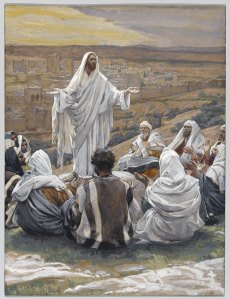
(c. 1890)
As Christians, we regularly engage with the origin stories of our faith—moments when the ordinary becomes sacred and helps shape our identity. This week’s Gospel reading offers one of those moments. An unnamed disciple asks Jesus to teach them how to pray, and in just a few verses (found in both Luke and Matthew), Jesus offers what we now call The Lord’s Prayer. If you grew up in the church, you’ve likely spoken this prayer thousands of times. As Lutherans, we place it at the center of liturgical life. When we say it aloud, we form community, build trust, and reconnect with God’s reign. Over time, I’ve learned that this prayer echoes the Jewish Amidah—a daily sequence of blessings that praised God’s name, asked for sustenance, and sought deliverance. Jesus knew and practiced that tradition.
Early Christian communities quickly embraced the prayer. Around 95 CE, the Didache instructed believers to pray it three times a day. That simple practice helped shape early Christian ethics and identity. The Didache also introduced a doxology—“For yours is the power and the glory forever”—which added depth to the scriptural text. The longer doxology many of us know—“For thine is the kingdom, and the power, and the glory…”—doesn’t appear in the earliest manuscripts. It entered worship through fourth-century church orders and became prominent in Protestant traditions thanks to the King James Bible and the Book of Common Prayer. Lutheran liturgy kept it as a bold affirmation of God’s sovereignty

(1483-1546)
Martin Luther spoke often about prayer, and especially The Lord’s Prayer. In the Small Catechism, he highlighted its simplicity. He’s reputed to have said, “The fewer the words the better the prayer.” He also criticized Christians for praying it without thought: “The Lord’s Prayer is the greatest martyr on earth. For everyone tortures and abuses it; few take comfort and joy in its proper use” (doesn’t that sound like Luther!)
Today, we Lutherans debate which translation to use on Sunday mornings—a squabble that always leaves me a bit amused. In the 1960s, a more contemporary version emerged and entered our Lutheran Book of Worship (the green hymnal) in 1978 and beyond. Traditionalists favor the King James phrasing, so the real debate often comes down to which Bible translation we prefer. I’ve included some resources below that will give you a greater sense of that, including how the prayer sounds in German and Norwegian, the language of many of our ancestors in the upper Great Lakes region.
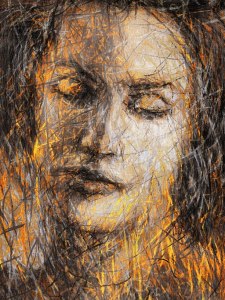
(Modern Interpretation)
Thanks for visiting this space again this week—I deeply appreciate your commitment to digging into these readings with me. The ELCA calendar offers several commemorations this week; check out page 16 of the ELW to explore them. One standout is the remembrance of Mary Magdalene on July 22. Mary was a woman of fierce devotion, personal transformation, and fearless witness. After Jesus delivered her from seven demons, she followed him faithfully, stood by the cross, and became the first to proclaim the resurrection. While history often misunderstood her, today the ELCA rightly honors her as an Apostle.
This week’s reflections center on the Gospel, with a nod to Psalm 138. I’ve also included a prayer reflection and a powerful musical interpretation of The Lord’s Prayer by a contemporary composer.
The Lord’s Prayer
(ELCA Traditional)
Our Father, who art in heaven,
hallowed be thy name, thy kingdom come,
thy will be done, on earth as it is in heaven.
Give us this day our daily bread;
and forgive us our trespasses,
as we forgive those who trespass against us;
and lead us not into temptation but deliver us from evil.
(added) For thine is the kingdom, and the power, and the glory,
forever and ever. Amen.
Matthew 6: 9-13
(King James Version)
9 After this manner therefore pray ye: Our Father which art in heaven, Hallowed be thy name. 10 Thy kingdom come, Thy will be done in earth, as it is in heaven. 11 Give us this day our daily bread. 12 And forgive us our debts, as we forgive our debtors. 13 And lead us not into temptation, but deliver us from evil: For thine is the kingdom, and the power, and the glory, for ever. Amen.
(Luke 11: 2-4 is the other source for the prayer in the New Testament, included in this week’s Gospel)
The Lord’s Prayer
(ELCA Contemporary)
Our Father in heaven, hallowed be your name, your kingdom come, your will be done, on earth as in heaven. Give us today our daily bread. Forgive us our sins as we forgive those who sin against us. Save us from the time of trial and deliver us from evil.
(added) For the kingdom, the power, and the glory are yours, now and forever. Amen.
Here is the version of the Lord’s Prayer Luther used in the early 16th century.
Vater unser im Himmel,
Geheiligt werde dein Name.
Dein Reich komme.
Dein Wille geschehe,
wie im Himmel, also auch auf Erden.
Unser tägliches Brot gib uns heute.
Und vergib uns unsere Schuld,
wie wir vergeben unsern Schuldigern.
Und führe uns nicht in Versuchung,
sondern erlöse uns von dem Übel.
Denn dein ist das Reich und die Kraft und die Herrlichkeit in Ewigkeit.
Amen.
Here is the the version of the prayer my Norwegian ancestors used in the mid-19th century.
Fader vor, du som er i himmelen!
Helliget vorde ditt navn;
komme ditt rike;
skje din vilje, som i himmelen, så og på jorden;
giv oss i dag vårt daglige brød;
og forlat oss vår skyld, som vi og forlater våre skyldnere;
og led oss ikke inn i fristelse,
men fri oss fra det onde.
For ditt er riket og makten og æren i evighet. Amen.
** Note 1: Links to outside references are bolded and italicized and are meant for further reading or research on your part. While the text I am including in the blog is my own, I am pulling from a multitude of sites for ideas and connections.
** Note 2: In my increasing use of A.I. (Copilot), I will cite sourcing of how I am using the tool, if necessary. I don’t want that to be overly cumbersome, but I am gradually incorporating more tools. And, by the way, I am exploring the A.I. world this summer prior to my next teaching semester. As you can imagine, it is a great challenge right now and will forever change the face of education!
** Note 3: The images I include in the blog are drawn from Wikimedia Commons to the fullest extent possible.
Common Themes Among the Readings
Pentecost 7 Readings
Genesis 18: 20-32
Psalm 138
Colossians 2: 6-15 (16-19)
Luke 11: 1-13
My source for the Bible readings each week is the Bible Gateway website. I generally use the NRSVUE translation.
The readings for the Seventh Sunday after Pentecost (Year C) center on bold intercession, divine responsiveness, and spiritual rootedness. Abraham’s plea for Sodom in Genesis 18 and Jesus’ teaching on persistent prayer in Luke 11 both highlight the power of faithful dialogue with God. Psalm 138 affirms that God answers those who call and lifts up the lowly, while Colossians 2 urges believers to remain grounded in Christ, resisting distractions and trusting in the fullness of divine grace. Together, these texts invite the faithful to approach God with confidence, knowing that divine mercy meets human need with transformative love.
“Describe the common themes among the readings for Pentecost 7.” Copilot, 19 July 2025, Copilot website.
Psalm 138
I give you thanks, O Lord,with my whole heart;
before the gods I sing your praise;
2 I bow down toward your holy temple
and give thanks to your name for your steadfast love and your faithfulness,
for you have exalted your name and your word
above everything.
3 On the day I called, you answered me;
you increased my strength of soul.
4 All the kings of the earth shall praise you, O Lord,
for they have heard the words of your mouth.
5 They shall sing of the ways of the Lord,
for great is the glory of the Lord.
6 For though the Lord is high, he regards the lowly,
but the haughty he perceives from far away.
7 Though I walk in the midst of trouble,
you preserve me against the wrath of my enemies;
you stretch out your hand,
and your right hand delivers me.
8 The Lord will fulfill his purpose for me;
your steadfast love, O Lord, endures forever.
Do not forsake the work of your hands.
TRY LUTHER’S METHOD OF BIBLE READING — GIVE IT A TRY!
A Revision of the Lectio Divina, a method he learned in his Augustinian training
Three Steps
Oratio (Prayer): This is the starting point, where one humbly prays for the Holy Spirit’s guidance to understand God’s Word. Luther emphasized that prayer prepares the heart and mind to receive divine wisdom.
Meditatio (Meditation): This involves deeply engaging with Scripture, not just reading it but reflecting on it repeatedly. Luther encouraged believers to “chew on” the Word, allowing its meaning to sink in and shape their thoughts and actions.
Tentatio (Struggle): Often translated as “trial” or “temptation,” this refers to the challenges and spiritual battles that arise as one seeks to live according to God’s Word. Luther saw these struggles as a way God refines faith, making it more resilient and authentic.
Luke 11: 1-13
He was praying in a certain place, and after he had finished, one of his disciples said to him, “Lord, teach us to pray, as John taught his disciples.” 2 So he said to them, “When you pray, say:
Father, may your name be revered as holy.
May your kingdom come.
3 Give us each day our daily bread.
4 And forgive us our sins,
for we ourselves forgive everyone indebted to us.
And do not bring us to the time of trial.”
5 And he said to them, “Suppose one of you has a friend, and you go to him at midnight and say to him, ‘Friend, lend me three loaves of bread, 6 for a friend of mine has arrived, and I have nothing to set before him.’ 7 And he answers from within, ‘Do not bother me; the door has already been locked, and my children are with me in bed; I cannot get up and give you anything.’ 8 I tell you, even though he will not get up and give him anything out of friendship, at least because of his persistence he will get up and give him whatever he needs.
9 “So I say to you, Ask, and it will be given to you; search, and you will find; knock, and the door will be opened for you. 10 For everyone who asks receives, and everyone who searches finds, and for everyone who knocks, the door will be opened. 11 Is there anyone among you who, if your child asked for a fish, would give a snake instead of a fish? 12 Or if the child asked for an egg, would give a scorpion? 13 If you, then, who are evil, know how to give good gifts to your children, how much more will the heavenly Father give the Holy Spirit to those who ask him!”
Reflections: The Sacred Audacity of Prayer
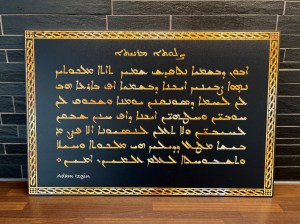
Long ago and far away, perhaps on a hillside near the Sea of Galilee, something powerful happened. A disciple asked Jesus to teach them how to pray—recall they had seen Jesus pray multiple times. It was a simple request that unlocked one of the most enduring texts in Christian tradition. Jesus responded with the Lord’s Prayer, a model of beautiful simplicity — he likely spoke the words in Aramaic. These few lines (verses 2-4) speak of a God who is both holy and near, whose kingdom breaks into daily life and whose mercy sustains our relationships and our souls. The prayer itself reveals not just how to speak to God, but how to see the world—through dependence, forgiveness, and trust. There are multiple versions of this prayer. I recently read the First Nations Version (2021), drawn from Luke’s Gospel, and it is filled with delightful imagery. Consider these opening lines: O Great Spirit, our Father from above, your name is sacred and holy. Bring your good road to us, where the beauty of your ways in the spirit world above is reflected in the earth below. Hard to improve on that.

(A.I. Generated, 2023)
Jesus goes on to tell a story (verses 5-13): a midnight visitor knocks persistently on a friend’s door, seeking bread. The friend eventually rises not out of kindness, but because the visitor refuses to quit. The parable honors shameless persistence, reminding us that prayer isn’t about polished words—it’s about bold approach. Jesus follows with the familiar triad: ask, seek, knock. These aren’t passive gestures; they signal movement toward a God who responds with generosity and gives the Holy Spirit to those who truly ask.
Psalm 138 deepens this theme. The psalmist recalls a time when they called to God—and God answered. Not only with words, but with strength: On the day I called, you answered me; you increased my strength of soul (verse 3). I love that line! The Psalmist echoes Luke’s midnight visitor who dares to knock, and the disciple who dares to ask. Both the psalm and the Gospel proclaim a God who hears and strengthens, a God whose steadfast love endures and whose purposes do not falter.
In the week ahead, I encourage you to sit with this prayer and let it resonate. In his 1535 letter A Simple Way to Pray, written to his barber (that really humanizes Luther, doesn’t it?), Luther described how he personally used the Lord’s Prayer as a framework for deeper meditation—sometimes lingering on a single petition if it stirred his heart. He emphasized quality over quantity, urging believers to pray with sincerity and attentiveness rather than rote repetition. The prayer calls us into a bold intimacy with God and guides us on the road of transformation.
Soli Deo Gloria!
Prayer Reflection: Meditation on the Lord’s Prayer
Alfred Delp, a Jesuit priest, was executed by the Nazis on February 2, 1945, for his refusal to condone the Third Reich and leave the Jesuit order — resistors like Delp and Bonhoeffer are amazing. While in prison, he meditated on the Lord’s Prayer. Here are excerpts of his thoughts on the words, “Hallowed be thy name.”
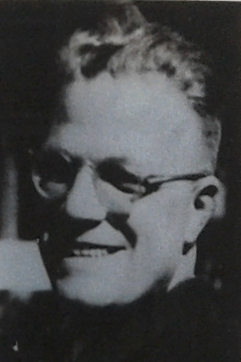
Human nature is so constituted that it must have something holy that it can worship, otherwise it becomes cramped and distorted, and instead of a holy object of veneration something else will take its place. I ought to know for I have just emerged from a murderous dialogue with such a self-appointed object of veneration. These substitute values are far more autocratic and demanding than the living God himself. They have no idea of courtesy or of waiting for their turn…All they know is demand, compulsion, force, threats and liquidation. And woe to anyone who does not conform . . . The word of God should evoke and receive the great veneration this phrase suggests: praise, reverence, awe…The name of God is the holy of holies, the central silence, the thing that above all others calls for humble approach. We not only ought to believe in the truth at the center of our being, in the purpose of our existence, but we should also bear testimony to this belief by the proper fulfilment of our life’s purpose. We should subjugate everything to this law of holiness and reject everything that does not harmonize with it. God, the great object of our veneration, will then also be our whole life . . . Prayer is our way to freedom and education in the method of prayer is the most valuable service that we can give to humankind. It makes it possible for the temple and the altar to again occupy their rightful place and for humanity to humble itself and measure its responsibilities in the name of God.
Source: Plough Magazine, Meditation on the Lord’s Prayer, 2 February 2025.
A Musical Offering: The Lord’s Prayer (Lucy Walker)
Lucy Walker (b. 1998), a young composer from North-East England, is gaining recognition for creating sacred choral music that speaks to the heart. A graduate of Cambridge and former Choral Scholar, she brings both skill and soul to her work. Her recent and enchanting setting of The Lord’s Prayer, premiered in 2025 at York Minster, was written to help people experience the prayer in a fresh and meaningful way, offering a great example of how this powerful prayer continues to inspire artists around the world in the early years of the 21st Century.
Faithful Conversations Updates
Our regular gatherings for discussing the weekly lectionary are on a pause. Summer worship at ELC is at 8:30 in town and 10:15 at Hatfield by the lake. The 8:30 service will be streamed. Please stay in touch!
Looking Ahead: “Bible 365: Journey Through God’s Word, One Day at a Time”
Have you ever wanted to read the entire Bible in a year? Starting this September, our church invites you to do just that through the Bible 365 Challenge. It’s open to everyone—individuals, families, and small groups—and designed to help us explore Scripture together. As Lutherans, we believe God’s Word is at the heart of our faith. Martin Luther once said, “The Bible is alive… it lays hold of me.” When we read daily, we grow in connection—with God and with one another. Our intention is to offer two choices regarding approach, traditional and digital. More details are coming soon in worship, online, and in the bulletin. We’ll walk through this journey as a community, offering support along the way. Are you ready to take the journey? Let’s read, grow, and deepen our faith—together!
