“Character building begins in our infancy and continues until death.” – Eleanor Roosevelt
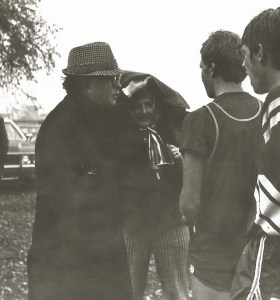
Character has been on my mind this week, stirred by Paul’s words in Romans for Trinity Sunday. The word immediately brings my mother, Cathy, to mind. Let me explain. For 60 years, I have immersed myself in athletics, either as a competitor or a coach. This particular photo—one of the few I have from my athletic days—captures a moment in 1974. My parents stood on the sidelines, enduring brutal weather to watch me compete in a Cross Country race during my senior year at West Fargo High School. Cathy never missed a chance to cheer me on, but beneath her unwavering support ran a fierce competitive streak. If she sensed I wasn’t pushing hard enough or thought I had slipped into self-pity, she wasted no time in setting me straight — she pushed me to persevere. My coaches appreciated her enthusiasm, I have no doubt! She would have wholeheartedly agreed with Eleanor Roosevelt, as she prepared me to face a challenging world. And, incidentally, wisdom often appears in Scripture as a personified woman—this week’s passage from Proverbs is an example. That image, much like the concept of character itself, reminds me of my mother. As part of my reflections this week, I’ll delve into how Paul frames character and how this applies to our lives as Christians.
As always, thanks for your continued interest in exploring the scriptures! And, a shout-out this week to all the fathers or father-figures in our lives. Thanks for everything that you do! We are now beyond the half-year of seasons (Advent, Christmas, Epiphany, Lent, and Easter) and are on the front end of the long season of Pentecost with this question guiding our reading: What does it mean to live out Jesus’ teachings in our chaotic and turmoil-filled world? The blog this week includes some thoughts on the Holy Trinity, Luther’s Trinitarian Prayer, and a joyful organ selection of a Trinity-inspired hymn. And one note: I sprinkle in a few hyperlinks throughout the blog if you care to do further reading — there are italicized and bolded.
The readings for Holy Trinity Sunday emphasize God’s wisdom, majesty, and relational nature. Proverbs 8 presents wisdom as an eternal presence with God, rejoicing in creation and calling humanity to understanding. Psalm 8 marvels at God’s grandeur, questioning humanity’s place in the cosmos while affirming human dignity as stewards of creation. Romans 5 highlights the transformative power of faith, where suffering leads to hope through the love of God poured out by the Holy Spirit. John 16 reveals the Spirit’s role in guiding believers into truth, glorifying Christ, and deepening the connection between the Father, Son, and Holy Spirit.
Romans 5: 1-5 5 Therefore, since we have been justified through faith, we have peace with God through our Lord Jesus Christ, 2 through whom we have gained access by faith into this grace in which we now stand. And we boast in the hope of the glory of God. 3 Not only so, but we also glory in our sufferings, because we know that suffering produces perseverance; 4 perseverance, character; and character, hope.5 And hope does not put us to shame, because God’s love has been poured out into our hearts through the Holy Spirit, who has been given to us.
Check out this introductory segment on Romans for background on this week’s passage. This comes from our friends at the Bible Project. There is a segment on Romans 5-16 as well, if you’re interested. You can find that here, along with many other guides.
TRY LUTHER’S METHOD OF BIBLE READING
A Revision of the Lectio Divina, a method he learned in his Augustinian training (Three Steps)
Oratio (Prayer): This is the starting point, where one humbly prays for the Holy Spirit’s guidance to understand God’s Word. Luther emphasized that prayer prepares the heart and mind to receive divine wisdom.
Meditatio (Meditation): This involves deeply engaging with Scripture, not just reading it but reflecting on it repeatedly. Luther encouraged believers to “chew on” the Word, allowing its meaning to sink in and shape their thoughts and actions.
Tentatio (Struggle): Often translated as “trial” or “temptation,” this refers to the challenges and spiritual battles that arise as one seeks to live according to God’s Word. Luther saw these struggles as a way God refines faith, making it more resilient and authentic.
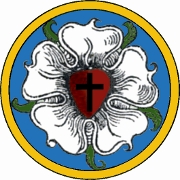
Luther’s Seal
Reflections (Part 1): “The Holy Trinity”
Almighty Creator and ever-living God: we worship your glory, eternal Three-in-One, and we praise your power, majestic One-in-Three. Keep us steadfast in this faith, defend us in all adversity, and bring us at last into your presence, where you live in endless joy and love, Father, Son, and Holy Spirit, one God, now and forever. Amen.
Here are a few things to think about this week regarding the Holy Trinity. Many Christian traditions follow a structured liturgy, shaping worship through prayers and rituals passed down over generations. Some parts of the liturgy, known as Propers, change based on the calendar, aligning with the Revised Common Lectionary and marking special observances like Epiphany or Pentecost. The Prayer of the Day for Holy Trinity Sunday (above), found on page 37 of the ELW(Evangelical Lutheran Worship hymnal), continues a tradition that traces back to the 16th-century Book of Common Prayer. I included this prayer to encourage reflection on the Holy Trinity, often called “the central mystery of the Christian faith and life.”
Martin Marty (1928-2025)
Many volumes explore the Trinity, but words alone struggle to capture its full meaning. Still, as theologian Martin Marty suggests, the Trinity teaches us about relationship—not just between God and humanity, but in how we interact with each other. He writes: “The Trinity is the model of the relational life, and invoking the Trinity draws us into thinking and experiencing divine-human relations that we can then carry into human-to-human relations . . . God. Father. Creator. Son. Redeemer. Savior. Spirit. Advocate. Comforter . . . the Trinity opens the door of imagination and the focusing power of prayer to much more than if we do not invoke the Trinity” (Lutheran Questions, Lutheran Answers, p. 42).
The discussion around the Trinity isn’t just a relic of history. I learned this week, for example, that The Lutheran World Federation (LWF), which includes our church, continues theological dialogues with Roman Catholic and Orthodox traditions, working toward greater understanding and unity. Decades of conversation with the Catholic Church led to the Joint Declaration on the Doctrine of Justification, a major step in bridging doctrinal differences. Likewise, dialogues with Orthodox churches have addressed topics such as the Holy Spirit, the nature of the Church, and historical disputes like the Filioque controversy. These ongoing conversations remind us that the doctrine of the Trinity remains deeply relevant in shaping faith today. Check out this joint statement from June 2025.
Reflections (Part 2): “Character Forged in Faith”
Like many passages in Romans, this week’s second reading packs a punch. Paul proclaims a bold truth: through faith, we stand justified and reconciled with God. Christ grants us access to grace, and we rejoice in the hope of His glory. But our confidence is not limited to moments of triumph—we find glory even in suffering, knowing it refines us. Hardships build endurance, endurance shapes character, and character fuels unwavering hope. This hope never fails us because God has poured His love into our hearts through the Holy Spirit, His gift to us. We are strengthened, sustained, and assured by the power of divine love.
Seminary Professor Chrystal Halloffers a compelling interpretation of this passage, highlighting how Paul grapples with integrating vastly different peoples—Gentiles and Jews—into the church despite their cultural, legal, and religious differences. Even in 2025, unity remains a challenge for the Christian community. Hall also emphasizes the Trinity’s presence in this passage, showing how its three Persons intertwine in relationship. Followers of the Anointed One experience God’s peace through Jesus and receive God’s love through the Holy Spirit, who pours that love into their hearts. This interdependence reflects our own relationship with one another and with God—a model suggested by Martin Marty (note Part 1 of my Reflections).
Finally, as alluded to in my blog introduction this week, I’ve always been struck by the language in verses 3-4: “suffering produces perseverance; perseverance, character; and character, hope.” The Greek word for “endurance” conveys resilient perseverance, while “character” implies steadfast reliability, especially in God’s eyes. These words resonate deeply in 2025, reminding us to remain strong as we navigate a challenging world. May the Holy Spirit inscribe them on our hearts!
Soli Deo Gloria!
Prayer Reflection: “Trinitarian Prayer and Blessing” (Martin Luther)
O God the Father, graciously give us all that we need for body and soul.
O Son of God, deliver us from sin, be gracious to us, and give us your Spirit.
O God, Holy Spirit, heal, comfort and strengthen us against the devil, and give us endless victory and resurrection from death. Amen.
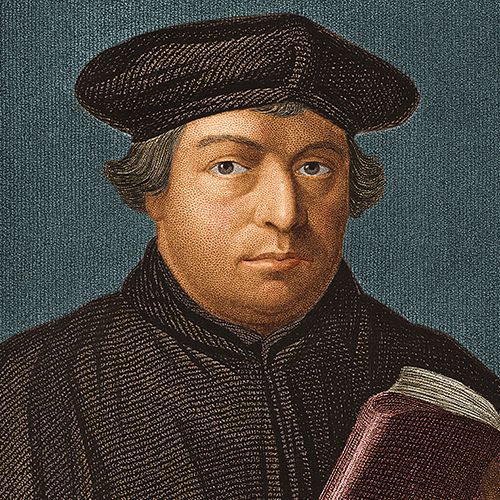
Martin Luther (1483-1546)
A Musical Offering: “Come, Join the Dance of Trinity” (412, ELW)
Come, Join the Dance of Trinity
Come, join the dance of Trinity, before all worlds begun– the interweaving of the Three, the Father, Spirit, Son. The universe of space and time did not arise by chance, but as the Three, in love and hope, made room within their dance.
Come, see the face of Trinity, newborn in Bethlehem; then bloodied by a crown of thorns outside Jerusalem. The dance of Trinity is meant for human flesh and bone; when fear confines the dance in death, God rolls away the stone.
Come, speak aloud of Trinity, as wind and tongues of flame set people free at Pentecost to tell the Savior’s name. We know the yoke of sin and death, our necks have worn it smooth; go tell the world of weight and woe that we are free to move!
Within the dance of Trinity, before all worlds begun, we sing the praises of the Three, the Father, Spirit, Son. Let voices rise and interweave, by love and hope set free, to shape in song this joy, this life: the dance of Trinity.
“Come, Join the Dance of Trinity” is a hymn written by Richard Leach, known for his ability to craft texts that are both biblically grounded and theologically rich. The hymn draws on the ancient concept of perichoresis, an early theological term describing the interrelationship of the Father, Son, and Holy Spirit—often likened to a divine dance. The hymn’s four stanzas explore the Trinity’s role in creation, redemption, and the Spirit’s ongoing work, culminating in an invitation for believers to join in the dance of faith. It is commonly set to the KINGSFOLD tune, a melody with medieval roots that has been adapted for various hymns. The organist you’re hearing is Jeffrey Dexter of Zion Lutheran Church in Ohio. The visuals are interesting throughout the song.
Zion is a congregation of the Evangelical Lutheran Church in America (ELCA), part of the Northeastern Ohio Synod of the ELCA, founded in 1840 and located in downtown Wooster.
Update on “Faithful Conversations”
Our regular gatherings for discussing the weekly lectionary are on a pause. Summer worship at ELC is at 8:30 in town and 10:15 at Hatfield by the lake. The 8:30 service will be streamed. Please stay in touch!
Recent News Regarding the Lutheran Study Bible!
This is something you may be interested to know. In 2009, the Lutheran Study Bible was published by Augsburg Fortress. It featured the New Revised Standard Version (NRSV) translation and included introductions, notes, and articles written by ELCA Lutheran pastors and theologians. It provided historical and cultural context, theological insights, and faith reflection prompts to help readers engage deeply with Scripture. I have used if for a number of years. A second edition, featuring the NRSV Updated Edition (NRSVue), is set to release in July 2025, expanding on the original with contributions from over seventy Lutheran scholars. If you’re looking for a Bible that connects well with the ELCA, check it out.
Augsburg Fortress is the publishing branch of the Evangelical Lutheran Church in America (ELCA). It creates resources for worship, music, faith education, and church life, including hymnals, theological books, and study materials. It also runs Fortress Press, which publishes academic and theological works for pastors, educators, and general readers. Over the years, Augsburg Fortress has shaped Lutheran teaching and provided essential materials for churches.
“People who’ve had any genuine spiritual experience always know that they don’t know. They are utterly humbled before mystery. They are in awe before the abyss of it all, in wonder at eternity and depth, and a Love, which is incomprehensible to the mind.” ~ Richard Rohr (Franciscan Priest)
Monday marks the 36th day of Eastertide, the sacred 50-day journey from Easter Sunday to Pentecost on June 8. Throughout these seven weeks, the Lectionary readings highlight resurrection, renewal, and the Church’s early expansion. This week, the opening quote from Christian mystic Richard Rohr resonated deeply with me, especially as Thursday approaches—the day that commemorates the Ascension of our Lord. After His Resurrection, Jesus walked the earth for 40 days before ascending into heaven, a moment of profound mystery (Acts 1: 1-11 and Luke 24: 44-53). The Ascension serves as a bridge between heaven and earth, mortality and eternity. Across Christian traditions, it remains a cornerstone of faith and worship, intricately tied to eschatology—the belief in Christ’s second coming — a connection we have with Christians across time since that incredible moment.
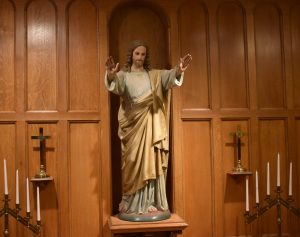
Ascension of Christ Albertino Piazza (1490–1528)
Some quick background. Since the earliest days of Christianity, believers have celebrated the Feast of the Ascension—also known as Ascension Day or Holy Thursday—to honor Jesus’ bodily ascent into heaven, as recorded in Luke’s Gospel. By the 4th century, Christians, particularly in the Eastern Church, widely observed the feast, and by the 6th century, the Western Church formally established it. Traditionally held forty days after Easter, Ascension Day falls on a Thursday, though some denominations move it to Sunday to allow more worshippers to take part. Over time, churches have deepened the celebration with processions, prayers, and solemn services. More than a historical event, Ascension Day proclaims Christ’s heavenly reign and his promise to return in glory, filling believers with hope and anticipation.
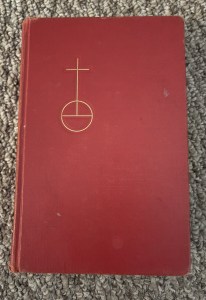
This day is highlighted in the Lectionary (one of several beyond Sundays), but my sense is that it goes by without much notice. In our various books of worship prior to the 1978 green hymnal, the calendar of the church year received more emphasis than in our new versions. If you are 65 or older, for example, the 1958 red hymnal would be familiar to you. Note the Introit and Collect for Ascension Day (below), utilized at the beginning of the worship service, words you may have heard growing up. Keep them in mind as you navigate the readings for both Ascension Day and the Seventh Sunday of Easter.
INTROIT “Ye men of Galilee, why stand ye gazing up into heaven? Hallelujah! This same Jesus which is taken up from you into heaven, shale come in like manner as ye have seen Him go into heaven: Hallelujah! Hallelujah!” (drawn from Acts 1: 11)
COLLECT “Grant we beseech Thee, Almighty God, that like as we do they only-begotten Son, our Lord Jesus Christ, to have ascended into the heavens; so may we also in heart and mind thither ascend, and with him continually dwell; who liveth and reigneth with thee and the Holy Ghost, one God, world without end. Amen.
Thanks for visiting this space again and for your continued interest in exploring the Lectionary! We have two notable commemorations this week: John Calvin, Renewer of the Church, died on 27 May in 1564. And the visit of Mary to Elizabeth is marked on Saturday, 31 May (The image on the left, The Embrace of Elizabeth and the Virgin Mary (c. 1191), is from a church in Macedonia). This week, my reflections center on a significant historical milestone—the 1700th anniversary of the Council of Nicaea (May–August, 325 CE), a pivotal moment in Christian history. I invite you to explore how this event connects with the readings assigned for both Thursday and Sunday. And one note: I include links out for further information and they are in bold print and italicized.
Common Themes Among the Readings
Ascension of Our Lord Acts 1: 1-11 Psalm 47 Ephesians 1: 15-23 Luke 24: 44-53
These four scripture passages convey the profound significance of Christ’s Ascension.Acts 1:1-11 portrays the moment of Jesus’ departure from Earth, as He ascends into heaven, promising the disciples the Holy Spirit and affirming His return. Luke 24:44-53 recounts the same event, emphasizing Jesus’ final words of blessing and commissioning to His followers. Ephesians 1:15-23 expands on the cosmic implications of Christ’s Ascension, depicting His exaltation above all powers and authorities, with believers as beneficiaries of His glorious inheritance. Psalm 47 serves as a poetic celebration of God’s sovereignty and kingship, resonating with the themes of triumph and exaltation present throughout the Ascension narrative.
The readings for the 7th Sunday of Easter emphasize themes of liberation, divine authority, and the promise of salvation. In Acts 16:16-34, Paul and Silas experience both persecution and miraculous deliverance, demonstrating God’s power to free and transform lives. Psalm 97 celebrates God’s reign with imagery of justice and righteousness, affirming divine sovereignty over all creation. Revelation 22 and John 17 point to Christ’s ultimate fulfillment of salvation, inviting all to partake in the water of life and highlighting the unity of believers in God’s love.
Reflection: “being of one substance”
Christian denominations like the ELCA actively shape their core beliefs and cultivate theological unity. They immerse believers in the Church’s rich historical traditions, preserving and passing down the faith that has endured since early Christianity. Creeds enunciate complex doctrines, transforming them into accessible teachings that strengthen spiritual formation through worship and instruction. As catalysts for ecumenical dialogue, creeds foster unity among diverse Christian traditions, building connections despite theological differences. Ultimately, they anchor churches in shared doctrine while forging lasting bridges across generations and denominations. The three great ecumenical statements of faith within Christendom are the Apostles’, Nicene, and Athanasian Creeds. The ELCA affirms all three as foundational expressions of our faith, and all are recognized in the ELCA’s governing documents and Lutheran confessional writings compiled in the Book of Concord. We recite the Apostles’ Creed every Sunday and the Nicene Creed occasionally. (Sidebar: I do not recall ever having used the Athanasian Creed. In fact, you will not find it in the ELW, our current hymnal, which seems surprising — a story for another day!).
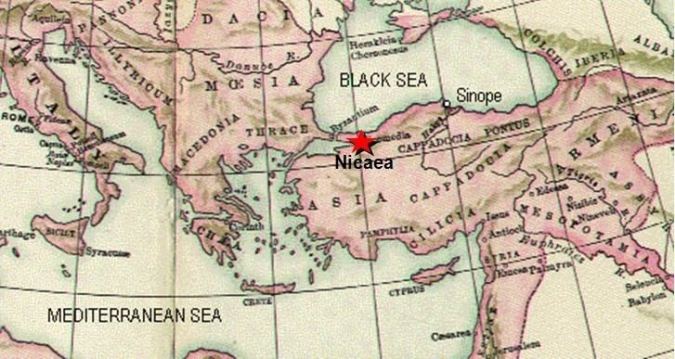
Let’s do a bit of time-tripping regarding the second of those belief statements, the Nicene Creed. As mentioned in my introduction, the summer of 2025 marks the 1700th anniversary of the famous meeting that produced this creed, the Council of Nicaea. From May through August of 325 CE, bishops from across the Roman Empire gathered in Nicaea, near Lake Ascanius in modern-day Turkey, to settle a major dispute about Christ’s nature. Arius, a priest from Alexandria, argued that Jesus was created and not fully divine, while others, like Athanasius (think Athanasian Creed), insisted he was equal to the Father. As the debates intensified, tensions ran high, and according to legend, St. Nicholas of Myra (yes, THAT St. Nicholas!) became so enraged by Arius’ arguments that he slapped or punched him in the heat of the discussion, a moment that I must admit, made me laugh when I heard of it! (This dramatic act, by the way, led to Nicholas being temporarily removed from the council until Emperor Constantine reinstated him). Ultimately, the council rejected Arianism, declaring Jesus homoousios—of the same essence as God—and formalized this belief in the Nicene Creed. Constantine supported the decision and ordered Arius to be exiled, banning his writings and declaring him a heretic. Meanwhile, the Nicene Creed became the foundation of Christian doctrine, shaping the Church for centuries.
Icon of Arius by Greek artist Michael Damaskinos (1530–1593).
My account here is a shorthand version of a complicated debate that went on far beyond 325! (Sidebar: Professor Philip Jenkins of Baylor University has written an excellent article in the May issue of The Christian Century that you may want to explore). Suffice to say, however, the Council of Nicaea proved to be a major turning point in Christian history. The council rejected Arianism and affirmed that Jesus is fully God, just like the Father. And further, this council led to the creation of the Nicene Creed, a statement of faith that Christians still use today. The Roman Emperor Constantine wanted a stronger, united Church to help stabilize his rule (we could have a lengthy discussion if this embrace of Christianity by the state was a good thing or not, but I digress!). The council’s decisions shaped Christianity for centuries, influencing future church gatherings and theological teachings.
As you read the words of the creed below, notice the careful use of language regarding that debate about Christ’s divinity (I encourage you to read it several times this week!). The Arian controversy is like a storm that shaped Christianity forever and offers a good reminder of how history shapes our present experience. In 325 AD, church leaders gathered at the Council of Nicaea to settle a fiery debate: Was Jesus fully God, or just created by Him? They stood their ground, declaring Christ eternal and equal to the Father (“being of one substance”), a belief now woven into the fabric of Christian worship through the Nicene Creed. Even today, some groups challenge this teaching, keeping the conversation alive in theology and interfaith dialogue. The echoes of that ancient dispute still ring through churches, shaping faith, unity, and how Christians see the heart of their belief—Jesus Himself. We live within an unfinished dialogue. 1 Corinthians 13:12: “For now we see in a mirror dimly, but then face to face. Now I know in part; then I shall know fully, even as I have been fully known.”
Soli Deo Gloria!
Late medieval Greek icon of Saint Nicholas slapping Arius during the Council of Nicaea, 325 CE.
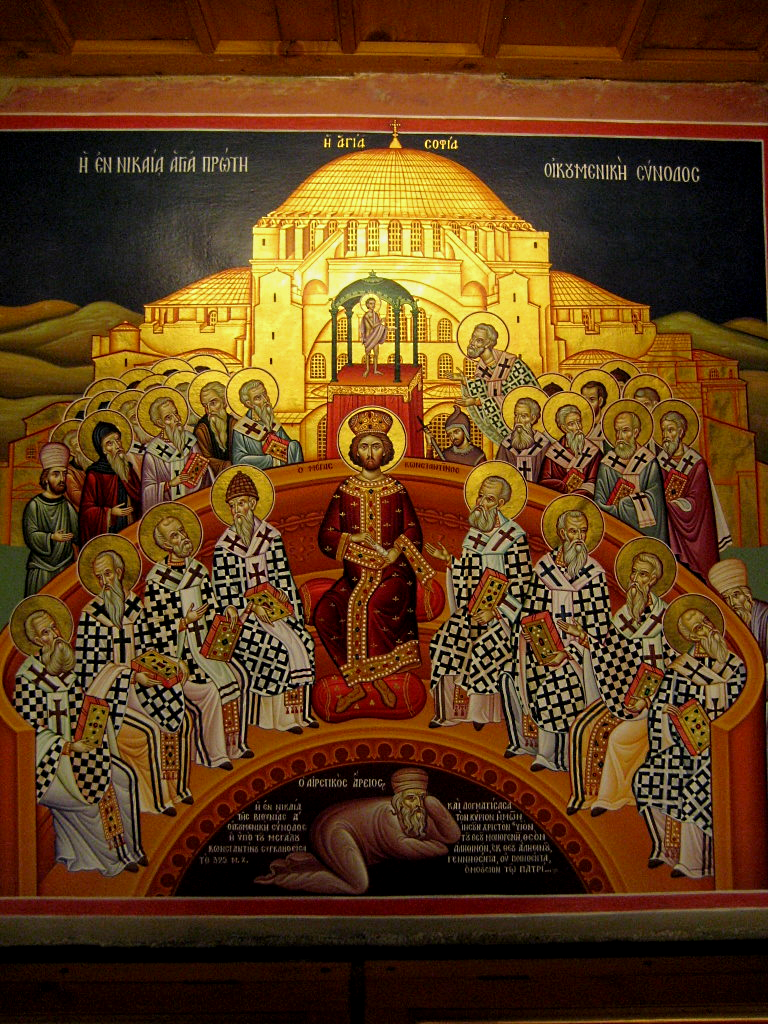
Icon from the Mégalo Metéoron Monastery in Greece depicting Arius below Constantine and the bishops.
The Nicene Creed
I believe in one God, the Father Almighty, maker of heaven and earth and of all things visible and invisible.
And in one Lord Jesus Christ, the only-begotten Son of God, begotten of His Father before all worlds, God of God, Light of Light, very God of very God, begotten, not made, being of one substance with the Father, by whom all things were made; who for us men and for our salvation came down from heaven and was incarnate by the Holy Spirit of the virgin Mary and was made man; and was crucified also for us under Pontius Pilate. He suffered and was buried. And the third day He rose again according to the Scriptures and ascended into heaven and sits at the right hand of the Father. And He wil come again with glory to judge both the living and the dead, whose kingdom will have no end.
And I believe in the Holy Spirit, the Lord and giver of life, who proceeds from the Father and the Son, who with the Father and the Son together is worshiped and glorified, who spoke by the prophets. And I believe in one holy Christian and apostolic Church, I acknowledge one Baptism for the remission of sins, and I look for the resurrection of the dead and the life of the world to come. Amen.
Note: The Sixth World Conference on Faith and Order will be held at the St. Bishoy Monastery in Wadi El Natrun, near Alexandria, Egypt, from October 24-28, 2025. This event is part of the World Council of Churches’ (WCC) year-long commemoration of the 1700th anniversary of the First Council of Nicaea. The conference will bring together church leaders, theologians, and ecumenists from various traditions to explore the theme “Where now for visible unity?”. Discussions will focus on the interconnected aspects of faith, mission, and unity, reflecting on how the Nicene Creed continues to shape Christian identity and cooperation today.
“I am struck by the fact that the prophets speaking about the future of Israel always kept reminding their people of God’s great works in the past. They could look forward with confidence because they could look backward with awe to Yahweh’s great deeds. All this seems extremely important in a time in which our sense of history is so weak…. Without anchors in its early promises and aspirations, a nation is in danger of drifting and losing direction. And not only a nation but the Church as well. It seems that progress is always connected with a refreshing of our collective memory.“
My prayer for us, prompted by Nouwen’s reflection:
God of our history and hope, You have led us through trials and triumphs, teaching us wisdom from the footsteps of those before us. Guide our hearts to honor the past, and give us courage to walk boldly into the future, trusting always in Your unfailing love. Amen.
A Musical Offering: “Sure On This Shining Night“
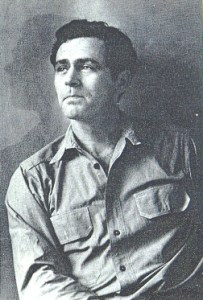
James Agee (1909-1955)
When I first heard Lauridsen’s musical interpretation of James Agee’s poem, I felt God’s presence — I don’t know if that’s what the poet or Lauridsen intended, but the music and words prompted that. The imagery of kindness watching over him suggests divine care, while the line “all is healed, all is health” echoes themes of restoration and peace. His weeping for wonder mirrors the human soul’s longing for God, much like the psalmist’s awe in Psalm 8. Ultimately, the poem captures the feeling of being alone yet surrounded by the sacred, drawing the reader into a sense of divine mystery and grace. It also fits well with the quote I cited in the introduction by Richard Rohr. Enjoy!
Sure On This Shining Night
James Agee
Sure on this shining night Of star made shadows round, Kindness must watch for me This side the ground. The late year lies down the north. All is healed, all is health. High summer holds the earth. Hearts all whole. Sure on this shining night I weep for wonder wand’ring far alone Of shadows on the stars.
Sure on This Shining Night Morten Lauridsen, Composer
Performed by the Concordia College Choir, Moorhead, MN
“Sure on This Shining Night” by Morten Lauridsen is a choral setting of a poem by James Agee, originally published in his 1934 collection Permit Me Voyage.
Update on “Faithful Conversations”
Our regular gatherings for discussing the weekly lectionary are on a pause. Summer worship at ELC is at 8:30 in town and 10:15 at Hatfield by the lake. The 8:30 service will be streamed. Please stay in touch!
Introduction to Bible Study
A few weeks back, I shared this link to the on-line class I put together and am reposting now as we get into the summer phase of the Lectionary. If you’re looking for a “reboot” on how to approach Bible study, take a look! Click on the photo for access!