2 June 2024: Pentecost 2

faithful conversations #66

Introduction to Readers: “Embrace the Process”
Let me start with a reminder today. If you google “lectionary history,” you will quickly realize that we are following a tradition here that has a long and winding backstory. The current three-year cycle we follow in the ELCA, the Revised Common Lectionary (RCL), has its more immediate roots in the late 1960s, and includes four scripture passages for each Sunday — the Old Testament reading, the Psalm as a response to the OT reading, the New Testament reading, and the Holy Gospel (Mark is featured in Year B). We started this project in February of 2023 with one simple goal: to promote the spiritual discipline of Bible reading by focusing on the Sunday readings (realize that there are Daily Readings for the RCL as well).

One of my favorite admonitions to athletes I have coached over the years is, “Embrace the Process.” It is easy to get sidetracked, to lose focus, to lose patience — and one thing I have learned about Bible study is that it takes patience and prayer. Your continuing interest inspires me, and I thank you for that! My reflections this week focus on the Old Testament reading, and especially the third commandment.

Readings for Pentecost 2
Deuteronomy 5: 12-15
Psalm 81: 1-10
2 Corinthians 4: 5-12
Mark 2: 23 – 3:6

A Quick Take on the Readings for Pentecost 2:
These readings invite us to honor God’s commands, trust in his grace, and recognize Jesus as the ultimate authority over tradition and human understanding. Deuteronomy 5:12-15 reiterates the commandment to observe the Sabbath, emphasizing its significance as a day of rest and remembrance of God’s liberation. Psalm 81:1-10 echoes this call to worship and obedience, reminding the people of God’s faithfulness and their covenant responsibilities. In 2 Corinthians 4:5-12, Paul reflects on the challenges of ministry, emphasizing the surpassing power of God’s grace amidst trials. Finally, in Mark 2:23-3:6, Jesus challenges the rigid interpretations of Sabbath observance, asserting his authority as the Lord of the Sabbath and revealing the true spirit of God’s law: mercy and restoration.

The First Reading: Deuteronomy 5: 12-15
12 Observe the Sabbath day and keep it holy, as the Lord your God commanded you. 13 Six days you shall labor and do all your work. 14 But the seventh day is a Sabbath to the Lord your God; you shall not do any work—you, or your son or your daughter, or your male or female slave, or your ox or your donkey, or any of your livestock, or the resident alien in your towns, so that your male and female slave may rest as well as you. 15 Remember that you were a slave in the land of Egypt, and the Lord your God brought you out from there with a mighty hand and an outstretched arm; therefore, the Lord your God commanded you to keep the Sabbath day.

(Compare to Exodus 20: 7-10)
“You shall not make wrongful use of the name of the Lord your God, for the Lord will not acquit anyone who misuses his name. “Remember the Sabbath day and keep it holy. Six days you shall labor and do all your work. 10 But the seventh day is a Sabbath to the Lord your God; you shall not do any work—you, your son or your daughter, your male or female slave, your livestock, or the alien resident in your towns.

Reflections on the sabbath day 

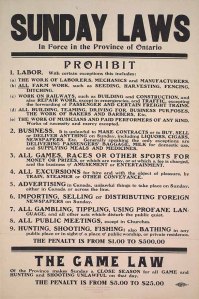
“Blue Laws” (or Sunday Laws) have been on my mind this week, prompted by the Deuteronomy passage.  Many of us are old enough to remember such laws, although Wisconsin moved away from them earlier than many other states. Having spent much of my young life in North Dakota, I saw these firsthand. Historically derived from 17th Century Puritanism, Blue Laws (so named, allegedly, because they were originally printed on blue paper) regulated activities that would be permitted on Sundays, or not, thereby enforcing Sabbath observance. The impulse behind such actions in a political system that separates church and state are complicated and over time, Blue Laws have faded. A bit of research tells me that 28 states still operate with Sunday Laws today, primarily related to the sale of alcohol.  The relaxation of Blue Laws, I suppose, is but one sign that Sunday has become “just another day of the week” for a huge swath of our population, prompting a good deal of handwringing among the faithful. And we’re all aware that church attendance continues to decline, especially among young adults. That said, how should we interpret the words from Deuteronomy?

“Moses Receiving the Tablets of the Law”
by Benjamin West (1738-1820)

First, some context. According to the Book of Exodus (Chapters 19-20), Moses ascended Mount Sinai, enveloped in smoke and thunder, to meet with God. There, in a dramatic, awe-inspiring moment, he received the Ten Commandments inscribed on two stone tablets, which provided a foundational moral and legal code for the Israelites. This event signaled a covenant between God and His chosen people, establishing guidelines for healthy living and worship. Moses’ descent from the mountain with the tablets symbolized the delivery of divine law to humanity, a cornerstone of Judeo-Christian tradition.

Like many of you, my introduction to the Ten Commandments came through studying and memorizing Luther’s Small Catechism more than fifty years ago. They were not presented to me as a set of rules, but rather as parameters for faithful living (Sidebar: Martin Luther adopted a specific approach to numbering the Ten Commandments that aligned closely with the Augustinian tradition, something that varies within the Christian community). In his explanation of the Third CommandmentRemember the sabbath day and keep it holy — Luther offered these words: We are to fear and love God, so that we do not despise preaching or God’s word, but instead keep that word holy and gladly hear and learn it. Luther is suggesting an attitude toward worship here. But, what about resting on the seventh day?

The idea of a day of rest (“Shabbat” in Hebrew) goes back to Genesis (2: 1-3) and the Creation story where God blessed the seventh day and set it apart. Both the Deuteronomy passage and the earlier one from Exodus (note above) appear to be saying the same thing, but as UCC biblical scholar (Lancaster Theological Seminary) Vanessa Lovelace points out, Deuteronomy 5:15 emphasizes God’s action in freeing the Israelites from slavery in Egypt (the exodus), rather than God resting on the seventh day as the source for this admonition. In other words, keeping the Sabbath meant remembering that period of enslavement, and God’s gift of liberation. Interesting. Further, both passages emphasize that resting from work applies to all, including you, or your son or your daughter, or your male or female slave, or your ox or your donkey, or any of your livestock, or the resident alien in your towns, so that your male and female slave may rest as well as you. In other words, we must take time for rest and focusing on God and allow others to have that same opportunity — this is a central part of our faith tradition. By doing so, we put ourselves in a position to deepen our faith journey and be touched by the miracle of God’s grace!

Soli Deo Gloria

prayer (inspired by Mark 2: 23 – 3:6)

Dear Heavenly Father,
As we reflect on the actions and teachings of Jesus in Mark 2:23-3:6, we ask for Your guidance and wisdom. Teach us to understand and embrace the true purpose of Your commandments, recognizing that compassion and mercy are at their heart. Help us to prioritize love and kindness in our daily lives, just as Jesus did when He healed on the Sabbath. May we have the courage to do what is right and just, even when it challenges conventional norms. Grant us the strength to extend grace and understanding to others, seeking always to do good and to honor You in all our actions. In your name we pray, Amen.

We will resume our in-person discussion of the Lectionary on Sunday (June 2) after the 8:30 worship service at ELC. Please feel welcome to join that discussion! no prior knowedge or special expertise is necessary — we grapple with scripture every week! All are welcome! 

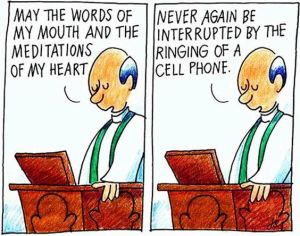
1960s Lutheran Humor
by Charles Schultz

26 May 2024: The Holy Trinity

Faithful Conversations #65
Introduction to Readers:

The Church Calendar

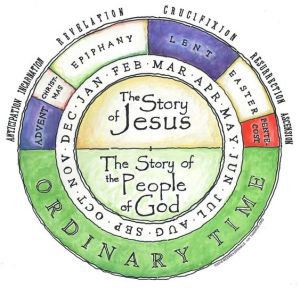
Summer is around the corner, and believe it or not, we have reached Ordinary Time, the longest phase in the liturgical calendar!  We will be here until Advent and the start of the new church year. My reflections this week will focus on the presence of the Holy Trinity in the official creeds of the ELCA and the Isaiah reading. As always, thanks for returning to this space each week. I submit these posts with great humility, realizing that many who are reading know much more than I do about these spiritual topics! (Sidebar: I have provided more hyperlinks than normal this week due to the subject matter. These are offered for the benefit of those who want to take a deeper dive into the material — they are italicized and in bold type and a different color).  
Let’s Start With a prayer and Some Context!

Almighty Creator and ever-living God: we worship your glory, eternal Three-in-One, and we praise your power, majestic One-in-Three. Keep us steadfast in this faith, defend us in all adversity, and bring us at last into your presence, where you live in endless joy and love, Father, Son, and Holy Spirit, one God, now and forever. Amen.

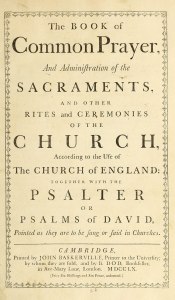
The Book of Common Prayer
1760 Edition

Across many denominations, formal worship includes the liturgy (customary public ritual performed by a religious group). The Propers are part of the liturgy that vary according to the date (think special observances like Epiphany or Pentecost) and correspond with the Revised Common Lectionary.  The Prayer of the Day cited above (formerly referenced as the “Collect”), is designated for Holy Trinity Sunday and is from page 37 of the ELW (our hymnal). Such prayers derive, at least in part, from the Book of Common Prayer, dating back to the 16th Century Anglican Church. I included this prayer to spur reflections on what some have called, “the central mystery of the Christian faith and life,” the Holy Trinity.

“Shield of the Trinity”
(Illustrating the Athanasian Creed)
A Modern View of the 12th Century Diagram

While exploring the Holy Trinity this week, I was transported back to my religion classes at Concordia College in the mid-1970s, especially discussions regarding theological differences in the early Christian Church, most of which seemed beyond my ken! One such dispute that burned hot in the 4th Century centered on Arianism, the belief that Jesus was created by God and was not one with God. As one born into Lutheranism, I suspect I have taken the unity of Father, Son, and Holy Spirit for granted, but it is important to realize how central this is to our faith. As an illustration of that, I have included the three belief statements cited by the ELCA as sources for its official doctrine, the Apostle’s, Nicene, and Athanasian Creeds. It is fascinating to note the actual language in each creed (especially the Nicene and Athanasian) that is devoted to the concept of the Trinity!  Scholars believe the Apostle’s Creed, the one we say most often, dates back to the 2nd Century. Both the Nicene and Athanasian Creeds, it should be noted, were written in response to heretical movements in their time, and primarily Trinitarian disputes (325 and the 5th Century, respectively). And, just for the record, I’m not sure I would want to tackle the Athanasian Creed every Sunday in our worship experience!
The Apostle’s Creed (2nd century) 
I believe in God, the Father almighty, creator of heaven and earth. I believe in Jesus Christ, God’s only Son, our Lord, who was conceived by the Holy Spirit, born of the virgin Mary, suffered under Pontius Pilate, was crucified, died, and was buried; he descended to the dead.* On the third day he rose again; he ascended into heaven, he is seated at the right hand of the Father, and he will come to judge the living and the dead. I believe in the Holy Spirit, the holy catholic Church, the communion of saints, the forgiveness of sins, the resurrection of the body, and the life everlasting. Amen. *Or, “he descended into hell,” another translation of this text in widespread use.
       Nicene Creed (325 CE)              Athanasian Creed (5th Century CE)
We believe in one God, the Father, the Almighty, maker of heaven and earth, of all that is, seen and unseen. We believe in one Lord, Jesus Christ, the only Son of God, eternally begotten of the Father, God from God, Light from Light, true God from true God, begotten, not made, of one Being with the Father; through him all things were made. For us and for our salvation he came down from heaven, was incarnate of the Holy Spirit and the virgin Mary and became truly human. For our sake he was crucified under Pontius Pilate; he suffered death and was buried. On the third day he rose again in accordance with the scriptures; he ascended into heaven and is seated at the right hand of the Father. He will come again in glory to judge the living and the dead, and his kingdom will have no end. We believe in the Holy Spirit, the Lord, the giver of life, who proceeds from the Father and the Son,* who with the Father and the Son is worshiped and glorified, who has spoken through the prophets. We believe in one holy catholic and apostolic church. We acknowledge one baptism for the forgiveness of sins. We look for the resurrection of the dead, and the life of the world to come. Amen. *Or, “who proceeds from the Father.” The phrase “and the Son” is a later addition to the creed. Whoever wants to be saved should above all cling to the catholic faith. Whoever does not guard it whole and inviolable will doubtless perish eternally. Now this is the catholic faith: We worship one God in trinity and the Trinity in unity, neither confusing the persons nor dividing the divine being. For the Father is one person, the Son is another, and the Spirit is still another. But the deity of the Father, Son, and Holy Spirit is one, equal in glory, coeternal in majesty. What the Father is, the Son is, and so is the Holy Spirit. Uncreated is the Father; uncreated is the Son; uncreated is the Spirit. The Father is infinite; the Son is infinite; the Holy Spirit is infinite. Eternal is the Father; eternal is the Son; eternal is the Spirit: And yet there are not three eternal beings, but one who is eternal; as there are not three uncreated and unlimited beings, but one who is uncreated and unlimited. Almighty is the Father; almighty is the Son; almighty is the Spirit: And yet there are not three almighty beings, but one who is almighty. Thus the Father is God; the Son is God; the Holy Spirit is God: And yet there are not three gods, but one God. Thus the Father is Lord; the Son is Lord; the Holy Spirit is Lord: And yet there are not three lords, but one Lord. As Christian truth compels us to acknowledge each distinct person as God and Lord, so catholic religion forbids us to say that there are three gods or lords. The Father was neither made nor created nor begotten; the Son was neither made nor created, but was alone begotten of the Father; the Spirit was neither made nor created, but is proceeding from the Father and the Son. Thus there is one Father, not three fathers; one Son, not three sons; one Holy Spirit, not three spirits. And in this Trinity, no one is before or after, greater or less than the other; but all three persons are in themselves, coeternal and coequal; and so we must worship the Trinity in unity and the one God in three persons. Whoever wants to be saved should think thus about the Trinity. It is necessary for eternal salvation that one also faithfully believe that our Lord Jesus became flesh. For this is the true faith that we believe and confess: That our Lord Jesus Christ, God’s Son, is both God and man. He is God, begotten before all worlds from the being of the Father, and he is man, born in the world from the being of his mother—existing fully as God, and fully as man with a rational soul and a human body; equal to the Father in divinity, subordinate to the Father in humanity. Although he is God and man, he is not divided, but is one Christ. He is united because God has taken humanity into himself; he does not transform deity into humanity. He is completely one in the unity of his person, without confusing his natures. For as the rational soul and body are one person, so the one Christ is God and man. He suffered death for our salvation. He descended into hell and rose again from the dead. He ascended into heaven and is seated at the right hand of the Father. He will come again to judge the living and the dead. At his coming all people shall rise bodily to give an account of their own deeds. Those who have done good will enter eternal life, those who have done evil will enter eternal fire. This is the catholic faith. One cannot be saved without believing this firmly and faithfully.

Readings for The Holy Trinity Isaiah 6: 1-8 Psalm 29 Romans 8: 12-17 John 3: 1-17

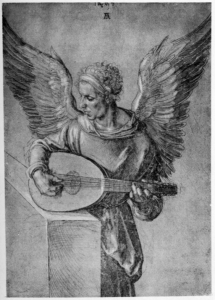
“Seraphim Plays the Lute”
Albrecht Dürer (1471 – 1528)

A Quick Take on This Week’s Readings: Think about the concept of the Holy Trinity as you walk through Sunday’s readings. In Isaiah 6:1-8, we are witnesses to Isaiah’s vision of the Lord seated on a throne, surrounded by seraphim (the closest angels to God who focus on praising and worshiping God for who he is and what he does). This imagery reflects the Father’s sovereignty. Psalm 29 portrays the powerful voice of God that thunders over the waters, shaking the wilderness, showcasing the might and authority of God, reminiscent of the Father’s divine power. In Romans 8:12-17, Paul discusses our adoption as children of God through the Spirit, highlighting the intimate relationship between believers and God as Father, while also acknowledging the role of the Holy Spirit in uniting us with Christ. Finally, in John 3:1-17, Jesus speaks to Nicodemus about being born of water and the Spirit, revealing the transformative work of the Holy Spirit in bringing about spiritual rebirth and salvation, thus portraying the unity of the Father, Son, and Holy Spirit in the divine plan of redemption.

Mosaic of the prophet Isaiah in the Dome of Immanuel in St Mark’s Basilica (Venice)

The First Reading: Isaiah 6: 1-8: A Vision of God in the Temple In the year that King Uzziah died, I saw the Lord sitting on a throne, high and lofty, and the hem of his robe filled the temple. Seraphs were in attendance above him; each had six wings: with two they covered their faces, and with two they covered their feet, and with two they flew. And one called to another and said,

“Holy, holy, holy is the Lord of hosts; the whole earth is full of his glory.”

The pivots on the thresholds shook at the voices of those who called, and the house filled with smoke. And I said, “Woe is me! I am lost, for I am a man of unclean lips, and I live among a people of unclean lips, yet my eyes have seen the King, the Lord of hosts!” Then one of the seraphs flew to me, holding a live coal that had been taken from the altar with a pair of tongs. The seraph touched my mouth with it and said, “Now that this has touched your lips, your guilt has departed and your sin is blotted out.” Then I heard the voice of the Lord saying, “Whom shall I send, and who will go for us?” And I said, “Here am I; send me!”

Reflections on isaiah’s call

Isaiah
by Michelangelo (1475-1564)

Old Testament encounters between individuals and God are often profound and pivotal moments in biblical narratives.*  Varied in nature, they range from visions and dreams to physical manifestations, but they all serve to convey God’s awesome power and direct communication with humanity.  This week’s vivid story from Isaiah, one such encounter, narrates the prophet’s overwhelming vision of God’s majesty in the temple. Isaiah sees the Lord seated on a throne (verse 1), surrounded by seraphim who proclaim His holiness (verses 2-3). The temple shakes, and smoke fills the air (verse 4). Feeling unworthy in the presence of such divine glory, Isaiah acknowledges his sinfulness and the sin of his people (verse 5). One of the seraphim purifies Isaiah’s lips with a burning coal, symbolizing forgiveness (verses 6-7). In response to God’s call for someone to deliver His message, Isaiah volunteers, saying, “Here am I; send me!” (verse 8). What should we take away from this episode that so triggers our imagination? First, it reminds us that we are not alone in this universe. Our God is all-powerful, eternally holy, and loves us, despite our flaws. Further, we encounter God in nature, in our daily interactions with other people, in our work, and in our dreams. God is present in us. Let that sink in.  Second, the most powerful moment of this Isaiah encounter, it seems to me, is the prophet’s response — his readiness to serve as God’s messenger despite his own imperfections. It reminded me of that famous line from Mark Twain: “The two most important days in your life are the day you are born and the day you find out why.” God called Isaiah and he responded. He didn’t analyze the situation and make a list of pros and cons, he simply said YES!  Soli Deo Gloria *Here are six well-known encounters: Moses and the Burning Bush in Exodus 3, Abraham and the Covenant in Genesis 15, Sarah’s Promise of a Son in Genesis 18, Miriam’s Leadership in Exodus 15, Moses on Mount Sinai in Exodus 19-20, and Deborah the Judge in Judges 4-5).  Prayer (portions of psalm 29) Ascribe to the Lord, O heavenly beings, ascribe to the Lord glory and strength. Ascribe to the Lord the glory of his name; worship the Lord in holy splendor! The voice of the Lord is over the waters; the God of glory thunders, the Lord, over mighty waters. The voice of the Lord is powerful; the voice of the Lord is full of majesty! The voice of the Lord flashes forth flames of fire. The voice of the Lord shakes the wilderness! The voice of the Lord causes the earth to shake and in God’s temple, all shall say “Glory!” The Lord sits enthroned as king forever. May the Lord give strength to us, the people of God! May the Lord bless the whole world with peace! Amen. a hymn inspired by isaiah, Chapter 6 The inspiration for hymns is a favorite topic of mine. This one will be familiar to many and has been part of our hymnal since 2006. Both the text and the music come from Dan Schutte, a Jesuit Priest, who drew his inspiration from chapter 6 of Isaiah. Enjoy this wonderful rendition from the Luther College Nordic Choir (Decorah, Iowa).
In-Person Lectionary Discussions!
Remember that ELC will have one service on Memorial Day Weekend at Russell Park in Hatfield (10:15). We will not meet on the 26th.

Luther’s Seal

Starting June 2nd, there will be two services: 8:30 at ELC and 10:15 at Russell Park. We will resume our in-person lectionary discussions on June 2nd, after the in-town service (roughly 9:30). We will do that for the Sundays in June (we will generate a new schedule beyond June).  All are welcome!      

19 May 2024: Day of Pentecost

Faithful Conversations #64

Introduction to Readers:
Campus protests in the United States remind us that we live in a small world. Events thousands of miles from our shores impact us whether we like it or not. That said, I am struck by the inverse relationship between the news coverage (high) and the lack of historical awareness of the Middle East among US citizens in general (low). My evidence for that is anecdotal, and yes, it is a hazard of my profession to feel this way (I have lived my life believing we do not teach enough history in our schools, nor with enough depth, but I digress!). If you feel like you could use a primer on this region, give this site a try, especially if you like maps! History provides context.

As Christians, our Judeo-Christian heritage runs deep, and Pentecost offers a good reminder of that. In Jewish tradition, the celebration of Pentecost derives from the Festival of Weeks coming 50 days after the Passover (penta is Greek for 50). Celebrating the spring wheat harvest, among other things, including God’s gift of the law — the Torah — to Moses (as described in Exodus 24). For the Christian community, the Jerusalem Pentecost, as described in Acts 2, signals the coming of the Holy Spirit. Steeped in the traditions of Judaism, our first spiritual ancestors, those who walked this earth with Jesus, encountered the risen Christ and received the gift of the Holy Spirit on what we consider the birth of our church in roughly 33 CE. We know that by the Second Century, Christians marked this day on the calendar. Keep that history in mind as you tackle this week’s readings. My commentary will focus on the Ezekiel passage, a personal favorite. As always, thanks for visiting this space each week!

Readings for Pentecost
Acts 2: 1-21 or Ezekiel 37: 1-14
Psalm 104: 24-34, 35b
Romans 8: 22-27
John 15: 26-27; 16: 4b-15

A Quick Take on This Week’s Readings:
The Pentecost passages paint a vivid picture of the Spirit’s work initiating new life, renewal, and empowerment within the Christian community (I’m reminded of that phrase, sing a new song unto the Lord).  Acts 2:1-21 recounts the dramatic outpouring of the Holy Spirit upon the disciples, echoing Ezekiel 37:1-14 where the breath of God revitalizes dry bones, symbolizing the restoration of Israel. Psalm 104:24-34, 35b praises God’s creative and life-giving power, echoing the themes of renewal and vitality found in both Acts and Ezekiel. Romans 8:22-27 speaks to the groaning of creation and the Spirit’s role in interceding for believers, linking back to the transformative power of the Spirit. Finally, in John 15:26-27; 16:4b-15, Jesus promises the coming of the Advocate, the Spirit of Truth, who will guide and empower the disciples, fulfilling the prophecies and prayers found throughout these readings.

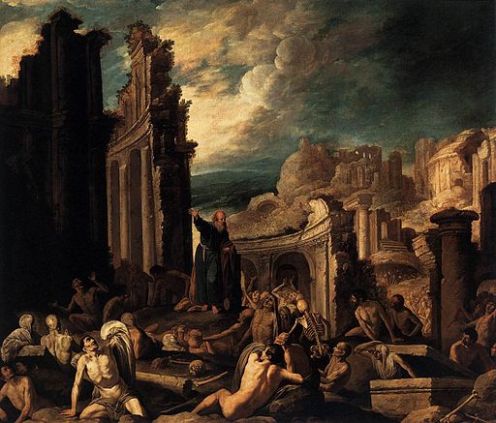
“The Vision of Ezekiel” (1630) by Spanish painter Francisco Collantes (1599-1656)

The First Reading: Ezekiel 37: 1-14: The Valley of Dry Bones
37 The hand of the Lord came upon me, and he brought me out by the spirit of the Lord and set me down in the middle of a valley; it was full of bones. He led me all around them; there were very many lying in the valley, and they were very dry. He said to me, “Mortal, can these bones live?” I answered, “O Lord God, you know.” Then he said to me, “Prophesy to these bones and say to them: O dry bones, hear the word of the LordThus says the Lord God to these bones: I will cause breath to enter you, and you shall live. I will lay sinews on you and will cause flesh to come upon you and cover you with skin and put breath in you, and you shall live, and you shall know that I am the Lord.” So I prophesied as I had been commanded, and as I prophesied, suddenly there was a noise, a rattling, and the bones came together, bone to its bone. I looked, and there were sinews on them, and flesh had come upon them, and skin had covered them, but there was no breath in them. Then he said to me, “Prophesy to the breath, prophesy, mortal, and say to the breath: Thus says the Lord God: Come from the four winds, O breath, and breathe upon these slain, that they may live.” 10 I prophesied as he commanded me, and the breath came into them, and they lived and stood on their feet, a vast multitude. 11 Then he said to me, “Mortal, these bones are the whole house of Israel. They say, ‘Our bones are dried up, and our hope is lost; we are cut off completely.’ 12 Therefore prophesy and say to them: Thus says the Lord God: I am going to open your graves and bring you up from your graves, O my people, and I will bring you back to the land of Israel. 13 And you shall know that I am the Lord when I open your graves and bring you up from your graves, O my people. 14 I will put my spirit within you, and you shall live, and I will place you on your own soil; then you shall know that I, the Lord, have spoken and will act, says the Lord.”

Reflections on ezekiel 37: “The breath of god”

This passage from Ezekiel is part of a rich landscape, the theater of the mind, we find throughout the Old Testament. It is one of my favorite stories from the scriptures.  Ezekiel, the lonely prophet, stands on the floor of a valley filled with dry bones, conversing with God about what he is experiencing. His prophetic call, it should be noted, coincides with the early period of the Babylonian Captivity and in a moment of desperate fear and sadness, God assures the prophet that He will breathe new life into the parched souls of the people. This was news they needed to hear!

Saint Augustine (354-430)
by Philippe de Champaigne

How should we think about this story twenty-six centuries later? Two things come to mind for me. First, Ezekiel’s encounter is an affirmation of God’s energetic Spirit at work through history. We live with a visual reminder of that in our community with the sturdy structures that grace “Holy Hill” atop Main Street (for those of you not familiar with Black River Falls, I have inserted an aerial photograph at the end of my reflections). Let me explain. Saint Joseph Church is the most visible symbol of Roman Catholicism in our community. One strand of that tradition derives from the works of Augustine, the 4th Century Church Father from North Africa. Augustine was spiritually dry until his 32nd year when he converted to Christianity. God infused the mind of this powerful intellectual with a desire to write and teach, ultimately leading to the founding of the Augustinian Order, one of the most influential in the training of priests.

Katie Luther
(1499-1552)

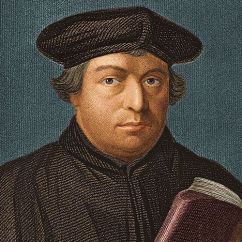
Martin Luther
(1483-1546)

Just north of St. Joseph, we arrive at Evangelical Lutheran Church. Let’s imagine a young Augustinian Monk named Luther nailing those 95 Theses on the door of the Wittenberg Church in Germany. Like Augustine, Luther experienced a crisis of faith as a young man and was infused with God’s Spirit to PROTEST various traditions within Roman Catholicism. Ultimately leaving the Augustinian Order, he married a former nun (Katharina von Bora), and wrote prolifically for the remainder of his life, providing many of the foundations of the Protestant Reformation. His critics referred to those who followed him as “Lutherans,” a name the protesters eventually embraced.  (Sidebar: Luther was not comfortable with that term and favored the label of “Evangelical” instead — I suspect he would be OK with the name of our church — ELC!).

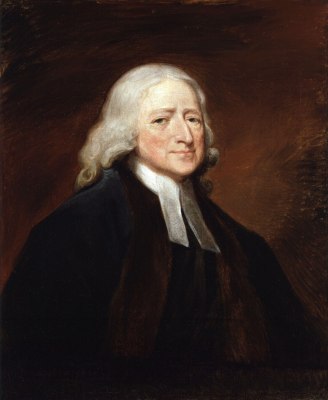
John Wesley
(1701-1793)

Fifty meters north of ELC stands the United Methodist Church. Once again, the work of God’s Spirit is evident in the tradition. Let’s go back to 18th Century England and Oxford University and hear discussions among a small band of students led by a young man name Wesley. A troubled soul, Wesley believed the Anglican Church had become too formal — spiritually dry — and that reform was needed. Methodical and disciplined in their personal habits, others derisively called them “Methodists.” Young Wesley’s often tortured journey of faith reached what he called a defining moment at age 35 while listening to someone reading, interestingly enough, Luther’s Preface to the Book of Romans. Wesley himself, by the way, never left the Anglican Church, but his followers did. 

Beyond the Holy Spirit’s role in history, Ezekiel’s story offers a powerful metaphor for each of us. How often do we confront “valleys of dry bones” in our faith journeys, when faith seems tenuous, hope seems lost, and life seems grim? If we notice that situation in another, for example, we might even remark, they have lost their spirit, an interesting expression. As Christians, we know it is the breath of God that sustains us, liberating us from sadness and despair, and driving us forward in hope. It is the Holy Spirit that sparks our thoughts and actions.  And isn’t that a powerful realization! We are not simply a constellation of genetics and environmental influences. We carry within us a force that lies beyond our human understanding. Interestingly, the word enthusiasm derives from the Greek, theos, meaning God — hence, en + theos means God in us! The next time you are with someone that exhibits authentic enthusiasm about anything, and especially in matters of faith, remember that word origin (I’m reminded of a recent conversation with Pastor Jen. I asked her how things were going, to which she replied, “Oh, things are going well — I’m just trying to keep up with the Holy Spirit!”). My prayer for all of us is that we carry that breath of God into our relationships, into our work, and into our communities!

Soli Deo Gloria

“Holy Hill” in Black River Falls, Wisconsin

Reflecting on the spiritual discipline of prayer

In recent weeks, I have been offering ideas regarding prayer. Recently I have been reading Martin Luther’s A Simple Way to Pray, a short tract he wrote at the request of his barber, Peter Beskendorf, in 1535. I love the fact that he wrote this for his barber! I commend to your reading the article link included here. I have found it exceedingly helpful!

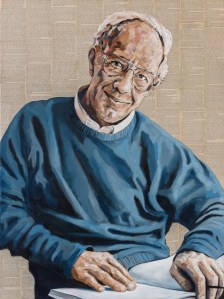
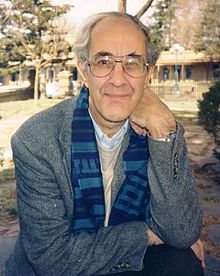
Henri Nouwen
(1932-1996)

And, once again, an offering from the wordsmith, Henri Nouwen:

Prayer is not introspection. It is not a scrupulous, inward-looking analysis of our own thoughts and feelings, but it is a careful attentiveness to the Presence of Love personified inviting us to an encounter. Prayer is the presentation of our thoughts— reflective thoughts, as well as daydreams, and night dreams—to the One who receives them, sees them in the light of unconditional love, and responds to them with divine compassion. This context of thinking in the Presence, of conversation and dialogue with Love, is the joyful affirmation of our gentle Companion on the journey with God who knows our minds and hearts, our goodness and our beauty, our darkness and our light. The Psalmist prays the prayer for us (Psalms 139:1–3; 23–24):

O Lord, you search me and you know me, you know my resting and my rising,
you discern my purpose from afar.
You mark when I walk or lie down,
all my ways lie open to you. . . .
O search me, God, and know my heart. O test me and know my thoughts.
See that I follow not the wrong path and lead me in the path of life eternal. Amen. 

Join us after church on Sundays in the library for some in-person discussion of the Lectionary! no prior knowedge or special expertise is necessary — we grapple with scripture every week! All are welcome! 

9 May 2024: The Ascension of Our Lord and 12 May: Easter 7

Faithful Conversations #63
Introduction to Readers
There’s an old adage when coaching distance runners: “If you want to do something different, you need to DO something different!” It might seem like double-speak, but there is a life lesson there and, it seems to me, an application to our spiritual journeys. I have been thinking about that recently, particularly regarding my approach to the discipline of prayer. More on that to follow. This week’s blog posting has two parts: first, some history of the Feast Day known as the Ascension of Our Lord and overview of the accompanying readings; and second, an overview of the readings for Easter 7 and commentary on John 17. As always, thanks for visiting this space again this week!
Brief history of ascension Day (this coming thursday):
Celebrated since the earliest days of Christianity, the Feast of the Ascension (also known as Ascension Day or Holy Thursday), commemorates our belief in the bodily ascension of Jesus Christ into heaven as described in Luke. The exact origins of its observance are somewhat uncertain, but by the 4th Century, it was widely celebrated by Christians, particularly in the Eastern Church. The Western Church formally established the celebration in the 6th Century. The Ascension is observed on a Thursday, forty days after Easter Sunday. (Sidebar: In some Christian denominations, the Feast is transferred to the following Sunday for practical reasons, allowing more people to participate in the celebration). Throughout history, various customs and rituals have been associated with Ascension Day, including special church services, processions, and devotional practices. Holy Thursday marks the completion of Jesus’ earthly ministry and serves as a reminder of the promise of Jesus’ return in glory, as mentioned in the New Testament.

Readings for the Ascension of our Lord (Thursday 9 May) Acts 1: 1-11 Psalm 47 (or 93) Ephesians 1: 15-23 Luke 24: 44-53

what to look for in the Ascension day Readings:

Ascension of Christ
Albertino Piazza
(1490–1528)

These four scripture passages convey the profound significance of Christ’s Ascension. Acts 1:1-11 portrays the moment of Jesus’ departure from Earth, as He ascends into heaven, promising the disciples the Holy Spirit and affirming His return. Luke 24:44-53 recounts the same event, emphasizing Jesus’ final words of blessing and commissioning to His followers. Ephesians 1:15-23 expands on the cosmic implications of Christ’s Ascension, depicting His exaltation above all powers and authorities, with believers as beneficiaries of His glorious inheritance. Psalm 47 serves as a poetic celebration of God’s sovereignty and kingship, resonating with the themes of triumph and exaltation present throughout the Ascension narrative.

Readings for Easter 7 Acts 1: 15-17, 21-26 Psalm 1 1 John 5: 9-13 John 17: 6-19 (highlighted below)

what to look for in the Readings for easter 7:

The readings for the 7th Sunday of Easter encompass various themes that reflect the significance of Jesus’ ascension and the disciples’ preparation for the coming of the Holy Spirit at Pentecost. In Acts 1:15-17, 21-26, the disciples gather to choose a replacement for Judas Iscariot (eventually Matthias), highlighting the importance of unity and community among believers. Psalm 1 echoes the theme of righteousness and meditation on God’s law, emphasizing the path of the righteous and their steadfastness in faith. 1 John 5:9-13 underscores the assurance of eternal life through belief in Jesus Christ, emphasizing the importance of faith and testimony. Finally, John 17:6-19 presents Jesus’ high priestly prayer, where he intercedes for his disciples and emphasizes their sanctification and protection in the world. Together, these readings offer a rich narrative surrounding the disciples’ preparation for ministry and the assurance of God’s presence and protection amidst challenges going forward.

The Gospel Reading from John

17 After Jesus had spoken these words, he looked up to heaven and said, “Father, the hour has come; glorify your Son so that the Son may glorify you, since you have given him authority over all people, to give eternal life to all whom you have given him. And this is eternal life, that they may know you, the only true God, and Jesus Christ, whom you have sent. I glorified you on earth by finishing the work that you gave me to do. So now, Father, glorify me in your own presence with the glory that I had in your presence before the world existed. “I have made your name known to those whom you gave me from the world. They were yours, and you gave them to me, and they have kept your word. Now they know that everything you have given me is from you, for the words that you gave to me I have given to them, and they have received them and know in truth that I came from you, and they have believed that you sent me. I am asking on their behalf; I am not asking on behalf of the world but on behalf of those whom you gave me, because they are yours. 10 All mine are yours, and yours are mine, and I have been glorified in them. 11 And now I am no longer in the world, but they are in the world, and I am coming to you. Holy Father, protect them in your name that you have given me, so that they may be one, as we are one. 12 While I was with them, I protected them in your name that you have given me. I guarded them, and not one of them was lost except the one destined to be lost, so that the scripture might be fulfilled. 13 But now I am coming to you, and I speak these things in the world so that they may have my joy made complete in themselves. 14 I have given them your word, and the world has hated them because they do not belong to the world, just as I do not belong to the world. 15 I am not asking you to take them out of the world, but I ask you to protect them from the evil one. 16 They do not belong to the world, just as I do not belong to the world. 17 Sanctify them in the truth; your word is truth. 18 As you have sent me into the world, so I have sent them into the world. 19 And for their sakes I sanctify myself, so that they also may be sanctified in truth. 20 “I ask not only on behalf of these but also on behalf of those who believe in me through their word, 21 that they may all be one. As you, Father, are in me and I am in you, may they also be in us, so that the world may believe that you have sent me. 

reflecting on the “high priestly prayer” of jesus

The High Priestly Prayer
Eugène Burnand (1850–1921)

The High Priestly Prayer of Jesus is found in John 17:1-26 (note that I’m including verses beyond what is assigned in the Lectionary). It’s a profound and intimate prayer that Jesus offered on behalf of his disciples just before his arrest and crucifixion. In this prayer, Jesus prays to the Father, expressing his desires for his disciples, for their unity, sanctification, and their mission in the world. It’s often regarded as one of the most significant prayers in the New Testament, revealing Jesus’ deep love for his followers and his concern for their spiritual well-being. Here’s a quick outline of 1-21:  Verses 1-5 show the stress exhibited in Jesus’ words as he speaks about his self-understanding in terms of his own mission. 6-9 include the gift of God’s words Jesus has shared with them. 10-13 include Jesus’ sharing of all that he has with the disciples, his pleas for their protection so their unity is not disrupted, and finally the gift of joy. Verses 14-19 conclude with the affirmation of the disciples’ placement squarely in the midst of human life and the process of God’s truth working in them a holy life.  Finally, 20-21 suggest that Jesus is also praying for those in the future (like us!) who will acknowledge him as Lord. What should we take away from this incredible prayer? Some refer to the High Priestly Prayer of Jesus as the “other” Lord’s Prayer, referencing the familiar words Jesus gave us in his Sermon on the Mount (Matthew 6:5-15). Beyond providing a model prayer, however, Jesus’ conversation with God feels deeply personal. Pastor and professor Susan Hedahl said this about this intimate moment with Jesus from John 17: This prayer is many things: leave-taking reflections; summary words; a call to spiritual struggle and commitment; and most of all, a prayer for someone who loves his followers deeply. That last line — and most of all, a prayer for someone who loves his followers deeply — hit me hard. Jesus is offering us a tremendous example of intercessory prayer here, a prayer given by someone on behalf of another. The context is important. He had spent three years with this group of men, among others who walked with him on this earth. And now, he was leaving. What must have been going through their minds at this point? And then he prays for us! (Verses 20-21). And his prayer includes the desire that we “all be one.” Let that sit in your heart for a few moments. How many people do you encounter in your daily walk who NEED to know that God loves them? As we look around at all the agony in our world — all the division and hatred — we need to dwell on these words from John 17! We need to share these words with others! Soli Deo Gloria ** As is often the case, many ideas I include here are drawn from others. This week’s blog was inspired, in part, from a 2009 reflection written by Susan Hedahl, Lutheran Theological Seminary at Gettysburg in fall 2012.
concluding thoughts on prayer this week:
As mentioned last week, I am offering a few things to think about regarding the spiritual discipline of prayer and will do so again next week. I found these two excerpts helpful this week.  

Martin Luther
(1483-1546)

From Martin Luther: In our prayers, we should firmly believe that God’s promise to us is always sure and certain and have no doubt that He will give us what He promises. Words of promise from God always call for faith on our part. Faith is a firm, undoubted confidence in the truth of God’s promise. He who prays to God with doubts in his heart is tempting God. He has his doubts about God’s will and grace. His prayer must be meaningless. He gropes after God like a blind man for a wall. 

Henri Nouwen (1932-1996)

From Henri Nouwen: Silence means rest, rest of body and mind in which we become available for him whose heart is greater than ours. That is very threatening; it is like giving up control over our actions and thoughts, allowing something creative to happen not by us but to us. Is it so amazing that we are so often tired and exhausted, trying to be masters of ourselves, wanting to grasp the ultimate meaning of our existence, struggling with our identity? Silence is that moment in which we not only stop the discussion with others but also the inner discussions with ourselves, in which we can breathe in freely and accept our identity as a gift. “Not I live, but He lives in me.” It is in this silence that the Spirit of God can pray in us and continue his creative work in us. . . . Without silence the Spirit will die in us and the creative energy of our life will float away and leave us alone, cold, and tired. Without silence we will lose our center and become the victim of the many who constantly demand our attention.
and, finally, celebrating unity in song . . . .
As part of our communion celebration at ELC on Sunday, we sang this familiar tune. After searching around a bit, I stumbled on this version of it. I learned that the song is derived from an African American Spiritual, and that it was most likely first sung at the time of the Civil War. (Note: It first showed up in our tradition with the Lutheran Book of Worship in 1978, and you will find it on page 471 in the ELW, our current hymnal).  I don’t know the full background of this live recording by Joan Baez, but I guarantee it will lift your spirit today, particularly when you reach the 4:20 mark!
we will resume our in-person discussion of the Lectionary on sunday 19 May! join us in the church library at 10:45 — no prior knowedge or special expertise is necessary — we grapple with scripture every week! All are welcome! 

5 May 2024: Easter 6

Faithful Conversations #62

Luther’s Bible 1534

Introduction to Readers:
We started this effort in February of 2023 as an outgrowth of an Introduction to Bible Study class. Our intention is to stay grounded in the Lutheran principle of Sola Scriptura by consistently reading and reflecting on weekly readings as prescribed in the Revised Common Lectionary. Hopefully, we are making progress in that effort! We are nearing the end of the Easter cycle of RCL readings (Year B), leading to the celebration of Pentecost (19 May). Today, I will offer a short introduction to the four readings and offer a brief reflection on Psalm 98, including a link to a favorite hymn. Beyond that, and for the next three weeks, I want to drill down a bit on the spiritual practice of prayer. As always, thanks for being here!

Readings for Easter 6
Acts 10: 44-48
Psalm 98
1 John 5: 1-6
John 15: 9-17

A Quick Take on This Week’s Readings:
A thematic thread of divine love and its transformative power weaves through the readings for the sixth Sunday in Easter. Acts 10:44-48 illustrates the inclusive nature of God’s love, as the Holy Spirit descends upon Gentiles, signifying that God’s grace is not limited by cultural or ethnic boundaries (the story of Cornelius, the Roman soldier, precedes this passage). This theme continues in Psalm 98, a celebration of God’s salvation and righteousness revealed to all nations, emphasizing the universality of divine love and justice. 1 John 5:1-6 underscores the inseparable connection between love for God and love for others, affirming that genuine faith in Christ is expressed through acts of love. Finally, John 15:9-17 captures Jesus’ commandment to love one another as he has loved us, emphasizing the sacrificial and unconditional nature of divine love, which forms the essence of discipleship. Look for these connections as you read today! 

Psalm 98

O sing to the Lord a new song,
    for he has done marvelous things.
His right hand and his holy arm
    have gotten him victory.
The Lord has made known his victory;
    he has revealed his vindication in the sight of the nations.
He has remembered his steadfast love and faithfulness
    to the house of Israel.
All the ends of the earth have seen
    the victory of our God.

Make a joyful noise to the Lord, all the earth;
    break forth into joyous song and sing praises.
Sing praises to the Lord with the lyre,
    with the lyre and the sound of melody.
With trumpets and the sound of the horn
    make a joyful noise before the King, the Lord.

Let the sea roar and all that fills it,
    the world and those who live in it.
Let the floods clap their hands;
    let the hills sing together for joy
at the presence of the Lord, for he is coming
    to judge the earth.
He will judge the world with righteousness
    and the peoples with equity.

Herbert Brokering
(1926-2009)

Reflections on psalm 98
Psalm 98, I have learned this week, served as the inspiration for one of my favorite hymns: “Earth and All Stars” (731 in the ELW). It was a favorite of my father’s and one that he requested for his funeral in 2013.  Composed by David Johnson with lyrics by Herb Brokering, it’s fairly new to our tradition. Written to commemorate the 90th anniversary of St. Olaf College in 1964, Brokering said this about his inspiration: I tried to gather into a hymn of praise the many facets of life which emerge in the life of community. So there are the references to building, nature, learning, family, war, festivity. Seasons, emotions, death and resurrection, bread, wine, water, wind, sun, spirit. . . have made great impressions on my imagination.

A couple other things. First, I met Herb Brokering at Concordia College in the late 1970s. He came and spoke at our morning chapel service and made quite an impression! And second, I’m taken with the phrase “sing to the Lord a new song” (Psalm 98:1) that reverberates throughout the piece and have been thinking about it for a couple of days. The phrase appears six times in the Psalms (33:3, 40:3, 96:1, 98:1, 144:9, and 149:1). It can be interpreted a variety of ways, but my sense of it is this: through Christ we continually experience spiritual renewal, we are opened up to new experiences, and experience the old and traditional foundations of our faith in new ways. Here are Brokering’s lyrics for the hymn:

1 Earth and all stars, loud rushing planets, sing to the Lord a new song!
O victory, loud shouting army, sing to the Lord a new song!
Refrain He has done marvelous things. I too will praise him with a new song!

2 Hail, wind, and rain, loud blowing snowstorms, sing to the Lord a new song!
Flowers and trees, loud rustling dry leaves, sing to the Lord a new song! Refrain

3 Trumpet and pipes, loud clashing cymbals, sing to the Lord a new song!
Harp, lute, and lyre, loud humming cellos, sing to the Lord a new song! Refrain

4 Engines and steel, loud pounding hammers, sing to the Lord a new song!
Limestone and beams, loud building workers, sing to the Lord a new song! Refrain

5 Classrooms and labs, loud boiling test-tubes, sing to the Lord a new song!
Athlete and band, loud cheering people, sing to the Lord a new song! Refrain

6 Knowledge and truth, loud sounding wisdom, sing to the Lord a new song!
Daughter and son, loud praying members, sing to the Lord a new song!

Finally, here is a great version of the hymn — a bit heavy on the organ, but you can sense the joy with this choir!

Reflecting on the spiritual discipline of prayer

John Hoagenson
Baptized in 1929

As mentioned in my introduction, for the next three weeks I want to devote part of this space to the discipline of prayer. I offer this with great humility, because I know that many of you have depths of wisdom when it comes to prayer. My interest in doing this stems from interviews I have been conducting with elder members of our parish (our “Resilient Voices” project). Each participant thus far has spoken with great specificity about their daily interaction with God through prayer. This is not surprising, of course, but exploring that with people is enlightening. Within the past week, I spoke with John Hoagenson — aka “Hoagy” — who has been a member of our parish for 95 years! In the course of the conversation, he talked about his nightly prayer discipline, and he lit up when talking about that. 

Two things to get us started. First, take time to listen to this short podcast by Father Mike Schmitz. He identifies four attributes of good prayer, and I found it helpful (you might even want to take a few notes!).

**Note: Father Schmitz the Director of Youth and Young Adult Ministries in the Diocese of Duluth, Minnesota. He has a notable social media presence and I am a fan of his podcasts.

And finally, I offer this prayer from the pen of Eleanor Roosevelt. According to her children, she included it with her prayers every night. I so appreciate the humility in the prayer and the final line reminded me of Psalm 98:1.

Eleanor Roosevelt
(1884-1962)

Our Father, who has set a restlessness in our hearts and made us all seekers after that which we can never fully find, forbid us to be satisfied with what we make of life. Draw us from base content and set our eyes on far off goals. Keep us at tasks too hard for us that we may be driven to Thee for strength. Deliver us from fretfulness and self-pitying; make us sure of the good we cannot see and of the hidden good in the world. Open our eyes to simple beauty all around us and our hearts to the loveliness men hide from us because we do not try to understand them. Save us from ourselves and show us a vision of the world made new. Amen. 

Soli Deo Gloria

Join us after church on Sundays in the library for some in-person discussion of the Lectionary! no prior knowedge or special expertise is necessary — we grapple with scripture every week! All are welcome! 


28 April 2024: Easter 5

Faithful Conversations #61

Introduction to Readers: “Out of intense complexities, intense simplicities emerge.” (Churchill) 

Winston Churchill
(1874-1965)

This week’s readings brought to mind Churchill’s widely applicable quote from The World Crisis, his multi-volume history of World War I. Within the most intricate and challenging situations, there often arise simple and profound truths or solutions. Complexity can give birth to clarity and simplicity. As we work our way through the Lectionary each week, it is easy to get tangled up with complicated theology and difficult Biblical interpretation. And while it is important to navigate the complexity of scripture and theological differences as best we can, it is good to remind ourselves that Christ cuts through the harsh realities and complicated nature of our lives and this world with a simple message: God loves us and, in turn, enables us to love our neighbor. That’s it! See how that message is conveyed in this week’s readings!

As always, thanks for your ongoing interest in gaining a deeper understanding of the Bible, and for revisiting this space each week. I will offer a summary of how the four readings are connected, followed by a prompt regarding the reading from 1 John, and reflections on the story from Acts 8. Beyond that, I’m introducing a special focus on prayer for the next several weeks, and including a suggested hymn that was prompted, in part, by this week’s Gospel.

Readings for Easter 5
Acts 8: 26-40
Psalm 22: 25-31
1 John 4: 7-21
John 15: 1-8

A Quick Take on This Week’s Readings
The readings for Easter 5 weave together a tapestry of themes centered on love, faith, and connection. In Acts 8:26-40, we witness Philip’s encounter with the Ethiopian eunuch, illustrating God’s inclusive love reaching beyond cultural boundaries. Psalm 22:25-31 echoes this inclusivity, celebrating God’s reign over all nations and generations. 1 John 4:7-21 delves into the essence of love, emphasizing that it originates from God and manifests in our relationships with one another. Finally, John 15:1-8 employs the metaphor of the vine and branches to emphasize our dependence on Christ for spiritual sustenance, highlighting the intimate connection between believers and their source of life.

The Second Reading: 1 John 4: 7-21: God is Love
Beloved, let us love one another, because love is from God; everyone who loves is born of God and knows God. Whoever does not love does not know God, for God is love. God’s love was revealed among us in this way: God sent his only Son into the world so that we might live through him. 10 In this is love, not that we loved God but that he loved us and sent his Son to be the atoning sacrifice for our sins. 11 Beloved, since God loved us so much, we also ought to love one another. 12 No one has ever seen God; if we love one another, God abides in us, and his love is perfected in us. 13 By this we know that we abide in him and he in us, because he has given us of his Spirit. 14 And we have seen and do testify that the Father has sent his Son as the Savior of the world. 15 God abides in those who confess that Jesus is the Son of God, and they abide in God. 16 So we have known and believe the love that God has for us. God is love, and those who abide in love abide in God, and God abides in them. 17 Love has been perfected among us in this: that we may have boldness on the day of judgment, because as he is, so are we in this world. 18 There is no fear in love, but perfect love casts out fear; for fear has to do with punishment, and whoever fears has not reached perfection in love. 19 We love[a] because he first loved us. 20 Those who say, “I love God,” and hate a brother or sister are liars, for those who do not love a brother or sister, whom they have seen, cannot love God, whom they have not seen. 21 The commandment we have from him is this: those who love God must love their brothers and sisters also.

A Story and Questions (drawn from the ELCA’s Website):
There is a well-known story of the preacher who preached a one-word sermon. He slowly walked to the pulpit, opened up his notes, and proclaimed, “Love!” and sat down. Those in the congregation didn’t know what to do. You could hear rustling of paper. Finally, the organist began to play a hymn. The next week, the preacher rose to the pulpit and proclaimed, “Love!” and sat down. This time, someone boldly yelled out, “You told us that last week!” The preacher stood up and solemnly said, “I know. Now start doing it!” (I enjoy this story because this preacher was practicing some great pedagogy!) Some questions to think about:

  1. How do you react to that story?
  2. What point was the preacher trying to make?
  3. How would such a sermon be received in your congregation?

The First Reading: Acts 8: 26-40: Philip and the Ethiopian Eunuch
26 Then an angel of the Lord said to Philip, “Get up and go toward the south to the road that goes down from Jerusalem to Gaza.” (This is a wilderness road.) 27 So he got up and went. Now there was an Ethiopian eunuch, a court official of the Candace, the queen of the Ethiopians, in charge of her entire treasury. He had come to Jerusalem to worship 28 and was returning home; seated in his chariot, he was reading the prophet Isaiah. 29 Then the Spirit said to Philip, “Go over to this chariot and join it.” 30 So Philip ran up to it and heard him reading the prophet Isaiah. He asked, “Do you understand what you are reading?” 31 He replied, “How can I, unless someone guides me?” And he invited Philip to get in and sit beside him. 32 Now the passage of the scripture that he was reading was this:

“Like a sheep he was led to the slaughter,
    and like a lamb silent before its shearer,
        so he does not open his mouth.
33 In his humiliation justice was denied him.
    Who can describe his generation?
        For his life is taken away from the earth.”

34 The eunuch asked Philip, “About whom, may I ask you, does the prophet say this, about himself or about someone else?” 35 Then Philip began to speak, and starting with this scripture he proclaimed to him the good news about Jesus. 36 As they were going along the road, they came to some water, and the eunuch said, “Look, here is water! What is to prevent me from being baptized?” 38 He commanded the chariot to stop, and both of them, Philip and the eunuch, went down into the water, and Philip baptized him. 39 When they came up out of the water, the Spirit of the Lord snatched Philip away; the eunuch saw him no more and went on his way rejoicing. 40 But Philip found himself at Azotus, and as he was passing through the region he proclaimed the good news to all the towns until he came to Caesarea.

This Week’s Reflection: conversion is a two-way experience!   

Baptism of the Ethiopian Eunuch c. 1655
Aelbert Cuyp (1620–1691)

There are two “Philips” in the New Testament. There is Philip the Apostle, one of the original twelve disciples, and Philip the Evangelist, one of the seven deacons chosen to serve the Jerusalem church.

Acts 8:26-40 recounts the fascinating story of Philip (the Evangelist) and the Ethiopian eunuch. (Sidebar: The identification of this individual as a eunuch is always a bit jarring! In ancient times, male court officials were often castrated at a young age in order to help them act appropriately around the king’s harem. It was also believed this would make them less susceptible to power struggles, having no possibility of heirs). Philip, prompted by an angel of the Lord, encounters the eunuch, who is a high official of the Ethiopian queen, reading from the book of Isaiah. Philip approaches and helps the eunuch understand the scripture, particularly Isaiah’s prophecy about Jesus. As they travel together, they come across water, and the eunuch asks to be baptized, professing his belief in Jesus as the Son of God. Philip baptizes him, after which the Spirit of the Lord whisks Philip away, leaving the eunuch rejoicing on his journey.

What should we take away from this story? Certainly, this passage highlights the inclusivity of the Gospel message. We assume that Philip had been raised a Jew and had subsequently joined the “people of the way.” I love the fact that when the Angel instructed him to go out on that “wilderness road,” Philip simply went — no hesitation. Further, it is intriguing to imagine this Spirit-led exchange with the Ethiopian man, certainly a Gentile (it is interesting to me that the eunuch is not named). The curiosity of the eunuch and Philip’s enthusiasm in sitting with him for a conversation are so refreshing. And imagine what is going through Philip’s mind when the Ethiopian asked to join the family of God! That moment when the chariot stops, and they go to the water is POWERFUL! It all seems very matter of fact. By baptism, the eunuch is forever changed. Likewise, however, it strikes me that Philip’s life was forever changed by this encounter, and his actions provide a beautiful model for us.

Soli Deo Gloria  

(Note: I am indebted to Pastor Debie Thomas for inspiring me with her words regarding this week’s passage from Acts. She contributes to “Journey With Jesus,” a weekly Lectionary Blog). 

description of Contemplative prayer (henri nouwen)

(Note: In the next several weeks, I plan to explore the practice of prayer within this space. I want to start with this terrific statement from our friend, Henri Nouwen).

Henri Nouwen (1932-1996)

The practice of contemplative prayer is the discipline by which we begin to “see” the living God dwelling in our own hearts. Careful attentiveness to the One who makes a home in the privileged center of our being gradually leads to recognition. As we come to know and love the Father of our hearts we give ourselves over to this incredible Presence who takes possession of all our senses. By the discipline of prayer we are awakened and opened to God within, who enters into our heartbeat and our breathing, into our thoughts and emotions, our hearing, seeing, touching, and tasting. It is by being awake to this God within that we also find the Presence in the world around us. Here we are again in front of the secret. It is not that we see God in the world, but that God-with-us recognizes God in the world. God speaks to God, Spirit speaks to Spirit, heart speaks to heart. Contemplation, therefore, is a participating in the divine self-recognition. The divine Spirit alive in us makes our world transparent for us and opens our eyes to the presence of the divine Spirit in all that surrounds us. It is with our heart of hearts that we see the heart of the world. . . .

Afterword: A suggested hymn for Easter 5 is “O Blessed Spring,” written by Robert Bucklee Farlee, with lyrics by Susan Cherwien (447 in the ELW). This link will take you to an excellent version of it by the National Lutheran Choir (based out of the Twin Cities). Note the lyrics and their connection to this week’s Gospel. Enjoy the gorgeous imagery also.

Join us after church on Sundays in the library for some in-person discussion of the Lectionary! no prior knowedge or special expertise is necessary — we grapple with scripture every week! All are welcome! 


21 April 2024: Easter 4

Faithful Conversations #60

Introduction to Readers: “Noverim me, noverim Te!” (Augustine)

Martin Luther
Augustinian Monk

Saint Augustine (354-430)
by Philippe de Champaigne

Somewhere along the line, I recall being taught that the central purpose of education can be reduced to the phrase, “Know Thyself.” Attributed to the famed Greek philosopher Socrates and Plato, his most famous student, the implication is that we must first understand ourselves if we are to correctly understand others and the world in which we live.  Makes sense. And that leads me to Augustine of Hippo and his famous Latin phrase (and short prayer) as noted in my title, Noverim me, noverim Te. It comes from his commentary on spiritual discernment and translates, “Oh God ever the same, let me know myself, let me know you!” Like many of his generation (and beyond), Augustine was influenced by the ancient Greeks and Platonic thinking. Further, this giant of Western Christianity profoundly influenced our spiritual ancestor, Martin Luther. As a young Augustinian Monk, Brother Martin delved deeply into Augustine’s writings, particularly his works on grace, sin, and salvation. Bishop Augustine’s emphasis on the primacy of grace and his teachings on justification by faith resonated deeply with young Luther. 

Let us keep Augustine’s simple prayer in mind as we explore this week’s readings. As always, thanks for your ongoing interest in Bible study, and for revisiting this space each week. In this week’s edition, I’m providing a short summary of the readings, followed by prompting questions related to the reading from 1 John 3, followed by some commentary on the passage from Acts 4.

Readings for Easter 4
Acts 4: 5-12
Psalm 23
1 John 3: 16-24
John 10: 11-18

A Quick Take on This Week’s Readings
The Bible readings for the 4th Sunday of Easter are linked by a common theme of shepherding and protection. In Acts 4:5-12, Peter boldly declares the name of Jesus as the only means of salvation, emphasizing the role of Jesus as the Good Shepherd who leads and protects his flock. Psalm 23 beautifully illustrates God’s care and guidance, depicting Him as the shepherd who leads His people to safety and abundance. This theme continues in 1 John 3:16-24, where the sacrificial love of Christ is highlighted as the ultimate example of shepherding, urging believers to love one another sacrificially. Finally, in John 10:11-18, Jesus explicitly identifies Himself as the Good Shepherd who lays down His life for His sheep, emphasizing His intimate knowledge of and care for His followers. Together, these readings underscore the comforting truth of God’s faithful shepherding and sacrificial love for His people.

The Third Reading: 1 John 3: 16-24
16 We know love by this, that he laid down his life for us—and we ought to lay down our lives for the brothers and sisters. 17 How does God’s love abide in anyone who has the world’s goods and sees a brother or sister in need and yet refuses help? 18 Little children, let us love not in word or speech but in deed and truth. 19 And by this we will know that we are from the truth and will reassure our hearts before him 20 whenever our hearts condemn us, for God is greater than our hearts, and he knows everything. 21 Beloved, if our hearts do not condemn us, we have boldness before God, 22 and we receive from him whatever we ask, because we obey his commandments and do what pleases him. 23 And this is his commandment, that we should believe in the name of his Son Jesus Christ and love one another, just as he has commanded us. 24 All who obey his commandments abide in him, and he abides in them. And by this we know that he abides in us, by the Spirit that he has given us.

Commentary and Questions (drawn from the ELCA’s Website):
After his last supper with them, Jesus instructs his disciples with those famous words from John 13:34: “I give you a new commandment, that you love one another. Just as I have loved you, you also should love one another. By this everyone will know that you are my disciples, if you have love for one another.” This new commandment is a central theme in the First Letter of John, and Jesus’ words do not allow wiggle room to be selective of who we love and when we love. Jesus seems to cut through any confusion. Here are several questions to think about (and discuss):

  1. Does it sound like love in an option with Jesus? Explain.
  2. How would you describe the love of Jesus?
  3. How does the commandment to love invite you to see others in need?
  4. Is it possible as a Christian not to see a neighbor in need and respond? Explain.

The First Reading: Acts 4: 5-12
The next day their rulers, elders, and scribes assembled in Jerusalem, with Annas the high priest, Caiaphas, John, and Alexander, and all who were of the high-priestly family. When they had made the prisoners stand in their midst, they inquired, “By what power or by what name did you do this?” Then Peter, filled with the Holy Spirit, said to them, “Rulers of the people and elders, if we are being questioned today because of a good deed done to someone who was sick and are being asked how this man has been healed, 10 let it be known to all of you, and to all the people of Israel, that this man is standing before you in good health by the name of Jesus Christ of Nazareth, whom you crucified, whom God raised from the dead. 11 This Jesus is ‘the stone that was rejected by you, the builders; it has become the cornerstone.’  12 “There is salvation in no one else, for there is no other name under heaven given among mortals by which we must be saved.”

This Week’s Reflection: The kingdom of god is here!   

Peter Healing the Cripple by Cantarini (17th Century)

We are continuing our walk through the post-resurrection period with these readings. In Acts 4:5-12, Peter and John are brought before the high priest and other religious leaders for questioning after healing a crippled beggar in the name of Jesus. As they boldly testify, Peter, filled with the Holy Spirit, asserts that the healing was done through the power of Jesus Christ, whom the religious leaders had crucified but who had been raised from the dead. He proclaims that there is salvation in no one else, for there is no other name under heaven given among men by which we must be saved. This passage highlights the unwavering faith and courage of the apostles in the face of opposition, as well as their steadfast belief in the uniqueness and saving power of Jesus Christ.

What should we draw from this confrontation between the disciples and the Jewish leaders? There is much here, but one thing that came home to me is this. Our faith is based on an understanding of salvation that is both here and now and yet to come. The healing of the crippled beggar — the event that led to the questioning of Peter and the others in front of the authorities — is a metaphor for God’s work in our world. One of my favorite scenes in scripture is the image of that broken and crippled man who suffered such great humiliation, leaping for joy upon being healed (Acts 3: 7-9). Imagine how it felt to witness such an event! As Christians, we are not simply sitting around waiting for the Second Coming. The Kingdom of God is here, right now, present in our world, and we are compelled to carry it forward with the guidance of the Holy Spirit, our powerful advocate. Luther would admonish us to “get busy” and go to work!

Soli Deo Gloria  
Prayer: psalm 23 (King James Version): 

The 23rd Psalm holds a special place in our tradition. Take time to pray the Psalm this week, focusing on the beautiful language.

The Lord is my shepherd; I shall not want. He maketh me to lie down in green pastures: he leadeth me beside the still waters. He restoreth my soul: he leadeth me in the paths of righteousness for his name’s sake. Yea, though I walk through the valley of the shadow of death, I will fear no evil: for thou art with me; thy rod and thy staff they comfort me. Thou preparest a table before me in the presence of mine enemies: thou anointest my head with oil; my cup runneth over. Surely goodness and mercy shall follow me all the days of my life: and I will dwell in the house of the Lord for ever.

Finally, a personal note: Psalm 23 was the inspiration for The King of Love, an Irish tune with words written by Henry W. Baker (1821-1877). It is one of the great hymns in our Lutheran tradition (page 502 of the ELW) . My mother, Cathryn Wambheim Rykken, sang under Paul J. Christiansen at Concordia College in the 1940s, and often sang this hymn (including at MaryBeth’s and my wedding 44 years ago!). Here is a recent version of the hymn from the Concordia Choir.

Join us after church on Sundays in the library for some in-person discussion of the Lectionary! no prior knowedge or special expertise is necessary — we grapple with scripture every week! All are welcome! 

14 April 2024: Easter 3

Faithful Conversations #59

Albert Einstein
1879-1955

Introduction to Readers:
The dynamic nature of our faith journeys has been on my mind this week, prompted by a quote from Einstein: “The distinction between the past, present, and future is only a stubbornly persistent illusion.” Our Christian walk is predicated on an eternal engagement with Jesus Christ, an ongoing process. Our formative faith experiences, for example, stay with us, for good or bad. I have had many conversations over the years with people who carry negative emotions from their early years that prompted them to leave the church (the word “baggage” comes to mind). Our current faith practices, in turn, may feel different from what we experienced in years past and surely impact where we are headed. Einstein was right — we cannot separate past, present, and future.

“Jacob Wrestles With God”
Unidentified Artist 1630

We know that Martin Luther’s faith journey was, at times, doubt-filled and excruciating. Genesis 32 comes to mind. Jacob’s nocturnal wrestling match with God offers a metaphor perhaps. This isn’t meant to be easy.

With this in mind, let me offer a simple suggestion this week –keeping a JOURNAL. Having journaled (off and on) for years, I and can say with certainty it helps me in three ways. First, it increases my engagement with what I am reading in the moment. Second, it provides a record of where I have been spiritually. And finally, and most importantly, it significantly enhances my prayer life. If you want to discuss that or have something to add about journaling, feel free to reach out and/or post a comment here! 

Thanks for your ongoing interest in Bible study, and hopefully you come away from this each week with something to think about! In this week’s edition, I’m providing a short summary of the readings, followed by prompting questions related to the reading from 1 John, and reflections on the passage from Luke.

Readings for Easter 3
Acts 3: 12-19
Psalm 4
1 John 3: 1-7
Luke 24: 36b-48

A Quick Take on This Week’s Readings
The readings from Acts 3:12-19, Psalm 4, 1 John 3:1-7, and Luke 24:36-48 are interconnected by their profound themes of repentance, forgiveness, and redemption through God’s grace. Acts 3 depicts Peter’s call to repentance, emphasizing the need for turning to God to experience forgiveness and renewal. Psalm 4 echoes this sentiment by portraying trust in God’s righteousness, seeking His favor, and finding peace in His presence. 1 John 3:1-7 underscores the transformative power of God’s love, urging believers to live righteous lives as children of God, purified by Christ’s sacrifice. Finally, Luke 24:36-48 portrays Jesus’ post-resurrection appearance, emphasizing His fulfillment of Scripture and the necessity of His death and resurrection for the forgiveness of sins. Together, these readings weave a narrative of repentance, forgiveness, and the transformative love of God, culminating in the proclamation of the Gospel for the salvation of humanity.

The Second Reading: 1 John 3: 1-7
See what love the Father has given us, that we should be called children of God, and that is what we are. The reason the world does not know us is that it did not know him. Beloved, we are God’s children now; what we will be has not yet been revealed. What we do know is this: when he is revealed, we will be like him, for we will see him as he is. And all who have this hope in him purify themselves, just as he is pure. Everyone who commits sin is guilty of lawlessness; sin is lawlessness. You know that he was revealed to take away sins, and in him there is no sin. No one who abides in him sins; no one who sins has either seen him or known him. Little children, let no one deceive you. Everyone who does what is right is righteous, just as he is righteous.

Commentary and Questions (drawn from the ELCA’s “Bible Studies” website):
Out of love, God calls and claims us to be children of God. That is not a claim issued in isolation. Our world, in fact, overflows with a Christian family. As we affirm our baptism, we promise to live among God’s faithful people — our brothers and sisters in Christ. Though we may not necessarily vote the same in an election, root for the same football team, or like the same dessert, we are united in and through Jesus Christ. Living among God’s faithful people means being an active part of the Christian community. We share the joys and sorrows of life. We grow in faith, urging each other to claim the identity of being children of God. Here are several questions to think about:

  1. When someone calls you a child of God, what comes to mind?
  2. The Holy Spirit is our advocate, our companion. What does that mean?
  3. How does being part of a Christian community help you to grow in faith?
  4. Is it possible to be a Christian and not interact with a community of faith?

The Gospel Reading: Luke 24: 36b-48
36 While they were talking about this, Jesus himself stood among them and said to them, “Peace be with you.” 37 They were startled and terrified and thought that they were seeing a ghost. 38 He said to them, “Why are you frightened, and why do doubts arise in your hearts? 39 Look at my hands and my feet; see that it is I myself. Touch me and see, for a ghost does not have flesh and bones as you see that I have.” 40 And when he had said this, he showed them his hands and his feet. 41 Yet for all their joy they were still disbelieving and wondering, and he said to them, “Have you anything here to eat?” 42 They gave him a piece of broiled fish, 43 and he took it and ate in their presence. 44 Then he said to them, “These are my words that I spoke to you while I was still with you—that everything written about me in the law of Moses, the prophets, and the psalms must be fulfilled.” 45 Then he opened their minds to understand the scriptures, 46 and he said to them, “Thus it is written, that the Messiah is to suffer and to rise from the dead on the third day 47 and that repentance and forgiveness of sins is to be proclaimed in his name to all nations, beginning from Jerusalem. 48 You are witnesses of these things.

This Week’s Reflection: God opens our minds!  
There are multiple instances of Christ appearing to people in the forty days after his resurrection recorded in scripture. This week’s Gospel reading from Luke is one such episode. First, some context. Luke-Acts, perhaps penned by the same author, comprises more than one quarter of the New Testament, and most likely, both books were written between 80-110 C.E. It’s intriguing to realize that it is entirely possible that many first century Christians who read the Gospel of Luke may have seen Christ during the forty days after his death and resurrection!

On the Road to Emmaus

In Chapter 24, Luke describes the day of the resurrection. Just prior to this week’s Gospel, we are walking along a road with Cleopas and his friend, both of whom are feeling dejected and without hope. Suddenly Jesus joins them on the path, though they fail to recognize him. In fact, they are taken aback that this “stranger” has not heard about the dramatic events of recent days. Jesus listens. Then he confronts them with a powerful interpretation of the Hebrew prophecies, clearly identifying himself as the promised Messiah, but they still don’t get it. As they reach their destination, they invite the stranger to join them since it is late. And, in one of the truly powerful moments in the post-resurrection period, Jesus breaks bread with them, then vanishes. Then suddenly, their minds are opened, and they realize who Jesus is! They rush back to Jerusalem to tell the disciples what they had experienced, and I suspect they covered the seven miles in record time!

This week’s Gospel reading, then, picks up the story from there. As the disciples are listening to Cleopas and his friend excitedly recounting their Emmaus encounter, Jesus suddenly appears to the group (verse 36) and says, “Peace be with you” (an expression he used many times). They are terrified and think they are seeing a ghost (verse 37). Seemingly unsympathetic to them (and perhaps a bit impatient), Christ urges them to touch him, to see that he is flesh and bone, and then requests something to eat (verses 38-43). Similar to the earlier encounter, Jesus then opens the minds of the disciples, triggering one of those miraculous “AHA!” moments (verse 45). They realize who is standing in front of them. Imagine their excitement!
What lessons might we draw from these events? A couple things come to mind. First, it is easy for me to identify with the people Christ encounters in Luke 24. Their sense of reality is being upended and their minds simply cannot comprehend what they are experiencing. Like them, how often do we encounter God in our world and fail to see Him? Second, our faith — our relationship to Christ — is a gift. It is not a result of us “figuring it out” through logical argument. Rather, God opens our minds to the amazing truth. May we continue to pray for that!

Soli Deo Gloria  
REFLECTION from Evelyn Underhill .  .  . 

Evelyn Underhill (1875-1941)

We are the agents of the Creative Spirit in this world. Real advance in the spiritual life, then, means accepting this vocation with all it involves. Not merely turning over the pages of an engineering magazine and enjoying the pictures but putting on the overalls and getting on with the job. The real spiritual life must be horizontal as well as vertical; spread more and more as well as aspire more and more.

Join us after church on Sundays in the library for some in-person discussion of the Lectionary! All are welcome!

7 April 2024: 2 Easter

Faithful Conversations #58

Introduction to Readers: 
Welcome back! The 50-day period between Easter (31 March) and Pentecost (19 May) is a season of hope and serves as a bridge between Christ’s resurrection and the dramatic arrival of the Holy Spirit. During these days, we reflect on Christ’s victory, anticipate the Spirit’s guidance, and prepare for the ongoing mission of sharing the Gospel. The four readings for the second Sunday of Easter emphasize unity and fellowship among believers, as well as the assurance of faith and the presence of God among them. Look for the following as you walk through these passages:

Acts 4:32-35 depicts the early Christian community sharing everything they had in common, demonstrating a unity of purpose and support for one another. Psalm 133 celebrates the beauty and blessing of unity among God’s people. 1 John 1:1-2:2 emphasizes the importance of fellowship and communion among believers, highlighting the joy and assurance that come from walking in the light of God’s presence and forgiveness through Jesus Christ. Finally, John 20:19-31 narrates the appearances of Jesus to his disciples after his resurrection, emphasizing the peace and assurance he brings to them, as well as the importance of believing in him even without seeing him physically.

My reflections this week will include two things: first, a brief commentary on confession prompted by the passage from 1 John; and second, some relevant background on Thomas to enhance your understanding of the Gospel reading. Beyond that, and for a change of pace, I have shared a sermon from a UCC Pastor in Kansas focusing on the Gospel.  Once again, thanks for your continued interest in Bible study! Remember that I utilize links for further reference — they are a different color and in italics. 

Readings for 2 Easter
Acts 4: 32-35
Psalm 133
1 John 1:1 — 2:2
John 20: 19-31

Second Reading: 1 John 1:1 — 2:2: The Word of Life
We declare to you what was from the beginning, what we have heard, what we have seen with our eyes, what we have looked at and touched with our hands, concerning the word of life— this life was revealed, and we have seen it and testify to it and declare to you the eternal life that was with the Father and was revealed to us— what we have seen and heard we also declare to you so that you also may have fellowship with us, and truly our fellowship is with the Father and with his Son Jesus Christ. We are writing these things so that our joy may be complete. This is the message we have heard from him and proclaim to you, that God is light and in him there is no darkness at all. If we say that we have fellowship with him while we are walking in darkness, we lie and do not do what is true; but if we walk in the light as he himself is in the light, we have fellowship with one another, and the blood of Jesus his Son cleanses us from all sin. If we say that we have no sin, we deceive ourselves, and the truth is not in us. If we confess our sins, he who is faithful and just will forgive us our sins and cleanse us from all unrighteousness. 10 If we say that we have not sinned, we make him a liar, and his word is not in us.

Commentary

Some Reformation Humor!

Verses 8-9 may sound familiar to you.  In the green LBW (1978-2005), they were part of the Brief Order for Confession and Forgiveness at the start of the liturgy. In our current hymnal (2006 ELW), the passage is included as part of the Corporate Confession and Forgiveness (pages 238-242), a beautiful service available to us. Interestingly, on pages 243-244 we also have a process for Individual Confession and Forgiveness, something we may request from our Pastor. Recall that Luther included a section on Confession in the Small Catechism that you may find interesting. The confessional services that are part of the ELW are based on Luther’s instructions from the original Catechism, published in 1529 as a “handbook for the Christian household.” The language has been modernized. (On the eve of the 500th Anniversary of the Reformation in 2016, Augsburg Fortress published an updated version of Luther’s Small Catechism if you are interested in a copy).  

**Questions to think about: Is Confession of Sin part of your daily faith practice? Do you think we emphasize the practice enough within our worship experience? What were you taught about this practice while coming of age? Feel free to comment here, or via email, and we will also discuss this in our in-person session after worship on 7 April, among other things.  

Gospel Reading: John 20: 19-31
19 When it was evening on that day, the first day of the week, and the doors were locked where the disciples were, for fear of the Jews, Jesus came and stood among them and said, “Peace be with you.” 20 After he said this, he showed them his hands and his side. Then the disciples rejoiced when they saw the Lord. 21 Jesus said to them again, “Peace be with you. As the Father has sent me, so I send you.” 22 When he had said this, he breathed on them and said to them, “Receive the Holy Spirit. 23 If you forgive the sins of any, they are forgiven them; if you retain the sins of any, they are retained.” 24 But Thomas (who was called the Twin), one of the twelve, was not with them when Jesus came. 25 So the other disciples told him, “We have seen the Lord.” But he said to them, “Unless I see the mark of the nails in his hands and put my finger in the mark of the nails and my hand in his side, I will not believe.”

“Doubting Thomas” by Giovanni Serodine 
(1600 –1630)
Swiss-Italian Artist (early Baroque)

26 A week later his disciples were again in the house, and Thomas was with them. Although the doors were shut, Jesus came and stood among them and said, “Peace be with you.” 27 Then he said to Thomas, “Put your finger here and see my hands. Reach out your hand and put it in my side. Do not doubt but believe.” 28 Thomas answered him, “My Lord and my God!” 29 Jesus said to him, “Have you believed because you have seen me? Blessed are those who have not seen and yet have come to believe.” 30 Now Jesus did many other signs in the presence of his disciples that are not written in this book. 31 But these are written so that you may continue to believe that Jesus is the Messiah, the Son of God, and that through believing you may have life in his name.


This Week’s Reflection: doubting thomas — a fair nickname?

Saint Thomas, also known as Didymus or “the Twin,” was one of the twelve apostles of Jesus Christ. Some have theorized that Thomas and Matthew were twins, and in the Syrian Church, Thomas is identified as Jesus’ twin. A Galilean fisherman by trade, Thomas is remembered for his initial skepticism about Jesus’ resurrection. When Jesus appeared to the disciples after his crucifixion, Thomas doubted the event until he saw and touched the wounds of Jesus for himself. However, Thomas’s doubt transformed into profound belief when he witnessed the resurrected Jesus. He famously exclaimed, “My Lord and my God!” upon seeing Jesus, affirming his faith. After this encounter, Thomas became a fervent missionary. 

St. Thomas the Apostle, one of the 12 disciples of Jesus Christ is believed to have travelled to India around 52 AD.
(Photo from Tamil Nadu, India)

Later traditions and historical accounts of Saint Thomas portray mystery. One tradition holds that he evangelized in regions such as Parthia, Persia, and possibly as far as India. According to ancient Christian texts and traditions, particularly those in India, Saint Thomas traveled to the Indian subcontinent and established Christian communities there. He is believed to have arrived in Kerala, South India, around the 1st century AD. Thomas is revered as a saint in various Christian denominations, including the Roman Catholic Church, Eastern Orthodox Church, and Anglican Communion. In the ELCA, we commemorate Saint Thomas on July 3rd. He is considered the patron saint of architects and builders, due to a legend associating him with the construction of a church in India. Saint Thomas’s legacy endures through his commitment to spreading the message of Christianity and his journey from doubt to unwavering faith.

Reverand Caroline Lawson Dean,
Plymouth Congregational Church (UCC), Lawrence, Kansas

While researching Thomas this week, I stumbled upon a sermon from Reverand Caroline Lawson Dean of Plymouth Church in Lawrence, Kansas, a UCC parish. Recall that the United Church of Christ is one of six Full Communion Partners with the ELCA. Pastor Dean explores the encounter between Jesus and Thomas, applying it in a meaningful way to young confirmands. Access it here.   

Soli Deo Gloria!  
 
 
EASTER REFLECTION FROM HENRI NOUWEN 

Henri Nouwen (1932-1996)

“The Easter season is a time of hope. There still is fear, there still is a painful awareness of sinfulness, but there also is light breaking through. Something new is happening, something that goes beyond the changing moods of our life. We can be joyful or sad, optimistic or pessimistic, tranquil or angry, but the solid stream of God’s presence moves deeper than the small waves of our minds and hearts. Easter brings the awareness that God is present even when his presence is not directly noticed. Easter brings the good news that, although things seem to get worse in the world, the Evil One has already been overcome. Easter allows us to affirm that although God seems very distant and although we remain preoccupied with many little things, our Lord walks with us on the road and keeps explaining the Scriptures to us. Thus there are many rays of hope casting their light on our way through life.”
 
Note: We will resume our Sunday blog discussions on 7 April at 10:45!  All are welcome!

31 March 2024: Easter Sunday!

Faithful Conversations #57

Introduction to Readers: We have arrived at Holy Week! 

Prelude:  Last week, I encouraged you to walk through the Holy Week readings in preparation for Easter.  Maundy Thursday, Good Friday, and Holy Saturday are referred to as The Three Days (traditionally known as the Triduum), and their roots hearken back to the Jewish celebration of the Passover. Part of that tradition among our spiritual ancestors involved slaughtering a lamb and sharing a meal — a reminder of the Israelite’s liberation from slavery in Egypt. Recall that God visited a number of plagues (think water turning to blood, frogs, lice, etc.) on Pharoah Ramesses II to convince him to free the Israelites, including sending the “angel of death” to slaughter the Egyptian’s firstborn sons. The Jewish slaves marked their doorposts with the blood of a lamb so the “angel of death” would pass over them, sparing their sons. Drawing from this tradition, early Christians observed the death and resurrection of Jesus Christ, the sacrificial Lamb of God, to commemorate the Pascha, — Christ’s passage from death to new life. Further, this new life was marked by the liberating gift of baptism. If you go to pages 30-31 in the ELW (which we have been using since 2006), you will see in the inclusion of the Three Days as part of the Sundays and Principal Festivals of the Church Year. Again, if you have not taken on those readings yet, I would encourage you to do so this week! We do observe Maundy Thursday and Good Friday with worship experiences at ELC. Here they are again.  

The Three Days: 

Veronica Wipes the Face of Jesus (c. 1886) by Theophile Lybaert (1848-1927)

*Maundy Thursday (28 March)
Exodus 12: 1-14
Psalm 116: 1-2, 12-19
1 Corinthians 11:23-26
John 13: 1-17, 31b-35

*Good Friday (29 March)
Isaiah 52: 13-53
Psalm 22
Hebrews 10: 16-25
John 18: 1 – 19:42 (Passion Story)

*Holy Saturday (30 March — Also referred to as Easter Eve)
Job 14: 1-14
Psalm 31: 1-4, 15-16
1 Peter 4: 1-8
John 19: 38-42

Readings for Easter Day
Isaiah 25: 6-9
Psalm 118: 1-2, 14-24
Acts 10:34-43
Mark 16: 1-8 or John 20: 1-18

** Note: There are varying accounts offered in the Gospels about the events occurring at the tomb of Jesus, a good example of how stories change over time. My commentary follows John’s version of the events. John’s Gospel most likely was written near the end of the first century, perhaps 50 years after the crucifixion.     

This Week’s Reflection:

Mary Magdalene by Koorosh Orooj, Iranian Artist, 2018.

It has been said that history must first be imagined in order to be understood. Let’s imagine the dramatic events outside Jesus’ tomb recounted in the 20th Chapter of John.

First, some background on Mary Magdalene. A fascinating individual, she is mentioned in all four Gospels as a follower of Jesus and witness to his crucifixion and resurrection. There are twelve references to her in the Gospels, more than any other woman, besides Mary, the mother of Jesus. Honored as a Saint within the Catholic Church, there is much we do not know about Mary of Magdala (another name for her). We commemorate her in the ELCA as “Mary the Apostle” on July 22nd. Most importantly, perhaps, Mary becomes the first person to carry the message of Jesus’ resurrection! (Sidenote: Though John does not mention the other “Mary,” being present at the tomb, presumably the mother of Jesus, she is mentioned in the three other Gospels — see Matthew 27:61, Mark 16:1, and Luke 24:10. Some scholars suggest that the absence of the Virgin Mary in John’s account may have symbolic significance. Mary, as the mother of Jesus, represents the earthly relationship, while Mary Magdalene, as a disciple, represents the new community of believers in Jesus). 
 

The Disciples Peter and John running to the sepulchre on the morning of the Resurrection by Eugene Burnand (1898).
Source: Wikimedia Commons.

Back to John’s account. Mary Magdalene visited Jesus’ tomb and saw that the stone had been removed. Realizing that Jesus’ body was gone, she ran to find Peter and the “other disciple” (unnamed), who then run to the tomb to see for themselves — one of my favorite moments in this story! Their excitement is palpable and echoes across the centuries. (Sidebar: The “other disciple” may have been John, the writer of the Gospel, but there is no definitive identification. I have always been intrigued by the various passages in scripture that include unnamed individuals — see the Emmaus story in Luke 24, for example. Some have suggested such characters represent us). Mary who remained weeping outside the tomb, then saw two angels where the body of Jesus had been. In an amazing moment, Jesus appears to Mary, though she does not recognize him until he calls her by name. He told her that he was ascending to his Father “and your Father, to my God and your God.” Mary then announced what she has learned to the disciples.   
 
What are we to make of all this? The deep, rich, and powerful mysteries we encounter during Holy Week remind me that as Christians, we are fundamentally an Easter people, racing toward that tomb, forever trying to grasp what happened there. Our faith journey is predicated on the acceptance of miracles — water turned to wine, blind people regaining their site, liberation from demonic possession — things we cannot explain. To many in our midst, this acceptance of the unexplainable is ridiculous — to them, we are chasing a fairy tale. But, as children of the light, we race on. The central miracle involves our Creator God sending his Son to share in our humanity, to walk the earth for roughly 33 years, to face betrayal, suffering, and a torturous death at the hands of Roman authorities. This Jesus took the dysfunction of the world, including the sins of humankind, upon himself, ultimately liberating us from sin and death, our greatest fear. The moment of his resurrection from the dead shines like a beacon in this unfolding drama we annually replay at this time of year. And, because we have been liberated, we are free to love and forgive others. Such forgiveness, at times, is a miracle in itself and runs contrary to the instincts of our broken and revenge-oriented culture. The greatest example of miraculous forgiveness in my lifetime happened nine years ago. On 17 June of 2015, a 21-year-old man named Dylan Roof entered Emanuel AME Church in Charleston, South Carolina and was welcomed by parishioners to a Bible study. Shortly thereafter, he proceeded to massacre nine people in the midst of prayer and study. At his bond hearing two days later, relatives of the slain victims spoke directly to Roof. In what can only be described as miraculous and amazing grace, one by one, these grieving people offered Dylan Roof forgiveness, not anger.  “I forgive you,” Nadine Collier, the daughter of 70-year-old Ethel Lance, said at the hearing, her voice breaking with emotion. “You took something very precious from me. I will never talk to her again. I will never, ever hold her again. But I forgive you. And have mercy on your soul.”

Miraculous forgiveness and victory over death — as Christians, our great gifts. Yes, we are an Easter people. We have a God who is faithful. Let us walk in the sunlight of his glorious resurrection!
 
Soli Deo Gloria!  
 
PRAYER (“Be Present at our Table Lord”)
Note: John Cennick (1718-1755) is credited with penning this hymn. He was associated, for a time, with the Wesley brothers (John and Charles), who founded Methodism. He later broke with them over doctrinal differences. My inclusion of the prayer here is based on two things: first, the first stanza is familiar in Lutheran circles — many of us grew up hearing it sung prior to meals, particularly in church basements! And, of course, there was always that confusion over the last line in verse one. I recall hearing my father lead this song/prayer many times, and always clarifying that last line — the other version being, “May strengthened for Thy service be.” Second, it seems an entirely appropriate Easter prayer, especially in light of all the verses.  
 
Be present at our table, Lord;
Be here and everywhere adored;
Thy creatures bless, and grant that we
May feast in paradise with Thee.

We thank Thee, Lord, for this our food,
For life and health and every good;
By Thine own hand may we be fed;
Give us each day our daily bread.

We thank Thee, Lord, for this our good,
But more because of Jesus’ blood;
Let manna to our souls be given,
The Bread of Life sent down from Heaven. Amen. 
 
POSTSCRIPT:
A reminder why Protestant Churches, like the ELCA, primarily display the empty cross, while Roman Catholic Churches primarily display the Crucifix. Here is an explanation from The Compass, a publication of the Catholic Diocese of Green Bay. Displaying the corpus of Jesus on the cross is a stark visual aid that helps us to more easily focus on the very real sacrifice Jesus offered for us for our salvation . . . Our brothers and sisters of mainline Protestant and non-denominational traditions typically display an empty cross in recognition that Jesus died once and for all for us and is now risen from the dead. The cross, like the tomb, is empty. We should see these not as opposing viewpoints, but as complimentary emphasis.

I appreciate that explanation and certainly both are powerful symbols for Christians! Both reflect the dynamic story of Holy Week and beyond and we utilize both in our home. Have a joyous Easter!
 
 
Note: We will resume our Sunday blog discussions on 7 April at 10:45!  All are welcome!