14 January 2024: Epiphany 2

Faithful Conversations #46

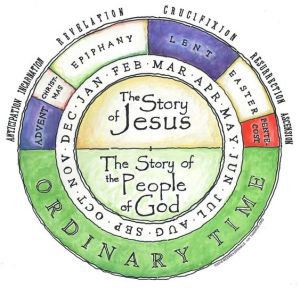
The Church Calendar

Introduction to Readers:

The season of Epiphany extends from 6 January through 13 February — the day before Ash Wednesday (within the ELCA). Epiphany means appearance or manifestation and its roots go deep into the 4th Century Eastern Orthodox Church. During this phase of the church year, we reflect on God’s revelation in His Son, including  the birth, the visit of the Magi to Bethlehem, His presentation in the Temple, and later, Jesus’ baptism by John. Recall that at Christ’s baptism, the Holy Trinity appeared — Father, Son, and Holy Spirit. If you are interested in the traditions surrounding Epiphany, click here for a good overview! 

Think about the concepts of “seeing and being seen” as you work through this week’s lectionary. How does God see us? How do we see others? My reflections this week will center on the Psalm, with references to the Gospel. As always, thanks for your continued journey through the scriptures!  

Note: I do utilize various hyperlinks within the body here for further exploration if interested! They are a different color and italicized. If you click out to the supplemental information, simply click back to return to the blog. 

Readings for Epiphany 2 (14 January)
1 Samuel 3: 1-10 (11-20)
Psalm 139: 1-6, 13-18
1 Corinthians 6: 12-20
John 1: 43-51

The Psalm for Epiphany 2: 139: 1-6, 13-18

“King David in Prayer” by Pieter de Grebber (1600-1653)
circa 1635-1640

You have searched me, Lord, and you know me.
You know when I sit and when I rise;
    you perceive my thoughts from afar.
You discern my going out and my lying down;
    you are familiar with all my ways.
Before a word is on my tongue
    you, Lord, know it completely.
You hem me in behind and before,
    and you lay your hand upon me.
Such knowledge is too wonderful for me,
    too lofty for me to attain.

For you created my inmost being;
    you knit me together in my mother’s womb.
14 I praise you because I am fearfully and wonderfully made;
    your works are wonderful,
    I know that full well.
15 My frame was not hidden from you
    when I was made in the secret place,
    when I was woven together in the depths of the earth.
16 Your eyes saw my unformed body;
    all the days ordained for me were written in your book
    before one of them came to be.
17 How precious to me are your thoughts, God!
    How vast is the sum of them!
18 Were I to count them,
    they would outnumber the grains of sand—
    when I awake, I am still with you.

Depiction of Nathanael:
St. John’s Anglican Church, New South Wales

The Gospel Reading:  John 1: 43-51
43 The next day Jesus decided to leave for Galilee. Finding Philip, he said to him, “Follow me.” 44 Philip, like Andrew and Peter, was from the town of Bethsaida. 45 Philip found Nathanael and told him, “We have found the one Moses wrote about in the Law, and about whom the prophets also wrote—Jesus of Nazareth, the son of Joseph.” 46 “Nazareth! Can anything good come from there?” Nathanael asked. “Come and see,” said Philip. 47 When Jesus saw Nathanael approaching, he said of him, “Here truly is an Israelite in whom there is no deceit.” 48“How do you know me?” Nathanael asked. Jesus answered, “I saw you while you were still under the fig tree before Philip called you.” 49 Then Nathanael declared, “Rabbi, you are the Son of God; you are the king of Israel.” 50 Jesus said, “You believe because I told you I saw you under the fig tree. You will see greater things than that.” 51 He then added, “Very truly I tell you, you will see ‘heaven open, and the angels of God ascending and descending on’ the Son of Man.”

This Week’s Reflection: 
The Season of Epiphany prompts me to think about those Aha! moments in our lives — moments of Epiphany that we experience from time to time (Pastor Jen alluded to this in her sermon last Sunday). Anna and Simeon said Aha! when Jesus was presented in the Temple. The Magi said Aha! as their camels sauntered into that stable in Bethlehem (my comic brain pictures Balthasar, Melchior, and Gaspar — yes, their names! — raising their fingers and saying Aha! in unison). And picture those witnessing Jesus’ baptism on the banks of the Jordan River and the appearance of the Holy Spirit looking at one another and saying, Aha!  (As a sidenote, I have always been fascinated by how people come to know things. We tend to think of knowledge acquisition as something that happens over time and with deliberation, but I’m convinced that much of what we know comes through Epiphany moments, but that’s another topic). 

Thomas Cranmer,
Archbishop of Canterbury
(1489 – 1556)

In turn, Epiphany moments remind me that God reveals Himself in our lives both persistently and surprisingly. The writer of this week’s Psalm (attributed to David), for example, in very personal and poetic language, describes God’s persistent revelation as he attempts to comprehend the Creator’s infinite knowledge of his inner thoughts, his actions, his life. Some may read Psalm 139 and feel suffocated by or afraid of such a God (do we really want God to know everything about us?). My sense, however, is that the Psalmist feels both comforted and liberated by this view of God’s all-encompassing wisdom and intervention in his life. In a recent post, theologian Dan Clendenin connects Psalm 139 to something called the Collect for Purity, a prayer dating back over a thousand years, and translated from Latin to English by Thomas Cranmer, Archbishop of Canterbury, during the time of the English Reformation (associate Cranmer with the reign of Henry VIII and all those difficult marital situations!). Cranmer (a Protestant) was responsible for publishing the Book of Common Prayer in 1549. Here is the prayer (it may seem familiar): 

The Evangelical Lutheran Worship (ELW) Hymnal (2006)

Almighty God, to whom all hearts are open, all desires known, and from whom no secrets are hid: Cleanse the thoughts of our hearts by the inspiration of your Holy Spirit, that we may perfectly love you, and worthily magnify your holy Name; through Jesus Christ our Lord. Amen.

Yes, the Collect for Purity shows up at the beginning of several worship settings in the front pages of the ELW (specifically in Settings 1 and 2 and the Service of the Word), a reminder that we draw from many traditions in the ELCA. Clendenin writes the following regarding this beautifully haunting prayer: The purpose of the “collect” is to summarize, focus, clarify and remind ourselves exactly what it is we hope to do in the service that follows .  .  .  At first glance, the Collect feels like a harsh exposure to guilt, fear, and shame — the terrifying realization that God knows all my distracted thoughts and disordered loves, my unruly desires and unwanted dreams. In fact, the exact opposite is true. Instead of judgment, the Collect expresses the paradoxical combination of human confession that brings liberation, and divine comfort that brings consolation. In other words, I am both nakedly revealed before the infinite God, and lovingly sheltered by his intimate love. Aha! God’s persistent revelation in our lives! 

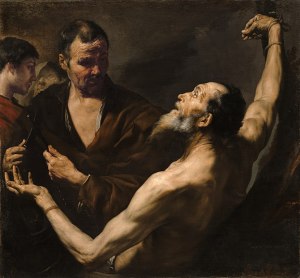
The Martyrdom of Saint Bartholomew (1634)
by Jusepe de Ribera

And then there are those surprising Epiphany moments when the truth is suddenly clear to us. In this week’s Gospel, Nathanael experienced such a moment. Jesus is in Galilee and calls Philip to follow him (verse 43). Philip, in turn, seeks out Nathanael and informs him that Jesus, the fulfillment of ancient prophecies, has arrived (verse 45). **Nathanael, though initially skeptical (verse 46), is greeted by Christ and immediately recognizes him as the Son of God (verses 48-49). Aha! God’s surprising revelation in our lives, forever changing our journey!

Soli Deo Gloria

** Nathanael is also identified as Bartholomew and shows up in the four “lists” of disciples in the New Testament: Matthew 10: 2-4, Mark 3: 16-19, Luke 6: 14-16, and Acts 1: 13. Not all scholars agree that Nathanael and Bartholomew were the same person, however. 

This Week’s Prayer (designated for Epiphany 2, Year B in the RCL):
Thanks be to you, Lord Jesus Christ, most merciful redeemer, for the countless blessings and benefits you give. May we know you more clearly, love you more dearly, and follow you more nearly, day by day praising you, with the Father and the Holy Spirit, one God, now and forever more. Amen. 

If you need a moment of uplift this week, here is a wonderful version of the hymn, The Summons. You are hearing from the Notre Dame Folk Choir and seeing images of Notre Dame University. Having visited there a number of times, I thoroughly enjoyed seeing the sites of the campus — brought back great memories. Though most commonly associated with the Catholic Church, this hymn is in the ELW (page 798). It is a suggested hymn for Epiphany 2, I believe, referencing the reading from 1 Samuel.   

Enjoy!  

Announcement Regarding Our Lectionary Discussions:

Join us, if you can, for a free-wheeling discussion of this week’s readings after worship on Sunday (10:45) in the library. Come to listen in or participate — you will not be put on the spot to exhibit your knowledge of the Lectionary! All are welcome!  

6-7 January 2024: Epiphany and Baptism of Our Lord

Faithful Conversations #45

Introduction to Readers:
David Brooks writes with precision and grace. Though I hesitate to recommend books due to my sense that reading is a highly personal endeavor, his most recent book, How to Know a Person is exceptional, and therefore, I recommend it with enthusiasm! At the outset, Brooks asserts the following: There is one skill that lies at the heart of any healthy person, family, school, community organization, or society: the ability to see someone else deeply and make them feel seen — to accurately know another person, to let them feel valued, heard, and understood. In turn, he suggests that, as a society in 2024, we are sorely lacking in this regard and the impact is exponentially harmful to us. Our political divide, for example, is one manifestation of our inability to “see” each other. Though not necessarily writing from a faith perspective (Brooks, by the way, is Jewish), he offers profound insights for those of us who walk as children of the light (1 Thessalonians 5:5). I will circle back to Brooks at the end of this week’s blog. 

You will note that I have listed the readings for Epiphany (Saturday), and I would urge you to walk through them prior to taking on the Sunday readings. Recall that Epiphany marks the visit of the Magi to Bethlehem. My reflections will focus on the Baptism of Our Lord, particularly the readings from Genesis and Mark. As always, mange tak for your continued interest in Bible study!   

Note: I do utilize various hyperlinks within the body here for further exploration on your  part if interested! They are a different color and italicized. If you click out to the supplemental information, simply click back to return to the blog. The images included, mostly, are from Wikimedia Commons, and therefore are in the public domain. 

Readings for Epiphany (6 January)
Isaiah 60: 1-6

Psalm 72: 1-7, 10-14
Ephesians 3: 1-12
Matthew 2: 1-12

Readings for the Baptism of Our Lord (7 January)
Genesis 1: 1-5
Psalm 29
Acts 19: 1-7
Mark 1: 4-11

The First Reading: Genesis 1: 1-5
When God began to create the heavens and the earth, the earth was complete chaos, and darkness covered the face of the deep, while a wind from God swept over the face of the watersThen God said, “Let there be light,” and there was light. And God saw that the light was good, and God separated the light from the darkness. God called the light Day, and the darkness he called Night. And there was evening and there was morning, the first day.

The Gospel: Mark 1: 4-11

The Baptism of Christ by Poussin (1594-1665)

so John the baptizer appeared in the wilderness, proclaiming a baptism of repentance for the forgiveness of sins. And the whole Judean region and all the people of Jerusalem were going out to him and were baptized by him in the River Jordan, confessing their sins. Now John was clothed with camel’s hair, with a leather belt around his waist, and he ate locusts and wild honey. He proclaimed, “The one who is more powerful than I is coming after me; I am not worthy to stoop down and untie the strap of his sandals. I have baptized you with water, but he will baptize you with the Holy Spirit.” In those days Jesus came from Nazareth of Galilee and was baptized by John in the Jordan. 10 And just as he was coming up out of the water, he saw the heavens torn apart and the Spirit descending like a dove upon him. 11 And a voice came from the heavens, “You are my Son, the Beloved; with you I am well pleased.”

This Week’s Reflection: “Life Giving Water”  

Genesis 1: 1-5 from the Hochungra Bible (1907)

Those first five verses of Genesis remind me that I have always struggled with the “science vs. religion” argument that ensnares many of our Christian sisters and brothers. Whatever processes led to the amazing world we daily experience, the essential point is that God created the universe, an awe-inspiring reality. As a sidebar, the image you’re seeing here is the Genesis passage from the Ho-Chunk Bible, a gift T.M. Rykken received in the 1921 while serving at Bethany Mission in Wittenberg, Wisconsin. John Stacy, the first Christian convert at the Mission east of Black River Falls, and Jacob Stucki of the German Reformed Church, translated portions of the Bible into Ho-Chunk in the early years of the 20th Century and one of them gave a copy to my grandfather (Hogusra translates as a place of creation). And, by the way, you may find the Ho-Chunk creation story compelling as a comparative exercise with our Judeo-Christian account, but I digress.   

Water, the elemental foundation of life, is present in each reading for Sunday. Water, in fact, was present before God spoke the light into existence in the Genesis passage (verse 2). Cory Driver poses the following thought-provoking question in his commentary in this week’s Living Lutheran: Where did the water come from? We just don’t know . . . We have the briefest poetic description of the formation of the deep, but a lot of creating is assumed to have happened before Genesis begins. Wow. 

And that mysterious, amazing water is present in Mark’s account of Jesus’ baptism, connecting our Lord to the creation moment and that “wind from God” — that Spirit descending in the form of a dove (verses 10-11). And, that same water, present in the moment of our baptism, connects us to Christ and the Holy Spirit. Let’s hear from Luther on this: “What then is the significance of such a baptism with water? It signifies that the old person in us with all sins and evil desires is to be drowned and die through daily sorrow for sin and through repentance, and on the other hand that daily a person is to come forth and rise up to live before God in righteousness and purity forever” (The Small Catechism).  Thank you brother Martin and thanks be to God! 

Soli Deo Gloria
 
This Week’s Prayer (inspired by David Brooks and Marty Haugen):  

Let us build a house where all are named,
their songs and visions heard.
And loved and treasured, taught and
claimed as words within the Word.
Built of tears and cries and laughter,
prayers of faith and songs of grace.
Let this house proclaim from floor to rafter;
All are welcome, all are welcome,
all are welcome in this place. Amen. 

Note: If you need a few moments of uplift today, check out this magnificent version of the above hymn. It speaks to the ability we have in our daily interactions with others — and certainly our ability as a church community — to SEE all people!  The congregation in the video is from The Collegiate Church of St. Mary (Anglican) in Warwick, England. The first time I heard this version, I was stuck by the wonderful sincerity of the congregants!    

Announcement Regarding Our Lectionary Discussions:

Join us, if you can, for a free-wheeling discussion of this week’s readings after worship on Sunday (10:45) in the library. All are welcome! 

31 December 2023: Christmas 1

Faithful Conversations #44

Introduction to Readers:

The March of the Wise Men by Leopold Kupelwieser, 1825

Renewal is on my mind this week, with 2024 just around the corner. What should I let go of in my life that is holding me back? What should I embrace going forward? As Christians, these are good questions for all of us to consider. Christmas Day marked the start of “Twelvetide,” or the Twelve Days of Christmas, leading to the Epiphany, which marks the visit of the Magi — those wise men from the east — to Bethlehem. I suspect this language conjures up images and music for many of us (Is anyone hearing “We Three Kings” and/or “The Twelve Days of Christmas?”). Guided by a star, they felt compelled to see this child, born “King of the Jews” (their story is found in Matthew 2 — one of my favorite musicians, James Taylor, even wrote a song about their journey!). The Magi brought gifts to Jesus: gold (the symbol of kings), frankincense (a perfume representing divinity), and myrrh (an embalming oil that symbolized death). Intriguing characters, those Magi! As we move toward the New Year, and beyond, to Epiphany, let’s imagine that world and their amazing journey. As always, thanks for your continuing interest in studying the Bible!      

Note: I do utilize various hyperlinks within the body here for further exploration on your  part if interested! They are a different color and italicized. If you click out to the supplemental information, simply click back to return to the blog. The images included, mostly, are from Wikimedia Commons, and therefore are in the public domain. 

Readings for Christmas 1
Isaiah 61:10 – 62:3
Psalm 148
Galatians 4:4-7
Luke 2:22-40

Galatians 4: 4-7
But when the fullness of time had come, God sent his Son, born of a woman, born under the law, in order to redeem those who were under the law, so that we might receive adoption as children. And because you are children, God has sent the Spirit of his Son into our hearts, crying, “Abba! Father!” So you are no longer a slave but a child, and if a child then also an heir through God. 

The Gospel: Luke 2: 22-40: Jesus is Presented in the Temple
22 When the time came for their purification according to the law of Moses, they brought him up to Jerusalem to present him to the Lord 23 (as it is written in the law of the Lord, “Every firstborn male shall be designated as holy to the Lord”), 24 and they offered a sacrifice according to what is stated in the law of the Lord, “a pair of turtledoves or two young pigeons.”

Simeon and Anna by Rembrandt (1606-1669)

25 Now there was a man in Jerusalem whose name was Simeon; this man was righteous and devout, looking forward to the consolation of Israel, and the Holy Spirit rested on him. 26 It had been revealed to him by the Holy Spirit that he would not see death before he had seen the Lord’s Messiah. 27 Guided by the Spirit, Simeon came into the temple, and when the parents brought in the child Jesus to do for him what was customary under the law, 28 Simeon took him in his arms and praised God, saying,

29 “Master, now you are dismissing your servant in peace,
    according to your word,
30 for my eyes have seen your salvation,
31     which you have prepared in the presence of all peoples,
32 a light for revelation to the gentiles
    and for glory to your people Israel.”

33 And the child’s father and mother were amazed at what was being said about him. 34 Then Simeon blessed them and said to his mother Mary, “This child is destined for the falling and the rising of many in Israel and to be a sign that will be opposed 35 so that the inner thoughts of many will be revealed—and a sword will pierce your own soul, too.”

Church of Simeon and Anna (Orthodox)
Located in Sysert, Russia

36 There was also a prophet, Anna the daughter of Phanuel, of the tribe of Asher. She was of a great age, having lived with her husband seven years after her marriage, 37 then as a widow to the age of eighty-four. She never left the temple but worshiped there with fasting and prayer night and day. 38 At that moment she came and began to praise God and to speak about the child to all who were looking for the redemption of Jerusalem.

39 When they had finished everything required by the law of the Lord, they returned to Galilee, to their own town of Nazareth. 40 The child grew and became strong, filled with wisdom, and the favor of God was upon him.

This Week’s Reflection: “Waiting and Hoping” 
For this week’s reflection, I will defer to Cory Driver who authors the Lectionary Blog in Living Lutheran, the ELCA’s monthly magazine (25 December 2023). He provides an excellent commentary on the story from Luke.  Click here to access the blog.

Also, note, the questions at the end of the blog related to the readings I included here from Luke and Galatians. We will use those for discussion on Sunday.  

Soli Deo Gloria
 
This Week’s Prayer (inspired by Psalm 148): 
Lord God, our prayers are so often self-absorbed due to our selfish nature. We ask forgiveness for our short sightedness. Open our hearts, Lord, to praise you to the heights, to praise you for your magnificent creation, to praise you for your awesome presence in our lives. We see you in nature, we feel your Spirit all around us. As we stand on the doorstep of a New Year, help us to walk humbly and rest in your powerful love. Amen.  
Announcement Regarding Our Lectionary Discussions:

We will resume our post-worship discussion of the Lectionary this week after worship (10:45) in the library. All are welcome! Here are two questions that we will discuss (among others, I’m sure!):

  1. How do you interpret the phrase, “in the fullness of time” in Galatians 4:4?  What do you think Paul meant by that? 
  2.  If you had the opportunity, what questions would you want to ask Simeon, based on the account from Luke?  How about Anna? And, what about Mary? 
Again, we will discuss these in our in-person meeting after worship on Sunday, but FEEL FREE TO RESPOND HERE ALSO! (And, certainly, feel free to offer any other comments as well!).  

24 December 2023: Advent 4

Faithful Conversations #43

Introduction to Readers:

Marty Haugen, Christian Composer (b. 1950)

During our Advent midweek services, we utilize the Holden Evening Prayer Service written by Marty Haugen. A bit of research informs me that Haugen composed this beautiful service setting in 1986 while at Holden Village in Washington, a Lutheran retreat center. An artistic  and gifted individual (who hails from Wanamingo, MN), Haugen was influenced by music of the Taize Community, a monastic order located in Bergundy, France that embodies both Protestant and Catholic traditions. The style emphasizes simple phrases that reference scripture and are repeated many times. The Gospel and the alternative to the Psalm for the 4th week of Advent connect to the Holden service and I’m focusing my reflections there this week. I copied those readings with their Holden Service below. Also, for this week’s prayer, I linked a beautiful version of the service if you care to listen. As always, thanks for your ongoing interest in studying the Bible!

Note: I do utilize various hyperlinks within the body here for further exploration on your  part if interested! They are a different color and italicized. If you click out to the supplemental information, simply click back to return to the blog. The images included, mostly, are from Wikimedia Commons, and therefore are in the public domain.  *Of Note: The first image of Mary you see below (accompanying the Magnificat) was generated by yours truly using A.I. We truly live in amazing times.  

Readings for the Fourth Sunday in Advent

2 Samuel 7: 1-11, 16
Psalm 89: 1-4, 19-26 (or Luke 1: 46b-55)
Romans 16: 25-27
Luke 1: 26-38

The Gospel: Luke 1: 26-38: “The Annunciation”  26 In the sixth month the angel Gabriel was sent by God to a town in Galilee called Nazareth, 27 to a virgin engaged to a man whose name was Joseph, of the house of David. The virgin’s name was Mary. 28 And he came to her and said, “Greetings, favored one! The Lord is with you.” 29 But she was much perplexed by his words and pondered what sort of greeting this might be. 30 The angel said to her, “Do not be afraid, Mary, for you have found favor with God. 31 And now, you will conceive in your womb and bear a son, and you will name him Jesus. 32 He will be great and will be called the Son of the Most High, and the Lord God will give to him the throne of his ancestor David. 33 He will reign over the house of Jacob forever, and of his kingdom there will be no end.” 34 Mary said to the angel, “How can this be, since I am a virgin?” 35 The angel said to her, “The Holy Spirit will come upon you, and the power of the Most High will overshadow you; therefore the child to be born will be holy; he will be called Son of God. 36 And now, your relative Elizabeth in her old age has also conceived a son, and this is the sixth month for her who was said to be barren. 37 For nothing will be impossible with God.” 38 Then Mary said, “Here am I, the servant of the Lord; let it be with me according to your word.” Then the angel departed from her. Holden Evening Prayer Service Application of this text: An angel went from God, to a town called Nazareth, to a woman whose name was Mary. The angel said to her, “Rejoice, O highly favored, for God is with you. You shall bear a child, and his name shall be Jesus, the Chosen One of God Most High.” And Mary said, “I am servant of my God, I live to do your will.”

Luke 1: 46b-55: “The Magnificat”

Virgin Mary
(A.I. Generated)

46 And Mary said, “My soul magnifies the Lord, 47 and my spirit rejoices in God my Savior, 48 for he has looked with favor on the lowly state of his servant. Surely from now on all generations will call me blessed, 49 for the Mighty One has done great things for me, and holy is his name; 50 indeed, his mercy is for those who fear him from generation to generation. 51 He has shown strength with his arm; he has scattered the proud in the imagination of their hearts. 52 He has brought down the powerful from their thrones and lifted up the lowly; 53 he has filled the hungry with good things and sent the rich away empty. 54 He has come to the aid of his child Israel, in remembrance of his mercy, 55 according to the promise he made to our ancestors, to Abraham and to his descendants forever.”

Holden Prayer Service Application of this Text: My soul proclaims your greatness, O God, and my spirit rejoices in your, You have looked with love on your servant here, and blessed me all my life through. Great and mighty are you, O Holy One, strong is your kindness evermore. How you favor the weak and lowly one, humbling the proud of heart. You have cast the mighty down from their thrones, and up lifted the humble of heart, you have filled the hungry with wondrous things, and left the wealthy no part. Great and mighty are you, O Faithful One, strong is your justice strong your love. As you promised to Sarah and Abraham, kindness forevermore. My soul proclaims your greatness, O God, and my spirit rejoices in your, You have looked with love on your servant here, and blessed me all my life through.
 
This Week’s Reflection: “A Radical Ancient Prayer”
 
One thing I learned early on as a history teacher was that stories bring history to life, and that revisiting the same story time and again allows us to see it from different perspectives and with richer meaning. In this 4th week of Advent, we are revisiting a familiar story, embodied in the two passages from Luke’s Gospel, the Annunciation, the angel Gabriel’s announcement to young Mary, and the Magnificat, her prayerful response. I have heard these stories any number of times in my life but am seeing them in a new light in 2023, especially the Magnificat. Let me explain.

Young Mary and the Annunciation

First, let’s consider Mary and her world, especially from our vantage point in December of 2023, amidst the troubling events surrounding the Israel-Hamas War. Though I have heard about her from a young age, especially at this time of year, I must admit not engaging more fully in her story. This Judean teenage girl (perhaps only 13!), swept into history by miraculous forces, lived a life like no other. From lowly circumstances, and a virgin, she learns in a spiritual encounter with Gabriel, that she will bear a son destined to be the Messiah for her people, and far beyond. Can we even imagine how her mind must have been racing at this moment? In what can only be described as a depth of faith that dwarfs anything I can understand, she responds with a calm and submissive courage (verse 38). And second, what of this dramatic prayer, the Magnificat (Latin for “magnify”)?  As Debi Thomas, Minister of Formation and Discipleship at St. Mark’s Episcopal Church in Palo Alto, California points out in a 2020 essay on these texts points out, Mary’s prayer “comprises the longest set of words spoken by a woman in the New Testament.” Further, that the prayer was “soaked in Jewish women’s history, echoing the words and stories of Miriam, Hannah, Judith, and Deborah” (Note “Hannah’s Prayer” in 1 Samuel 2: 1-10). Most astonishing, however, is the radical and subversive nature of the prayer, what Thomas calls “Mary’s fiery justice song.” Read it again focusing on the highlighted verses (51-53). Our friend Dietrich Bonhoeffer, called the Magnificat “the most passionate, the wildest, one might even say the most revolutionary hymn ever sung.” Oscar Romero, Salvadoran Catholic Priest, murdered in 1980, later canonized, drew comparisons between Mary and the poor and powerless in his community. Indeed, the Magnificat has been banned more than a few times by those in power who fear its message. As we move toward the celebration of our Lord’s birth, we would do well to hear and reflect on his mother’s fervent prayer with fresh insight. As scholar Kenneth Craycraft asserts, “A lowly birth to a lowly woman ushers in the magnificent fulfillment of God’s offer and promise of salvation.” Soli Deo Gloria This Week’s Prayer: The Holden Evening Prayer Service (The Annunciation Starts at 6:57)
Announcement Regarding Our Lectionary Discussions: We will resume our post-worship discussion of the Lectionary on Sunday, 31 December at 10:45 in the church library! All are welcome!    

17 December 2023: Advent 3

Faithful Conversations #42

Charity Thunder (1947-2018)
“Ho-homp-gi-ka re-wi” (she lights up the earth)

Introduction to Readers:
I have referenced her in a prior post, but former colleague Charity Thunder crossed my mind again this week. In a memorable conversation with her many years ago, I asked her a question regarding some aspect of Ho-Chunk culture, and she responded, “I’m not old enough to know that yet.” I’m certain she was in her sixties at the time, and her response was indicative of both her humility and the respect afforded elders within her culture. As I approach this Lectionary challenge each week, I echo her response. Spiritual wisdom, in my estimation, can happen at any age, but for the most part, it seems to continually unfold over time — it is truly a brick-by-brick process. The words of Paul in 1 Corinthians 13:12 come to mind:  “For now we see only a reflection, as in a mirror, but then we will see face to face. Now I know only in part; then I will know fully, even as I have been fully known.”

One other thought before starting this week: on Sunday, a few of us gathered in the library after worship, something we will continue to do, for some free-flowing discussion of the readings — no particular agenda, just talk. An important part of that discussion, and a reiteration on my part, is that I’m following the Revised Common Lectionary (RCL) in the blog, and that may not always match with what Pastor Jen is doing on Sunday (and may not match what some of you that outside ELC are hearing in your home churches). For example, in Advent Pastor Jen is doing a preaching series (“Do not be afraid”) that centers on Luke’s Gospel. Clergy, of course, have a variety of options for preaching, including something called the “Narrative Lectionary,” and the RCL is not required by the ELCA. Our initial goal in launching Faithful Conversations was to grow in our understanding of the RCL and to utilize it as an anchor for further study. If you want to more information regarding the denominations that utilize the RCL and its global reach, check out this site. Thanks for your continued interest! In this week’s reflection, I will be focusing on Psalm 126 and the passage from 1 Thessalonians.   

Note: I do utilize various hyperlinks within the body here for further exploration on your part if interested! They are a different color and italicized. If you click out to the supplemental information, simply click back to return to the blog. The images included, mostly, are from Wikimedia Commons, and therefore are in the public domain.  

Readings for the Third Sunday in Advent
Isaiah 61: 1-4, 8-11
Psalm 126
1 Thessalonians 5: 16-24
John 1: 6-8, 19-28

Psalm 126: A Song of Ascents 
 When the Lord restored the fortunes of Zion, we were like those who dream.
Then our mouth was filled with laughter and our tongue with shouts of joy;
then it was said among the nations, “The Lord has done great things for them.”
The Lord has done great things for us, and we rejoiced.

Restore our fortunes, O Lord, like the watercourses in the Negeb.
May those who sow in tears reap with shouts of joy.
Those who go out weeping, bearing the seed for sowing,
shall come home with shouts of joy, carrying their sheaves.

The Second Reading: 1 Thessalonians 5: 16-24
16 Rejoice always, 17 pray without ceasing, 18 give thanks in all circumstances, for this is the will of God in Christ Jesus for you. 19 Do not quench the Spirit. 20 Do not despise prophecies, 21 but test everything; hold fast to what is good; 22 abstain from every form of evil. 23 May the God of peace himself sanctify you entirely and may your spirit and soul and body be kept sound and blameless at the coming of our Lord Jesus Christ. 24 The one who calls you is faithful, and he will do this.

This Week’s Reflection: “Psalms That Speak to Us Across Time”
Martin Luther loved the Psalms. He often commented on that, including a quote that sounds so Lutheran: “Komm, lass uns einen Psalm singen und den Teufel vertreiben!” (Come, let us sing a psalm, and drive away the devil!). Let’s do some theater of the mind and picture what it might have been like to join Luther and his wife Katie around their kitchen table, discussing Psalm 126. 

For purposes of context, the Psalm likely refers to the period after the Babylonian Captivity and the return of the Jewish exiles to Zion (6th Century BCE). It is a “communal” Psalm — a prayer for help. As Wartburg Professor Samantha Gilmore suggests in a recent commentary, Psalm 126 can be interpreted in two ways: “The psalmist may be 1) remembering with joy what God has done for God’s people in the past or 2) anticipating with joy what God will do to restore God’s people in the (hopefully near) future.” In either case, the psalmist reveals a strong faith “in the power of God to radically change people’s circumstances and the goodness of God to do so in a life-giving way.”

Ah, isn’t it a marvel how these words transcend time and speak to us as we walk the Advent journey? That poetic line in verse 1 — we were like those who dream — reminds me of one of the fundamental questions posed to me and my classmates by Martin Lutter (yes, that was his name, not a typo), a history professor at Concordia in the late 1970s: “Can we use history to imagine a better future?” What an important question! Churches across the ELCA, it seems to me, are in the throes of grappling with that question in 2023, a time of exciting and often painful transition. Individually and collectively, can we remember when our mouths were “filled with laughter” as we contemplate a future filled with “shouts of joy?” This is our challenge.

And the short passage from 1 Thessalonians, it seems to me, offers a timeless playbook, an approach for Christians experiencing difficult times. Those three words in verse 17 — pray without ceasing — offer a powerful reminder for all of us. Lutheran theologian and martyr, Dietrich Bonhoeffer, wrote the following commentary on this verse, offering a great description of the power of prayer and its transformative effect in our lives. 

Bonhoeffer and Confirmands 1932

The unity of prayer and work, the unity of the day, is found because finding the You of God behind the It of the day’s work is what Paul means by his admonition to “pray without ceasing” (1 Thessalonians 5:17). The prayer of the Christian reaches, therefore, beyond the time allocated to it and extends into the midst of work. It surrounds the whole day, and in so doing, it does not hinder the work; it promotes work, affirms work, gives work great significance and joyfulness. Thus every word, every deed, every piece of work of the Christian becomes a prayer, not in the unreal sense of being constantly distracted from the task that must be done, but in the real breakthrough from the hard It to the gracious You.


Bonhoeffer! Once again, you have given us something to think about! May we take your words to heart. 

Soli Deo Gloria!  

Prayer (Inspired by Isaiah 61: 1-4, 8-11)

Note: I found this prayer on-line, but there was no author attribution. It is an example, however, of “praying through the Bible,” a technique that I have been introduced to before, and would like to further explore.  

Sovereign Lord, Your Spirit rested on the prophets of the Old Testament. Your Spirit filled John the Baptist before he was born. Your Spirit anointed Your Son when John baptized Him, and He manifested that fact throughout His servant ministry and preaching. As believers in Jesus as our Lord and Savior, we praise You and thank You that this same Holy Spirit indwells us and enables us to do many of the things Jesus did. Empower us, guide us, and help us meet the needs of others as Jesus showed us how when He blessed and taught Your people on earth. Sovereign Lord, Supreme Ruler over all creation, many of Your people are mourning today because of abuse and affliction, disease and death, unjust punishments and evil persecutions. Comfort all who mourn and make us instruments of Your peace. Lord Jesus, come again quicklyand make all thing s right in Your sight. Sovereign Lord, we have seen many of Isaiah’s prophecies fulfilled in history. Through Your Son, establish justice on earth according to the Scriptures. Inspire us to love justice as You do and also hate all unrighteousness. May we see many of the fruits of the new covenant that Jesus Christ established through His blood, and may many people turn to Him in faith and repentance in order to live a new life in Your presence forever.Sovereign Lord, King of the universe, we delight and rejoice in You and Your salvation, even as we continue to  struggle in this broken world. Thank You for clothing us in the righteousness of Jesus Christ so we can stand unashamed in Your presence before a watching world ever ready to condemn us for the slightest failings. We pray that through our faithfulness and Your gracious work through us that Your righteousness will spring up before all nations and justice will prevail in all human endeavors and relationships. Come quickly, Lord Jesus. Amen.

AND, THIS REMINDER!   We are extending our Faithful Conversation with some in-person discussion on Sunday mornings after our worship experience (10:45-11:30). Join us for our informal discussion of the Lectionary readings — no preparation is necessary — simply bring your Bible and be open to sharing and listening! All our welcome! Unless we need more room, we will gather in the library. 

10 December 2023: Advent 2


Faithful Conversations #41

Introduction to Readers: 

The Wilderness of Virginia

The notion of the wilderness has been on my mind this week owing to the readings from Isaiah and Mark. The word derives from the Middle English and means uninhabited, uncultivated, or wild territory; desolate land or desert. We run into the wilderness frequently in scripture, often as a backdrop to significant events — God appearing to Abraham, the 40-year journey of the Israelites as they fled Egypt, and Jesus’ grueling 40 days of testing, just to name three. I will explore the idea of wilderness further in my reflections this week. Mark, by the way, is featured in Year B of the Lectionary, so we will visit him many times. Thanks for your continued interest in exploring the Bible!        

Note: I do utilize various hyperlinks within the body here for further exploration on your part if interested! They are a different color and italicized. If you click out to the supplemental information, simply click back to return to the blog. The images included, mostly, are from Wikimedia Commons, and therefore are in the public domain.  

Readings for the Second Sunday in Advent

Isaiah 40: 1-11
Psalm 85: 1-2, 8-13
2 Peter 3: 8-15a
Mark 1: 1-8

Mosaic of the prophet Isaiah in the Dome of Immanuel in St Mark’s Basilica (Venice)

First Reading: Isaiah 40: 1-11

Comfort, O comfort my people,
    says your God.
Speak tenderly to Jerusalem,
    and cry to her
that she has served her term,
    that her penalty is paid,
that she has received from the Lord’s hand
    double for all her sins.

A voice cries out:
“In the wilderness prepare the way of the Lord;
    make straight in the desert a highway for our God.
Every valley shall be lifted up,
    and every mountain and hill be made low;
the uneven ground shall become level,
    and the rough places a plain.
Then the glory of the Lord shall be revealed,
    and all flesh shall see it together,
    for the mouth of the Lord has spoken.”

A voice says, “Cry out!”
    And I said, “What shall I cry?”
All flesh is grass;
    their constancy is like the flower of the field.
The grass withers; the flower fades,
    when the breath of the Lord blows upon it;
    surely the people are grass.
The grass withers; the flower fades,
    but the word of our God will stand forever.
Get you up to a high mountain,
    O Zion, herald of good news;
lift up your voice with strength,
    O Jerusalem, herald of good news;
    lift it up, do not fear;
say to the cities of Judah,
    “Here is your God!”
10 See, the Lord God comes with might,
    and his arm rules for him;
his reward is with him
    and his recompense before him.
11 He will feed his flock like a shepherd;
    he will gather the lambs in his arms
and carry them in his bosom
    and gently lead the mother sheep.

Mark the Evangelist by Frans Hals (1583-1666)

Gospel: Mark 1: 1-8
The beginning of the good news (gospel) of Jesus Christ. As it is written in the prophet Isaiah,

“See, I am sending my messenger ahead of you,
    who will prepare your way,
the voice of one crying out in the wilderness:
    ‘Prepare the way of the Lord;
    make his paths straight,’ ”

so John the baptizer appeared in the wilderness,proclaiming a baptism of repentance for the forgiveness of sins. And the whole Judean region and all the people of Jerusalem were going out to him and were baptized by him in the River Jordan, confessing their sins. Now John was clothed with camel’s hair, with a leather belt around his waist, and he ate locusts and wild honey. He proclaimed, “The one who is more powerful than I is coming after me; I am not worthy to stoop down and untie the strap of his sandals. I have baptized you with water, but he will baptize you with the Holy Spirit.”

This Week’s Reflection: “Confronting the Wilderness”

As metaphors go, the wilderness can symbolize many things: a fearful place, a place of testing, a place of transformation, a place where we confront God. Isaiah voiced such sentiments six centuries before Christ walked the earth. The second part of this grand book (chapters 40-55), takes place after Babylon rose to power, destroyed Jerusalem, and took thousands of the Jewish people prisoner and away from their home — into the wilderness of a foreign land. The prophet assures the people of their future liberation from Babylon, voicing words of hope (verses 3-5, and 11).

The Appearance of Christ Before the People, by Ivanov, (1837-1857)

More than five hundred years later, Mark, the evangelist, after succinctly proclaiming the good news  of Jesus Christ (verse 1), draws his first-generation Christian readers back to Isaiah (40:3) and Malachi (3:1), announcing John the Baptist’s arrival on the scene. In crisp and clear language, Mark connects his Jewish audience to the unfolding story of Jesus Christ. Throngs of people come to meet John in the wilderness. And like those earliest nascent Christians, this “wilderness man,” ignites our imaginations. But the story is not about John. Rather, it is about the arrival of Jesus and the powerful moment of his baptism (note verses 9-11, beyond today’s reading). 

What are we to make of all this? Both Isaiah and Mark provide us with Advent moments — assurances of God’s presence in our world, moments of energetic hope. In August, Mary Beth and I witnessed an Advent moment in Anchorage, Alaska. First, some context. The city of Anchorage has roughly 300,000 people, 40% of Alaska’s total population. Surprisingly (or not), more than 3,000 residents are homeless. While many are hiding in the shadows, others occupy a visible and extensive tent city. Let’s imagine their situation as we head into the winter months! Further, while Indigenous people make up 15% of Alaska’s overall population, they account for 40% of those who are unhoused. We spent Friday of our mission week at the Hope Soup Kitchen in downtown Anchorage. We helped prepare and serve the noon meal, interacting with the workers, other volunteers, and those who came for the meal. Around 11:00, hundreds and hundreds of people started streaming into the area, most of them people of color. Each had a unique story of how they landed in this space. Picture them walking out of the wilderness of their world to a place of sanctuary, a place where they might encounter God’s powerful presence in the form of a meal and fellowship. And here’s the grand and humbling revelation. In my clumsy attempts to converse with many, it became crystal clear they were ministering to me. I saw Jesus in their faces and heard his voice in their stories. An Advent moment.  

Soli Deo Gloria    

Hope Soup Kitchen, Anchorage, Alaska

Prayer (Inspired by the Hope Soup Kitchen experience): 
Lord God, we pray for people near and far who are experiencing the grim reality of poverty, hunger, and homelessness. May you strengthen them and provide them with hope. We pray also, Lord, that you be with those who take on the work of assisting them day to day — leaders, volunteers, clergy, and social workers. May your compassion for our world — and especially those who are suffering — continue to be present in their efforts. We pray in the name of Jesus Christ. Amen. 

AND, A SPECIAL ANNOUNCEMENT TODAY!  

Let’s extend our Faithful Conversation with some in-person discussion on Sunday mornings after our worship experience (10:45-11:30). Join us for our informal discussion of the Lectionary readings — no preparation is necessary — simply bring your Bible and be open to sharing and listening! All our welcome! Click here or on my mugshot for a short screencast with details! 


3 December 2023: Advent 1

Faithful Conversations #40

Introduction to Readers: Welcome back to Faithful Conversations! We have arrived at the start of the new liturgical church year. To reiterate, the lectionary is arranged in a three-year cycle and each year features a different synoptic Gospel (Matthew, Mark, or Luke — called synoptic because they are similar and can be viewed side by side). John’s Gospel, different in both content and style, is interspersed throughout all three years. We are now in Cycle B and Mark is featured in 2023-24. If you’re like me, an occasional reboot is necessary when it comes to spiritual disciplines, and I encourage you to pray about your daily faith practices. Now might be a good time, for example, to experiment with different approaches.

This week marks the start of the Season of Advent. The word Advent derives from the Latin, adventus meaning “coming.” And while we tend to emphasize the birth of Jesus (looking back), Advent also boldly reminds us of Christ’s second coming (looking forward), as noted in this week’s Gospel. Amidst the stress foisted upon us by the overt consumerism and rush that infuses this time of year, Advent calls Christians to pause, to wake-up, to focus on Christ’s presence in our lives — and to seek God amidst the chaos that surrounds us. The readings for this week project themes of lamentation, anticipation, and hope. Keep those ideas in mind as you work through them.

Note: I do utilize various hyperlinks within the body here for further exploration on your part if interested! They are a different color and italicized. 

Readings for the First Sunday in Advent
Isaiah 64:1-9
Psalm 80:1-7, 17-19
1 Corinthians 1:3-9
Mark 13: 24-37

Mosaic of the prophet Isaiah in the Dome of Immanuel in St Mark’s Basilica (Venice)

First Reading: Isaiah 64:1-9: O that you would tear open the heavens and come down, so that the mountains would quake at your presence— as when fire kindles brushwood and the fire causes water to boil— to make your name known to your adversaries, so that the nations might tremble at your presence! When you did awesome deeds that we did not expect, you came down; the mountains quaked at your presence. From ages past no one has heard, no ear has perceived, no eye has seen any God besides you, who works for those who wait for him. You meet those who gladly do right, those who remember you in your ways. But you were angry, and we sinned; because you hid yourself we transgressed. We have all become like one who is unclean, and all our righteous deeds are like a filthy cloth. We all fade like a leaf, and our iniquities, like the wind, take us away. There is no one who calls on your name or attempts to take hold of you, for you have hidden your face from us and have delivered us into the hand of our iniquity. Yet, O Lord, you are our Father; we are the clay, and you are our potter; we are all the work of your hand. Do not be exceedingly angry, O Lord, and do not remember iniquity forever.     Now consider, we are all your people. Second Reading: 1 Corinthians 1: 3-9 Grace to you and peace from God our Father and the Lord Jesus Christ.I give thanks to my God always for you because of the grace of God that has been given you in Christ Jesus, for in every way you have been enriched in him, in speech and knowledge of every kind— just as the testimony of Christ has been strengthened among you— so that you are not lacking in any gift as you wait for the revealing of our Lord Jesus Christ. He will also strengthen you to the end, so that you may be blameless on the day of our Lord Jesus Christ. God is faithful, by whom you were called into the partnership of his Son, Jesus Christ our Lord. The Gospel Reading:  Mark 13: 24-37 24 “But in those days, after that suffering, the sun will be darkened, and the moon will not give its light, 25 and the stars will be falling from heaven, and the powers in the heavens will be shaken.

26 “Then they will see ‘the Son of Man coming in clouds’ with great power and glory. 27 Then he will send out the angels and gather the elect from the four winds, from the ends of the earth to the ends of heaven. 28 “From the fig tree learn its lesson: as soon as its branch becomes tender and puts forth its leaves, you know that summer is near. 29 So also, when you see these things taking place, you know that he is near, at the very gates. 30 Truly I tell you, this generation will not pass away until all these things have taken place. 31 Heaven and earth will pass away, but my words will not pass away. 32 “But about that day or hour no one knows, neither the angels in heaven nor the Son, but only the Father. 33 Beware, keep alert, for you do not know when the time will come. 34 It is like a man going on a journey, when he leaves home and puts his slaves in charge, each with his work, and commands the doorkeeper to be on the watch. 35 Therefore, keep awake, for you do not know when the master of the house will come, in the evening or at midnight or at cockcrow or at dawn, 36 or else he may find you asleep when he comes suddenly. 37 And what I say to you I say to all: Keep awake.”

This Week’s Reflection: “From Despair to Hope”

Henry David Thoreau
(1817-1862)

“Most men lead lives of quiet desperation.” Thoreau’s famous line from Walden (1854) came to mind this week, prompted by a dread-filled conversation with a friend — a stark reminder that too many in our midst are gripped with cynicism about the future.  I must admit, standing on the doorstep of December 2023, the world “out there” seems plenty grim. Wars in Ukraine and the Middle East, coupled with political divisions at home and abroad prompt a soul-crushing uncertainty and darkness within our hearts. This week’s ancient text from Isaiah rings modern and captures our deep longing for God’s presence in this place and at this time — O that you would tear open the heavens and come down, so that the mountains would quake at your presence . . .  And so we begin the Advent journey.
 
Isaiah 64 is raw and dark, reflecting a turbulent period in Jewish history — and it feels personal. The context is this: many Israelites returned from their long captivity in Babylon (with Persian help — remember Cyrus?) and rejoined others who had not been displaced. Tensions arose between various factions (note the prayer of penitence in Isaiah 63:15-19 that precedes today’s reading). The anguished prophet voices desperation, calling out for a God who seems absent (verses 5-6). And he pleads with God to return and forgive and to Now consider, we are all your people.
 
The counterpoint to this language of despair, it seems to me, is found in Paul’s pep talk to the Corinthian believers, words that resonate two thousand years later. Through the life, death, and resurrection of his son, God strengthens us for this world, granting us the spiritual tools we need and, indeed, liberating us from sin and the fear of death. (Luther, by the way, described our relationship with Christ as the “happy exchange,” an intriguing notion that you may want to explore further).
 
And finally, we have the words of Jesus himself as recorded in Mark, a powerful reminder in this first week of Advent, of his Second Coming. As we embark on the journey to Bethlehem over the next several weeks, as we once again explore the birth and early years of the Savior of Humanity, our God prompts us to keep alert, to stay awake — to have a sense of urgency as we navigate these lives we have been given. And so we begin the Advent journey, replacing despair with hope.
 
Soli Deo Gloria!
 
Closing Prayer (Inspired by Psalm 80): “Restore us, O God; let your face shine that we may be saved.” We are troubled, Lord, our world is troubled.  “Restore us, O God; let your face shine that we may be saved.” You help us to walk from dark despair into a life of hope.   “Restore us, O God; let your face shine that we may be saved.” Amen.

 
And, something to think about . . . .   
 

Dietrich Bonhoeffer
(1906-1945)

These words from one of the great heroes of Lutheranism, Dietrich Bonhoeffer, executed at age 39 for resisting Nazism in Germany. “The celebration of Advent is possible only to those who are troubled in soul, who know themselves to be poor and imperfect, and who look forward to something greater to come.” 


26 November 2023: “Christ the King”

Faithful Conversations #39

Introduction to Readers: 

The Liturgical Calendar

For 26 weeks, we have been in Ordinary Time in the church calendar and this week marks the end of the church year. Let me offer a bit of history here. In 1925, responding to the brutal ravages of the Great War, Pope Pius XI designated the last Sunday in October as “Christ the King” Sunday. Witnessing totalitarian and secular forces marching across the globe, including the rise of communism in Russia and fascism in Italy and Spain (foreshadowing Nazism in Germany), the Pope sought to remind Christians of their true allegiance to God Almighty.   Later, as part of the reforms emerging from the Second Vatican Council, Christ the King Sunday was moved to where it sits in the lectionary today, the final Sunday of the liturgical calendar. A reminder that the ELCA follows the Revised Common Lectionary that emerged in the 1990s, and Christ the King Sunday was absorbed from these earlier changes. My reflections this week will focus on the Gospel, and I will include the posting from this week’s Living Lutheran Lectionary Blog. As always, thanks for your continued interest in exploring the Bible within the flow of our lives! 

Note: I do utilize various hyperlinks within the body here for further exploration on your part if interested! They are a different color and italicized. 

Readings for Christ the King Sunday
Ezekiel 34:11-16, 20-24
Psalm 95:1-7a
Ephesians 1:15-23
Matthew 25:31-46

Matthew 25:31-46 (Focus Scripture):

Jan van Eyck (1390-1441)
“God Almighty”
The Ghent Altarpiece
Belgium

31 “When the Son of Man comes in his glory and all the angels with him, then he will sit on the throne of his glory. 32 All the nations will be gathered before him, and he will separate people one from another as a shepherd separates the sheep from the goats, 33 and he will put the sheep at his right hand and the goats at the left. 34 Then the king will say to those at his right hand, ‘Come, you who are blessed by my Father, inherit the kingdom prepared for you from the foundation of the world, 35 for I was hungry and you gave me food, I was thirsty and you gave me something to drink, I was a stranger and you welcomed me, 36 I was naked and you gave me clothing, I was sick and you took care of me, I was in prison and you visited me.’ 37 Then the righteous will answer him, ‘Lord, when was it that we saw you hungry and gave you food or thirsty and gave you something to drink? 38 And when was it that we saw you a stranger and welcomed you or naked and gave you clothing? 39 And when was it that we saw you sick or in prison and visited you?’ 40 And the king will answer them, ‘Truly I tell you, just as you did it to one of the least of these brothers and sisters of mine, you did it to me.’ 41 Then he will say to those at his left hand, ‘You who are accursed, depart from me into the eternal fire prepared for the devil and his angels, 42 for I was hungry and you gave me no food, I was thirsty and you gave me nothing to drink, 43 I was a stranger and you did not welcome me, naked and you did not give me clothing, sick and in prison and you did not visit me.’ 44 Then they also will answer, ‘Lord, when was it that we saw you hungry or thirsty or a stranger or naked or sick or in prison and did not take care of you?’ 45 Then he will answer them, ‘Truly I tell you, just as you did not do it to one of the least of these, you did not do it to me.’ 46 And these will go away into eternal punishment but the righteous into eternal life.”

This Week’s Reflection: “The Counter-Cultural Nature of Christianity” 

President Jimmy Carter and First Lady, Rosalynn

Rosalynn Carter’s death this week conjured up memories from the 1970s. As a first-time voter in 1976 (sophomore in college), I cast my ballot for President Carter — and imagine that he and Rosalynn were already in their 30th year of marriage when he was elected! While following their lives, especially in the post-Presidential years, I have always been impressed by the authenticity of this dynamic couple’s faith journey. Both used their positions and influence to promote God’s work in this world, and they did it with amazing grace — and they did it for SO long! What a powerful example they offer.  
 
This week’s Gospel — the final of our church year — is powerful. It takes us into the realm of the final judgement, an uncomfortable topic to say the least. There is much to reflect on here, and I will leave that to the commentary linked below. What is crystal clear, however, is that as Christians, we are commanded to speak up for — and care for — the most vulnerable souls in our midst. We embody the greatest counter-cultural movement in history, an awesome realization!  James Forbes, former pastor of Riverside Church in New York City, perhaps said it best: “Nobody gets to heaven without a letter of reference from the poor” (I am indebted to Dan Clenendin for this line, as noted in a lectionary commentary he offered this week). 
 
Living Lutheran is a monthly periodical produced by the ELCA and is transitioning to a digital-only platform as we speak. In my estimation, it is a terrific resource for us, and I commend it to your reading. That said, a Lectionary Blog is featured, and I am especially impressed with this week’s offering. This excerpt is especially insightful: 

At the ELCA Systems Academy training in early October, psychologist Walter Howard Smith argued that one of the principle causes of congregations shrinking and dying is that they are in cutoff relationships with the communities that once reciprocally nourished and were nourished by them. The congregations provided good news for all, training for discipleship and aid for those on the margins. The community valued these efforts while supporting and participating in the congregation. But, as the congregations’ foci moved inward to prioritizing worship services (and, if we’re honest, emphasizing one style of worship as “correct” and others as somehow suspect or faulty) instead of forming disciples and caring for its neighbors, those communities lost interest in supporting and/or attending the church.
Access the full blog here as you reflect on this week’s readings.
Soli Deo Gloria!
 
Prayer (Inspired by Psalm 95:1-7a):
Lord God, you are the Rock of our salvation, and King above all Gods. Your majestic creation exhibits your power. We, your people, praise your awesome presence in our lives. Amen. 
 
And, for those of you that appreciate powerful organ music, here is a rendition of an 1851 hymn designated for Christ the King Sunday — “Crown Him With Many Crowns.” The organist is Craig Williams and he is playing the organ at the Cadet Chapel at West Point. My wife MaryBeth and I had the pleasure of attending a concert there during  graduation week in 2007 — an amazing experience. 
Access it here and ENJOY!

19 November 2023: Pentecost 25

Faithful Conversations #38

Introduction to Readers:

Plato (428/427 or 424/423 – 348 BC)
Greek Philosopher

One of my favorite passages from Scripture is 1 Corinthians 13:12:  For now we see through a glass, darkly; but then face to face: now I know in part; but then shall I know even as also I am known.” It’s my go-to when I’m struggling to understand God’s word (and is widely applicable in many aspects of our lives, including our understanding of history, by the way!). It gives me great hope — one day things will be clearer! Paul’s Greek heritage is coming through here, particularly the influence of Plato, the philosopher who lived four centuries before Christ’s birth. It was Plato who suggested in his cave analogy that what we perceive to be reality is merely a shadow-like reflection on the walls of the cave, and that truth is outside the cave in splashing sunlight — and that truth is only available to a select few. Forgive the drifty metaphor, but 1 Corinthians 13:12 has been on my mind all week, especially as I try to decipher and process the news of our day. I have had several conversations with friends in the past week who are voicing much anxiety about our world. The readings for Pentecost 25 feel especially modern (or timeless) to me in that regard. And since I have been trying to dig into the Psalms more of late, my focus will be on Psalm 90 and especially the fascinating connection between it and one of the great hymns of the Christian church. As always, thanks for your continuing interest in the Lectionary and I hope your reading is going well. Relax, breathe, and take time to listen as one with a “wise heart” (Psalm 90:12).

(Note: I do highlight phrases, and also offer hyperlinks that offer background — those are of a different color, italicized, and bolded). 

Readings for Pentecost 25
Zephaniah 1:7, 12-18
Psalm 90: 1-8 (9-11) 12 (focus passage)
1 Thessalonians 5:1-11 (prayer inspiration)
Matthew 25:14-30

This Week’s Reflection: “Crisis, Lament, and Hope” 

Abraham Lincoln (1809-1865)
This is a photograph from 5 days before he was assassinated.

In October of 1863, amidst a raging Civil War, President Lincoln issued a Proclamation designating the last Thursday of November as a day of Thanksgiving. Lincoln served the nation in an incredibly difficult time and, like all Presidents, had his flaws. The same man who ultimately brought an end to slavery, for example, pursued policies that meant death and removal to Indigenous people. That said, Lincoln’s humility intrigues me. For example, he penned the following passage as part of his Thanksgiving Proclamation:  “And I recommend to them that while offering up the ascriptions justly due to Him (God) for such singular deliverances and blessings, they do also, with humble penitence for our national perverseness and disobedience, commend to His tender care all those who have become widows, orphans, mourners or sufferers in the lamentable civil strife in which we are unavoidably engaged, and fervently implore the interposition of the Almighty Hand to heal the wounds of the nation and to restore it as soon as may be consistent with the Divine purposes to the full enjoyment of peace, harmony, tranquility and Union.” Would such words be said by a President in the modern era? Lincoln, in essence, asked the American people to seek penance for our national sins as part of their observance of Thanksgiving. Imagine that.  

 
Though Lincoln’s spiritual life remains a mystery, it is clear that he was well versed in the scriptures, and perhaps this explains his language in the Proclamation. The ancient Israelites responded to crises (such as the Babylonian Captivity) by gathering in holy places and offering laments to their God. Sins of the nation were taken seriously. Psalm 90 provides an example. The fragility of life, divine wrath, and divine grace — these are the themes imbedded in the Psalm. Note also that the Psalmist asks God for a “wise heart” (verse 12), the only time (according to my Lutheran Study Bible commentary) that particular phrase appears in scripture. I will be adding that request to my prayers in the days ahead!
 

Isaac Watts
(1674-1748)

And, permit me to draw one more connection regarding Psalm 90 (and late November). As you may or may not be aware (we don’t emphasize them much), the ELCA has many days of commemoration throughout the church year. On November 25th, we honor the life of Isaac Watts. Among other things, Watts was an English Congregational Minister and prolific hymn writer. Reading his biography leaves me feeling completely inadequate — hard to imagine everything he did in his lifetime. He is credited, for example, with producing more than 750 hymns! (“Joy to the World,” “When I Survey the Wondrous Cross,” and “O God Our Help in Ages Past” are his most famous). Psalm 90 provided Watts with the inspiration for the last hymn of the three mentioned, and provides a wonderful example of the power of the Psalms. Take some time and see how the language of the Psalm worked its way into the hymn. Also, I have linked two versions of this glorious hymn below for your listening pleasure. One is a majestic version from England and the other is from an Anglican church in Nigeria. (Note: In our hymnal, the ELW, this is hymn 632 and we have six verses: 1, 2, 3, 5, 7 and 9).
 
Psalm 90
Oh God Our Help in Ages Past
Lord, you have been our dwelling place in all generations.

Before the mountains were brought forth or ever you had formed the earth and the world, from everlasting to everlasting you are God.

You turn us back to dust and say, “Turn back, you mortals.”

For a thousand years in your sight are like yesterday when it is past or like a watch in the night.

You sweep them away; they are like a dream, like grass that is renewed in the morning;

in the morning it flourishes and is renewed; in the evening it fades and withers.

For we are consumed by your anger; by your wrath we are overwhelmed.

You have set our iniquities before you, our secret sins in the light of your countenance.

For all our days pass away under your wrath; our years come to an end like a sigh.

10 The days of our life are seventy years or perhaps eighty, if we are strong; even then their span is only toil and trouble; they are soon gone, and we fly away.

11 Who considers the power of your anger? Your wrath is as great as the fear that is due you.

12 So teach us to count our days that we may gain a wise heart.

13 Turn, O Lord! How long? Have compassion on your servants!

14 Satisfy us in the morning with your steadfast love, so that we may rejoice and be glad all our days.

15 Make us glad as many days as you have afflicted us and as many years as we have seen evil.

16 Let your work be manifest to your servants and your glorious power to their children.

17 Let the favor of the Lord our God be upon us and prosper for us the work of our hands— O prosper the work of our hands!

1. O God, our help in ages past, Our hope for years to come, Our shelter from the stormy blast, And our eternal home.

2. Under the shadow of Thy throne Thy saints have dwelt secure; Sufficient is Thine arm alone, And our defense is sure.

3. Before the hills in order stood, Or earth received her frame, From everlasting Thou art God, To endless years the same.

4. Thy Word commands our flesh to dust, “Return, ye sons of men”: All nations rose from earth at first, And turn to earth again.

5. A thousand ages in Thy sight Are like an evening gone; Short as the watch that ends the night Before the rising sun.

6. The busy tribes of flesh and blood, With all their lives and cares, Are carried downwards by the flood, And lost in foll’wing years.

7. Time, like an ever-rolling stream, Bears all its sons away; They fly, forgotten, as a dream Dies at the op’ning day.

8. Like flow’ry fields the nations stand Pleased with the morning light; The flow’rs beneath the mower’s hand Lie with’ring ere ’tis night.

9. O God, our help in ages past, Our hope for years to come, Be Thou our guard while troubles last, And our eternal home.

Soli Deo Gloria!  

Prayer (Inspired by Thessalonians 5:1-11): Lord, help us to walk as children of the light. Grant us a sense of urgency, but also calm, as we confront our daily challenges — our lives are brief, but you assure us of eternity in the Kingdom. As we worship you, both publicly and privately, help us to encourage each other in the faith. Amen.

Enjoy this powerful hymn!

The English version, complete with brass and organ!

And, from an Anglican church in Nigeria!

12 November 2023: Pentecost 24

Faithful Conversations #37

Introduction to Readers: 
The readings for Pentecost 24 challenge me to ponder WHY we spend so little time in the ELCA on Christ’s second coming (or am I “off” in that assessment?). It is clearly central to our theology, as noted in our public recitation of the Apostles’ Creed each Sunday (“he is seated at the right hand of the Father, and he will come to judge the living and the dead”). Further, we have Christ’s clear language on the matter (note Luke 17:22-24, among other passages). We live with the anticipation of the Second Coming! Let’s think about this as we walk through this week’s readings. My reflections will focus on the passage from Thessalonians, and my prayer is inspired by the words of Amos. 

On another note, we have three Sundays left in our church year (Lectionary A) and on 3 December we will be in Advent and turn the page into Year B (2024). Forgive my repetition, but I cannot believe how fast the time goes! As always, thank you for your continuing interest in taking on the challenge of God’s word!     

(Note: I do highlight phrases, and also offer hyperlinks that offer background — those are of a different color, italicized, and bolded). 

Readings for Pentecost 24
Amos 5:18-24
Psalm 70
1 Thessalonians 4:13-18 (focus passage)
Matthew 25:1-13

The First Reading: Amos 5:18-24 
18 Woe to you who desire the day of the Lord!

    Why do you want the day of the Lord?
It is darkness, not light,
19     as if someone fled from a lion
    and was met by a bear
or went into the house and rested a hand against the wall
    and was bitten by a snake.
20 Is not the day of the Lord darkness, not light,
    and gloom with no brightness in it?
21 I hate, I despise your festivals,
and I take no delight in your solemn assemblies.
22 Even though you offer me your burnt offerings and grain offerings,
I will not accept them,
and the offerings of well-being of your fatted animals
I will not look upon.
23 Take away from me the noise of your songs;
I will not listen to the melody of your harps.
24 But let justice roll down like water
 and righteousness like an ever-flowing stream.

St. Paul by Rembrandt (1606-1669)

The Second Reading: 1 Thessalonians 4:13-18
13 But we do not want you to be uninformed, brothers and sisters, about those who have died, so that you may not grieve as others do who have no hope. 14 For since we believe that Jesus died and rose again, even so, through Jesus, God will bring with him those who have died. 15 For this we declare to you by the word of the Lord, that we who are alive, who are left until the coming of the Lord, will by no means precede those who have died. 16 For the Lord himself, with a cry of command, with the archangel’s call and with the sound of God’s trumpet, will descend from heaven, and the dead in Christ will rise first. 17 Then we who are alive, who are left, will be caught up in the clouds together with them to meet the Lord in the air, and so we will be with the Lord forever. 18 Therefore encourage one another with these words.

This Week’s Reflection: “The Second Coming”
My father was a gracious individual but could be blunt at times. Just weeks before his death, I asked him if he expected to see Cathy (his wife of 64 years who died 7 months ahead of him) when he died. It wasn’t unusual for me to ask such questions of him, since we often talked theology. My question was prompted, in part, by the comments people make when a loved one journeys on, and especially the notion that they have now joined their departed loved ones in heaven. In clear language, Unk (my father) responded to me by asserting that “that’s not what our theology tells us — those that have gone before us are at rest and will rise when Christ returns.” I recall being a bit taken aback by his comments and asked him if that is what he truly believed — it seemed less than comforting. Then he winked at me and said, “you know, sometimes we tell ourselves things just to feel better, but death remains a great mystery.” It was a conversation I never forgot. 

Paul’s Second Missionary Journey, 49 CE

So, the Second Coming — what to make of that? Paul’s language in 1 Thessalonians is helpful. As with many books of the Bible, context is truly key. This letter, according to most scholars, is the oldest book of the New Testament, probably written in the early 50s CE, roughly 20 years after the crucifixion. As part of his second missionary journey in 49 CE, Paul and his companions traveled throughout the Roman Empire, in this case to the Macedonian city of Thessaloniki. As was often the case, Paul (and companions Sylvanus and Timothy) were writing to the Thessalonian Christians on many matters of faith to follow-up their earlier visit. Specifically in this passage, Paul is addressing their fear that believers who had died would not share in glory of Christ’s return (verse 13). He assures them that those who have died will be ushered into heaven first, followed by those still alive (verses 14-18), and that all will be with Christ forever.

It is worth noting three things here. First, the notion of our God taking human form and dying a brutal death on the cross and rising again has divided believers since the time of those first-generation Christians. In fact, in the earliest centuries of the Church’s formation, there were those who sought to guard the divinity of Christ — called Docetists — who believed that Jesus, because he was divine, only seemed to die. The Apostles’ Creed, in fact, was written directly in opposition to those who questioned Christ’s humanity — you may want to look at the Creed again. Second, Paul’s language in this passage indicates that he believed Christ would return in his lifetime — a common belief among our earliest Christian ancestors. Amazingly, there were those alive when Paul was writing that had actually witnessed the crucifixion AND may have been among the hundreds of people that saw Christ, post-resurrection! And, let me now circle back to my initial question in the introduction — WHY we spend so little time talking about Christ’s second coming. My sense, based on what I have learned, and especially Luther’s skepticism about the book of Revelation, is that we are wary of getting caught up in predictions regarding the return of Christ. Jesus, in fact, is clear on this point when he tells his followers: “About that day and hour no one knows, neither the angels of heaven, nor the Son, but only the Father” (Matthew 24:36). Further, our emphasis on God’s grace perhaps precludes us from coming down too harshly on the notion of eternal damnation — just a thought. Finally, in spite of the mysteries surrounding many aspects of our faith, let us lean in on the assurance of Christ’s return, and let that awe-inspiring hope guide our approach to life. Barbara Rossing, professor of New Testament and the environmental ministry coordinator at the Lutheran School of Theology at Chicago, offers this terrific commentary:   

Early Christians definitely thought they were living at the brink of the end of the world. Love of neighbor and hospitality to strangers was early Christians’ surest response to life on the brink of the end-times. They gathered and worshiped God. They ministered to the poor. They visited prisoners. They broke bread together, they sang hymns. Early Christians nurtured community. By their lifestyle of love and welcome, early Christians resisted the claims of the empire. People around them marveled at their joy and boldness. To look for the coming of Christ, and to live in urgency, means to share God’s love for the world. “Thy kingdom come, thy will be done, on earth as in heaven” is what Jesus taught us to pray. It is not a prayer to take us away from earth but rather a prayer that God’s reign will come to earth — and that it will even come through us, as Martin Luther explained in the 16th century.

Soli Deo Gloria

Prayer (inspired by the Amos passage): 
Lord, help us to worship you with integrity, and not for show or to elevate ourselves in the eyes of others. Inspire us to “let justice roll down like water and righteousness like an ever-flowing stream” in all that we say and do. We ask this humbly in the Spirit of Christ. Amen.  

Postscript: 

United Church of Christ
Ho-Chunk Mission
Established 1878

Finally, this week, a few words about a special event. On Sunday (12 November) we will be joined by several members of the UCC Ho-Chunk Mission Church east of Black River Falls. The church was established in 1878 by missionaries from the German Reformed Church. We are a “full communion partner” with the United Church of Christ, so this joint worship is a natural for us. In addition, within the ELCA we continue to grapple with the difficult history of settler-colonialism and the centuries-long harm inflicted on Indigenous people prompted, in part, by the 15th Century Papel edict known as the Doctrine of Discovery. The ELCA and UCC, along with several other denominations, have repudiated the Doctrine in recent years. Notably, the Catholic Church has done so most recently. Our worship will combine elements of both the UCC and ELCA and will include prayers for healing the divide in our community and beyond. 

As we continue to do this work, our steps feel tentative and halting, but we pray for the Holy Spirit’s guidance. I ran across this compelling statement from El Salvadoran Archbishop Oscar Romero (1917-1980) — a beautiful and timely reflection:   

Oscar Romero
(1917-1980)

“It helps, now and then, to step back and take a long view. The kingdom is not only beyond our efforts, it is even beyond our vision. We accomplish in our lifetime only a tiny fraction of the magnificent enterprise that is God’s work. Nothing we do is complete, which is a way of saying that the Kingdom always lies beyond us. No statement says all that could be said. No prayer fully expresses our faith. No confession brings perfection. No pastoral visit brings wholeness. No program accomplishes the Church’s mission. No set of goals and objectives includes everything. This is what we are about. We plant the seeds that one day will grow. We water seeds already planted, knowing that they hold future promise. We lay foundations that will need further development. We provide yeast that produces far beyond our capabilities. We cannot do everything, and there is a sense of liberation in realizing that. This enables us to do something, and to do it very well. It may be incomplete, but it is a beginning, a step along the way, an opportunity for the Lord’s grace to enter and do the rest. We may never see the end results, but that is the difference between the master builder and the worker. We are workers, not master builders; ministers, not messiahs. We are prophets of a future not our own.”