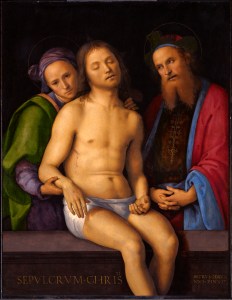
Faithful Conversations #11
Note to readers: Take the time to read through the four readings in full so you can see the connections — sometimes they are clear, other times not. I include the text of one of the readings, or perhaps parts of several here, for easy reference while reading the reflection. This week, I am focusing primarily on the reading from Acts and utilizing the 23rd Psalm as a prayer.
Readings for the Fourth Sunday in Easter:
Acts 2: 42-47
1 Peter 2: 19-25
Psalm 23
John 10: 1-10
The First Reading: Acts 2: 42-47: Life Among the Believers
42 They devoted themselves to the apostles’ teaching and fellowship, to the breaking of bread and the prayers. 43 Awe came upon everyone because many wonders and signs were being done through the apostles. 44 All who believed were together and had all things in common; 45 they would sell their possessions and goods and distribute the proceeds to all, as any had need. 46 Day by day, as they spent much time together in the temple, they broke bread at home and ate their food with glad and generous hearts, 47 praising God and having the goodwill of all the people. And day by day the Lord added to their number those who were being saved.
Today’s Reflection (focusing on the reading from Acts)
As Christians, how do we balance the three time dimensions — past, present, and future — in a healthy way? This question has been on my mind this week. Let me explain.
For more than 40 years, I have been engaged in teaching history — I spend much time journeying into the past. That said, history can be perilous, particularly if we get stuck there. For example, wallowing in the dark chapters of yesteryear, individually or collectively, often prevents us from moving forward with our lives. Instead of a liberating source of knowledge providing context for our present reality, history becomes a crushing burden. In addition, looking back often prompts feelings of nostalgia, a painful homesickness for a “better time” when life seemed simpler (you may want to look up the derivation of that word — nostalgia). While some nostalgia is fun, it can be debilitating. In either case, it seems to me, history may prevent us from meeting life head on in our present circumstances. The converse is also true, of course. How many times do we experience fears and anxiety about the future? Fear of what is lurking around the corner, especially in light of the challenges humanity is facing in 2023, can produce a sense of cynicism and, if unchecked, despair.

Statue of Saint Richard in front of the Cathedral of Chichester
As I read (and reread) the passage from Acts this week, the line day by day (which appears twice) jumped out at me. Among other things, it took me back to high school days (1973) and the movie, “Godspell.” Perhaps you remember it. It was a contemporary take on the story of the first Christians, wrapped in the vibe of the early 70s counter-culture movement. (“Godspell,” by the way is where we get the term “gospel,” and it means “good news” or “good story”). The third song in the movie, and most memorable to me, is “Day by Day” (linked below). The lyric clearly references this week’s passage from Acts and, so I learned, also the “Prayer of Saint Richard of Chichester” (1197-1253), the patron saint of the sick, lepers, and travelers (note the picture on the right). The relevant portion of Saint Richard’s prayer is this:
O most merciful redeemer, friend and brother,
may I know thee more clearly,
love thee more dearly,
and follow thee more nearly, day by day.
Amen.
(Take a few moments and listen to the song from 1971 by clicking here!)
The earliest Christians, our spiritual ancestors, possessed a living memory of the resurrection of Jesus. Can you imagine how electric that atmosphere must have been? They experienced “wonders and signs” (verse 43) and lived in the moment — day by day (verses 46-47). They shared their possessions, they were united in a grand adventure, a cause bigger than themselves. Thousands of people joined the movement and were saved (verse 47). One can sense the joy they felt in their work, day by day. And, herein lies the answer to our sometimes unhealthy fixation on the past or the future. Focus on today. It is the only day we have. Stay the course. We cannot change the past, nor can we control the future. Indeed, “This is the day the Lord has made, let us rejoice and be glad in it!” (Psalm 118)
Prayer (Psalm 23: The Divine Shepherd)
Note: It may not surprise you to learn that Psalm 23 is the most popular for people of faith, as evidenced by being the “most searched on Google” (the next four in order are 91, 139, 27, and 121, in case you’re interested in such things). For this week’s prayer, I encourage you to pray the Psalm aloud — let the language settle in your heart. David was an excellent poet.
The Lord is my shepherd; I shall not want. 2 He makes me lie down in green pastures; he leads me beside still waters; 3 he restores my soul. He leads me in right paths for his name’s sake. 4 Even though I walk through the darkest valley, I fear no evil, for you are with me; your rod and your staff, they comfort me. 5 You prepare a table before me in the presence of my enemies; you anoint my head with oil; my cup overflows. 6 Surely goodness and mercy shall follow me all the days of my life, and I shall dwell in the house of the Lord my whole life long. Amen.
Soli Deo Gloria.
And, a bit of history for you today regarding the worship space at ELC:
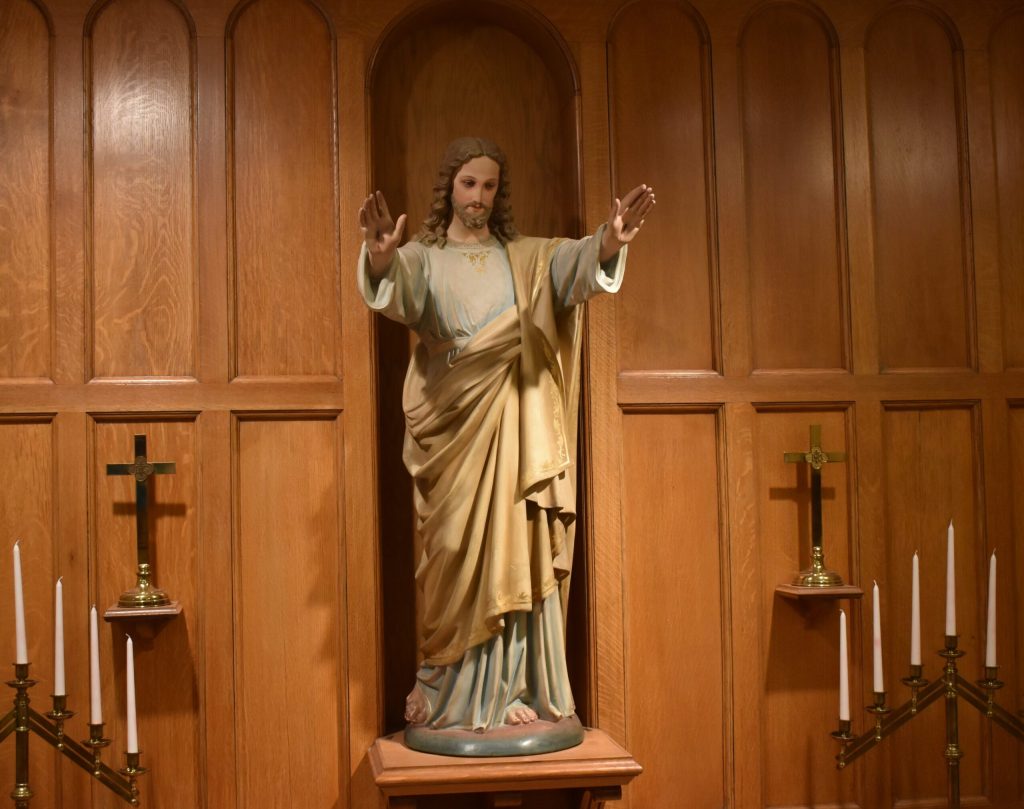
The chapel off the sanctuary, I have learned, was originally called the “Pioneer Chapel,” a nod to the original Norwegian settlers in Jackson County that established the parish (originally, Little Norway). The statue and altar are from the original church structure, built in 1876, that was located east of the Courthouse on Third Street, at least that is the best information I have on it now. In 1953, ELC moved up the hill to its present location.

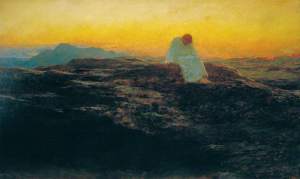
 There are eight instances of Christ appearing to people in the forty days after his resurrection recorded in scripture, eight times where people on this earth saw and, in some cases, directly interacted with him. In this week’s Gospel reading, we are walking along a road with Cleopas and his friend, both of whom are feeling dejected and without hope (verse 21). It is Sunday evening, three days after the crucifixion, and they are headed out of Jerusalem to the village of Emmaus. They are attempting to sort out the climactic events of the past several days and we sense their despondency. Versed in the tradition of Judaism, they expected a different sort of Messiah. Jesus’ death, and the fact that they had not seen him, (though some had spoken of his miraculous resurrection) leaves them puzzled and without hope. Suddenly Jesus appears and joins them on the path, though they fail to recognize him. In fact, they are taken aback that this “stranger” has not heard about the dramatic events of recent days. Jesus listens. Then he confronts them with a powerful interpretation of the Hebrew prophecies, clearly identifying himself as the promised Messiah, but they still don’t get it (verses 25-27). As they reach their destination, they invite the stranger to join them since it is late. And, in one of the truly powerful moments in the post-resurrection period, Jesus breaks bread with them, then vanishes. They suddenly realize WHO he is (verse 31) and in their excitement, they rush back to Jerusalem and recount their experience to the eleven disciples. I suspect they covered that seven miles in a hurry!
 Now, back to Robert Zund’s interpretative artwork. Many commentators note that he got the flora and fauna all wrong here. Instead of a Middle Eastern scene, the road to Emmaus is set in what appears to be the countryside of Switzerland, his home. It is a gorgeous setting, and , in fact, resembles the place that you and I live. Perhaps the artist did this with intent. Encounters with Christ can happen anywhere and he meets people, often unexpectedly, wherever they are. (As a sidebar, I have talked with Native American people who have recounted stories of Christ appearing to their ancestors in North America, something that seems entirely plausible to me).


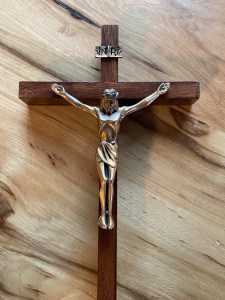
 “Displaying the corpus of Jesus on the cross is a stark visual aid that helps us to more easily focus on the very real sacrifice Jesus offered for us for our salvation . . . Our brothers and sisters of mainline Protestant and non-denominational traditions typically display an empty cross in recognition that Jesus died once and for all for us, and is now risen from the dead. The cross, like the tomb, is empty. We should see these not as opposing viewpoints, but as complimentary emphasis.”




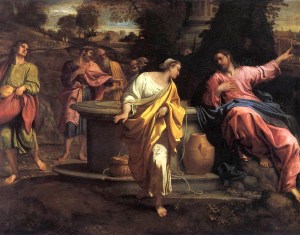 Back to the Samaritan woman. Among Eastern Orthodox churches, she is called by the name Photini and, in fact, is numbered among the Great Martyrs (you may want to explore more about her fascinating story). Though not named in John’s Gospel, her identity as a Samaritan is significant. Jesus and his disciples are traveling from Judea to Galilee and they chose to take the direct route through Samaria. The backdrop here is that Jews and Samaritans, though distant cousins ethnically, were enemies for a variety of reasons, but most notably their differences over the proper place to worship God. Jews viewed Jerusalem as the center of worship, while Samaritans believed it was Mount Gerizim. This argument among spiritual ancestors seems perplexing to us, but it was critically important two thousand years ago.

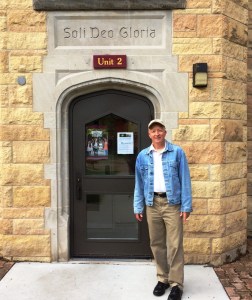 One other personal note about this week’s readings: Psalm 121 is my favorite. It is known as the “The Traveler’s Psalm” and I commend it to your reading this week. My father requested this Psalm for his funeral. He liked to say of this life, “we’re all just traveling through.” I learned after his death, that it had been read at his father’s funeral as well. It is a “tie that binds.”