Faithful Conversations #106
Introduction to Readers:
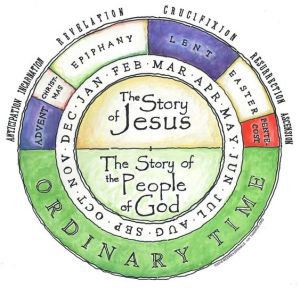
We turn the page this week. Lent comes from the Old English word lencten, meaning springtime and its connection to Christianity dates back centuries. The 40-day season of Lent, focused on fasting and reflection before Easter, became widespread after 313 CE when Emperor Constantine embraced Christianity. The Council of Nicea in 325 further solidified the tradition. The number ’40’ holds spiritual significance, with examples like Moses receiving the Ten Commandments (Exodus 34:28), Elijah walking to Mount Horeb (1 Kings 19:8), and Jesus fasting before his public ministry (Matthew 4:2). On Wednesday, many of us will have our foreheads marked with ashes in the shape of a cross, symbolizing penance, humility, and mortality (Memento, homo, quia pulvis es, et in pulverem reverteris). It’s interesting to note that Luther favored continuing the traditions of Ash Wednesday, though more radical Lutherans of the time did not, believing it to be too “Catholic.” Today, the “Day of Ashes” is observed by many denominations within Western Christendom (Roman Catholic, Lutheran Anglican, Episcopal, Baptist, Presbyterian, and Methodist).
Like many of you, I grew up with the Lenten tradition and remember classmates “giving up” something during Lent (like chips and soda, which always seemed trite) as an act of self-denial. Although that tradition wasn’t emphasized in my home, perhaps because it smacked of “works righteousness,” Lent was certainly a time to focus on spiritual disciplines — I heard it described once as a time of “spring cleaning for our souls.” That said, I plan to spend the next six weeks exploring the Lectio Divina (Latin for Divine Reading and powerful in the Benedictine tradition), a method of reading the Bible involving four steps: reading (Lectio), where a Bible passage is read slowly; meditation (Meditatio), reflecting on its meaning; prayer (Oratio), responding to God; and contemplation (Contemplatio), resting in God’s presence. (Sidebar: I am aware that Martin Luther absorbed this practice during his monastery days but later modified it and I hope to learn more about that also!). I encourage you to use this season of our church year to reflect on spiritual practices in your life!
As always, thanks for your continued interest in the Lectionary. Three reminders: first, the blog is meant to accompany a walk-through of the four passages and typically focuses on one of the readings. Second, I utilize hypertext for “further reading” on your part — look for bolded words or phrases that are in italics. My reflections this week will focus on the Psalms that are before us in the two sets of readings (51 and 91), including a musical connection.
Ash Wednesday Readings
Joel 2: 1-2, 12-17
Psalm 51: 1-17
2 Cor 5: 20b – 6:10
Matthew 6: 1-6, 16-21
Common Themes
The common themes among the readings for Ash Wednesday include a call to repentance, humility, and seeking God’s mercy. Joel 2:1-2, 12-17 emphasizes the urgency of turning back to God with sincere hearts, while Psalm 51:1-17 is a heartfelt plea for forgiveness and cleansing from sin. In 2 Corinthians 5:20b-6:10, Paul urges believers to be reconciled with God and to endure hardships as faithful servants of Christ. Matthew 6:1-6, 16-21 teaches the importance of genuine devotion and sincerity in prayer, fasting, and giving, focusing on the inner disposition rather than outward displays of piety.
1 Lent Readings
Deuteronomy 26: 1-11
Psalm 91: 1-2, 9-16
Romans 10: 8b-13
Luke 4: 1-13
Common Themes
Look for these themes as you work through Sunday’s readings: faith, trust, and divine protection. In Deuteronomy 26:1-11, the Israelites are reminded to offer their first fruits as a testament to God’s provision and faithfulness. Psalm 91:1-2, 9-16 speaks of God’s promise to protect those who take refuge in Him. Romans 10:8b-13 emphasizes the power of faith in Christ for salvation, and Luke 4:1-13 recounts Jesus’ temptation in the wilderness, showcasing His unwavering trust in God’s word.
Psalm 51: 1-17
Have mercy on me, O God,
according to your steadfast love;
according to your abundant mercy,
blot out my transgressions.
2 Wash me thoroughly from my iniquity,
and cleanse me from my sin.
3 For I know my transgressions,
and my sin is ever before me.
4 Against you, you alone, have I sinned
and done what is evil in your sight,
so that you are justified in your sentence
and blameless when you pass judgment.
5 Indeed, I was born guilty,
a sinner when my mother conceived me.
6 You desire truth in the inward being;
therefore teach me wisdom in my secret heart.
7 Purge me with hyssop, and I shall be clean;
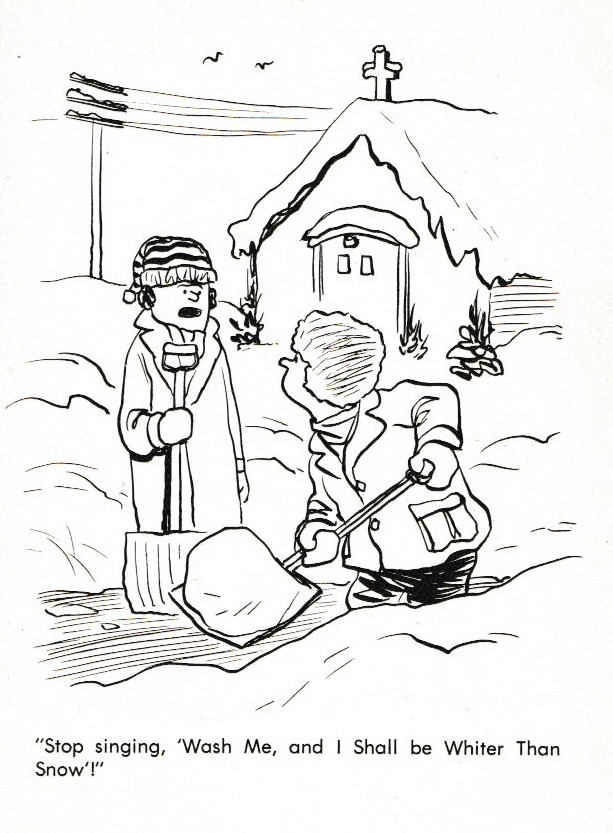
wash me, and I shall be whiter than snow.
8 Let me hear joy and gladness;
let the bones that you have crushed rejoice.
9 Hide your face from my sins,
and blot out all my iniquities.
10 Create in me a clean heart, O God,
and put a new and right spirit within me.
11 Do not cast me away from your presence,
and do not take your holy spirit from me.
12 Restore to me the joy of your salvation,
and sustain in me a willing spirit.
13 Then I will teach transgressors your ways,
and sinners will return to you.
14 Deliver me from bloodshed, O God,
O God of my salvation,
and my tongue will sing aloud of your deliverance.
15 O Lord, open my lips,
and my mouth will declare your praise.
16 For you have no delight in sacrifice;
if I were to give a burnt offering, you would not be pleased.
17 The sacrifice acceptable to God is a broken spirit;
a broken and contrite heart, O God, you will not despise.
Prayer for Cleansing and Pardon
To the leader. A Psalm of David, when the prophet Nathan came to him, after he had gone in to Bathsheba.

“King David Playing the Harp”
Gerard van Honthorst (1592–1656)
Reflections: “A Clean Heart and Right Spirit”
Two Psalms confront us at the start of Lent (51 and 91) that offer contrasting themes and tones, regarding different aspects our relationship with God. Psalm 51, a deeply penitent prayer, emphasizes the desire for redemption and a new heart. Psalm 91, an uplifting liturgy of confident assurance, emphasizes God’s protection and care for those who trust in Him (note the musical connection below).
Martin Luther referred to the Psalms as “the little Bible” and offered many commentaries on them throughout his career. He said this of Psalm 51: “A knowledge of this psalm is necessary and useful in many ways. It contains instruction about the chief parts of our religion, about repentance, sin, grace, and justification, as well as about the worship we ought to render to God. These are divine and heavenly doctrines. Unless they are taught by the great Spirit, they cannot enter the heart of man.” Based on Luther’s notable enthusiasm, I plan to revisit Psalm 51 throughout the Lenten journey. (Sidebar: Along with 121, Psalm 51 is a favorite of mine!)

Let me start that process with a stunning visual, Dutch artist Govert Flinck’s 1651 masterpiece, “Bathsheba’s Appeal to David.” Flinck imagines a later chapter from a deeply complicated tale found in 2 Samuel and 1 Kings. A quick summary: King David, while his army was at war against the Ammonites, stayed back in Jerusalem. On a fateful spring evening, he witnessed Bathsheba, the wife of Uriah (an elite soldier in David’s army), bathing from the rooftop of his palace. Overcome by desire, David summoned Bathsheba and slept with her, resulting in her pregnancy. To cover up his actions, David called Uriah back from the battlefield, hoping he would sleep with Bathsheba and believe the child was his. However, Uriah, being a loyal and disciplined soldier, refused to go home while his comrades were still fighting. Frustrated, David then arranged for Uriah to be placed in the front lines of battle, where he was killed. After Uriah’s death, David married Bathsheba (he had many wives). And, in one of the most powerful scenes in scripture, God sends the Prophet Nathan of visit the powerful King, offering a stern rebuke for his actions (see 2 Samuel 12). This series of events led to significant consequences for David and his family, including the birth of Solomon, who would later become one of Israel’s greatest kings. Flinck’s painting recounts the visit of Bathsheba to the aging king, pleading for Solomon’s succession to the throne of Israel (recounted in 1 Kings 1).
It’s hard to “unhear” that story when reading Psalm 51. David, the lowly shepherd boy who gained fame for defeating Goliath, was known for his military skills and poetic flare. A “golden child” in many ways, he rose to the heights of power yet remained an anguished figure who sinned mightily. Imagine his deep remorse as you read the words of the Psalm (verses 1-7). This flawed man, driven to his knees, was totally dependent on God’s redeeming power. Pleading with God to bring him back from the brink of despair, he enunciates a prayer that rings across the ages (verses 10-12). Hear these words from the King James version: Create in me a clean heart, O God; and renew a right spirit within me. Cast me not away from thy presence; and take not thy holy spirit from me. Restore unto me the joy of thy salvation; and uphold me with thy free spirit.**
As we begin our Lenten journey this year, let’s pray those Psalms, 51 and 91. Let’s remind ourselves every day of our baptism into Christ. And may we feel the breath of God’s free spirit, a generous, liberating, and empowering spirit!
Soli deo Gloria!
**Sidebar: I am partial to the King James version of Psalm 51 — I like that wording. In part, that derives from singing those words hundreds of times in formative years as an Offertory during worship. The version of that Offertory comes from composer J.A. Freylinghausen (1670-1739), notable as a hymn writer and also for his involvement in the Pietist Movement in Germany in the post-Reformation period. Pietism emphasized personal faith, spiritual renewal, and practical Christianity. The hymn remains in the ELW (our book of worship) and is found in the “Service Music” section — in fact, there are four versions of it!
A Prayer for Peace in Ukraine
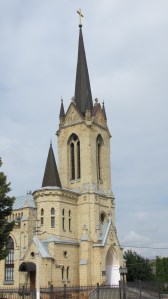
“Man’s capacity for justice makes democracy possible; man’s inclination to injustice makes democracy necessary.” (Reinhold Niebuhr)
As we mark the third anniversary of Russia’s full-scale invasion of Ukraine, we lift our hearts in prayer, mindful of the profound suffering and resilience that have marked this time. For more than a thousand days, the Ukrainian people have endured. More than 100,000 lives have been lost, countless more wounded, and millions displaced from their homes—both within Ukraine and beyond its borders. Once-vibrant cities stand in ruins, bearing witness to the devastating toll of this conflict. The prayer below was written by Prof. Dr. Dmytro Tsolin. He is a pastor in the German Evangelical-Lutheran Church of Ukraine, which is member of the LWF. It was originally shared by the Communion of Protestant Churches in Europe. (Source: Lutheran World Federation Website, 24 February 2025).
Our Father in Heaven! Our eyes are turned towards You, and we lift up our hearts before You. O God, for over one thousand days we have been praying daily to You, imploring You, putting our hope in You. For over three horrible years we have received horrible news of the death of our compatriots, we have heard the noise of explosions and the wailing of the sirens. Lord, every day the number of orphans and widows increases. Every day there are more people who experience the pain of loss of loved ones. Our God, we see no end to this calamity, only You hold us. For over one thousand days, Lord, we have stood and believed. We thank You, for Your Spirit nourishes us. We believe in Your righteousness, we place hope in Your mercy, we experience Your love in the midst of ruin and death. But God, our strength is at its end. We tell You of our pains, Father, though You know them all before we even tell You. The sons and daughters of our nation leave us, they are dying in the fields of battle and under fire in our cities and towns. We remain, Lord, remain with us. We thank You for all those that support us, we thank You for our brothers and sisters in Christ and for the goodwill from those of other lands. Bless them! Breath into us faith for the victory of love and truth. Come, Lord Jesus!
Amen
Musical Reflection: Psalm 91
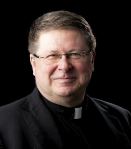
Michael Joncas (b. 1951) is a Catholic priest, liturgical theologian, and composer of contemporary Catholic music. Joncas has served as a professor at various institutions, including the University of St. Thomas and the University of Notre Dame. He is best known for his hymn “On Eagle’s Wings.” The lyrics draw inspiration from Psalm 91, the Book of Exodus 19, and Matthew 13.
Psalm 91
1 You who live in the shelter of the Most High,
who abide in the shadow of the Almighty,
2 will say to the Lord, “My refuge and my fortress;
my God, in whom I trust.”
3 For he will deliver you from the snare of the hunter
and from the deadly pestilence;
4 he will cover you with his pinions,
and under his wings you will find refuge;
his faithfulness is a shield and defense.
5 You will not fear the terror of the night
or the arrow that flies by day
6 or the pestilence that stalks in darkness
or the destruction that wastes at noonday.
7 A thousand may fall at your side,
ten thousand at your right hand,
but it will not come near you.
8 You will only look with your eyes
and see the punishment of the wicked.
9 Because you have made the Lord your refuge,
the Most High your dwelling place,
10 no evil shall befall you,
no scourge come near your tent.
11 For he will command his angels concerning you
to guard you in all your ways.
12 On their hands they will bear you up,
so that you will not dash your foot against a stone.
13 You will tread on the lion and the adder;
the young lion and the serpent you will trample under foot.
14 Those who love me, I will deliver;
I will protect those who know my name.
15 When they call to me, I will answer them;
I will be with them in trouble;
I will rescue them and honor them.
16 With long life I will satisfy them
and show them my salvation.
On Eagles Wings
You who dwell in the shelter of the Lord
Who abide in His shadow for life
Say to the Lord, “My refuge, my rock in whom I trust!”
And He will raise you up on eagles’ wings
Bear you on the breath of dawn
Make you to shine like the sun
And hold you in the palm of His hand
The snare of the fowler will never capture you
And famine will bring you no fear
Under His wings your refuge, His faithfulness your shield
You need not fear the terror of the night
Nor the arrow that flies by day
Though thousands fall about you, near you it shall not come
For to His angels He’s given a command
To guard you in all of your ways
Upon their hands they will bear you up
Lest you dash your foot against a stone
And He will raise you up on eagles’ wings
Bear you on the breath of dawn
Make you to shine like the sun
And hold you in the palm of His hand
Check out this special performance!
Faithful Conversations on Sunday
Join us on Sunday 9 March at 10:45 in the church library. We talk through the readings (some or all) in an informal setting — no prior preparation is necessary and all are welcome!
The cartoon here comes from the world of Charles Schultz and clearly references Psalm 51!
