Faithful Conversations #114
Introduction to Readers
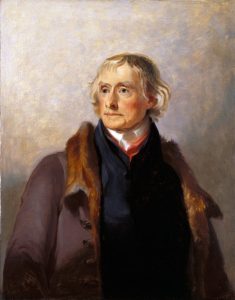
” . . . of this band of dupes and impostors, Paul was the great Coryphaeus (leader of the chorus), and first corrupter of the doctrines of Jesus. These palpable interpolations and falsifications of his doctrines led me to try to sift them apart.” (Thomas Jefferson writing to William Short, 13 April 1820).
Our third President was no fan of Saint Paul, and across the centuries, any number of prominent thinkers and theologians have agreed with Jefferson. In their eyes, Paul introduced theological complexities and doctrines that corrupted the simplicity of Jesus’ original message (think, justification by faith alone — a big debate, complex attitudes about women and slavery, and questions about Paul’s apostolic authority, just to name a few). Volumes have been written on such topics. As one named for him (and Stephen), I have been grappling with this guy for many years. My father explained the contradictory name choice to me on more than one occasion — the first Christian martyr and the zealot who approved his death (note Acts 7: 54-60 – 8:1). Bottom line: he wanted me to understand the power of conversion. The fact that Paul was such a hero to Unk (my father) makes the controversies surrounding him all the more interesting to me, I suppose. After all, of the twenty-seven documents comprising the New Testament, thirteen are letters attributed to this first century Greek man. His conversion story, this week’s first reading, is therefore a powerful moment in Christian history. Further reflections this week will focus on Paul’s conversion, including an excellent discussion by noted Anglican Bishop, N.T. Wright, who has written extensively on the life of Paul. It should be noted, curiously, that the conversion story from Acts shows up only once (Year C) in the three-year cycle of the Revised Common Lectionary!

Thanks for visiting this space again this week! We are roughly eight days into the season of Eastertide (the fifty days between Easter Sunday and Pentecost). As theologian Diana Butler Bass suggests, the central question for us during this part of our church calendar is: What does Jesus’ resurrection mean for our lives in the world? (Sunday Musings, 27 April 2025). Keep that in mind as you explore this week’s readings. We have one commemoration on our calendar this week: Catherine of Siena (1347-1380), Italian mystic and theologian known for her advocacy for church reform (died 29 April 1380).
Beyond Paul’s conversion story, I will offer an inspirational passage from Pope Francis aimed at young people, and a musical selection I hope you will appreciate.
Common Themes Among the Readings
3 Easter
Acts 9: 1-6 (7-20)
Psalm 30
Revelation 5: 11-14
John 21: 1-19
The readings for the Third Sunday in Easter explore themes of transformation, restoration, and worship in response to encounters with the risen Christ. In Acts, Saul’s conversion showcases the radical change brought by Christ’s call, while in John, Peter’s reinstatement demonstrates forgiveness and renewal. Psalm 30 reflects the joy and gratitude that emerge from being delivered from despair, echoing the personal restoration seen in Acts and John. Finally, Revelation exalts the Lamb who was slain, inviting all creation to worship, uniting the readings in their celebration of Christ’s victory and its transformative power.
Focus Passage
Acts 9: 1-6 (7-20)
9 Meanwhile Saul, still breathing threats and murder against the disciples of the Lord, went to the high priest 2 and asked him for letters to the synagogues at Damascus, so that if he found any who belonged to the Way, men or women, he might bring them bound to Jerusalem. 3 Now as he was going along and approaching Damascus, suddenly a light from heaven flashed around him. 4 He fell to the ground and heard a voice saying to him, “Saul, Saul, why do you persecute me?” 5 He asked, “Who are you, Lord?” The reply came, “I am Jesus, whom you are persecuting. 6 But get up and enter the city, and you will be told what you are to do.” 7 The men who were traveling with him stood speechless because they heard the voice but saw no one. 8 Saul got up from the ground, and though his eyes were open, he could see nothing; so they led him by the hand and brought him into Damascus. 9 For three days he was without sight and neither ate nor drank. 10 Now there was a disciple in Damascus named Ananias. The Lord said to him in a vision, “Ananias.” He answered, “Here I am, Lord.” 11 The Lord said to him, “Get up and go to the street called Straight, and at the house of Judas look for a man of Tarsus named Saul. At this moment he is praying, 12 and he has seen in a vision a man named Ananias come in and lay his hands on him so that he might regain his sight.” 13 But Ananias answered, “Lord, I have heard from many about this man, how much evil he has done to your saints in Jerusalem, 14 and here he has authority from the chief priests to bind all who invoke your name.” 15 But the Lord said to him, “Go, for he is an instrument whom I have chosen to bring my name before gentiles and kings and before the people of Israel; 16 I myself will show him how much he must suffer for the sake of my name.” 17 So Ananias went and entered the house. He laid his hands on Saul and said, “Brother Saul, the Lord Jesus, who appeared to you on your way here, has sent me so that you may regain your sight and be filled with the Holy Spirit.” 18 And immediately something like scales fell from his eyes, and his sight was restored. Then he got up and was baptized, 19 and after taking some food, he regained his strength. For several days he was with the disciples in Damascus, 20 and immediately he began to proclaim Jesus in the synagogues, saying, “He is the Son of God.”
TRY LUTHER’S METHOD!
Luther’s Revision of the Lectio Divina
(Three Steps)
Oratio (Prayer): This is the starting point, where one humbly prays for the Holy Spirit’s guidance to understand God’s Word. Luther emphasized that prayer prepares the heart and mind to receive divine wisdom.
Meditatio (Meditation): This involves deeply engaging with Scripture, not just reading it but reflecting on it repeatedly. Luther encouraged believers to “chew on” the Word, allowing its meaning to sink in and shape their thoughts and actions.
Tentatio (Struggle): Often translated as “trial” or “temptation,” this refers to the challenges and spiritual battles that arise as one seeks to live according to God’s Word. Luther saw these struggles as a way God refines faith, making it more resilient and authentic.

Reflections: “Who are you Lord?”

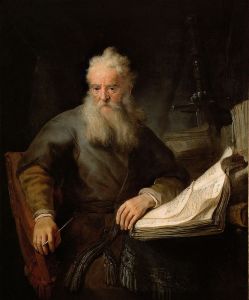
Few moments in Christian history rival the dramatic and transformative encounter on the road to Damascus, where a zealous persecutor named Saul was radically reshaped into Paul, the tireless apostle of Christ. The story is recounted multiple times in the New Testament, mainly in Acts. The initial narrative is this week’s first reading as noted above. Paul later shares his conversion story in a speech to a crowd in Jerusalem (Acts 22: 3-16) and retells the story a final time before King Agrippa (Acts 26: 9-20). Beyond these three accounts, the Apostle refers to his conversion within his letters (Galatians 1: 11-17, Philippians 3: 4-11, 1 Corinthians 15: 8-10, and 2 Corinthians 4:6), in each case reflecting on the transformative experience and its implications for his ministry and theology.

Derived from the Latin convertere, meaning to turn around, to transform, CONVERSION is central to our journeys of faith and a life-long process. Martin Luther, our spiritual ancestor, famously recounted his conversion experience, and we operate within a faith community derived, in part, from his experience (sidebar: Luther in his typically brusque style, also offered this quote regarding conversion: “People go through three conversions: The conversion of their head, their heart, and their pocketbook. Unfortunately, not all at the same time”). Though I was born into Christianity, I am convinced that I have experienced conversions on more than one occasion — forks in the road where faith was questioned and ultimately deepened. The Spirit showed me a new way. That famous question raised by Paul on the road to Damascus — Who are you Lord? — has been changing lives for centuries. Yes, conversions are before and after moments. Conversions are powerful. Conversions bring change. Throughout the coming week, I urge you to think about conversion stories you may have encountered in your life, personally or in others.
Soli deo Gloria!
And for a further take on the conversion story . . . .
N.T. Wright, also known as Nicholas Thomas Wright, is a prominent Anglican bishop, theologian, and New Testament scholar. Wright’s work often challenges traditional views, offering fresh perspectives on theology and practical Christian living. Listen to what he has to say about this transformative moment in Christian history!
The Voice of a Christian Leader: Pope Francis’ Message to Young People in 2023

Pope Francis’ death in recent days brought forth an outpouring of remembrances. These words, spoken during a vigil with youth in 2023, seem especially fitting in our times. (Photo Source: Catholic News World, 19 November 2019).
World Youth Day: 5 August 2023
“I leave you with these thoughts. Carry on; if you fall, get back up; walk with a goal in mind, and train each day of your lives. Nothing is free in life, everything has to be paid for. Only one thing is free: the love of Jesus! So, with this free gift that we have – the love of Jesus – and with the desire to carry on the journey, let us walk in hope, let us be mindful of our roots, and move forwards, without fear. Do not be afraid.”
A Musical Prayer: “Grace Before Sleep”
Lyrics: Grace Before Sleep
How can our minds and bodies be
grateful enough that we have spent,
here in this generous room…
This evening of content?
Each one of us has walked through storm
and fled the wolves along the road;
but here the hearth is wide and warm.
And for this shelter and this light
Accept, O Lord, our thanks tonight.
“Grace Before Sleep” by Sara Teasdale is a reflective poem of gratitude, often interpreted as a meditation on finding solace and thankfulness amidst life’s challenges. Teasdale, a Pulitzer Prize-winning poet, frequently explored themes of beauty, resilience, and the human spirit in her work. This particular poem has inspired musical adaptations, such as Susan LaBarr’s choral setting, which emphasizes its themes of thanksgiving and quiet reflection.
The Luther College Choirs are renowned for their exceptional artistry and dedication to the choral tradition. Among them, the Nordic Choir stands out as the principal ensemble, celebrated for its national and international performances and innovative repertoire.
Update on “Faithful Conversations”
Join us on Sunday 4 May at 10:45 in the church library. We talk through the readings (some or all) in an informal setting — no prior preparation is necessary and all are welcome! Come and help us deepen our understanding of the readings!
And, on the horizon . . . . Pastor Jen and I are working to develop a series of podcasts that will be made available on various venues, short conversations on a variety of topics related to the faith journey. Our first series will explore the history of Lutheranism in general, the background to our local parish, how we translate our faith traditions and core values in our community, and how people can become a member of our church. Look for these later this spring!
