Faithful Conversations #117
Introduction to Readers
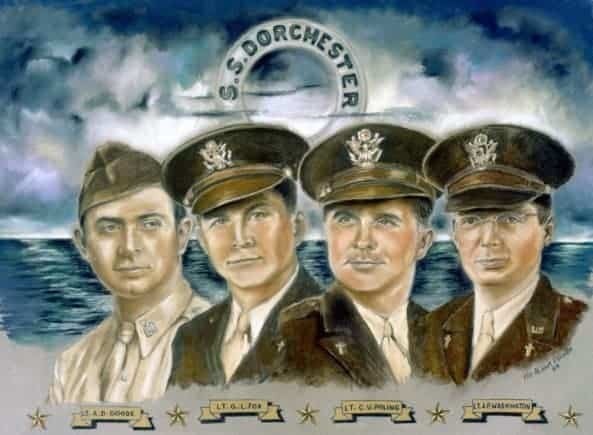
On February 3, 1943, a German torpedo struck the SS Dorchester, a U.S. Army transport ship, in the icy North Atlantic. Four chaplains—Alexander D. Goode (Jewish rabbi), George L. Fox (Methodist), Clark V. Poling (Dutch Reformed), and John P. Washington (Catholic)—guided soldiers to safety, handed out life jackets, and offered prayers. When the life jackets ran out, they gave up their own and remained aboard, linked arm in arm, praying and singing hymns as the ship sank—a lasting testament to unity and courage.
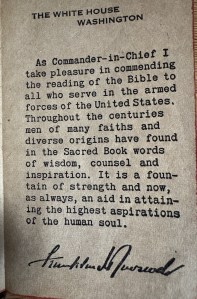
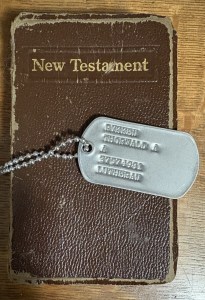
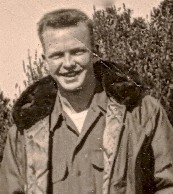
As Memorial Day weekend and the 6th Sunday in Easter intersect, the story of the four chaplains feels especially poignant. My father, Thor—aka “Unk”—joined the Army at 19 in 1943, flying 49 missions as a tail-gunner on a B-25 Mitchell in the Italian Theater. His pocket New Testament, inscribed by the Commander-in-Chief, remains a cherished possession, and his dog tags bore his Lutheran identity. Among other things, World War II reshaped interfaith relations, uniting Protestant, Catholic, and Jewish communities under a shared identity, with freedom of religion standing among the FOUR FREEDOMS that defined the war effort. Unk often said military service expanded his world beyond his northern small-town roots. This week, take time to pray for those who serve and honor those whose lives ended on some distant field of battle. I’ve included a haunting piece of music in my blog that I believe you’ll find moving.
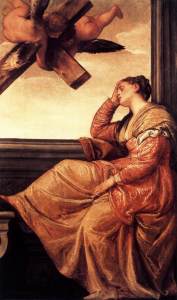
Monday marks day 29 of Eastertide, meaning the celebration of Pentecost (8 June) is 21 days away. We have three commemorations noted in our calendar this week (pages 14-17 of the ELW): Helena, mother of Constantine (died on 21 May c. 330), and scientists Nicolaus Copernicus and Leonhard Euler (both died on 24 May 1543 and 1783 respectively). Emperor Constantine’s conversion to Christianity in 312 CE led to the Edict of Milan in 313, granting religious tolerance to Christians. He actively supported the Church, commissioning Christian buildings, including the original St. Peter’s Basilica and convening the Council of Nicaea in 325 to address theological disputes and establish foundational doctrines. If interesting, read more about his mother, Saint Helena here! And, as always, thanks for visiting this space again this week. I consider each blog entry an unfinished dialogue, and my hope is that you read them in that spirit. I offer them with humility — the more I learn, the more I understand how much I do not know! My reflection this week will focus on the story of Lydia’s conversion as recounted in Acts 16.
Common Themes Among the Readings
6 Easter
Acts 16: 9-15
Psalm 67
Revelation 21: 10, 22-22:5
John 14: 23-29
The readings for the sixth Sunday in Easter emphasize divine guidance, inclusion, and peace. In Acts 16, Paul follows a vision that leads him to Lydia, whose open heart exemplifies God’s call to all people. Psalm 67 echoes this theme, celebrating God’s blessings reaching every nation, while Revelation 21 paints a vision of a radiant, welcoming city where God’s presence illuminates all. John 14 reinforces this promise, as Jesus assures his followers of the Spirit’s guidance and the peace that transcends earthly troubles.
Focus: Acts 16: 9-15: Lydia’s Conversion
9 During the night Paul had a vision: there stood a man of Macedonia pleading with him and saying, “Come over to Macedonia and help us.” 10 When he had seen the vision, we immediately tried to cross over to Macedonia, being convinced that God had called us to proclaim the good news to them. 11 We therefore set sail from Troas and took a straight course to Samothrace, the following day to Neapolis, 12 and from there to Philippi, which is a leading city of the district of Macedonia and a Roman colony. We remained in this city for some days. 13 On the Sabbath day we went outside the gate by the river, where we supposed there was a place of prayer, and we sat down and spoke to the women who had gathered there. 14 A certain woman named Lydia, a worshiper of God, was listening to us; she was from the city of Thyatira and a dealer in purple cloth. The Lord opened her heart to listen eagerly to what was said by Paul. 15 When she and her household were baptized, she urged us, saying, “If you have judged me to be faithful to the Lord, come and stay at my home.” And she prevailed upon us.
“The Lord opened her heart to listen eagerly to what was said by Paul.“
TRY LUTHER’S METHOD OF BIBLE READING
A Revision of the Lectio Divina, a method he learned in his Augustinian training (Three Steps)
Oratio (Prayer): This is the starting point, where one humbly prays for the Holy Spirit’s guidance to understand God’s Word. Luther emphasized that prayer prepares the heart and mind to receive divine wisdom.
Meditatio (Meditation): This involves deeply engaging with Scripture, not just reading it but reflecting on it repeatedly. Luther encouraged believers to “chew on” the Word, allowing its meaning to sink in and shape their thoughts and actions.
Tentatio (Struggle): Often translated as “trial” or “temptation,” this refers to the challenges and spiritual battles that arise as one seeks to live according to God’s Word. Luther saw these struggles as a way God refines faith, making it more resilient and authentic.

Reflections: “Divine Guidance”
Several women in the New Testament make short, seemingly random appearances, yet profoundly speak to us across time. Three examples (among many others) are Anna the prophetess (Luke 2:36–38) who recognizes Jesus as the Messiah when he is presented at the temple, the unnamed woman (Mark 5:25–34) who reaches out in faith to touch Jesus’ cloak, demonstrating the power of belief and healing, and Pilate’s wife (Matthew 27:19) who warns her husband about condemning Jesus, offering a rare glimpse of moral insight in the trial narrative. And let’s add the intriguing encounter between Lydia and Paul to that list.

THE CONTEXT: Paul’s second missionary journey (49–52 CE) helped spread Christianity into Europe for the first time. He traveled through Greece, preaching in cities like Philippi, Thessalonica, Athens, and Corinth, where he gained converts but also faced opposition. In Philippi, he baptized Lydia and was miraculously freed from prison, while in Athens, he debated Greek philosophers about faith. His journey relied on Roman roads and sea routes, making travel easier despite frequent conflicts over Gentile believers. Lasting about three years, this trip built strong Christian communities that later received his letters of guidance and encouragement.
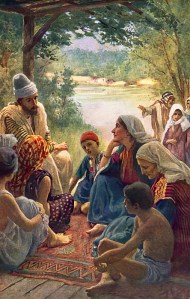
THE STORY: Acts 16:9-15 describes a pivotal moment in Paul’s missionary journey, where he receives a vision of a man from Macedonia pleading for help. This vision leads Paul and his companions to change course and travel to Macedonia, marking the spread of Christianity into Europe. Upon arriving in Philippi, a Roman colony, Paul and his group seek out a place of prayer and encounter Lydia, a merchant dealing in purple cloth. Lydia is described as a worshiper of God, and as she listens to Paul’s message, her heart is opened by the Lord. She and her household are baptized, and she offers hospitality to Paul and his companions. (Postscript: Acts 16: 16-40 is worth a few moments of your time — a crazy story! Paul and Silas got thrown into prison for ruining a lucrative fortune-telling business, but instead of sulking, they turned the jail into a midnight worship concert—which was so powerful that an earthquake broke open the doors. The terrified jailer, ready to end it all, was stopped by Paul, who instead converted him and his entire household on the spot. By morning, the magistrates tried to quietly dismiss them, but Paul pulled the “I’m a Roman citizen” card, forcing them into an awkward public apology before strolling out of town like a seasoned evangelist with diplomatic immunity. And where did they go? Back to Lydia’s home!).
WHO WAS LYDIA? Lydia is primarily known by her given name, but she has been referred to by a few descriptive titles, notably “The Woman of Purple.” Some traditions, including the ELCA, honor here due to her important role in early Christianity (we commemorate her as a “witness to the faith,” along with Phoebe and Dorcas, on 27 January). Lydia was a successful merchant of purple cloth, a luxury item associated with wealth and royalty, and she likely held considerable influence in her trade. Originally from Thyatira, a city known for its dye industry, she emigrated to Philippi, where she became a God-fearer, meaning she worshiped the God of Israel without fully converting to Judaism. When Paul met her by the riverside, she listened intently, and God opened her heart to receive the Gospel, leading to her baptism along with her household. She then offered hospitality to Paul and his companions, making her home a center for early Christian gatherings, possibly the first church in Europe (sidebar: The church of Thyatira is mentioned in Revelation 2:18-29, where Jesus addresses it as one of the seven churches of Asia Minor. Thyatira was a small but prosperous city, known for its trade guilds, including those involved in dyeing fabrics—possibly linking it to Lydia, the seller of purple cloth from Acts).
WHAT SHOULD WE TAKE AWAY FROM THE LYDIA STORY? Two things stand out to me. First, there is the issue of divine guidance. Paul’s nighttime vision (verse 9) directs him to Macedonia, no small matter. Paul often comes across to me as an anxious (even tortured) soul, but when something became clear to him, he proceeded with great courage and intensity. Much will come from that trip for Paul, his companions, and the people they encounter. Second, we learn that God opened Lydia’s heart (verse 14), a reminder of the notion of what some in the faith community refer to as Effectual Calling, the irresistible work of God in drawing people to salvation—it’s not just an invitation, but a divine summons that guarantees a response.** Lydia’s example is important for us to think about. Do we leave ourselves open to God’s call to spread the Gospel? Lydia’s openness to Paul’s message and her willingness to support his mission reflect the transformative power of faith and generosity, a timeless lesson for all of us!
Soli Deo Gloria!

** For futher discussion: Calvinism, for example, places great emphasis on effectual calling. As Lutherans, the notion of “being called” is central, and we certainly emphasize God’s role in salvation. Luther taught that humans are bound by sin and cannot choose God on their own, aligning with the idea that faith is a gift. However, he focused more on vocation, believing that God calls people to serve Him in all aspects of life, not just in salvation. While he affirmed that God initiates faith, he didn’t frame it in the strict irresistible grace model found in Calvinism. He was more about God’s calling in daily work and service, rather than a predetermined, irresistible summons to salvation.
Prayer Reflection: “Living in the Light” (Henri Nouwen)
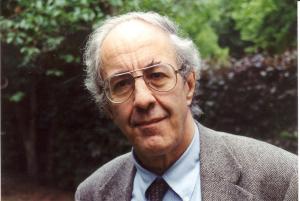
Lord Jesus,
I come to you to enter into the mystery of your way – the way of discipleship, the way that leads from the cross to new life. It is not an easy way, but it is a way of peace and joy. Help me to be here with a heart open to suffering, a mind open to understanding, and a will ready to follow. There are many struggles and I will always have many struggles, but with you, O Lord, I am living in the Light. With you, O Lord, I am moving more and more toward life. With you, O Lord, I know I am safe. Let me celebrate my life in a spirit of gratitude. Grateful that I am here and grateful you are my God. Amen.
(Source: Daily Meditations, 16 May 2025. Henri Nouwen Society).
A Musical Offering: “Mansions of the Lord”
Lyrics: Mansions of the Lord
To fallen soldiers let us sing,
Where no rockets fly nor bullets wing,
Our broken brothers let us bring
To the Mansions of the Lord
No more bleeding, no more Fight
No prayers pleading through the night
Just Divine embrace,
Eternal light,
In the Mansions of the Lord
Where no mothers cry
And no children weep,
We will stand and guard
Though the angels sleep,
All through the ages safely keep
The Mansions of the Lord
“Mansions of the Lord” is a solemn hymn honoring fallen soldiers. It was written by Randall Wallace and composed by Nick Glennie-Smith for the 2002 film We Were Soldiers, which told the story of the Battle of Ia Drang in Vietnam. The use of the term “mansions” in the title is clearly a reference to John 14:2 (King James version): “In my Father’s house are many mansions: if it were not so, I would have told you. I go to prepare a place for you.”
During our son Jake’s time at West Point (2004-2007), we had the opportunity to worship there in a couple of settings and had the privilege of hearing great music!
Update on “Faithful Conversations”
Our regular gatherings for discussing the weekly lectionary are on a pause. Memorial Day weekend will be the kick-off for our Hatfield Services and there will be no in-town service this weekend! Join us at the lake!
Introduction to Bible Study
A few weeks back, I shared this link to the on-line class I put together and am reposting now as we get into the summer phase of the Lectionary. If you’re looking for a “reboot” on how to approach Bible study, take a look! Click on the photo for access!
