Faithful Conversations #130
Introduction to Readers
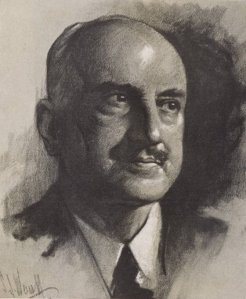
“Those who cannot remember the past are condemned to repeat it.” (Santayana)
The debates over our national history have been on my mind this week. They go beyond academic and are existential in some ways. History shapes our identity, both personal and collective. At the center of this fight over our past is the challenge of memory: what we remember, what we forget, and whose stories we tell. Each person sees the past through their own lens, shaped by background and experience. That’s why history is often contested, and why historians work hard to find and share the truth. But behind all these disagreements is that deeper question: Who are we as a people?*

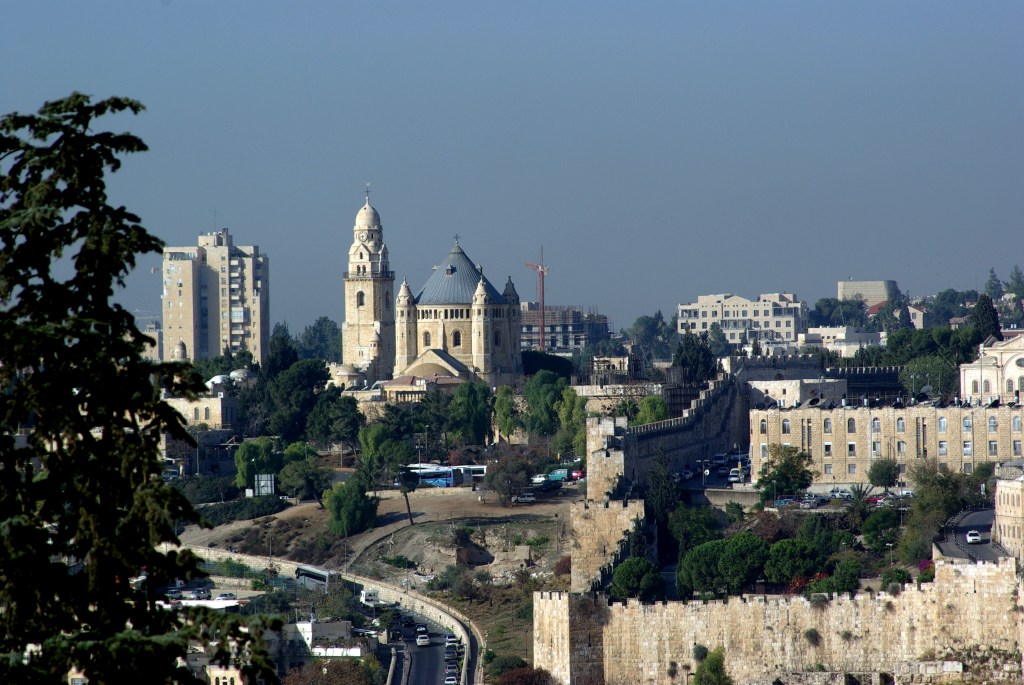
First generation Christians grappled with this question as well. This week’s passage from Hebrews (12:18–29) brought to mind Santayana’s famous warning about failing to remember.** The author of Hebrews (Paul? Apollos?) offers a compelling example of how sacred history can be used to interpret the present and warn against repeating the mistakes of the past. The writer draws a vivid contrast between two mountains—Mount Sinai and Mount Zion. Sinai, with its fire, darkness, and trembling, recalls the fearsome encounter between God and the Israelites—a moment etched in communal memory as both revelation and warning. Zion, by contrast, represents a new reality: the city of the living God, a place of welcome, celebration, and covenant fulfilled. This historical contrast is not incidental—it’s purposeful. It invites the early Christian community, and us as readers today, to reflect on where we stand. Are we still living in the shadow of Sinai, bound by fear and distance? Or have we embraced the promise of Zion, stepping into a relationship marked by grace and proximity? I’ll explore this further in this week’s reflection, including a connection to the Gospel reading.
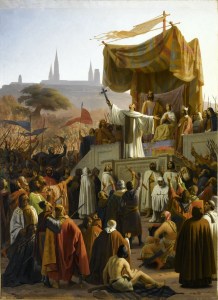
Thanks for your visit here again this week and I pray for all of us regarding the exploration of God’s Word. We are nearing the half-way point of the 168 days of the Season of Pentecost. Bernard, Abbott of Clairvaux (d. 20 August 1153), is commemorated on our church calendar this week. Bernard (1090–1153) was a key leader in medieval Christianity known for his deep faith and powerful influence. He helped grow the Cistercian order, promoting a simpler, more prayerful way of life. His writings encouraged a personal connection with God and shaped Christian mysticism. Bernard also supported the Knights Templar and helped make devotion to the Virgin Mary a central part of Catholic belief. Honored as a saint and Doctor of the Church, his legacy lives on through his teachings on love, humility, and spiritual renewal. The accompanying image is by the French artist, Emile Signol (1804-1892) and is titled, “Saint Bernard Preaching the Second Crusade in Vezelay, 1146.”
* I am about to embark on my 47th year of teaching history, and these “history wars” have been part of my experience dating back to the late 1970s. If you are interested in a further exploration of this debate, this commentary by historian David Blight is a good place to start. Also, I welcome any exchange you might want to have regarding the topic!
**This interpretation I’m offering was inspired by a posting by Timothy L. Adkins-Jones in Working Preacher from 25 August 2019. He is the senior pastor at Bethany Baptist Church in Newark, N.J. Working Preacher is sponsored by Luther Seminary and is a powerful resource!
Common Themes Among the Readings for Pentecost 11
Pentecost 11 Readings
Isaiah 58: 9b-14
(Alt: Jeremiah 1: 4-10)
Psalm 103: 1-8
Hebrews 12: 18-29
Luke 13: 10-17
My source for the Bible readings each week is the Bible Gateway website. I generally use the NRSVUE translation.
Here’s a framework for exploring the readings for Pentecost 11 (Year C). God’s call to prophetic witness (Jeremiah 1:4–10) and the promise of restoration through justice and compassion (Isaiah 58:9b–14) offer a vision of divine empowerment rooted in mercy. Psalm 103 celebrates God’s steadfast love and forgiveness, echoing the healing and liberation Jesus brings to the bent-over woman in Luke 13. The Gospel challenges rigid religiosity, affirming that true Sabbath observance is found in acts of grace. Hebrews 12 contrasts fear-based worship with the awe-filled joy of belonging to an unshakable kingdom, urging reverence and gratitude. Together, these texts invite the faithful to embody healing, justice, and holy boldness in a world longing for renewal.
“Describe the common themes among the readings for Pentecost 11.” Copilot, 25 15 August 2025, Copilot website.
LUTHER’S METHOD OF BIBLE READING
A Revision of the Lectio Divina (Augustinian)
Three Steps
Oratio (Prayer): This is the starting point, where one humbly prays for the Holy Spirit’s guidance to understand God’s Word. Luther emphasized that prayer prepares the heart and mind to receive divine wisdom.
Meditatio (Meditation): This involves deeply engaging with Scripture, not just reading it but reflecting on it repeatedly. Luther encouraged believers to “chew on” the Word, allowing its meaning to sink in and shape their thoughts and actions.
Tentatio (Struggle): Often translated as “trial” or “temptation,” this refers to the challenges and spiritual battles that arise as one seeks to live according to God’s Word. Luther saw these struggles as a way God refines faith, making it more resilient and authentic.
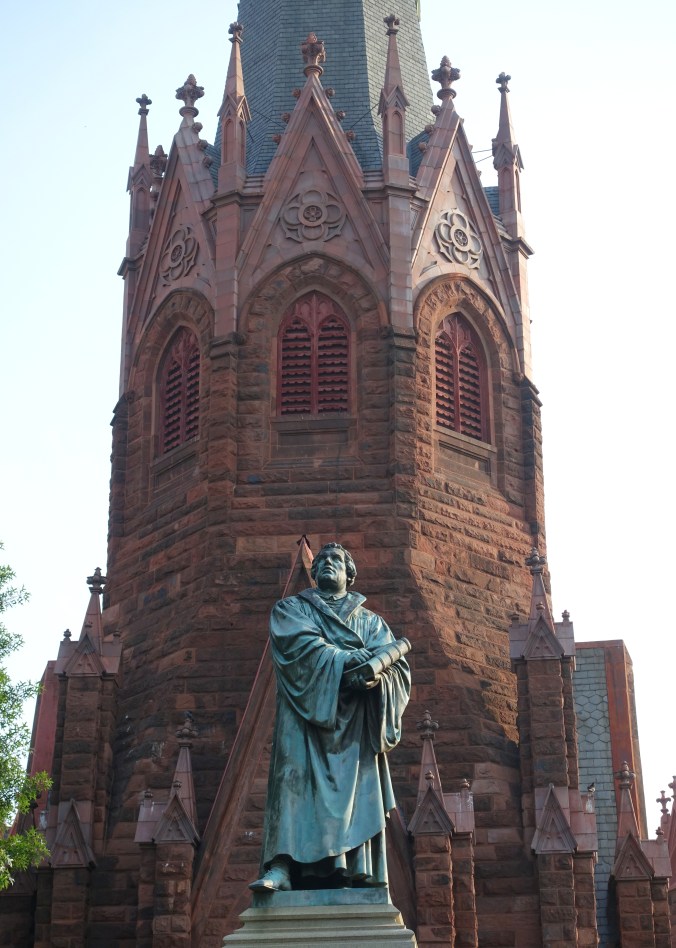
Fast Fact: In Washington, D.C., a statue of Martin Luther stands prominently in front of Luther Place Memorial Church at Thomas Circle. Installed in 1884 to mark the 400th anniversary of Luther’s birth, the statue is a replica of Ernst Friedrich August Rietschel’s original work from the 1868 Luther Monument in Worms, Germany.
Second Reading: Hebrews 12: 18-29
18 You have not come to something that can be touched, a blazing fire, and darkness, and gloom, and a tempest, 19 and the sound of a trumpet, and a voice whose words made the hearers beg that not another word be spoken to them. 20 (For they could not endure the order that was given, “If even an animal touches the mountain, it shall be stoned to death.” 21 Indeed, so terrifying was the sight that Moses said, “I tremble with fear.”) 22 But you have come to Mount Zion and to the city of the living God, the heavenly Jerusalem, and to innumerable angels in festal gathering, 23 and to the assembly of the firstborn who are enrolled in heaven, and to God the judge of all, and to the spirits of the righteous made perfect, 24 and to Jesus, the mediator of a new covenant, and to the sprinkled blood that speaks a better word than the blood of Abel. 25 See that you do not refuse the one who is speaking, for if they did not escape when they refused the one who warned them on earth, how much less will we escape if we reject the one who warns from heaven! 26 At that time his voice shook the earth, but now he has promised, “Yet once more I will shake not only the earth but also the heaven.” 27 This phrase, “Yet once more,” indicates the removal of what is shaken—that is, created things—so that what cannot be shaken may remain. 28 Therefore, since we are receiving a kingdom that cannot be shaken, let us show gratitude, by which we may offer to God an acceptable worship with reverence and awe, 29 for indeed our God is a consuming fire.
Gospel: Luke 13: 10-17
10 Now he was teaching in one of the synagogues on the Sabbath. 11 And just then there appeared a woman with a spirit that had crippled her for eighteen years. She was bent over and was quite unable to stand up straight. 12 When Jesus saw her, he called her over and said, “Woman, you are set free from your ailment.” 13 When he laid his hands on her, immediately she stood up straight and began praising God. 14 But the leader of the synagogue, indignant because Jesus had cured on the Sabbath, kept saying to the crowd, “There are six days on which work ought to be done; come on those days and be cured and not on the Sabbath day.” 15 But the Lord answered him and said, “You hypocrites! Does not each of you on the Sabbath untie his ox or his donkey from the manger and lead it to water? 16 And ought not this woman, a daughter of Abraham whom Satan bound for eighteen long years, be set free from this bondage on the Sabbath day?” 17 When he said this, all his opponents were put to shame, and the entire crowd was rejoicing at all the wonderful things being done by him.
Reflection: “Encountering God“
Where do we encounter God in our lives? That question surfaced recently in a conversation with Pastor Jen. The truth is, God can show up anywhere—while talking with a friend, sitting quietly in nature, or listening to music that stirs something deep inside. These moments often arrive unannounced, but they carry weight. They shift our perspective. They remind us that the sacred is not confined to sanctuaries or rituals—it’s woven into the fabric of daily life. C.S. Lewis captured this beautifully in his essay Is Theology Poetry, where he wrote, “I believe in Christianity as I believe that the sun has risen: not only because I see it, but because by it I see everything else.” Faith, in this sense, is not just a lens—it’s illumination. It doesn’t merely help us see God; it helps us see the world more clearly. Christianity, for those who walk that path, shines light on every part of life, revealing both its beauty and its brokenness.

This week’s lectionary readings from Hebrews and Luke offer vivid examples of what happens when people encounter God. These stories don’t play it safe—they disrupt old boundaries and invite us into moments of reverent awe. In Luke, Jesus heals a woman on the Sabbath, challenging rigid religious norms and revealing how God’s kingdom breaks into ordinary life with liberating power. In Hebrews, the writer contrasts the trembling fear of Sinai with the joy of Mount Zion—a place filled with healing, justice, and divine presence. Both passages confront systems that resist change—whether it’s synagogue leaders or worshippers clinging to fear. They call us to embrace a deeper, more gracious reality. True worship doesn’t come from legalism or anxiety. It flows from bold, compassionate acts that reflect God’s kingdom here and now.
God moments often arrive often when we least expect them. We carry a spark of the divine within us, so the potential is always near. That’s why it’s essential to stay grounded in two practices: worship with other Christians and daily engagement with God’s Word. These habits don’t just sustain us—they prepare us. They keep us attuned to the Spirit’s movement, even in the mundane. One of my coaching mentors used to say, “You need to put yourself in a position to BE in position.” It took me a while to grasp what he meant. He was urging us to prepare—to do the work—so that when the moment came, we’d be ready. As Lutherans, we know we don’t earn salvation. God has already given it to us. That’s our great gift. But we still have a role to play in this journey. We live it out. We share the story. We stay open to the unexpected. In the days ahead, watch for those quiet, surprising moments when God shows up. And when they do, let them shape you. We’re part of a story that’s still unfolding. Let’s live it with courage, grace, and readiness.
Soli Deo Gloria!
Prayer Reflection: People Who Show the Way (Nouwen)
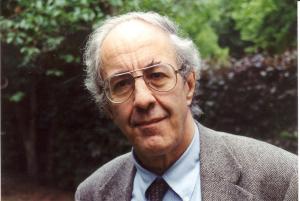
“God’s people ground me in the reality and wholeness of Christ and his church, holding me firm and safe in God’s loving embrace. God speaks regularly to us through people who talk to us about the things of God. Certain people become living signs that point us to God. Whether in life or in memory, the people God puts in our lives can help guide us and show us the way.” (Nouwen)
Source: Henri Nouwen Society
Inspired prayer: O God, in the voices and lives of those you place before us, we encounter your presence and are drawn into the mystery of Christ and his church. Through their witness, may we be guided ever deeper into your love, finding in them a sacred path to you. Amen.
A Musical Offering: “Here I Am Lord”
“Here I Am, Lord” is a beloved Christian hymn written by Dan Schutte in 1981, originally composed for the ordination Mass of a deacon while Schutte was studying theology at the Jesuit School of Theology in Berkeley. The lyrics draw deeply from Isaiah 6:8 (“Whom shall I send?”) and 1 Samuel 3 (“Speak, Lord, for your servant is listening”), blending divine calling with human response. The song also fits well with this week’s Isaiah reading (Isaiah 58: 9b-14). Uniquely, the hymn alternates between God’s voice in the verses and the worshipper’s reply in the refrain, creating a dynamic dialogue of vocation and surrender. Though rooted in Catholic renewal music following the Second Vatican Council, it quickly gained popularity across denominations and is now found in numerous Protestant hymnals. I first heard it while visiting a Methodist church and was captivated by it. In the ELW (ELCA), it is hymn number 574. The version offered here is a gorgeous jazz interpretation. Enjoy!
Source: Copilot Website
Here I Am, Lord (Lyrics)
I, the Lord of sea and sky
I have heard my people cry
All who dwell in dark and sin
My hand will save
I, who made the stars of night
I will make their darkness bright
Who will bear my light to them?
Whom shall I send?
Here I am, Lord
Is it I, Lord?
I have heard you calling in the night
I will go Lord, if You lead me
I will hold Your people in my heart
I, the Lord of snow and rain
I have borne my people’s pain
I have wept for love of them
They turn away
I will break there hearts of stone
Give them hearts for love alone
I will speak my word to them
Whom shall I send?
(Refrain)
I, the Lord of wind and flame
I will tend the poor and lame
I will set a feast for them
My hand will save
Finest bread I will provide
‘Til their hearts be satisfied
I will give my life to them
Whom shall I send?
(Refrain)

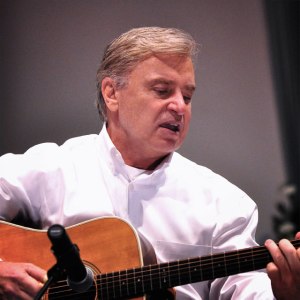
Chuck Marohnic (b. 1940) is a renowned jazz pianist and educator whose career has spanned collaborations with legends like Chet Baker and Joe Henderson, as well as decades of teaching at Arizona State University. After retiring from academia, he turned his focus toward integrating jazz with spiritual practice, serving as a music minister in various Christian denominations. He co-founded Sanctuary Jazz, blending sacred themes with improvisational depth.
Faithful Conversations: Two Updates
Our regular gatherings for discussing the weekly lectionary are on a pause. Summer worship at ELC is at 8:30 in town and 10:15 at Hatfield by the lake. The 8:30 service will be streamed. Please stay in touch! We will resume in-person gatherings on 14 September at ELC following worship in the library (10:45-11:30).
📖 Ready to read the Bible in a year?
Starting this September, join our Bible 365 Challenge—a yearlong journey through Scripture for individuals, families, and groups. As Lutherans, we know God’s Word shapes our lives and deepens our faith. Luther once said, “The Bible is alive… it lays hold of me.” Whether you choose the print path or go digital, we’ll grow together—with daily readings, mutual support, and spiritual connection. Details are coming soon. Let’s dive in, walk together, and let the Word come alive in us!
