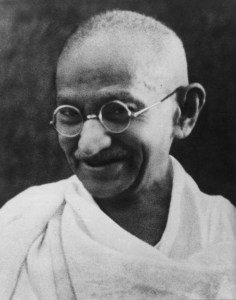
“If light can come out of darkness, then alone can love emerge from hatred.” (Mahatma Gandhi)
Once again, political violence has erupted with chilling force this week. On Friday, as I spoke with our eldest daughter Kate (b. 1981), her words stirred a sobering truth: we are not built to absorb the relentless tide of hatred and grief that courses through our nation. I hold fast to Gandhi’s enduring conviction—that LOVE stands as the most powerful force we possess, and we must wield it with courage and intention. (Gandhi himself, regretfully, fell victim to political violence in 1948).
As we open the lectionary this Sunday, we enter a tradition that has never shied away from upheaval. Scripture speaks directly into chaos, echoing through centuries of resistance—from the Zealot revolts in Roman-occupied Judea to the unraveling of civic virtue in the late Roman Republic. Like us, our spiritual ancestors grappled with power, injustice, violence, and the sacred call to act. Of course, their world was far different from ours, but evil has been present across time — not a comforting reality but perhaps brings perspective. As Pastor Jen emphasized in her sermon on Sunday (14 September), as Christians, we are to be “purveyors of hope” for those living in a divided world.
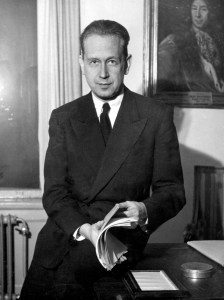
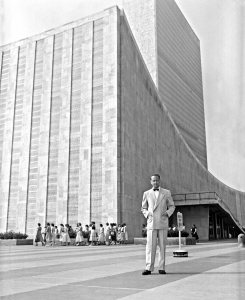
Hammarskjold (1905-1961)
Thanks for your return to this venue this week! Counting next Sunday, there are ten remaining in our church year (Christ the King Sunday is on 23 November). We have several commemorations this week on the ELCA calendar, and perhaps most notably, Dag Hammarskjold who was killed (somewhat mysteriously) in a plane crash on 18 September 1961. A fascinating individual, Hammarskjöld was a Swedish economist, diplomat, and spiritual thinker who served as the second Secretary-General of the United Nations from 1953 until his death (sidebar: A teacher I had in 8th grade was enamored with Hammarskjold and we learned much about him that year!). He played a pivotal role in shaping UN peacekeeping operations and mediating global crises, including the Suez and Congo conflicts, earning him a posthumous Nobel Peace Prize. As a man of faith and ethical service, Hammarskjold was deeply influenced by Christian mysticism.
Note: My reflections this week will focus on the Amos passage. I also have included a prayer from the pen of Dag Hammarskjold and a favorite Dylan song that speaks to our time. Also, take note of the discussion questions that will frame our in-person discussion of the Lectionary next Sunday (a new feature).
** Note 1: Links to outside references are bolded and italicized and are meant for further reading or research on your part. While the text I am including in the blog is my own, I am pulling from a multitude of sites for ideas and connections. ** Note 2: In my increasing use of A.I. (Copilot), I will cite sourcing of how I am using the tool, if necessary. I don’t want that to be overly cumbersome, but I am gradually incorporating more tools. I am exploring the A.I. world this summer prior to my next teaching semester. As you can imagine, it is a great challenge right now and will forever change the face of education!
** Note 3: The images I include in the blog are drawn from Wikimedia Commons to the fullest extent possible.
My source for the Bible readings each week is the Bible Gateway website. I generally use the NRSVUE translation.
The readings for Pentecost 15 confront economic injustice and call for ethical stewardship, reminding us that God sees and judges those who exploit the poor (Amos 8:4–7). Psalm 113 lifts up God’s mercy and power to raise the lowly, celebrating divine reversal and care for the marginalized. 1 Timothy 2:1–7 urges prayerful living and inclusive salvation, emphasizing Christ as mediator for all people. Luke 16:1–13 challenges us to use worldly resources wisely and faithfully, underscoring that no one can serve both God and wealth.
“Describe the common themes among the readings for Pentecost 15.” Copilot, 12 September 2025, Copilot website.
LUTHER’S METHOD OF BIBLE READING A Revision of the Lectio Divina (Augustinian)
Three Steps Oratio (Prayer): This is the starting point, where one humbly prays for the Holy Spirit’s guidance to understand God’s Word. Luther emphasized that prayer prepares the heart and mind to receive divine wisdom.
Meditatio (Meditation): This involves deeply engaging with Scripture, not just reading it but reflecting on it repeatedly. Luther encouraged believers to “chew on” the Word, allowing its meaning to sink in and shape their thoughts and actions.
Tentatio (Struggle): Often translated as “trial” or “temptation,” this refers to the challenges and spiritual battles that arise as one seeks to live according to God’s Word. Luther saw these struggles as a way God refines faith, making it more resilient and authentic.
Luther on Reading the Bible
“For some years now I have read through the Bible twice every year. If you picture the Bible to be a mighty tree and every word a little branch, I have shaken every one of these branches because I wanted to know what it was and what it meant.“
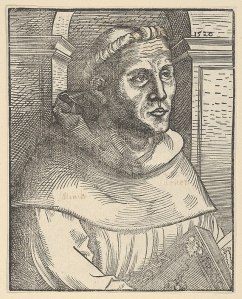
Martin Luther (1483-1546)
The First Reading: Amos 8: 4-7
Hear this, you who trample on the needy, and bring to ruin the poor of the land, 5 saying, “When will the new moon be over so that we may sell grain, and the Sabbath, so that we may offer wheat for sale? We will make the ephah smaller and the shekel heavier and practice deceit with false balances, 6 buying the poor for silver and the needy for a pair of sandals and selling the sweepings of the wheat.” 7 The Lord has sworn by the pride of Jacob: Surely I will never forget any of their deeds.
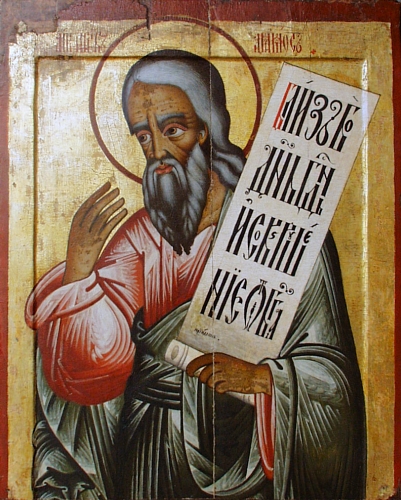
Amos, the Prophet
Check out this excellent summary of Amos from the Bible Project!
Reflection: An Ancient Voice Speaks to Us
The prophet Amos appears five times across the three-year cycle of the Revised Common Lectionary, typically during the Season after Pentecost when prophetic voices are spotlighted (once in Year A, and twice in both Years B and C). Across these readings, Amos emerges as a relentless voice for justice, calling out systems that oppress the vulnerable and distort sacred practice. His message is consistent: true faith demands ethical integrity, and divine judgment awaits those who ignore the cries of the poor. The lectionary’s use of Amos places him in direct conversation with Gospel texts, reinforcing the timeless urgency of his prophetic witness. (Sidebar: I explored Amos in July (Pentecost 6) when he appeared as an alternate reading offered within the Lectionary).
Amos the Prophet, 18th Century Russian Icon
In the Lutheran Study Bible (Second Edition), Peter T. Nash and Walter C. Bouzard do a terrific job of framing the prophet’s story (shameless plug for investing in this resource!). Amos’ prophetic ministry began in c. 762 BCE and though he was from Tekoa in the Southern Kingdom, he spent most of his time in the Northern Kingdom in the region of Bethel (eleven miles north of Jerusalem). The division between the two Kingdoms of Israel during this time offers relevant context. As the authors assert, “Judahite interpreters from the southern tribes blamed the north and its leaders for the broken relationship. They pointed to the northerners’ rebellious spirit, which was fueled by the polluting influence of Canannite and Phoenician politics and religious practices. The worship of other gods in addition to YHWH was a severe offense. Also mentioned frequently was the issue of economic inequality . . . Southerners accused the northerners of abandoning their shared core value — equality among siblings based on their equality before God.” (pp. 1383-84, LSB). I suspect if these ancient people could have accessed social media, they would have launched vitriolic attacks on one another! It was into this milieux that the prophet Amos emerged. It was a diverse and divided world.
This week’s passage, chapter 8:4–7, comes after God compares the people of Israel to a basket of summer fruit that is rotting. In response, Amos delivers a sharp rebuke to those who exploit the poor and manipulate economic systems for personal gain. The prophet exposes how sacred times are treated as mere interruptions to profiteering, with dishonest scales and the buying and selling of the vulnerable. God responds with a solemn oath: these injustices will not be forgotten, and divine judgment is coming for those who trample the needy. In fact, if you read ahead a bit (verses 11-12), the Lord suggests that the very Word of God will be withdrawn from the people — a chilling assertion!
How should 21st Century Christians respond to Amos? The lessons from Amos 8:4–7 are as urgent now as they were in his day twenty-seven centuries ago. First, justice is not optional—it’s woven into the very character of God, and those who claim to follow Him must reflect that justice in how they treat others, especially the poor and powerless. Second, Amos reminds us that injustice is often systemic: dishonest scales, exploitative markets, and disregard for sacred rhythms all point to a society where profit overrides compassion. And third, there’s a warning here for communities of faith: when worship becomes disconnected from ethical living, God does not merely critique—He threatens silence. The Word of the Lord is not a guarantee; it’s a gift, and when ignored, it may be withdrawn. That silence, Amos suggests, is its own kind of judgment. That’s unsettling, to say the least!
But let’s not leave it at that. The great Walter Brueggemann viewed prophets like Amos as bearers of the prophetic imagination—figures who challenged prevailing assumptions and offered a radically different vision rooted in God’s justice. Their role wasn’t just to criticize; they also reframed reality itself. Brueggemann reminds us that true prophets don’t simply name what’s broken—they envision what could be, guided by mercy and moral conviction. These are words for us to carry with us every day as “purveyors of hope” in a broken world.
Soli Deo Gloria!
Note: In the paragraph offered on the lessons of Amos, I drew heavily from a 2010 commentary by Rolf Jacobson, the A.N. Rogness Chair in Scripture, Theology and Ministry at Luther Seminary in St. Paul.
Note: Walter Brueggemann’s book, The Prophetic Imagination (40th Anniversary edition, 2018) is a remarkable resource and changed my understanding of the Old Testament prophets.
Prayer Reflection from Dag Hammarskjold
You who are over us, You who are one of us, You who are also within us, May all see you in me also. May I prepare the way for you, May I thank you for all that shall fall to my lot, May I also not forget the needs of others. Give me a pure heart-that I may see you. A humble heart-that I may hear you, A heart of love-that I may serve you, A heart of faith-that I may abide in you. Amen.
This prayer is attributed to Dag Hammarskjöld, the Swedish diplomat and second Secretary-General of the United Nations. It appears in his posthumously published spiritual journal Markings (originally Vägmärken), which blends poetic reflection, Christian mysticism, and ethical introspection.
A Musical Offering: Ring Them Bells (Dylan)
Bob Dylan’s “Ring Them Bells,” from his 1989 Oh Mercy album, hits like a quiet thunderclap—a solemn, hymn-like call to wake up. It’s Dylan in full prophetic mode, echoing earlier pieces like “Chimes of Freedom,” but here the urgency feels deeper, more spiritual. He brings in biblical figures—St. Peter, St. Catherine, Sweet Martha—not just as symbols, but as voices ringing the bells, urging us back toward justice, mercy, and truth. Dylan’s not just singing—he’s sounding the alarm, stepping into that long tradition of artists who speak up when the world’s off-kilter.
The song is especially interesting, owing to Dylan’s dramatic conversion to Christianity in the late 1970s.
Provide a short analysis of Bob Dylan’s Song, “Ring Them Bells.” Copilot website, 13 September 2025.
The Lyrics
Ring them bells, ye heathen From the city that dreams Ring them bells from the sanctuaries Across the valleys and streams For they’re deep and they’re wide And the world’s on its side And time is runnin’ backwards And so is the bride
Ring them bells St. Peter Where the four winds blow Ring them bells with an iron hand So the people will know Oh, it’s rush hour now On the wheel and the plow And the sun is goin’ down Upon the sacred cow
Ring them bells Sweet Martha For the poor man’s son Ring them bells so the world will know That God is one Oh the shepherd is asleep Where the willows weep And the mountains they are filled With lost sheep
Ring them bells for the blind and the deaf Ring them bells for all of us who are left Ring them bells for the chosen few Who will judge the many When the day is through Ring them bells for the time that flies For the child that cries When her innocence dies
Ring them bells St. Catherine From the top of the room Ring them bells from the fortress For the lilies that bloom Oh, the lines they are long And the fighting is strong And they’re breakin’ down the distance Between right and wrong
Joan Baez, born in 1941 in Staten Island, New York, rose to prominence in the early 1960s as a folk singer whose unwavering commitment to social justice made her a defining voice of her generation. She played a pivotal role in popularizing Bob Dylan’s early work and became a leading figure in the civil rights and anti-war movements, performing at events like the 1963 March on Washington. and the 1969 Woodstock Festival. Over more than six decades, Baez released over 30 albums and remained a tireless activist, earning induction into the Rock and Roll Hall of Fame in 2017.
I hope you enjoy Baez’s live performance here and her interpretation of this timely song!
Faithful Conversations Updates
Join us for some free-flowing conversation about the Lectionary readings each Sunday. We meet from 10:45-11:30 in the church library each week, with some exceptions. No prior knowledge is necessary! ALL ARE WELCOME!
Note: These are questions for discussion for next Sunday:
What does Amos 8:4–7 reveal about the relationship between worship and justice? How might this challenge modern faith communities that separate spiritual practice from social responsibility?
Amos was a southerner speaking truth to the northern kingdom. How does his outsider status affect his message? What parallels can we draw with voices today who speak truth across lines of division?
How can we, as 21st-century Christians, become “purveyors of hope” in a broken world? What practices help us move from critique to constructive vision?
📖 LET’S TAKE ON READING THE ENTIRE BIBLE THIS YEAR! Starting on 28 September, join our Bible 365 Challenge—a yearlong journey through Scripture for individuals, families, and groups. As Lutherans, we know God’s Word shapes our lives and deepens our faith. Luther once said, “The Bible is alive… it lays hold of me.” Whether you choose the print path or go digital, we’ll grow together—with daily readings, mutual support, and spiritual connection. Pastor Jen will offer a “Bible Reading Kick-Off Class” on 21 and 28 September (choose either) at 11:00 in the Gathering Area. ALL ARE WELCOME!
Hi Ellen! It was Ruby Mallum. She talked to us several times about Dag — not sure why that stayed with me, but she impacted me in a number of ways. For example, in my teaching of civics/government over 41 years, I always had my students memorize the Preamble to the Constitution, and I know that was from her — we had to do that.


Curious who that 8th grade teacher was?
LikeLike
Hi Ellen! It was Ruby Mallum. She talked to us several times about Dag — not sure why that stayed with me, but she impacted me in a number of ways. For example, in my teaching of civics/government over 41 years, I always had my students memorize the Preamble to the Constitution, and I know that was from her — we had to do that.
LikeLike