“Education is much more a matter of the heart than of the head.” (Gordon Thunder)
I spent my early years in this community (ages 5 to 15), then returned in 1990 at age 33 after nearly twenty years away. Since then, I’ve witnessed many familiar faces journey on—a steady rhythm of loss that sometimes seem to come in waves. Across cultures, people honor elders as wisdom keepers, and their passing reminds us of the sacred cycle of exile and return, of memory, renewal, and life beyond this life. Last week, we lost Gordon Thunder, a gracious man who, with his sister Charity, helped me see the world through Indigenous eyes. They often visited my classroom, sharing stories of history, language, and culture that left lasting impressions on my students. During one visit in the early 1990s, Gordon spoke the line offered above that struck me as both simple and profound—I scribbled it down and have shared it with thousands of students since. It speaks to the heart of education: not just knowledge, but empathy, connection, and transformation—companions I carry with me in my exploration of the scriptures each week. In Ho-Chunk tradition, the death of an elder marks a sacred journey back to Earthmaker, who formed humans from clay and gave them a soul. Guided by prayer, song, and offerings, this journey leads the soul home, echoing the Christian hope of returning to our Creator, where rest and reunion await. You will note a connection to these themes in the musical selection I’m offering further on in the blog.
Thanks for your visit to this space again this week. Incredibly, we are rounding the corner into October and will be engaged in our Bible 365 Challenge. I am reminded each and every week that God’s Word is vast and powerfully relevant in every age. My reflections will focus on the Amos passage again this week, noting how it intersects with Luke 16. Note the prompts for discussion in the Faithful Conversations update at the end of the blog — we will utilize those for our in-person discussion on Sunday.
** Note 1: Links to outside references are bolded and italicized and are meant for further reading or research on your part. While the text I am including in the blog is my own, I am pulling from a multitude of sites for ideas and connections. ** Note 2: In my increasing use of A.I. (Copilot), I will cite sourcing of how I am using the tool, if necessary. I don’t want that to be overly cumbersome, but I am gradually incorporating more tools. I am exploring the A.I. world this summer prior to my next teaching semester. As you can imagine, it is a great challenge right now and will forever change the face of education!
** Note 3: The images I include in the blog are drawn from Wikimedia Commons to the fullest extent possible.
My source for the Bible readings each week is the Bible Gateway website. I generally use the NRSVUE translation.
The readings for Pentecost 16 share a strong warning against complacency, wealth without compassion, and the neglect of justice. Amos condemns the ease and luxury of the powerful who ignore the suffering of others, while Psalm 146 calls for trust in God, who lifts the oppressed and cares for the vulnerable. In 1 Timothy, believers are urged to pursue righteousness and generosity rather than riches, anchoring their hope in eternal life. Luke’s parable of the rich man and Lazarus drives the message home: ignoring the poor has eternal consequences, and true faith is shown through mercy and action.
“Describe the common themes among the readings for Pentecost 16.” Copilot, 21 September 2025, Copilot website.
LUTHER’S METHOD OF BIBLE READING A Revision of the Lectio Divina (Augustinian)
Three Steps Oratio (Prayer): This is the starting point, where one humbly prays for the Holy Spirit’s guidance to understand God’s Word. Luther emphasized that prayer prepares the heart and mind to receive divine wisdom.
Meditatio (Meditation): This involves deeply engaging with Scripture, not just reading it but reflecting on it repeatedly. Luther encouraged believers to “chew on” the Word, allowing its meaning to sink in and shape their thoughts and actions.
Tentatio (Struggle): Often translated as “trial” or “temptation,” this refers to the challenges and spiritual battles that arise as one seeks to live according to God’s Word. Luther saw these struggles as a way God refines faith, making it more resilient and authentic.
Luther on Reading the Bible
“For some years now I have read through the Bible twice every year. If you picture the Bible to be a mighty tree and every word a little branch, I have shaken every one of these branches because I wanted to know what it was and what it meant.“
(Luther would have appreciated our Bible 365 Project!)
The First Reading: Amos 6: 1a, 4-7
Woe to those who are at ease in Zion and for those who feel secure on Mount Samaria, the notables of the first of the nations, to whom the house of Israel resorts!
Woe to those who lie on beds of ivory and lounge on their couches and eat lambs from the flock and calves from the stall, 5 who sing idle songs to the sound of the harp and like David improvise on instruments of music, 6 who drink wine from bowls and anoint themselves with the finest oils but are not grieved over the ruin of Joseph! 7 Therefore they shall now be the first to go into exile, and the revelry of the loungers shall pass away.
The Gospel: Luke 16: 19-31
19 “There was a rich man who was dressed in purple and fine linen and who feasted sumptuously every day. 20 And at his gate lay a poor man named Lazarus, covered with sores, 21 who longed to satisfy his hunger with what fell from the rich man’s table; even the dogs would come and lick his sores. 22 The poor man died and was carried away by the angels to be with Abraham.[a] The rich man also died and was buried. 23 In Hades, where he was being tormented, he lifted up his eyes and saw Abraham far away with Lazarus by his side.[b]24 He called out, ‘Father Abraham, have mercy on me, and send Lazarus to dip the tip of his finger in water and cool my tongue, for I am in agony in these flames.’ 25 But Abraham said, ‘Child, remember that during your lifetime you received your good things and Lazarus in like manner evil things, but now he is comforted here, and you are in agony. 26 Besides all this, between you and us a great chasm has been fixed, so that those who might want to pass from here to you cannot do so, and no one can cross from there to us.’ 27 He said, ‘Then I beg you, father, to send him to my father’s house— 28 for I have five brothers—that he may warn them, so that they will not also come into this place of torment.’ 29 Abraham replied, ‘They have Moses and the prophets; they should listen to them.’ 30 He said, ‘No, father Abraham, but if someone from the dead goes to them, they will repent.’ 31 He said to him, ‘If they do not listen to Moses and the prophets, neither will they be convinced even if someone rises from the dead.’ ”
Reflection: How Much is Enough?
In 1821, British poet Percy Bysshe Shelley (b. 1792) wrote a line that still rings true: “The rich have become richer, and the poor have become poorer.” He was watching the rise of industrial England—a world where wealth piled up for the few while the many labored in worsening conditions. Shelley’s lament wasn’t just poetic—it was prophetic. And yet, the cry he voiced wasn’t new. Centuries earlier, the prophet Amos stood in the northern kingdom of Israel and spoke with fire. His words cut through the comfort of the elite: “Woe to those who are at ease in Zion… who lie on beds of ivory… who drink wine in bowls… but are not grieved over the ruin of Joseph!”
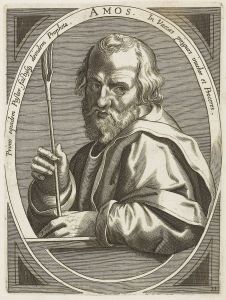
Amos the Prophet Kizhi Monastery, Russia
Amos, like all prophets, spoke into a particular moment. His ministry unfolded during the reigns of King Uzziah of Judah and King Jeroboam II of Israel—a time of booming trade, expanding borders, and political stability. On the surface, things looked good. Israel was thriving. But beneath that prosperity, the poor were being crushed, justice was for sale, and worship had lost its soul. Amos wasn’t part of the establishment. He was a shepherd and fig farmer from Tekoa—called to speak truth in the king’s sanctuary at Bethel. And he didn’t mince words. He didn’t condemn wealth itself, but wealth without justice, comfort without compassion, and rituals that ignored righteousness.
Juliana Claassens University of Stellenbosch
That message still speaks. As Juliana Claassens points out in a sharply written commentary, “An online search for who, most recently, has been drawn to this book (Amos) steeped in the pursuit of justice and righteousness, is telling: Results show many scholars from the Developing World concerned about the state of their people in impoverished countries where the rich are getting richer and the poor poorer—for example, Nigeria, Zimbabwe, Myanmar, and parts of Latin America.” As Claassens asserts, these communities face unfair labor systems, resource extraction by the Global North, and corruption from within. Claassens reminds us: Amos’s call for justice is not abstract. It’s urgent. It’s real. It’s now.
As Christians trying to live out our faith, we might ask ourselves, how much is enough? If someone is a billionaire, do they need many billions? What happens when abundance becomes blindness? That question echoes in Luke 16, where Jesus tells the story of the rich man and Lazarus. The rich man feasts daily, dressed in purple and fine linen. Lazarus lies at his gate, covered in sores. After death, their roles reverse—but the rich man’s vision doesn’t. He still sees Lazarus as a servant, not a neighbor. The chasm between them, once social, becomes eternal. Amos and Jesus both confront us with the moral danger of indifference. They remind us that ease is not innocence, and that comfort can become complicity. To lie on beds of ivory while others sleep on concrete is not just unfortunate—it’s unjust. To feast while others hunger is not just a lifestyle—it’s a spiritual crisis.
And so, back to Shelley. His lament is more than a line—it’s a summons. (Sidebar: Shelley’s was deeply skeptical of organized religion because he thought it was used to justify inequality and moral hypocrisy, something you may want to explore further).How much is enough? Enough to lift the fallen. Enough to mend the breach. Enough to remember that every Lazarus at the gate is a child of God.
Soli Deo Gloria!
Note: I am indebted to Juliana Claassens, Old Testament Professor at the University of Stellenbosch in Stellenbosch, South Africa for her commentary on the Amos passage. You may find the commentary at Working Preacher, a site sponsored by Luther Seminary in St. Paul, Minnesota.
Prayer Reflection: A Future Not Our Own (Oscar Romero)
It helps now and then to step back and take a long view. The Kingdom is not only beyond our efforts, it is beyond our vision. We accomplish in our lifetime only a fraction of the magnificent enterprise that is God’s work. Nothing we do is complete, which is another way of saying that the kingdom always lies beyond us.
No statement says all that could be said. No prayer fully expresses our faith. No confession brings perfection, no pastoral visit brings wholeness. No program accomplishes the Church’s mission. No set of goals and objectives include everything.
This is what we are about. We plant the seeds that one day will grow. We water the seeds already planted knowing that they hold future promise. We lay foundations that will need further development. We provide yeast that produces effects far beyond our capabilities. We cannot do everything, and there is a sense of liberation in realizing this.
This enables us to do something, and to do it very well. It may be incomplete, but it is a beginning, a step along the way, an opportunity for the Lord’s grace to enter and do the rest.
We may never see the end results, but that is the difference between the master builder and the worker. We are workers, not master builders, ministers, not messiahs. We are prophets of a future not our own.
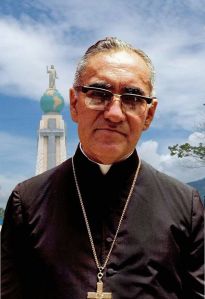
Oscar Romero (1917-1980)
Saint Óscar Arnulfo Romero y Galdámez was a Salvadoran Roman Catholic archbishop renowned for his courageous advocacy for human rights and the poor during El Salvador’s civil unrest. Initially seen as conservative, Romero became a prophetic voice against government repression, denouncing violence from both state forces and guerrilla groups. He was assassinated while celebrating Mass on March 24, 1980, and later canonized as a martyr and saint by the Catholic Church in 2018.
A Musical Offering: Suiderkruis (Southern Cross) by Jacques de Villiers
Suiderkruis (Southern Cross), composed by Jacques de Villiers and arranged by André van der Merwe, is a choral elegy that mourns the loss of homeland and honors the elders whose lives once anchored its memory. The Southern Cross shines as a celestial guide for those in exile, not only pointing the way home but illuminating the spiritual path beyond death—a journey through silence, longing, and ancestral remembrance. Sung in Afrikaans, its haunting lyrics ask whether we are still remembered, whether anyone stands beneath the stars to welcome the soul’s return, as the music swells from quiet lament to transcendent yearning—a requiem for the departed and a compass for those who remain. The song spoke to me in navigating the recent passing of several elders in our faith community and beyond.
The Stellenbosch University Choir, based in South Africa and conducted by André van der Merwe, is internationally acclaimed for its emotive artistry and innovative choral arrangements. Composed of student singers, the ensemble blends African rhythms, classical technique, and contemporary expression to create transcendent musical experiences. Their performances often explore themes of identity, memory, and spiritual longing, resonating deeply with audiences across cultures.
Included in the lyrics (Afrikaans)
Will you remember me in dreams and in silence? Who stands amongst the Southern Cross? Who brings hope? Dreamy images dance amongst the constellations. In a time of mourning, we all lose power. Remember me in the morning dew.
Faithful Conversations Updates
Join us for some free-flowing conversation about the Lectionary readings each Sunday. We meet from 10:45-11:30 in the church library each week, with some exceptions. No prior knowledge is necessary! ALL ARE WELCOME! And, let’s discuss these questions when we gather:
1. Drawing from Juliana Claassens’s insight: How does Amos’s cry for justice speak to the realities of economic exploitation in places like Nigeria, Myanmar, or Latin America? What responsibilities do those of us in the Global North carry in light of these imbalances?
2. Let’s talk about the “prophetic imagination.” Amos and Jesus both confront systems of indifference. If you were to write a modern-day parable or prophetic lament in the spirit of Amos 6 or Luke 16, what would it sound like? Who are the “Lazaruses” at our gates today—and what would it mean to truly see them?
📖 ARE YOU READY TO READ THE BIBLE IN A YEAR? Starting on Monday 29 September, join our Bible 365 Challenge—a yearlong journey through Scripture for individuals, families, and groups. Luther once said, “The Bible is alive… it lays hold of me.” Whether you choose the print path or go digital, we’ll grow together—with daily readings, mutual support, and spiritual connection. Pastor Jen will offer a “Bible Reading Kick-Off Class” on 28 September at 11:00 in the Gathering Area.
As of last Sunday, 50 people had signed up to undertake the challenge! ALL ARE WELCOME!