“There are times in life when we have to buckle up and buckle down, lifting one another up with encouragement. Without such commitment, we live with the prospect or fear that our lives will not have mattered. We may not always know if our actions are contributing to an increase of the abundant life in this world. But, as Mahatma Gandhi once put it, ‘if you do nothing, there will be no result.'” (Peter W. Marty)
A conversation in our lectionary study group on Sunday, paired with this week’s readings from Habakkuk and Luke’s Gospel, brought Peter Marty’s words from the September Christian Century to the forefront. His Gandhi reference — “If you do nothing, there will be no result” — landed with force. Faith doesn’t shield us from the weight of the world; it often makes that weight more visible, more personal. We feel the burden, the fatigue, and sometimes the quiet fear that our lives might not matter. Habakkuk saw violence and chaos and cried out, asking where God had gone. His voice feels close, even now. The apostles, unsure and overwhelmed, didn’t ask for a strategy—they asked for a shortcut: “Increase our faith!” That plea still resonates. In 2025, ancient voices speak with startling relevance. They urge us to stay present, to lift one another up, and to keep moving—even when the way forward is unclear. I’ll return to their wisdom in my reflections. For now, I’m listening.
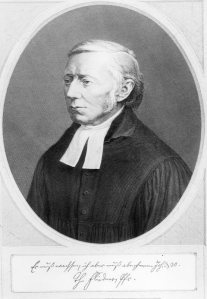
Welcome to this space again this week and your continued interest in exploring the Lectionary! Counting Sunday, we have eight Sundays left in the church year (Year C). Hard to imagine. We have several commemorations in our calendar this week: Michael and All Angels, Jerome, translator and teacher (d. 30 September 420), Francis of Assisi, renewer of the church (d. 4 October 1226), and Theodore Fliedner, renewer of society (d. 4 October 1864). Fliedner (b. 1800) was a German Lutheran pastor and social reformer who founded the Kaiserswerther Diakonie in 1836, a pioneering institution for hospital care and deaconess training. Inspired by the Moravian Church and reformers like Elizabeth Fry, he revived the ancient Christian office of deaconess to serve the sick, poor, and imprisoned. His work laid the foundation for modern nursing and influenced figures like Florence Nightingale, who trained at Kaiserswerth in 1850. By the time of his death, Fliedner had established a global network of deaconess motherhouses, transforming Christian social service across continents. Deaconess Hospital in Minneapolis was part of the larger movement inspired by Theodor Fliedner’s work in Germany. Although Fliedner didn’t start the hospital himself, his revival of the deaconess tradition in 1836 influenced similar efforts around the world. In 1888, Rev. Falk Gjertsen and others invited Sister Elizabeth Fedde—trained in a tradition shaped by Fliedner—to help begin a deaconess home and hospital in Minneapolis. Her work led to the founding of the Norwegian Lutheran Deaconess Institute, which became Deaconess Hospital, built on Fliedner’s original vision. My great-aunt Josie Rykken worked at Deaconess Hospital as a seamstress for many years and my oldest sister Anne was born there while Unk (our dad) was a student at Luther Seminary (1950). All these years later, I am appreciating that history.
** Note 1: Links to outside references are bolded and italicized and are meant for further reading or research on your part. While the text I am including in the blog is my own, I am pulling from a multitude of sites for ideas and connections. ** Note 2: In my increasing use of A.I. (Copilot), I will cite sourcing of how I am using the tool, if necessary. I don’t want that to be overly cumbersome, but I am gradually incorporating more tools. I am exploring the A.I. world this summer prior to my next teaching semester. As you can imagine, it is a great challenge right now and will forever change the face of education!
** Note 3: The images I include in the blog are drawn from Wikimedia Commons to the fullest extent possible.
Common Themes Among the Readings
Readings for Pentecost 17
Habakkuk 1:1-4, 2:1-4 Psalm 37:1-9 2 Timothy 1:1-14 Luke 17:5-10
My source for the Bible readings each week is the Bible Gateway website. I generally use the NRSVUE translation.
The readings for Pentecost 17 share a deep concern with perseverance, trust, and faithful living in the face of uncertainty and injustice. Habakkuk wrestles with the silence of God amid violence but is reminded that the righteous live by faith, while Psalm 37 counsels patience and trust in the Lord rather than envy of evildoers. In 2 Timothy, Paul encourages Timothy to rekindle the gift of God with courage and endurance, grounded in the power of the Spirit and the legacy of faith. Luke’s Gospel reframes discipleship as humble service, emphasizing that faith—even as small as a mustard seed—can transform, but obedience remains the quiet duty of those who follow Christ.
“Describe the common themes among the readings for Pentecost 17.” Copilot, 25 September 2025, Copilot website.
LUTHER’S METHOD OF BIBLE READING A Revision of the Lectio Divina (Augustinian)
Three Steps Oratio (Prayer): This is the starting point, where one humbly prays for the Holy Spirit’s guidance to understand God’s Word. Luther emphasized that prayer prepares the heart and mind to receive divine wisdom.
Meditatio (Meditation): This involves deeply engaging with Scripture, not just reading it but reflecting on it repeatedly. Luther encouraged believers to “chew on” the Word, allowing its meaning to sink in and shape their thoughts and actions.
Tentatio (Struggle): Often translated as “trial” or “temptation,” this refers to the challenges and spiritual battles that arise as one seeks to live according to God’s Word. Luther saw these struggles as a way God refines faith, making it more resilient and authentic.
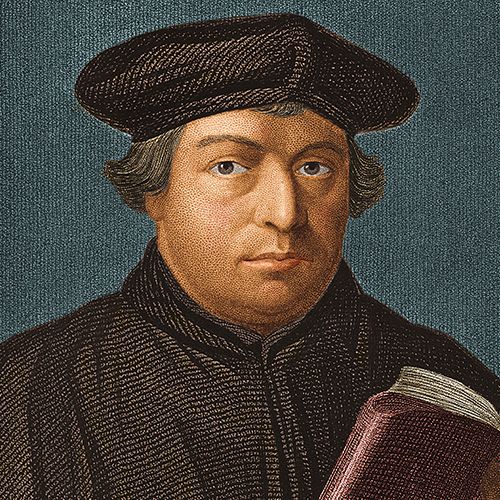
Martin Luther
(1483-1546)
Luther on Reading the Bible
“In truth you cannot read too much in Scripture; and what you read you cannot read too carefully… and what you teach well you cannot live too well.”
(Luther would have appreciated our Bible 365 Project!)
First Reading: Habbakkuk 1:1-4, 2:1-4
1 The oracle that the prophet Habakkuk saw.
2 O Lord, how long shall I cry for help, and you will not listen? Or cry to you “Violence!” and you will not save? 3 Why do you make me see wrongdoing and look at trouble? Destruction and violence are before me; strife and contention arise. 4 So the law becomes slack, and justice never prevails. The wicked surround the righteous; therefore judgment comes forth perverted.
2 I will stand at my watchpost and station myself on the rampart; I will keep watch to see what he will say to me and what he[a] will answer concerning my complaint. 2 Then the Lord answered me and said: Write the vision; make it plain on tablets, so that a runner may read it. 3 For there is still a vision for the appointed time; it speaks of the end and does not lie. If it seems to tarry, wait for it; it will surely come; it will not delay. 4 Look at the proud! Their spirit is not right in them, but the righteous live by their faithfulness.
Check out this excellent summary of Habbakkuk!
Gospel: Luke 17: 5-10
5 The apostles said to the Lord, “Increase our faith!” 6 The Lord replied, “If you had faith the size of a mustard seed, you could say to this mulberry tree, ‘Be uprooted and planted in the sea,’ and it would obey you.
7 “Who among you would say to your slave who has just come in from plowing or tending sheep in the field, ‘Come here at once and take your place at the table’? 8 Would you not rather say to him, ‘Prepare supper for me; put on your apron and serve me while I eat and drink; later you may eat and drink’? 9 Do you thank the slave for doing what was commanded? 10 So you also, when you have done all that you were ordered to do, say, ‘We are worthless slaves; we have done only what we ought to have done!’ ”
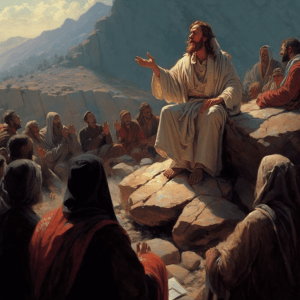
Jesus Teaching in Galilee
(A.I. Generated, 2023)
Reflection: Faith Doesn’t Get Easier — It Gets Stronger
Habakkuk the Prophet (A.I. Generated 2025)
There’s an old runner’s adage: Running doesn’t get easier—you just get stronger. Having been a runner for more than a half-century and a distance coach, I can attest to that. The hills don’t flatten, the wind doesn’t stop, and the soreness doesn’t vanish. But something shifts inside. Muscles adapt. Breathing deepens. Resolve hardens. You learn to keep going—not because the path is easier, but because you’ve grown stronger. This running analogy echoes the spiritual journey described in Habakkuk and Luke. In Habakkuk 1:1–4, the prophet cries out in anguish: “O Lord, how long shall I cry for help, and you will not listen?” His world is unraveling—violence, injustice, and destruction surround him. Habakkuk lived in Judah during the late 7th century BCE, a time of political instability and moral decay. Babylon was rising, and the covenant people seemed to have lost their way. Habakkuk doesn’t offer easy answers. He offers lament. And in doing so, he gives us permission to bring our own questions to God. This makes Habakkuk a vital companion when faith feels weary. His honesty is refreshing. He doesn’t pretend things are fine. He stands in the watchtower and waits (Habakkuk 2:1), modeling a posture of spiritual attentiveness. He’s not passive—he’s expectant. And when the Lord replies, it’s not with a quick fix but with a vision: “The righteous live by their faithfulness” (Habakkuk 2:4). This phrase becomes a theological cornerstone. Paul quotes it in Romans 1:17 and Galatians 3:11. The author of Hebrews echoes it in 10:38. For Lutherans, it’s foundational. Martin Luther’s breakthrough came when he realized that righteousness is not earned by works but received through faith. Faithfulness, then, is not about perfection—it’s about trust. It’s about showing up, even when the road is steep.
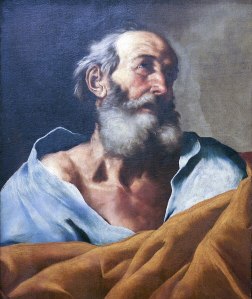
Saint Luke the Evangelist De Rosa (1607-1656)
Luke 17:5–10 offers a complementary lens. The disciples plead, “Increase our faith!”—a request that resonates with anyone who’s felt spiritually inadequate. Jesus responds with a paradox: “If you had faith the size of a mustard seed…” It’s not about quantity. It’s about rootedness. Even the smallest seed of faith, planted in God’s promises, can grow into something mighty. Then comes the parable of the slave. It’s unsettling. The slave works all day, returns home, and still isn’t praised. Jesus says, “We have done only what we ought to have done.” This challenges our desire for ease and affirmation. We want the faith life to be rewarding, comfortable, even applauded. But Jesus reframes it: faithfulness is about duty, humility, and perseverance. Hard words.
Habakkuk’s lament and Luke’s mustard seed converge in this truth: faith is not flashy. It’s steady. It’s the teacher who prepares lessons for students who may never say thank you. It’s the caregiver who shows up day after day. It’s the disciple who forgives seventy times seven. It’s the runner who laces up shoes in the dark and keeps going. In our spiritual lives, we often long for shortcuts. We want a smoother path, the answers to come quickly. But Habakkuk teaches us to wait. Luke teaches us to serve. And the Lutheran tradition teaches us to trust—not in our strength, but in the righteousness that comes by faith. Again, remember the triad of texts — Romans 1:17, Galatians 3:11, and Hebrews 10:38 — they provide a cadence for the long run.
When faith feels like a grind, when injustice floods the headlines, and your prayers seem to vanish into silence—open Habakkuk! Climb the watchtower. Speak the hard truths. Demand answers. And listen: “There is still a vision for the appointed time.” Then lace up. Run. Not because the path smooths out, but because your spirit grows stronger with every step. Faith doesn’t promise ease—it builds endurance. And in the steady rhythm of trust, in the quiet certainty of God’s faithfulness, you’ll find the strength to keep going. The world needs our voice.
Soli Deo Gloria!
Prayer Reflection: Strength for the Journey
This prayer is inspired by the Bible 365 Project. As we take on this challenge, we will need to pray about the experience! If you are interested in the lay-out of the year-long schedule, I linked it in the green announcement box at the end of the blog.
God of the Word, You who spoke light into darkness and breathed life into dust, I begin this sacred journey—a year of walking through Your story, from Genesis to Revelation, from wilderness to wonder, from exile to return. Open my heart to receive what You have spoken. Let these pages be more than ink and parchment; make them living water for my thirst, bread for the journey, and fire for the cold places within me. Give me discipline when the days feel long, curiosity when the texts feel strange, and grace when I stumble or fall behind. Let me not rush past mystery or skip over lament. Teach me to linger, to wrestle, to listen. As I read of prophets and poets, kings and shepherds, apostles and outcasts, may I find myself in their stories—and may I find You, always You, speaking through the chaos, calling me to justice, mercy, and love. Let this year be more than a reading plan. Let it be a pilgrimage. Let it be transformation. Let it be communion with You. In the name of the Living Word, Jesus Christ, Amen.
A Musical Offering: What is the World Like? (Adam Tice)
What is the world like when God’s will is done? Mustard seeds grow more than we can conceive: roots thread the soil; branches reach for the sun. This is how God moves us each to believe.
What is the world like when God’s will is done? Witness the wandering child coming home; watch as the parent breaks into a run. This is how God longs for us when we roam.
What is the world like when God’s will is done? No more is neighbor just ally or friend; peace thrives in places where once there was none. This is how God works when rivalries end.
What is the world like when God’s will is done? Ready for feasting, we watch through the night, tending our lamps till the new day’s begun. This is how God readies us for the light.
These are the stories that Jesus imparts, filled with the Spirit who joins us as one. Born through our voices, our hands, and our hearts, this is a new world where God’s will is done.
Adam M. L. Tice is a prominent contemporary hymn writer and editor known for his contributions to ecumenical hymnody and justice-centered worship. A graduate of Goshen College, Tice has served as a church musician, associate pastor, and editor of The Hymn journal, and was the text editor for the 2020 Mennonite hymnal Voices Together. His hymn “What Is the World Like” (2009), set to Sally Ann Morris’s tune NEW WORLD, draws on four parables to envision a world shaped by God’s justice, mercy, and light. Tice’s work reflects a deep commitment to inclusive theology, poetic clarity, and communal transformation through song. The lyrics are compelling and the last one, in particular, seems especially fitting for the start of our Bible 365 Project!
Faithful Conversations Updates
Join us for some free-flowing conversation about the Lectionary readings each Sunday. We meet from 10:45-11:30 in the church library each week, with some exceptions. No prior knowledge is necessary! ALL ARE WELCOME! And, let’s discuss these questions when we gather:
1. How does the analogy of long-distance running deepen our understanding of faith as endurance rather than ease?
2. What does Habakkuk’s posture of lament and waiting teach us about engaging with God during seasons of silence or injustice?
3. In what ways does Jesus’ teaching in Luke 17 challenge our desire for recognition in the faith journey, and how might humility reshape our understanding of spiritual strength?
📖 ARE YOU READY TO READ THE BIBLE IN A YEAR? Starting on Monday 29 September, join our Bible 365 Challenge—a yearlong journey through Scripture for individuals, families, and groups. As of Sunday, more than 60 people had signed up to undertake the challenge! ALL ARE WELCOME!