“Every culture is anchored in shared stories. They are the glue that binds people to their traditions, landscapes, and ancestors, carrying history and values across generations. Origin myths, religious texts, folk tales, and national narratives serve as collective memory, shaping how communities understand the past and orient themselves toward the future.” (Richard L. Lechowick)
Richard Lechowick’s reflection on shared stories and collective memory articulates my reverence for the rhythm of the Revised Common Lectionary (RCL). This three-year journey through Scripture — embraced by many within the **catholic (see note below) Christian community — continues to shape worship and spiritual formation with its steady cadence of readings. The lectionary draws on two forces that form us at the deepest level: story and repetition. I grew up in the orbit of a storyteller — my father — who taught me to see the world through narrative. That lens still directs my teaching and mentoring, because story does more than entertain; it interprets our lives and reveals meaning in the ordinary. Each week, the RCL thrusts us into the greatest story ever told: the life, death, and resurrection of Jesus Christ. We do not stand outside that story; we live inside it. Through repetition, the lectionary compels us to revisit this story from fresh angles each year. Its three-year cycle sweeps us across the breadth of Scripture, reminding us that faith grows from memory and renews itself in retelling. Story anchors us in the past, but it also illuminates the present, helping us discern who we are and how we belong to God’s unfolding narrative.
Thanks for your visit to this space again this week! There are several commemorations on the ELCA calendar this week, including three pastors from the Lutheran tradition on 24 November: Justus Falckner (1672-1723), Jehu Jones, Jr. (1786-1852), and William Passavant (1821-1894). Each has a compelling story, if you are interested to learn more. As with so many of those we commemorate, I had never heard of these three prior to now. (You will find all the commemorations on pages 14-17 in the front portion of the ELW).
Justus Falckner (1672-1723) became the first Lutheran and Protestant pastor ordained in what would become the United States. He preached, wrote hymns, and carried the Lutheran faith into the new land as a missionary.
Born into slavery, Jehu Jones Jr. (1786–1852) established one of the first African-American Lutheran congregations in the nation. He advanced the Lutheran presence by linking faith with social action, working tirelessly to improve the welfare of African Americans.
William Passavant (1821–1894) expanded Lutheranism’s reach by introducing the Lutheran Deaconess movement to the United States. Through this effort, he rooted Lutheran identity in service, creating institutions of care and social ministry that shaped American Lutheran life.
My reflections this week will center on the Isaiah reading. I’m also including a haunting Advent hymn, a prayer from this year’s Advent Devotional (ELCA), and the first installment of a conversation with Pastor Jen Hatleli reflecting on her recent travels to Malawi, Africa.
** My deliberate use of the word “catholic” in my introduction stems from a discussion within our Lectionary group on Sunday. The Inter-Lutheran Commission on Worship began using “catholic” instead of “Christian” in the Apostles’ Creed with the publication of the Lutheran Book of Worship in 1978. This change restored the original wording of the ancient creeds, where catholic meant universal rather than Roman Catholic. For centuries, many Protestant churches had substituted Christian to avoid confusion, but the ELCA chose to reclaim the historic language. By doing so, the church emphasized continuity with the early church and the ecumenical nature of the creeds. Today, the wording reminds worshippers that they belong to the one universal body of Christ, rooted in memory and renewed in retelling.
** Note 1: Links to outside references are bolded and italicized and are meant for further reading or research on your part. While the text I am including in the blog is my own, I am pulling from a multitude of sites for ideas and connections. ** Note 2: In my increasing use of A.I. (Copilot), I will cite sourcing of how I am using the tool, if necessary. I don’t want that to be overly cumbersome, but I am gradually incorporating more tools. I am exploring the A.I. world this summer prior to my next teaching semester. As you can imagine, it is a great challenge right now and will forever change the face of education!
** Note 3: The images I include in the blog are drawn from Wikimedia Commons to the fullest extent possible.
My source for the Bible readings each week is the Bible Gateway website. I generally use the NRSVUE translation.
The First Sunday of Advent readings share a common call to wakefulness, hope, and holy anticipation. Isaiah envisions a future of peace where nations stream to the mountain of the Lord, while Psalm 122 invites us to rejoice in the promise of Jerusalem’s peace and unity. Paul urges believers to awaken from spiritual slumber and cast off the works of darkness, living honorably in the light of Christ. Jesus, in Matthew’s Gospel, warns of the unexpected hour of his coming, calling us to stay alert and ready for the inbreaking of God’s kingdom.
“Describe the common themes among the readings for 1 Advent.” Copilot, 19 November 2025, Copilot website.
A Strategy for the Readings
The four-question approach to reading (NRRD) is a good way to take on Bible passages. This is something my son Jake shared with me while attending West Point in the early 2000s (a history class), and I have used it with my students ever since. Give it a try this week!
What is something NEW you learned?
What is something that made you REFLECT?
What is something that RELATES to prior knowledge?
What is something you would like to further DISCUSS?
Focus Passage: Isaiah 2: 1-5
2 The word that Isaiah son of Amoz saw concerning Judah and Jerusalem.
2 In days to come the mountain of the Lord’s house shall be established as the highest of the mountains and shall be raised above the hills; all the nations shall stream to it. 3 Many peoples shall come and say, “Come, let us go up to the mountain of the Lord, to the house of the God of Jacob, that he may teach us his ways and that we may walk in his paths.” For out of Zion shall go forth instruction and the word of the Lord from Jerusalem. 4 He shall judge between the nations and shall arbitrate for many peoples; they shall beat their swords into plowshares and their spears into pruning hooks; nation shall not lift up sword against nation; neither shall they learn war any more. 5 O house of Jacob, come, let us walk in the light of the Lord!
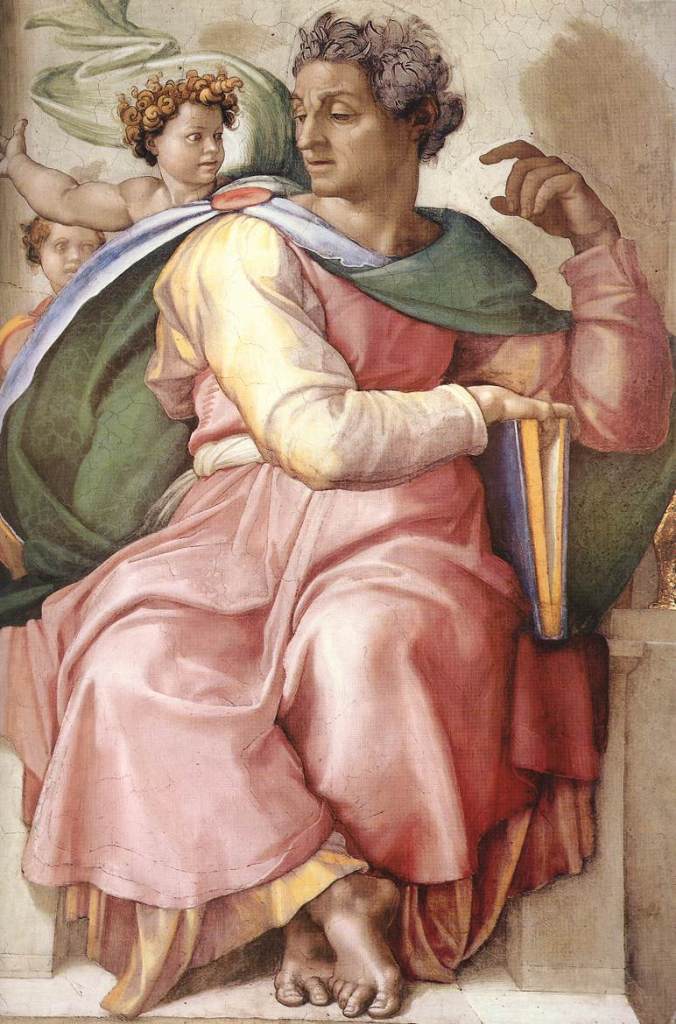
Isaiah by Michelangelo (1475-1564)
Reflections: Isaiah and Jesus: Prophecy and Fulfillment
Mosaic of the prophet Isaiah (Venice)
Luther Seminary Professor Frederick Gaiser calls Isaiah “the longest and perhaps most important of the prophetic books, offering the full range of God’s prophetic message: terrifying words of judgment and comforting words of promise.” He’s right—Isaiah is not for the faint of heart.
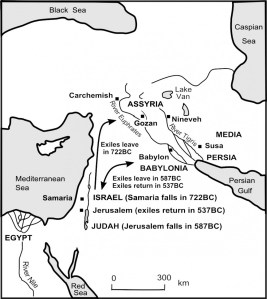
Here’s some backstory. Isaiah, son of Amoz, lived in Jerusalem in the 8th century BCE and carried out his ministry in a time of political upheaval. He confronted kings head‑on, warning them against idolatry, injustice, and dependence on foreign powers as Assyria rose to dominance. His call came through a dramatic temple vision, and his message fused sharp judgment with enduring hope. Later generations expanded his legacy, weaving in words from the Babylonian exile and the return from captivity. Scholars divide the book into three movements: First Isaiah (1–39), addressing Assyrian threats; Second Isaiah (40–55), offering comfort and the Servant Songs during exile; and Third Isaiah (56–66), reflecting on rebuilding community and worship. Isaiah spoke with urgency in his own time, and his vision of justice and peace still shapes faith and history.
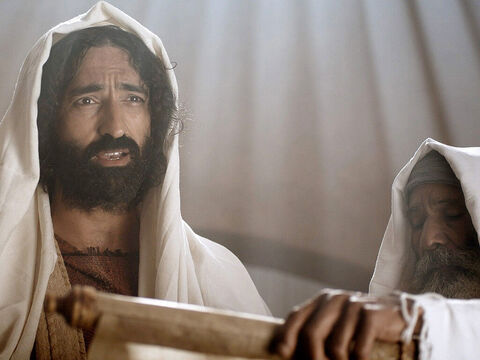
Jesus Reads from Isaiah
The Revised Common Lectionary draws heavily on Isaiah—Year A alone includes at least 24 readings, many during Advent. For Christians, Isaiah provides the essential backdrop for understanding the story of Jesus Christ. Recall that in the synagogue at Nazareth, Jesus read from Isaiah:“The Spirit of the Lord is upon me, because he has anointed me to bring good news to the poor. He has sent me to proclaim release to the captives and recovery of sight to the blind, to let the oppressed go free, to proclaim the year of the Lord’s favor” (Isaiah 61:1–2; Luke 4:18–19). By choosing this passage, Jesus announced that Isaiah’s vision had come to life in him. Isaiah spoke of a servant who would bring good news, heal the broken, and shine light into darkness. Jesus claimed that mission and embodied it in his ministry. For Christians, this connection strikes at the heart of Advent: God’s promises echo through Isaiah and find their fulfillment in Christ, the one who brings freedom, healing, and hope.
The first of the Isaiah readings — 2:1–5 — speaks with urgency and hope. The prophet envisions the mountain of the Lord rising above all others, drawing nations together to learn God’s ways and walk in God’s paths. He then delivers a bold image of transformation: weapons hammered into tools for planting and pruning, war exchanged for peace, destruction turned into life. These twin themes — universal invitation and radical peace –summon us to walk in the light of the Lord and embody reconciliation in a fractured world. As Walter Brueggemann reminds us in The Prophetic Imagination, the prophets confront the dominant culture with a sharp alternative— a counter-vision. Isaiah’s vision still cuts through the noise of our age, and his call remains powerfully relevant as we enter Advent in 2025. Let our journey begin.
Soli Deo Gloria!
Advent Music: “Each Winter as the Year Grows Older”
1 Each winter as the year grows older, we each grow older, too. The chill sets in a little colder; the verities we knew seem shaken and untrue.
2 When race and class cry out for treason, when sirens call for war,” they over-shout the voice of reason and scream till we ignore all we held dear before.
3 Yet I believe beyond believing that life can spring from death, that growth can flower from our grieving, that we can catch our breath and turn transfixed by faith.
4 So even as the sun is turning to journey to the north, the living flame, in secret burning, can kindle on the earth and bring God’s love to birth.
5 O Child of ecstasy and sorrows, O Prince of peace and pain, brighten today’s world by tomorrow’s, renew our lives again; Lord Jesus, come and reign.
“Each Winter as the Year Grows Older” is a haunting hymn written in 1969 by William Gay, with music composed by his wife Annabeth McClelland Gay, and later arranged and popularized by liturgical composer Marty Haugen. The text reflects on the passage of time, human struggle, and the hope of Christ’s coming, making it especially fitting for Advent and Epiphany seasons. Its tune, Carol of Hope, carries a somber yet expectant tone that underscores themes of lament and renewal. Haugen’s arrangement, recorded on his Night of Silence album, helped bring the hymn into wider use across Catholic and Protestant congregations, where it continues to resonate as a prayerful meditation on faith, memory, and the promise of God’s love.
A Prayer for 1 Advent
Even when we trip over our good intentions, O God, guide our days this Advent season. Give us confidence and hope in this time of waiting and empower us to carry your message of love to all the world. Amen.
Source: “Devotions for Advent and Christmas, 2025-26.” (Augsburg Fortress).
Faithful Conversations Updates
Join us for some free-flowing conversation about the Lectionary readings each Sunday. We meet from 10:45-11:30 in the church library each week, with some exceptions. No prior knowledge is necessary! ALL ARE WELCOME!
QUESTIONS FOR DISCUSSION THIS WEEK:
1. We’ve all been shaped by stories that get told again and again—family stories, community stories, even songs we grew up with. The Revised Common Lectionary works the same way, pulling us back into the story of Jesus week after week. How have you noticed this rhythm of repeated readings shaping your own faith?
2. Isaiah warned leaders not to put their trust in foreign powers or idols but to return to God’s justice. In our own time—when we lean so heavily on technology, political systems, or economic security—how might we recognize the ways we’ve misplaced our trust? What could that look like, day to day?
The Bible 365 Challenge! More than 60 members of our faith community have committed to the Bible 365 Challenge—a shared journey of reading through the entire Bible in one year. Each day, we engage with selected passages weaving together stories of faith, struggle, grace, and redemption. This challenge isn’t just about completing a task; it’s about deepening our spiritual roots, building community, and discovering how scripture speaks into our lives today.
Reflections on Malawi
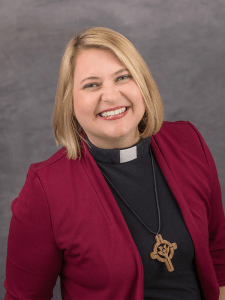
Pastor Jenny Hatleli
Since 1999, the Northwest Synod of Wisconsin and the Evangelical Lutheran Church of Malawi have been companions in ministry. Recently, several NW Synod representatives, including Pastor Jen Hatleli and Patti Whitworth from ELC, traveled there and met with many of our partners in the region. During Advent, I will post reflections on that journey from Pastor Jen. In our first exchange, she comments on what most surprised her about the spiritual lives of the communities she visited there.
Thanks Ellen — I will be sharing segments of that interview for the next few weeks. We had fun doing it. Thanks for your continued interest in the blog!


I enjoyed the conversation with Pastor Jenny about her thoughts on the people of Malawi and their strong faith.
Also Isaiah 61: 1-2, Luke 4: 18-19🧡
LikeLiked by 1 person
Thanks Ellen — I will be sharing segments of that interview for the next few weeks. We had fun doing it. Thanks for your continued interest in the blog!
LikeLike