Faithful Conversations #146

JOY has been much on my mind this week. The word itself reaches back to Latin, where gaudia conveys gladness and delight. From that same root comes gaudete — “rejoice” — the word that gives Gaudete Sunday its name. This third Sunday of Advent takes its title from the opening of the ancient introit, Gaudete in Domino semper (“Rejoice in the Lord always”). Emerging in the early centuries of the Church when Advent was observed as a penitential season akin to Lent, this Sunday offered a liturgical pause of joy and anticipation amid the somber preparation, marked by rose‑colored vestments and candles instead of the usual purple. Historically, it reminded the faithful that the coming of Christ was not only a call to repentance but also a promise of joy. Today, Gaudete Sunday continues to be celebrated across Christian traditions as a moment of light breaking into Advent’s darkness—often symbolized by the rose candle on the Advent wreath—and serves as a reminder that even in waiting, the Church rejoices in the nearness of God’s presence.

Thanks for visiting this space again today and for your continuing interest in studying the Bible and exploring the Revised Common Lectionary! We have two commemorations on the ELCA calendar this week: Lucy, the martyr (d. 304) on 13 December and John of the Cross, renewer of the church (d. 1591) on 14 December.
My reflections for 3 Advent will focus on the Matthew’s Gospel and John the Baptist. I will also offer a homily at ELC on Sunday regarding John’s story and his connection to the season of Advent. In addition, I have included a hauntingly beautiful piece of music from Iceland and the third excerpt of an interview with Pastor Jen Hatleli of ELC regarding her experience in Malawi, Africa in October of 2025.
NOTES REGARDING SOURCING:
** Note 1: Links to outside references are bolded and italicized and are meant for further reading or research on your part. While the text I am including in the blog is my own, I am pulling from a multitude of sites for ideas and connections.
** Note 2: In my increasing use of A.I. (Copilot), I will cite sourcing of how I am using the tool, if necessary. I don’t want that to be overly cumbersome, but I am gradually incorporating more tools.
** Note 3: The images I include in the blog are drawn from Wikimedia Commons to the fullest extent possible.
Common Themes Among the Readings
3 Advent Readings
Isaiah 35:1-10
Psalm 146:5-10
James 5:7-10
Matthew 11:2-11

My source for the Bible readings each week is the Bible Gateway website. I generally use the NRSVUE translation.
The readings for Gaudete Sunday share a common theme of joy and hope breaking into the midst of waiting and struggle. Isaiah envisions the desert blossoming and the weak strengthened, while the psalm proclaims God’s justice for the oppressed and care for the vulnerable. James urges patient endurance, reminding believers that the Lord’s coming is near, and Matthew highlights Jesus as the fulfillment of prophetic promises, bringing healing and good news to the poor. Together, these texts invite the faithful to rejoice with confidence that God’s saving presence is already at work, even as they await its fullness.
“Describe the common themes among the readings for Gaudete Sunday.” Copilot, 6 December 2025, Copilot website.
A Strategy for Reading
The four-question approach to reading (NRRD) is a good way to take on Bible passages. Give it a try this week!
- What is something NEW you learned?
- What is something that made you REFLECT?
- What is something that RELATES to prior knowledge?
- What is something you would like to further DISCUSS?
Focus Passage: Matthew 11:2-11
2 When John heard in prison what the Messiah was doing, he sent word by his disciples 3 and said to him, “Are you the one who is to come, or are we to wait for another?” 4 Jesus answered them, “Go and tell John what you hear and see: 5 the blind receive their sight, the lame walk, those with a skin disease are cleansed, the deaf hear, the dead are raised, and the poor have good news brought to them. 6 And blessed is anyone who takes no offense at me.” 7 As they went away, Jesus began to speak to the crowds about John: “What did you go out into the wilderness to look at? A reed shaken by the wind? 8 What, then, did you go out to see? Someone dressed in soft robes? Look, those who wear soft robes are in royal palaces. 9 What, then, did you go out to see? A prophet? Yes, I tell you, and more than a prophet. 10 This is the one about whom it is written,
‘See, I am sending my messenger ahead of you, who will prepare your way before you.’
11 “Truly I tell you, among those born of women no one has arisen greater than John the Baptist, yet the least in the kingdom of heaven is greater than he.

Pastors Tom Heyd, A.M. Rusten, and Thor Rykken lined up left to right, hammering away at wooden crosses for Lent back in the 1960s. This week’s Gospel reading catapulted me straight back to that era, when Rusten thundered out a sermon on “John the Baptizer.” With his booming voice and thick Norwegian brogue, he didn’t just preach—he practically summoned John into the sanctuary. Anyone who knew Rusten remembers him vividly; a strong personality filled with the Holy Spirit!
Reflections: “John the Baptizer — Bridging the Covenant”

John the Baptist has jolted me awake — in my mind I am standing with the crowd along the Jordan River trying to figure this guy out! For years I kept him at the edges, a minor figure overshadowed by Christ. But the more I study, I realize I need to spend more time with him. John storms into the wilderness, thunders repentance, plunges people into the Jordan, and then vanishes—silenced by Herod’s brutal command. Mark’s Gospel paints the most harrowing picture of John’s demise (Mark 6: 14-29): Herod fears John’s righteousness yet crumbles under Herodias’s grudge and her daughter’s demand. The scene exposes Herod’s weakness and John’s fearless courage. We are left with that gruesome image of John’s head on a platter. This week, however, Matthew refuses to let me dismiss him. Jesus declares John more than a prophet—the one who stands at history’s hinge, bridging the old covenant and the new, pointing us straight to the kingdom breaking in.

In Matthew 11:2–11, we encounter John the Baptist in prison—his body worn down, his spirit unsettled. The prophet who once thundered with conviction now wrestles with doubt. He sends his disciples to ask Jesus, “Are you the one who is to come, or shall we look for another?” It is a profoundly human moment: the fiery herald of repentance now questioning in the shadows of confinement. (Perhaps John is questioning his cousin’s movement from the wilderness into the world — his association with “worldly people”). As is so often the case, Jesus does not respond with a simple “yes” or “no.” Instead, he points to the evidence of God’s reign breaking into the world: the blind see, the lame walk, lepers are cleansed, the deaf hear, the dead are raised, and the poor receive good news. In other words, the promises of Isaiah are being fulfilled before their eyes. Then Jesus turns to the crowd and honors John. He asks them directly: “What did you go out into the wilderness to see? A reed shaken by the wind? A man dressed in fine clothes? No—you went to see a prophet.” These questions cut to the heart. John was not a reed bending to public opinion, nor a courtier seeking comfort and status. He was a prophet—unyielding, uncompromising, and chosen to prepare the way. And yet, Jesus adds a startling twist: “Truly I tell you, among those born of women there has not risen anyone greater than John the Baptist; yet whoever is least in the kingdom of heaven is greater than he.” John stands at the threshold of the kingdom, pointing toward it, but the kingdom itself is breaking in with a new kind of power—one not built on human greatness but on God’s grace. Even the least who enter into this kingdom share in a reality greater than John’s prophetic mission, because they live within the fullness of what Christ brings.
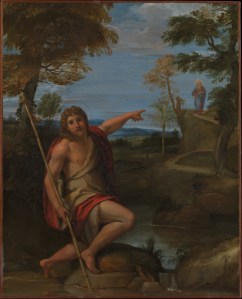
And that is why John the Baptizer is the perfect symbol of Advent. The word itself means “coming” or “arrival,” and John embodies that threshold moment. He points beyond himself, preparing the way, reminding us that the kingdom is near. Advent is not only about waiting—it is about waiting with urgency, with repentance, with hope. John’s life tells us that joy and judgment, longing and fulfillment, are woven together in the coming of Christ. He is not a footnote; he is the voice crying out in the wilderness, the herald of Advent joy. But his cry is not only for the crowds of the Jordan River—it echoes still. If John’s voice were to reach us today, what paths would we need to straighten, what valleys would we need to lift, so that Christ might truly arrive in our midst?
Soli Deo Gloria and Gaudete in Domino semper!
Note: I am indebted to Fr. Morgan Reed of the Corpus Christie Anglican for his interpretation of this week’s Gospel. You can read his full homily here. In addition, I utilized interpretations of John the Baptist offered by Garry Wills in his 2006 book, What Jesus Meant.
We will explore this passage further in our Sunday Lectionary group using the discussion questions included in the Faithful Conversations update below.
Musical Meditation: “Fljótavík” (Sigur Rós)
As we enter the season of Advent, we are invited to see ourselves as travelers moving through wilderness and storm, longing for shelter and light. Sigur Rós’s “Fljótavík,” named after a remote bay in Iceland, tells of a journey ashore, a struggle across sand and stone, and the discovery of a fragile hut where rest is found while the storm rages outside. The music mirrors this imagery—spare at first, then swelling like waves—until it settles into quiet memory. This song, like the season, is about waiting with trust: remembering storms, yet resting in hope that light will break into the darkness. Voces8 offers a powerful interpretation of it which I have included here.
Sigur Rós is an Icelandic post‑rock band formed in Reykjavík in 1994, known for their ethereal sound. Their name means “Victory Rose.” Singing in Icelandic and their invented “Hopelandic” language, they rose to international fame and have sold millions of albums worldwide. Sigur Rós remains celebrated for turning Iceland’s landscapes and spirit into sound that feels both deeply local and universally transcendent.
The original lyrics for Fljotavik are in Icelandic. Here is the translation:
We look over the rudder
Cut off the sea
We sail by the mast
Stretch the sails
We steer towards the bridge
We sail ashore
Up on the large rocks and the sand
We wade ashore
What a mess
There I found myself
Endlessly thanking
Sheltered in a makeshift house
And we slept
As the storm died down
VOCES8 is a British vocal ensemble formed in 2005. Admired not only for their artistry but also for their role as cultural ambassadors, they bring choral music to diverse audiences and work to nurture the next generation of singers.
Prayer Reflection: A Prayer for Joy in Our World
“But the angel said to them, “Do not be afraid. I bring you good news that will cause great joy for all the people. Today in the town of David a Savior has been born to you; he is the Messiah, the Lord.” (Luke 2:10-11)
Lord, the good news of Jesus’ arrival brings such joy to our world! Reach those who are lost and searching with the message of hope that we have through the Messiah. God, allow your message of peace to bring comfort to our anxious world. As we all go about the holiday season, let the message of great joy pierce through all the noise and into people’s hearts. Amen.
Source: Crosswalk: Third Sunday of Advent: Gaudete Readings and Prayers for Lighting the Candle. Retrieved 6 December 2025.
Faithful Conversation Updates
Join us for some free-flowing conversation about the Lectionary readings each Sunday. We meet from 10:45-11:30 in the church library each week, with some exceptions. No prior knowledge is necessary! ALL ARE WELCOME!
QUESTIONS FOR DISCUSSION THIS WEEK:
John’s Doubt and Our Own:
1. In Matthew 11, John the Baptist—once so certain—now wrestles with doubt in prison. How does his questioning help us understand the role of doubt in faith, especially during Advent, when we wait with both hope and uncertainty?
John as the Symbol of Advent:
2. Jesus calls John “more than a prophet,” the one who prepares the way. In what ways does John’s life—his courage, his suffering, his pointing beyond himself—embody the meaning of Advent, and how might his witness challenge the way we live out our own waiting today?
THIS WEEK’S BIBLE 365
READING CHALLENGE
Monday 8 December: Judges 4-5, Psalm 71
Tuesday 9 December: Judges 6-8, Psalm 72
Wednesday 10 December: Judges 9-12, Psalm 73
Thursday 11 December: Judges 13-15, Psalm 74
Friday 12 December: Judges 16-18, Psalm 75
Saturday 13 December: Judges 19-21, Psalm 76
Sunday 14 December: Ruth 1-4, Psalm 77
Here is a LINK to the full Bible 365 Plan!
The Bible 365 Challenge!
More than 60 members of our faith community have committed to the Bible 365 Challenge—a shared journey of reading through the entire Bible in one year. Each day, we engage with selected passages weaving together stories of faith, struggle, grace, and redemption. This challenge isn’t just about completing a task; it’s about deepening our spiritual roots, building community, and discovering how scripture speaks into our lives today.
Reflections On Malawi: Part 3
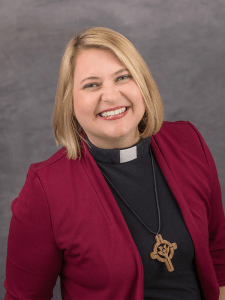
Since 1999, the Northwest Synod of Wisconsin and the Evangelical Lutheran Church of Malawi have been companions in ministry. Recently, several NW Synod representatives, including Pastor Jen Hatleli and Patti Whitworth from ELC, traveled there and met with many of our partners in the region. During Advent, I am posting excerpts from my interview with her about the trip. In our third exchange, I asked Jen to share a story of a person or moment that left a lasting impression on her.
