Faithful Conversations #153
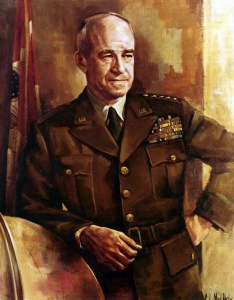
(1893-1981)
“We live in a world of nuclear giants and ethical infants, in a world that has achieved brilliance without wisdom, power without conscience. We have solved the mystery of the atom and forgotten the lessons of the Sermon on the Mount. We know more about war than we know about peace, more about dying than we know about living.” (Omar N. Bradley)
Omar Bradley’s words stopped me in my tracks this week as I dug into the Sermon on the Mount. His climb from poverty to West Point’s famed Class of 1915 is striking, but what grips me even more is this: those who knew war best — Bradley, Eisenhower, and countless veterans I’ve spoken with (including both my father and son) — never romanticized it. They approached conflict with steady, unvarnished realism, treating it as a grim duty rather than a platform for ego, and they carried the weight of their comrades’ lives with humility and moral gravity. Ike’s Farewell Address drives that truth home with unmistakable force.
Bradley’s spiritual background is striking. His early faith formation in the Stone–Campbell tradition, rooted in the Second Great Awakening, shaped his outlook even though he apparently showed little overt religious practice later in life. Growing up in small Church of Christ and Christian Church congregations, he absorbed a faith grounded in simplicity, integrity, and personal responsibility. Those early convictions — especially humility and the value of every human life — quietly guided his leadership and surfaced in the way he bore the burdens of command. His nod to the Sermon on the Mount reflects that deep moral grounding.
Upcoming Commemorations
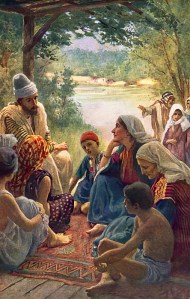
by Harold Copping
Thanks for visiting this space again this week and for your ongoing interest in exploring the Lectionary! There are several commemorations included in our church calendar in the days ahead: missionaries Timothy, Titus and Silas on 25 January, Lydia, Dorcas, and Phoebe — witnesses to the faith — on 26 January, and teacher Thomas Aquinas who died on 28 January in 1274. Lydia, Dorcas, and Phoebe offer a clear glimpse into how the early church grew through the faith and leadership of everyday women. Lydia, the first recorded convert in Europe, opened her home in Philippi, creating a gathering place for believers. Dorcas, known for her steady compassion in Joppa, cared for widows and became so cherished that her death moved the whole community. Phoebe, a deacon from Cenchreae, carried Paul’s letter to the Romans and served as both patron and teacher. Together they show the gospel taking root through generosity, service, and the quiet strength of women woven into the life of the early church.
by Crivelli, 1476
St. Thomas Aquinas (1225-1274) is best known for the Summa Theologiae, his clear and comprehensive effort to bring Christian faith and classical philosophy into a coherent whole. Born into a noble family in 13th‑century Italy, he surprised his relatives by joining the Dominican order, choosing a life of study, preaching, and disciplined simplicity over the political and ecclesial power expected of him. He argued that faith and reason ultimately work together, giving the church a way to think that is both intellectually serious and spiritually grounded.
Note: I include a few links within the blog — italicized and bolded — for further information on various topics.
Changes Coming Soon With the Lectionary Blog!

This week’s post is the penultimate entry in the three‑year lectionary cycle we began together in February of 2023, and it comes with a quick update about what’s ahead. Beginning with Transfiguration Sunday (15 February), the blog will take on a simpler design and a new name — Two Worlds — as part of a renewed commitment to digital ministry and more intentional use of online tools for learning, reflection, and future offerings (I have been transitioning to the new name already). Because I am discontinuing the mailing list, you will need to subscribe directly through WordPress to keep receiving new posts at no cost: enter your email in the subscription box near the bottom, confirm the message WordPress sends, and you’ll receive updates automatically. If the confirmation email doesn’t appear, check your spam folder, and remember that you can manage your subscription anytime through the “Manage Subscription” link at the bottom of any email. One other note: Those who have been on the mailing list and are having trouble with the subscription process, feel free to email me because I am able to add subscribers manually on my end.
Try Luther’s Approach to Reading Again This Week!
A Revision of the Lectio Divina (Augustinian)
Three Steps
Oratio (Prayer)
The journey begins with humble prayer, asking the Holy Spirit to open one’s heart to Scripture. For Luther, prayer clears the ground so God’s wisdom can take root.
Meditatio (Meditation)
Meditation means more than reading. It’s the slow, repeated turning of Scripture over in the mind — “chewing” on the Word until it shapes one’s imagination, habits, and decisions.
Tentatio (Struggle)
Struggle is the crucible of faith. As believers try to live out God’s Word, they meet resistance — inner conflict, doubt, temptation, and suffering. Luther insisted that these trials are not signs of failure but the very means by which God deepens and strengthens faith.
Lectio Divina is a quiet, thoughtful way of reading the Bible to connect with God. It grew out of early Christian traditions and was shaped by thinkers like Augustine, who believed Scripture speaks to the heart. Augustine didn’t invent the practice, but his ideas helped form its spirit—listening deeply and responding with love. Later, others gave it a clear structure, but its roots go back to that longing for God’s voice.
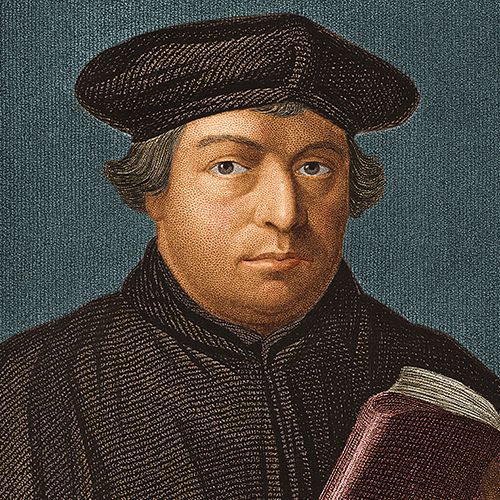
(1483-1546)
Readings for 4 Epiphany
Micah 6: 1-8
Psalm 15
1 Corinthians 1: 18-31
Matthew 5: 1-12
Common Themes Among the Four Readings
The readings for the Fourth Sunday after Epiphany call God’s people to a way of life shaped by humility, justice, and deep trust. Micah urges the community to abandon empty religious performance and actively practice justice, kindness, and humble companionship with God. The psalmist describes a life of integrity in which truthfulness, generosity, and moral steadiness create a dwelling place in God’s presence. Paul reminds the Corinthians that God overturns human standards of power and wisdom, choosing what seems weak or foolish to reveal the heart of the gospel. In the Beatitudes, Jesus blesses the poor, the meek, the merciful, and the peacemakers, inviting disciples into a kingdom where God’s surprising grace reshapes both character and community.
Co-Pilot Prompt: “Comment on the themes from the Revised Common Lectionary for 4 Epiphany.” 22 January 2026.
Focus Readings: Micah and Matthew
The First Reading (Micah)
Hear what the Lord says:
Rise, plead your case before the mountains,
and let the hills hear your voice.
2 Hear, you mountains, the case of the Lord,
and you enduring foundations of the earth,
for the Lord has a case against his people,
and he will contend with Israel.
3 “O my people, what have I done to you?
In what have I wearied you? Answer me!
4 For I brought you up from the land of Egypt
and redeemed you from the house of slavery,
and I sent before you Moses,
Aaron, and Miriam.
5 O my people, remember now what King Balak of Moab devised,
what Balaam son of Beor answered him,
and what happened from Shittim to Gilgal,
that you may know the saving acts of the Lord.”
6 “With what shall I come before the Lord
and bow myself before God on high?
Shall I come before him with burnt offerings,
with calves a year old?
7 Will the Lord be pleased with thousands of rams,
with ten thousands of rivers of oil?
Shall I give my firstborn for my transgression,
the fruit of my body for the sin of my soul?”
8 He has told you, O mortal, what is good, and what does the Lord require of you but to do justice and to love kindness
and to walk humbly with your God?
Question for Discussion
If the Kingdom of God is already present among us, what practices, priorities, or relationships might need to shift so that we participate more fully in the world Jesus describes on that hillside?
Which of the other Beatitudes (besides number 3) speaks to you most powerfully at this moment in your faith journey?
The Gospel (Matthew)
5 When Jesus saw the crowds, he went up the mountain, and after he sat down, his disciples came to him. 2 And he began to speak and taught them, saying:
3 “Blessed are the poor in spirit, for theirs is the kingdom of heaven.
4 “Blessed are those who mourn, for they will be comforted.
5 “Blessed are the meek, for they will inherit the earth.
6 “Blessed are those who hunger and thirst for righteousness, for they will be filled.
7 “Blessed are the merciful, for they will receive mercy.
8 “Blessed are the pure in heart, for they will see God.
9 “Blessed are the peacemakers, for they will be called children of God.
10 “Blessed are those who are persecuted for the sake of righteousness, for theirs is the kingdom of heaven.
11 “Blessed are you when people revile you and persecute you and utter all kinds of evil against you falsely on my account. 12 Rejoice and be glad, for your reward is great in heaven, for in the same way they persecuted the prophets who were before you.
My source for the Biblical texts is the Bible Gateway website, NRSVUE.
Reflection: The Mountain Where Everything Shifts
The readings for 4 Epiphany speak to one another with surprising clarity. Even without turning to Micah, that familiar line from 6:8 frames the Sermon on the Mount with unmistakable force: do justice, love kindness, walk humbly with your God. And every time I sit with this text (and many others), I feel that familiar hesitation: What can I possibly add? Few passages expose my limits like this one. The Sermon on the Mount sits at the center of Christian imagination, and every generation has returned to it for guidance, challenge, and hope.
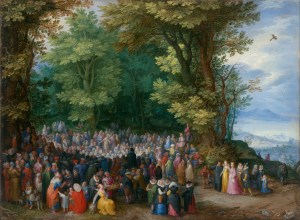
by Jan Brueghel the Elder, 1598
First, some context. Matthew places this moment at a decisive turning point. Jesus has just begun his ministry in Galilee — teaching, healing, gathering disciples. Crowds are swelling. Expectations are rising. Before anything grows larger, Jesus climbs the mountain and lays out the heart of his message. Matthew presents this as Jesus’ authoritative teaching, the roadmap for life in God’s reign. (Sidebar: Mark offers nothing like it, and Luke’s Sermon on the Plain is shorter and sharper). Matthew casts Jesus as a new Moses, ascending the mountain to speak God’s will with clarity and compassion. Before the miracles, before the parables, before the conflicts, Jesus opens a window into the Kingdom of Heaven. (An interesting note here about the Brueghel painting — the artist clearly imagines this moment within the context of 16th Century Europe!)
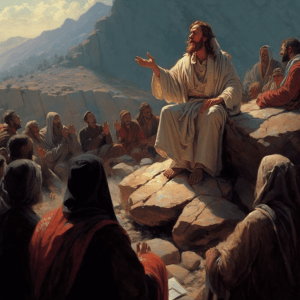
(A.I. Generated, 2023)
Then come those beatitudes. They are not commands or moral checklists. They are declarations — bold, often unsettling announcements about where God’s blessing actually rests. Jesus names the people the world overlooks and calls them blessed. That alone disrupts our assumptions. But he goes further: he overturns the entire value system we take for granted. Power, wealth, status, and self‑sufficiency do not define the good life in God’s kingdom. Instead, Jesus blesses those who know their need, those who grieve, those who hunger for justice, those who practice mercy, those who make peace. The first beatitude always stops me. “Poor in spirit” often gets softened into a vague spiritual humility, but Matthew — and the world Jesus inhabited — pushes us toward something far more concrete. New Testament scholar Warren Carter describes the “poor in spirit” as “people who are materially poor and whose spirits are crushed by economic injustice, deprivation of resources, and few options.” Their poverty reaches into every corner of their lives — financial, emotional, social, existential. Their capacity to hope has been worn thin. (Sidebar: It is striking, isn’t it, that many in the Christian community argue for a placement of the Ten Commandments in public spaces, including school classrooms, yet I have never heard the same passion for placing the Beatitudes in public spaces, but I digress!)
My life in the classroom often meant encountering students who fit that description. And in recent weeks, I’ve met several people in our community who are homeless — navigating cold nights, scarce resources, and systems that seem designed to drain them. Carter’s words describe them exactly. If Jesus calls such people blessed, then our response cannot remain theoretical. How do we stand with those whose lives reflect the very conditions Jesus names? How do we resist the temptation to spiritualize his words and instead let them reshape our priorities, our compassion, our advocacy, our generosity? To be “poor in spirit” is a condition Jesus sees with powerful empathy and urgency. And if the kingdom belongs to such as these, then our calling becomes unmistakable: recognize their dignity, listen to their stories, meet immediate needs when we can, and work for a world where fewer spirits are crushed by injustice.

So, let us return to that hillside and sit with our Christian ancestors, listening to the young man whose emergence we are witnessing—what is he saying to us in 2026? In our lectionary gathering on Sunday, Pastor Jen emphasized that within the ELCA, our view is that the Kingdom of God is already present among us. If that is true — and I believe it is — then these blessings are not abstract ideals. They are invitations. They call us to align our lives with God’s priorities, to stand with the people Jesus names, and to participate — actively, courageously –in the world God is bringing to life right now.
Soli Deo Gloria!
Note: Once again, this week, I drew from Warren Carter’s commentary on this passage (1 February 2026), accessed through Working Preacher (Luther Seminary). Carter is a New Testament professor in Tulsa, Oklahoma.
Musical Meditation: “This is My Father’s World“

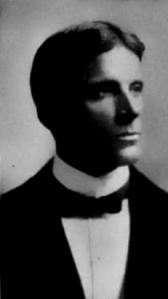
Maltbie Davenport Babcock (1858–1901), a Presbyterian pastor known for his love of nature, often took long walks near his home in Lockport, New York, telling his wife he was going out “to see my Father’s world.” Those walks inspired a sixteen‑stanza poem he titled My Father’s World, published only after his unexpected death in 1901 (the lyrics provided below represent only a portion of the poem and are included in the ELW, page 824). It may be that the poem was inspired as he looked out over Lake Ontario. His friend Franklin L. Sheppard later selected several stanzas and set them to an English folk melody his mother had taught him, creating the tune now known as Terra Beata. The hymn first appeared in a 1915 Presbyterian Sunday school hymnal and quickly became a staple of American worship. Its enduring appeal lies in Babcock’s blend of wonder, trust, and the conviction that creation itself sings of God’s presence. The jazz interpretation of the hymn offered here is by a jazz pianist name Euiju Cheong, also known as Jazz Jane. Enjoy — and may I suggest listening with headphones if available!
Lyrics
This is my Father’s world,
And to my list’ning ears
All nature sings, and round me rings
The music of the spheres.
This is my Father’s world:
I rest me in the thought
Of rocks and trees, of skies and seas—
His hand the wonders wrought.
This is my Father’s world:
The birds their carols raise,
The morning light, the lily white,
Declare their Maker’s praise.
This is my Father’s world:
He shines in all that’s fair;
In the rustling grass I hear Him pass,
He speaks to me everywhere.
This is my Father’s world:
Oh, let me ne’er forget
That though the wrong seems oft so strong,
God is the ruler yet.
This is my Father’s world,
Why should my heart be sad?
The Lord is King, let heaven ring;
God reigns, let earth be glad!
Jazz Jane is the performing name of contemporary jazz pianist and composer Euiju Cheong, known for her intimate, improvisational style. She has built a strong following through YouTube performances that embrace the beauty of unpolished, human playing. Her work ranges from jazz standards to reflective ballads, many which have a Christian focus.
Visit her website here.
Prayer for Balance (Nouwen)
Within the three-year lectionary cycle, I have referenced Henri Nouwen, I suspect, dozens of times. Though he departed this earth twenty years ago, his writings live on. This one comes from a recent Daily Meditation I received from the Nouwen Society and speaks to our present moment — how do we navigate the intersection of faith and politics, especially in a polarized moment?
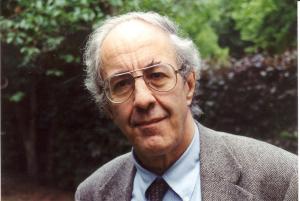
(1932-1996)
“Receptivity and confrontation are the two inseparable sides of Christian witness. They have to remain in careful balance. Receptivity without confrontation leads to a bland neutrality that serves nobody. Confrontation without receptivity leads to an oppressive aggression, which hurts everybody. This balance between receptivity and confrontation is found at different points, depending upon our individual position in life. But in every life situation, we not only have to receive, but also to confront.“
Heavenly Father,
You see the fractures that run through our world and through our communities.
Teach us the hard balance Nouwen names—hearts open enough to receive one another, and courage strong enough to confront what harms or divides. Keep us from the neutrality that avoids truth and from confrontation without love. Shape us into people who bridge divides without losing the center of our faith, so that our witness reflects the grace and truth of Christ, in whose name we pray. Amen.
Faithful Conversation Updates
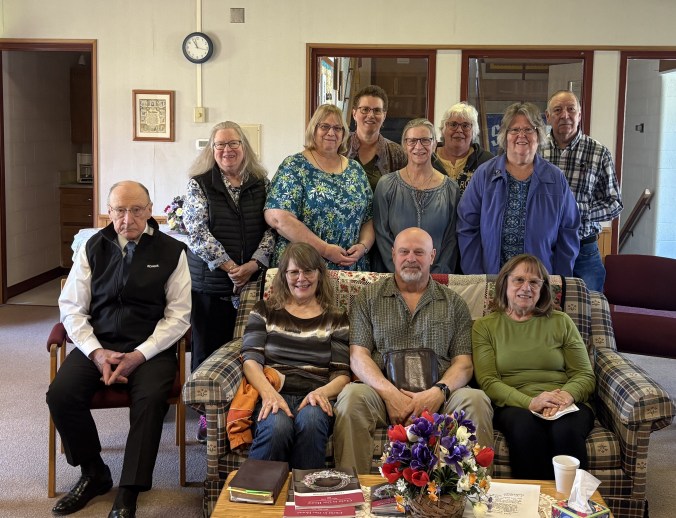
Join us for some free-flowing conversation about the Lectionary readings each Sunday. We meet from 10:45-11:30 in the church library each week, with some exceptions. No prior knowledge is necessary! ALL ARE WELCOME!
THIS WEEK’S BIBLE 365
READING CHALLENGE
Monday 26 January: Isaiah 45-45, Psalm 119: 33-64
Tuesday 27 January: Isaiah 49-51, Psalm 119: 65-96
Wednesday 28 January: Isaiah 52-54, Psalm 119:97-128
Thursday 29 January: Isaiah 55-57, Psalm 119:129-152
Friday 30 January: Isaiah 58-60, Psalm 119:153-176
Saturday 31 January: Isaiah 61-64, Psalm 120
Sunday 1 February: Isaiah 65-66, Psalm 121
Here is a LINK to the full Bible 365 Plan!
The Bible 365 Challenge!
More than 60 members of our faith community have committed to the Bible 365 Challenge—a shared journey of reading through the entire Bible in one year.
