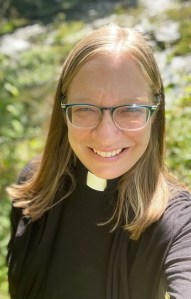
“There are days when I look at today’s world, torn apart by violence and hatred, and I can’t even imagine all of us living in harmony with one another. It seems impossible. Jesus knew something about conflict and discord. He rode into Jerusalem to shouts of ‘Hosanna!’ The crowds rejoiced at the coming of their king. How quickly, though, those songs of praise turned to cries for Jesus to be crucified. (But) Jesus, the crucified king, conducts creation’s choir. With his dying breath, he teaches us the song of infinite forgiveness. He silences all those forces that rebel against God, directing our days and our deeds in peace. We may not be able to hear the harmony quite yet, but it’s here, because Jesus is here.” (Stacey Nalean-Carlson)
Introduction
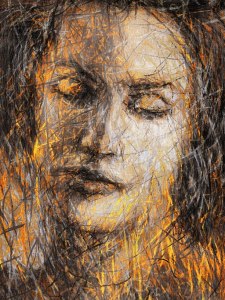
(Modern Interpretation)
Holy Week always asks us to hold more than we think we can — beauty and betrayal, praise and violence, hope and heartbreak. Stacey Nalean-Carlson’s commentary highlights the tension in our experience. The world around us isn’t so different from the world Jesus entered: crowds pulled in every direction, longing for peace yet captive to fear, eager for a savior yet quick to turn on the very one who brings healing. And still, Christ steps into the noise without flinching. He doesn’t wait for harmony before he begins to sing; he brings harmony with him. His path through this week reveals a love strong enough to absorb our dissonance and patient enough to teach us a new way to listen. Anchor yourself in that this week.
The Gospels tell the resurrection story in different ways, a reminder of how memory shifts as communities retell what matters most. John’s Gospel, written near the end of the first century, places Mary Magdalene at the center. She appears in all four Gospels as a devoted follower and a witness to both the crucifixion and the resurrection. She’s mentioned twelve times — more than any woman except Mary, the mother of Jesus. Honored as a saint in the Catholic tradition and commemorated in the ELCA on July 22, she still carries an air of mystery. What we know for certain is this: Mary is the first to proclaim the resurrection. John doesn’t mention the other Mary at the tomb, though Matthew, Mark, and Luke do (Matthew 27:61; Mark 16:1; Luke 24:10). Some scholars see symbolism here—the mother of Jesus representing the old, earthly relationship, and Mary Magdalene representing the emerging community of believers. It’s an intriguing possibility.
Holy Week confronts us with mysteries just as profound. Christians live as an Easter people — running toward the empty tomb with Peter and John, trying to grasp what happened there. Our faith stands on the bold acceptance of miracles: water turned to wine, sight restored, freedom breaking through oppression. Many dismiss these as fantasy. Still, as children of the light, we keep running. At the center of our story is the greatest miracle: the Creator entering our humanity, walking among us for thirty‑three years, enduring betrayal, suffering, and a brutal Roman execution. Jesus absorbed the world’s dysfunction — our sin, our fear, our violence — and carried it to the cross, breaking the power of sin and death. His resurrection bursts into the story like a beacon, reordering everything. Set free by that moment, we now live free — free to love, free to forgive, free to bear light into a world still learning to hear the harmony he brings.
Soli Deo Gloria!
The opening quote from Stacey Nalean-Carlson was drawn from Love Outpoured: Devotions for Lent 2026, published by Augsburg Fortress in Minneapolis. Stacey is an ELCA Pastor, ordained in 2003. To learn more, visit her website here.
Navigate the Blog Here
- Introduction
- The Readings for the Triduum and Easter Sunday
- ELCA Commemorations This Week
- Reflective Music for Holy Week
- Meditative Prayer: A Collect for Easter Day
- Going Beyond: Faith at Work
A compelling question for us this week:
“Where do I need to trust that God is already at work bringing resurrection out of what feels lost or broken?”
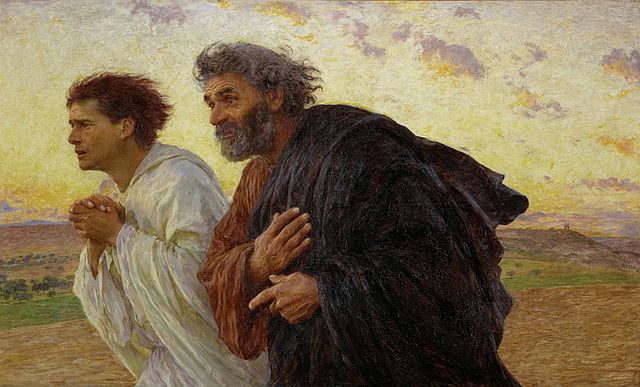
Eugène Burnand’s 1898 painting The Disciples Peter and John Running to the Sepulchre on the Morning of the Resurrection captures the dramatic moment from John 20 when the two apostles race toward the empty tomb after hearing Mary Magdalene’s news. Burnand, a Swiss realist painter known for his deep Christian faith, exhibited the work at the Paris Salon, where it was immediately acclaimed and later acquired by the French state for the Musée d’Orsay. The painting is celebrated for its vivid emotional realism: Peter’s anxious, weathered face and John’s youthful, hope‑filled expression reveal the turmoil and dawning faith of that first Easter morning.
The Readings for the Triduum and Easter Sunday
Maundy Thursday, Good Friday, and Holy Saturday are referred to as The Three Days (traditionally known as the Triduum), and their roots hearken back to the Jewish celebration of the Passover. Part of that tradition among our spiritual ancestors involved slaughtering a lamb and sharing a meal — a reminder of the Israelite’s liberation from slavery in Egypt. Recall that God visited a number of plagues (think water turning to blood, frogs, lice, etc.) on Pharaoh Ramesses II to convince him to free the Israelites, including sending the “angel of death” to slaughter the Egyptian’s firstborn sons. The Jewish slaves marked their doorposts with the blood of a lamb so the “angel of death” would pass over them, sparing their sons. Drawing from this tradition, early Christians observed the death and resurrection of Jesus Christ, the sacrificial Lamb of God, to commemorate the Pascha, — Christ’s passage from death to new life. Further, this new life was marked by the liberating gift of baptism. If you go to pages 30-31 in the ELW (which we have been using since 2006), you will see in the inclusion of the Three Days as part of the Sundays and Principal Festivals of the Church Year.
All the readings are linked for easy access.
2 April: Maundy Thursday
Exodus 12: 1-14
Psalm 116: 1-2, 12-19
1 Corinthians 11: 23-26
John 13: 1-17, 31b-35
3 April: Good Friday
Isaiah 52:13-53:12
Psalm 22
Hebrews 10: 16-25
John 18:1-19:42
4 April: Holy Saturday
(Easter Vigil)
Romans 3: 6-11
John 20: 1-18
(Note: A complete list of readings for Easter Vigil are found on page 269 of the ELW).
5 April: Easter Day
Jeremiah 31: 1-6
Psalm 118: 1-2, 14-24
Acts 10: 34-43
John 20: 1-18
Common Themes and Connecting Ideas
The readings for Easter Sunday proclaim God’s decisive act of renewal, moving a people from sorrow into joy and from death into life. Jeremiah announces a future where God gathers the people in love and restores them to dancing and hope, while Psalm 118 celebrates the Lord’s saving power with the triumphant declaration that “the stone the builders rejected has become the chief cornerstone.” Acts 10 expands this renewal to all people, as Peter proclaims that the risen Christ brings forgiveness and new life without partiality. In John 20, this cosmic victory becomes deeply personal as the risen Jesus calls Mary Magdalene by name, transforming her grief into witness. Together, these texts reveal Easter as God’s surprising, world‑shifting act of life‑giving love that restores, includes, and sends people out with joy.
Note: I utilize the Bible Gateway website for the readings (NRSVUE) and also receive as assist from Co-Pilot (A.I.) for summarizing the themes each week.
ELCA Commemorations This Week
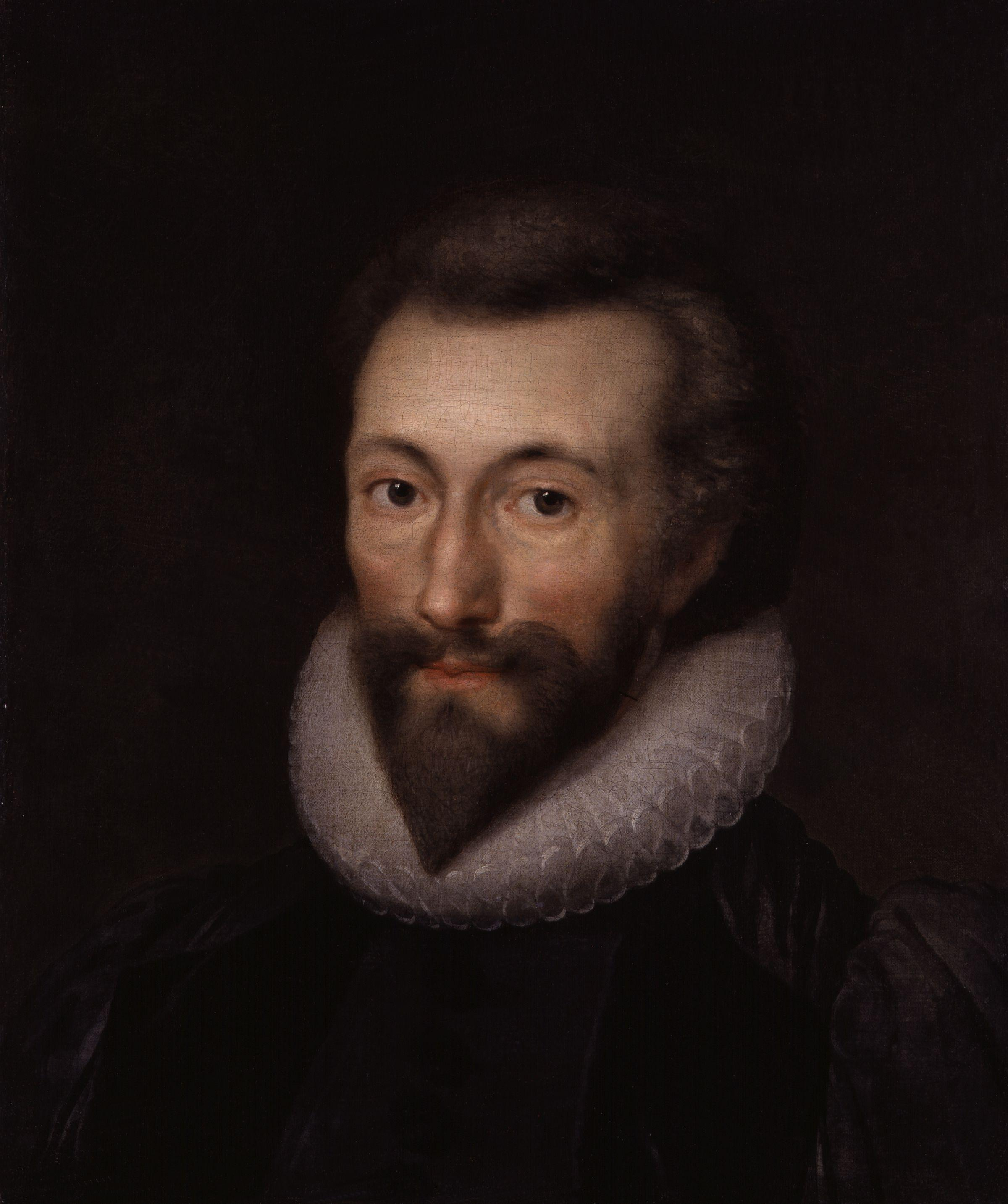
(1572-1631))
Tuesday 31 March:
John Donne, poet (d. 1631)
Saturday 4 April:
Benedict the African, confessor (d. 1589)
Click on each photo for background information
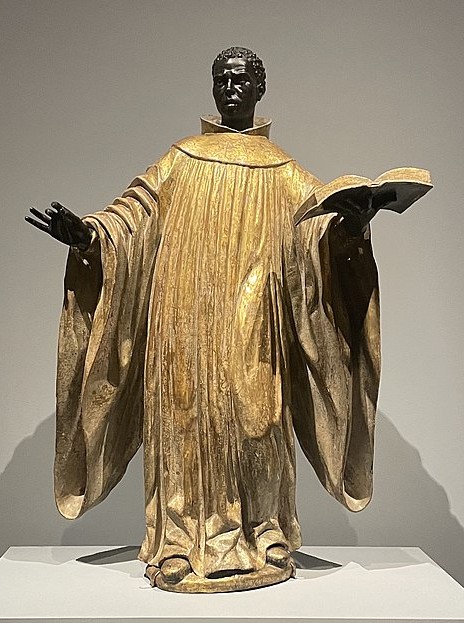
(1526-1589)
Reflective Music for Holy Week
“Were You There” grew out of the lived experience of enslaved African Americans in the 19th century, who used song to name both their suffering and their hope. It first appeared in print in 1899, but it had already traveled for years through oral tradition, carried by communities who sang it to remember the story of the crucifixion. The repeated question — “Were you there?” — pulls us into that story and asks us to feel its weight in real time. At the same moment, the song quietly links Christ’s suffering with the suffering of the people who created it. By the mid‑20th century it had become a beloved hymn across traditions, recorded by major artists and sung in churches everywhere, a testament to its emotional power and deep roots. This interpretation by Ensemble Altera is particularly powerful — enjoy! (Listen with headphones for a rich experience).
Lyrics
1 Were you there when they crucified my Lord?
Were you there when they crucified my Lord?
Oh, sometimes it causes me to tremble, tremble, tremble. Were you there when they crucified my Lord?
2 Were you there when they nailed him to the tree?
Were you there when they nailed him to the tree?
Oh, sometimes it causes me to tremble, tremble, tremble. Were you there when they nailed him to the tree?
3 Were you there when they laid him in the tomb?
Were you there when they laid him in the tomb?
Oh, sometimes it causes me to tremble, tremble, tremble.
Were you there when they laid him in the tomb?
4 Were you there when God raised him from the grave?
Were you there when God raised him from the grave?
Oh, sometimes it causes me to tremble, tremble, tremble. Were you there when God raised him from the grave?
Ensemble Altera is a rising professional chamber choir from Rhode Island, known for its luminous sound, imaginative programming, and deep commitment to the healing power of music. Led by countertenor Christopher Lowrey, the ensemble has earned national and international praise for performances that blend artistic precision with emotional depth. Their recordings have garnered major awards and critical acclaim, helping establish Altera as one of the most compelling new voices in American choral music. Whether presenting reimagined classics or bold contemporary works, they invite audiences into experiences that uplift, challenge, and inspire.
Visit Their Website for More Information
Meditative Prayer: A Collect for Easter Day
A collect gets its name from the Latin collēcta, meaning “a gathering,” originally referring either to the gathering of the people or the gathering of their prayers. Over time, the term came to describe the brief, focused prayer that opens worship by uniting the community’s intentions into one voice. Its structure and purpose reflect this origin: a single, elegant petition that gathers the church for what follows. The following prayer is drawn from The Lutheran Hymnary, published by Augsburg Publishing House in Minneapolis in 1935. My father utilized it while attending Luther Seminary in the late 1940s. Note the language, reminiscent of the King James version of the Bible. As you hear the words, imagine our Lutheran forbears saying this on Easter morning:
Lord God, heavenly Father, who didst deliver Thy Son for our offenses, and didst raise Him again for our justification: We beseech Thee, grant us Thy Holy Spirit, that He may rule and govern us according to Thy will; graciously keep us in the true faith; defend us from all sins, and after this life raise us unto eternal life, through the same, They beloved Son, who liveth and reigneth with Thee and the Holy Ghost, one true God, world without end. Amen.
Going Beyond: Faith at Work
Join Us for Worship and Study
Evangelical Lutheran Church in Black River Falls, Wisconsin, and is part of the Northwest Synod of Wisconsin (ELCA). We stream our Sunday worship at 9:30 each week. Please feel free to join us!
Access our YouTube Channel here.
Ecumenical News This Week:
Lutheran leaders from around the world joined ecumenical guests in Canterbury Cathedral on March 25 for the installation of Archbishop Sarah Mullally, the first woman to lead the Church of England.
Lutheran World Federation General Secretary Anne Burghardt celebrated the historic moment and highlighted the strong, evolving relationships between Anglicans and Lutherans across the globe. The service blended ancient tradition with global diversity, underscoring a shared commitment to unity, prayer, and common Christian witness.
Read the full story here!
FOR THOSE INVOLVED . . . .
Our in-person Lectionary discussion group that meets at ELC will be off until APRIL 12TH. This is due to travel on my part and activities on Palm Sunday and Easter.
The ELCA is one of the largest member churches of the Lutheran World Federation, a global communion representing more than 77 million Lutherans in 99 countries. As a full and active member, the ELCA helps shape the LWF’s work in theology, humanitarian response, advocacy, and global mission. ELCA leaders serve on councils, commissions, and working groups that guide the federation’s priorities and partnerships. Through the LWF, the ELCA joins a worldwide witness to Christ’s justice, mercy, and reconciliation.