12 October 2025: Pentecost 18

Introduction to Readers

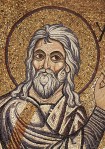
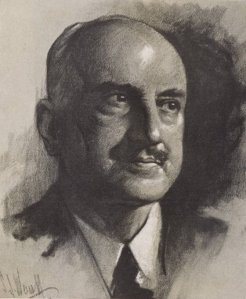
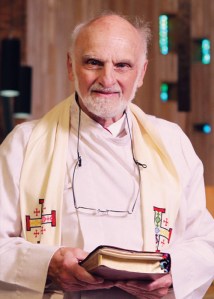
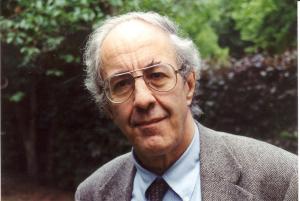
Jonathan Sacks (1948-2020)

“Optimism is a passive virtue, hope an active one. It needs no courage to be an optimist, but it takes a great deal of courage to hope. The Hebrew Bible is not an optimistic book. It is, however, one of the great literatures of hope.” (Rabbi Jonathan Sacks)

Lately, I find myself praying for clarity on how to bring a faithful presence into our fractured world. I’ve also been thinking about children and the world they’re experiencing. In the October issue of The Christian Century, Presbyterian minister Maryann McKibben Dana shares a striking moment from a conversation with a friend. The friend pointed out that those who rage at every headline often do so from the comfort of safety—far removed from the daily grind of people fighting just to get by. While some shout from the sidelines, others carry the weight of survival in silence. Dana’s reflection flips the lens, reminding us that outrage can be a privilege not everyone can afford. As Christians, we are called to purveyors of hope in our world, not glittering optimists who dance in superficiality, and as Rabbi Jonathan Sacks suggests, God’s word grounds us in that hope. Keep that in mind as you work through this week’s readings. And let’s stay excited that many in our midst have taken on the challenge of reading the Bible through in one year!

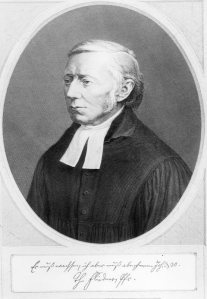
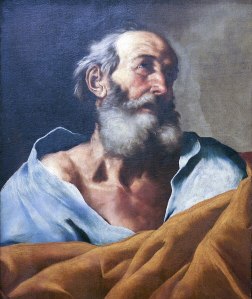
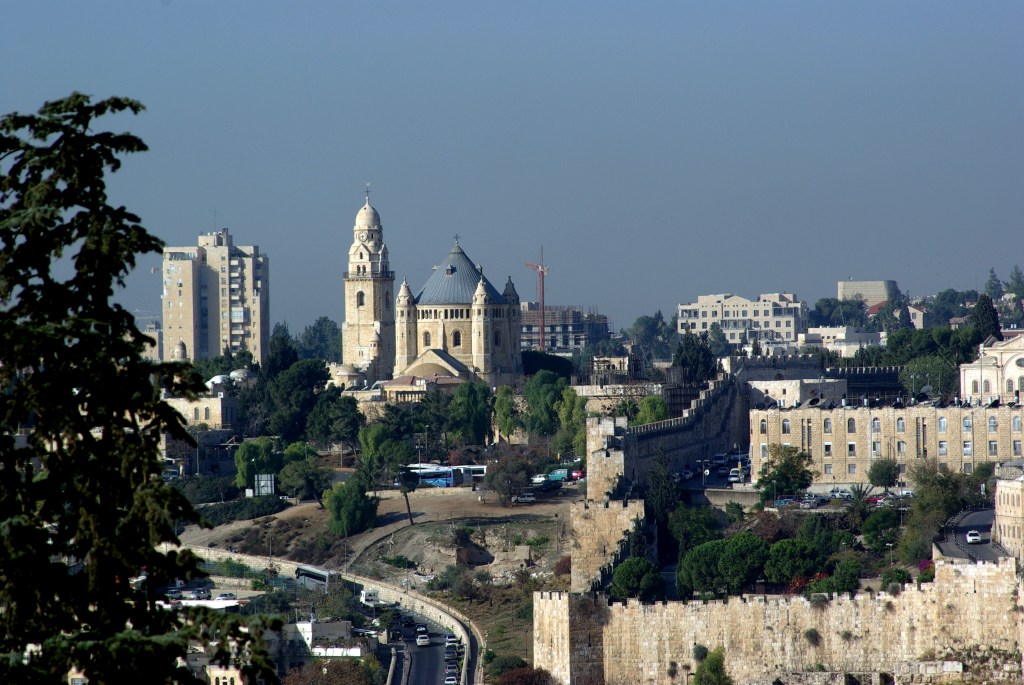
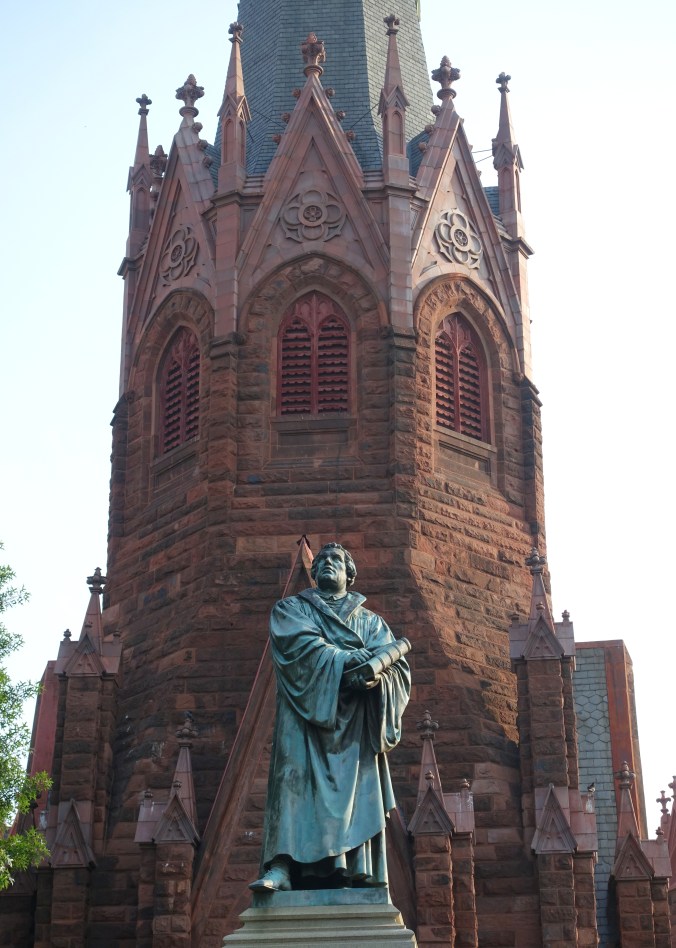
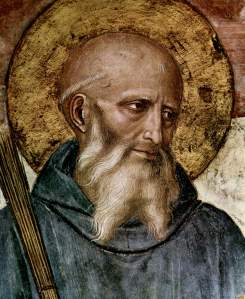
Henry Muhlenberg

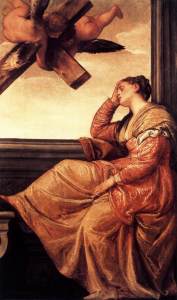
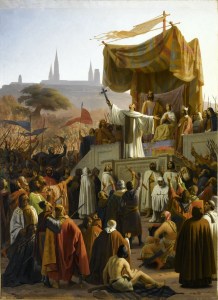
We have reached Pentecost 18 and soon will mark the 508th anniversary of the Reformation (26 October). We have two commemorations on our calendar this week: William Tyndale (died on 6 October 1536) was a groundbreaking English scholar, linguist, and Protestant reformer best known for translating the Bible into English directly from Hebrew and Greek texts—a radical act that challenged both ecclesiastical authority and political power; and Henry Melchior Muhlenberg who died on 7 October 1787. Born in Einbeck, Germany (1711) and deeply influenced by Pietism, he was ordained in 1739 and emigrated to Pennsylvania in 1742, serving scattered German-speaking Lutheran communities in the pre-Revolutionary period. Among other things, he kept detailed journals that remain invaluable for understanding early American Lutheranism and religious life in the colonies. One other notable fact is that Muhlenberg’s son Peter became a soldier of renown during the Revolutionary War.

Thanks for visiting this venue again this week and for your continued interest in the Lectionary. My reflections will focus on the readings from Jeremiah and Luke. I’m also including a prayer dedicated to the refugees in our midst and musical selection that focuses on the children in our world (generally), and especially those who have been displaced.

** Note 1: Links to outside references are bolded and italicized and are meant for further reading or research on your part. While the text I am including in the blog is my own, I am pulling from a multitude of sites for ideas and connections.

** Note 2: In my increasing use of A.I. (Copilot), I will cite sourcing of how I am using the tool, if necessary. I don’t want that to be overly cumbersome, but I am gradually incorporating more tools. I am exploring the A.I. world this summer prior to my next teaching semester. As you can imagine, it is a great challenge right now and will forever change the face of education!


** Note 3: The images I include in the blog are drawn from Wikimedia Commons to the fullest extent possible.

My source for the Bible readings each week is the Bible Gateway website. I generally use the NRSVUE translation.

The readings for Pentecost 18 center on themes of healing, gratitude, and faithful witness in the midst of exile and uncertainty. Naaman’s cleansing in 2 Kings and the Samaritan leper’s thanksgiving in Luke highlight the transformative power of divine mercy and the importance of responding with praise. Jeremiah’s letter to the exiles urges rootedness and hope, even in foreign lands, while 2 Timothy calls for endurance and integrity in proclaiming the gospel. Psalm 111 ties these threads together with a celebration of God’s wondrous deeds and enduring covenant, inviting the community to remember and trust.

“Describe the common themes among the readings for Pentecost 18.” Copilot, 4 October 2025, Copilot website.

LUTHER’S METHOD OF BIBLE READING
A Revision of the Lectio Divina (Augustinian)

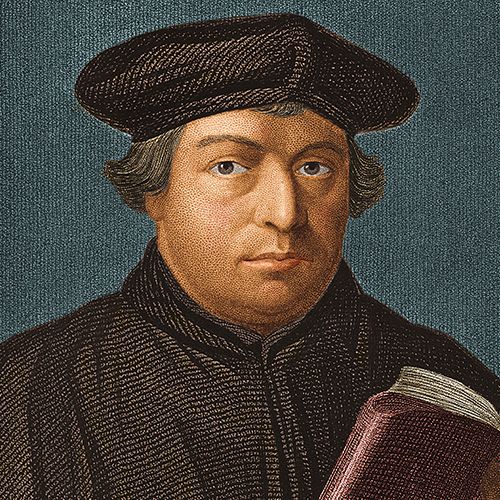
Martin and Katie Luther Engaged in Bible Study
(A.I. Generated, 2025)
The Yoke of Jeremiah

Gospel: Luke 17: 11-19
11 On the way to Jerusalem Jesus was going through the region between Samaria and Galilee. 12 As he entered a village, ten men with a skin disease approached him. Keeping their distance, 13 they called out, saying, “Jesus, Master, have mercy on us!” 14 When he saw them, he said to them, “Go and show yourselves to the priests.” And as they went, they were made clean. 15 Then one of them, when he saw that he was healed, turned back, praising God with a loud voice. 16 He prostrated himself at Jesus’s feet and thanked him. And he was a Samaritan. 17 Then Jesus asked, “Were not ten made clean? So where are the other nine? 18 Did none of them return to give glory to God except this foreigner?” 19 Then he said to him, “Get up and go on your way; your faith has made you well.”

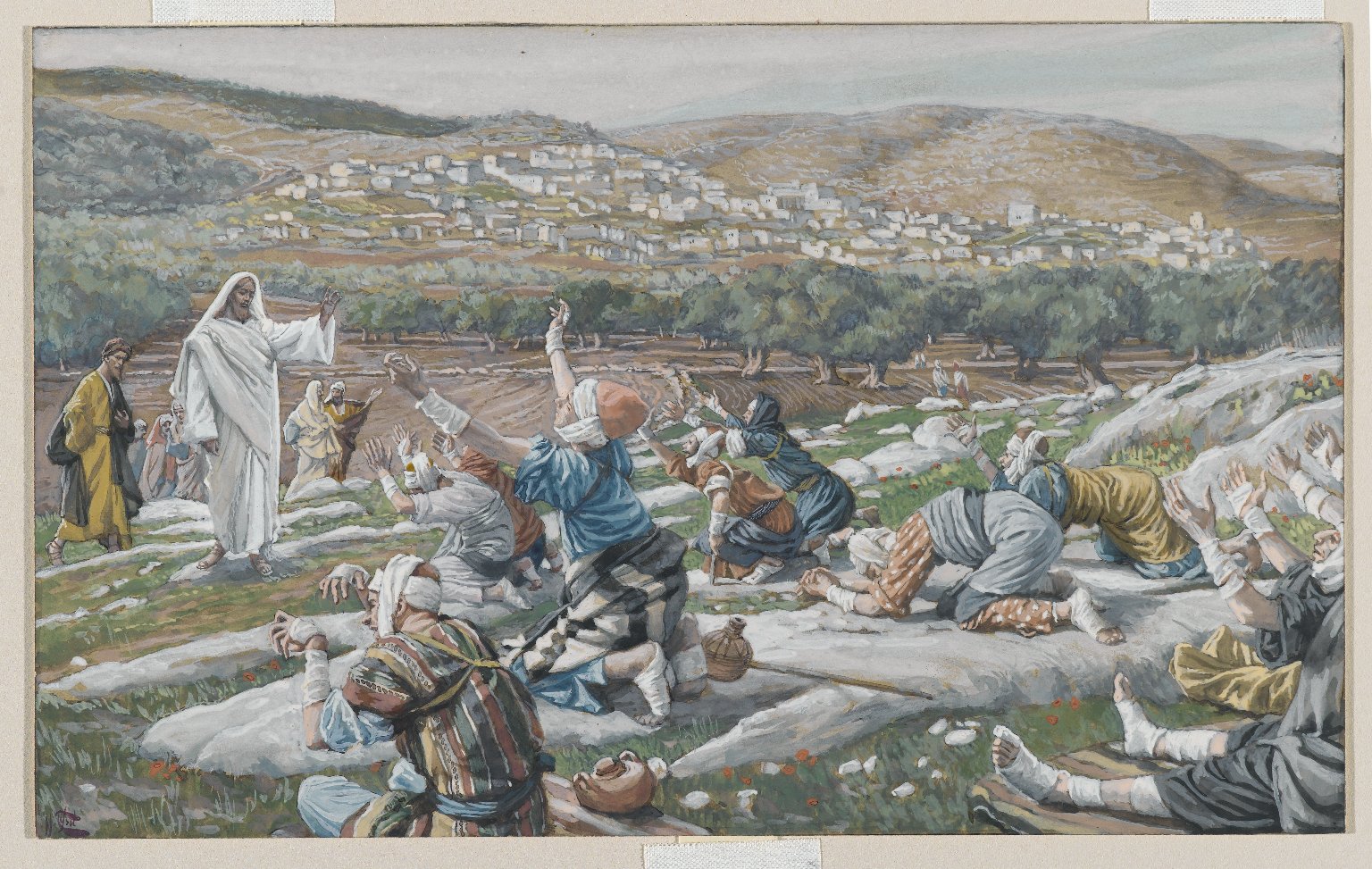
The Healing of the Ten Lepers
James Tissot (1836–1902)

Reflection: Strangers in our Midst

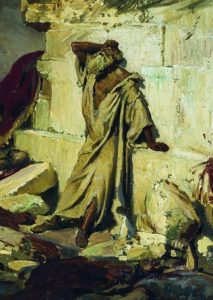
“Cry of prophet Jeremiah on the Ruins of Jerusalem” by Ilya Repin (1870)

This week’s readings from Jeremiah and Luke offer profound insights into the presence—and the power—of the foreigner in our midst. In Jeremiah 29:1, 4–7, the prophet pens a letter to the exiles in Babylon—a displaced people, torn from Jerusalem and thrust into foreign soil. His message is startling in its realism: “Build houses and live in them… seek the welfare of the city where I have sent you into exile.” Rather than resist or retreat, the exiles are called to engage, to bless, and to pray for the flourishing of the very place that holds them captive. This summons is both unsettling and deeply hopeful. Historically, this letter was written after the first wave of deportations in 597 BCE, when King Jehoiachin and the Judean elite were taken to Babylon. Archaeological records confirm that these exiles were not merely prisoners—they were artisans, officials, and laborers integrated into Babylonian society. Jeremiah’s call was radical: live faithfully among foreigners and recognize that God’s presence is not confined to Jerusalem. The stranger becomes neighbor, and exile becomes a crucible for spiritual renewal. It’s a vision that redefines exile—not as punishment, but as possibility.

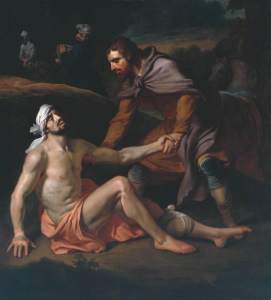
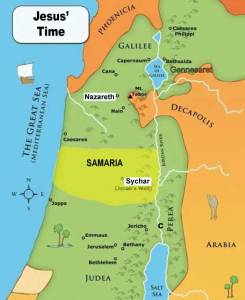
More than six centuries later, in Luke 17:11–19, Jesus encounters ten lepers on the borderlands between Galilee and Samaria. These men are doubly marginalized—by disease and geography. Yet it is the Samaritan, the foreigner among them, who returns to give thanks. Jesus’ response is telling: “Was no one found to return and give praise to God except this foreigner?” The outsider becomes exemplar, the one who sees clearly and responds with gratitude. This encounter unfolds in a region scarred by ethnic division and religious mistrust. Samaritans were viewed with suspicion by many Jews, their worship practices deemed impure. Yet here, the Samaritan’s faith transcends boundaries. All ten are healed, but only one is made whole—his gratitude becomes the gateway to deeper restoration. Once again, Jesus throws us a curveball.

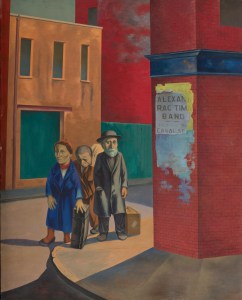
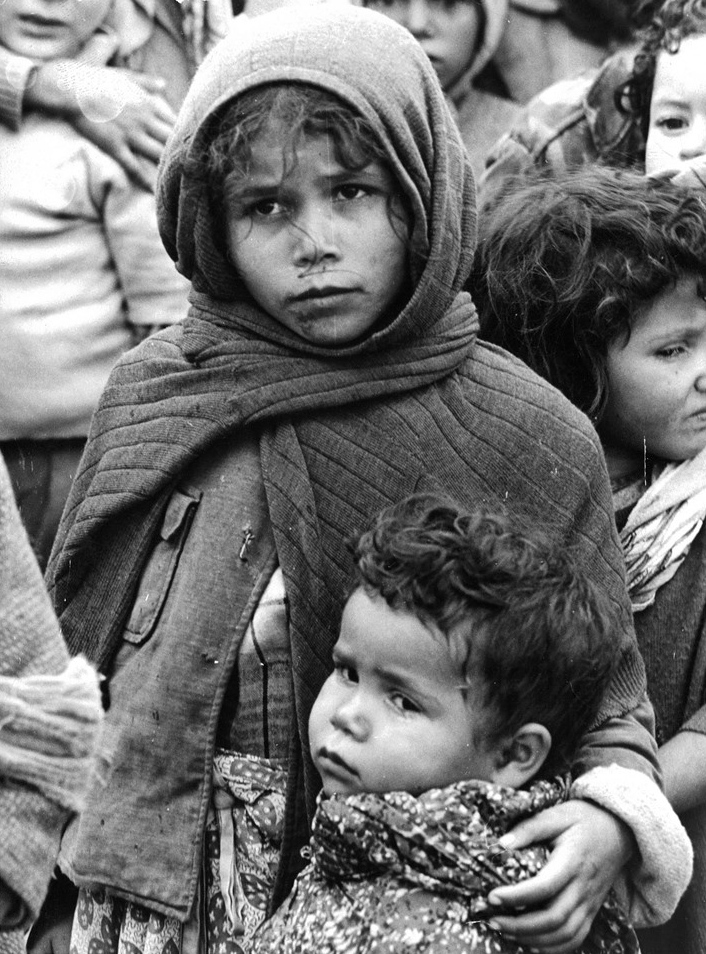
Refugees (1939) by Guglielmi (1906-1956)

Together, these passages challenge us to reconsider our posture toward the foreigner. Jeremiah urges rootedness and blessing in unfamiliar places. Luke reveals that grace often flows through those we least expect. In both, God’s movement is not confined to the familiar or the favored—it pulses through exile, borderlands, and gratitude. As so often in Scripture, these ancient voices speak directly into our present moment. As migration and displacement continue to rock the global political environment, and cultural tension shapes our communities, these texts beckon us toward prophetic realism and gospel hospitality. The foreigner is not merely among us—they are often the vessel of divine insight. To dwell faithfully is to seek the welfare of the stranger, and to recognize that healing and thanksgiving may come from unexpected voices. Hope is all around us if we choose to see it.

Soli Deo Gloria!

Prayer Reflection: Prayer for Refugees and Migrants

Lutherans have a strong tradition in the world of immigration. Formed in 1939, Global Refuge (formerly Lutheran Immigration and Refugee Services), has been active in the world for 86 years. The following prayer is an interpretation of a prayer suggested within their resources and also inspired by Psalm 146. We know that children, in particular, are caught within the various forces of displacement in our world — political conflicts, civil wars, and famine just to name a few.

God of mercy, who watches over the stranger and lifts up the brokenhearted, guide us to walk with refugee families seeking peace and home. Bless the mothers, fathers, and children who flee danger. Heal their wounds, restore their hope, and let your love be their shelter. You uphold the cause of the oppressed and give food to the hungry. Make us instruments of your justice—welcoming, compassionate, and brave. Open our hearts to see your image in every migrant and asylum seeker. Lead us to serve with light and love. End the violence that drives them. Stir the hearts of nations to build a world where no child must flee again. The Lord reigns forever. In your mercy, hear our prayer. Amen.

Bless the mothers, fathers, and children who flee danger. Heal their wounds, restore their hope, and let your love be their shelter.

Having spent my adult life with young people, I find so much of our modern environment harmful to children — perhaps, like many of you, legacy is on my mind. What kind of world are we leaving to our children? One of the heartbreaking realities of our world today, as has been true throughout history, is the suffering of children. There are so many contemporary examples. As of the end of 2024, for example, nearly 49 million children were forcibly displaced worldwide due to conflict, violence, and disasters (40% of all refugees). Additionally, having reached my elder years, I grieve for the example our young people see around them growing up. Surely, we can do better. The powerful message of Bestor’s song resonates.

**My statistics are drawn from the Stop Child Labor website.

Refugee Children

Prayer of the Children

Can you hear the prayer of the children
On bended knee, in the shadow of an unknown room?
Empty eyes, with no more tears to cry
Turning heavenward, toward the light

Crying, “Jesus, help me
To see the morning light of one more day;
But if I should die before I wake
I pray my soul to take.”

Can you feel the heart of the children
Aching for home, for something of their very own?
Reaching hands, with nothing to hold on to
But hope for a better day, a better day

Crying, “Jesus, help me
To feel the love again in my own land;
But if unknown roads lead away from home
Give me loving arms, away from harm.”

Can you hear the voice of the children
Softly pleading for silence in a shattered world?
Angry guns preach a gospel full of hate
Blood of the innocent on their hands

Crying, “Jesus, help me
To feel the sun again upon my face;
For when darkness clears I know you’re near
Bringing peace again.”

“Prayer of the Children” by Kurt Bestor is a deeply moving song written in response to the suffering of children during the Yugoslav Wars. Its lyrics express a child’s longing for peace, safety, and connection with God amidst violence and loss. One of its most poignant lines is: “Can you hear the prayer of the children… aching for home, for something of their very own.”


Chorale NouvEAU performs Prayer of the Children composed by Kurt Bestor and arranged by Andrea S. Klouse, under the direction of Kate Larson. This performance was from our concert, A Cry for Peace on January 19th, 2025, at Christ Church Cathedral. This concert was in partnership with Sleep in Heavenly Peace. Sleep in Heavenly Peace (SHP) is a volunteer-driven nonprofit dedicated to building and delivering hand-made, fully furnished beds to children in need. ELC has partnered with SHP on several occasions.

(Information provided with the YouTube posting)

The Chorale NouvEAU draws its members from the Chippewa Valley region of Wisconsin.

Faithful Conversations Updates

5 October 2025: Pentecost 17

Introduction to Readers

“There are times in life when we have to buckle up and buckle down, lifting one another up with encouragement. Without such commitment, we live with the prospect or fear that our lives will not have mattered. We may not always know if our actions are contributing to an increase of the abundant life in this world. But, as Mahatma Gandhi once put it, ‘if you do nothing, there will be no result.'” (Peter W. Marty)

A conversation in our lectionary study group on Sunday, paired with this week’s readings from Habakkuk and Luke’s Gospel, brought Peter Marty’s words from the September Christian Century to the forefront. His Gandhi reference — “If you do nothing, there will be no result” — landed with force. Faith doesn’t shield us from the weight of the world; it often makes that weight more visible, more personal. We feel the burden, the fatigue, and sometimes the quiet fear that our lives might not matter. Habakkuk saw violence and chaos and cried out, asking where God had gone. His voice feels close, even now. The apostles, unsure and overwhelmed, didn’t ask for a strategy—they asked for a shortcut: “Increase our faith!” That plea still resonates. In 2025, ancient voices speak with startling relevance. They urge us to stay present, to lift one another up, and to keep moving—even when the way forward is unclear. I’ll return to their wisdom in my reflections. For now, I’m listening.

Welcome to this space again this week and your continued interest in exploring the Lectionary! Counting Sunday, we have eight Sundays left in the church year (Year C). Hard to imagine. We have several commemorations in our calendar this week: Michael and All Angels, Jerome, translator and teacher (d. 30 September 420), Francis of Assisi, renewer of the church (d. 4 October 1226), and Theodore Fliedner, renewer of society (d. 4 October 1864). Fliedner (b. 1800) was a German Lutheran pastor and social reformer who founded the Kaiserswerther Diakonie in 1836, a pioneering institution for hospital care and deaconess training. Inspired by the Moravian Church and reformers like Elizabeth Fry, he revived the ancient Christian office of deaconess to serve the sick, poor, and imprisoned. His work laid the foundation for modern nursing and influenced figures like Florence Nightingale, who trained at Kaiserswerth in 1850. By the time of his death, Fliedner had established a global network of deaconess motherhouses, transforming Christian social service across continents. Deaconess Hospital in Minneapolis was part of the larger movement inspired by Theodor Fliedner’s work in Germany. Although Fliedner didn’t start the hospital himself, his revival of the deaconess tradition in 1836 influenced similar efforts around the world. In 1888, Rev. Falk Gjertsen and others invited Sister Elizabeth Fedde—trained in a tradition shaped by Fliedner—to help begin a deaconess home and hospital in Minneapolis. Her work led to the founding of the Norwegian Lutheran Deaconess Institute, which became Deaconess Hospital, built on Fliedner’s original vision. My great-aunt Josie Rykken worked at Deaconess Hospital as a seamstress for many years and my oldest sister Anne was born there while Unk (our dad) was a student at Luther Seminary (1950). All these years later, I am appreciating that history.

Common Themes Among the Readings

Readings for Pentecost 17

Habakkuk 1:1-4, 2:1-4
Psalm 37:1-9
2 Timothy 1:1-14
Luke 17:5-10

My source for the Bible readings each week is the Bible Gateway website. I generally use the NRSVUE translation.

The readings for Pentecost 17 share a deep concern with perseverance, trust, and faithful living in the face of uncertainty and injustice. Habakkuk wrestles with the silence of God amid violence but is reminded that the righteous live by faith, while Psalm 37 counsels patience and trust in the Lord rather than envy of evildoers. In 2 Timothy, Paul encourages Timothy to rekindle the gift of God with courage and endurance, grounded in the power of the Spirit and the legacy of faith. Luke’s Gospel reframes discipleship as humble service, emphasizing that faith—even as small as a mustard seed—can transform, but obedience remains the quiet duty of those who follow Christ.

“Describe the common themes among the readings for Pentecost 17.” Copilot, 25 September 2025, Copilot website.

LUTHER’S METHOD OF BIBLE READING
A Revision of the Lectio Divina (Augustinian)


Three Steps
Oratio (Prayer): This is the starting point, where one humbly prays for the Holy Spirit’s guidance to understand God’s Word. Luther emphasized that prayer prepares the heart and mind to receive divine wisdom.

Meditatio (Meditation): This involves deeply engaging with Scripture, not just reading it but reflecting on it repeatedly. Luther encouraged believers to “chew on” the Word, allowing its meaning to sink in and shape their thoughts and actions.

Tentatio (Struggle): Often translated as “trial” or “temptation,” this refers to the challenges and spiritual battles that arise as one seeks to live according to God’s Word. Luther saw these struggles as a way God refines faith, making it more resilient and authentic.

Martin Luther (1483-1546)

Luther on Reading the Bible

“In truth you cannot read too much in Scripture; and what you read you cannot read too carefully… and what you teach well you cannot live too well.”

(Luther would have appreciated our Bible 365 Project!)

Check out this excellent summary of Habbakkuk!

Gospel: Luke 17: 5-10

The apostles said to the Lord, “Increase our faith!” The Lord replied, “If you had faith the size of a mustard seed, you could say to this mulberry tree, ‘Be uprooted and planted in the sea,’ and it would obey you.

“Who among you would say to your slave who has just come in from plowing or tending sheep in the field, ‘Come here at once and take your place at the table’? Would you not rather say to him, ‘Prepare supper for me; put on your apron and serve me while I eat and drink; later you may eat and drink’? Do you thank the slave for doing what was commanded? 10 So you also, when you have done all that you were ordered to do, say, ‘We are worthless slaves; we have done only what we ought to have done!’ ”

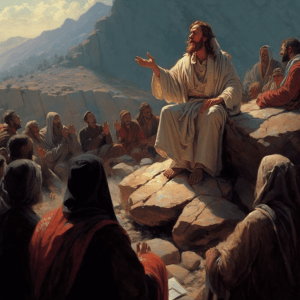
Jesus Teaching in Galilee (A.I. Generated, 2023)

Reflection: Faith Doesn’t Get Easier — It Gets Stronger

Habakkuk the Prophet
(A.I. Generated 2025)

There’s an old runner’s adage: Running doesn’t get easier—you just get stronger. Having been a runner for more than a half-century and a distance coach, I can attest to that. The hills don’t flatten, the wind doesn’t stop, and the soreness doesn’t vanish. But something shifts inside. Muscles adapt. Breathing deepens. Resolve hardens. You learn to keep going—not because the path is easier, but because you’ve grown stronger. This running analogy echoes the spiritual journey described in Habakkuk and Luke. In Habakkuk 1:1–4, the prophet cries out in anguish: “O Lord, how long shall I cry for help, and you will not listen?” His world is unraveling—violence, injustice, and destruction surround him. Habakkuk lived in Judah during the late 7th century BCE, a time of political instability and moral decay. Babylon was rising, and the covenant people seemed to have lost their way. Habakkuk doesn’t offer easy answers. He offers lament. And in doing so, he gives us permission to bring our own questions to God. This makes Habakkuk a vital companion when faith feels weary. His honesty is refreshing. He doesn’t pretend things are fine. He stands in the watchtower and waits (Habakkuk 2:1), modeling a posture of spiritual attentiveness. He’s not passive—he’s expectant. And when the Lord replies, it’s not with a quick fix but with a vision: “The righteous live by their faithfulness” (Habakkuk 2:4). This phrase becomes a theological cornerstone. Paul quotes it in Romans 1:17 and Galatians 3:11. The author of Hebrews echoes it in 10:38. For Lutherans, it’s foundational. Martin Luther’s breakthrough came when he realized that righteousness is not earned by works but received through faith. Faithfulness, then, is not about perfection—it’s about trust. It’s about showing up, even when the road is steep.

Saint Luke the Evangelist
De Rosa (1607-1656)

Luke 17:5–10 offers a complementary lens. The disciples plead, “Increase our faith!”—a request that resonates with anyone who’s felt spiritually inadequate. Jesus responds with a paradox: “If you had faith the size of a mustard seed…” It’s not about quantity. It’s about rootedness. Even the smallest seed of faith, planted in God’s promises, can grow into something mighty. Then comes the parable of the slave. It’s unsettling. The slave works all day, returns home, and still isn’t praised. Jesus says, “We have done only what we ought to have done.” This challenges our desire for ease and affirmation. We want the faith life to be rewarding, comfortable, even applauded. But Jesus reframes it: faithfulness is about duty, humility, and perseverance. Hard words.

Habakkuk’s lament and Luke’s mustard seed converge in this truth: faith is not flashy. It’s steady. It’s the teacher who prepares lessons for students who may never say thank you. It’s the caregiver who shows up day after day. It’s the disciple who forgives seventy times seven. It’s the runner who laces up shoes in the dark and keeps going. In our spiritual lives, we often long for shortcuts. We want a smoother path, the answers to come quickly. But Habakkuk teaches us to wait. Luke teaches us to serve. And the Lutheran tradition teaches us to trust—not in our strength, but in the righteousness that comes by faith. Again, remember the triad of texts — Romans 1:17, Galatians 3:11, and Hebrews 10:38 — they provide a cadence for the long run.

When faith feels like a grind, when injustice floods the headlines, and your prayers seem to vanish into silence—open Habakkuk! Climb the watchtower. Speak the hard truths. Demand answers. And listen: “There is still a vision for the appointed time.” Then lace up. Run. Not because the path smooths out, but because your spirit grows stronger with every step. Faith doesn’t promise ease—it builds endurance. And in the steady rhythm of trust, in the quiet certainty of God’s faithfulness, you’ll find the strength to keep going. The world needs our voice.

Soli Deo Gloria!

Prayer Reflection: Strength for the Journey

This prayer is inspired by the Bible 365 Project. As we take on this challenge, we will need to pray about the experience! If you are interested in the lay-out of the year-long schedule, I linked it in the green announcement box at the end of the blog.

God of the Word, You who spoke light into darkness and breathed life into dust, I begin this sacred journey—a year of walking through Your story, from Genesis to Revelation, from wilderness to wonder, from exile to return. Open my heart to receive what You have spoken. Let these pages be more than ink and parchment; make them living water for my thirst, bread for the journey, and fire for the cold places within me. Give me discipline when the days feel long, curiosity when the texts feel strange, and grace when I stumble or fall behind. Let me not rush past mystery or skip over lament. Teach me to linger, to wrestle, to listen. As I read of prophets and poets, kings and shepherds, apostles and outcasts, may I find myself in their stories—and may I find You, always You, speaking through the chaos, calling me to justice, mercy, and love. Let this year be more than a reading plan. Let it be a pilgrimage. Let it be transformation. Let it be communion with You. In the name of the Living Word, Jesus Christ, Amen.

What is the world like when God’s will is done?
Mustard seeds grow more than we can conceive:
roots thread the soil;
branches reach for the sun.
This is how God moves us each to believe.

What is the world like when God’s will is done?
Witness the wandering child coming home;
watch as the parent breaks into a run.
This is how God longs for us when we roam.

What is the world like when God’s will is done?
No more is neighbor just ally or friend;
peace thrives in places where once there was none.
This is how God works when rivalries end.

What is the world like when God’s will is done?
Ready for feasting, we watch through the night,
tending our lamps till the new day’s begun.
This is how God readies us for the light.

These are the stories that Jesus imparts,
filled with the Spirit who joins us as one.
Born through our voices, our hands, and our hearts,
this is a new world where God’s will is done.

Adam M. L. Tice is a prominent contemporary hymn writer and editor known for his contributions to ecumenical hymnody and justice-centered worship. A graduate of Goshen College, Tice has served as a church musician, associate pastor, and editor of The Hymn journal, and was the text editor for the 2020 Mennonite hymnal Voices Together. His hymn “What Is the World Like” (2009), set to Sally Ann Morris’s tune NEW WORLD, draws on four parables to envision a world shaped by God’s justice, mercy, and light. Tice’s work reflects a deep commitment to inclusive theology, poetic clarity, and communal transformation through song. The lyrics are compelling and the last one, in particular, seems especially fitting for the start of our Bible 365 Project!

Faithful Conversations Updates

28 September 2025: Pentecost 16

Introduction to Readers

Gordon Thunder (1939-2025)

“Education is much more a matter of the heart than of the head.” (Gordon Thunder)

I spent my early years in this community (ages 5 to 15), then returned in 1990 at age 33 after nearly twenty years away. Since then, I’ve witnessed many familiar faces journey on—a steady rhythm of loss that sometimes seem to come in waves. Across cultures, people honor elders as wisdom keepers, and their passing reminds us of the sacred cycle of exile and return, of memory, renewal, and life beyond this life. Last week, we lost Gordon Thunder, a gracious man who, with his sister Charity, helped me see the world through Indigenous eyes. They often visited my classroom, sharing stories of history, language, and culture that left lasting impressions on my students. During one visit in the early 1990s, Gordon spoke the line offered above that struck me as both simple and profound—I scribbled it down and have shared it with thousands of students since. It speaks to the heart of education: not just knowledge, but empathy, connection, and transformation—companions I carry with me in my exploration of the scriptures each week. In Ho-Chunk tradition, the death of an elder marks a sacred journey back to Earthmaker, who formed humans from clay and gave them a soul. Guided by prayer, song, and offerings, this journey leads the soul home, echoing the Christian hope of returning to our Creator, where rest and reunion await. You will note a connection to these themes in the musical selection I’m offering further on in the blog.

Thanks for your visit to this space again this week. Incredibly, we are rounding the corner into October and will be engaged in our Bible 365 Challenge. I am reminded each and every week that God’s Word is vast and powerfully relevant in every age. My reflections will focus on the Amos passage again this week, noting how it intersects with Luke 16. Note the prompts for discussion in the Faithful Conversations update at the end of the blog — we will utilize those for our in-person discussion on Sunday.

Common Themes Among the Readings

Readings for Pentecost 16

Amos 6: 1a, 4-7
Psalm 146
1 Timothy 6: 6-19
Luke 16: 19-31

My source for the Bible readings each week is the Bible Gateway website. I generally use the NRSVUE translation.

The readings for Pentecost 16 share a strong warning against complacency, wealth without compassion, and the neglect of justice. Amos condemns the ease and luxury of the powerful who ignore the suffering of others, while Psalm 146 calls for trust in God, who lifts the oppressed and cares for the vulnerable. In 1 Timothy, believers are urged to pursue righteousness and generosity rather than riches, anchoring their hope in eternal life. Luke’s parable of the rich man and Lazarus drives the message home: ignoring the poor has eternal consequences, and true faith is shown through mercy and action.

“Describe the common themes among the readings for Pentecost 16.” Copilot, 21 September 2025, Copilot website.

LUTHER’S METHOD OF BIBLE READING
A Revision of the Lectio Divina (Augustinian)


Three Steps
Oratio (Prayer): This is the starting point, where one humbly prays for the Holy Spirit’s guidance to understand God’s Word. Luther emphasized that prayer prepares the heart and mind to receive divine wisdom.

Meditatio (Meditation): This involves deeply engaging with Scripture, not just reading it but reflecting on it repeatedly. Luther encouraged believers to “chew on” the Word, allowing its meaning to sink in and shape their thoughts and actions.

Tentatio (Struggle): Often translated as “trial” or “temptation,” this refers to the challenges and spiritual battles that arise as one seeks to live according to God’s Word. Luther saw these struggles as a way God refines faith, making it more resilient and authentic.

Luther on Reading the Bible

For some years now I have read through the Bible twice every year. If you picture the Bible to be a mighty tree and every word a little branch, I have shaken every one of these branches because I wanted to know what it was and what it meant.

(Luther would have appreciated our Bible 365 Project!)

The Gospel: Luke 16: 19-31

19 “There was a rich man who was dressed in purple and fine linen and who feasted sumptuously every day. 20 And at his gate lay a poor man named Lazarus, covered with sores, 21 who longed to satisfy his hunger with what fell from the rich man’s table; even the dogs would come and lick his sores. 22 The poor man died and was carried away by the angels to be with Abraham.[a] The rich man also died and was buried. 23 In Hades, where he was being tormented, he lifted up his eyes and saw Abraham far away with Lazarus by his side.[b] 24 He called out, ‘Father Abraham, have mercy on me, and send Lazarus to dip the tip of his finger in water and cool my tongue, for I am in agony in these flames.’ 25 But Abraham said, ‘Child, remember that during your lifetime you received your good things and Lazarus in like manner evil things, but now he is comforted here, and you are in agony. 26 Besides all this, between you and us a great chasm has been fixed, so that those who might want to pass from here to you cannot do so, and no one can cross from there to us.’ 27 He said, ‘Then I beg you, father, to send him to my father’s house— 28 for I have five brothers—that he may warn them, so that they will not also come into this place of torment.’ 29 Abraham replied, ‘They have Moses and the prophets; they should listen to them.’ 30 He said, ‘No, father Abraham, but if someone from the dead goes to them, they will repent.’ 31 He said to him, ‘If they do not listen to Moses and the prophets, neither will they be convinced even if someone rises from the dead.’ ”

Reflection: How Much is Enough?

In 1821, British poet Percy Bysshe Shelley (b. 1792) wrote a line that still rings true: “The rich have become richer, and the poor have become poorer.” He was watching the rise of industrial England—a world where wealth piled up for the few while the many labored in worsening conditions. Shelley’s lament wasn’t just poetic—it was prophetic. And yet, the cry he voiced wasn’t new. Centuries earlier, the prophet Amos stood in the northern kingdom of Israel and spoke with fire. His words cut through the comfort of the elite: “Woe to those who are at ease in Zion… who lie on beds of ivory… who drink wine in bowls… but are not grieved over the ruin of Joseph!”

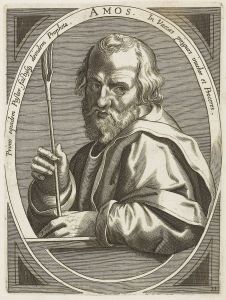
Amos the Prophet
Kizhi Monastery, Russia

Amos, like all prophets, spoke into a particular moment. His ministry unfolded during the reigns of King Uzziah of Judah and King Jeroboam II of Israel—a time of booming trade, expanding borders, and political stability. On the surface, things looked good. Israel was thriving. But beneath that prosperity, the poor were being crushed, justice was for sale, and worship had lost its soul. Amos wasn’t part of the establishment. He was a shepherd and fig farmer from Tekoa—called to speak truth in the king’s sanctuary at Bethel. And he didn’t mince words. He didn’t condemn wealth itself, but wealth without justice, comfort without compassion, and rituals that ignored righteousness.

Juliana Claassens
University of Stellenbosch

That message still speaks. As Juliana Claassens points out in a sharply written commentary, “An online search for who, most recently, has been drawn to this book (Amos) steeped in the pursuit of justice and righteousness, is telling: Results show many scholars from the Developing World concerned about the state of their people in impoverished countries where the rich are getting richer and the poor poorer—for example, Nigeria, Zimbabwe, Myanmar, and parts of Latin America.” As Claassens asserts, these communities face unfair labor systems, resource extraction by the Global North, and corruption from within. Claassens reminds us: Amos’s call for justice is not abstract. It’s urgent. It’s real. It’s now.

As Christians trying to live out our faith, we might ask ourselves, how much is enough? If someone is a billionaire, do they need many billions? What happens when abundance becomes blindness? That question echoes in Luke 16, where Jesus tells the story of the rich man and Lazarus. The rich man feasts daily, dressed in purple and fine linen. Lazarus lies at his gate, covered in sores. After death, their roles reverse—but the rich man’s vision doesn’t. He still sees Lazarus as a servant, not a neighbor. The chasm between them, once social, becomes eternal. Amos and Jesus both confront us with the moral danger of indifference. They remind us that ease is not innocence, and that comfort can become complicity. To lie on beds of ivory while others sleep on concrete is not just unfortunate—it’s unjust. To feast while others hunger is not just a lifestyle—it’s a spiritual crisis.

And so, back to Shelley. His lament is more than a line—it’s a summons. (Sidebar: Shelley’s was deeply skeptical of organized religion because he thought it was used to justify inequality and moral hypocrisy, something you may want to explore further). How much is enough? Enough to lift the fallen. Enough to mend the breach. Enough to remember that every Lazarus at the gate is a child of God.

Soli Deo Gloria!

Note: I am indebted to Juliana Claassens, Old Testament Professor at the University of Stellenbosch in Stellenbosch, South Africa for her commentary on the Amos passage. You may find the commentary at Working Preacher, a site sponsored by Luther Seminary in St. Paul, Minnesota.

Prayer Reflection: A Future Not Our Own (Oscar Romero)

It helps now and then to step back and take a long view. The Kingdom is not only beyond our efforts, it is beyond our vision. We accomplish in our lifetime only a fraction of the magnificent enterprise that is God’s work. Nothing we do is complete, which is another way of saying that the kingdom always lies beyond us.

No statement says all that could be said. No prayer fully expresses our faith. No confession brings perfection, no pastoral visit brings wholeness. No program accomplishes the Church’s mission. No set of goals and objectives include everything.

This is what we are about. We plant the seeds that one day will grow. We water the seeds already planted knowing that they hold future promise. We lay foundations that will need further development. We provide yeast that produces effects far beyond our capabilities. We cannot do everything, and there is a sense of liberation in realizing this.

This enables us to do something, and to do it very well. It may be incomplete, but it is a beginning, a step along the way, an opportunity for the Lord’s grace to enter and do the rest.

We may never see the end results, but that is the difference between the master builder and the worker. We are workers, not master builders, ministers, not messiahs. We are prophets of a future not our own.

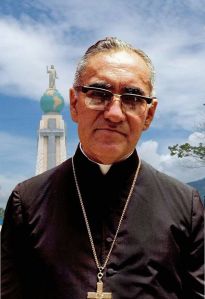
Oscar Romero
(1917-1980)

Saint Óscar Arnulfo Romero y Galdámez was a Salvadoran Roman Catholic archbishop renowned for his courageous advocacy for human rights and the poor during El Salvador’s civil unrest. Initially seen as conservative, Romero became a prophetic voice against government repression, denouncing violence from both state forces and guerrilla groups. He was assassinated while celebrating Mass on March 24, 1980, and later canonized as a martyr and saint by the Catholic Church in 2018.

Suiderkruis (Southern Cross), composed by Jacques de Villiers and arranged by André van der Merwe, is a choral elegy that mourns the loss of homeland and honors the elders whose lives once anchored its memory. The Southern Cross shines as a celestial guide for those in exile, not only pointing the way home but illuminating the spiritual path beyond death—a journey through silence, longing, and ancestral remembrance. Sung in Afrikaans, its haunting lyrics ask whether we are still remembered, whether anyone stands beneath the stars to welcome the soul’s return, as the music swells from quiet lament to transcendent yearning—a requiem for the departed and a compass for those who remain. The song spoke to me in navigating the recent passing of several elders in our faith community and beyond.

The Stellenbosch University Choir, based in South Africa and conducted by André van der Merwe, is internationally acclaimed for its emotive artistry and innovative choral arrangements. Composed of student singers, the ensemble blends African rhythms, classical technique, and contemporary expression to create transcendent musical experiences. Their performances often explore themes of identity, memory, and spiritual longing, resonating deeply with audiences across cultures.

Included in the lyrics (Afrikaans)

Will you remember me in dreams and in silence? Who stands amongst the Southern Cross? Who brings hope? Dreamy images dance amongst the constellations. In a time of mourning, we all lose power. Remember me in the morning dew.

Faithful Conversations Updates

21 September 2025: Pentecost 15

Introduction to Readers

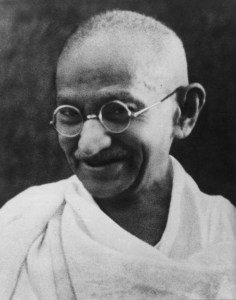
Gandhi (1869-1948)

Once again, political violence has erupted with chilling force this week. On Friday, as I spoke with our eldest daughter Kate (b. 1981), her words stirred a sobering truth: we are not built to absorb the relentless tide of hatred and grief that courses through our nation. I hold fast to Gandhi’s enduring conviction—that LOVE stands as the most powerful force we possess, and we must wield it with courage and intention. (Gandhi himself, regretfully, fell victim to political violence in 1948).

As we open the lectionary this Sunday, we enter a tradition that has never shied away from upheaval. Scripture speaks directly into chaos, echoing through centuries of resistance—from the Zealot revolts in Roman-occupied Judea to the unraveling of civic virtue in the late Roman Republic. Like us, our spiritual ancestors grappled with power, injustice, violence, and the sacred call to act. Of course, their world was far different from ours, but evil has been present across time — not a comforting reality but perhaps brings perspective. As Pastor Jen emphasized in her sermon on Sunday (14 September), as Christians, we are to be “purveyors of hope” for those living in a divided world.

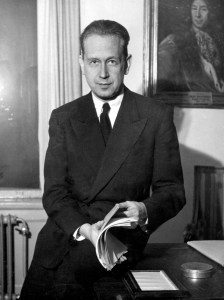
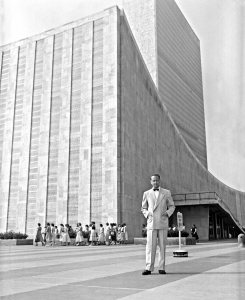
Hammarskjold (1905-1961)

Thanks for your return to this venue this week! Counting next Sunday, there are ten remaining in our church year (Christ the King Sunday is on 23 November). We have several commemorations this week on the ELCA calendar, and perhaps most notably, Dag Hammarskjold who was killed (somewhat mysteriously) in a plane crash on 18 September 1961. A fascinating individual, Hammarskjöld was a Swedish economist, diplomat, and spiritual thinker who served as the second Secretary-General of the United Nations from 1953 until his death (sidebar: A teacher I had in 8th grade was enamored with Hammarskjold and we learned much about him that year!). He played a pivotal role in shaping UN peacekeeping operations and mediating global crises, including the Suez and Congo conflicts, earning him a posthumous Nobel Peace Prize. As a man of faith and ethical service, Hammarskjold was deeply influenced by Christian mysticism.

Note: My reflections this week will focus on the Amos passage. I also have included a prayer from the pen of Dag Hammarskjold and a favorite Dylan song that speaks to our time. Also, take note of the discussion questions that will frame our in-person discussion of the Lectionary next Sunday (a new feature).

** Note 1: Links to outside references are bolded and italicized and are meant for further reading or research on your part. While the text I am including in the blog is my own, I am pulling from a multitude of sites for ideas and connections.

** Note 2: In my increasing use of A.I. (Copilot), I will cite sourcing of how I am using the tool, if necessary. I don’t want that to be overly cumbersome, but I am gradually incorporating more tools. I am exploring the A.I. world this summer prior to my next teaching semester. As you can imagine, it is a great challenge right now and will forever change the face of education!


** Note 3: The images I include in the blog are drawn from Wikimedia Commons to the fullest extent possible.

Common Themes Among the Readings

Readings for Pentecost 15

Amos 8: 4-7
Psalm 113
1 Timothy 2: 1-7
Luke 16: 1-13

My source for the Bible readings each week is the Bible Gateway website. I generally use the NRSVUE translation.

The readings for Pentecost 15 confront economic injustice and call for ethical stewardship, reminding us that God sees and judges those who exploit the poor (Amos 8:4–7). Psalm 113 lifts up God’s mercy and power to raise the lowly, celebrating divine reversal and care for the marginalized. 1 Timothy 2:1–7 urges prayerful living and inclusive salvation, emphasizing Christ as mediator for all people. Luke 16:1–13 challenges us to use worldly resources wisely and faithfully, underscoring that no one can serve both God and wealth.

“Describe the common themes among the readings for Pentecost 15.” Copilot, 12 September 2025, Copilot website.

LUTHER’S METHOD OF BIBLE READING
A Revision of the Lectio Divina (Augustinian)


Three Steps
Oratio (Prayer): This is the starting point, where one humbly prays for the Holy Spirit’s guidance to understand God’s Word. Luther emphasized that prayer prepares the heart and mind to receive divine wisdom.

Meditatio (Meditation): This involves deeply engaging with Scripture, not just reading it but reflecting on it repeatedly. Luther encouraged believers to “chew on” the Word, allowing its meaning to sink in and shape their thoughts and actions.

Tentatio (Struggle): Often translated as “trial” or “temptation,” this refers to the challenges and spiritual battles that arise as one seeks to live according to God’s Word. Luther saw these struggles as a way God refines faith, making it more resilient and authentic.

Luther on Reading the Bible

For some years now I have read through the Bible twice every year. If you picture the Bible to be a mighty tree and every word a little branch, I have shaken every one of these branches because I wanted to know what it was and what it meant.

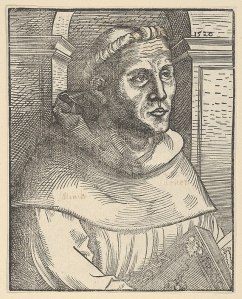
Martin Luther
(1483-1546)

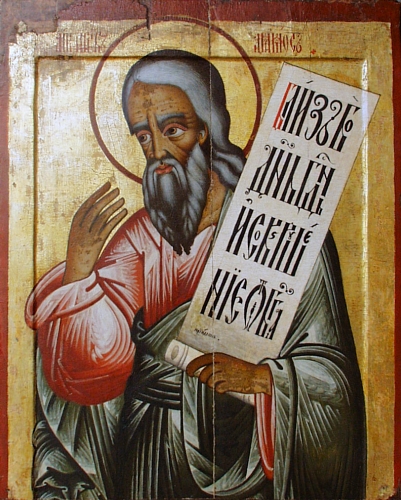
Amos, the Prophet

Reflection: An Ancient Voice Speaks to Us

The prophet Amos appears five times across the three-year cycle of the Revised Common Lectionary, typically during the Season after Pentecost when prophetic voices are spotlighted (once in Year A, and twice in both Years B and C). Across these readings, Amos emerges as a relentless voice for justice, calling out systems that oppress the vulnerable and distort sacred practice. His message is consistent: true faith demands ethical integrity, and divine judgment awaits those who ignore the cries of the poor. The lectionary’s use of Amos places him in direct conversation with Gospel texts, reinforcing the timeless urgency of his prophetic witness. (Sidebar: I explored Amos in July (Pentecost 6) when he appeared as an alternate reading offered within the Lectionary).

Amos the Prophet, 18th Century Russian Icon

In the Lutheran Study Bible (Second Edition), Peter T. Nash and Walter C. Bouzard do a terrific job of framing the prophet’s story (shameless plug for investing in this resource!). Amos’ prophetic ministry began in c. 762 BCE and though he was from Tekoa in the Southern Kingdom, he spent most of his time in the Northern Kingdom in the region of Bethel (eleven miles north of Jerusalem). The division between the two Kingdoms of Israel during this time offers relevant context. As the authors assert, “Judahite interpreters from the southern tribes blamed the north and its leaders for the broken relationship. They pointed to the northerners’ rebellious spirit, which was fueled by the polluting influence of Canannite and Phoenician politics and religious practices. The worship of other gods in addition to YHWH was a severe offense. Also mentioned frequently was the issue of economic inequality . . . Southerners accused the northerners of abandoning their shared core value — equality among siblings based on their equality before God.” (pp. 1383-84, LSB). I suspect if these ancient people could have accessed social media, they would have launched vitriolic attacks on one another! It was into this milieux that the prophet Amos emerged. It was a diverse and divided world.
This week’s passage, chapter 8:4–7, comes after God compares the people of Israel to a basket of summer fruit that is rotting. In response, Amos delivers a sharp rebuke to those who exploit the poor and manipulate economic systems for personal gain. The prophet exposes how sacred times are treated as mere interruptions to profiteering, with dishonest scales and the buying and selling of the vulnerable. God responds with a solemn oath: these injustices will not be forgotten, and divine judgment is coming for those who trample the needy. In fact, if you read ahead a bit (verses 11-12), the Lord suggests that the very Word of God will be withdrawn from the people — a chilling assertion!

How should 21st Century Christians respond to Amos? The lessons from Amos 8:4–7 are as urgent now as they were in his day twenty-seven centuries ago. First, justice is not optional—it’s woven into the very character of God, and those who claim to follow Him must reflect that justice in how they treat others, especially the poor and powerless. Second, Amos reminds us that injustice is often systemic: dishonest scales, exploitative markets, and disregard for sacred rhythms all point to a society where profit overrides compassion. And third, there’s a warning here for communities of faith: when worship becomes disconnected from ethical living, God does not merely critique—He threatens silence. The Word of the Lord is not a guarantee; it’s a gift, and when ignored, it may be withdrawn. That silence, Amos suggests, is its own kind of judgment. That’s unsettling, to say the least!

But let’s not leave it at that. The great Walter Brueggemann viewed prophets like Amos as bearers of the prophetic imagination—figures who challenged prevailing assumptions and offered a radically different vision rooted in God’s justice. Their role wasn’t just to criticize; they also reframed reality itself. Brueggemann reminds us that true prophets don’t simply name what’s broken—they envision what could be, guided by mercy and moral conviction. These are words for us to carry with us every day as “purveyors of hope” in a broken world.

Soli Deo Gloria!

Note: In the paragraph offered on the lessons of Amos, I drew heavily from a 2010 commentary by Rolf Jacobson, the A.N. Rogness Chair in Scripture, Theology and Ministry at Luther Seminary in St. Paul.

Note: Walter Brueggemann’s book, The Prophetic Imagination (40th Anniversary edition, 2018) is a remarkable resource and changed my understanding of the Old Testament prophets.

Prayer Reflection from Dag Hammarskjold

You who are over us,
You who are one of us,
You who are also within us,
May all see you in me also.
May I prepare the way for you,
May I thank you for all
that shall fall to my lot,
May I also not forget the needs of others.
Give me a pure heart-that I may see you.
A humble heart-that I may hear you,
A heart of love-that I may serve you,
A heart of faith-that I may abide in you. Amen.

This prayer is attributed to Dag Hammarskjöld, the Swedish diplomat and second Secretary-General of the United Nations. It appears in his posthumously published spiritual journal Markings (originally Vägmärken), which blends poetic reflection, Christian mysticism, and ethical introspection.

A Musical Offering: Ring Them Bells (Dylan)

Bob Dylan’s “Ring Them Bells,” from his 1989 Oh Mercy album, hits like a quiet thunderclap—a solemn, hymn-like call to wake up. It’s Dylan in full prophetic mode, echoing earlier pieces like “Chimes of Freedom,” but here the urgency feels deeper, more spiritual. He brings in biblical figures—St. Peter, St. Catherine, Sweet Martha—not just as symbols, but as voices ringing the bells, urging us back toward justice, mercy, and truth. Dylan’s not just singing—he’s sounding the alarm, stepping into that long tradition of artists who speak up when the world’s off-kilter.

The song is especially interesting, owing to Dylan’s dramatic conversion to Christianity in the late 1970s.

Provide a short analysis of Bob Dylan’s Song, “Ring Them Bells.” Copilot website, 13 September 2025.

The Lyrics

Ring them bells, ye heathen
From the city that dreams
Ring them bells from the sanctuaries
Across the valleys and streams
For they’re deep and they’re wide
And the world’s on its side
And time is runnin’ backwards
And so is the bride

Ring them bells St. Peter
Where the four winds blow
Ring them bells with an iron hand
So the people will know
Oh, it’s rush hour now
On the wheel and the plow
And the sun is goin’ down
Upon the sacred cow

Ring them bells Sweet Martha
For the poor man’s son
Ring them bells so the world will know
That God is one
Oh the shepherd is asleep
Where the willows weep
And the mountains they are filled
With lost sheep

Ring them bells for the blind and the deaf
Ring them bells for all of us who are left
Ring them bells for the chosen few
Who will judge the many
When the day is through
Ring them bells for the time that flies
For the child that cries
When her innocence dies

Ring them bells St. Catherine
From the top of the room
Ring them bells from the fortress
For the lilies that bloom
Oh, the lines they are long
And the fighting is strong
And they’re breakin’ down the distance
Between right and wrong

Joan Baez, born in 1941 in Staten Island, New York, rose to prominence in the early 1960s as a folk singer whose unwavering commitment to social justice made her a defining voice of her generation. She played a pivotal role in popularizing Bob Dylan’s early work and became a leading figure in the civil rights and anti-war movements, performing at events like the 1963 March on Washington. and the 1969 Woodstock Festival. Over more than six decades, Baez released over 30 albums and remained a tireless activist, earning induction into the Rock and Roll Hall of Fame in 2017.

I hope you enjoy Baez’s live performance here and her interpretation of this timely song!

Faithful Conversations Updates

14 September 2025: Holy Cross Day (Pentecost 14)

Introduction to Readers

Rene Girard
(1923-2015)

“Everywhere and always, when human beings either cannot or dare not take their anger out on the thing that has caused it, they unconsciously search for substitutes, and more often than not they find them.” (René Girard, The One by Whom Scandal Comes)

While exploring the Gospel passage from John for Holy Cross Day, I stumbled on a fascinating commentary that pointed me to a deeper understanding of the role of the scapegoat throughout history — a term that traces back to William Tyndale’s 1530 English translation of Leviticus 16. In the ancient Day of Atonement ritual, one goat was offered to God, while another was sent into the wilderness, symbolically carrying the sins of the people. Tyndale rendered the Hebrew word ʿăzāzêl as “escape goat,” a phrase that evolved into scapegoat and came to describe anyone unfairly blamed or cast out for the faults of others. French-American thinker René Girard deepened this insight with his concept of the scapegoat mechanism—the unconscious “search for substitutes.” What he described was a pattern by which societies target outsiders to relieve internal tensions, often masking deeper truths about violence, reconciliation, and grace. We don’t have to look far to see the pattern! History certainly offers sobering examples: Socrates, condemned by the Athenian state as a corrupting influence during a time of civic unrest, and European Jews, scapegoated by the Nazi regime as the cause of Germany’s decline—both victims of collective projection and sacrificial violence. (Here’s a good article if you would like a further explanation). I will explore this concept further in m reflections, focusing on the Old Testament reading from Numbers as a backdrop for understanding the Gospel.

St. Helena

Thanks for returning to this space again this week! Your interest in the Lectionary inspires me! Next Sunday coincides with Holy Cross Day on our church calendar (September 14), listed among the Lesser Festivals and Commemorations in the ELCA. It is not uncommon to highlight the Lesser Festivals, especially when they fall on a Sunday. (Sidebar: Here’s a nice explanation of how we handle such things within our denomination). And some background for the good of the cause: Holy Cross Day commemorates the cross on which Jesus was crucified—not merely as an instrument of death, but as a symbol of redemption and divine love. The feast traces its origins to St. Helena, mother of Emperor Constantine, who journeyed to Jerusalem c. 326 CE and, according to tradition, discovered the True Cross at the site of Christ’s crucifixion. Sometime later, Constantine dedicated the Church of the Holy Sepulchre on September 13–14, 335, marking the first public veneration of the cross. The feast also recalls the recovery of the cross in 628 A.D. by Emperor Heraclius, who reclaimed it from Persian forces and returned it to Jerusalem. Over time, Holy Cross Day became a universal Christian observance, celebrated by Catholics, Orthodox, Anglicans, Lutherans, and others. Unlike Good Friday, which focuses on Christ’s suffering, this feast exalts the cross as a “tree of life”, a sign of victory, healing, and hope. In liturgy and devotion, the cross is lifted high—not to glorify suffering, but to proclaim the transformative power of divine love. I’m offering a musical selection today that comes out of this tradition.

** Note 1: Links to outside references are bolded and italicized and are meant for further reading or research on your part. While the text I am including in the blog is my own, I am pulling from a multitude of sites for ideas and connections.

** Note 2: In my increasing use of A.I. (Copilot), I will cite sourcing of how I am using the tool, if necessary. I don’t want that to be overly cumbersome, but I am gradually incorporating more tools. I am exploring the A.I. world this summer prior to my next teaching semester. As you can imagine, it is a great challenge right now and will forever change the face of education!


** Note 3: The images I include in the blog are drawn from Wikimedia Commons to the fullest extent possible.

Common Themes Among the Readings

Readings for
Holy Cross Day


Numbers 21: 4b-9
Psalm 98: 1-4
1 Corinthians 1: 18-24
John 3: 13-17

My source for the Bible readings each week is the Bible Gateway website. I generally use the NRSVUE translation.

The readings for Holy Cross Day converge around the mystery and majesty of the cross as both a symbol of suffering and a source of salvation. In Numbers, the bronze serpent lifted by Moses prefigures Christ’s crucifixion, where healing comes through looking in faith. John 3:13–17 deepens this image, revealing that the Son of Man must be lifted up so that all who believe may have eternal life—not just life after death, but a new, abundant life marked by spiritual rebirth and belonging. This passage, often reduced to the familiar “John 3:16,” gains its full power when read in context: Jesus speaks to Nicodemus about the radical nature of God’s love, a love that chooses vulnerability and sacrifice over condemnation. 1 Corinthians and Psalm 98 echo this paradox and promise—where the cross, foolish to the world, becomes the wisdom of God, and all creation is invited to sing of the victory won through love.

“Describe the common themes among the readings for Holy Cross Day.” Copilot, 4 September 2025, Copilot website.

LUTHER’S METHOD OF BIBLE READING
A Revision of the Lectio Divina (Augustinian)


Three Steps
Oratio (Prayer): This is the starting point, where one humbly prays for the Holy Spirit’s guidance to understand God’s Word. Luther emphasized that prayer prepares the heart and mind to receive divine wisdom.

Meditatio (Meditation): This involves deeply engaging with Scripture, not just reading it but reflecting on it repeatedly. Luther encouraged believers to “chew on” the Word, allowing its meaning to sink in and shape their thoughts and actions.

Tentatio (Struggle): Often translated as “trial” or “temptation,” this refers to the challenges and spiritual battles that arise as one seeks to live according to God’s Word. Luther saw these struggles as a way God refines faith, making it more resilient and authentic.

1960s Lutheran humor from Charles Schultz

The Gospel: John 3: 13-17

13 No one has ascended into heaven except the one who descended from heaven, the Son of Man. 14 And just as Moses lifted up the serpent in the wilderness, so must the Son of Man be lifted up, 15 that whoever believes in him may have eternal life.
16 “For God so loved the world that he gave his only Son, so that everyone who believes in him may not perish but may have eternal life.
17 “Indeed, God did not send the Son into the world to condemn the world but in order that the world might be saved through him.

Reflection: Lifted for Healing

In exploring the Lectionary each week, the Old Testament passage typically provides context for the Gospel reading, and that is certainly the case for Holy Cross Day. Here’s a quick summary of each.

Moses and the Bronze Serpent
(Jean-Charles Frontier, 1743)

Numbers 21:4b–9 recounts a moment of crisis and mercy during Israel’s wilderness journey. As the people grow impatient and speak against God and Moses, they are punished with fiery serpents whose bites prove deadly. In response to their repentance, God instructs Moses to craft a bronze serpent and lift it on a pole—anyone who looks at it after being bitten is healed. This passage reveals a powerful pattern: divine judgment met with divine mercy, and healing offered not by removing danger, but by redirecting the gaze toward hope.

John 3:13–17 presents a powerful summary of the Gospel message through Jesus’ conversation with Nicodemus, a Pharisee who secretly visited Jesus at night. Jesus explains that just as Moses lifted up the serpent in the wilderness, so must the Son of Man be lifted up—pointing to his crucifixion as the means by which eternal life is offered. The passage culminates in the declaration that “God so loved the world that He gave His only Son,” emphasizing divine love as the foundation of salvation. Crucially, it affirms that Jesus was sent not to condemn the world, but to save it, offering redemption to all who believe.

What are we to make of these readings? Both passages are imbedded in powerful moments and difficult to understand, in my mind, without deeper context. Jennifer Garcia Bashaw, Associate Professor of New Testament and Christian Ministry at Campbell University, provides a compelling commentary that I am leaning on heavily here. Let me summarize a bit. She makes the case that we tend to read John 3:16 — one of the most recognizable Bible passage of all — as a “stand-alone” verse and misrepresent its true meaning. The key, according to Bashaw, is the reference in preceding verses (3:14-15) to the “bizarre story about a bronze snake” (referencing Numbers). Those fiery serpents God sent are wreaking havoc on the wandering Israelites, and their only salvation is to gaze upon the lifted serpent of bronze. That image reminds them of their own self-destruction — in Bashaw’s words, “the evil of empire, the oppression they participate in, the violence that beats at the heart of society, the scapegoating tendencies of people who allow innocent people to suffer for sins that aren’t their own.” And here’s the connection John is drawing: like that bronze serpent, Jesus’ death on the cross (“Lift High the Cross”), “reveals humanity’s self-destructive nature that drives societies to fear and violence.” The cross, then, becomes “the symbol of misplaced blame and oppressive violence.” Jesus becomes the scapegoat, executed by the powerful and a reminder of how far we have fallen. Our healing — our salvation — starts with recognizing this fact, believing it deeply in our souls.

John’s Gospel underscores this call to belief with remarkable frequency. He uses some variation of the verb believe eighty-four times—far more than Matthew, Mark, and Luke combined. Faith, then, rests not on abstract doctrine but on a lived belief in a Savior whose life, death, and resurrection transformed history and offers hope to a fallen world. This is good news that we need to share!

Soli Deo Gloria!

Prayer Reflection: Two from Henri Nouwen

Henri Nouwen
(1932-1996)

Before Birth and After Death
I am a human being who was loved by God before I was born and whom God will love after I die. This brief lifetime is my opportunity to receive love, deepen love, grow in love, and give love. When I die love continues to be active, and from full communion with God I am present by love to those I leave behind.

Discovering our True Self
The spiritual journey is essentially different from engaging in hero worship or joining a therapeutic movement. These forms of following are typically centered on “me.” In hero worship, we may be looking for a vicarious self by losing our identity in that of the hero. In many therapeutic movements, we may be searching for inner harmony or healing. When Jesus says, “Follow me,” he is calling us to let go of “me” and to gradually say, “You, Lord, are the one.” Jesus calls us to leave our “me” world, trusting that being at home in God we will discover who we truly are.

A Musical Offering: Nos Autem Gloriari

Nos autem gloriari is a liturgical chant rooted in Galatians 6:14 which declares: “But far be it from me to glory except in the cross of our Lord Jesus Christ, by which the world has been crucified to me, and I to the world.” This verse became the foundation for the Latin Introit used on Holy Thursday and the Feast of the Exaltation of the Holy Cross, emphasizing the paradoxical glory of Christ’s crucifixion. The chant was formalized in the Gregorian tradition and later inspired Renaissance composers like Palestrina, whose motet setting remains a sacred choral standard. Over centuries, Nos autem has served as a musical and theological anchor, proclaiming the cross as both a sign of suffering and the gateway to redemption. The lyrics also reference Psalm 67.

The Lyrics (Latin/English)

Nos autem gloriari oportet in cruce Domini nostri Jesu Christi:
In quo est salus, vita et resurrectio nostra:
Per quem salvati et liberati sumus.
Psalmus: Deus misereatur nostri, et benedicat nobis:
Illuminet vultum suum super nos, et misereatur nostri.

But it befits us to glory in the Cross of our Lord Jesus Christ,
in whom is our salvation, life, and resurrection;
through whom we are saved and set free.
Psalm: May God have mercy on us and bless us;
may He cause the light of His countenance to shine upon us, and may He have mercy on us.

The Choir of the Basilica of the National Shrine of the Immaculate Conception is a professional vocal ensemble based in Washington, D.C., dedicated to enhancing sacred liturgy through music. Comprising highly trained singers from the region, the choir performs a wide repertoire—from Gregorian chant and Renaissance polyphony to contemporary sacred compositions—under the direction of Dr. Peter Latona. Known for its musical excellence and spiritual depth, the choir regularly sings for major liturgical celebrations, including papal visits and national broadcasts, serving as a voice of beauty and devotion within the Catholic Church.

“Provide a description of the Choir of the Basilica of the National Shrine,” 7 September 2025, Copilot Website.

Faithful Conversations Updates

31 August 2025: Pentecost 12 (Ordinary 22)

Introduction to Readers

“The big majority of Americans, who are comparatively well-off, have developed an ability to have enclaves of people living in the greatest misery almost without noticing them.” — Gunnar Myrdal (1898-1987)

We live in a time marked by deep divisions. This week’s readings from Proverbs and Luke revolve around meals, invitations, and where people sit, both literally and metaphorically. The closing verses of Luke’s Gospel (14:13–14) remind me of a story my father shared with me many times. During his World War II training (1943), prior to his deployment to the Italian theater, he witnessed something that stayed with him for life (sidebar: much of his training took place in the South, but this incident was in a different region of the country. Also, a reminder that the US Military was not integrated until 1948). One evening, while eating with fellow soldiers, a Black man entered the restaurant and sat nearby. Unk’s training partner—a young lad from Georgia—suddenly stood up and left, visibly shaken and nearly sick. The reaction stunned Unk. He couldn’t understand how someone could be so shaped by racial prejudice that the simple presence of another person caused such a visceral response. I believe that moment, quiet but powerful, opened his eyes to the deeper divisions in the country he was preparing to defend. As a nineteen-year-old northern boy, he had never seen anything like it. Swedish economist and sociologist Gunnar Myrdal’s famous study, The American Dilemma: The Negro Problem and Modern Democracy, published around that time (1944), highlighted the deep contradiction between the United States’ democratic ideals and its systemic racism. Myrdal saw a deep spiritual crisis at the heart of American life: a nation that preached liberty and equality yet built systems that denied those very gifts to Black citizens. This contradiction, especially in the conscience of white Americans, became a kind of moral blindness—one that sustained injustice across generations. He believed that only by naming and repenting of this hypocrisy could the nation begin to walk the path of true reconciliation and justice. Though time has passed and progress has come, I believe we are still called—eighty-one years later—to wrestle with this same brokenness and seek healing with honesty, humility, and hope. More on this later in my reflection.

Moses the Black

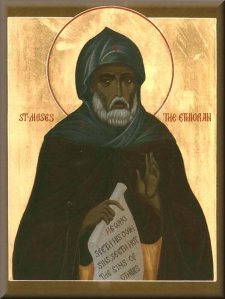
Thanks for your continued interest in the Lectionary and for returning to this space! This week (August 28th) the ELCA commemorates both Augustine, Bishop of Hippo (CE 354-430), and Moses the Black, 4th Century monk and martyr. Recall that Martin Luther had Augustinian training under the guidance of Johann von Staupitz, who encouraged Luther’s deep engagement with grace, sin, and faith. This training laid the foundation for Luther’s theological breakthroughs, as he later drew heavily on Augustine’s writings while developing his own reformist ideas. And, a reminder — the modified version of the Lectio Divina I include each week, comes from Augustine. As for Moses the Black, his fascinating story is new to me, and I encourage you to read about him here.

** Note 1: Links to outside references are bolded and italicized and are meant for further reading or research on your part. While the text I am including in the blog is my own, I am pulling from a multitude of sites for ideas and connections.

** Note 2: In my increasing use of A.I. (Copilot), I will cite sourcing of how I am using the tool, if necessary. I don’t want that to be overly cumbersome, but I am gradually incorporating more tools. I am exploring the A.I. world this summer prior to my next teaching semester. As you can imagine, it is a great challenge right now and will forever change the face of education!


** Note 3: The images I include in the blog are drawn from Wikimedia Commons to the fullest extent possible.

Common Themes Among the Readings

Pentecost 12 Readings

Proverbs 25: 6-7
Psalm 112
Hebrews 13: 1-8, 15-16
Luke 14: 1, 7-14

My source for the Bible readings each week is the Bible Gateway website. I generally use the NRSVUE translation.

The readings for Pentecost 12 (Year C) center on humility, hospitality, and the quiet strength of righteousness. Proverbs 25:6–7 and Luke 14:7–14 both caution against self-promotion, urging listeners to take the lower seat and let honor come from others, especially God. Psalm 112 celebrates the life of the righteous—those who are gracious, generous, and just—whose legacy endures and whose hearts are steady. Hebrews 13 calls believers to live with love, integrity, and generosity, extending hospitality to strangers and remembering those who suffer. Together, these texts invite a posture of grounded humility and active compassion, reflecting the values of God’s kingdom rather than the hierarchies of the world.

“Describe the common themes among the readings for Pentecost 12.” Copilot, 25 August 2025, Copilot website.

LUTHER’S METHOD OF BIBLE READING
A Revision of the Lectio Divina (Augustinian)


Three Steps
Oratio (Prayer): This is the starting point, where one humbly prays for the Holy Spirit’s guidance to understand God’s Word. Luther emphasized that prayer prepares the heart and mind to receive divine wisdom.

Meditatio (Meditation): This involves deeply engaging with Scripture, not just reading it but reflecting on it repeatedly. Luther encouraged believers to “chew on” the Word, allowing its meaning to sink in and shape their thoughts and actions.

Tentatio (Struggle): Often translated as “trial” or “temptation,” this refers to the challenges and spiritual battles that arise as one seeks to live according to God’s Word. Luther saw these struggles as a way God refines faith, making it more resilient and authentic.

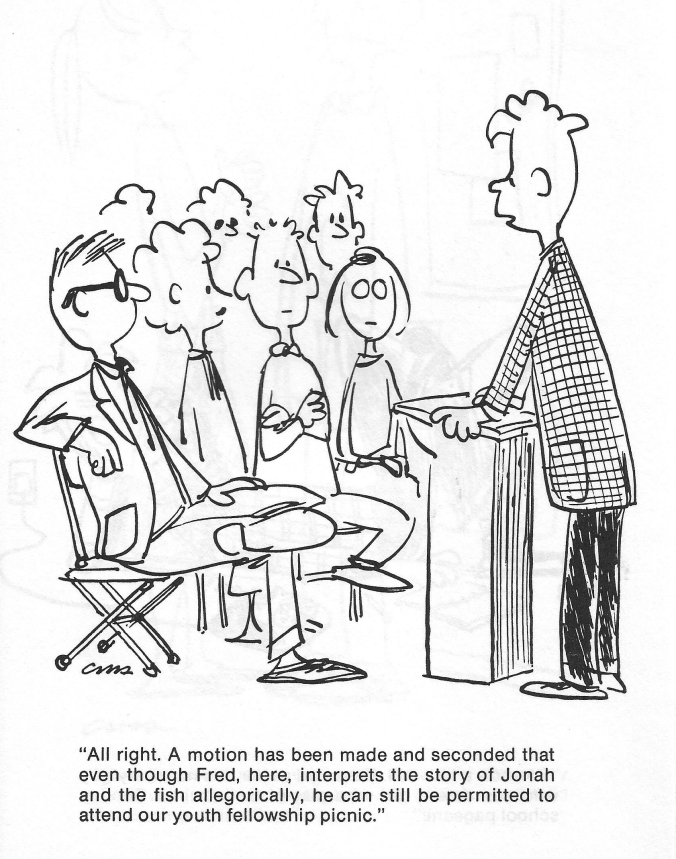
1960s Lutheran Humor!
Intense battles over Biblical Interpretation!
(1960s Lutheran humor)

Hebrews 13: 1-8, 15-16

13 Let mutual affection continue. Do not neglect to show hospitality to strangers, for by doing that some have entertained angels without knowing it. Remember those who are in prison, as though you were in prison with them, those who are being tortured, as though you yourselves were being tortured. Let marriage be held in honor by all, and let the marriage bed be kept undefiled, for God will judge the sexually immoral and adulterers. Keep your lives free from the love of money, and be content with what you have, for he himself has said, “I will never leave you or forsake you.” So we can say with confidence, “The Lord is my helper;
    I will not be afraid.
What can anyone do to me?” Remember your leaders, those who spoke the word of God to you; consider the outcome of their way of life, and imitate their faith. Jesus Christ is the same yesterday and today and forever.
15 Through him, then, let us continually offer a sacrifice of praise to God, that is, the fruit of lips that confess his name. 16 Do not neglect to do good and to share what you have, for such sacrifices are pleasing to God.

Luke 14: 1, 7-14

One Sabbath, when Jesus went to eat in the house of a prominent Pharisee, he was being carefully watched.
When he noticed how the guests picked the places of honor at the table, he told them this parable: “When someone invites you to a wedding feast, do not take the place of honor, for a person more distinguished than you may have been invited. If so, the host who invited both of you will come and say to you, ‘Give this person your seat.’ Then, humiliated, you will have to take the least important place. 10 But when you are invited, take the lowest place, so that when your host comes, he will say to you, ‘Friend, move up to a better place.’ Then you will be honored in the presence of all the other guests. 11 For all those who exalt themselves will be humbled, and those who humble themselves will be exalted.” 12 Then Jesus said to his host, “When you give a luncheon or dinner, do not invite your friends, your brothers or sisters, your relatives, or your rich neighbors; if you do, they may invite you back and so you will be repaid. 13 But when you give a banquet, invite the poor, the crippled, the lame, the blind, 14 and you will be blessed. Although they cannot repay you, you will be repaid at the resurrection of the righteous.”

Source: Bible Gateway

Reflection: “Welcoming Angels, Mending Wounds”

Isaiah the Prophet

On Sunday morning (yesterday), I had a “Holy Spirit moment” while listening to the first reading from Isaiah (thanks Sue Leadholm, for your reading, and also Pastor Jen for helping me think further regarding exclusion!). One verse stood out with unusual force—Isaiah 58:12: “You shall be called the repairer of the breach, the restorer of streets to live in.” A bit of background for context: Isaiah 58 is a prophetic call to authentic faithfulness, where God—through the prophet—challenges hollow religious rituals and redirects attention toward justice, mercy, and community restoration. The chapter opens with a rebuke: the people are fasting and seeking God, but their actions are disconnected from righteousness—they exploit workers, quarrel, and ignore the oppressed. Instead of empty gestures, God calls for a fast that loosens the bonds of injustice, frees the oppressed, shares bread with the hungry, and shelters the homeless. It was that phrase—repairer of the breach— that stopped me in my tracks. It felt powerfully relevant and a call for Christians today, especially in a world so divided and wounded. It’s an age-old problem — excluding others — but listen for it in the daily news cycle! We are meant to be people who help mend what’s broken, who rebuild trust, and who provide space for others to live with dignity and hope. As followers of Christ, if we can’t do this — if we won’t do this — who will?

Jesus Invites the Outcasts (A.I. generated)

In turn, that verse and that moment reframed my hearing of the Hebrews 13 and Luke 14 readings in this week’s lectionary. The passage from Hebrews (the last of four in the lectionary cycle) reminds us, among other things, to show love to strangers, saying that in doing so, we may be welcoming angels without knowing it (13:2). Let that notion sink in for a moment. Luke takes this even further, urging us to invite those who cannot repay us—the poor, the forgotten, the excluded (14:13). Both passages suggest that hospitality isn’t just about being polite—it’s about seeing Christ in others, especially those who are vulnerable. It’s about creating space where grace can take root.

One thing I’ve learned over the years is that scripture speaks differently each time we read it. Familiar passages can suddenly feel new, offering fresh insight or a deeper challenge. That’s part of the beauty of the Bible—it grows with us. Starting in late September, we’re inviting our members to begin a journey: reading through the Bible in a year. It’s a commitment, yes—but also an opportunity to hear God’s voice in new ways, to be shaped by the stories, wisdom, and promises that have guided generations. I hope you’ll join us. Let’s walk this path together.

Soli Deo Gloria!

Prayer Reflection: “On the Pulse of Morning” (Angelou)

Lift up your faces, you have a piercing need
For this bright morning dawning for you.
History, despite its wrenching pain
Cannot be unlived, but if faced
With courage, need not be lived again.
Lift up your eyes upon
This day breaking for you.
Give birth again
To the dream…


Lift up your hearts
Each new hour holds new chances
For a new beginning.
Do not be wedded forever
To fear, yoked eternally
To brutishness.
The horizon leans forward,
Offering you space to place new steps of change.

Drawn from Angelou’s Inaugural Poem, 20 January 1993.

A Musical Offering: “Jesus Calls Us Over the Tumult”

Cecil Frances Alexander (1818–1895), a beloved Irish hymn writer known for her poetic clarity and theological depth, wrote over 400 hymns, many for children, including All Things Bright and Beautiful and Once in Royal David’s City. This hymn was written for a Sunday service focused on the calling of the first disciples—Simon, Andrew, James, and John—by the Sea of Galilee (Matthew 4:18–22; Mark 1:16–18). Her husband, William Alexander, an Anglican clergyman (later Archbishop of Ireland), requested a hymn for that occasion. The hymn echoes Jesus’ call to leave behind worldly distractions and follow Him wholeheartedly. Lines like “Christian, love me more than these” draw inspiration from John 21:15, where Jesus asks Peter, “Do you love me more than these?” It’s a call to discipleship amid the “tumult” of everyday life. If you need a few moments of calm in your day, enjoy this simple and clear piano interpretation!

Lyrics: Jesus Calls Us O’er the Tumult

1. Jesus calls us o’er the tumult
Of our life’s wild, restless sea;
Day by day his sweet voice sounding,
Saying, “Christian, follow me.”

2. Brothers Simon, Andrew heard it
By the Galilean lake,
Turned from home, and toil, and kindred,
Leaving all for His dear sake.

3. Jesus calls us from the worship
Of the vain world’s golden store,
From each idol that would keep us,
Saying, “Christian, love me more.”

4. In our joys and in our sorrows,
Days of toil and hours of ease,
Still he calls, in cares and pleasures,
“Christian, love me more than these.”

5. Jesus calls us—By your mercies,
Savior, may we hear your call,
Give our hearts to your obedience,
Serve and love you best of all.

Cecil Frances Alexander

Faithful Conversations: Two Updates

Next Sunday (31 August), ELC will offer one service at Hatfield at 10:15 (no in-town worship that day). This will the final Hatfield experience for this year and starting 7 September, we will resume our regular schedule (9:30 service at ELC). One 14 September, we will resume our in-person discussions of the lectionary after worship in the church library (10:45-11:30). ALL ARE WELCOME!

24 August 2025: Pentecost 11 (Ordinary 21)

Introduction to Readers

George Santayana (1863-1952)

The debates over our national history have been on my mind this week. They go beyond academic and are existential in some ways. History shapes our identity, both personal and collective. At the center of this fight over our past is the challenge of memory: what we remember, what we forget, and whose stories we tell. Each person sees the past through their own lens, shaped by background and experience. That’s why history is often contested, and why historians work hard to find and share the truth. But behind all these disagreements is that deeper question: Who are we as a people?*

Mount Sinai
Modern View of Mount Zion

First generation Christians grappled with this question as well. This week’s passage from Hebrews (12:18–29) brought to mind Santayana’s famous warning about failing to remember.** The author of Hebrews (Paul? Apollos?) offers a compelling example of how sacred history can be used to interpret the present and warn against repeating the mistakes of the past. The writer draws a vivid contrast between two mountains—Mount Sinai and Mount Zion. Sinai, with its fire, darkness, and trembling, recalls the fearsome encounter between God and the Israelites—a moment etched in communal memory as both revelation and warning. Zion, by contrast, represents a new reality: the city of the living God, a place of welcome, celebration, and covenant fulfilled. This historical contrast is not incidental—it’s purposeful. It invites the early Christian community, and us as readers today, to reflect on where we stand. Are we still living in the shadow of Sinai, bound by fear and distance? Or have we embraced the promise of Zion, stepping into a relationship marked by grace and proximity? I’ll explore this further in this week’s reflection, including a connection to the Gospel reading.

Thanks for your visit here again this week and I pray for all of us regarding the exploration of God’s Word. We are nearing the half-way point of the 168 days of the Season of Pentecost. Bernard, Abbott of Clairvaux (d. 20 August 1153), is commemorated on our church calendar this week. Bernard (1090–1153) was a key leader in medieval Christianity known for his deep faith and powerful influence. He helped grow the Cistercian order, promoting a simpler, more prayerful way of life. His writings encouraged a personal connection with God and shaped Christian mysticism. Bernard also supported the Knights Templar and helped make devotion to the Virgin Mary a central part of Catholic belief. Honored as a saint and Doctor of the Church, his legacy lives on through his teachings on love, humility, and spiritual renewal. The accompanying image is by the French artist, Emile Signol (1804-1892) and is titled, “Saint Bernard Preaching the Second Crusade in Vezelay, 1146.”

* I am about to embark on my 47th year of teaching history, and these “history wars” have been part of my experience dating back to the late 1970s. If you are interested in a further exploration of this debate, this commentary by historian David Blight is a good place to start. Also, I welcome any exchange you might want to have regarding the topic!

**This interpretation I’m offering was inspired by a posting by Timothy L. Adkins-Jones in Working Preacher from 25 August 2019. He is the senior pastor at Bethany Baptist Church in Newark, N.J. Working Preacher is sponsored by Luther Seminary and is a powerful resource!

Common Themes Among the Readings for Pentecost 11

Pentecost 11 Readings

Isaiah 58: 9b-14
(Alt: Jeremiah 1: 4-10)
Psalm 103: 1-8
Hebrews 12: 18-29
Luke 13: 10-17

My source for the Bible readings each week is the Bible Gateway website. I generally use the NRSVUE translation.

Here’s a framework for exploring the readings for Pentecost 11 (Year C). God’s call to prophetic witness (Jeremiah 1:4–10) and the promise of restoration through justice and compassion (Isaiah 58:9b–14) offer a vision of divine empowerment rooted in mercy. Psalm 103 celebrates God’s steadfast love and forgiveness, echoing the healing and liberation Jesus brings to the bent-over woman in Luke 13. The Gospel challenges rigid religiosity, affirming that true Sabbath observance is found in acts of grace. Hebrews 12 contrasts fear-based worship with the awe-filled joy of belonging to an unshakable kingdom, urging reverence and gratitude. Together, these texts invite the faithful to embody healing, justice, and holy boldness in a world longing for renewal.

“Describe the common themes among the readings for Pentecost 11.” Copilot, 25 15 August 2025, Copilot website.

LUTHER’S METHOD OF BIBLE READING
A Revision of the Lectio Divina (Augustinian)


Three Steps
Oratio (Prayer): This is the starting point, where one humbly prays for the Holy Spirit’s guidance to understand God’s Word. Luther emphasized that prayer prepares the heart and mind to receive divine wisdom.

Meditatio (Meditation): This involves deeply engaging with Scripture, not just reading it but reflecting on it repeatedly. Luther encouraged believers to “chew on” the Word, allowing its meaning to sink in and shape their thoughts and actions.

Tentatio (Struggle): Often translated as “trial” or “temptation,” this refers to the challenges and spiritual battles that arise as one seeks to live according to God’s Word. Luther saw these struggles as a way God refines faith, making it more resilient and authentic.

Fast Fact: In Washington, D.C., a statue of Martin Luther stands prominently in front of Luther Place Memorial Church at Thomas Circle. Installed in 1884 to mark the 400th anniversary of Luther’s birth, the statue is a replica of Ernst Friedrich August Rietschel’s original work from the 1868 Luther Monument in Worms, Germany.

Second Reading: Hebrews 12: 18-29
18 You have not come to something that can be touched, a blazing fire, and darkness, and gloom, and a tempest, 19 and the sound of a trumpet, and a voice whose words made the hearers beg that not another word be spoken to them. 20 (For they could not endure the order that was given, “If even an animal touches the mountain, it shall be stoned to death.” 21 Indeed, so terrifying was the sight that Moses said, “I tremble with fear.”) 22 But you have come to Mount Zion and to the city of the living God, the heavenly Jerusalem, and to innumerable angels in festal gathering, 23 and to the assembly of the firstborn who are enrolled in heaven, and to God the judge of all, and to the spirits of the righteous made perfect, 24 and to Jesus, the mediator of a new covenant, and to the sprinkled blood that speaks a better word than the blood of Abel. 25 See that you do not refuse the one who is speaking, for if they did not escape when they refused the one who warned them on earth, how much less will we escape if we reject the one who warns from heaven! 26 At that time his voice shook the earth, but now he has promised, “Yet once more I will shake not only the earth but also the heaven.” 27 This phrase, “Yet once more,” indicates the removal of what is shaken—that is, created things—so that what cannot be shaken may remain. 28 Therefore, since we are receiving a kingdom that cannot be shaken, let us show gratitude, by which we may offer to God an acceptable worship with reverence and awe, 29 for indeed our God is a consuming fire.

Gospel: Luke 13: 10-17
10 Now he was teaching in one of the synagogues on the Sabbath. 11 And just then there appeared a woman with a spirit that had crippled her for eighteen years. She was bent over and was quite unable to stand up straight. 12 When Jesus saw her, he called her over and said, “Woman, you are set free from your ailment.” 13 When he laid his hands on her, immediately she stood up straight and began praising God. 14 But the leader of the synagogue, indignant because Jesus had cured on the Sabbath, kept saying to the crowd, “There are six days on which work ought to be done; come on those days and be cured and not on the Sabbath day.” 15 But the Lord answered him and said, “You hypocrites! Does not each of you on the Sabbath untie his ox or his donkey from the manger and lead it to water? 16 And ought not this woman, a daughter of Abraham whom Satan bound for eighteen long years, be set free from this bondage on the Sabbath day?” 17 When he said this, all his opponents were put to shame, and the entire crowd was rejoicing at all the wonderful things being done by him.

Reflection: “Encountering God

Where do we encounter God in our lives? That question surfaced recently in a conversation with Pastor Jen. The truth is, God can show up anywhere—while talking with a friend, sitting quietly in nature, or listening to music that stirs something deep inside. These moments often arrive unannounced, but they carry weight. They shift our perspective. They remind us that the sacred is not confined to sanctuaries or rituals—it’s woven into the fabric of daily life. C.S. Lewis captured this beautifully in his essay Is Theology Poetry, where he wrote, “I believe in Christianity as I believe that the sun has risen: not only because I see it, but because by it I see everything else.” Faith, in this sense, is not just a lens—it’s illumination. It doesn’t merely help us see God; it helps us see the world more clearly. Christianity, for those who walk that path, shines light on every part of life, revealing both its beauty and its brokenness.

Jesus Heals the Crippled Woman (A.I. generated)

This week’s lectionary readings from Hebrews and Luke offer vivid examples of what happens when people encounter God. These stories don’t play it safe—they disrupt old boundaries and invite us into moments of reverent awe. In Luke, Jesus heals a woman on the Sabbath, challenging rigid religious norms and revealing how God’s kingdom breaks into ordinary life with liberating power. In Hebrews, the writer contrasts the trembling fear of Sinai with the joy of Mount Zion—a place filled with healing, justice, and divine presence. Both passages confront systems that resist change—whether it’s synagogue leaders or worshippers clinging to fear. They call us to embrace a deeper, more gracious reality. True worship doesn’t come from legalism or anxiety. It flows from bold, compassionate acts that reflect God’s kingdom here and now.

God moments often arrive often when we least expect them. We carry a spark of the divine within us, so the potential is always near. That’s why it’s essential to stay grounded in two practices: worship with other Christians and daily engagement with God’s Word. These habits don’t just sustain us—they prepare us. They keep us attuned to the Spirit’s movement, even in the mundane. One of my coaching mentors used to say, “You need to put yourself in a position to BE in position.” It took me a while to grasp what he meant. He was urging us to prepare—to do the work—so that when the moment came, we’d be ready. As Lutherans, we know we don’t earn salvation. God has already given it to us. That’s our great gift. But we still have a role to play in this journey. We live it out. We share the story. We stay open to the unexpected. In the days ahead, watch for those quiet, surprising moments when God shows up. And when they do, let them shape you. We’re part of a story that’s still unfolding. Let’s live it with courage, grace, and readiness.

Soli Deo Gloria!

Prayer Reflection: People Who Show the Way (Nouwen)

Dutch Theologian Henri Nouwen (1932-1996)

“God’s people ground me in the reality and wholeness of Christ and his church, holding me firm and safe in God’s loving embrace. God speaks regularly to us through people who talk to us about the things of God. Certain people become living signs that point us to God. Whether in life or in memory, the people God puts in our lives can help guide us and show us the way.” (Nouwen)

Source: Henri Nouwen Society


Inspired prayer: O God, in the voices and lives of those you place before us, we encounter your presence and are drawn into the mystery of Christ and his church. Through their witness, may we be guided ever deeper into your love, finding in them a sacred path to you. Amen.


A Musical Offering: “Here I Am Lord”

Dan Schutte (b. 1947)

“Here I Am, Lord” is a beloved Christian hymn written by Dan Schutte in 1981, originally composed for the ordination Mass of a deacon while Schutte was studying theology at the Jesuit School of Theology in Berkeley. The lyrics draw deeply from Isaiah 6:8 (“Whom shall I send?”) and 1 Samuel 3 (“Speak, Lord, for your servant is listening”), blending divine calling with human response. The song also fits well with this week’s Isaiah reading (Isaiah 58: 9b-14). Uniquely, the hymn alternates between God’s voice in the verses and the worshipper’s reply in the refrain, creating a dynamic dialogue of vocation and surrender. Though rooted in Catholic renewal music following the Second Vatican Council, it quickly gained popularity across denominations and is now found in numerous Protestant hymnals. I first heard it while visiting a Methodist church and was captivated by it. In the ELW (ELCA), it is hymn number 574. The version offered here is a gorgeous jazz interpretation. Enjoy!

Source: Copilot Website

Here I Am, Lord (Lyrics)

I, the Lord of sea and sky
I have heard my people cry
All who dwell in dark and sin
My hand will save
I, who made the stars of night
I will make their darkness bright
Who will bear my light to them?
Whom shall I send?
Here I am, Lord
Is it I, Lord?
I have heard you calling in the night
I will go Lord, if You lead me
I will hold Your people in my heart
I, the Lord of snow and rain
I have borne my people’s pain
I have wept for love of them
They turn away
I will break there hearts of stone
Give them hearts for love alone
I will speak my word to them
Whom shall I send?
(Refrain)
I, the Lord of wind and flame
I will tend the poor and lame
I will set a feast for them
My hand will save
Finest bread I will provide
‘Til their hearts be satisfied
I will give my life to them
Whom shall I send?
(Refrain)

Chuck Marohnic (b. 1940) is a renowned jazz pianist and educator whose career has spanned collaborations with legends like Chet Baker and Joe Henderson, as well as decades of teaching at Arizona State University. After retiring from academia, he turned his focus toward integrating jazz with spiritual practice, serving as a music minister in various Christian denominations. He co-founded Sanctuary Jazz, blending sacred themes with improvisational depth.

Faithful Conversations: Two Updates

Our regular gatherings for discussing the weekly lectionary are on a pause. Summer worship at ELC is at 8:30 in town and 10:15 at Hatfield by the lake. The 8:30 service will be streamed. Please stay in touch! We will resume in-person gatherings on 14 September at ELC following worship in the library (10:45-11:30).

10 August 2025: Pentecost 9 (Ordinary 19)

Introduction to Readers

Ralph Waldo Emerson
(1803-1882)

“Things are in the saddle and ride mankind.” (Ralph Waldo Emerson)

Emerson’s line from his 1846 Ode to William H. Channing, voicing his unease with the coming war with Mexico, has been on my mind over the past few days. It was eighty years ago this week, that the United States dropped atomic bombs on Hiroshima (August 6) and Nagasaki (August 9), bringing World War II to a close. The bombs, ironically born of a desperate race among scientists fleeing Nazi tyranny, marked a split screen in human history: the unleashing of the most devastating weapon ever conceived, and the liberation of millions from the grip of totalitarianism. As Christians living in a dangerous world, we are called to wrestle with such paradoxes. We live between the towers of Babel and the cross of Christ—between the pride of human power and the humility of divine love. The events of August 1945 remind us that history is not merely a sequence of dates and decisions, but a moral terrain where faith must find its footing. In a world where “things” of our own making often seem to ride us, how do we remain grounded in the gospel? How do we discern the difference between necessary action and moral compromise? These questions challenge me every day.

As the world turns, important things happened this week impacting our denomination. Among many actions taken by the Churchwide Assembly, Reverand Yehiel Curry (b. 1972) was elected as the fifth presiding bishop of the Evangelical Lutheran Church in America (ELCA)—the first Black leader to serve in this role. He received 562 of the 799 votes cast on the fifth ballot, marking a significant moment in the church’s history.** Like Martin Luther, Curry’s spiritual journey began in the Roman Catholic tradition. Raised on the South Side of Chicago, he attended Lewis University, a Catholic institution, and earned his B.A. in 1995. His path shifted in the 1990s when he accepted an invitation to worship at St. Stephen’s Lutheran Church. That experience opened the door to Lutheran theology and community life, eventually leading him to join the ELCA. Before entering ministry, Curry worked as a public-school teacher and social worker—roles that shaped his deep commitment to urban communities. He was ordained in 2010, served as pastor of Shekinah Chapel, and later became bishop of the Metropolitan Chicago Synod. Curry brings a strong voice for multicultural engagement and urban ministry to his new role. Here’s a good article from Living Lutheran, if you want more background. Bishop Curry is the fifth since the ELCA was established in 1987 and his term will begin in October. Others who held the position: Herbert Chilstrom (1987-1995), H. George Anderson (1995-2001), Mark S. Hanson (2001-2013), and Elizabeth A. Eaton (2013-2025).

**Note: The presiding bishop is chosen through a prayerful process called the ecclesiastical ballot. Any eligible minister can be nominated anonymously by voting members on the first ballot, which serves as both nomination and potential election. If no one receives the required majority, the top candidates move forward through successive ballots until one is elected. This method emphasizes discernment, transparency, and communal decision-making.

Saint Dominic (1170-1221)

We have reached the 9th of 23 Sundays in Ordinary Time. The second lessons for the remaining August Sundays feature passages from the last three chapters of Hebrews, and my plan is to feature those in the next four blog postings. We should note at the outset that in his German Bible, Luther grouped Hebrews with James, Jude, and Revelation at the end of the New Testament, signaling his reservations about the book. He considered these books “disputed” and less central to the gospel message than others like Romans or Galatians (if you want more information regarding his position, here is a good link). Anyway, let’s take on these readings and learn more about this book!

Thanks for returning to this space this week! I deeply appreciate your continued interest in the Lectionary! Saint Dominic de Guzmán, founder of The Order of Preachers (Dominican), who died on 8 August in 1221, is commemorated within the ELCA this week. I have included a painting of him by the Flemish artist Gaspar de Crayer (c. 1655).

** Note 1: Links to outside references are bolded and italicized and are meant for further reading or research on your part. While the text I am including in the blog is my own, I am pulling from a multitude of sites for ideas and connections.

** Note 2: In my increasing use of A.I. (Copilot), I will cite sourcing of how I am using the tool, if necessary. I don’t want that to be overly cumbersome, but I am gradually incorporating more tools. I am exploring the A.I. world this summer prior to my next teaching semester. As you can imagine, it is a great challenge right now and will forever change the face of education!


** Note 3: The images I include in the blog are drawn from Wikimedia Commons to the fullest extent possible.

Common Themes Among the Readings

Pentecost 9 Readings

Genesis 15: 1-6
Psalm 33: 12-22
Hebrews 11: 1-3, 8-16
Luke 12: 32-40

My source for the Bible readings each week is the Bible Gateway website. I generally use the NRSVUE translation.

On the 9th Sunday after Pentecost (Year C), the lectionary readings share a common thread of faithful trust in God’s promises and the call to live with hopeful readiness. In Genesis 15, Abram believes God’s promise despite having no visible evidence, and his faith is counted as righteousness. Psalm 33 celebrates God’s steadfast love and watchful care over those who trust in Him, reminding us that human strength cannot save. Hebrews 11 highlights the faith of Abraham and others who embraced God’s promises from afar, longing for a better country prepared by God. Luke 12 calls disciples to live without fear, to give generously, and to remain vigilant—ready for the coming of the Son of Man.

“Describe the common themes among the readings for Pentecost 9.” Copilot, 1 August 2025, Copilot website.

Genesis 15: 1-6

15 After these things the word of the Lord came to Abram in a vision, “Do not be afraid, Abram, I am your shield; your reward shall be very great.” But Abram said, “O Lord God, what will you give me, for I continue childless, and the heir of my house is Eliezer of Damascus?” And Abram said, “You have given me no offspring, so a slave born in my house is to be my heir.” But the word of the Lord came to him, “This man shall not be your heir; no one but your very own issue shall be your heir.” He brought him outside and said, “Look toward heaven and count the stars, if you are able to count them.” Then he said to him, “So shall your descendants be.” And he believed the Lord, and the Lord reckoned it to him as righteousness.

Check out this background video on the book of Hebrews!

Source: The Bible Project

LUTHER’S METHOD OF BIBLE READING
GIVE IT A TRY!

A Revision of the Lectio Divina, a method he learned in his Augustinian training

Three Steps

Oratio (Prayer): This is the starting point, where one humbly prays for the Holy Spirit’s guidance to understand God’s Word. Luther emphasized that prayer prepares the heart and mind to receive divine wisdom.

Meditatio (Meditation): This involves deeply engaging with Scripture, not just reading it but reflecting on it repeatedly. Luther encouraged believers to “chew on” the Word, allowing its meaning to sink in and shape their thoughts and actions.

Tentatio (Struggle): Often translated as “trial” or “temptation,” this refers to the challenges and spiritual battles that arise as one seeks to live according to God’s Word. Luther saw these struggles as a way God refines faith, making it more resilient and authentic.

Hebrews 11: 1-3, 8-16
11 Now faith is the assurance of things hoped for, the conviction of things not seen. Indeed, by faith our ancestors received approval. By faith we understand that the worlds were prepared by the word of God, so that what is seen was made from things that are not visible.
By faith Abraham obeyed when he was called to set out for a place that he was to receive as an inheritance, and he set out, not knowing where he was going. By faith he stayed for a time in the land he had been promised, as in a foreign land, living in tents, as did Isaac and Jacob, who were heirs with him of the same promise. 10 For he looked forward to the city that has foundations, whose architect and builder is God. 11 By faith, with Sarah’s involvement, he received power of procreation, even though he was too old, because he considered him faithful who had promised. 12 Therefore from one person, and this one as good as dead, descendants were born, “as many as the stars of heaven and as the innumerable grains of sand by the seashore.” 13 All of these died in faith without having received the promises, but from a distance they saw and greeted them. They confessed that they were strangers and foreigners on the earth, 14 for people who speak in this way make it clear that they are seeking a homeland. 15 If they had been thinking of the land that they had left behind, they would have had opportunity to return. 16 But as it is, they desire a better homeland, that is, a heavenly one. Therefore God is not ashamed to be called their God; indeed, he has prepared a city for them.

Reflection: “Strangers on the Way”

Apollos and Paul (A.I. Generated)

In his excellent introduction to Hebrews in the Lutheran Study Bible (second edition), Erik M. Heen, professor of New Testament at The Lutheran Theological Seminary at Philadelphia, points out that the book is a “sophisticated document written in elegant Greek around 70 CE” and was penned as an “extended sermon” for a “community of second-generation Greek-speaking Christians” that had experienced a variety of trials causing many to “drift away” from their faith in the Gospel. Heen asserts the following overarching statement about the message of Hebrews: “Lutherans believe that the word of God, in Hebrew Scriptures and in the New Testament, meets us as both law (judgement) and gospel (promise). Hebrews follows that pattern, often moving back and forth between severe warning and strong encouragement . . .” He also reminds us that tradition claimed that Paul wrote the letter, but that Luther thought the author was Apollos (see Acts 18:24), a companion of Paul and intriguing figure in his own right. The author clearly had a profound understanding of Jewish scriptures and Christian theology. As a sidenote, the book is beautifully written and provides an eloquent summary of the Jewish story and where Christ comes into that story.

Here is a summary of this week’s passage and its connection to the Old Testament reading. Faith begins not with certainty, but with trust—trust in a promise we cannot yet see. Abraham’s journey, as told in Hebrews 11, was marked by obedience to a call that offered no map, only the assurance of God’s presence. He lived as a stranger, yet hoped for a city built by God, a home beyond what this world could offer. In Genesis 15, Abram questioned his future, but when he believed God’s word, it was counted to him as righteousness (sidebar: Luther viewed Genesis 15:6 as a foundational text for the doctrine of justification by faith, not works. Also, note that the Hebrews passage includes Sarah’s involvement in all this!). What lessons should we draw from these texts?

Two things stand out to me. First, faith, as described in Hebrews 11, calls us to live with forward-looking trust rather than backward-facing certainty — note that poetic and familiar phrasing, “Now faith is the assurance of things hoped for, the conviction of things not seen” (11:1). Abraham models this posture by stepping into the unknown, not because he had a map, but because he trusted the One who called him; his journey reminds us that faith begins when we move, not when we understand. Second, the passage also urges us to embrace our identity as strangers and foreigners on the earth, people who seek a better homeland shaped not by comfort or permanence but by God’s promise. Rather than returning to what was familiar, the faithful pressed on toward a city whose architect and builder is God, showing us that true faith resists settling and instead leans into sacred anticipation. In a world that tempts us to anchor ourselves in possessions, status, or certainty, Hebrews reminds us that faith is not a possession but a pilgrimage—a daily turning toward the promise, a restlessness that refuses to settle for anything less than God’s future. It’s up to us — guided by the Spirit — to share this good news with others!

Soli Deo Gloria!

Prayer Reflection: The Jesus Prayer (Henri Nouwen)

Dutch Theologian
Henri Nouwen
(1932-1996)

One simple way to practice solitude is to take a simple prayer like, “Lord Jesus Christ, have mercy on me.” Sit down, light a candle, look at an icon, be in front of the blessed sacrament or the Bible, depending on your tradition. Simply be there and repeat the prayer for five minutes. Let each word sink from your mind into your heart and then carry all of them through the day.

A Musical Offering: “People Get Ready” (Curtis Mayfield)

People Get Ready, written by Curtis Mayfield in 1965, is a soul song rooted in gospel tradition and the hope of the Civil Rights Movement. Its image of a train bound for glory calls people to faith and trust, much like the message in Hebrews 11, where believers are praised for following God’s call without knowing where it would lead. Mayfield, shaped by his church upbringing, wrote the song during a time of racial struggle, and it became a source of comfort and strength for many, including Martin Luther King Jr. The song has been covered by many artists. The version I’m sharing by Kenny Rankin captures its spirit beautifully—I hope it resonates with you.

Lyrics: People Get Ready (Mayfield version)

People get ready
There’s a train a-coming
You don’t need no baggage
You just get on board

All you need is faith
To hear the diesels humming
Don’t need no ticket
You just thank the Lord

So people get ready
For the train to Jordan
Picking up passengers
From coast to coast

Faith is the key
Open the doors and board them
There’s hope for all
Among those loved the most

There ain’t no room
For the hopeless sinner
Who would hurt all mankind
Just to save his own, believe me now

Have pity on those
Whose chances grow thinner
For there’s no hiding place
Against the kingdom’s throne

So people get ready
There’s a train a-coming
You don’t need no baggage
You just get on board

All you need is faith
To hear the diesels humming
Don’t need no ticket
You just thank the Lord

Kenny Rankin (1940-2009) was a genre-blending singer-songwriter whose crystalline voice and jazz-inflected guitar work earned him acclaim across folk, pop, and jazz circles. Born in New York City in 1940, he gained early recognition with his song “Peaceful” and frequent appearances on The Tonight Show, where Johnny Carson championed his talent. His interpretations of standards and Beatles songs, especially “Blackbird,” showcased his emotional depth and technical finesse. Rankin passed away in 2009, leaving behind a legacy of soulful artistry and musical elegance.

“Provide background on Kenny Rankin.” Copilot, 2 August 2025, Copilot website.

Faithful Conversations: Looking Ahead

Our regular gatherings for discussing the weekly lectionary are on a pause. Summer worship at ELC is at 8:30 in town and 10:15 at Hatfield by the lake. The 8:30 service will be streamed. Please stay in touch! Note: We will resume our “after-worship” dialogues on 14 September.

13 July 2025: Pentecost 5 (15 Ordinary)

Introduction to Readers

“A refugee is someone who survived and who can create the future.” (Amela Koluder)

“Boat People”
(c. late 1970s)

The parable of the Good Samaritan prompts a memory nearly fifty years past: cool summer mornings in the mid ’70s, walking with my father, escorting a young Vietnamese refugee to catch the bus to the beet fields outside Fargo where he had recently started working. I was a student at Concordia College in Moorhead, MN, and a member of Faith Lutheran Church in West Fargo where my father served. Our parish was sponsoring families fleeing the wars in Vietnam and Cambodia. This was my first encounter with third world people — people who survived war and displacement — something I could only imagine. They were among nearly 300,000 Southeast Asian refugees who arrived in the U.S. between 1975 and 1979. (In Wisconsin alone, thousands of Hmong refugees began new lives during those same years). Arriving at their hot apartment with the smells of seasoned rice filling the air, I helped teach the young children basic English and attempted to communicate with these beautiful people whose world was so entirely different from mine—simple moments that opened my eyes to the human toll of conflict. The Vietnam War, which had loomed large throughout my formative years, suddenly had names, faces, and stories. All these years later, I regret that I did not do more to foster a good experience for these frightened boatpeople living so far from their homeland! My halting, clumsy efforts fell woefully short. In 2025, more than 42 million people worldwide live as refugees—part of a staggering 123 million who are displaced by war, persecution, or disaster. The crisis has reshaped global politics and tests our capacity for collective compassion. As a Christian with Lutheran heritage, I am proud of the fact that refugee resettlement has been a significant part of the Lutheran witness going back to the World War II era. Most notably that work continues today through Global Refuge, an excellent organization.

Saint Benedict (480-547)

Thanks for visiting this space again this week and for your continued interest in exploring the Lectionary! We have reached the 15th Sunday in Ordinary Time (and the All-Star Game is just around the corner for those of you that following the Major Leagues!). A notable ELCA calendar commemoration this week is for Benedict of Nursia, better known as Saint Benedict, who died on 11 July 547. My reflections this week will focus on the familiar parable of the Good Samaritan, with a reference to the reading from Deuteronomy. I will also include a fitting prayer for this week’s Gospel and St. Benedict, and a rousing musical selection I hope will bring you joy! I will also have the opportunity to preach on these readings this week at ELC and Hatfield!

** Note 1: Links to outside references are bolded and italicized and are meant for further reading or research on your part. While the text I am including in the blog is my own, I am pulling from a multitude of sites for ideas and connections.

** Note 2: In my increasing use of A.I. (Copilot), I will cite sourcing of how I am using the tool, if necessary. I don’t want that to be overly cumbersome, but I am gradually incorporating more tools. And, by the way, I am exploring the A.I. world this summer prior to my next teaching semester. As you can imagine, it is a great challenge right now and will forever change the face of education!

Deuteronomy 30: 9-14

and the Lord your God will make you abundantly prosperous in all your undertakings, in the fruit of your body, in the fruit of your livestock, and in the fruit of your soil. For the Lord will again take delight in prospering you, just as he delighted in prospering your ancestors, 10 when you obey the Lord your God by observing his commandments and decrees that are written in this book of the law, because you turn to the Lord your God with all your heart and with all your soul. 11 “Surely, this commandment that I am commanding you today is not too hard for you, nor is it too far away. 12 It is not in heaven, that you should say, ‘Who will go up to heaven for us and get it for us so that we may hear it and observe it?’ 13 Neither is it beyond the sea, that you should say, ‘Who will cross to the other side of the sea for us and get it for us so that we may hear it and observe it?’ 14 No, the word is very near to you; it is in your mouth and in your heart for you to observe.

If you would like background to the book of Deuteronomy, here is a good summary:

Source: The Bible Project

TRY LUTHER’S METHOD OF BIBLE READING

A Revision of the Lectio Divina, a method he learned in his Augustinian training (Three Steps)

Oratio (Prayer): This is the starting point, where one humbly prays for the Holy Spirit’s guidance to understand God’s Word. Luther emphasized that prayer prepares the heart and mind to receive divine wisdom.

Meditatio (Meditation): This involves deeply engaging with Scripture, not just reading it but reflecting on it repeatedly. Luther encouraged believers to “chew on” the Word, allowing its meaning to sink in and shape their thoughts and actions.

Tentatio (Struggle): Often translated as “trial” or “temptation,” this refers to the challenges and spiritual battles that arise as one seeks to live according to God’s Word. Luther saw these struggles as a way God refines faith, making it more resilient and authentic.

Luke 10: 25-37

25 An expert in the law stood up to test Jesus. “Teacher,” he said, “what must I do to inherit eternal life?” 26 He said to him, “What is written in the law? What do you read there?” 27 He answered, “You shall love the Lord your God with all your heart and with all your soul and with all your strength and with all your mind and your neighbor as yourself.” 28 And he said to him, “You have given the right answer; do this, and you will live.” 29 But wanting to vindicate himself, he asked Jesus, “And who is my neighbor?” 30 Jesus replied, “A man was going down from Jerusalem to Jericho and fell into the hands of robbers, who stripped him, beat him, and took off, leaving him half dead. 31 Now by chance a priest was going down that road, and when he saw him he passed by on the other side. 32 So likewise a Levite, when he came to the place and saw him, passed by on the other side. 33 But a Samaritan while traveling came upon him, and when he saw him he was moved with compassion. 34 He went to him and bandaged his wounds, treating them with oil and wine. Then he put him on his own animal, brought him to an inn, and took care of him. 35 The next day he took out two denarii, gave them to the innkeeper, and said, ‘Take care of him, and when I come back I will repay you whatever more you spend.’ 36 Which of these three, do you think, was a neighbor to the man who fell into the hands of the robbers?” 37 He said, “The one who showed him mercy.” Jesus said to him, “Go and do likewise.”

My source for the Bible readings each week is the Bible Gateway website.

Reflections: Who Passed, Who Stopped and Why It Matters!

The Good Samaritan (1744)
Joseph Highmore (1682-1780)

We see Jesus at his sharpest here—not just as a storyteller, but as a master teacher. With this parable, he afflicts the comfortable — he unsettles them. Here’s the setup: A legal expert stands up to test Jesus. What must I do to inherit eternal life? he asks. True to form, Jesus doesn’t answer directly. Instead, he turns the question back: What’s written in the Law? The man responds with the heart of Torah—love God and love your neighbor. But he wants to justify himself, so he presses further: And who is my neighbor? Jesus answers with a story that stuns the crowd. A man lies beaten and half-dead on the road. A priest sees him and walks by. A Levite does the same. But then comes a Samaritan—someone Jews considered a heretic, an outsider, an enemy. He stops. He binds the man’s wounds, anoints them with oil and wine, lifts him onto his animal, and pays for his care.

Jesus doesn’t just tell a story here—he shatters a cultural boundary. Making a Samaritan the hero would have shocked his listeners. The hostility between Jews and Samaritans ran deep. After the Assyrian conquest of Israel in 721 BCE, many Israelites were exiled. Those who remained intermarried with foreign settlers, and their descendants became the Samaritans. They worshiped on Mount Gerizim and accepted only the Pentateuch as Scripture. Jews saw them as impure and unfaithful. By Jesus’ time, the two groups avoided each other entirely. So when Jesus casts a Samaritan as the model of mercy, he doesn’t just challenge prejudice—he dismantles it. He redefines neighborly love as boundary-breaking compassion. And this isn’t an isolated moment. Samaritans appear often in Jesus’ ministry: the woman at the well in John 4, the grateful leper in Luke 17, and the Great Commission in Acts 1, where Jesus sends his followers to Samaria as part of their mission.

As I read this parable again, three reflections rise to the surface. First, as a historian, I’m struck by a powerful Old Testament parallel in 2 Chronicles 28, something I was not aware of previously. After a brutal battle, Israelite soldiers take thousands of Judean captives. But the prophet Oded confronts them: “Your cruelty offends God.” In response, leaders from Ephraim rise—not to dominate, but to heal. They clothe the naked, feed the hungry, anoint the wounded, and carry the weak on donkeys back to Jericho—the very road where Jesus sets his parable. This ancient act of mercy across tribal lines mirrors the Samaritan’s compassion. It reminds us that even in the Old Testament, God calls his people to see the enemy not as a threat, but as a neighbor in need. Is Jesus reflecting this story realizing that those listening may draw this parallel?

Second, for the past few weeks, I’ve been reflecting on how the Gospel and the Old Testament readings speak to each other in the Lectionary. Deuteronomy 30 insists that God’s command isn’t distant or mysterious. Moses says, the word is very near to you; it is in your mouth and in your heart for you to observe (verse 14). Jesus echoes this truth. The Samaritan doesn’t wait for a sign from heaven. He sees suffering and acts. Love of neighbor isn’t abstract—it’s immediate, embodied, and within reach. Just as Moses urges Israel to choose life, Jesus calls us to choose mercy. It’s not complicated. It’s costly, but it’s clear.

Walter Brueggeman
(1933-2025)

Finally, I’m drawn to how Jesus uses counter-narratives. He does this again and again. He flips expectations, tells stories that disrupt the dominant script — what theologian Walter Brueggemann called the “prophetic imagination”—the bold articulation of an alternative reality. From Brueggeman: People in fact change by the offer of new models, images, and pictures of how the pieces of life fit together. Transformation is the slow, steady process of inviting each other into a counter story about God, world, neighbor, and self.

Yes, Jesus invites us to see the world not as it is, but as it could be. He calls us to imagine a kingdom where mercy triumphs over division, and where love crosses every line we draw. May we act on this message going forward in 2025!

Soli Deo Gloria!

Note: I am indebted to Mennonite Pastor Gina Burkhart and her interpretation of this text as explored in the July issue of The Christian Century.

The Good Samaritan Prayer comes from the Sisters of the Good Samaritan of the Order of St. Benedict, located in southeastern Australia. I appreciate the simplicity and clarity, along with the connection to the 10th Chapter of Luke.

God of love,
May we always see the world through
the eyes of the Good Samaritan and be filled
with your deep compassion.
Help us to be merciful neighbours
even when it is inconvenient, when we don’t have
time, or when we have other responsibilities to attend to.

Grant us the insight to see the need in those around us,
the wisdom to know how to respond,
and the strength to do so willingly.
We pray for those we might cross the road to avoid –
the poor, the vulnerable and the marginalised.
Those, who in many and various ways, have been stripped,
beaten and left for dead.

We pray for all who call from us more than we feel we have to give.
Open our eyes, that we might not cross the road from human need.
May our love of you and love of our neighbour call us to be people of peace and justice in the world.
And may we, like the Good Samaritan, always ‘go and do likewise’.
Amen.

This statement of acknowledgement for the Indigenous people of Australia is from the website of the Sisters of the Good Samaritan. Read more about their work with the native people of Australia here.

We acknowledge the traditional custodians who have walked upon and cared for this land for tens of thousands of years. We acknowledge their deep spiritual relationship to country and commit ourselves to the ongoing journey of Reconciliation. We pay our respects to their Elders, past, present and emerging. We respectfully acknowledge the first peoples of all the lands and waters upon which we live, work and travel throughout Australia, Japan, the Philippines and Kiribati. As you take your next step, remember the first peoples who walked these lands.

Sacred Heart Chapel
Sisters of the Order of St. Benedict

Note: In the process of working on the blog, I learned of the tragic flooding that hit central Texas. Two of our grandchildren were attending Camp Chrysalis at the time of the extreme weather, an ELCA sponsored Bible camp just 14 miles from Camp Mystic that was hit so hard! Fortunately, they were safe, but our heart grieves for the many lost lives in that region — let us pray for them this week and beyond. Lives have been forever changed.

I’ll Be On My Way

When I am gone
Don’t you cry for me
Don’t you pity my sorry soul
What pain there might have been
Will now be passed
And my spirit will be home.

I’ll be on my way, I’ll be on my way
I’ll have left my feet of clay upon the ground
I will be glory bound
I’ll be on my way

When I am gone
Don’t you cry for me
Don’t my pity my sorry soul
What pain there might have been
Will now be past and my spirit will be home

I’ll be on my way, I’ll be on my way
I’ll have left my feet of clay upon the ground
I will be glory bound
I’ll be on my way

When I am gone
Please forgive the wrong that I might have done to you
There’ll be no room for regrets up there high above
Way beyond the blue

I’ll be on my way, I’ll be on way
I’ll have laid my frown and all my burdens down
I’ll be putting on my crown
I’ll be in my way

When I am gone, don’t you look for me in the places I have been
I’ll be alive but somewhere else I’ll be on my way again

I’ll be on my way, I’ll be on my way
I’ll lift my wings and soar into the air
There’ll be glory everywhere
I’ll be on way
I’ll be on my way, I’ll be on my way
I’ll have laid my from and all my burdens down
I’ll be putting on my crown
I’ll be on my way
I’ll have left my feet of clay upon the ground
I will be glory bound
I’ll be on my way

“I’ll Be On My Way”
Shawn Kirchner composed “I’ll Be On My Way” after witnessing a tragic bus accident near his church, where a quiet moment of reflection sparked the song’s central phrase. Drawing on folk and gospel traditions, the song has since resonated deeply with audiences, often closing concerts with its message of healing and homecoming.

“Provide background for Kirshner’s song, ‘I’ll Be On My Way.'” Copilot, 5 July 2025. Copilot Website.

From the National Lutheran Choir’s Website:

“Founded in 1986 by the late Larry Fleming, grown under the direction of David Cherwien from 2002-2023, and now led by Jennaya Robison, the National Lutheran Choir sings a spiritual story through diverse repertoire including selections from early chant and simple folk anthems to complex choral masterworks and new compositions. Currently in its 39th year, the National Lutheran Choir features a roster of more than 65 volunteer singers from various backgrounds and faith traditions.”

Update on “Faithful Conversations”

Our regular gatherings for discussing the weekly lectionary are on a pause. Summer worship at ELC is at 8:30 in town and 10:15 at Hatfield by the lake. The 8:30 service will be streamed. Please stay in touch!

And . . . Looking Ahead: The “Bible 365 Challenge!”

Consistent interaction with God’s Word is a transforming experience. In one of his Table Talks, Martin Luther made the following statement about the spiritual discipline of reading the scriptures: “For some years now I have read through the Bible twice every year. If you picture the Bible to be a mighty tree and every word a little branch, I have shaken every one of these branches because I wanted to know what it was and what it meant.” In September we will be launching “Bible 365” at ELC. The goal will be to invite any who are interested to take on the challenge of reading through the entirety of the Bible in one year. We are currently in the planning process and will offer more details as we progress. We will be following the “Challenge” plan offered in the Lutheran Study Bible (Second Edition, 2025). We hope to form teams that will go through the process together and meet from time to time for discussion. Feel free to contact me with questions and/or ideas regarding this endeavor!

22 June 2025: Pentecost 2

Introduction to Readers

“The church meets to imagine what our lives can be like if the gospel were true.” ~ Walter Brueggemann

Walter Brueggeman
(1933-2025)

God calls us to imagine a better future. In June 2025, that call feels especially urgent. Let me explain. The death of Walter Brueggemann two weeks ago stirred me to return to his writings, especially those that speak of imagination as a tool of faith. Brueggemann challenged the Church to resist the forces that numb and divide us, and to dream boldly in the Spirit of the prophets. And just as I began writing this week’s blog posting, I learned of the heartbreak in Brooklyn Park, Minnesota (Saturday 14 June). With family members who live there, the sorrow feels close to home. I hold this grief in tandem with Brueggemann’s vision, asking what it means to live as if the gospel is true. May we dare to imagine more—and may God carry those who have suffered an unspeakable tragedy. I will revisit imagination-inspired faith in my reflections on this week’s passage from Galatians.

The Liturgical Calendar

Thanks for taking some time in the space again this week! We are in Ordinary Time, the longest season in the Church calendar, but don’t let the name fool you—it’s anything but boring. The word “ordinary” comes from ordinal, meaning “counted,” because the Sundays are numbered (like the 12th Sunday in Ordinary Time). It comes in two parts: the first begins after Epiphany and ends before Lent, and the second starts after Pentecost and runs until Advent. Unlike the dramatic seasons of Christmas or Easter, Ordinary Time focuses on the day-to-day life and teachings of Jesus, inviting us to grow in faith, discipleship, and spiritual maturity. Think of it as the Church’s “green season”—a time for steady growth, reflection, and living out the gospel in ordinary moments. Along with this week’s reflections, I’m offering a prayer reflection and musical selection that will hopefully prompt peace in the midst of the turmoil of our times.

** Note 1: Links to outside references are bolded and italicized and are meant for further reading or research on your part. While the text I am including in the blog is my own, I am pulling from a multitude of sites for ideas and connections.

** Note 2: In my increasing use of A.I. (Copilot), I will cite sourcing of how I am using the tool, if necessary. I don’t want that to be overly cumbersome, but I am gradually incorporating more tools. And, by the way, I am exploring the A.I. world this summer prior to my next teaching semester. As you can imagine, it is a great challenge right now and will forever change the face of education!

Note on Sourcing: I utilize Bible Gateway for the scripture passages cited each week.

TRY LUTHER’S METHOD OF BIBLE READING

A Revision of the Lectio Divina, a method he learned in his Augustinian training (Three Steps)

Oratio (Prayer): This is the starting point, where one humbly prays for the Holy Spirit’s guidance to understand God’s Word. Luther emphasized that prayer prepares the heart and mind to receive divine wisdom.

Meditatio (Meditation): This involves deeply engaging with Scripture, not just reading it but reflecting on it repeatedly. Luther encouraged believers to “chew on” the Word, allowing its meaning to sink in and shape their thoughts and actions.

Tentatio (Struggle): Often translated as “trial” or “temptation,” this refers to the challenges and spiritual battles that arise as one seeks to live according to God’s Word. Luther saw these struggles as a way God refines faith, making it more resilient and authentic.

Luther’s Seal

Like so much of scripture, context is key to understanding what we are reading. Paul likely wrote Galatians between 47 and 50 CE, during or just after his first missionary journey. It was a moment of intense debate over the inclusion of Gentiles in the Christian movement. Christianity, recall, began as a Jewish messianic movement, but as it spread beyond Israel, conflicts arose over whether non-Jewish believers needed to follow Jewish customs (like circumcision and dietary laws). This controversy came to a head in Acts 15, where church leaders debated whether Gentiles should be required to observe the Torah’s laws (found in the first five books of the Old Testament). Some Jewish Christians insisted that Gentiles must follow these practices to be fully part of God’s covenant family, while Paul argued that faith in Christ alone was sufficient. His letter to the Galatians was written in response to Judaizers—Jewish Christians who were pressuring Gentile believers to adopt Jewish customs. You can feel his frustration throughout the book!

Saint Paul by Guercino (1591–1666)

Galatians 3:23–29 brings us to the heart of the Christian story: faith has arrived, and the law no longer defines us. Once, the law guided and instructed, but now baptism clothes us in Christ, transforming our identities! Paul declares, “There is no longer Jew or Greek, slave or free, male and female.” The divisions that once separated people no longer hold power—a radical claim in his time and just as revolutionary today. If we take this seriously, we must see every person as equally beloved, fully included, and truly part of the body of Christ.

And that brings me back to Walter Brueggemann and his challenge. He urges the Church to ignite imaginations through the Holy Spirit, inspiring people not just to read the gospel but to embody it in their lives — to offer hope in a troubled world. As a counter-cultural people, we must reveal what life looks like when love—not hierarchy—leads the way. Now, more than ever, is the time to live this truth.

Soli Deo Gloria!

The story of Hercules wrestling Antaeus is a classic myth about strength and strategy. Antaeus, a giant and son of Gaia (Earth) and Poseidon, was invincible as long as he remained in contact with the ground. He challenged all travelers to wrestling matches, always winning and using their skulls to decorate a temple. When Hercules encountered Antaeus, he realized that the giant’s power came from the earth. Instead of continuing to throw him down, Hercules lifted Antaeus into the air, cutting off his connection to the ground. Without his source of strength, Antaeus weakened, and Hercules was able to crush him to death. (“Describe the myth of Hercules wrestling with Antaeus.” Copilot, 13 June 2025, Copilot website).

I ran across this beautiful interpretation of the Hercules/Antaeus myth by Glenn Clark — widely applicable and so fitting for our present circumstances!

“We, who are not children of Earth but children of God, could learn much from the lesson of Antaeus. We too, whenever troubles cast us back upon the bosom of our Father, rise with renewed strength. But just as Antaeus let Hercules, who was smaller in stature than he, lift him away from the source of his power, so circumstances, infinitely small and trivial, may drag us away from God. Troubles, misfortunes, disappointments, and handicaps, if they but throw us back upon God, if they merely give us opportunity of bringing into play our God-directed imagination and our heaven-blessed sense of humor, may become converted into marvelous good fortune. For trouble, if it merely turns us to God and hence renews our strength, ceases to be evil, and becomes good; it becomes the best thing that could possibly come to us, next to God Himself. For our growth in power and happiness depends upon the number of seconds out of each twenty-four hours that we are resting in God.”

Source: The Soul’s Sincere Desire
(Glenn Cark)

Medici Villa of Castello, Florence, Italy. Detail of Fountain of Hercules and Antaeus (1538-1565) by Bartolomeo Ammannati.

One of the things that has become clear to me in recent times, is that as Christians we are called to be purveyors of hope within our communities. This has been a theme of conversations with Pastor Jen in recent weeks. To do that, of course, we have to maintain our own sense of well-being. This song, though not overtly Christian, expresses the power of hope that is ours in Jesus Christ.

You are the new day

You are the new day
I will love you more than me
And more than yesterday
If you can but prove to me
You are the new day

Send the sun in time for dawn
Let the birds all hail the morning
Love of life will urge me say
You are the new day

When I lay me down at night
Knowing we must pay
Thoughts occur that this night might
Stay yesterday

Thoughts that we as humans small
Could slow worlds and end it all
Lie around me where they fall
Before the new day

One more day when time is running out
For everyone
Like a breath I knew would come I reach for
The new day

Hope is my philosophy
Just needs days in which to be
Love of life means hope for me
Borne on a new day
You are the new day

“You Are the New Day”

John David wrote You Are the New Day in 1978 during a time of deep concern about the state of the world—particularly the threat of nuclear war. He later shared that he composed the song in a moment of quiet reflection, hoping to express a longing for peace, renewal, and the fragile hope that each new day brings. Though David was known for his work in rock music, this song emerged as a gentle, hymn-like meditation. Its message—centered on love, life, and the possibility of change—struck a chord far beyond its original context.

The Singapore Symphony Youth Choir (SSYC) is an ensemble of young singers aged 17 to 28, performing under the umbrella of the Singapore Symphony Orchestra. Founded in 2016, the SSYC builds on the success of the Singapore Symphony Children’s Choir and offers older youth a platform to continue their choral journey with artistic excellence and expressive depth. At the helm is Wong Lai Foon, a seasoned choirmaster and educator who has shaped Singapore’s choral landscape for nearly two decades. They are impressive!

Update on “Faithful Conversations”

Our regular gatherings for discussing the weekly lectionary are on a pause. Summer worship at ELC is at 8:30 in town and 10:15 at Hatfield by the lake. The 8:30 service will be streamed. Please stay in touch!

Recent News From Luther Seminary in St. Paul!

“After engaging in careful consideration and faithful conversation about Luther Seminary’s important mission and future, the seminary’s board of directors voted unanimously to begin the process to shift to a more nimble model and divest from its current physical campus in Saint Paul. Luther Seminary will initiate a process to seek new space in the Twin Cities area that aligns with its needs going forward and helps maintain the seminary’s enduring commitment to ensuring Christian leaders are equipped for the realities of ministry today and into the future.”

Read the full article here!