Navigate the Blog Here
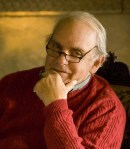
Some good thoughts from Henri Nouwen
“Life becomes an unbearable burden whenever we lose touch with the presence of a loving Savior and see only hunger to be alleviated, injustice to be addressed, violence to overcome, wars to be stopped, and loneliness to be removed. All these are critical issues and Christians must try to solve them; however, when our concern no longer flows from our personal encounter with the living Christ, we feel an oppressive weight.
Here arises a key question: “Can we see Christ in the world?” The answer is, “No, we cannot see Christ in the world, but only the Christ in us can see Christ in the world.” This means that through prayer the Christ within us opens our eyes to the Christ among us.“
** Drawn from the Henri Nouwen Society website, Daily Meditations.
Two Worlds is a digital ministry space that shares the RCL readings, a brief homily, and supporting images, music, and ELCA commemorations. The blog is authored by Paul Rykken in consultation with Pastor Jen Hatleli of Evangelical Lutheran Church in Black River Falls, Wisconsin. The blog lands more naturally on a larger screen. Also, hyperlinks are included for further information — they are bolded and italicized.
Pentecost 18 Readings
Ezekiel 18: 1-4, 25-32
Psalm 25: 1-9
Philippians 2: 1-13
Matthew 21: 23-32
Readings are Linked
Common Themes and Connections
The readings for Pentecost 18 converge around the call to genuine repentance expressed through humble obedience and transformed living. Ezekiel insists that each person is responsible before God and that true turning of the heart leads to life rather than blame or fatalism. Psalm 25 echoes this posture, lifting the soul to God in trust and asking to be taught the ways of divine mercy and truth. Philippians deepens the theme by urging the community toward Christ‑like humility—an obedience shaped not by compulsion but by self‑giving love. In Matthew, Jesus exposes the gap between words and actions, teaching that authentic repentance is revealed not in claims of righteousness but in actually doing the will of the Father.
Image of the Week
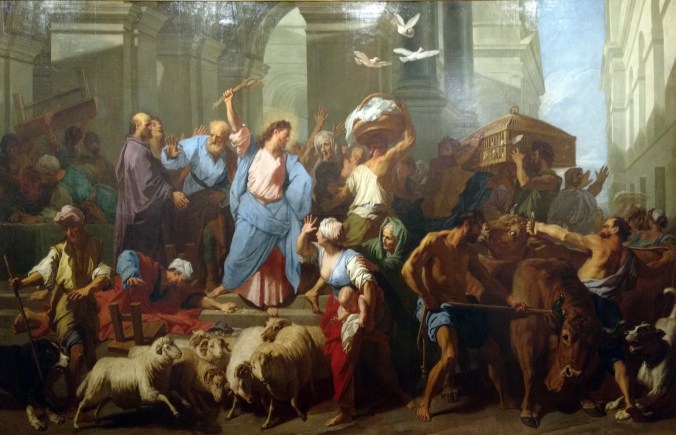
French artist, Jean Jouvenet (1644–1717)
Jean Jouvenet’s Driving the Merchants from the Temple shows Jesus stepping into a chaotic scene as he clears out the money changers, and you can feel the energy in the way people and animals scatter. Jouvenet was a major French painter of his time, known for strong, naturalistic figures and bold color choices that pull your eye right to the heart of the action. The painting was part of a larger set of religious works he created for Paris churches in the early 1700s, which helped cement his reputation. What stands out here is how he captures both the physical movement and the moral force of the moment. For Pentecost 18, the scene echoes the readings’ call for honest worship and faithful living—God pushing back against the ways we twist faith for our own gain and inviting us to return to what really matters.
Five-Minute Homily: Pentecost 18
“Where Grace Turns Us Around”
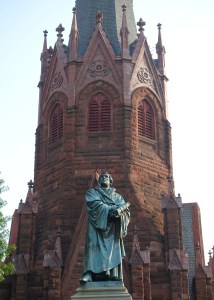
509 years ago, a 34‑year‑old Augustinian monk named Martin Luther shook the Christian world when he posted his 95 Theses on the Castle Church door in Wittenberg. His opponents quickly labeled his followers “Lutherans,” and the name stuck, eventually becoming one of the major branches of Protestantism. It’s worth remembering that Luther began his list with a simple but demanding claim: “When our Lord and Master Jesus Christ said ‘Repent,’ he intended the entire life of believers to be repentance.” That line sets the tone for next Sunday’s readings — think “repentance.”
So, let’s dive in. This week’s “Image of the Week,” is a painting by the French artist Jean Jouvenet titled Driving the Merchants from the Temple. Jouvenet captures Jesus stepping into a swirl of motion as animals scatter, tables overturn, and the merchants scramble — a vivid picture of righteous anger and moral clarity (for some reason, that story so appealed to me when I first learned of it as a young boy!). It’s a helpful doorway into today’s Gospel, because this dramatic cleansing of the temple is the backdrop for Jesus’ tense exchange with the chief priests and elders in Matthew 21. They were rattled by his actions and his growing influence, and they demanded to know by what authority he taught.
Jesus responds with a question of his own and then tells the parable of the two sons — one who refuses to work in the vineyard but later goes, and one who agrees to go but never does. The point is unmistakable: the first son, the one who actually acts, is the one who does the father’s will. Jesus follows with a sharp reversal, telling the religious leaders that tax collectors and prostitutes — people they dismissed — are entering the kingdom ahead of them because they listened, repented, and changed their lives. Their refusal to turn around, to receive God’s messenger, had become a roadblock. Ezekiel’s voice echoes the same call: “Repent and turn from all your transgressions… get yourselves a new heart and a new spirit.”
That’s the heart of this week’s Gospel message. Repentance isn’t a gloomy word—it’s a life‑giving one. It’s the daily turning of the heart, the quiet work of letting God reshape us so that our actions begin to reflect what we say. Every week we bring that work into worship through the confession of sin, speaking words that steady us and open us again to grace. Hear these words from the Book of Common Prayer (1979), that are part of our services in the ELW:
Most merciful God, we confess that we have sinned against you in thought, word, and deed, by what we have done, and by what we have left undone. We have not loved you with our whole heart; we have not loved our neighbors as ourselves. We are truly sorry and we humbly repent. For the sake of your Son Jesus Christ, have mercy on us and forgive us; that we may delight in your will, and walk in your ways, to the glory of your Name. Amen.
Those words matter. They humble us, they ground us, reminding us that faith is not just what we say but how we live. So as we move through Pentecost 18, hold Luther’s first thesis close: the whole life of believers is repentance — turning toward God, receiving a new heart and spirit, and stepping into the vineyard not with perfect words, but with faithful action.
Soli Deo Gloria!
Musical Reflection

Though not explicitly Christian‑oriented music, Mary Chapin Carpenter’s song “Why Walk When You Can Fly” carries a spirit that fits beautifully with the Pentecost 18 readings and their call to turn, trust, and live differently. The song leans into that moment when a person finally lets go of the old weight—fear, stubbornness, self‑protection—and chooses a new path. From there, it opens up a wider reflection on the Christian journey itself: how grace keeps nudging us toward the life we were meant to live, even when we’ve settled for something smaller. Carpenter’s refrain becomes more than a lyric; it becomes a gentle reminder that when we finally trust the One who meets us in our turning, we discover that walking isn’t our only option. We were made to rise.
Mary Chapin Carpenter is an American singer‑songwriter whose music blends folk, country, and Americana with a thoughtful, literary touch. Her warm, steady voice carries songs that often explore resilience, relationships, and the quiet work of becoming fully human. Over the years she has built a devoted following by writing with emotional honesty rather than flash, letting her lyrics do the heavy lifting. Many listeners describe her music as a companion for the long journey — reflective, wise, and grounded in everyday experience.
Visit her website here
Lyrics
In this world, there’s a whole lot of trouble, baby
In this world, there’s a whole lot of pain
In this world, there’s as whole lot of trouble but
A whole lot of ground to gain
Why take when you could be giving?
Why watch as the world goes by?
It’s a hard enough life to be living
Why walk when you can fly?
In this world, there’s a whole lot of sorrow
In this world, there’s a whole lot of shame
In this world, there’s a whole lot of sorrow
And a whole lot of ground to gain
When you spend your whole life wishing
Wanting and wondering why
It’s a long enough life to be living
Why walk when you can fly?
And in this world, there’s a whole lot of golden
In this world, there’s a whole lot of plain
In this world, you’ve a soul for a compass
And a heart for a pair of wings
There’s a star on the far horizon
Rising bright in an azure sky
For the rest of the time that you’re given
Why walk when you can fly high?
Who Are We Commemorating This Week?
Note: The ELCA commemorates a wide range of Christians throughout the year as a way of remembering that God has worked through ordinary people in every age. These commemorations — drawn from Scripture, the early church, the Reformation, and more recent history — invite us to see faith lived out in many different vocations and cultures. They aren’t about elevating “heroes,” but about widening our sense of the communion of saints and letting their witness encourage our own. In marking these days, the church pauses to give thanks, to learn, and to be reminded that the Holy Spirit continues to shape faithful lives in every generation.
We have one commemotion this week. You will find the full listing of them in the front of the ELW.
Commemorations: Week of 21 September
Monday 21 September
MATTHEW, APOSTLE AND EVANGELIST
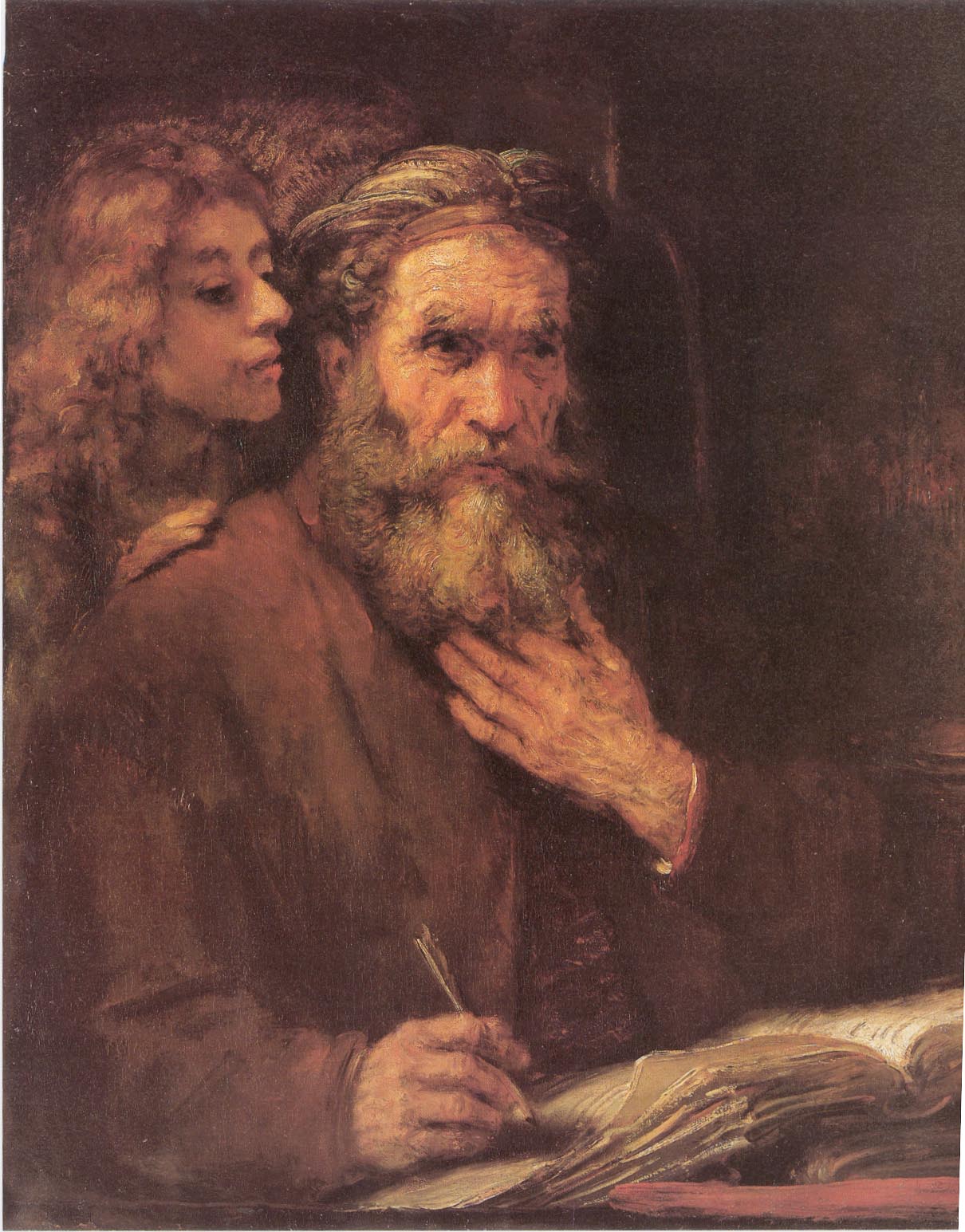
St. Matthew is traditionally known as a tax collector whom Jesus called to become one of the twelve apostles, a shift that highlights the Gospel’s recurring theme of grace reaching into unlikely places. His background as a publican—someone often viewed with suspicion or disdain—makes his response to Jesus’ invitation all the more striking, embodying the power of repentance and the possibility of a transformed life. Matthew is credited as the author of the first Gospel, a work that emphasizes Jesus as the fulfillment of Israel’s story and underscores the call to faithful discipleship. In Christian art and tradition, he is often depicted with an angel, symbolizing the divine inspiration guiding his writing.
Digital Ministry and Beyond
We’re living in a moment when the tools of ministry have expanded far beyond the walls of any building. Digital platforms now allow Scripture, teaching, and community to reach people wherever they are. What once required physical presence can now be shared through video, messaging, and collaborative online study. This new landscape invites congregations to imagine ministry with a wider reach and a deeper sense of connection. At the same time, we need to find the balance with ongoing in-person efforts!
Try The Bible Project
The Bible Project is a nonprofit started by Tim Mackie and Jon Collins to help people see how the whole Bible fits together as one big story. Mackie brings the deep scholarship—especially in Hebrew Bible and Jewish studies—while Collins turns those ideas into clear, engaging animations and videos. What began as two friends trying to make Scripture more accessible has grown into a huge library of free videos, podcasts, and reading guides used around the world. Their work helps people read the Bible with fresh eyes, paying attention to its literary design, major themes, and the way it all points toward Jesus. Here is an excellent video overviewing the New Testament.
ELC In-Person Opportunities
As we turn the page into September, we’re refreshing our adult education opportunities at ELC as we continue creating spaces where members can explore Scripture and connect faith to daily life.
Our digital ministry—including Two Worlds, the weekly lectionary blog — remains part of that effort.
Beginning on 27 September and following, Sundays from 11:00–11:45 a.m. will be dedicated to Faithful Conversations, a renewed rhythm of study shaped by three strands: Lutheran Theology, History, and Spiritual Disciplines.
We will begin with a four‑week book study of Real Faith for Real Life (27 September–18 October).

If you are interested in ordering the book for our first go-round, follow the link below. We will also have several copies available. We will revisit a study the book from three years ago — it remains remarkably relevant.
ORDER YOUR COPY HERE!