Something to Ponder . . .
This quote comes from theologian Frederick Buechner (1926-2022): “Don’t start looking in the Bible for the answers it gives. Start by listening for the questions it asks.” Isn’t that a great thought?
The readings this week center around the idea of “fairness,” and raise tough questions. Would you agree with me that we all seem to have an innate sense of fairness? As a teacher, for example, it is never good to be accused of being unfair — students and parents will pounce on that in a hurry. Anyway, keep “fairness,” and especially our human notions of it, on your radar screen as you walk through this week’s readings. My commentary will focus on the passage from Jonah. Thanks for your continued interest in Bible study!
Navigate the Blog
Two Worlds is a digital ministry space that shares the RCL readings, a brief homily, and supporting images, music, and ELCA commemorations. The blog is authored by Paul Rykken in consultation with Pastor Jen Hatleli of Evangelical Lutheran Church in Black River Falls, Wisconsin. The blog lands more naturally on a larger screen. Also, hyperlinks are included for further information — they are bolded and italicized.
Pentecost 17 Readings
Jonah 3:10 — 4:11
Psalm 145: 1-8
Philippians 1: 21-30
Matthew 20: 1-16
Readings are Linked
Common Themes and Connections
God’s mercy stands at the center of the Pentecost 17 readings, revealing a God who acts with generosity that often unsettles human expectations. Jonah resents God’s compassion toward Nineveh, yet Psalm 145 affirms that the Lord is “gracious and merciful, slow to anger and abounding in steadfast love,” grounding the story in God’s consistent character. Paul’s words in Philippians call believers to live faithfully and courageously in that same grace, understanding life itself as participation in Christ. Jesus’ parable of the laborers in the vineyard in Matthew 20 echoes Jonah’s struggle by showing that God’s generosity disrupts our instinct for fairness and invites us into a new way of seeing. Together, these texts challenge us to embrace God’s expansive mercy, relinquish our narrow notions of justice, and live in grateful trust.
Image of the Week
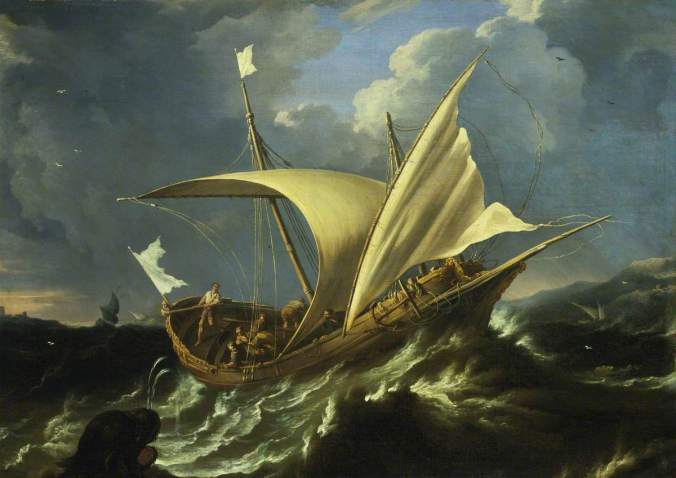
Carlo Antonio Tavella (1668–1738)
Flemish Artist
Carlo Antonio Tavella’s Jonah and the Whale captures the drama of Jonah’s story with a stormy sea, dark skies, and the great fish emerging as a sign of God’s intervention. You can feel the power of the water! Tavella, an Italian painter from Milan who spent most of his career in Genoa, was known for landscapes that set biblical moments inside vivid, emotional natural settings. In this scene, the restless water and swirling atmosphere amplify Jonah’s fear and the chaos of trying to outrun God. Tavella often worked alongside other painters who added figures to his landscapes, a common studio practice that helped shape the collaborative feel of his compositions. His ability to create mood through weather and terrain is on full display here, turning nature itself into the stage where Jonah’s struggle and God’s persistence unfold.
Five-Minute Homily
“The God Who Loves Past Our Borders”

(First published in 1904)
For many of us, the Bible stories we met as kids are stitched right into our faith formation. This week’s reading from Jonah sent me rummaging through memory — and, unsuccessfully, through my bookshelves — for Hurlbut’s Story of the Bible, a staple in the Rykken household. I’m fairly sure it was the source of numerous bedtime stories, and the illustrations stoked my imagination. And of course, Jonah and the Whale was the blockbuster: nothing grabs a kid quite like a prophet getting swallowed whole and living to tell the tale.
Jonah himself lived in the 8th century BCE, called by God to preach repentance to the people of Nineveh — capital of the Assyrian Empire and sworn enemy of Israel. Jonah wanted none of it, so he headed in the opposite direction, boarding a ship for Tarshish and hoping distance might discourage the Almighty. After the storm hits, Jonah volunteers to be tossed overboard (not your typical cruise excursion), and he ends up in the belly of a great fish for three long days before being spat back onto dry land. God calls him again — same mission, same city –and this time Jonah goes, delivers the shortest sermon in the Bible, and watches in disbelief as the entire city, king included, repents. That’s where this week’s reading picks up.
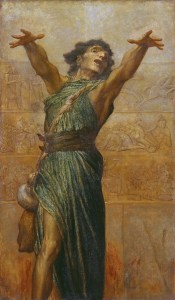
God’s mercy toward Nineveh is simply too much for Jonah; it offends his sense of fairness. He’s so furious he asks God to take his life, which is quite a reaction for someone who just survived an astonishing three-day near-death experience. God responds with that piercing question — “Is it right for you to be angry?” — and then stages an object lesson involving a shade plant, a worm, scorching sun, and Jonah’s world‑class sulking. The point lands: Jonah is upset about things he never controlled, while God’s compassion stretches far beyond Jonah’s categories of “deserving” and “undeserving.” (Note: the Watts painting of Jonah, it seems, captures Jonah’s exasperation!).
And that’s the rub for us who live in the world of the 21st Century. We want good people rewarded and bad people punished, and when the opposite happens, we sputter in protest (I can still hear my mother: “Life isn’t always fair, Paul”). God’s mercy toward Nineveh — people who “do not know their right hand from their left”—reveals a justice that restores rather than destroys. No one is beyond the reach of God’s love, not even those who unsettle us, oppose us, or confound our sense of right and wrong. It’s a hard truth, but a liberating one. May we keep that idea front of mind in the days ahead!
Soli Deo Gloria!
Musical Reflection
“There Is a Wideness in God’s Mercy” was written in 1854 by Frederick William Faber, an English priest who composed more than 150 hymns to help ordinary people grasp the breadth of God’s compassion. Faber wrote it during a period when he was increasingly concerned that Christians often made God’s love narrower and harsher than Scripture itself portrays. The hymn’s central image — a wideness in God’s mercy like the wideness of the sea –pushes back against human attempts to limit grace, a theme that mirrors Jonah’s resentment when God forgives Nineveh. It also resonates with Jesus’ parable of the laborers in the vineyard, where the landowner’s generosity unsettles those who expect God to operate by strict fairness rather than overflowing grace. Taken together, the hymn is a musical commentary on both readings, reminding the church that God’s mercy is larger, freer, and more surprising than our instincts allow. There are two versions of this hymn in the ELW (hymns 587 and 588).
Harmonious Chorale Ghana is one of the country’s most celebrated choral groups, known for its rich blend of classical repertoire and vibrant Ghanaian sacred music. Founded under the leadership of composer James Varrick Armaah, the ensemble has grown from a small quartet into a nationally recognized chorale with a polished, energetic sound. They’ve earned international attention through major performances and awards, including standout recognition at the World Choir Games. What sets them apart is their mission to elevate Ghanaian choral music on the world stage while inspiring younger choirs through mentorship and collaboration.
Lyrics
1 There’s a wideness in God’s mercy,
like the wideness of the sea;
there’s a kindness in God’s justice
which is more than liberty.
There is no place where earth’s sorrows
are more felt than up in heav’n.
There is no place where earth’s failings
have such kindly judgment giv’n.
2 There is welcome for the sinner,
and a promised grace made good;
there is mercy with the Savior;
there is healing in his blood.
There is grace enough for thousands
of new worlds as great as this;
there is room for fresh creations
in that upper home of bliss.
3 For the love of God is broader
than the measures of the mind;
and the heart of the Eternal
is most wonderfully kind.
But we make this love too narrow
by false limits of our own;
and we magnify its strictness
with a zeal God will not own.
4 ‘Tis not all we owe to Jesus;
it is something more than all:
greater good because of evil,
larger mercy through the fall.
Make our love, O God, more faithful;
let us take you at your word,
and our lives will be thanksgiving
for the goodness of the Lord.
Who Are We Commemorating This Week?
Note: The ELCA commemorates a wide range of Christians throughout the year as a way of remembering that God has worked through ordinary people in every age. These commemorations — drawn from Scripture, the early church, the Reformation, and more recent history — invite us to see faith lived out in many different vocations and cultures. They aren’t about elevating “heroes,” but about widening our sense of the communion of saints and letting their witness encourage our own. In marking these days, the church pauses to give thanks, to learn, and to be reminded that the Holy Spirit continues to shape faithful lives in every generation.
We have several this week. You will find the full listing of them in the front of the ELW.
Commemorations: Week of 14 September
Monday 14 September
HOLY CROSS DAY
Wednesday 16 September
Cyprian, Bishop of Carthage, martyr
(d. 258)
Thursday 17 September
Hildegard, Abbess of Bingen (d. 1179)
Dag Hammarskjold, renewer of society
(d. 1961)
Utilize the links for further information!
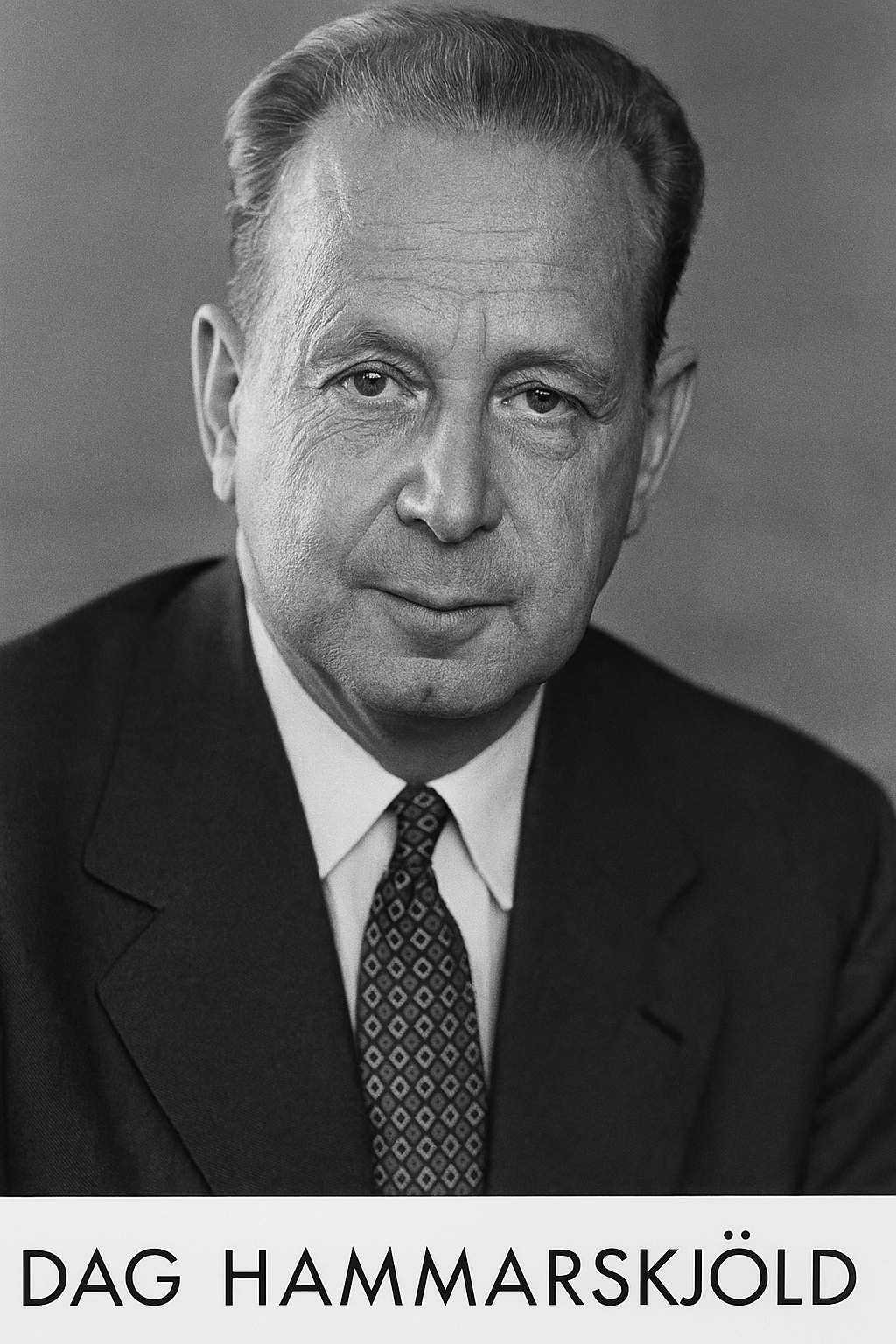
Note: I had an 8th grade social studies teacher named Ruby Mallum who was especially enamored with Dag Hammarskjold. This was in the late 60s, and it makes sense to me now WHY she viewed him so positively — an amazing character who had been tragically killed only a few years earlier!
Digital Ministry and Beyond
We’re living in a moment when the tools of ministry have expanded far beyond the walls of any building. Digital platforms now allow Scripture, teaching, and community to reach people wherever they are. What once required physical presence can now be shared through video, messaging, and collaborative online study. This new landscape invites congregations to imagine ministry with a wider reach and a deeper sense of connection. At the same time, we need to find the balance with ongoing in-person efforts!
The Bible Project
The Bible Project is a nonprofit started by Tim Mackie and Jon Collins to help people see how the whole Bible fits together as one big story. Mackie brings the deep scholarship—especially in Hebrew Bible and Jewish studies—while Collins turns those ideas into clear, engaging animations and videos. What began as two friends trying to make Scripture more accessible has grown into a huge library of free videos, podcasts, and reading guides used around the world. Their work helps people read the Bible with fresh eyes, paying attention to its literary design, major themes, and the way it all points toward Jesus. Here is an example of the type of available videos — this one focused on the concept of Agape (Love).
ELC In-Person Opportunities
As we turn the page into September, we’re refreshing our adult education opportunities at ELC as we continue creating spaces where members can explore Scripture and connect faith to daily life. Our digital ministry—including Two Worlds, the weekly lectionary blog — remains part of that effort. Beginning on 27 September and following, Sundays from 11:00–11:45 a.m. will be dedicated to Faithful Conversations, a renewed rhythm of study shaped by three strands: Lutheran Theology, History, and Spiritual Disciplines. We’ll begin with a four‑week book study of Real Faith for Real Life (27 September–18 October), followed by a one‑day Reformation session on Martin Luther (25 October), a four‑week exploration of the lectionary (1–29 November), and a five‑week study of the Augsburg Confession (10 January–7 February 2027).

If you are interested in ordering the book for our first go-round, follow the link below. We will also have several copies available. We will revisit a study the book from three years ago — it remains remarkably relevant.
ORDER YOUR COPY HERE!
