29 December 2024: Christmas 1

Faithful Conversations #96
Introduction to readers

“Massacre of the Innocents”
Léon Cogniet (1794-1880)

Beyond Christmas Eve and Christmas Day this week, we observe three Lesser Festivals from our ELCA church calendar: Stephen, Deacon and Martyr (my namesake along with Paul) on Thursday; John, Apostle and Evangelist on Friday; and on Saturday, the martyrdom of the Holy Innocents, recalling the tragic killing of male children by King Herod, who feared a prophecy about a newborn king threatening his rule. This brutal act is recounted in the second chapter of Matthew, including a reference to Jeremiah 31:15:  A voice is heard in Ramah, weeping and great mourning, Rachel weeping for her children and refusing to be comforted, because they are no more.” French painter Leon Cogniet captured the horror of this long-ago event in the terrified look on the young mother’s face, a strikingly modern looking portrait. 

The innocent children who “are no more” have been on my mind this week owing to the recent events at Abundant Life Christian School on Madison’s east side, the 323rd school shooting in the United States in 2024. Something is terribly, terribly wrong. In my 41 years of full-time teaching (that’s roughly 7,800 days), the worst moments occurred when we learned of a school shooting somewhere in the country, a chilling reminder of our vulnerability. The first half of my career included occasional bomb threats (which often came in bunches), but in the second half it was “intruder drills” — learning how to barricade our classrooms, hide, evacuate, if possible, to rally points off school grounds. It always seemed a bit surreal. Such dark news may not seem like a good starting point for discussing the Lectionary, but as Christians there is much for us to consider as we walk in two worlds — both the temporal and the eternal. Our civic engagement flows from our understanding of God’s word, as applied to our daily walk. May we have discerning hearts in these troubled times. This, by the way, is the suggested prayer for December 28th, altogether fitting for this moment (ELW, page 54): 

We remember today, O God, the slaughter of the innocent children of Bethlehem by order of King Herod. Receive into the arms of your mercy all innocent victims. By your great might frustrate the design of evil tyrants and establish your rule of justice, love, and peace, through Jesus Christ, our Savior and Lord, who lives and reigns with you and the Holy Spirit, one God now and forever. Amen.

A couple notes regarding this week’s blog. I have included the readings for Christmas Eve and Christmas Day and encourage you to work through them. My reflections will center on the Gospel for the first Sunday after Christmas, the story of young Jesus in the Temple. As always, thank you for your continued interest in exploring the scriptures. Our spiritual journeys evolve, and the key is to stay engaged. As we head into 2025, my offerings here are made with humility — the more I learn, the more I realize how little I know!     

Readings for Christmas Eve
Isaiah 9: 2-7
Psalm 96
Titus 2: 11-14
Luke 2: 1-14 (15-20)

Readings for Christmas Day
Isaiah 62: 6-12
Psalm 97
Titus 3: 4-7
Luke 2: (1-7) 8-20

Readings for 1 Christmas
1 Samuel 2: 18-20, 26
Psalm 148
Colossians 3: 12-17
Luke 2: 41-52

Common Themes in the Readings for 1 Christmas (29 December)
The readings for 1 Christmas share themes of faithfulness, praise, growth, and community. In 1 Samuel 2:18-20, 26 and Luke 2:41-52, we see Samuel and Jesus both dedicated to God’s service and growing in wisdom and favor. Psalm 148 calls all of creation to worship and praise God, a sentiment echoed in Colossians 3:12-17, where believers are urged to live in harmony, singing with gratitude to God. Collectively, these passages emphasize the importance of dedication to God, worship, spiritual growth, and nurturing loving, forgiving communities.

“Christ Among the Doctors” (c. 1635)
Matthias Stom (1615-1649)

The Gospel: Luke 2: 41-52: The Boy Jesus in the Temple
41 Now every year his parents went to Jerusalem for the festival of the Passover. 42 And when he was twelve years old, they went up as usual for the festival. 43 When the festival was ended and they started to return, the boy Jesus stayed behind in Jerusalem, but his parents were unaware of this. 44 Assuming that he was in the group of travelers, they went a day’s journey. Then they started to look for him among their relatives and friends. 45 When they did not find him, they returned to Jerusalem to search for him. 46 After three days they found him in the temple, sitting among the teachers, listening to them and asking them questions. 47 And all who heard him were amazed at his understanding and his answers. 48 When his parents saw him they were astonished, and his mother said to him, “Child, why have you treated us like this? Your father and I have been anxiously looking for you.” 49 He said to them, “Why were you searching for me? Did you not know that I must be in my Father’s house?”[ 50 But they did not understand what he said to them. 51 Then he went down with them and came to Nazareth and was obedient to them, and his mother treasured all these things in her heart. 52 And Jesus increased in wisdom and in years and in divine and human favor.

Reflection: “christ among the doctors”

“Christ in the Temple”
Heinrich Hofmann (1824-1911)

The story of twelve-year-old Jesus in the Temple fascinated me as a child and that may have been because of the accompanying picture from Hurlburt’s Story of the Bible.  Among other things, I was always curious as to HOW Mary and Joseph could “lose” their son for three days and how Jesus seemed so nonchalant about the whole situation!  

Interestingly, beyond the birth story, this is the only episode we are offered from Christ’s formative years, and it is the first time we hear him speak (we will next hear from him at age 30). There is much to unpack within the verses. We learn that Mary and Joseph travel to Jerusalem each year for the festival of the Passover, an arduous journey of 100 miles that would have taken 8-10 days. Jesus’ age (12) puts him on the verge of manhood in Jewish culture (13). Further, we witness a dramatic moment between Mary and her son when they find him. She is clearly frantic and distressed, as any parent would be who has spent three days trying to find their child! 

And, perhaps most importantly, we are brought into this intriguing moment when the young Jesus is sitting in the Temple among the teachers (sometimes referred to as the “doctors”). We learn that this charismatic young boy amazes those in the audience with his questions and insights that day, not unlike the response many years later by the travelers on the road to Emmaus recounted in Luke 24. And standing off on the side, Mary and Joseph are astonished to see their boy holding court with the elders. His response to Mary’s anxious inquiry indicates that he is aware of his calling, his special role in history, at a young age. What a moment! And even though we know where this story is going, let’s stay with this moment for a time and like Mary, “treasure these things” in our hearts.

 Soli Deo Gloria!

(Note: I am indebted to Ginger Barfield, Professor Emerita of Biblical Studies and Theology at Lutheran Theological Southern Seminary of Lenoir-Rhyne University Columbia, South Carolina and Meda Stamper, minister in the Presbyterian Church (USA) for their interpretations of this story).  
prayer: “do well the few things” (henri nouwen)

(Note: The Nouwen meditation seems especially fitting in light of the school shootings) 

Henri Nouwen
(1932-1996)

The more I think about the human suffering in our world and my desire to offer a healing response, the more I realize how crucial it is not to allow myself to become paralyzed by feelings of impotence and guilt. More important than ever is to be very faithful to my vocation to do well the few things I am called to do and hold on to the joy and peace they bring me. I must resist the temptation to let the forces of darkness pull me into despair and make me one more of their many victims. I have to keep my eyes fixed on Jesus and on those who followed him and trust that I will know how to live out my mission to be a sign of hope in this world. (The Nouwen Society Website, 21 December 2024). 
Musical Offering: The Wexford Carol 

The Wexford Carol is a beloved traditional Irish Christmas carol. It is also known as The Enniscorthy Carol, as it was originally collected by a folklorist named Grattan Flood in Enniscorthy, a town in Ireland’s County Wexford. The lyrics, which are in English, date back to the 12th century. As is the case with all very old songs, the history is a bit hard to track, but it appears that the lyrics were added to the tune much later, and it is not believed that the lyrics were originally in the Irish language.

(Source: LiveAboutdotcom) 

Enjoy this version of the song from the Clare College Choir, Cambridge!

Good people all, this Christmas time,
Consider well and bear in mind
What our good God for us has done
In sending his beloved son

With Mary holy we should pray,
To God with love this Christmas Day
In Bethlehem upon that morn,
There was a blessed Messiah born.

The night before that happy tide,
The noble Virgin and her guide
Were long time seeking up and down
To find a lodging in the town.

But mark how all things came to pass
From every door repelled, alas,
As was foretold, their refuge all
Was but a humble ox’s stall.

Near Bethlehem did shepherds keep
Their flocks of lambs and feeding sheep
To whom God’s angels did appear
Which put the shepherds in great fear

Prepare and go, the angels said
To Bethlehem, be not afraid
For there you’ll find, this happy morn
A princely babe, sweet Jesus, born.

With thankful heart and joyful mind
The shepherds went the babe to find
And as God’s angel had foretold
They did our Saviour Christ behold

Within a manger he was laid
And by his side the virgin maid
Attending on the Lord of Life
Who came on earth to end all strife.

There were three wise men from afar
Directed by a glorious star
And on they wandered night and day
Until they came where Jesus lay

And when they came unto that place
Where our beloved Messiah lay
They humbly cast them at his feet
With gifts of gold and incense sweet.

Our next in-person meeting regarding the lectionary will be on sunday, 29 December at 10:45. join us in the library — All are welcome!
 
And, a reminder: the bonhoeffer book study!

Dietrich Bonhoeffer
(1906-1945)

Dietrich Bonhoeffer’s classic, The Cost of Discipleship, is an excellent book for Christians to read heading into 2025! We have ordered several copies of the book and also hope that many will purchase it for themselves. Our intention is to do a five-session study beginning on Wednesday 29 January and continuing for each Sunday in February.  Contact me if you have questions! 

22 December 2024: Advent 4

Faithful Conversations #95
Introduction to readers

Filmstrip Projector
c. 1958

Bupe Kibiki of Tanzania

Due to my age (b. 1957), I carry around layers of memory from the world of 1950s and 60s Lutheranism. An Advent message of joy from Bupe Kibiki of Tanzania came into my inbox this week, triggering one such memory –that primitive piece of technology known as the “filmstrip” (click here or on her photo if you want to view her message). Yes, those filmstrips in Sunday School or Luther League transported us beyond our small world into the global presence of Lutheranism represented by missionaries working in exotic lands (sidebar: it was a unique thrill if the teacher asked you to assist with the filmstrip!). The joy-filled message from Bupe Kibiki came from the website of the Lutheran World Federation, a communion of Lutheran churches established in 1947 in Lund, Sweden. The LWF brings together 149 member churches (including the ELCA) from over 99 countries, representing more than 78 million Lutherans worldwide. Rooted in the Lutheran tradition, the organization addresses issues such as poverty, climate change, gender equality, and peacebuilding, working ecumenically to promote the common good. Headquartered in Geneva, Switzerland, the LWF stands as a powerful reminder that we share our version of the faith with millions of people across the world!      

As always, thanks for your continuing interest in exploring the scriptures! In keeping with our walk through the various prophets for several Sundays, I have included a short video summarizing the book of Micah which I encourage you to watch. My reflections will focus on Luke’s Gospel and especially Mary’s presence — and I am including a few more verses than called for in the Lectionary.  

Reading for Advent 4
Micah 5: 2-5a
Psalm 80: 1-7
Hebrews 10: 5-10
Luke 1: 39-45 (46-55)

Common Themes in the Advent 4 Readings
Look for these themes as you work through next Sunday’s readings: hope, fulfillment of prophecy, and divine intervention. Micah 5: 2-5a speaks of a coming ruler from Bethlehem who will bring peace, while Psalm 80: 1-7 expresses a longing for God’s restoration and salvation. Hebrews 10: 5-10 highlights Christ’s sacrifice as the ultimate fulfillment of God’s will, and Luke 1: 39-45 (46-55) celebrates Mary’s faith and the coming of the Messiah, showing God’s intervention through humble means. Together, these texts emphasize God’s promises being realized through the coming of Christ, offering salvation and peace to all.

The Old Testament Reading: Micah 5: 2-5a

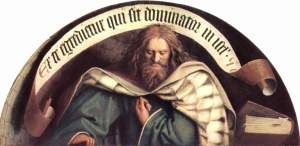
The Prophet Micah
The Ghent Altarpiece
Hubert van Eyck (c. 1385/90-1426)

But you, O Bethlehem of Ephrathah, who are one of the little clans of Judah, from you shall come forth for me one who is to rule in Israel, whose origin is from of old, from ancient days. Therefore he shall give them up until the time     when she who is in labor has brought forth; then the rest of his kindred shall return to the people of Israel. And he shall stand and feed his flock in the strength of the Lord, in the majesty of the name of the Lord his God. And they shall live secure, for now he shall be great to the ends of the earth, and he shall be the one of peace.

** Note: If you want to spend a few minutes gaining a better understanding of the book of Micah, CHECK OUT THIS VIDEO! And further, if you are interested in more of these types of videos, they come from The Bible Project, a site you may want to explore! 
 

The Gospel: Luke 1: 26-56
26 In the sixth month the angel Gabriel was sent by God to a town in Galilee called Nazareth, 27 to a virgin engaged to a man whose name was Joseph, of the house of David. The virgin’s name was Mary. 28 And he came to her and said, “Greetings, favored one! The Lord is with you.” 29 But she was much perplexed by his words and pondered what sort of greeting this might be. 30 The angel said to her, “Do not be afraid, Mary, for you have found favor with God. 31 And now, you will conceive in your womb and bear a son, and you will name him Jesus. 32 He will be great and will be called the Son of the Most High, and the Lord God will give to him the throne of his ancestor David. 33 He will reign over the house of Jacob forever, and of his kingdom there will be no end.” 34 Mary said to the angel, “How can this be, since I am a virgin?” 35 The angel said to her, “The Holy Spirit will come upon you, and the power of the Most High will overshadow you; therefore the child to be born will be holy; he will be called Son of God. 36 And now, your relative Elizabeth in her old age has also conceived a son, and this is the sixth month for her who was said to be barren. 37 For nothing will be impossible with God.” 38 Then Mary said, “Here am I, the servant of the Lord; let it be with me according to your word.” Then the angel departed from her.

Mary Visits Elizabeth

39 In those days Mary set out and went with haste to a Judean town in the hill country, 40 where she entered the house of Zechariah and greeted Elizabeth. 41 When Elizabeth heard Mary’s greeting, the child leaped in her womb. And Elizabeth was filled with the Holy Spirit 42 and exclaimed with a loud cry, “Blessed are you among women, and blessed is the fruit of your womb. 43 And why has this happened to me, that the mother of my Lord comes to me? 44 For as soon as I heard the sound of your greeting, the child in my womb leaped for joy. 45 And blessed is she who believed that there would be a fulfillment of what was spoken to her by the Lord.”

Mary’s Song of Praise

Virgin Mary
(A.I. Generated)

46 And Mary said,
“My soul magnifies the Lord,
47 and my spirit rejoices in God my Savior,
48 for he has looked with favor on the lowly state of his servant.
Surely from now on all generations will call me blessed,
49 for the Mighty One has done great things for me,
and holy is his name;
50 indeed, his mercy is for those who fear him
from generation to generation.
51 He has shown strength with his arm;
he has scattered the proud in the imagination of their hearts.
52 He has brought down the powerful from their thrones
and lifted up the lowly;
53 he has filled the hungry with good things
and sent the rich away empty.
54 He has come to the aid of his child Israel,
in remembrance of his mercy,
55 according to the promise he made to our ancestors,
to Abraham and to his descendants forever.”
56 And Mary remained with her about three months and then returned to her home.

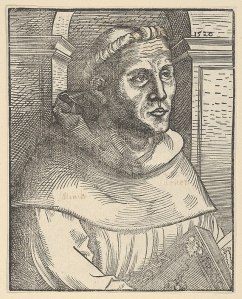
Martin Luther
Augustinian Monk

Preface to this week’s reflection: This is an updated version of my posting from Advent 3 in 2023. Let me also add the following short explanation of how Lutherans differ from our Roman Catholic sisters and brothers regarding Mary. Martin Luther’s attitude toward Mary was complex (no surprise) and evolved over time. He acknowledged her unique role in salvation history, for example, as indicated by the following excerpt of his Christmas sermon of 1531:  “[She is the] highest woman and the noblest gem in Christianity after Christ . . . She is nobility, wisdom, and holiness personified. We can never honor her enough. Still honor and praise must be given to her in such a way as to injure neither Christ nor the Scriptures.” That final sentence encapsulates Luther’s objection to what he saw as excessive prayers or the attribution of mediating powers to her (similar to his attitude toward the Saints). While he continued to honor Mary as “Theotokos” (God-bearer) and believed in her perpetual virginity, he firmly opposed the idea of her being an object of intercession or veneration beyond what was biblically grounded. What a time it was in the years around 1517 when these debates were in the air!   

Reflection: “mary’s radical and ancient prayer” 
 One thing I learned early on as a teacher was this: stories bring history to life, and that revisiting the same story time and again allows us to see it from different perspectives and with richer meaning. In this 4th week of Advent, we revisit a compelling story, embodied in the two passages from Luke’s Gospel, the Annunciation, the angel Gabriel’s announcement to young Mary, and the Magnificat, her prayerful response. I have heard these stories any number of times in my life but am seeing them (again) in a new light in 2024, especially the Magnificat. Let me explain.

Young Mary and the Annunciation


First, let’s consider Mary and her world, especially from our vantage point in December of 2024, amidst the troubling events surrounding the ongoing Israel-Hamas War. While I have heard about her from a young age, especially at this time of year, I must admit not engaging more fully in her story. This Judean teenage girl (perhaps only 13!), swept into history by miraculous forces, lived a life like no other. From lowly circumstances, and a virgin, she learns in a spiritual encounter with Gabriel, that she will bear a son destined to be the Messiah for her people, and far beyond. Can we even imagine how her mind must have been racing at this moment? In what can only be described as a depth of faith that dwarfs anything I can understand, she responds with a calm and submissive courage (verse 38). And second, what of this dramatic prayer, the Magnificat (Latin for “magnify”)?  As Debi Thomas, Minister of Formation and Discipleship at St. Mark’s Episcopal Church in Palo Alto, California points out in a 2020 essay on these texts points out, Mary’s prayer comprises the longest set of words spoken by a woman in the New Testament. Further, that the prayer was soaked in Jewish women’s history, echoing the words and stories of Miriam, Hannah, Judith, and Deborah (Note “Hannah’s Prayer” in 1 Samuel 2: 1-10). Most astonishing, however, is the radical and subversive nature of the prayer, what Thomas calls Mary’s fiery justice song. Read it again focusing on the highlighted verses (51-53). Our friend Dietrich Bonhoeffer, called the Magnificat the most passionate, the wildest, one might even say the most revolutionary hymn ever sung. Oscar Romero, Salvadoran Catholic Priest, murdered in 1980, later canonized, drew comparisons between Mary and the poor and powerless in his community. Indeed, the Magnificat has been banned more than a few times by those in power who fear its message. As we move toward the celebration of our Lord’s birth, we would do well to hear and reflect on his mother’s fervent prayer with fresh insight. As scholar Kenneth Craycraft asserts, A lowly birth to a lowly woman ushers in the magnificent fulfillment of God’s offer and promise of salvation.

Soli Deo Gloria!
 
 prayer/musical reflection: “some children see him”   

Wihla Hutson (1901-2002)

Alfred Burt (1920-1954)

Some Children See Him was composed by Alfred Burt, an American jazz musician who produced an annual Christmas carol from 1942 through 1954 with an old family friend, Wihla Hutson who looks right out of central casting for any lutefisk supper I ever attended as a child!  This song was produced in 1951 and I’m sharing an especially fine interpretation of it from James Taylor. The lyrics are below. 

Some children see Him lily white
The baby Jesus born this night
Some children see Him lily white
With tresses soft and fair

Some children see Him bronzed and brown
The Lord of heav’n to earth come down
Some children see Him bronzed and brown
With dark and heavy hair

Some children see Him almond-eyed
This Saviour whom we kneel beside
Some children see Him almond-eyed
With skin of golden hue

Some children see Him dark as they
Sweet Mary’s Son to whom we pray
Some children see him dark as they
And, oh they love Him too

The children in each different place
Will see the baby Jesus’ face
Like theirs, but bright, with heavenly grace
And filled with holy light

Oh lay aside each earthly thing
And with thy heart as offering
Come worship now the infant King
‘Tis love that’s born tonight
 
Our next in-person meeting regarding the lectionary will be on sunday, 29 December at 10:45. join us in the library — All are welcome!

And, a reminder: the bonhoeffer book study!

Dietrich Bonhoeffer
(1906-1945)
Dietrich Bonhoeffer’s classic, The Cost of Discipleship, is an excellent book for Christians to read heading into 2025! We have ordered several copies of the book and also hope that many will purchase it for themselves. Our intention is to do a five-session study beginning on Wednesday 29 January and continuing for each Sunday in February.  Contact me if you have questions! 

15 December 2024: Advent 3

Faithful Conversations #94

Introduction to readers

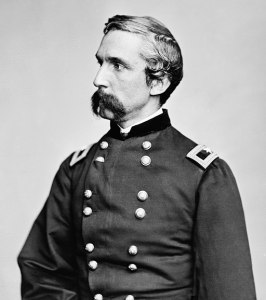
Joshua Lawrence Chamberlain
(1828-1914)

Joshua Lawrence Chamberlain has been on my mind this week. College professor, soldier, and politician, Chamberlain was best known for his heroism during the American Civil War. Enlisting at age 34 in 1862, he most notably commanded the 20th Maine Regiment at the Battle of Gettysburg (July 1863) where his epic defense of Little Round Top was crucial to the Union’s victory. After the war, this amazing man became a politician, serving as the Governor of Maine and later as a U.S. Congressman. A lesser-known episode in his war experiences came after he was severely wounded in the battle of Petersburg (June 1864). In excruciating pain and facing death, he penned these words to his beloved wife Fanny: “I am lying mortally wounded the doctors think, but my mind and heart are at peace — Jesus Christ is my all-sufficient savior. I go to him. God bless and keep and comfort you . . . To know and love you makes life and death beautiful.” (Let’s imagine Fanny receiving such a letter!) Having visited both the Gettysburg and Petersburg battlefields, Chamberlain’s powerful testimony regarding Jesus Christ left such an impression on me when I first read his letter.  Among other things, his words bring a much-needed clarity for the Advent Season. My sense is that he understood the nature of the authentic joy the Apostle Paul is talking about in this week’s Philippians passage. As Christians living in our deeply cluttered, harried, hate-filled, and chaotic world, we have a Savior — an all-sufficient Savior, and that is enough!     

As always, thanks for your continuing interest in exploring the scriptures! My reflections this week will focus on the passages from Zephaniah Philippians. And two suggestions: first, take one reading per day and spend time with it; and second, utilize the four-question approach with each reading as noted here: 

1. What is something new you learned from the reading? (NEW)
2. What is something that caught your attention and made you think? (REFLECT)
3. What did you read that relates to other reading you have done? (RELATE)
4. What would you like to discuss from the reading? (DISCUSS)

Reading for Advent 3
Zephaniah 3: 14-20
Isaiah 12: 2-6
Philippians 4: 4-7
Luke 3: 7-18

Common Themes in the Advent 3 Readings
Look for these common themes in this week’s readings: joy, salvation, and hope. All the readings highlight the theme of rejoicing in the Lord, with Zephaniah and Isaiah proclaiming the coming restoration and deliverance of God’s people, calling for songs of praise and celebration. Philippians emphasizes joy in the Lord and peace through prayer and trust in God, while Luke’s message of repentance and the coming of the Messiah prepares the way for the ultimate salvation. Together, these passages reflect the larger Advent themes of anticipation, inner transformation, and the joyful expectation of God’s saving work.

The Old Testament Reading: Zephaniah 3: 14-20

14 Sing aloud, O daughter Zion;
    shout, O Israel!
Rejoice and exult with all your heart,
    O daughter Jerusalem!
15 The Lord has taken away the judgments against you;
    he has turned away your enemies.
The king of Israel, the Lord, is in your midst;
    you shall fear disaster no more.
16 On that day it shall be said to Jerusalem:
“Do not fear, O Zion;
    do not let your hands grow weak.
17 The Lord, your God, is in your midst,
    a warrior who gives victory;
he will rejoice over you with gladness;
    he will renew you in his love;
he will exult over you with loud singing
18     as on a day of festival.”
I will remove disaster from you,
    so that you will not bear reproach for it.
19 I will deal with all your oppressors
    at that time.
And I will save the lame
    and gather the outcast,
and I will change their shame into praise
    and renown in all the earth.
20 At that time I will bring you home,
    at the time when I gather you;
for I will make you renowned and praised
    among all the peoples of the earth,
when I restore your fortunes
    before your eyes, says the Lord. 

** Note: If you want to spend a few minutes gaining a better understanding of the book of Zephaniah, check out the video below! And further, if you are interested in more of these types of videos, they come from The Bible Project, a site you may want to explore!   

The Second Reading: Philippians 4: 4-7
Rejoice in the Lord always; again I will say, Rejoice. Let your gentleness be known to everyone. The Lord is near. Do not be anxious about anything, but in everything by prayer and supplication with thanksgiving let your requests be made known to God. And the peace of God, which surpasses all understanding, will guard your hearts and your minds in Christ Jesus.

Reflection: “Gaudete in Domino semper!”

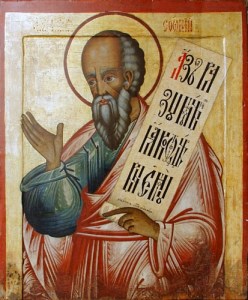
The Prophet Zephaniah
Russian Orthodox Icon
18th Century

The third Sunday in Advent is known Gaudete Sunday. The name derives from Roman Catholic tradition and the opening words of the traditional Introit (opening chant) for the Mass on this day: Gaudete in Domino semper (“Rejoice in the Lord always,” a reference to Philippians 4). The day is marked by a slight relaxation of the penitential tone of Advent, symbolized by the use of a rose-colored (instead of purple) candle on the Advent wreath in many churches. Gaudete Sunday highlights the joyful expectation of Christ’s coming, both at Christmas and in the future Second Coming. (If you want to know more about the traditions surrounding Gaudete Sunday in the ELCA, and especially the Advent Wreath, check out this article). 

As you know, Advent affords us the opportunity to hang around with several Old Testament prophets and this week, Zephaniah takes center stage. He prophesied during the late 7th century BCE, a tumultuous period for the Kingdom of Judah, under the reign of King Josiah. This era was marked by religious reform as Josiah sought to return the nation to proper worship, but also by the looming threat of foreign invasion. Assyria, once a dominant power, was in decline, and Babylon was rising, signaling an impending shift in regional power dynamics. Zephaniah’s prophecies, which emphasize the coming “day of the Lord” and divine judgment, reflect the anxiety of this time (not unlike our own), while also offering hope for the faithful remnant amidst the destruction that was to come. Like all the Old Testament prophets — these men and women who spoke for God — Zephaniah’s message is one of both judgement and salvation. The passage included for Sunday picks up on the second part of that and echoes like a rousing pep-talk across the centuries. Read it with that in mind. 

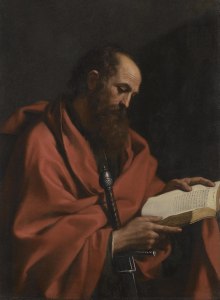
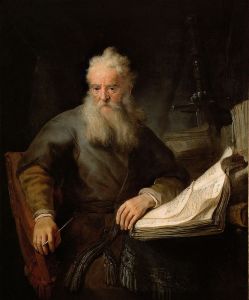
Saint Paul
Rembrandt (1606-1669)

Writing more than six centuries later (and while under house arrest in Rome!), Paul’s admonition to the Christian community in Philippi, reflects the anticipatory JOY voiced by Zephaniah.  Throughout the letter, Paul expresses gratitude for their generosity, encourages unity and joy despite challenges, and emphasizes living a life worthy of the gospel. Offering Christ as the ultimate example of selflessness, Paul urges the Philippians to stand firm in their faith as they await Christ’s return. Like many of our Christian ancestors of his generation, Paul was executed under the Emperor Nero as part of a wave of persecutions between 64-68 CE. His clear and direct language in next Sunday’s passage, stand as a reminder for us — JOY is not a fleeting vapor that comes and goes. Rather, it is an attitude, a decision, and a gift for us to share!  

Soli Deo Gloria!

prayer: The Advent Attitude (from Henri Nouwen)

Dutch Theologian
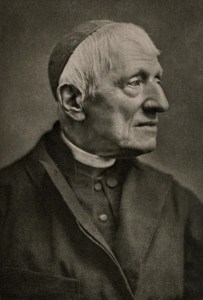
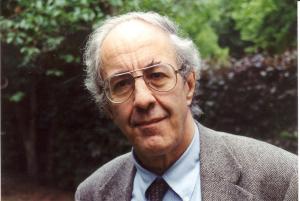
Henri Nouwen
(1932-1996) 

In the beginner’s mind there is no thought ‘I have attained something.’ All self-centered thoughts limit our vast mind. When we have no thought of achievement, no thought of self, we are true beginners. Then we can really learn something. The beginner’s mind is the mind of compassion. When our mind is compassionate, it is boundless.”

I like these words. Also very important for Advent. Open, free, flexible, receptive. That is the attitude that makes us ready. I realize that in Zen you are not expecting anything or anyone. Still, it seems that all the things Shunryu Suzuki tells his students (above) are important for Christians to hear and realize. Isn’t a beginner’s mind, a mind without the thought “I have attained something,” a mind opened for grace? Isn’t that the mind of children who marvel at all they see? Isn’t that the mind not filled with worries for tomorrow but alert and awake in the present moment?

(6 December 2024 Entry: Accessed from the Nouwen Society Website)

update on the bonhoeffer book study!

Dietrich Bonhoeffer
(1906-1945)

Dietrich Bonhoeffer’s classic, The Cost of Discipleship, is an excellent book for Christians to read heading into 2025! We have ordered several copies of the book and also hope that many will purchase it for themselves. Besides on-line, copies can be purchased at regional bookstores — BAM in Eau Claire or Barnes and Noble in LaCrosse. (Note: Apparently The Cost of Discipleship is flying off the shelves and not available through normal on-line outlets. We will continue to be resourceful about that and hopefully the fact that we are not starting our study until late January will help!). Also, I should mention that Mary Beth and I had the opportunity to see the film on Bonhoeffer currently playing in theaters and both enjoyed it immensely! It captures many aspects of his story well. 

Here’s the plan for our study: 

Prior Preparation
It will be helpful to read Bonhoeffer’s book, or a good portion of it, prior to the start of our study (although it certainly will work to first experience the book during the study). 

Study Format
Our study will focus on four key themes from Bonhoeffer’s book. Each week will include a chapter selection, key themes, discussion points, and reflection questions. No prior knowledge is necessary, and you will not be put on the spot to read aloud – our format will be simple and informal!

Schedule
We are offering this as part of our preparation for the Lenten Journey that starts in early March this year. We will gather for one evening session (including a film), followed by four sessions on Sunday mornings. The Sunday morning sessions will be from 10:45-11:45.

Wednesday 29 January: “An Evening with Bonhoeffer” (5:00-7:00 p.m.)
To kick off the study, we will meet at 5:00 at ELC to watch a powerful documentary on the life of Dietrich Bonhoeffer, followed by a discussion and overview of the study.
Sunday 2 February: Costly Grace vs. Cheap Grace (Focus on Chapter 1)
Sunday 9 February: The Radical Call for Discipleship (Focus on Chapter 4)
Sunday 16 February: The Ethics of the Sermon on the Mount (Focus on Chapter 12)
Sunday 23 February: The Church as the Visible Community of Disciples (Focus on Chapter 30)

let me know if you are interested in being part of the study, or if you have questions. email or text! (pstrykken@gmail.com or 715-299-0311). 

And We continue to meet on sundays at 10:45 for those that want to participate in some in-person discussion of the lectionary readings. our next meeting is on 15 december. join us in the library — All are welcome!

8 December 2024: Advent 2

Faithful Conversations #93
Introduction to readers

Two thoughts to get started this week. First, I have Bonhoeffer on the brain right now and this line from The Cost of Discipleship jumped out at me this week:  “Cheap grace is preaching forgiveness without repentance; it is baptism without the discipline of community.” That phrase — the discipline of community — could be interpreted a number of ways, but one way to think of it is that we need each other. The faith journey is not an “island experience,” but rather, involves regular spiritual disciplines, including membership in a faith community. More on Bonhoeffer at the end of the blog. 

Second, time and the importance of context have been on my mind this week, prompted by the Malachi reading and Luke’s Gospel. Each week in the Lectionary, we are communicating with spiritual ancestors who walked this earth twenty centuries (or more) ago. And though their time and place are utterly foreign to us, I suspect if we could speak to them directly, we would quickly find common ground. Like them, we are navigating a broken world and living in that tense middle ground between what was and what is to come. Let’s see what they have to say to us this week!    

As always, thanks for your continuing interest in exploring the scriptures! My reflections this week will focus on Malachi and Luke’s Gospel. I will also share a hymn that is especially fitting for Advent 2. And two reminders: first, take one reading per day and spend time with it; and second, utilize the four-question approach with each reading as noted here: 

1. What is something new you learned from the reading? (NEW)
2. What is something that caught your attention and made you think? (REFLECT)
3. What did you read that relates to other reading you have done? (RELATE)
4. What would you like to discuss from the reading? (DISCUSS)

Reading for 2 Advent
Malachi 3: 1-4 (or Baruch 5: 1-9)
Luke 1: 68-79 
Philippians 1: 3-11
Luke 3: 1-6

Common Themes in 2 Advent Readings
Look for the following themes as you walk through this week’s readings: preparation, purification, and hope for salvation. Malachi 3:1-4 speaks of a messenger preparing the way for the Lord and a refining process to purify God’s people. In Luke 1:68-79 (replaces the Psalm), Zechariah’s song praises God for raising up a savior and calls for the people to walk in the light of peace and redemption. Philippians 1:3-11 emphasizes the growth in love, righteousness, and readiness for the day of Christ. Finally, Luke 3:1-6 highlights John the Baptist’s call to prepare the way of the Lord, urging repentance and the leveling of obstacles for the arrival of God’s salvation. Together, these passages focus on spiritual readiness and the transformative power of God’s coming.

The Old Testament Reading: Malachi 3: 1-4: The Coming Messenger
See, I am sending my messenger to prepare the way before me, and the Lord whom you seek will suddenly come to his temple. The messenger of the covenant in whom you delight—indeed, he is coming, says the Lord of hosts. But who can endure the day of his coming, and who can stand when he appears? For he is like a refiner’s fire and like washers’ soap; he will sit as a refiner and purifier of silver, and he will purify the descendants of Levi and refine them like gold and silver, until they present offerings to the Lord in righteousness. Then the offering of Judah and Jerusalem will be pleasing to the Lord, as in the days of old and as in former years.

** Note: If you want to spend a few minutes gaining a better understanding of the book of Malachi, check out this video!  

The Gospel: Luke 3: 1-6: The Proclamation of John the Baptist

In the fifteenth year of the reign of Tiberius Caesar, when Pontius Pilate was governor of Judea, and Herod was ruler of Galilee, and his brother Philip ruler of the region of Ituraea and Trachonitis, and Lysanias ruler of Abilene, during the high priesthood of Annas and Caiaphas, the word of God came to John son of Zechariah in the wilderness. He went into all the region around the Jordan, proclaiming a baptism of repentance for the forgiveness of sins, as it is written in the book of the words of the prophet Isaiah,

“The voice of one crying out in the wilderness:
‘Prepare the way of the Lord;
    make his paths straight.
Every valley shall be filled,
    and every mountain and hill shall be made low,
and the crooked shall be made straight,
    and the rough ways made smooth,
and all flesh shall see the salvation of God.’ ”

Reflection: Malachi and john 

The word prophet has Greek and Latin derivation and means an interpreter, spokesman, proclaimer; a harbinger. In the spiritual realm, we think of prophets as people who speak for God. Malachi and John both fit the bill (as does Zechariah, also included in this week’s lection).  For roughly a thousand years (1450-400 BCE), God sent prophets to the Israelites — think of Moses and Malachi as the bookends. The time between the book of Malachi, the last book of the Old Testament, and the events of the Gospels in the New Testament is often referred to as the Intertestamental Period and lasted for roughly four centuries. Because it was a period of prophetic silence, we tend to ignore this era. Further, it should be noted, that one significant outcome of the Reformation within emerging Protestant churches was the disavowal of the Apocryphal writings — think 1 & 2 Maccabees, 1 Esdras, Judith, Tobit, the Wisdom of Solomon, Sirach or  Ecclesiasticus, and Baruch, among others — that highlight the intertestamental period.  (Note: It is interesting to note that Baruch 5: 1-9 is listed as an alternative first reading for this week. If you want to get further into the story of the Apocryphal writings, have at it!).

The four hundred years of prophetic silence, of course, does not suggest that nothing was happening during those years! Without getting too far into the weeds, the Intertestamental Period was a time of cultural fusion, political turmoil, and religious development that profoundly influenced the Jewish world into which Jesus was born. These historical dynamics provided the language (Greek, think Alexander the Great), infrastructure (Roman — think Roman Empire), and theological context (Jewish messianic hope — think the rise of the Pharisees and Sadducees) for the rapid spread of Christianity in the first century. Context, context, context. (I am reminded of Galatians 4:7: “But when the fullness of time had come, God sent his Son, born of a woman, born under the law, in order to redeem those who were under the law, so that we might receive adoption as children”). 

Saint John the Baptist (c. 1630)
French Artist: Valentin de Boulogne (1591-1632)

Malachi, then, identifies a messenger (3:1), a forerunner to the Messiah in the person of John the Baptist (compare Luke 1:17 and Malachi 4:6, Matthew 17:12 and Mark 9:11, and John 1:21). Writing four hundred years later, Luke identifies John as the messenger, placing him in a very specific context (Luke 3: 1-2) which equates to roughly 26 CE. Notably, he identifies both the political context (the rule of Tiberius, Pontius Pilate, Herod, Philipp, and Lysanias) and the religious context (the priesthood of Annas and Caiaphas). The “word of the Lord” (verse 2) came from this eccentric prophet, this radical man who lived in the wilderness, wearing animal skins and eating honey. I try to imagine how we would respond to such a figure today! The internet would be going crazy! 

What should we take away from these readings? In my imagination, I see Malachi shouting across the centuries, foretelling John’s arrival. And like the prophets of old, John arrives and makes us uncomfortable — read on into verses 7-14 if you need a reminder.  John is not an easy guy, and six months after his arrival on the stage, he suffers a gruesome death, a reminder that both John and Jesus will rock the establishment of their day. Yes, John speaks to us across time, urging us to wake up. His call for repentance is an invitation to think differently about our lives — a command to change direction with urgency! Let’s call this the excitement of waiting.      

Soli Deo Gloria!

prayer and musical Reflection: A voice crying in the wilderness (elw/255)

James Lewis Milligan
(1876-1961)

James Lewis Milligan was a British-born poet who had a long and varied career. This hymn, written in 1930, directly references Isaiah 40:3, but also fits with this week’s Malachi passage. Milligan ultimately emigrated to the United States in 1911 and is buried in Toronto Canada. The performance linked below comes from the National Lutheran Choir which is centered in the Twin Cities area.   

1 There’s a voice in the wilderness crying,
a call from the ways untrod:
Prepare in the desert a highway,
a highway for our God!
The valleys shall be exalted,
the lofty hills brought low;
make straight all the crooked places
where the Lord, our God, may go!

2 O Christians, you bring good tidings;
get up to the heights and sing!
Proclaim to a desolate people
the coming of their King.
Like the flow’rs of the field they perish;
like grass our works decay.
The pow’r and pomp of nations
shall pass like a dream away.

3 But the Word of our God is eternal;
the arm of our God is strong.
He stands in the midst of the nations,
and he shall right the wrong.
He shall feed his flock like a shepherd,
the lambs shall gently hold,
to pastures of peace shall lead them,
and bring them to his fold.


update on the bonhoeffer book study!

Bonhoeffer and Confirmands 1932

We will be studying Dietrich Bonhoeffer’s classic, The Cost of Discipleship as we start the new year. The goal will be for people to read it between now and the end of the year in preparation for several in-person sessions at ELC in early 2025. While giving us an opportunity to dive into some Lutheran history, Bonhoeffer’s book remains incredibly relevant for 21st Century Christians! We have ordered several copies of the book and also hope that many will purchase it for themselves. 

Our plan for the study is taking shape. Look for a schedule that will include a “Bonhoeffer Night” in January including a powerful documentary, followed by four sessions on Sunday mornings (10:45-11:45) for exploring the book. 

let me know if you are interested in being part of the study! email or text! (pstrykken@gmail.com or 715-299-0311). 
And We continue to meet on sundays at 10:45 for those that want to participate in some in-person discussion of the lectionary readings. our next meeting is on 8 december. join us in the library — All are welcome!

1 December 2024: 1 Advent

Faithful Conversations #92

Introduction to Readers:
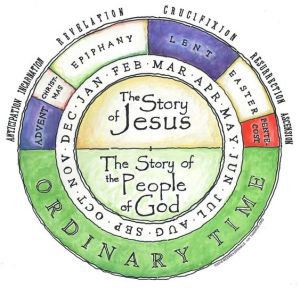
Welcome back and to Year C of the three-year Revised Common Lectionary cycle (2024-25). Year C focuses on the Gospel of Luke. The Old Testament readings are of prophetic proclamation in chronological order and will highlight Jeremiah. The New Testament readings (or second readings) are mainly from Galatians, Colossians, 1 and 2 Timothy, and 2 Thessalonians. Sunday is a good reminder that as Christians, we walk in two worlds and our New Year starts now! Here is a breakdown of the upcoming Christian calendar: 

The Liturgical Calendar

Advent: 1 December through 23 December 2024
Christmas: 24 December 2024 through 6 January 2025
Time After Epiphany: 7 January through 4 March 2025
Lent: 5 March through 16 April 2025
The Three Days: 17 April through 19 April 2025
Easter: 20 April through 11 June 2025
Time after Pentecost (Ordinary Time): 12 June through 26 November 2025 

This week, then, marks the start of the Season of Advent. The word Advent derives from the Latin, adventus meaning “coming.” And while we tend to emphasize the birth of Jesus (looking back), Advent also boldly reminds us of Christ’s second coming (looking forward), as noted in this week’s Gospel. Amidst the stress foisted upon us by the overt consumerism and rush that infuses this time of year, Advent calls Christians to pause, to wake-up, to focus on Christ’s presence in our lives — and to seek God amidst the chaos that surrounds us.

As always, thanks for visiting this space again this week! My reflections will focus on the passage from Jeremiah and the words of Jesus as recounted in the Gospel. I will also share a hymn that is especially fitting for Advent 1. Also, realize that I offer hyperlinks for further reading, so be alert for those.  And a reminder to work through the four readings utilizing the four-question approach:

1. What is something new you learned from the reading? (NEW)
2. What is something that caught your attention and made you think? (REFLECT)
3. What did you read that relates to other reading you have done? (RELATE)
4. What would you like to discuss from the reading? (DISCUSS)

Reading for 1 Advent
Jeremiah 33: 14-16
Psalm 25: 1-10
1 Thessalonians 3: 9-13
Luke 21: 25-36

Common Themes in the Readings Advent 1
Look for these themes in the readings for next Sunday: hope, watchfulness, and God’s faithfulness. Jeremiah speaks of the promised coming of a righteous king who will restore justice, instilling hope for a better future. Psalm 25 echoes a plea for guidance and deliverance, trusting in God’s steadfast love and mercy as the faithful await His salvation. In 1 Thessalonians, Paul encourages believers to live in holiness while anticipating Christ’s return, fostering a spirit of preparation and prayer. Finally, Luke highlights the need for remaining awake and steadfast as we face trials in this life, with the assurance that God’s kingdom will ultimately prevail.

The Old Testament Reading: Jeremiah 33: 14-16
14 The days are surely coming, says the Lord, when I will fulfill the promise I made to the house of Israel and the house of Judah. 15 In those days and at that time I will cause a righteous Branch to spring up for David, and he shall execute justice and righteousness in the land. 16 In those days Judah will be saved, and Jerusalem will live in safety. And this is the name by which it will be called: “The Lord is our righteousness.”

The Gospel: Luke 21: 25-36

The Coming of the Son of Man
25 “There will be signs in the sun, the moon, and the stars and on the earth distress among nations confused by the roaring of the sea and the waves. 26 People will faint from fear and foreboding of what is coming upon the world, for the powers of the heavens will be shaken. 27 Then they will see ‘the Son of Man coming in a cloud’ with power and great glory. 28 Now when these things begin to take place, stand up and raise your heads, because your redemption is drawing near.”

The Lesson of the Fig Tree
29 Then he told them a parable: “Look at the fig tree and all the trees; 30 as soon as they sprout leaves you can see for yourselves and know that summer is already near. 31 So also, when you see these things taking place, you know that the kingdom of God is near. 32 Truly I tell you, this generation will not pass away until all things have taken place. 33 Heaven and earth will pass away, but my words will not pass away.

Exhortation to Watch
34 “Be on guard so that your hearts are not weighed down with dissipation and drunkenness and the worries of this life and that day does not catch you unexpectedly, 35 like a trap. For it will come upon all who live on the face of the whole earth. 36 Be alert at all times, praying that you may have the strength to escape all these things that will take place and to stand before the Son of Man.”

reflection: “wide awake!” 

Pin Worn by Wide-Awake Members in 1860

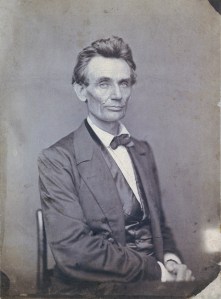
Lincoln in May of 1860
After Receiving the Republican Nomination

164 years ago, Abraham Lincoln became our 16th President. He received less than 40 percent of the popular vote in a brutally contentious four-way contest. Between the November election and his inauguration in March, seven southern states seceded from the Union, a precursor to our Civil War. One of my favorite episodes stemming from the 1860 election was the rise of the WIDE-AWAKES. Comprised mostly of young men, they were an imaginative, vocal, and often militant group supporting the anti-slavery Republican Party and its chosen candidate. Their name derived from the practice of holding torchlight parades and rallies (including in Wisconsin), and emphasis on being AWAKE to the moral and political issues of the time, particularly slavery and its expansion. Wide-Awakes saw themselves as actively engaged in the fight for justice, freedom, and reform, contrasting with those they viewed as complacent or asleep, if you will. They helped propel Lincoln to victory and their message remains relevant in 2024!

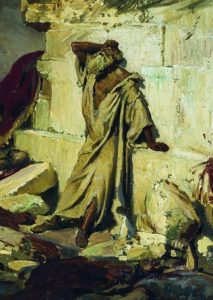
“Cry of prophet Jeremiah on the Ruins of Jerusalem” by Ilya Repin (1870)

The readings for Advent 1 spur us to wake up and be alert in our chaotic world. More than 26 centuries ago, the prophet Jeremiah was writing to a devastated people. The mighty Babylonian army had ransacked Jerusalem shipping thousands of Jewish people off to captivity, turning their world upside down. In that terrifying moment, the Prophet of God warned the “days are surely coming” when “justice and righteousness” shall return! In our interpretive framework, we hear those hopeful words to mean the coming of Jesus Christ, hence their inclusion in this week’s readings. But there’s more. As Julia M. O’Brien of Lancaster Theological Seminary and Moravian University asserts, the entire book of Jeremiah centers on the larger theme of judgement. Time and again, the Prophet hammers the Israelites for their waywardness from God (it’s actually tough to read!). My sense is that we should not read this as a finger-pointing exercise aimed at “those people back there,” but rather as a commentary on the lack of “righteousness and justice” in our time and place. Jesus echoes these words in the passage from Luke. Verses 25-26, for example, seem eerily descriptive of our time, a period of distress among nations confused by the roaring of the sea and the waves. 

As we walk into Advent 2024, then, let’s imagine being in that Jerusalem temple crowd listening to Jesus, and may we take his words to heart. Let’s not become consumed with the worries of this life, but rather, **WAKE UP, focus forward, and spend our time doing God’s work in the world, as we prepare for Christ’s return!

Soli Deo Gloria!

**Note: As I worked on this blog in the past couple of days, I could not help but think of how the word “woke” has come into our political jargon. The term’s origin traces to the African-American experience, and referred to being aware of social injustices, particularly those related to racism and inequality, and staying alert to systemic issues. Over time, it evolved into a broader concept encompassing awareness and advocacy for various social issues, including gender equality, climate justice, and LGBTQ+ rights. However, it has also become a contentious term, with critics using it to label what they perceive as excessive political correctness or performative activism. As a result, “woke” can carry both positive connotations of social consciousness and negative connotations as a polarizing or pejorative term, depending on the context. 

prayer reflection: “Wake awake, for night is flying” 

Wake Awake, For Night is Flying is a powerful hymn (436 in the ELW) from Philip Nicolai and seems especially fitting with this week’s lectionary. A Lutheran Pastor (and a “PK”), Nicolai studied in Wittenberg from 1547-49 and was soundly influenced by Luther who died a year before Nicolai’s arrival.  He ultimately served in five different parishes in Germany during his ministry. Written in 1597 in Unna during a devastating plague during which many of his parishioners died, the stirring hymn offers hope amidst desperate times. Enjoy the version below offered by the Luther College Choir.

Philipp Nicolai
(1556-1608)

Wake, awake, for night is flying,
the watchmen on the heights are crying;
awake, Jerusalem, at last.
Midnight hears the welcome voices,
and at the thrilling cry rejoices:
“Come forth, you maidens! Night is past.
The Bridegroom comes! Awake;
your lamps with gladness take!”
Alleluia!
Prepare yourselves to meet the Lord,
whose light has stirred the waiting guard.


An Announcement Regarding an Adult Education Opportunity! 

Dietrich Bonhoeffer
(1906-1945)

We will be doing a book study on Bonhoeffer’s classic, The Cost of Discipleship as we start the new year. The goal will be for people to read it between now and the end of the year in preparation for several in-person sessions at ELC in early 2025. While giving us an opportunity to dive into some Lutheran history, Bonhoeffer’s book remains incredibly relevant for 21st Century Christians! We have ordered several copies of the book and also hope that many will purchase it for themselves. In addition, be aware that a film on Bonhoeffer will be coming out around Thanksgiving, and my intention is to reference the book and Bonhoeffer’s life within the blog as well.

let me know if you are interested in being part of the study! email or text! (pstrykken@gmail.com or 715-299-0311). 
We will meet on Sunday 1 December after church in the library, for those that want to participate in some in-person discussion of the lectionary readings. our pattern typically is to take one of the readings, apply the four-question approach to it, and let the discussion flow from there!  All are welcome!

24 November 2024: Christ the King Sunday

Faithful Conversations #91
Introduction to Readers:

“What is truth?” Pilate’s cynical question from John 18:38 has been on my mind this week. Merriam-Webster defines truth as the body of real things, events, and facts. Of all the disconcerting things in our present environment, disinformation seems especially fraught with danger: who and what do we believe? What information can we trust? Pilate’s question, perhaps, is remarkably relevant in 2024. More on that in a bit.   

The Liturgical Calendar

This week marks the end of the church year and Year B of the Lectionary Cycle. Some quick history. In 1925, responding to the brutal ravages of the Great War, Pope Pius XI designated the last Sunday in October as “Christ the King” Sunday. Witnessing totalitarian and secular forces marching across the globe, including the rise of communism in Russia and fascism in Italy and Spain (foreshadowing Nazism in Germany), the Pope sought to remind Christians of their true allegiance to God Almighty.   Later, as part of the reforms emerging from the Second Vatican Council, Christ the King Sunday was moved to where it sits in the lectionary today, the final Sunday of the liturgical calendar and hinge point into Advent. A reminder that the ELCA follows the Revised Common Lectionary that emerged in the 1990s, and Christ the King Sunday was absorbed from these earlier changes.

Thanks for visiting this space again this week! A reminder that the goal of this project is simply to engage with the Lectionary readings as a way of enhancing our faith journeys. We join millions of other Christians worldwide as we do this. One suggestion I might offer is to spend a few minutes with one reading per day, applying the four-question reading approach:

1. What is something new you learned from the reading? (NEW)
2. What is something that caught your attention and made you think? (REFLECT)
3. What did you read that relates to other reading you have done? (RELATE)
4. What would you like to discuss from the reading? (DISCUSS)

My reflections this week will focus on John 18, with references to the passage from Revelation.

Reading for Christ the King Sunday
Daniel 7: 9-10, 13-14
Psalm 93
Revelation 1: 4b-8
John 18: 33-37

Common Themes in the Readings for Christ the King Sunday
The readings for Christ the King Sunday emphasize the sovereignty and eternal reign of Christ as the King of all creation. Daniel 7:9-14 portrays a vision of God’s authority and the establishment of an everlasting kingdom, symbolizing the ultimate triumph of Christ. You will see a connection between the words from Daniel and Revelation 1:4b-8 declaring Jesus as the faithful witness, ruler of kings, and the Alpha and Omega, emphasizing His divine authority and role as the eternal King. Psalm 93 celebrates God’s majestic power and steadfast rule over the earth, affirming that His throne is eternal and unshakable. In John 18:33-37, Jesus reveals that His kingdom is not of this world, underscoring the spiritual and transcendent nature of His reign.

The Second Reading: Revelation 1: 4b-8
John to the seven churches that are in Asia: Grace to you and peace from him who is and who was and who is to come and from the seven spirits who are before his throne, and from Jesus Christ, the faithful witness, the firstborn of the dead, and the ruler of the kings of the earth. To him who loves us and freed us from our sins by his blood and made us a kingdom, priests serving his God and Father, to him be glory and dominion forever and ever. Amen. Look! He is coming with the clouds; every eye will see him, even those who pierced him, and all the tribes of the earth will wail on account of him. So it is to be. Amen. “I am the Alpha and the Omega,” says the Lord God, who is and who was and who is to come, the Almighty.

The Gospel: John 18: 33-37
33 Then Pilate entered the headquarters again, summoned Jesus, and asked him, “Are you the King of the Jews?” 34 Jesus answered, “Do you ask this on your own, or did others tell you about me?” 35 Pilate replied, “I am not a Jew, am I? Your own nation and the chief priests have handed you over to me. What have you done?” 36 Jesus answered, “My kingdom does not belong to this world. If my kingdom belonged to this world, my followers would be fighting to keep me from being handed over to the Jews. But as it is, my kingdom is not from here.” 37 Pilate asked him, “So you are a king?” Jesus answered, “You say that I am a king. For this I was born, and for this I came into the world, to testify to the truth. Everyone who belongs to the truth listens to my voice.”
(Additional Verses: 38-40) 38 Pilate asked him, “What is truth?” After he had said this, he went out to the Jews again and told them, “I find no case against him. 39 But you have a custom that I release someone for you at the Passover. Do you want me to release for you the King of the Jews?” 40 They shouted in reply, “Not this man but Barabbas!” Now Barabbas was a rebel.

reflection: “quid est veritas?” (what is truth?) 

“What is Truth?”
Nikolai Ge (1831–1894)

Young Mary and the Annunciation

Pontius Pilate. We mention him every week while reciting the Apostle’s Creed. In fact, there are three people mentioned in both the Apostle’s and Nicene Creeds — Jesus, Mary, and Pilate. (Sidebar: Mary is referenced, though not named, in the Athanasian Creed, and there is no reference to Pilate). So, who was this guy and what should we know about him?   

Pontius Pilate was a Roman governor of Judea from around 26 to 36 CE, appointed by the Emperor Tiberius. He is most famous for presiding over the trial of Jesus Christ and ordering his crucifixion, despite finding no fault in him. Pilate’s tenure as governor was marked by tensions with the Jewish population, particularly over issues like Roman idolatry and the use of temple funds, which led to several violent confrontations. Historical accounts suggest Pilate was recalled to Rome after a dispute with the Samaritans, and there are various reports about his fate, including claims that he faced execution or exile. Pilate’s legacy remains largely defined by his role in the Passion narrative, making him a key figure in Christian theology. Like many other figures from the ancient world, Pilate’s legacy is complicated! 

The captivating exchange between Jesus and Pilate in John 18 is noted in all four Gospels (Matthew 27, Mark 15, and Luke 23), indicating its significance in the early Christian narratives. Pilate seeks to understand the identity of this young man standing before him. As a representative of the powerful Roman Empire, he is disdainful of those that may be angling for political power within the society yet is unclear whether Christ poses a threat. Jesus, on the other hand, represents a completely different kind of power as one who came into the world, to testify to the truth (verse 37). (Recall the earlier exchange between Jesus and Thomas in John 14:6: “I am the way and the truth and the life. No one comes to the Father except through me”). 

Pilate’s piercing follow-up question — What is truth? — is the perfect prompt for that moment in Jesus’ story. Jesus is the truth, the one eternal and perfect truth. Further, the Kingdom He is ushering in does not belong to this world (verse 36) yet is more powerful than any temporal authority (Revelation 1:5). Guided by the Holy Spirit, we carry that Kingdom on our shoulders and in our hearts every day. In our post-truth and disinformation culture, this is the powerful truth we can rely on, and this is news we must share!   

Soli Deo Gloria!

prayer reflection: “beautiful savior, king of creation”  

Paul J. Christiansen
(1914-1997)

F. Melius Christiansen
(1871-1955)

Note: How many times have we heard and sung Beautiful Savior (hymn 838 in the ELW)?  Yet, this familiar hymn has several references to Jesus as King that I have never appreciated as much as I do after walking through this week’s Lectionary. If you’re interested in the fascinating history of the hymn, check this out.  One of the arrangements of the hymn that caught fire within our denomination came from Norwegian born F. Melius Christiansen who directed the St. Olaf Choir for thirty years. His son, Paul J. Christiansen, directed the Concordia Choir from 1937-1986, and made this song a staple in the choir’s repertoire. (Sidebar: In her college days, my mother Cathy sang under Christiansen at Concordia and took great pride in being the soloist on this particular song). I included the words here and a stirring version of the song performed by the Concordia Choir last year while in Rome. Enjoy!

1 Beautiful Savior, King of creation,
Son of God and Son of Man!
Truly I’d love Thee, truly I’d serve thee,
Light of my soul, my Joy, my Crown.

2 Fair are the meadows, Fair are the woodlands,
Robed in flow’rs of blooming spring;
Jesus is fairer, Jesus is purer;
He makes our sorr’wing spirit sing.

3 Fair is the sunshine, Fair is the moonlight,
Bright the sparkling stars on high;
Jesus shines brighter, Jesus shines purer
Than all the angels in the sky.

4 Beautiful Savior, Lord of the nations,
Son of God and Son of Man!
Glory and honor, Praise, adoration,
Now and forevermore be Thine!

An Announcement Regarding an Adult Education Opportunity! 

Dietrich Bonhoeffer
(1906-1945)

We are planning a book study on Dietrich Bonhoeffer’s 1937 classic, The Cost of Discipleship. The goal will be for people to read it between now and the end of the year in preparation for several in-person sessions at ELC in early 2025. While giving us an opportunity to dive into some Lutheran history, Bonhoeffer’s book remains incredibly relevant for 21st Century Christians! We plan to order several copies of the book, and also hope that many will purchase it for themselves. In addition, be aware that a film on Bonhoeffer will be coming out around Thanksgiving, and my intention is to reference the book and Bonhoeffer’s life within the blog as well.

We will meet on Sunday 24 November after church in the library, for those that want to participate in some in-person discussion of the lectionary readings. our pattern typically is to take one of the readings, apply the four-question approach to it, and let the discussion flow from there!  All are welcome!

17 November 2024: Pentecost 26

Faithful Conversations #90
Introduction to Readers:

Carol Wambheim
(1928-2024)

As a Christian, it makes perfect sense to me that various people come into our lives to show us how to live. I was reminded of that on Saturday while attending my Aunt Carol’s funeral. It was a simple and contemplative service rooted in Lutheran tradition. Among the many interesting things about her journey, those who spoke mentioned that in the last week of her life (age 96) she participated in a Bible study, something she did throughout her life. Additionally, we learned that she practiced the spiritual discipline of prayer each morning. We left inspired.

We have reached the penultimate Sunday in Year B of the Lectionary (second to last), and two of this week’s readings remind us of Apocalyptic literature in the Bible. That word — apocalypse — derives from a Greek word meaning to uncover, disclose, or reveal (think “Revelation”). In a broad sense, apocalyptic literature within the Jewish and Christian communities flourished from roughly 200 B.C.E. to 200 C.E. The writers reflected great despair about their own times (which often included persecution) and signaled God’s imminent return to defeat the forces of evil in the world. The literary genre featured the seismic battle between God and Satan, revealing a divinely determined time schedule when the final conflict would ensue, ushering in a new and perfect world order. Various denominations — the ELCA, not so much — place great emphasis on the Apocalyptic writings and if you’re interested in a deeper dive into their role in U.S. history, here is a good article. 

Thanks for visiting this space again this week! In my reflections, I will provide some framing for the passages from Daniel and Mark.

Pentecost 26 Readings
Daniel 12: 1-3
Psalm 16
Hebrews 10: 11-25
Mark 13: 1-8

Common Themes in the Pentecost 26 Readings

Look for these themes in this week’s readings: hope, endurance, and the promise of God’s ultimate deliverance. In Daniel 12:1-3, the prophecy speaks of a time of great tribulation followed by the resurrection and eternal reward for the faithful, emphasizing God’s power to save. Psalm 16 expresses deep trust in God as the source of refuge and security, reinforcing the belief that God’s presence offers steadfast protection amid uncertainty. Hebrews 10:11-25 encourages believers to hold fast to their faith and gather together, reminding them of Christ’s once-for-all sacrifice and the assurance of forgiveness. In Mark 13:1-8, Jesus warns of future trials, urging his followers to remain vigilant and trust in God’s plan despite the signs of chaos and suffering in the world. Together, these texts highlight the call to persevere with faith, trust in God’s promises, and look forward to the fulfillment of God’s redemptive work.

The First Reading: Daniel 12: 1-3: The Resurrection of the Dead
At that time Michael, the great prince, the protector of your people, shall arise. There shall be a time of anguish such as has never occurred since nations first came into existence. But at that time your people shall be delivered, everyone who is found written in the book. Many of those who sleep in the dust of the earth shall awake, some to everlasting life and some to shame and everlasting contempt. Those who are wise shall shine like the brightness of the sky, and those who lead the many to righteousness, like the stars forever and ever.

The Gospel: Mark 13: 1-8: Destruction of the Temple Foretold
As he came out of the temple, one of his disciples said to him, “Look, Teacher, what large stones and what large buildings!” Then Jesus asked him, “Do you see these great buildings? Not one stone will be left here upon another; all will be thrown down.” When he was sitting on the Mount of Olives opposite the temple, Peter, James, John, and Andrew asked him privately, “Tell us, when will this be, and what will be the sign that all these things are about to be accomplished?” Then Jesus began to say to them, “Beware that no one leads you astrayMany will come in my name and say, ‘I am he!’ and they will lead many astray. When you hear of wars and rumors of wars, do not be alarmed; this must take place, but the end is still to come. For nation will rise against nation and kingdom against kingdom; there will be earthquakes in various places; there will be famines. This is but the beginning of the birth pangs.

reflection: Take a breath

We live in perilous times. As Christians, this should come as no surprise (I’m reminded of my father’s frequent admonition to me: “There’s always been plenty of sin in the world.”). Each time we say the Apostle’s Creed, we finish with these words (the Third Article): I believe in the Holy Spirit, the holy catholic church, the communion of saints, the forgiveness of sins, the resurrection of the body, and the life everlasting. Amen. The final clauses remind us that this life is not all there is, that at some future point, we will transition to a different reality. This belief, of course, informs our view of death. But, let’s be honest, it all remains a great mystery, perhaps the greatest of mysteries.

Rubens (1577-1640)
“Daniel in the Lion’s Den”(1614)

This week’s first reading comes from Daniel, a book nestled within the Prophets section of the Bible. If you have never spent time with Daniel, I encourage you to do so but be ready for “a ride” because it is filled with unresolved puzzles. (Sidebar: Rubens’ famous rendition painting is a reminder of my childlike fascination with Daniel and the story of his journey into the “lion’s den,” now a figure of speech for great trouble that we may be entering).  Chapter 12 is the continuation of a discourse that starts in chapter 10, as described here by Anathea Portier-Young, an Old Testament scholar at Duke University Divinity School. I quote her at length here.

A “man,” or angel, dressed in linen, with a face like lightning and eyes like flaming torches (10:5), speaks with Daniel, touches him, and gives him strength to stand (10:10-11,16-19). This angel, also called “one in human form,” explains to Daniel that he has been fighting against the “Prince of Persia” and will later fight the “Prince of Greece” (10:13, 20-21). Alongside him fights Michael, “one of the chief princes” (10:13). The angel who speaks with Daniel tells him, “There is no one who contends with me against these princes except Michael, your prince” (10:21). This passage provides important background for Daniel 12:1. The title “prince” in Daniel 10 and 12 refers to a superhuman, celestial being who represents and has responsibility to protect a particular people. The identification of Michael as the prince of Daniel’s people suggests that Michael has been their guardian from the very beginning of their existence. It emphasizes to Daniel and his audience that when they do not have power to contend against their enemies, the greatest of all princes fights on their behalf. A situation may seem hopeless, but what Daniel’s oppressed people can see and hear does not tell the whole story. Behind the scenes, forces more powerful than those on earth shape the destinies of peoples and nations.  

This week’s Gospel reading from Mark, it should be noted, was important enough to the early church that it is repeated in Matthew 24 and Luke 21 (we’re pointed to 13: 1-8, but the entire passage is 1-37). In it, Jesus predicts the destruction of the temple in Jerusalem and then comments on the end times. Again, it is important to bear in mind that his followers were steeped in Judaism and such references would fit well in their worldview, based on their knowledge of the Prophets. He then offers two pieces of advice, as theologian Dan Clendenin points out in a recent commentary. In verse 5, we are told “not to be led astray” by those who claim to be the Savior or speak for Jesus (this is repeated eight times in Chapter 13, in some form). In other words, we must be on our guard and practice discernment amidst the “noise” that surrounds us. And second, we must “not be alarmed” (verse 7) by what is happening in our world — strong words that we need to hear over and over again as Christians. God is in control. He has given us the gift of faith. We need to share that with those in our midst that need words of encouragement!

Soli Deo Gloria!

prayer reflection: transitions 

Note: Regular readers know that I am a fan of Nouwen. This is from the Henri Nouwen Society’s website from 9 November 2024. It seems timely and spoke to me during the period of transition we are experiencing in the months ahead in our nation and world.

Henri Nouwen
(1932-1996)

One of the most radical demands for you and me is the discovery of our lives as a series of movements or passages. When we are born, we leave our mothers’ womb for the larger, brighter world of the family. It changes everything, and there is no going back. When we go to school, we leave our homes and families and move to a larger community of people where our lives are forever larger and more expansive. Later when our children are grown and they ask us for more space and freedom than we can offer, our lives may seem less meaningful. It all keeps changing. When we grow older, we retire or lose our jobs, and everything shifts again. It seems as though we are always passing from one phase to the next, gaining and losing someone, some place, something. You live all these passages in an environment where you are constantly tempted to be destroyed by resentment, by anger, and by a feeling of being put down. The losses remind you constantly that all isn’t perfect and it doesn’t always happen for you the way you expected; that perhaps you had hoped events would not have been so painful, but they were; or that you expected something from certain relationships that never materialized. You find yourself disillusioned with the irrevocable personal losses: your health, your lover, your job, your hope, your dream. Your whole life is filled with losses, endless losses. And every time there are losses there are choices to be made. You choose to live your losses as passages to anger, blame, hatred, depression, and resentment, or you choose to let these losses be passages to something new, something wider, and deeper. The question is not how to avoid loss and make it not happen, but how to choose it as a passage, as an exodus to greater life and freedom.

An Announcement Regarding an Adult Education Opportunity! 

Dietrich Bonhoeffer
(1906-1945)

We are planning a book study on Dietrich Bonhoeffer’s 1937 classic, The Cost of Discipleship. The goal will be for people to read it between now and the end of the year in preparation for several in-person sessions at ELC in early 2025. While giving us an opportunity to dive into some Lutheran history, Bonhoeffer’s book remains incredibly relevant for 21st Century Christians! We plan to order several copies of the book, and also hope that many will purchase it for themselves. In addition, be aware that a film on Bonhoeffer will be coming out around Thanksgiving, and my intention is to reference the book and Bonhoeffer’s life within the blog as well.

We will meet on Sunday 17 November after church in the library, for those that want to participate in some in-person discussion of the lectionary readings. our pattern typically is to take one of the readings, apply the four-question approach to it, and let the discussion flow from there!  All are welcome!

10 November 2024: Pentecost 25

Faithful Conversations #89
Introduction to Readers:

We make hundreds of decisions every day, and the quality of DISCERNMENT has been on my mind this week. The origin of the word is the Latin discernere, — a combination of dis (meaning apart) and cernere (meaning to separate or sift). Discernment, then, refers to our ability to judge wisely and sift things out on our daily walk. I regularly pray for discernment because life is filled with difficult decisions. Spend time this week thinking about those “discerning souls” in your background, people who modeled clear thinking for you in your formative years. We need reminders of their voices! 

The Face of Jesus (using AI)

Discernment, of course, is important when choosing leaders, and on election eve, this week’s Lectionary readings are a great reminder of the counter-cultural nature of our faith. Think about the thousands of messages we have been hearing for many months (are you as overwhelmed by the political ads as I am?), and how little we hear about the poor or those suffering from injustice in our world. Frustratingly, the appeal from candidates always seems to focus heavily on selfishness, as if the only question we should be asking ourselves is, “What is best for me?!” I shudder to consider what Jesus thinks about the language running in and through our political dialogue!

Thanks for visiting the blog again this week, and for your continued interest in grappling with issues of faith! Amazingly, we have three Sundays left in this church year and will turn the calendar to “Year C” of the Lectionary on December 1st. We have been in the time of Pentecost since May — and a reminder that it was during Pentecost that our spiritual ancestors received the Holy Spirit. Once exclusive to a select group, that Spirit and God’s blessing extend to everyone — a good reminder for us! My reflection this week will key in on the connections between the passages from 1 Kings, Psalm 146, and Mark’s Gospel.

Pentecost 25 Readings
1 Kings 17: 8-16
Psalm 146
Hebrews 9: 24-28
Mark 12: 38-44

Common Themes in the Pentecost 25 Readings

Look for the following themes in the readings for Sunday: faith, sacrifice, and divine provision. In 1 Kings 17:8-16, the widow’s willingness to share her last meal with the prophet Elijah exemplifies deep trust in God’s sustenance. Psalm 146 emphasizes reliance on God as the true source of help, contrasting human leaders with the enduring support of the Lord. Hebrews 9:24-28 speaks to Christ’s ultimate sacrifice, revealing the significance of His role in atonement and salvation. Finally, in Mark 12:38-44, Jesus commends the poor widow’s humble offering, illustrating that genuine faith is measured not by the amount given, but by the heart’s intention.

First Reading: 1 Kings 17: 8-16: The Widow of Zarephath

Then the word of the Lord came to him, saying, “Go now to Zarephath, which belongs to Sidon, and live there, for I have commanded a widow there to feed you.” 10 So he set out and went to Zarephath. When he came to the gate of the town, a widow was there gathering sticks; he called to her and said, “Bring me a little water in a vessel, so that I may drink.” 11 As she was going to bring it, he called to her and said, “Bring me a morsel of bread in your hand.” 12 But she said, “As the Lord your God lives, I have nothing baked, only a handful of meal in a jar and a little oil in a jug; I am now gathering a couple of sticks so that I may go home and prepare it for myself and my son, that we may eat it and die.” 13 Elijah said to her, “Do not be afraid; go and do as you have said, but first make me a little cake of it and bring it to me, and afterward make something for yourself and your son. 14 For thus says the Lord the God of Israel: The jar of meal will not be emptied and the jug of oil will not fail until the day that the Lord sends rain on the earth.” 15 She went and did as Elijah said, so that she as well as he and her household ate for many days. 16 The jar of meal was not emptied, neither did the jug of oil fail, according to the word of the Lord that he spoke by Elijah.

Psalm 146: Praise for God’s Help

Praise the Lord!
Praise the Lord, O my soul!
I will praise the Lord as long as I live;
    I will sing praises to my God all my life long.

Do not put your trust in princes,
    in mortals, in whom there is no help.
When their breath departs, they return to the earth;
    on that very day their plans perish.

Happy are those whose help is the God of Jacob,
    whose hope is in the Lord their God,
who made heaven and earth,
    the sea, and all that is in them;
who keeps faith forever;
    who executes justice for the oppressed;
    who gives food to the hungry.

The Lord sets the prisoners free;
    the Lord opens the eyes of the blind.
The Lord lifts up those who are bowed down;
    the Lord loves the righteous.
The Lord watches over the strangers;
    he upholds the orphan and the widow,
    but the way of the wicked he brings to ruin.

10 The Lord will reign forever,
    your God, O Zion, for all generations.
Praise the Lord!

The Gospel: Mark 12: 38-44: The Widow’s Offering

38 As he taught, he said, “Beware of the scribes, who like to walk around in long robes and to be greeted with respect in the marketplaces 39 and to have the best seats in the synagogues and places of honor at banquets! 40 They devour widows’ houses and for the sake of appearance say long prayers. They will receive the greater condemnation.” 41 He sat down opposite the treasury and watched the crowd putting money into the treasury. Many rich people put in large sums. 42 A poor widow came and put in two small copper coins, which are worth a penny. 43 Then he called his disciples and said to them, “Truly I tell you, this poor widow has put in more than all those who are contributing to the treasury. 44 For all of them have contributed out of their abundance, but she out of her poverty has put in everything she had, all she had to live on.”

Reflection: “let us learn from the widows” 

Elijah and the Widow of Zerephath

Widows figure prominently in three of this week’s readings. My sense is that the widow of Zerephath and the poor widow Christ observes after his denunciation of the Scribes in Mark’s Gospel account, represent those on the fringes of society — those who lack money, status, or power of any kind. In the patriarchal culture of the ancient world, widowhood presented difficult financial challenges. Some quick research indicates that widows, in fact, are mentioned 103 times in the Bible and, not surprisingly, their status affords the opportunity for sharing theological insights (orphans receive 30 mentions, by the way). What should we take away from these stories?

The encounter between Elijah (700 BCE) and the widow from Zerephath has always puzzled me. Elijah, this rugged “confronter of kings” from the Northern Kingdom, is brusque in manner toward the widow, almost rude (verses 10-12). She is clearly destitute and afraid, and yet he expects her to serve him. What must she have been thinking at this moment?  Imagine her stress level! The storyline, of course, highlights the need for faith in God, even in desperate circumstances. Because of her actions, God provides for her and her son from that point forward. The story does not end there, however, because soon thereafter, the widow’s son dies (verses 17-24), and Elijah revives the child with God’s help. What a moment!

“The Widow’s Mite”
Artist: James Christensen
(1942-2017)

It is not hard to imagine that Christ had this story in his mind as he sat teaching in the Temple. We first see a flash of righteous anger directed at the Scribes (Mark 12: 38-40). And isn’t it interesting how Jesus seems to continually call out the power brokers within the faith community and broader societal structure? He has very little patience for them. He then directs his attention to the poor widow and her extravagant generosity. I recall this story being utilized during stewardship drives, as if she is a model for giving. But after reflecting on it this week, that version of the story makes me uncomfortable. Rather, it seems plausible that Christ elevates the widow, contrasting her with the rich and powerful. Though she possessed little, this humble woman was rich in faith and challenges, to the core, our notion of power, and the various complex societal structures that foster poverty in our midst. The Sermon on the Mount comes to mind.

Finally, take time to read Psalm 146 with this week’s election and the two widows in mind — a good reminder of the timeless wisdom of the Bible! And let us pray for discerning minds this week and going forward!

Soli Deo Gloria!

prayer reflection: “Post-Election Day” 

Walter Brueggeman
(b. 1933)

Note: This poem by Walter Brueggemann (b. 1933) jumped out at me this week. Brueggemann is a professor emeritus of Old Testament studies at Columbia Theological Seminary in Decatur, Georgia, and has authored over seventy books. This poem appeared in Prayers for a Privileged People (Nashville: Abingdon, 2008), pp. 149. I retrieved it from the Journey With Jesus webzine, a source I utilize frequently.

You creator God
     who has ordered us
       in families and communities,
       in clans and tribes,
       in states and nations.

You creator God
     who enacts your governance
       in ways overt and
       in ways hidden.
     You exercise your will for
       peace and for justice and for freedom.

We give you thanks for the peaceable order of
   our nation and for the chance of choosing—
     all the manipulative money notwithstanding.

We pray now for new governance
   that your will and purpose may prevail,
   that our leaders may have a sense
     of justice and goodness,
   that we as citizens may care about the
     public face of your purpose.

We pray in the name of Jesus who was executed
   by the authorities. Amen. 

An Announcement Regarding an Adult Education Opportunity! 

Dietrich Bonhoeffer
(1906-1945)
We are planning a book study on Dietrich Bonhoeffer’s 1937 classic, The Cost of Discipleship. The goal will be for people to read it between now and the end of the year in preparation for several in-person sessions at ELC in early 2025. While giving us an opportunity to dive into some Lutheran history, Bonhoeffer’s book remains incredibly relevant for 21st Century Christians! We plan to order several copies of the book, and also hope that many will purchase it for themselves. In addition, be aware that a film on Bonhoeffer will be coming out around Thanksgiving, and my intention is to reference the book and Bonhoeffer’s life within the blog as well.

We will meet on sunday 10 November after church in the library, for those that want to participate in some in-person discussion of the lectionary readings. our pattern typically is to take one of the readings, apply the four-question approach to it, and let the discussion flow from there!  All are welcome!
And, one more thing . . .

Bishop Elizabeth Eaton
Fourth Presiding Bishop
Evangelical Lutheran Church in America

With elections on our mind, Bishop Eaton recently released this statement regarding voting that I appreciated very much:  “Voting is not just a civic duty; it is a way to serve our neighbors.  When we vote, we have the chance to advocate for policies that reflect God’s justice and compassion.  When we vote, we should think more about the policies that affect the most vulnerable people in our communities, those that Jesus called upon us to serve.”

3 November 2024: All Saints Sunday (Pentecost 24)

Faithful Conversations #88
Introduction to Readers:

The Wittenberg Castle Church

There are moments in history that send shock waves into the future. 507 years ago this week, on October 31, 1517—All Hallows’ Eve—Martin Luther, in a bold and strategic move, posted his 95 Theses on the door of the Wittenberg Castle Church. The next morning — All Saints’ Day — local parishioners were greeted by Luther’s wide-ranging protest against church practices he deemed unbiblical as they gathered for Mass. Among other things, he challenged the sale of indulgences and the theology behind them, including the notion of purgatory and All Souls’ Day (the next day). As he painstakingly studied the scriptures, this monk of the Augustinian Order, argued that salvation came through faith in Christ alone (sola fide), and upon death, souls go directly to eternal life or separation from God, without an intermediate state. This bold act followed by a confluence of several historical forces, sparked the Protestant Reformation, a profound rupture within western Christianity.

Carol Johnson Wambheim
(1928-2024)

As spiritual descendants of Luther and other reformers, it’s important to remember that, despite our differences, we still share beliefs and traditions with our Roman Catholic brothers and sisters, including the celebration of All Saints’ Day this week. Profound in meaning, we remind ourselves of this beautiful tradition each Sunday in the words of the Apostle’s Creed. Indeed, we are surrounded by the “Communion of Saints” in our daily walk. This has special meaning for me and my family this week owing to the death of our Aunt Carol, an inspirational individual and faith mentor! At age 96, she was the last link to my parent’s generation and her passing brings that odd mixture of deep sadness and joy that resurrection people experience when a family member dies. She joins the cloud of witnesses mentioned in Hebrews, surrounding us — encouraging us — as we await Christ’s return (sidebar: the word encourage literally means to strengthen the heart and grow in courage!). Spend some time this week reflecting on the saints who live on and encourage your hearts! 

Once again, thanks for visiting this space each week and may we continue to inspire each other as we grapple with the scriptures. Again, I listed the readings designated for Pentecost 24 but realize that we follow the All Saints lection. My reflections will highlight the second reading from Revelation 21 with connections drawn to Psalm 24.  And finally, this week’s blog is dedicated to my Aunt Carol.   

All Saints Sunday Readings
Isaiah 25: 6-9
Psalm 24
Revelation 21: 1-6a
John 11: 32-44

Common Themes in the All Saints Sunday Readings
The themes of hope and life after death run in and through this week’s readings. In Isaiah 25:6-9, God promises a joyful feast where He will end all suffering and death. Psalm 24 reminds us that God is powerful and pure, showing His greatness over all creation. Revelation 21:1-6a paints a picture of a new world where God is close to His people and wipes away their tears. In John 11:32-44, Jesus raises Lazarus from the dead, demonstrating that He gives us eternal life and hope beyond this life.
 
(And the readings designated for Pentecost 24)
Deuteronomy 6: 1-9
Psalm 119: 1-8
Hebrews 9: 11-14
Mark 12: 28-34
 
Psalm 24: Entrance into the Temple

The earth is the Lord’s and all that is in it,
    the world, and those who live in it,
for he has founded it on the seas
    and established it on the rivers.

Who shall ascend the hill of the Lord?
    And who shall stand in his holy place?
Those who have clean hands and pure hearts,
    who do not lift up their souls to what is false
    and do not swear deceitfully.
They will receive blessing from the Lord
    and vindication from the God of their salvation.
Such is the company of those who seek him,
    who seek the face of the God of Jacob.[a] Selah

Lift up your heads, O gates!
    and be lifted up, O ancient doors,
    that the King of glory may come in!
Who is the King of glory?
    The Lord, strong and mighty,
    the Lord, mighty in battle.
Lift up your heads, O gates!
    and be lifted up, O ancient doors,
    that the King of glory may come in!
10 Who is this King of glory?
    The Lord of hosts,
    he is the King of glory. Selah

The Second Reading: Revelation 21: 1-6a: The New Heaven and the New Earth 

Then I saw a new heaven and a new earth, for the first heaven and the first earth had passed away, and the sea was no more. And I saw the holy city, the new Jerusalem, coming down out of heaven from God, prepared as a bride adorned for her husband. And I heard a loud voice from the throne saying,

See, the home of God is among mortals.
He will dwell with them;
they will be his peoples,
and God himself will be with them and be their God;
he will wipe every tear from their eyes.
Death will be no more;
mourning and crying and pain will be no more,
for the first things have passed away.

And the one who was seated on the throne said, “See, I am making all things new.” Also he said, “Write this, for these words are trustworthy and true.” Then he said to me, “It is done! I am the Alpha and the Omega, the Beginning and the End. To the thirsty I will give water as a gift from the spring of the water of life.

Reflection: “Simul Justus et peccator”

Growing up steeped in Lutheranism, the book of Revelation was always presented as being “interesting” in a mysterious kind of way, but not central for us. Part of this, I believe, came from the fact that other denominations, especially those with a literalist bent, relied on it as a predictor of the “end times,” and we were discouraged from such interpretations. **That said, this week’s passage flips the script a bit and prompts me to think about the Kingdom of Heaven in a new way (I need to explore this further, but consider this a start). God and heaven are not “out there” somewhere both in time and space, but rather are here and now among us (verse 3). This idea is mirrored in Psalm 24: 7-10 as well. This squares with the Christian notion of simultaneously walking in two worlds, the temporal and the eternal.     

“Heaven on Earth”
Natural Heritage Site
Thailand

And that brings us to All Saints Day. In his commentary on Romans (his favorite book), Martin Luther gave voice to one of the bedrocks of Lutheranism, that in our Christian journey, we are both sinner and saint. (Luther wrote and delivered lectures in Latin and the phrase Simul Justus et Peccator is how he would have said it). Our faith in Jesus Christ means our salvation has been decided once and for all. Nevertheless, we continue to navigate a broken world that snares us into sin, a continual reminder of our need for daily repentance. In a liberating act of love, God has enabled us to catch glimpses of heaven in our midst that surprise and encourage us — experiences and people that affirm God’s presence here and now. Let’s look for those this week and share them with those around us!   

  Soli Deo Gloria! 
 
**Note: I am indebted to Katherine Shaner, Associate Professor of New Testament at Wake Forest University School of Divinity for this interpretation derived from her 2018 commentary posted in Working Preacher.org).  
a prayer Reflection: “Crazy quilt” (Jane wilson Joyce)  

Note: One week out from our elections, I am praying for our nation to regain a sense of unity. Beyond praying about that, let’s work for it! Though written in 1984, this poem jumped out at me this week and speaks to our times. It also reminded me of our incredible quilting group at ELC!      

The Liberty Bell in Philadelphia
is cracked. California is splitting
off. There is no East or West, no rhyme,
no reason to it. We are scattered.
Dear Lord, lest we all be somewhere
else, patch this work. Quilt us
together, feather-stitching piece
by piece our tag-ends of living,
our individual scraps of love.

Jane Wilson Joyce (PhD University of Texas, Austin) retired in 2012 as Luellen Professor Emerita of Classics at Centre College in Kentucky. This poem comes from her book The Quilt Poems (1984). 

And, enjoy this beautiful version of “Sine Nominee” — For All the Saints. This is an organ version from All Saints Church in Oystermouth Swansea (South Wales). 

please note: we will resume our in-person discussion of the lectionary on sunday 3 november! all are welcome! also, be listening for an upcoming adult education opportunity related to a study of dietrich bonhoeffer!


27 October 2024: Reformation Sunday (Pentecost 23)

Faithful Conversations #87
Introduction to Readers:

The Revised Common Lectionary is a guideline for churches, not a mandate. For the next two Sundays, denominations that have roots in the Protestant Reformation utilize different texts than those prescribed in the RCL. Next Sunday we commemorate the Reformation, and I am listing those readings first. Part one of my commentary, partially a repeat from a year ago, will focus on Psalm 46. I am also listing the RCL readings (for your interest) and in part two will focus on the Hebrews passage as I have done for several weeks. Thanks for your continued interest in the Lectionary! 

Reformation Sunday Readings
Jeremiah 31: 31-32
Psalm 46
Romans 3: 19-28
John 8: 31-36

Common Themes in the Reformation Sunday Readings
The readings for Reformation Sunday highlight themes of covenant, freedom, and the transformative power of faith. In Jeremiah, God’s promise of a new covenant emphasizes the deep, personal relationship between God and His people. Psalm 46 reinforces the notion of God’s protection and strength amid chaos, while Romans underscores the significance of grace and faith in achieving righteousness (sidebar: Romans was Luther’s favorite book). Finally, John speaks to the liberating truth found in Christ, illustrating that true freedom comes from living in accordance with His teachings.

(And the readings designated for Pentecost 23)
Jeremiah 31: 7-9
Psalm 126
Hebrews 7: 23-28
Mark 10: 46-52

Reflection (part 1): the reformation hymn

Martin Luther
Augustinian Monk

507 years ago, this week (October of 1517), the rebellious Augustinian monk Martin Luther posted his famed Ninety-Five Theses on the door of the Castle Church in Wittenberg, Germany prompting debates that, over time, fractured Roman Catholicism and planted the seeds for the Protestant Reformation. He saw the world through the prism of a cosmic struggle between good and evil, something that comes through clearly in his writing. A brilliant and complex individual, Luther spent years translating the Bible into German, produced tracts and commentaries that fill volumes, and produced a large and small catechism for the education of both clergy and common people. A gifted musician, Luther also wrote hymns — thirty-six are attributed to him. Most famously, he composed Ein feste Burg ist unser Gott, known to us as A Mighty Fortress is our God (hymn number 504 in the ELW). Known as “The Battle Hymn of the Reformation,” Luther most likely penned it between 1527-1529, according to Anglican clergyman and hymnology expert John Julian.

Luther’s Hymn — An Early Printing

Luther loved the Psalms, referring to them as the “Bible in miniature.” Psalm 46 held a special place in his heart, specifically in 1527 with the plague surging through Europe while Luther faced enormous pressures in his own life, including the near death of his son. Reflecting on Psalm 46, Luther made the following gritty observation:  “We sing this psalm to the praise of God, because He is with us and powerfully and miraculously preserves and defends His church and His word against all fanatical spirits, against the gates of hell, against the implacable hatred of the devil, and against all the assaults of the world, the flesh, and sin.”  There are many great versions of this powerful hymn available, and this one by the St. Olaf Choir is especially majestic. Take a listen while you explore Psalm 46 adjacent to the lyrics of the hymn — imagine the mind of Luther at work!

Psalm 46  A Mighty Fortress is our God

God is our refuge and strength, a very present help in trouble. Therefore we will not fear, though the earth should change, though the mountains shake in the heart of the sea,

though its waters roar and foam, though the mountains tremble with its tumult. Selah  There is a river whose streams make glad the city of God, the holy habitation of the Most High.

God is in the midst of the city; it shall not be moved; God will help it when the morning dawns. The nations are in an uproar; the kingdoms totter; he utters his voice; the earth melts.

The Lord of hosts is with us; the God of Jacob is our refuge. Selah  Come, behold the works of the Lord; see what desolations he has brought on the earth.

He makes wars cease to the end of the earth; he breaks the bow and shatters the spear; he burns the shields with fire. 10 “Be still, and know that I am God! I am exalted among the nations; I am exalted in the earth.” 11 The Lord of hosts is with us; the God of Jacob is our refuge. Selah

1 A mighty fortress is our God, A bulwark never failing; Our helper He amid the flood Of mortal ills prevailing. For still our ancient foe Doth seek to work us woe– His craft and power are great, And, armed with cruel hate, On earth is not His equal.

2 Did we in our own strength confide, Our striving would be losing. Were not the right man on our side, The man of God’s own choosing. Dost ask who that may be? Christ Jesus, it is He– Lord Sabaoth His name, From age to age the same, And He must win the battle.

3 And though this world with devils filled, Should threaten to undo us, We will not fear, for God hath willed His truth to triumph through us. The prince of darkness grim, We tremble not for him– His rage we can endure, For lo, his doom is sure: One little word shall fell him.

4 That word above all earthly powers, No thanks to them, abideth; The Spirit and the gifts are ours Through Him who with us sideth. Let goods and kindred go, This mortal life also– The body they may kill; God’s truth abideth still: His kingdom is forever. Amen.

“Holy Hill”
Black River Falls, Wisconsin
(Photo: Joel Busse)

And something to think about today: As is true in every community, the forces of history echo across time. Driving up main street in our small city, the Protestant Reformation is illustrated by the structures atop “Holy Hill!” St. Joseph Catholic Church and Evangelical Lutheran Church are not more than fifty meters apart!   

Reflection (part 2): luther and hebrews

Lutheran Humor

And finally, since we are thinking about Luther this week, a quick commentary on his reservations about the book of Hebrews. (Sidebar: I like to think Luther had a good sense of humor and would appreciate the cartoon here!). Anyway, here is what I have learned thus far. He questioned its authorship and theological content. He believed it lacked apostolic authority since the author was unknown and not clearly associated with the apostles, whom Luther regarded as primary sources of Christian doctrine. Luther was also uneasy about Hebrews’ theological emphasis on works and its interpretation of Christ’s priesthood, which he felt conflicted with his doctrine of justification by faith alone. Particularly, Hebrews 6:4-6, which warns against falling away after receiving salvation, troubled Luther as it seemed to challenge the permanence of grace. Consequently, he considered Hebrews less central to the canon, although he did not reject it entirely. Whew! I am trying to imagine what it may have been like to have theological discussions with this guy!   

Here is the Hebrews passage from Pentecost 23 (Chapter 7: 23-28) 
23 Now there have been many of those priests, since death prevented them from continuing in office; 24 but because Jesus lives forever, he has a permanent priesthood. 25 Therefore he is able to save completely those who come to God through him, because he always lives to intercede for them. 26 Such a high priest truly meets our need—one who is holy, blameless, pure, set apart from sinners, exalted above the heavens. 27 Unlike the other high priests, he does not need to offer sacrifices day after day, first for his own sins, and then for the sins of the people. He sacrificed for their sins once for all when he offered himself. 28 For the law appoints as high priests men in all their weakness; but the oath, which came after the law, appointed the Son, who has been made perfect forever.

A couple things to think about here. First, it is important to recall that Hebrews was written as a homily — a sermon — to convince second generation Christians to stay the course, to see the events of their lifetime within God’s cosmic plan. And remember that many of the first hearers were facing persecution for the faith or had witnessed such persecution. Second, as a teacher, I am impressed by the REPETITION that is utilized by the writer — a great technique to reinforce a powerful idea. This passage, for example, builds on last week’s reading in that it reinforces Jesus’ role as High Priest in the grand scheme of God’s plan for salvation, fulfilling the prophecies of old.  What differentiates Christ from all others is that he is holy, blameless, and pure, and that he forever intercedes on our behalf. And note the use of the phrase “once for all,” that is repeated in 9:12, 9:26, 10:2, and 10:10. ONCE FOR ALL (verse 27), Jesus sacrificed for their sins. Let that idea grab hold of your heart this week and share the good news!  

Soli Deo Gloria! 
a prayer Reflection: luther’s evening ritual 

Martin Luther prayed a lot. When a friend asked him what he was going to do today, he is reputed to have replied, “I have so much to do that I shall have to spend the first three hours in prayer!” Whether that is true or not, the spirit of the quote captures part of his persona that comes across time to us. If you are interested, this site offers a compendium of Luther’s prayers. I offer his bedtime prayer practice here. 

Martin Luther
(1483-1546)

In the evening when you go to bed, make the sign of the holy cross and say:

In the name of the Father and of the + Son and of the Holy Spirit. Amen.

Then kneeling or standing, repeat the Creed and the Lord’s Prayer. If you choose, you may also say this little prayer:

I thank You, my heavenly Father, through Jesus Christ, Your dear Son, that You have graciously kept me this day; and I pray that You would forgive me all my sins where I have done wrong, and graciously keep me this night. For into Your hands I commend myself, my body and soul, and all things. Let Your holy angel be with me, that the evil foe may have no power over me. Amen.

Then go to sleep at once and in good cheer.

please note: we will not meet on reformation sunday after church due to a special meeting that will be taking place at that time. we will resume our in-person discussion of the lectionary on sunday 3 november! all are welcome!