Faithful Conversations #122
Introduction to Readers
“Eventually, all things merge into one, and a river runs through it. The river was cut by the world’s great flood and runs over rocks from the basement of time. On some of the rocks are timeless raindrops. Under the rocks are the words, and some of the words are theirs. I am haunted by waters.”
(Norman Maclean)
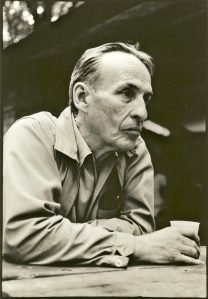
(1902-1990)
Rivers—and the moments of transformation they represent—have been on my mind this week, especially as I sit with the readings from 2 Kings and Luke. Norman Maclean’s words remind me how rivers quietly carry the memory of generations past. Living in a small river city, I’ve often felt that truth flow around me. The Jordan River, prevalent in this week’s first reading, isn’t just a location in Scripture—it’s a vivid symbol of change, transition, and divine encounter. In the Old Testament, it marks the line between wilderness and promise. Jacob crosses the Jabbok River (an eastern tributary of the Jordan), wrestles a man all night, and leaves limping with a dislocated hip. That crossing marks the moment he becomes Israel (Genesis 32). When the Israelites step across the Jordan in Joshua 3, they’re not just walking into new territory—after 40 years of wandering, they’re crossing into God’s fulfilled promise. The river becomes a doorway into new life. In 2 Kings, Elijah and Elisha both cross the Jordan during key moments in their prophetic journeys. Elijah walks through before being taken up to heaven. Elisha returns, parting the waters with Elijah’s cloak and carrying a double portion of his spirit. The river becomes the stage for succession, power, and calling. And in the New Testament, the Jordan deepens in meaning. Jesus steps into its waters to be baptized by John. That moment marks the start of his public ministry. The Jordan becomes not just a river, but a sign of spiritual rebirth and God’s voice of affirmation. It points toward the heart of baptism: dying to the old self, rising into new life. More to come on sacred crossings in this week’s reflection.
Thanks for your visit again this week and for your continued interaction with the Lectionary! As I am working on the blog, the news out of the Middle East is disconcerting. As Christians, we are called to be people of peace, even in times of global conflict. The U.S. bombing of Iranian nuclear sites is sobering and will be an evolving story. In part, due to our son Jake’s military journey, we have spent 25 years reacting to such stories in a personal way. Regardless of political views, our response must begin with prayer—for wisdom among leaders, protection for the innocent, and a path toward reconciliation. I found myself seeking out the words from Psalm 121, often a calming exercise for me.
There are several commemorations on our church calendar this week (you can find all 125 of them in the ELW, pages 14-17). Notably, John the Baptist (June 24) and Peter and Paul (June 29). And, important in our Lutheran heritage, we commemorate the presentation of the Augsburg Confession (1530) and Philipp Melanchthon (d. 1560) on June 25. Read more about that story here! Beyond my reflections this week, I will offer some background on the Serenity Prayer and a beautiful (and familiar) piece of music with a river theme!
** Note 1: Links to outside references are bolded and italicized and are meant for further reading or research on your part. While the text I am including in the blog is my own, I am pulling from a multitude of sites for ideas and connections.
** Note 2: In my increasing use of A.I. (Copilot), I will cite sourcing of how I am using the tool, if necessary. I don’t want that to be overly cumbersome, but I am gradually incorporating more tools. And, by the way, I am exploring the A.I. world this summer prior to my next teaching semester. As you can imagine, it is a great challenge right now and will forever change the face of education!
Common Themes Among the Readings
PENTECOST 3
1 Kings 19: 15-16,19-21
2 Kings 2:1–2, 6–14
(alternate)
Psalm 16
Galatians 5: 1, 13-25
Luke 9: 51-62
The readings for 3 Pentecost (Year C) converge around the call to follow God with unwavering trust and bold commitment. Elijah’s mantle passing to Elisha, and Jesus’ resolute journey to Jerusalem, both illustrate the cost—and urgency—of discipleship. Galatians urges believers to walk by the Spirit, embodying freedom not as self-indulgence but as love put into practice. Psalm 16 provides the foundation for this journey, anchoring it in the assurance that God charts the path of life and holds us fast. Together, these texts call us to release what tethers us to the past, receive the Spirit’s power, and walk the sacred road of transformation.
“Describe the common themes among the readings for Pentecost 3.” Copilot, 21 June 2025, Copilot website.
2 Kings 2: 1-2, 6-14
2 Now when the Lord was about to take Elijah up to heaven by a whirlwind, Elijah and Elisha were on their way from Gilgal. 2 Elijah said to Elisha, “Stay here, for the Lord has sent me as far as Bethel.” But Elisha said, “As the Lord lives and as you yourself live, I will not leave you.” So they went down to Bethel.
6 Then Elijah said to him, “Stay here, for the Lord has sent me to the Jordan.” But he said, “As the Lord lives and as you yourself live, I will not leave you.” So the two of them went on. 7 Fifty men of the company of prophets also went and stood at some distance from them, as they both were standing by the Jordan. 8 Then Elijah took his mantle and rolled it up and struck the water; the water was parted to the one side and to the other, and the two of them crossed on dry ground. 9 When they had crossed, Elijah said to Elisha, “Tell me what I may do for you before I am taken from you.” Elisha said, “Please let me inherit a double share of your spirit.” 10 He responded, “You have asked a hard thing, yet if you see me as I am being taken from you, it will be granted you; if not, it will not.” 11 As they continued walking and talking, a chariot of fire and horses of fire separated the two of them, and Elijah ascended in a whirlwind into heaven. 12 Elisha kept watching and crying out, “Father, father! The chariots of Israel and its horsemen!” But when he could no longer see him, he grasped his own clothes and tore them in two pieces. 13 He picked up the mantle of Elijah that had fallen from him and went back and stood on the bank of the Jordan. 14 He took the mantle of Elijah that had fallen from him and struck the water. He said, “Where is the Lord, the God of Elijah? Where is he?” He struck the water again, and the water was parted to the one side and to the other, and Elisha crossed over.
TRY LUTHER’S METHOD OF BIBLE READING
A Revision of the Lectio Divina, a method he learned in his Augustinian training (Three Steps)
Oratio (Prayer): This is the starting point, where one humbly prays for the Holy Spirit’s guidance to understand God’s Word. Luther emphasized that prayer prepares the heart and mind to receive divine wisdom.
Meditatio (Meditation): This involves deeply engaging with Scripture, not just reading it but reflecting on it repeatedly. Luther encouraged believers to “chew on” the Word, allowing its meaning to sink in and shape their thoughts and actions.
Tentatio (Struggle): Often translated as “trial” or “temptation,” this refers to the challenges and spiritual battles that arise as one seeks to live according to God’s Word. Luther saw these struggles as a way God refines faith, making it more resilient and authentic.
My source for the Bible readings each week is the Bible Gateway website.
Luke 9: 51-62
51 When the days drew near for him to be taken up, he set his face to go to Jerusalem. 52 And he sent messengers ahead of him. On their way they entered a village of the Samaritans to prepare for his arrival, 53 but they did not receive him because his face was set toward Jerusalem. 54 When his disciples James and John saw this, they said, “Lord, do you want us to command fire to come down from heaven and consume them?” 55 But he turned and rebuked them. 56 Then they went on to another village. 57 As they were going along the road, someone said to him, “I will follow you wherever you go.” 58 And Jesus said to him, “Foxes have holes, and birds of the air have nests, but the Son of Man has nowhere to lay his head.” 59 To another he said, “Follow me.” But he said, “Lord, first let me go and bury my father.” 60 And Jesus said to him, “Let the dead bury their own dead, but as for you, go and proclaim the kingdom of God.” 61 Another said, “I will follow you, Lord, but let me first say farewell to those at my home.” 62 And Jesus said to him, “No one who puts a hand to the plow and looks back is fit for the kingdom of God.”
Here is a good “refresher” on how to read the Gospels from
Source: The Bible Project
Reflections: “Reluctance and Resolve”
The connections between the Lectionary readings are sometimes difficult to discern, but that’s not the case with the passages from 2 Kings and Luke this week. Both center on moments of transition, departure, and the cost of discipleship. Here is a quick summary of both. (Note: You may see there are two “first” readings listed this week, and the 2 Kings passage is the alternate reading, but they are connected).

by Giuseppe Angeli (c. 1740)
In 2 Kings, Elijah (the mentor) is about to be taken up into heaven (a dramatic scene!), and Elisha (the pupil) becomes his successor. (Sidbar: Can we all recall readers in church stumbling through this passage, confusing the names of Elijah and Elisha? But, I digress). The naming of Elisha happens earlier (1 Kings 19), but the actual transfer of authority happens in 2 Kings. Elisha’s persistence and his request for a double portion of Elijah’s spirit show his readiness to carry on the prophetic mission. The crossing of the Jordan, the parting of the waters, and the taking up of Elijah all mark a sacred transition of leadership and spiritual authority.

In Luke 9, Jesus “sets his face toward Jerusalem” (verse 53) signaling the beginning of his journey toward the cross. Like Elijah, he is moving toward a moment of departure. Along the way, Jesus encounters would-be followers, but he challenges them with the cost of discipleship—no turning back, no delay, no divided loyalties (verses 60-62). His words echo the urgency and total commitment seen in Elisha’s response to Elijah.
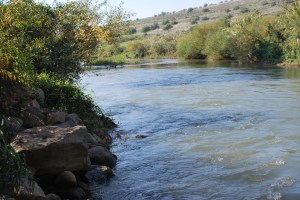
What are the takeaways for those of us navigating the world of 2025? Let me return to my musings on rivers and especially the Jordan River. While working through the 2 Kings reading, I stumbled on a wonderful analysis offered by theologian Kimberly D. Russaw of Pittsburgh Theological Seminary. She highlights the Jordan River as a metaphor in our lives that I find an especially compelling: “What situation do we need to cross over or resolve in order to move into the next phase of our life? What hard thing must we confront to live fully and freely in our ministry?” In Elisha’s case, one senses both reluctance and resolve as he witnesses his vaunted mentor riding that chariot to a different reality — a moment of truth. The disciples traveling with Jesus are experiencing the same thing — reluctance and resolve. This young Jewish man is heading toward the fulfillment of his destiny, and they aren’t quite sure if they’re ready to take those next steps. Those next steps are always difficult. Again, from Kimberly Russaw: “When we cross our Jordan Rivers, we should possess something different—something that will help us in our earthly ministry. We should also understand aspects of our ministry because we will have witnessed someone else doing something similar.” My prayer for all of us going forward is that we find that resolve and cross those rivers, doorways to a new life, more deeply and spiritually blessed!
Soli Deo Gloria!
The Serenity Prayer: Reinhold Niebuhr


Background: Most people think the Serenity Prayer started with AA, but it actually goes back to theologian Reinhold Niebuhr (1892-1971) in the 1930s. One of his students, Winnifred Wygal (1884-1972), wrote it down and helped spread its popularity through the YWCA. Over time, the prayer made its way into a World War II chaplain’s prayer book, and by the early 1940s, it landed in Alcoholics Anonymous—and that’s when it really stuck. The prayer found its way to me 31 years ago through a counselor who walked with me during a time of deep personal reckoning. It has been part of my daily ritual ever since.
God, grant me the serenity to accept the things I cannot change,
Courage to change the things I can,
And wisdom to know the difference.
A Musical Offering: “Down in the River to Pray” (author unknown)
Down in the River to Pray
As I went down in the river to pray
Studying about that good ol’ way
And who shall wear the starry crown?
Good Lord show me the way
O sisters, let’s go down
Let’s go down, come on down
O sisters, let’s go down
Down in the river to pray
As I went down in the river to pray
Studying about that good ol’ way
And who shall wear the robe and crown?
Good Lord show me the way
O brothers, let’s go down
Let’s go down, come on down
Come on brothers, let’s go down
Down in the river to pray
As I went down in the river to pray
Studying about that good ol’ way
And who shall wear the starry crown?
Good Lord show me the way
O fathers, let’s go down
Let’s go down, come on down
O fathers, let’s go down
Down in the river to pray
As I went down in the river to pray
Studying about that good ol’ way
And who shall wear the robe and crown?
Good Lord show me the way
O mothers, let’s go down
Come on down, don’t you wanna go down?
Come on mothers, let’s go down
Down in the river to pray
As I went down in the river to pray
Studying about that good ol’ way
And who shall wear the starry crown?
Good Lord show me the way
O sinners, let’s go down
Let’s go down, come on down
O sinners, let’s go down
Down in the river to pray
As I went down in the river to pray
Studying about that good ol’ way
And who shall wear the robe and crown?
Good Lord show me the way
“Down in the River to Pray”
“Down in the River to Pray” is a deeply spiritual American folk song with roots that stretch across traditions—African American spirituals, Appalachian hymns, and Southern gospel all claim a piece of its heritage. The earliest known version, titled “The Good Old Way,” appeared in the 1867 collection Slave Songs of the United States, contributed by George H. Allan of Nashville. Its lyrics evoke baptismal imagery and a longing for divine guidance, often interpreted as both a literal call to faith and a coded message of hope and escape during slavery—walking in the river could mask scent from tracking dogs, and the “starry crown” may allude to navigating by the stars. As I have listened to it this week, two things stand out: first, the pace of the song raises an image of people gracefully walking, and two, the sense of spiritual resolve embodied in the lyrics.
The Atlanta Master Chorale is a nationally recognized choral ensemble based in Atlanta, Georgia, known for its rich, expressive sound and deeply spiritual performances. Founded in 1985 as the Gwinnett Festival Singers, the group evolved into Atlanta Sacred Chorale under the leadership of Dr. Eric Nelson in 2000, and later adopted its current name to reflect its artistic growth and broader reach. Their mission, “to lift the spirit through choral artistry,” is evident in their diverse repertoire, which spans Renaissance motets, spirituals, gospel, and newly commissioned works.
Source: exploregeorgia.org
Update on “Faithful Conversations”
Our regular gatherings for discussing the weekly lectionary are on a pause. Summer worship at ELC is at 8:30 in town and 10:15 at Hatfield by the lake. The 8:30 service will be streamed. Please stay in touch!
News from our Episcopal Brothers and Sisters in Massachusetts!
This story from Massachusetts caught my attention this week. You may recall that the ELCA officially repudiated the Doctrine of Discovery in August 2016 during its Churchwide Assembly. The resolution passed with overwhelming support—912 to 28—making the ELCA the second major U.S. denomination to take this step — the Episcopalians were first in 2009. The Doctrine of Discovery refers to a series of 15th-century papal decrees that gave Christian colonizers theological and legal justification to claim lands inhabited by non-Christians.
Note: The ELCA has a strong ecumenical vision rooted in the Augsburg Confession’s emphasis on unity where the Gospel is “rightly preached and the sacraments rightly administered.” We are in full communion with the denominations listed below—meaning we recognize each other’s sacraments and ministries, and can exchange clergy and worship together. These partnerships are grounded in a shared confession of faith and a commitment to unity in diversity: Reformed Church in America (1997), United Church of Christ (1997), The Episcopal Church (1999), The Moravian Church (1999), The United Methodist Church (2009).

Coincidentally, I’ve been doing a mini-study of my own this past month on the words “water” and “river” (hand in hand with the lectionary study) and there is a lot! I have found 13 verses that referred to water or a river as the Presence of God (and I’m sure there’s more!). I think, as believers, we always have His “River of Living Water” (referred to in John 7:38) flowing through us but at times, in my life, it gets reduced to a trickle! The solution for the gates of the dam to be open wider, so to speak, is for me to spend more Time with my heavenly Father listening/talking to Him and absorbing His Words of life and love found in the Bible.
LikeLiked by 1 person
Hi Kris — The Jordan River comes into play, once again, in the July 6 readings (an alternate first reading from 2 King s 5: 1-14 — the healing of Naaman, commander of the army of the King of Aram. Quite a story.
LikeLike