Faithful Conversations #137
Introduction to Readers
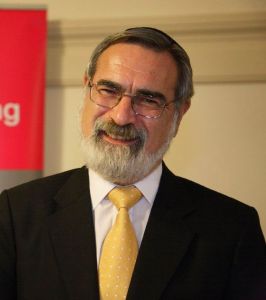
“Optimism is a passive virtue, hope an active one. It needs no courage to be an optimist, but it takes a great deal of courage to hope. The Hebrew Bible is not an optimistic book. It is, however, one of the great literatures of hope.” (Rabbi Jonathan Sacks)
Lately, I find myself praying for clarity on how to bring a faithful presence into our fractured world. I’ve also been thinking about children and the world they’re experiencing. In the October issue of The Christian Century, Presbyterian minister Maryann McKibben Dana shares a striking moment from a conversation with a friend. The friend pointed out that those who rage at every headline often do so from the comfort of safety—far removed from the daily grind of people fighting just to get by. While some shout from the sidelines, others carry the weight of survival in silence. Dana’s reflection flips the lens, reminding us that outrage can be a privilege not everyone can afford. As Christians, we are called to purveyors of hope in our world, not glittering optimists who dance in superficiality, and as Rabbi Jonathan Sacks suggests, God’s word grounds us in that hope. Keep that in mind as you work through this week’s readings. And let’s stay excited that many in our midst have taken on the challenge of reading the Bible through in one year!

We have reached Pentecost 18 and soon will mark the 508th anniversary of the Reformation (26 October). We have two commemorations on our calendar this week: William Tyndale (died on 6 October 1536) was a groundbreaking English scholar, linguist, and Protestant reformer best known for translating the Bible into English directly from Hebrew and Greek texts—a radical act that challenged both ecclesiastical authority and political power; and Henry Melchior Muhlenberg who died on 7 October 1787. Born in Einbeck, Germany (1711) and deeply influenced by Pietism, he was ordained in 1739 and emigrated to Pennsylvania in 1742, serving scattered German-speaking Lutheran communities in the pre-Revolutionary period. Among other things, he kept detailed journals that remain invaluable for understanding early American Lutheranism and religious life in the colonies. One other notable fact is that Muhlenberg’s son Peter became a soldier of renown during the Revolutionary War.
Thanks for visiting this venue again this week and for your continued interest in the Lectionary. My reflections will focus on the readings from Jeremiah and Luke. I’m also including a prayer dedicated to the refugees in our midst and musical selection that focuses on the children in our world (generally), and especially those who have been displaced.
** Note 1: Links to outside references are bolded and italicized and are meant for further reading or research on your part. While the text I am including in the blog is my own, I am pulling from a multitude of sites for ideas and connections.
** Note 2: In my increasing use of A.I. (Copilot), I will cite sourcing of how I am using the tool, if necessary. I don’t want that to be overly cumbersome, but I am gradually incorporating more tools. I am exploring the A.I. world this summer prior to my next teaching semester. As you can imagine, it is a great challenge right now and will forever change the face of education!
** Note 3: The images I include in the blog are drawn from Wikimedia Commons to the fullest extent possible.
Common Themes Among the Readings
Readings for Pentecost 18
2 Kings 5:1-3, 7-15c
(Alt) Jeremiah 29:1, 4-7
Psalm 111
2 Timothy 2:8-15
Luke 17:11-19
My source for the Bible readings each week is the Bible Gateway website. I generally use the NRSVUE translation.
The readings for Pentecost 18 center on themes of healing, gratitude, and faithful witness in the midst of exile and uncertainty. Naaman’s cleansing in 2 Kings and the Samaritan leper’s thanksgiving in Luke highlight the transformative power of divine mercy and the importance of responding with praise. Jeremiah’s letter to the exiles urges rootedness and hope, even in foreign lands, while 2 Timothy calls for endurance and integrity in proclaiming the gospel. Psalm 111 ties these threads together with a celebration of God’s wondrous deeds and enduring covenant, inviting the community to remember and trust.
“Describe the common themes among the readings for Pentecost 18.” Copilot, 4 October 2025, Copilot website.
LUTHER’S METHOD OF BIBLE READING
A Revision of the Lectio Divina (Augustinian)
Three Steps
Oratio (Prayer): This is the starting point, where one humbly prays for the Holy Spirit’s guidance to understand God’s Word. Luther emphasized that prayer prepares the heart and mind to receive divine wisdom.
Meditatio (Meditation): This involves deeply engaging with Scripture, not just reading it but reflecting on it repeatedly. Luther encouraged believers to “chew on” the Word, allowing its meaning to sink in and shape their thoughts and actions.
Tentatio (Struggle): Often translated as “trial” or “temptation,” this refers to the challenges and spiritual battles that arise as one seeks to live according to God’s Word. Luther saw these struggles as a way God refines faith, making it more resilient and authentic.
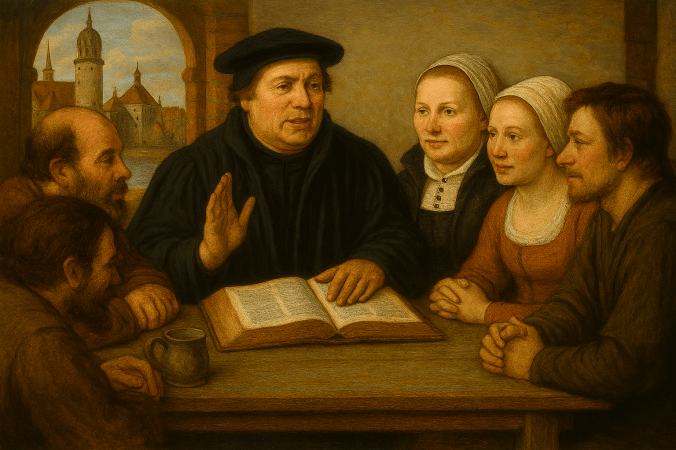
(A.I. Generated, 2025)
Alternate First Reading: Jeremiah 29: 1, 4-7
29 These are the words of the letter that the prophet Jeremiah sent from Jerusalem to the remaining elders among the exiles and to the priests, the prophets, and all the people whom Nebuchadnezzar had taken into exile from Jerusalem to Babylon.
4 Thus says the Lord of hosts, the God of Israel, to all the exiles whom I have sent into exile from Jerusalem to Babylon: 5 Build houses and live in them; plant gardens and eat what they produce. 6 Take wives and have sons and daughters; take wives for your sons, and give your daughters in marriage, that they may bear sons and daughters; multiply there, and do not decrease. 7 But seek the welfare of the city where I have sent you into exile, and pray to the Lord on its behalf, for in its welfare you will find your welfare.

Gospel: Luke 17: 11-19
11 On the way to Jerusalem Jesus was going through the region between Samaria and Galilee. 12 As he entered a village, ten men with a skin disease approached him. Keeping their distance, 13 they called out, saying, “Jesus, Master, have mercy on us!” 14 When he saw them, he said to them, “Go and show yourselves to the priests.” And as they went, they were made clean. 15 Then one of them, when he saw that he was healed, turned back, praising God with a loud voice. 16 He prostrated himself at Jesus’s feet and thanked him. And he was a Samaritan. 17 Then Jesus asked, “Were not ten made clean? So where are the other nine? 18 Did none of them return to give glory to God except this foreigner?” 19 Then he said to him, “Get up and go on your way; your faith has made you well.”
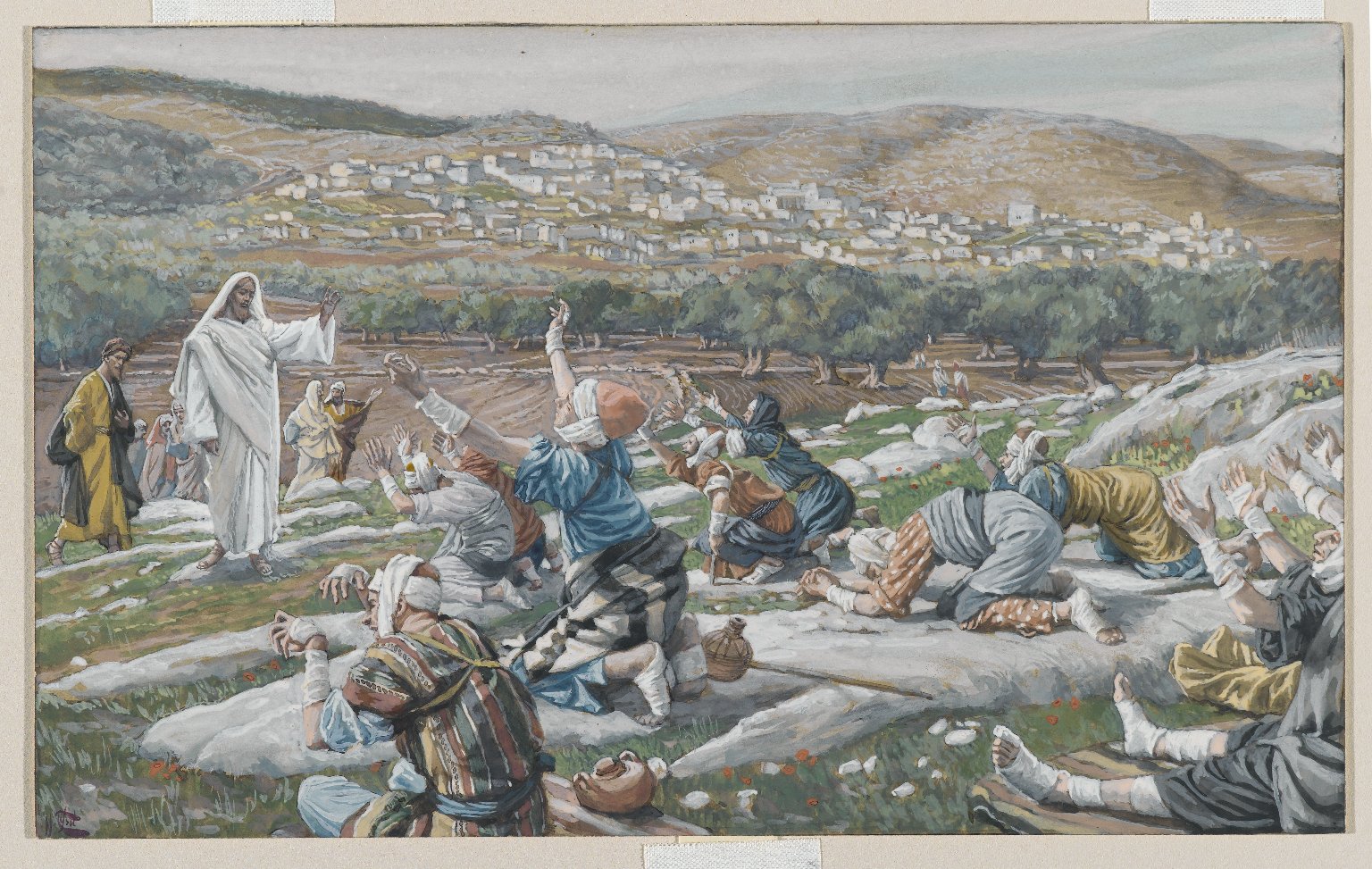
James Tissot (1836–1902)
Reflection: Strangers in our Midst
This week’s readings from Jeremiah and Luke offer profound insights into the presence—and the power—of the foreigner in our midst. In Jeremiah 29:1, 4–7, the prophet pens a letter to the exiles in Babylon—a displaced people, torn from Jerusalem and thrust into foreign soil. His message is startling in its realism: “Build houses and live in them… seek the welfare of the city where I have sent you into exile.” Rather than resist or retreat, the exiles are called to engage, to bless, and to pray for the flourishing of the very place that holds them captive. This summons is both unsettling and deeply hopeful. Historically, this letter was written after the first wave of deportations in 597 BCE, when King Jehoiachin and the Judean elite were taken to Babylon. Archaeological records confirm that these exiles were not merely prisoners—they were artisans, officials, and laborers integrated into Babylonian society. Jeremiah’s call was radical: live faithfully among foreigners and recognize that God’s presence is not confined to Jerusalem. The stranger becomes neighbor, and exile becomes a crucible for spiritual renewal. It’s a vision that redefines exile—not as punishment, but as possibility.
More than six centuries later, in Luke 17:11–19, Jesus encounters ten lepers on the borderlands between Galilee and Samaria. These men are doubly marginalized—by disease and geography. Yet it is the Samaritan, the foreigner among them, who returns to give thanks. Jesus’ response is telling: “Was no one found to return and give praise to God except this foreigner?” The outsider becomes exemplar, the one who sees clearly and responds with gratitude. This encounter unfolds in a region scarred by ethnic division and religious mistrust. Samaritans were viewed with suspicion by many Jews, their worship practices deemed impure. Yet here, the Samaritan’s faith transcends boundaries. All ten are healed, but only one is made whole—his gratitude becomes the gateway to deeper restoration. Once again, Jesus throws us a curveball.
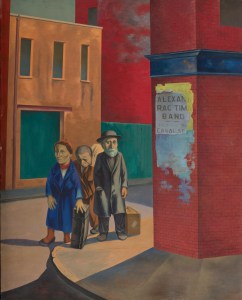
Together, these passages challenge us to reconsider our posture toward the foreigner. Jeremiah urges rootedness and blessing in unfamiliar places. Luke reveals that grace often flows through those we least expect. In both, God’s movement is not confined to the familiar or the favored—it pulses through exile, borderlands, and gratitude. As so often in Scripture, these ancient voices speak directly into our present moment. As migration and displacement continue to rock the global political environment, and cultural tension shapes our communities, these texts beckon us toward prophetic realism and gospel hospitality. The foreigner is not merely among us—they are often the vessel of divine insight. To dwell faithfully is to seek the welfare of the stranger, and to recognize that healing and thanksgiving may come from unexpected voices. Hope is all around us if we choose to see it.
Soli Deo Gloria!
Prayer Reflection: Prayer for Refugees and Migrants
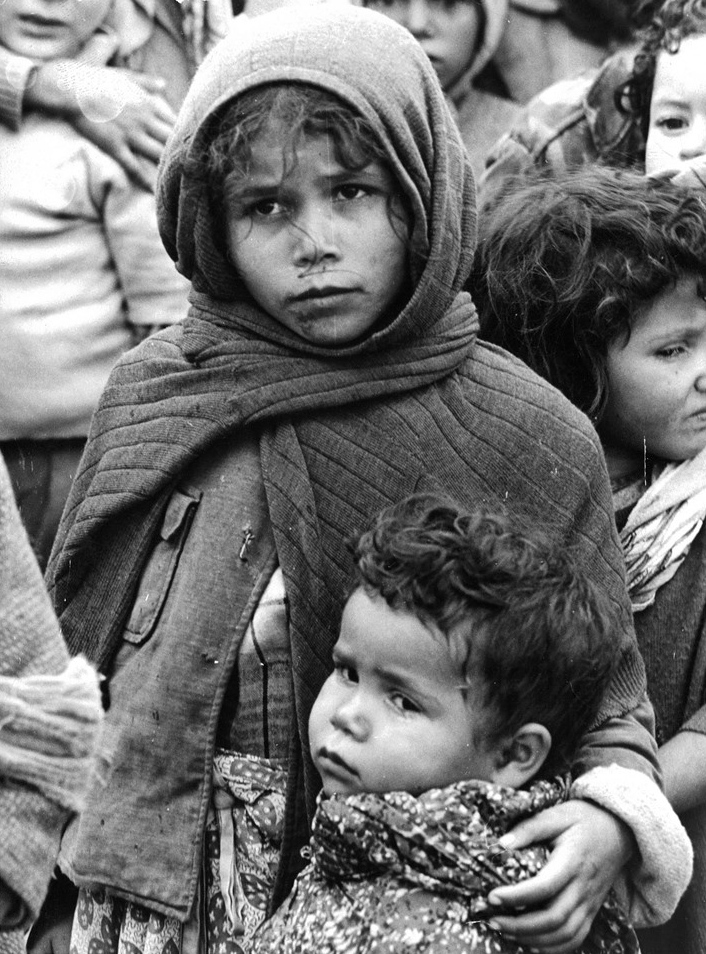
Lutherans have a strong tradition in the world of immigration. Formed in 1939, Global Refuge (formerly Lutheran Immigration and Refugee Services), has been active in the world for 86 years. The following prayer is an interpretation of a prayer suggested within their resources and also inspired by Psalm 146. We know that children, in particular, are caught within the various forces of displacement in our world — political conflicts, civil wars, and famine just to name a few.
God of mercy, who watches over the stranger and lifts up the brokenhearted, guide us to walk with refugee families seeking peace and home. Bless the mothers, fathers, and children who flee danger. Heal their wounds, restore their hope, and let your love be their shelter. You uphold the cause of the oppressed and give food to the hungry. Make us instruments of your justice—welcoming, compassionate, and brave. Open our hearts to see your image in every migrant and asylum seeker. Lead us to serve with light and love. End the violence that drives them. Stir the hearts of nations to build a world where no child must flee again. The Lord reigns forever. In your mercy, hear our prayer. Amen.

“Bless the mothers, fathers, and children who flee danger. Heal their wounds, restore their hope, and let your love be their shelter.“
A Musical Offering: Prayer of the Children (Kurt Bestor)
Having spent my adult life with young people, I find so much of our modern environment harmful to children — perhaps, like many of you, legacy is on my mind. What kind of world are we leaving to our children? One of the heartbreaking realities of our world today, as has been true throughout history, is the suffering of children. There are so many contemporary examples. As of the end of 2024, for example, nearly 49 million children were forcibly displaced worldwide due to conflict, violence, and disasters (40% of all refugees). Additionally, having reached my elder years, I grieve for the example our young people see around them growing up. Surely, we can do better. The powerful message of Bestor’s song resonates.
**My statistics are drawn from the Stop Child Labor website.
Prayer of the Children
Can you hear the prayer of the children
On bended knee, in the shadow of an unknown room?
Empty eyes, with no more tears to cry
Turning heavenward, toward the light
Crying, “Jesus, help me
To see the morning light of one more day;
But if I should die before I wake
I pray my soul to take.”
Can you feel the heart of the children
Aching for home, for something of their very own?
Reaching hands, with nothing to hold on to
But hope for a better day, a better day
Crying, “Jesus, help me
To feel the love again in my own land;
But if unknown roads lead away from home
Give me loving arms, away from harm.”
Can you hear the voice of the children
Softly pleading for silence in a shattered world?
Angry guns preach a gospel full of hate
Blood of the innocent on their hands
Crying, “Jesus, help me
To feel the sun again upon my face;
For when darkness clears I know you’re near
Bringing peace again.”
“Prayer of the Children” by Kurt Bestor is a deeply moving song written in response to the suffering of children during the Yugoslav Wars. Its lyrics express a child’s longing for peace, safety, and connection with God amidst violence and loss. One of its most poignant lines is: “Can you hear the prayer of the children… aching for home, for something of their very own.”
Chorale NouvEAU performs Prayer of the Children composed by Kurt Bestor and arranged by Andrea S. Klouse, under the direction of Kate Larson. This performance was from our concert, A Cry for Peace on January 19th, 2025, at Christ Church Cathedral. This concert was in partnership with Sleep in Heavenly Peace. Sleep in Heavenly Peace (SHP) is a volunteer-driven nonprofit dedicated to building and delivering hand-made, fully furnished beds to children in need. ELC has partnered with SHP on several occasions.
(Information provided with the YouTube posting)
The Chorale NouvEAU draws its members from the Chippewa Valley region of Wisconsin.
Faithful Conversations Updates
Join us for some free-flowing conversation about the Lectionary readings each Sunday. We meet from 10:45-11:30 in the church library each week, with some exceptions. No prior knowledge is necessary! ALL ARE WELCOME! And, let’s discuss these questions when we gather (or any other questions you would like to raise for the group!):
1. Why did Jeremiah instruct the captive Israelites (verses 4-7) in the manner he did?
2. What does the Samaritan’s gratitude teach us about recognizing grace in unexpected places—and voices? Who are the “foreigners” in your life whose faith or insight has challenged you to see more clearly?

📖 THIS WEEK’S BIBLE 365 READING CHALLENGE:
Monday 6 October: Genesis 25-28 and Psalm 8
Tuesday 7 October: Genesis 29-31 and Psalm 9
Wednesday 8 October: Genesis 32-34 and Psalm 10
Thursday 9 October: Genesis 35-37 and Psalm 11
Friday 10 October: Genesis 38-40 and Psalm 12
Saturday 11 October: Genesis 41-42 and Psalm 13
Sunday 12 October: 43-45 and Psalm 14
Here is a LINK to the full Bible 365 Plan!

This resource is a beautiful gift to the saints. Thank you for the insights and for gathering together these reflections.
LikeLiked by 1 person
Thank you for those words of encouragement, Reverand Dr. Young — much appreciated. The Blog is a work in progress.
LikeLike