Welcome to Two Worlds!
(Year A: 2 Lent)

Nicodemus, Kansas
INTRODUCTION
Place names often carry remarkable stories. Founded in 1877 by formerly enslaved people from Kentucky, Nicodemus, Kansas took its name from the biblical figure in Sunday’s Gospel because the settlers saw their new community as a kind of “new birth.” The AME Church, built in 1885, quickly became the town’s spiritual and civic anchor, hosting worship, school lessons, and community gatherings; today it stands within the Nicodemus National Historic Site as a powerful reminder of the faith and resilience that shaped this Reconstruction‑era settlement.

So who was Nicodemus, and why did his story matter enough to inspire a town’s name in the hinterland of North America? An intriguing character, he appears only in John’s Gospel, and we meet him three times—first in John 3 during his nighttime conversation with Jesus, then in John 7 when he challenges the Pharisees’ rush to judgment, and finally in John 19 when he helps Joseph of Arimathea bury Jesus. A Pharisee steeped in Jewish law, he comes to Jesus under cover of darkness, genuinely seeking to understand what God is doing through him. He senses something divine in Jesus but struggles with the idea of being “born again,” a concept that doesn’t fit his religious framework. His tension exposes how easily religious structures can distract us from Christ himself, a temptation that sits squarely within the First Commandment. Nicodemus wrestles because Jesus is announcing a new reality that stretches beyond conventional Judaism, yet the later references to him show a man changed by the encounter — someone who comes to see Jesus as the Son of God. In that sense, he becomes a mirror for us. And it’s in this same conversation that we hear John 3:16, perhaps the most quoted verse in Scripture. It sounds simple — believe and be saved — but as Lutherans we remember that salvation rests on grace, not on our own effort. That’s why verses 16 and 17 belong together: God enters the world through Christ not to condemn but to save, an expansive promise that includes all of humanity and challenges us every day.
Soli deo Gloria!
Thanks for visiting this space again this week! We are now in the 40 days of Lent (46 calendar days, because Sundays are not counted), leading to Holy Week (the first week in April).
Something to think about . . .
“The Christian faith, while wildly misrepresented in so much of American culture, is really about death and resurrection. It’s about how God continues to reach into the graves we dig for ourselves and pull us out, giving us new life, in ways both dramatic and small.”
(Nadia Bolz-Weber, as quoted in Love Outpoured: Devotions for Lent 2026, Augsburg Fortress Publishing).
This Week’s Readings
Genesis 12: 1-4a
Psalm 121
Romans 4: 1-5, 13-17
John 3: 1-17
The Readings Are Linked
Themes and Connections
The readings for 2 Lent trace a movement of trust: Abram steps into an unknown future on the strength of God’s promise, the psalmist lifts his eyes to the One who guards every step, and Paul insists that such trust—faith apart from works—is the true inheritance of God’s people. Nicodemus’s nighttime conversation with Jesus extends this theme, revealing that new birth and salvation flow not from human effort but from God’s initiative and love. Together, the texts invite a posture of receptive faith that opens us to God’s surprising, life‑giving future.
The readings are drawn from the Bible Gateway website and are the NRSVUE edition. I utilize Co-Pilot to assist with summarizing themes among the readings.
Image of the Week: “Christ and Nicodemus“
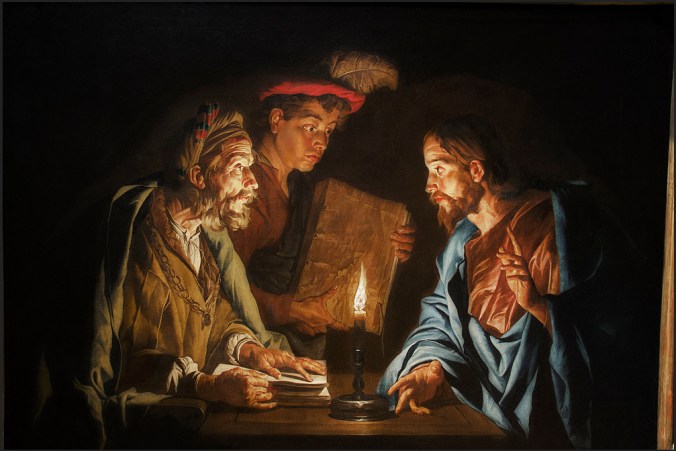
Matthias Stom’s depiction of John 3: 1-17 comes from the mid-1600s. Stom was drawn to moments when people were wrestling with big spiritual questions, so Nicodemus’s late‑night conversation was a natural fit for him. In the world Stom inhabited — where the church was urging people toward personal renewal — the scene underscores the heart of the passage: a respected teacher trying to make sense of new birth and the depth of God’s love revealed in Christ.
Learn more about the artist here.
This Week’s ELCA Commemorations
There are three ELCA commemorations this week:
Monday 23 February:
Polycarp, Bishop of Smyrna,
martyr (d. 156)
Wednesday 25 February:
Elizabeth Fedde, deaconess (d. 1921)
Sunday 1 March:
George Herbert, hymnwriter (d. 1633)

(1850-1921)
Norwegian immigrant Elizabeth Fedde played a significant role in the Deaconess movement, a Christian tradition focused on social service and ministry. Drawing from her own experiences and convictions, she championed the idea of women serving in practical, hands-on roles within their communities, particularly in addressing the needs of the poor and marginalized.
Fedde came to Minneapolis in 1888 at the invitation of Midwestern Lutherans who wanted to replicate the deaconess work she had pioneered in Brooklyn. During her brief but influential stay, she founded a deaconess home and helped launch what became the Hospital of the Lutheran Free Church — Deaconess Hospirtal. Her Minneapolis work anchored Lutheran social ministry in the Upper Midwest and shaped care for generations of Norwegian‑American immigrants. Thanks to my pal Rollie Lee for putting me on to Fedde’s story!
Read about Elizabeth here!
Musical Meditation
“There Is a Balm in Gilead” has long been one of my favorites because my mother, Cathy Rykken, sang it often, and its soaring melody fit her soprano voice beautifully. The song itself grew out of the 19th‑century African American spiritual tradition, drawing on Jeremiah’s question about healing in Gilead and transforming it into a Christian affirmation that Christ restores the “sin‑sick soul.” Included as one of roughly fourteen spirituals in the Evangelical Lutheran Worship hymnal (#614), it isn’t officially a Lenten hymn, yet congregations often sing it during Lent because its message of healing and hope speaks so directly into the season’s themes. My sense is they sang this often in that AME Church in Nicodemus, Kansas!
The interpretation I posted here is remarkable in a couple ways. The sound quality is superb (especially good with headphones), and the style makes it meditative. Enjoy!
The Adventist Vocal Ensemble was a UK‑based broadcast choir led by Ken Burton, known for its polished hymn arrangements and frequent appearances on the BBC’s Songs of Praise. The recording I’ve posted comes from 2013, during the group’s most active period. Their website hasn’t been updated since 2016, so the ensemble may no longer be active as a formal performing group, or they may have merged with another ensemble.
Prayer Meditation: Psalm 121
Psalm 121, one of the “Songs of Ascents,” likely accompanied pilgrims on their climb to Jerusalem and speaks with steady confidence about God’s protective care. It has long been my favorite. Known as “The Traveler’s Psalm,” my father requested it for his funeral in 2013, echoing his saying that “we’re all just traveling through.” I later learned it had been read at his father’s funeral as well, a quiet thread of faith that binds our family across generations. The accompanying prayer reflects the Psalm.
Further Information Here
God, you know the roads we walk and the ones we can’t yet see. Lift our eyes when we grow tired, and steady us with the promise that you never drift off or look away. Watch over our coming and going today—every step, every conversation, every quiet moment—and keep us rooted in the trust that you travel with us. Amen.
Going Beyond (Faith At Work)
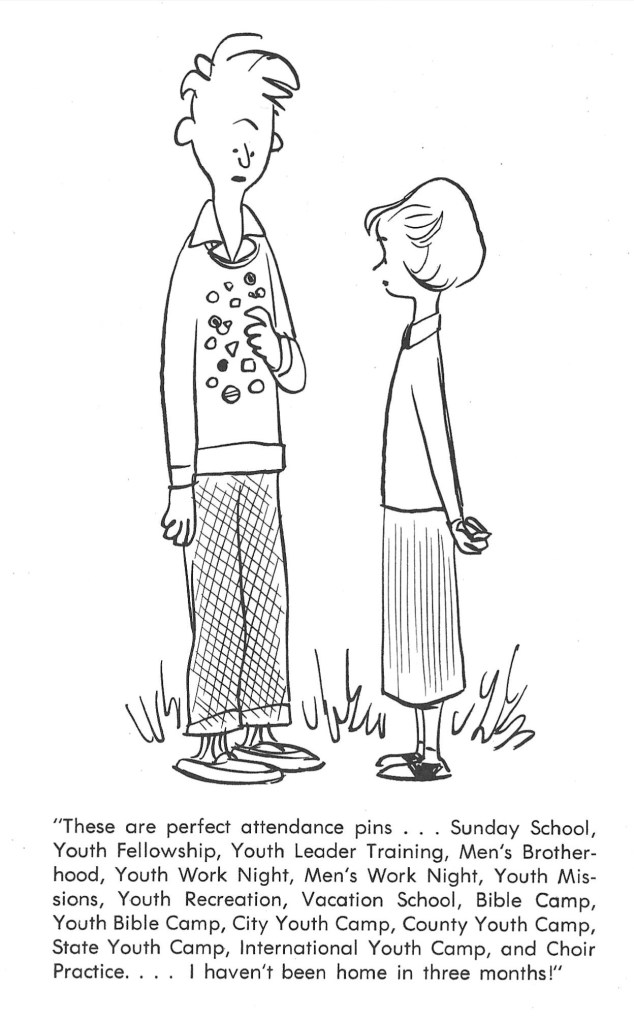
1960s Lutheran Humor
If you grew up within the tradition of 1950s and 60s Lutheranism, these cartoons by Charles Schultz resonate! Schultz had a gift.
Join Us for Worship and Study
Evangelical Lutheran Church in Black River Falls, Wisconsin, and is part of the Northwest Synod of Wisconsin (ELCA). We stream our Sunday worship at 9:30 each week. Please feel free to join us!
Access our YouTube Channel here.
Access the Homepage of Two Worlds here
(linked to the picture). I offer more background there and also the entire archive of the first three years.