Welcome to Two Worlds!
(Year A: 3 Lent)
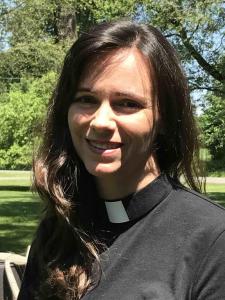
“In his encounter with the Samaritan woman at the well, Jesus must overcome a number of barriers to interaction, much less to genuine, vulnerable conversation. Their contrasting genders, ethnic identities, faiths, and social roles all discourage them from speaking to each other . . . And when she leans in, connecting his proclamation to her own sacred teachings, Jesus honors her with his own trust. He confesses to her — the first person to whom Jesus himself makes this claim in John’s Gospel — that he is the expected Messiah.” (Serena Rice)
INTRODUCTION
Life’s chance encounters sit close to the surface for me this week as I return to Jesus and the Samaritan woman at the well. John writes this scene not as a detached reporter but as one of the early church’s theological narrators, shaping the community’s memory of Jesus through the sources available to him — his own presence among the disciples on that journey through Samaria, the stories they shared afterward, and the oral tradition that carried these encounters forward. That layered memory lets him slow the pace and let us overhear a real conversation unfolding in real time. And beneath it all runs the question that drove every Gospel writer and still presses on us today: Who is Jesus for us, here and now? In John’s hands, that question comes alive in the bright noon light, where an unexpected meeting becomes a turning point for a woman, a village, and anyone willing to listen.
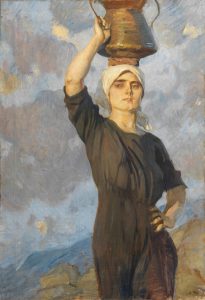
The Samaritan woman — known in Eastern Orthodox tradition as Photini, steps into the story unnamed but unforgettable. Jesus and his disciples take the direct route from Judea to Galilee, which means passing through Samaria. That choice alone carries weight. Jews and Samaritans shared ancestry but lived with deep hostility, especially over where God should be worshiped: Jerusalem for Jews, Mount Gerizim for Samaritans. What feels like an old family argument to us was a defining boundary line two thousand years ago. Into that tension, Jesus initiates a long, open conversation with a woman who, by every social measure, should have been ignored. She carried three strikes: Samaritan, woman, and someone whose marital history raised eyebrows. Yet Jesus not only speaks with her—he speaks with her longer than with anyone else in the Gospels, as Barbara Brown Taylor notes. And she becomes the first person to whom he openly reveals himself as the Messiah. Those details should stop us in our tracks. As you read the exchange, notice how Jesus meets her. Nicodemus came at night, curious but cautious. She came for water, not answers. Jesus seeks her out in broad daylight and opens a conversation that touches her deepest truth. You can almost feel the moment her world shifts. Her response stands in sharp contrast to Nicodemus. He fades back into the shadows, still wrestling. She runs toward her community with joy, becoming the first evangelist in John’s Gospel. Because of her testimony, the people of Sychar come to Jesus and proclaim him “the Savior of the world.”
Soli Deo Gloria!
Note: My reflections here were prompted by Serena Rice’s article in the March 2026 edition of The Christian Century (p. 25). She serves as Pastor at Abiding Peace Lutheran Church in Budd Lake, New Jersey. Abiding Peace is a member of the ELCA.
Monday (2 March) marks Day 11 of the 40 day Lenten Journey which began on Ash Wednesday (18 February) and will end on Maundy Thursday (1 April).
Thanks for visiting this space again this week and two reminders: utilize the links to the left to navigate the blog and be aware that I have various links throughout the blog that will take you to sites for further reading!
This Week’s Readings
Themes and Connections
The readings for Lent 3 tighten around a single arc: people thirst, hearts harden, and God meets that resistance with sustaining mercy. Israel’s quarrel at Massah and Meribah becomes the backdrop for Psalm 95’s warning, even as Paul names the deeper truth—God pours out love precisely when we are weakest. That love takes flesh in Jesus’ encounter with the Samaritan woman, where living water breaks open old boundaries and turns skepticism into witness.
Exodus 17: 1-7
Psalm 95
Romans 5: 1-11
John 4: 5-42
The Readings are Linked!
The readings are drawn from the Bible Gateway website and are the NRSVUE edition. I utilize Co-Pilot to assist with summarizing themes among the readings.
Image of the Week

Carracci’s Christ and the Samaritan Woman captures the moment when an ordinary stop at a well turns into a life‑changing conversation. Jesus leans toward her with a calm, open gesture, meeting her right in the middle of her daily routine—much like Pastor Serena Rice describes, breaking through every barrier that should have kept them apart. The woman pauses with her jar, caught between the world she knows and the unexpected trust he offers, and the whole scene glows with the quiet revelation of someone realizing, perhaps for the first time, who is standing before her.
Learn more about this painting here.
This Week’s ELCA Commemorations
There are three ELCA commemorations this week:
Monday 2 March:
John Wesley (d. 1791), Charles Wesley (d. 1788), Renewers of the Church
Saturday 7 March:
Perpetua, Felicity, and Companions, martyrs at Carthage (202)
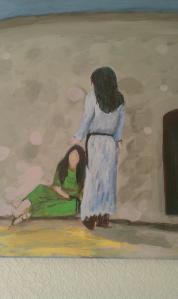
Perpetua and Felicity were part of a small group of North African Christians martyred in Carthage in 203, during a wave of persecution under Emperor Septimius Severus. Perpetua — a young noblewoman and new mother — and Felicity — an enslaved woman who gave birth in prison days before the execution — stood alongside their companions as a community formed not by status but by baptismal identity. Their story, preserved in The Passion of Saints Perpetua and Felicity, shows them crossing social, economic, and gender boundaries with the same kind of courageous trust Pastor Serena Rice highlights in the Samaritan woman: when Christ meets people across the lines meant to divide them, they respond with a boldness that still speaks to us today.
Learn More About Their Story Here!
Musical Meditation
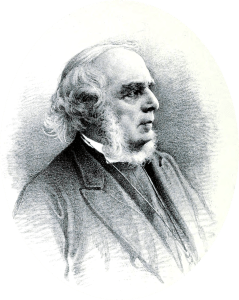
“I Heard the Voice of Jesus Say” comes from Horatius Bonar (1808–1889), a Scottish pastor who wrote it in the 1840s during his ministry in Kelso. He crafted it as a simple, direct invitation to Christ — part of his wider effort to give congregations and young people clear, memorable gospel language. Its imagery of thirst, rest, and living water echoes the story of Jesus and the Samaritan woman in John 4, where Christ meets human need with an offer of life that never runs dry. The hymn appears in Evangelical Lutheran Worship at ELW 332, placed in the Lent section, and most hymnals trace its origin to Bonar’s early collections such as The Bible Hymn‑Book (1845–1850), where several of his texts first appeared.
Lyrics
1. I heard the voice of Jesus say,
“Come unto Me and rest;
Lay down, O weary one, lay down
Thy head upon My breast.”
I came to Jesus as I was,
Weary, and worn, and sad;
I found in him a resting-place,
And he has made me glad.
2. I heard the voice of Jesus say,
“Behold, I freely give
The living water; thirsty one,
Stoop down, and drink, and live.”
I came to Jesus, and I drank
Of that life-giving stream;
My thirst was quench’d, my soul revived,
And now I live in him.
3. I heard the voice of Jesus say,
“I am this dark world’s Light;
Look unto me, your morn shall rise,
And all your day be bright.”
I looked to Jesus, and I found
In him my Star, my Sun;
And in that Light of life I’ll walk,
Till trav’ling days are done.
The Choir of Trinity College Cambridge is one of the world’s leading collegiate choirs, known for its luminous blend, expressive clarity, and deep roots in the English choral tradition. Made up of around thirty choral scholars and two organ scholars, it sings regular services in Trinity’s historic chapel and maintains an active schedule of touring, broadcasting, and award‑winning recording. Gramophone has ranked it among the top choirs globally, a reputation built on both its centuries‑old heritage and its adventurous, wide‑ranging repertoire.
Visit Their Website Here
Prayer Meditation: The Serenity Prayer
The latest U.S.–Israeli bombing strikes in the Middle East have stirred that familiar heaviness — the sense that the world might be sliding toward another war. With a soldier in the family for more than twenty years, we have learned to take these moments in stride and not overreact, but they still land hard. In times like this, the heart reaches for words that steady us, which is why Reinhold Niebuhr’s Serenity Prayer still feels so alive. When it first appeared in the 1944 Book of Prayers and Services for the Armed Forces, chaplains used it to help soldiers face fear, uncertainty, and the limits of their own control. But the prayer was never meant for military life alone. Its quiet movement—from accepting what can’t be changed, to acting where we must, to discerning the difference—speaks just as clearly to civilians watching events unfold from a distance yet feeling their weight. In every era of conflict, it offers a way to stay grounded without becoming resigned, and hopeful without becoming naïve.

(1892-1971)
God grant me the serenity
to accept the things I cannot change;
courage to change the things I can;
and wisdom to know the difference.
Living one day at a time;
Enjoying one moment at a time;
Accepting hardships as the pathway to peace;
Taking, as He did, this sinful world
as it is, not as I would have it;
Trusting that He will make all things right
if I surrender to His Will;
That I may be reasonably happy in this life
and supremely happy with Him
Forever in the next.
Amen.
Going Beyond (Faith At Work)
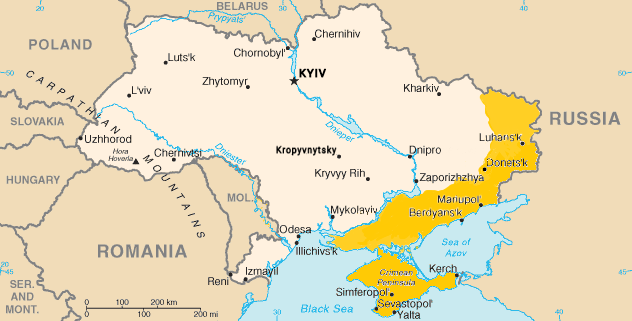
The Lutheran World Federation—a global communion of Lutheran churches that includes the ELCA—marks four years of accompanying Ukrainians through the trauma and displacement caused by Russia’s full‑scale invasion. Its teams and member churches continue to repair homes, support schools, and provide psychosocial care even as violence intensifies and winter conditions worsen. Ukrainian church leaders express deep gratitude for global solidarity and urge continued support as international funding declines and humanitarian needs grow.
Read more about this story here!
Join Us for Worship and Study
Evangelical Lutheran Church in Black River Falls, Wisconsin, and is part of the Northwest Synod of Wisconsin (ELCA). We stream our Sunday worship at 9:30 each week. Please feel free to join us!
Access our YouTube Channel here.

Access the Homepage of Two Worlds here
(linked to the picture). I offer more background there and also the entire archive of the first three years.
