Welcome to Two Worlds!
(Year A: 5 Lent)
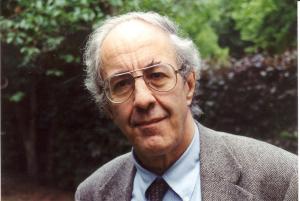
“Discipline means to prevent everything in your life from being filled up. Discipline means that somewhere you’re not occupied, and certainly not preoccupied. In the spiritual life, discipline means to create that space in which something can happen that you hadn’t planned or counted on.”
(Henri Nouwen, Dutch Theologian)
INTRODUCTION
Living in the northland makes the Lenten journey feel like the slow turn from winter toward spring — a season that asks us to clear space inside ourselves the way the land slowly clears itself of ice. The gray, frozen landscape loosens, and the first thin layers of green push back into view. Lent invites that same discipline of stepping back from what occupies or preoccupies us so that God can do what we could not plan or predict. That movement from darkness to light, despair to hope, and death to life runs straight through the readings for the 5th Sunday in Lent — Ezekiel’s valley of dry bones and Jesus calling Lazarus from the tomb. Ezekiel’s vision has always pulled me in. He stands among the great prophetic voices — Isaiah, Jeremiah, Lamentations, Daniel — and he lived through the trauma of exile in Babylon after his people watched the Temple fall in 587 BCE. That loss cut deep into their identity. Ezekiel spoke with fierce clarity, confronting the idolatry and corruption of Israel’s leaders and insisting their choices mattered. Yet he refused to leave his people in despair. He promised restoration, a return home, a rebuilt Temple. At the center of those promises rises that wild, unforgettable vision: a valley of bones so dry they almost rattle, until God breathes life into them and they stand with energy and purpose. Darkness to light. Despair to hope. Death to life.
That same breath — God’s life‑giving Spirit — carried forward through Israel’s story, shaping the imagination of the people who later stood at Lazarus’s tomb. They knew the God who brings life out of death; they had sung it, prayed it, and passed it down for generations. So when Jesus called Lazarus out of the grave, they recognized the pattern. God’s presence wasn’t an idea to them — it formed their memory, their imagination, their identity.
So what do we make of these stories two thousand years later? I’ve been sitting with that question this week. The same breath that filled those dry bones and stirred Lazarus awake still moves in and among us. Paul says it plainly in Romans 8: the Spirit dwells in us. That brings to mind the word enthusiasm — entheos — “God within us.” God doesn’t leave us stuck in darkness, despair, or death. God fills us with light, hope, and life — and calls us to live as if we trust that promise. And maybe that’s where Nouwen helps us land. Lent isn’t only about recognizing the breath of God; it’s about making room for it. Creating space — somewhere not occupied, not preoccupied — so that the same Spirit who raised dry bones and awakened Lazarus can move freely in us. The season invites us to that quiet, courageous openness.
Soli Deo Gloria!
Note: The opening quote comes from Henri Nouwen’s 1981 book, The Way of the Heart: Connecting With God Through Prayer, Wisdom, and Silence. A prolific writer, Nouwen published 42 books in his lifetime.
Navigate the Blog Here
Thanks for your visit again this week!
Monday (16 March) marks Day 22 of the 40-day Lenten journey (Ash Wednesday to Easter, not counting Sundays).
Reminders regarding the blog: utilize the table of contents to navigate around and also realize that I have links for greater depth that are italicized and bolded throughout the blog.
This Week’s Readings
Themes and Connections
The readings for 5 Lent trace a movement from death’s grip toward the life-giving breath of God. Ezekiel’s vision of the dry bones and the psalmist’s cry “out of the depths” both name the stark reality of human despair while trusting that God can raise what seems lost. Paul deepens this hope by contrasting the futility of the flesh with the Spirit who brings life to mortal bodies. In John’s account of Lazarus, Jesus embodies this promise by stepping into grief, calling forth new life, and revealing God’s power to transform even the tomb into a place of awakening.
Ezekial 37: 1-14
Psalm 130
Romans 8: 6-11
John 11: 1-45
The Readings are Linked!
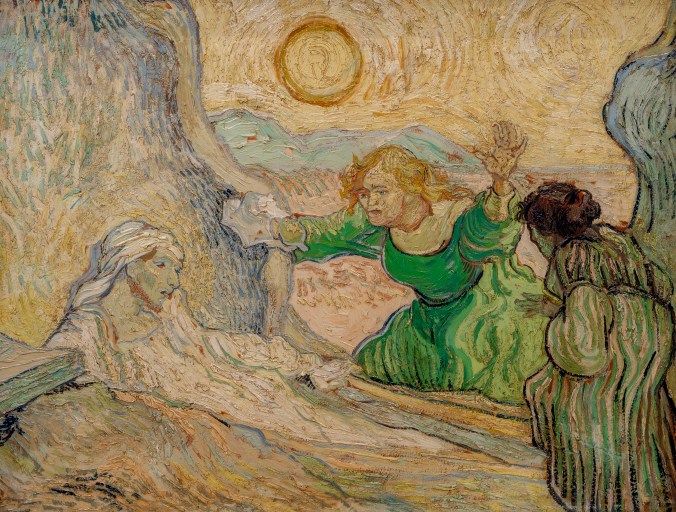
The readings are drawn from the Bible Gateway website and are the NRSVUE edition. I utilize Co-Pilot to assist with summarizing themes among the readings. All images are drawn from Wikimedia Commons, thereby copyright free.
Image of the Week
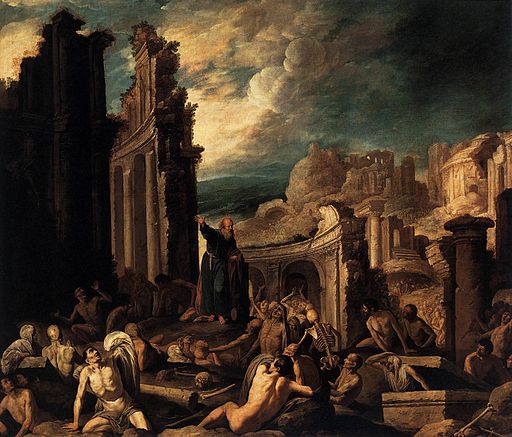
Francisco Collantes’ The Vision of Ezekiel (1630) plunges the viewer into the drama of Ezekiel 37 with a sweeping, almost theatrical sense of scale. The prophet stands elevated in his blue robe, arm outstretched as he confronts a valley littered with bones and half‑formed bodies—figures caught in the very moment between death and restoration. Around him, ruins and crumbling architecture heighten the sense of desolation, while the turbulent sky above suggests divine power breaking into the scene. The whole composition captures the tension and hope of the biblical vision: God’s breath stirring a devastated people back to life, an “exceeding great army” rising where only despair once lay.
This Week’s ELCA Commemorations
There are four ELCA commemorations this week:
Tuesday 17 March
Patrick, bishop and missionary to Ireland (d. 461)
Thursday 19 March
Joseph, Guardian of Jesus
Saturday 21 March
Thomas Cranmer, Bishop of Canterbury, martyr (d. 1556)
Sunday 22 March
Jonathan Edwards, teacher, missionary to American indians (d. 1758)
Jonathan Edwards was born in 1703 in East Windsor, Connecticut, into a prominent Puritan family, and his early brilliance carried him to Yale at thirteen. He emerged as a central figure of the First Great Awakening in Northampton, where his preaching and writing helped redefine Calvinist theology for a changing colonial world. After conflicts over church membership led to his dismissal, he spent productive years as a missionary and scholar in Stockbridge, working among Mohican and Mohawk communities while completing major theological works. In 1758 he became president of the College of New Jersey, but died shortly after from a smallpox inoculation, leaving a legacy as one of early America’s most influential theologians
Learn More About His Story Here!
Musical Meditation: Abide With Me
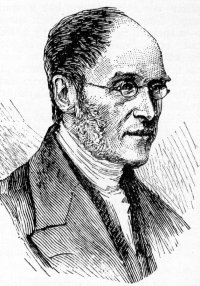
(1793-1847)
Abide With Me comes out of Henry Francis Lyte’s own season of weakness and uncertainty, and that’s part of why it still feels so human. He wrote it near the end of his life, when the days really were “fast falling,” and his simple plea for God to stay close has the same emotional honesty you hear in Psalm 130. The psalmist cries “out of the depths” and waits for God the way a watchman waits for morning; Lyte is doing something similar, just in the language of evening—naming the fears that surface when things grow dim and trusting that God’s presence won’t slip away. Put together, the hymn and the psalm sound like two voices in the same room: one calling from the depths, the other from the edge of night, both leaning on the same steady mercy. The version I’m including here comes from a performance by the Concordia Choir at Central Lutheran in Minneapolis from 2024. Enjoy!
Lyrics
Abide with me; fast falls the eventide;
The darkness deepens; Lord, with me abide;
When other helpers fail and comforts flee,
Help of the helpless, oh, abide with me.
Swift to its close ebbs out life’s little day;
Earth’s joys grow dim, its glories pass away;
Change and decay in all around I see—
O Thou who changest not, abide with me.
I need Thy presence every passing hour;
What but Thy grace can foil the tempter’s pow’r?
Who, like Thyself, my guide and stay can be?
Through cloud and sunshine, Lord, abide with me.
I fear no foe, with Thee at hand to bless;
Ills have no weight, and tears no bitterness;
Where is death’s sting? Where, grave, thy victory?
I triumph still, if Thou abide with me.
Hold Thou Thy cross before my closing eyes;
Shine through the gloom and point me to the skies;
Heav’n’s morning breaks, and earth’s vain shadows flee;
In life, in death, O Lord, abide with me.
Lyrics drawn from hymn 629, ELW.
The Concordia College Choir of Moorhead, Minnesota, is widely regarded as one of America’s premier a cappella ensembles, known for its refined blend and expressive musicality. Founded in 1920, the choir has built a century‑long legacy shaped by influential conductors including Paul J. Christiansen, René Clausen, and current director Dr. Michael Culloton. It tours nationally and internationally, performing sacred and secular repertoire in major concert halls and historic sacred spaces. Concordia College is one of 26 colleges and universities across the United States affiliated with the ELCA.
Learn More About the Choir Here!
Prayer Meditation: The Prayer of St. Patrick
The Prayer of St. Patrick (483) — often called St. Patrick’s Breastplate — is a bold, rhythmic call to “bind” oneself to God’s strength, presence, and protection. It paints a vivid picture of Christ surrounding the believer on every side, turning faith into something embodied and fiercely alive. Rooted in early Irish Christianity, the prayer endures because it speaks to our deep desire for courage, grounding, and the sense that God walks with us into every moment. I’m including it this week in honor of St. Patrick and for those with Irish heritage — in my case, twelve percent according to DNA testing. My Viking ancestors, apparently, made trips to Ireland!
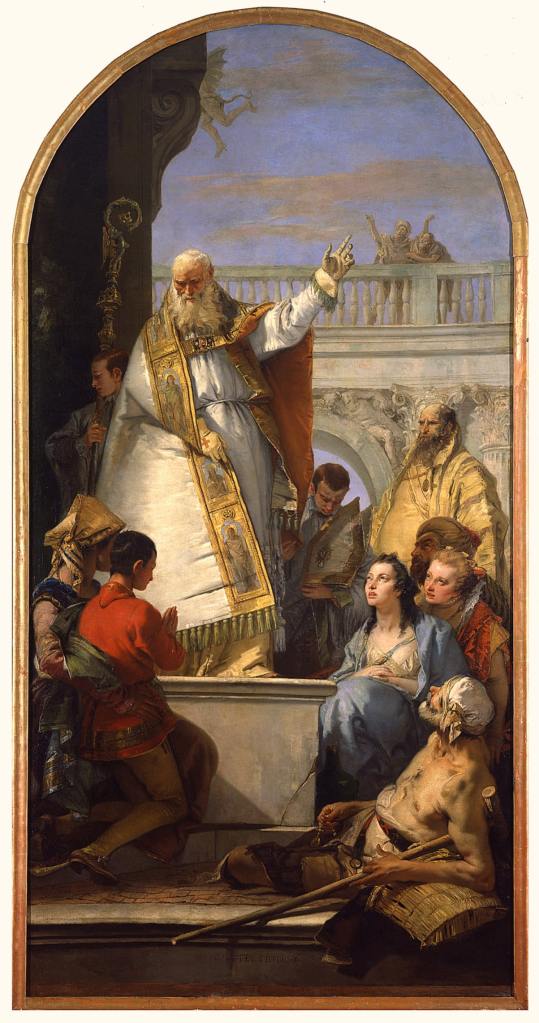
Christ with me, Christ before me, Christ behind me,
Christ in me, Christ beneath me, Christ above me,
Christ on my right, Christ on my left,
Christ where I lie, Christ where I sit, Christ where I arise,
Christ in the heart of everyone who thinks of me,
Christ in the mouth of every one who speaks to me,
Christ in every eye that sees me,
Christ in every ear that hears me.
Salvation is of the Lord.
Salvation is of the Christ.
May your salvation, Lord, be ever with us.
Going Beyond (Faith At Work)
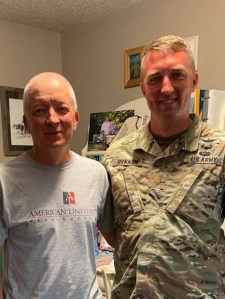
Greetings from Texas! We’re spending time with Jake and family this week.
FOR THOSE INVOLVED . . . .
Our in-person Lectionary discussion group that meets at ELC will be off until APRIL 12TH. This is due to travel on my part and activities on Palm Sunday and Easter.
Join Us for Worship and Study
Evangelical Lutheran Church in Black River Falls, Wisconsin, and is part of the Northwest Synod of Wisconsin (ELCA). We stream our Sunday worship at 9:30 each week. Please feel free to join us!
Access our YouTube Channel here.
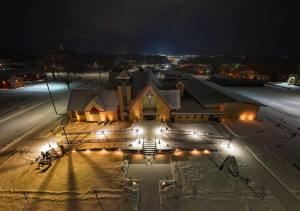
Joel Busse Photograph
