Where Are We?
For twenty-six Sundays, beginning in June, we have journeyed through the long season of Pentecost (also called “Ordinary Time”). Along the way, the readings have challenged us to consider what it means to follow Christ in the everyday moments of life. Now we arrive at Christ the King Sunday, also known as Reign of Christ Sunday, the final Sunday of the church year and a fitting conclusion to the season.
Established by Pope Pius XI in 1925 amid the political upheavals of the early twentieth century, Christ the King Sunday reminded Christians that their ultimate allegiance belongs to Christ alone. Later liturgical reforms following the Second Vatican Council moved the festival to the final Sunday of the church year, where it now serves as a fitting conclusion to the church’s story, proclaiming Christ’s reign over all creation and the promised fulfillment of God’s kingdom.
That theme runs through this week’s readings. Ezekiel portrays God as the shepherd who seeks the lost, heals the injured, and brings justice to the flock. Psalm 95 calls God’s people to worship the One whose sheep we are. Ephesians lifts our eyes to the risen and exalted Christ, whose authority surpasses every ruler and power. In Matthew, Jesus identifies himself with “the least of these” and measures faithfulness by acts of mercy, compassion, and care.
My reflections this week will focus on Ezekiel 34 and its relevance for our present moment. The prophet’s vision of leadership, justice, and care for the vulnerable remains as timely as ever. As always, thank you for joining me in exploring Scripture within the flow of our lives and the world around us.
Navigate the Blog Here
Two Worlds is a digital ministry space that shares the RCL readings, a brief homily, and supporting images, music, and ELCA commemorations. The blog is authored by Paul Rykken in consultation with Pastor Jen Hatleli of Evangelical Lutheran Church in Black River Falls, Wisconsin (ELCA). The blog lands more naturally on a larger screen. Also, hyperlinks are included for further information — they are bolded and italicized.
Readings for Christ the King
Luther and the lectio divina
Luther’s approach to lectio divina begins with the Augustinian conviction that Scripture is understood through the Holy Spirit and received in humble prayer. While the monastic tradition described four movements of reading, meditation, prayer, and contemplation, Luther reshaped the practice around oratio (prayer), meditatio (meditation), and tentatio (spiritual struggle). Rather than seeking contemplative ascent, Luther saw the Christian life as a cross-shaped encounter in which God’s Word meets us amid trial, testing, and weakness, forming faith through the struggle.
Ezekial 34: 11-16, 20-24
Psalm 95: 1-7a
Ephesians 1: 15-23
Matthew 25: 31-46
Readings are Linked
Image of the Week
This mural, Christ in Glory (artist unknown), located in the Cathedral of Christ the Saviour, Moscow, offers a fitting visual companion to the Epistle reading for Christ the King Sunday, Ephesians 1:15-23.
The image presents Christ enthroned in heavenly majesty, surrounded by angels, saints, and the symbols of the four Evangelists, while radiant light streams outward from his throne. The scene vividly reflects Paul’s proclamation that God “raised Christ from the dead and seated him at his right hand in the heavenly places,” placing him “far above all rule and authority and power and dominion” (Ephesians 1:20-21). As the gathered figures bow in worship before the cosmic King, the mural bears witness to Paul’s vision of Christ as the one whom God has made “head over all things for the church” (Ephesians 1:22).
Source: Christ in Glory (mural, artist unknown), Cathedral of Christ the Saviour, Moscow, Russian Federation, late twentieth century. Photograph via Wikimedia Commons.

Five-Minute Homily: Christ the King
Title: Leaders Come and Go, but Christ Remains

Christ the King Sunday brings us to the end of another church year, and the readings appointed for this day invite us to take a longer view of things. We arrive here after an intense election season, reminded once again how quickly circumstances shift and how often public attention turns from one leader or party to the next.
Reflecting on Ezekiel 34, the late James Limburg of Luther Seminary, commenting on this text many years ago, observed that late November stands at a crossroads. One church year is ending; Advent is near. Against that backdrop, Ezekiel points beyond the rulers and uncertainties of every age to the one King whose reign does not pass away. He is the Shepherd who seeks the lost, gathers the scattered, and feeds his people with justice.
First some backstory. Ezekiel was a priest and prophet carried into exile in Babylon after the first deportation of Judeans in 597 BC. He ministered among a people who had watched their kingdom collapse, Jerusalem fall, and the Temple be destroyed. In the midst of that trauma, one question hung in the air: How did we get here? Ezekiel’s answer was blunt. Israel’s kings, priests, and leaders had failed in their calling. Instead of caring for the people, they had served themselves. The prophet’s diagnosis is ancient, but it feels remarkably contemporary. We still know what it is like to be disappointed by leaders, to watch institutions falter, and to wonder who is looking out for the common good. Yet the heart of Ezekiel 34 is not criticism. It is promise. Having exposed the failures of Israel’s shepherds, God announces, “I myself will search for my sheep” (34:11). The focus shifts from leaders who failed to the Shepherd who never abandons the flock.
How does this text speak to us in 2026? First, leadership matters because people matter. Whether in government, the church, our schools, our workplaces, or our homes, shepherds are called to serve those entrusted to their care, not themselves. Second, our ultimate hope rests not in human leaders but in God. Like the Israelites who heard Ezekiel’s words in exile nearly twenty-five centuries ago, many today know what it means to live with uncertainty and long for a place of belonging. Exile is more than a geographical reality. It is the experience of being far from home in body, mind, or spirit. We encounter it whenever life no longer feels familiar, when relationships fracture, when institutions disappoint us, when grief settles in, or when we wonder where God is amid the uncertainty. To such people Ezekiel offers a promise: the Shepherd seeks the lost, gathers the scattered, binds up the wounded, and feeds his people with justice. Human leaders rise and fall, but Christ remains. In every age, he continues the work of finding, healing, and leading his people home. Indeed, Christ is King!
Soli Deo Gloria!
Note: As is so often the case, my reflections are inspired by others and garnered through eclectic readings. My homily this week was inspired by James Limburg’s analysis of the Ezekiel passage, as found in Working Preacher, a resource offered through Luther Seminary in St. Paul, MN.
Also be aware that Luther Seminary will leave its historic Saint Anthony Park campus after the 2026-27 academic year and begin a long-term lease at River Parkway Place, 1101 W. River Parkway, Minneapolis, effective July 1, 2027. This move came offer much discernment by Seminary leaders and speaks to the changing nature of the institution and how future church leaders are accessing their education.
Musical Reflection
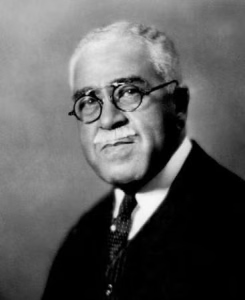
Many people know“In Christ There Is No East or West” as a hymn about Christian unity, but its roots go back to 1908 when English writer John Oxenham (the pen name of William Arthur Dunkerley) wrote the text for a London Missionary Society event. Drawing on Paul’s vision in Galatians that all are one in Christ, the hymn pushes back against the divisions of race, nationality, and culture, proclaiming that Christ brings people together across every boundary. In Evangelical Lutheran Worship (2006), it appears as hymn 650 and is paired with the beloved tune MCKEE, adapted by Harry T. Burleigh from an African American spiritual. Its simple but powerful message continues to resonate: in a world often marked by separation and division, Christ calls us into one fellowship of faith and love.
1 In Christ there is no east or west,
In him no south or north,
But one great fellowship of love
Throughout the whole wide earth.
2 In him shall true hearts ev’rywhere
Their high communion find;
His service is the golden cord
Close-binding all mankind.
3 Join hands then, brothers of the faith,
Whate’er your race may be.
Who serves my Father as a son
Is surely kin to me.
4 In Christ now meet both east and west,
In him meet south and north;
All Christly souls are one in Him
Throughout the whole wide earth.
The virtual choir you are hearing is from the Fifth Avenue Presbyterian Church in New York City. You can learn more about their various ministries at their website below!
FAPC · Fifth Avenue Presbyterian Church
Who Are We Commemorating This Week?
Note: The ELCA commemorates a wide range of Christians throughout the year as a way of remembering that God has worked through ordinary people in every age. These commemorations — drawn from Scripture, the early church, the Reformation, and more recent history — invite us to see faith lived out in many different vocations and cultures. They aren’t about elevating “heroes,” but about widening our sense of the communion of saints and letting their witness encourage our own. In marking these days, the church pauses to give thanks, to learn, and to be reminded that the Holy Spirit continues to shape faithful lives in every generation.
We have one commemoration on this week’s calendar. You will find the full listing of them in the front of the ELW.

Week of 16 November
Tuesday 17 November
Elizabeth of Hungary, renewer of society (d. 1231)
Born a princess of Hungary in 1207, St. Elizabeth of Hungary chose a very different path than most people of her status. Rather than focusing on wealth and privilege, she spent her time feeding the hungry, caring for the sick, and helping the poor. After her husband, Louis of Thuringia, died, Elizabeth gave away much of her wealth and devoted herself fully to serving others, even working in a hospital with her own hands. Though she lived only twenty-four years, her life offers a powerful reminder that Christian faith is more than belief alone. It takes shape in acts of mercy, generosity, and love for our neighbors. Her commemoration on November 17 invites us to consider how we, too, might put our faith into action.
Going Beyond
Faithful Conversations
Faithful Conversations — adult study at ELC — meets each Sunday from 11:00-11:45 in the church sanctuary.
For the next several Sundays (22 November – 13 December), we will be offering an informal discussion of each Sunday’s readings from the RCL. We will meet in the church library, unless we need more room.
All Are Welcome!
Three-Year Revised Common Lectionary Archive

This week’s edition of Two Worlds is #195 since we started in February of 2023, and marks the end of Year A. Next Sunday — Advent 1 — will mark the start of Year B. A reminder: Each week’s RCL readings are chosen to be in conversation with one another, shedding light on a shared theme or aspect of God’s activity in the world. Taken together, the three-year cycle introduces worshipers to the breadth of Scripture, ensuring that congregations encounter the Bible’s major stories, themes, and voices over time.
The blog continues to evolve, and I have created a full archive of Year A (2025-26), Year B (2023-24), and Year C (2024-25) that is available on the blog homepage.
I was able to sing the song g in my head. In Christ there is no east or west! Love that!